The Modern Portrait
Juried by Theadora Walsh

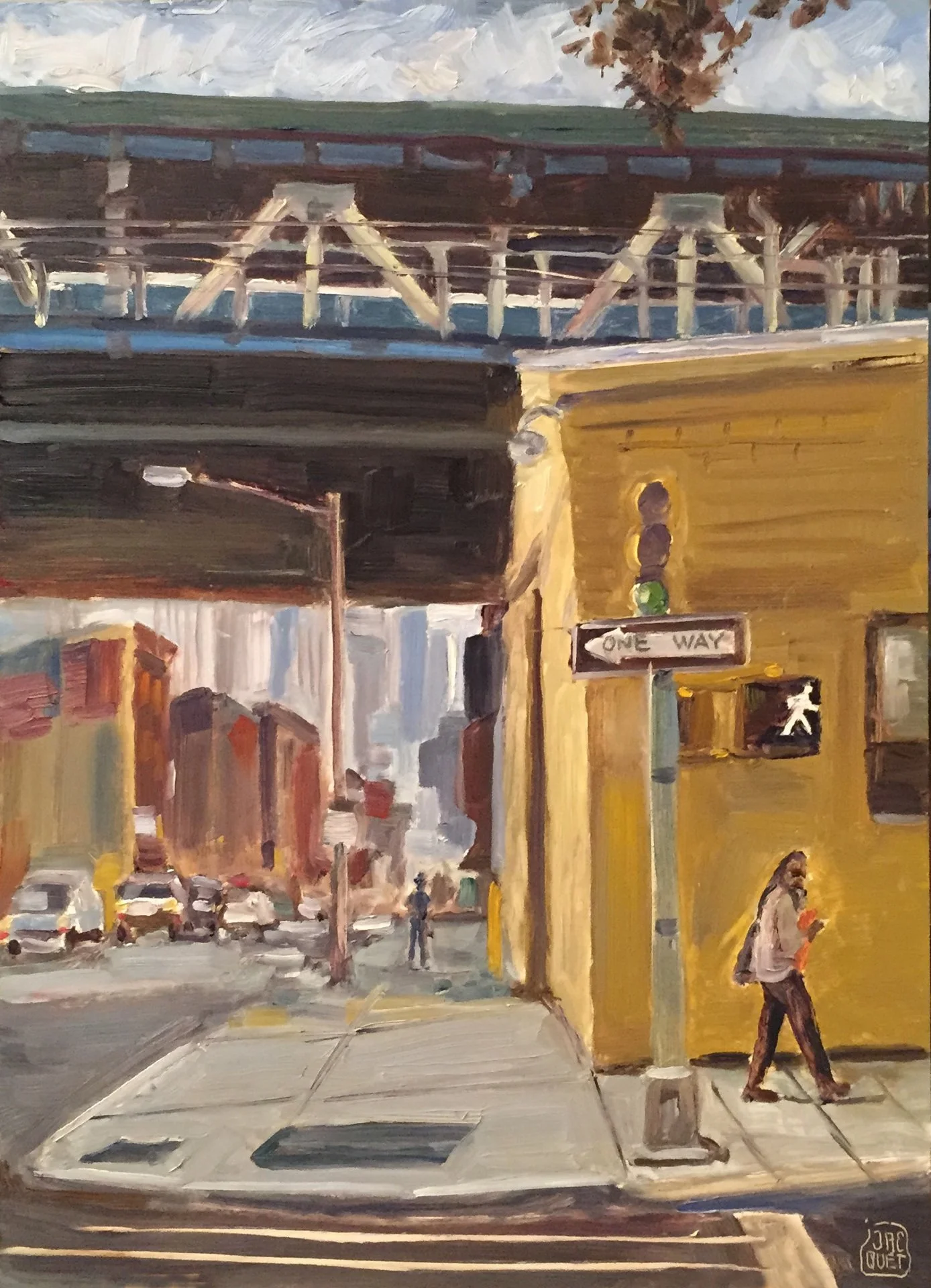
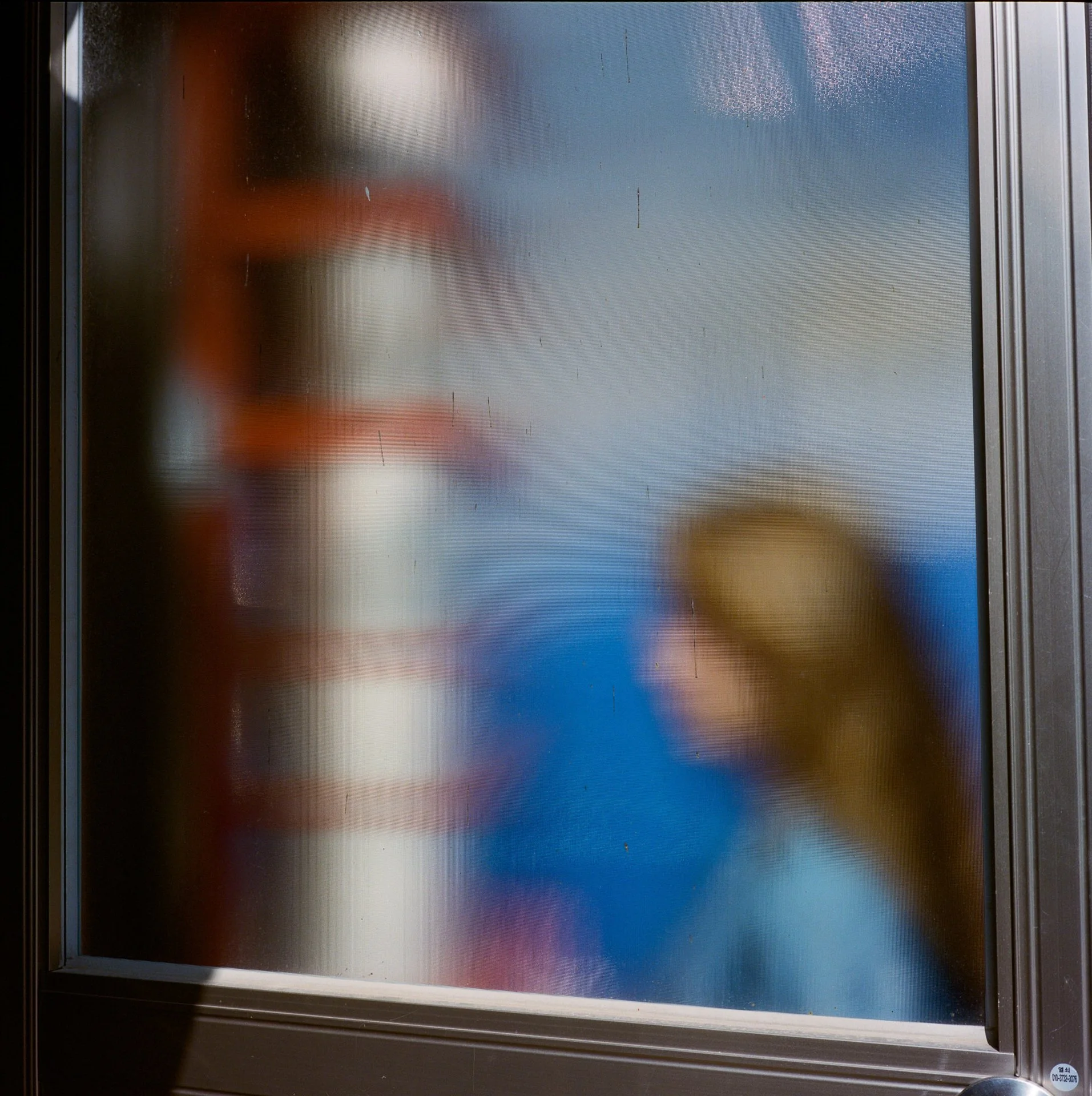
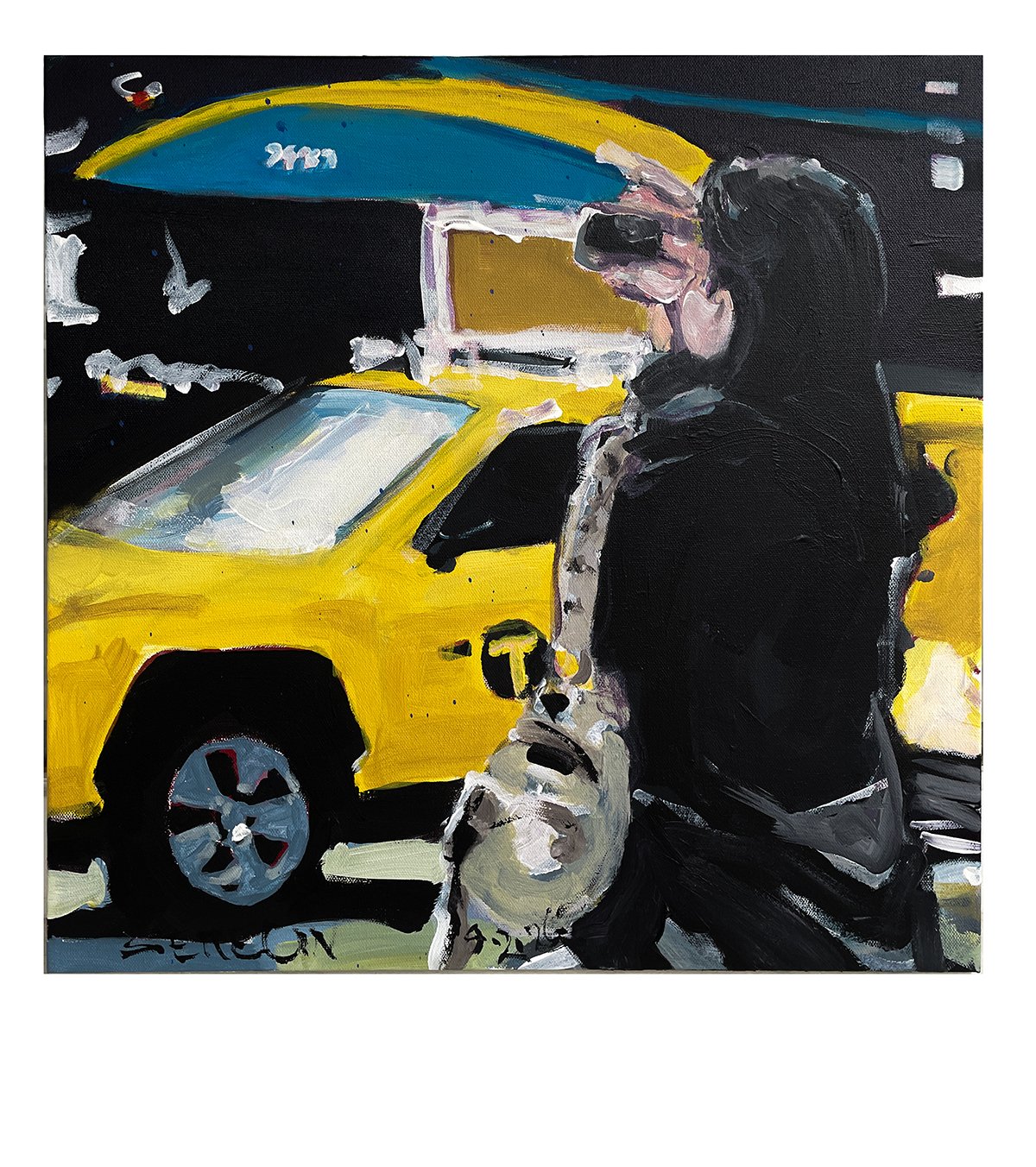
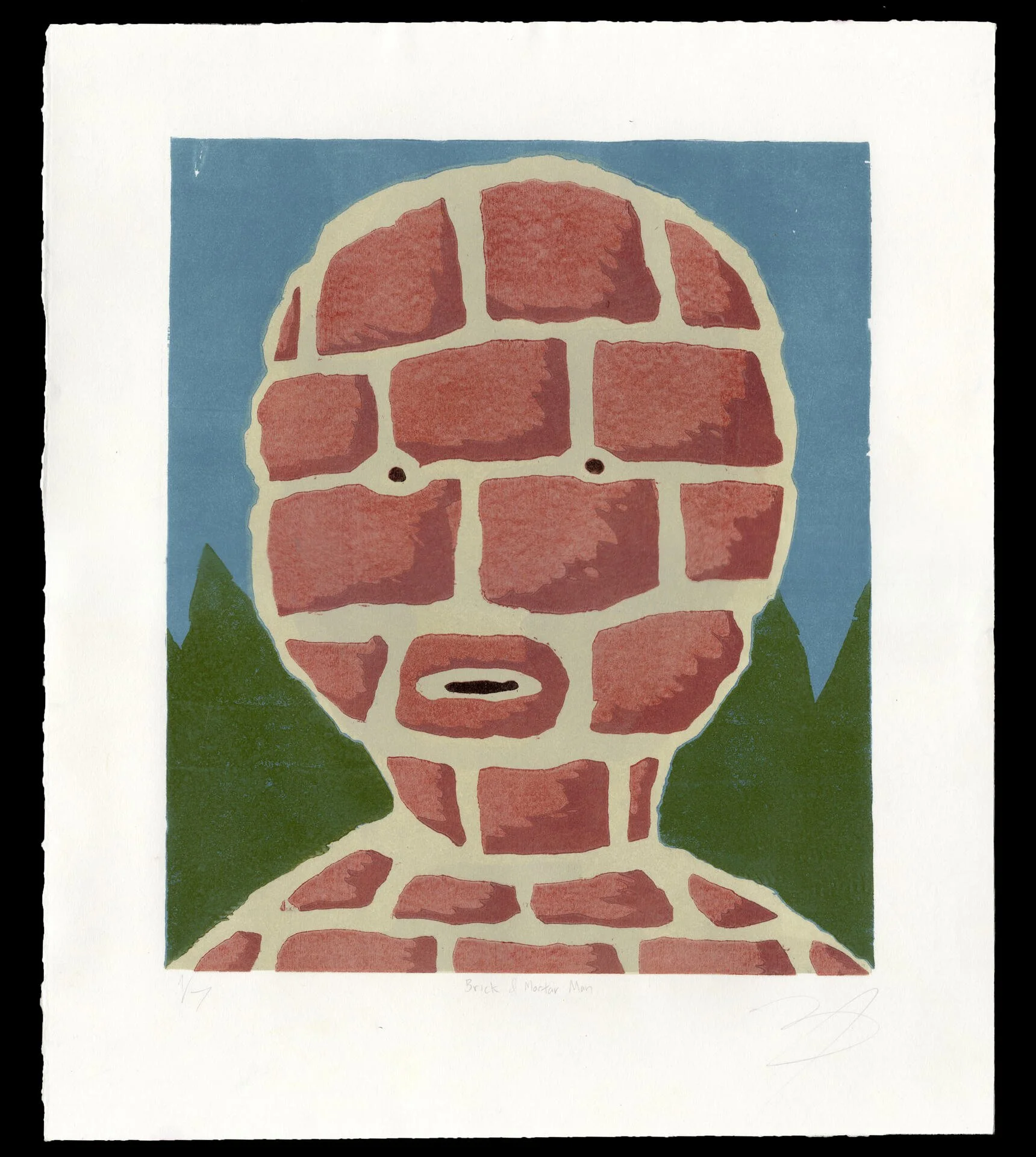
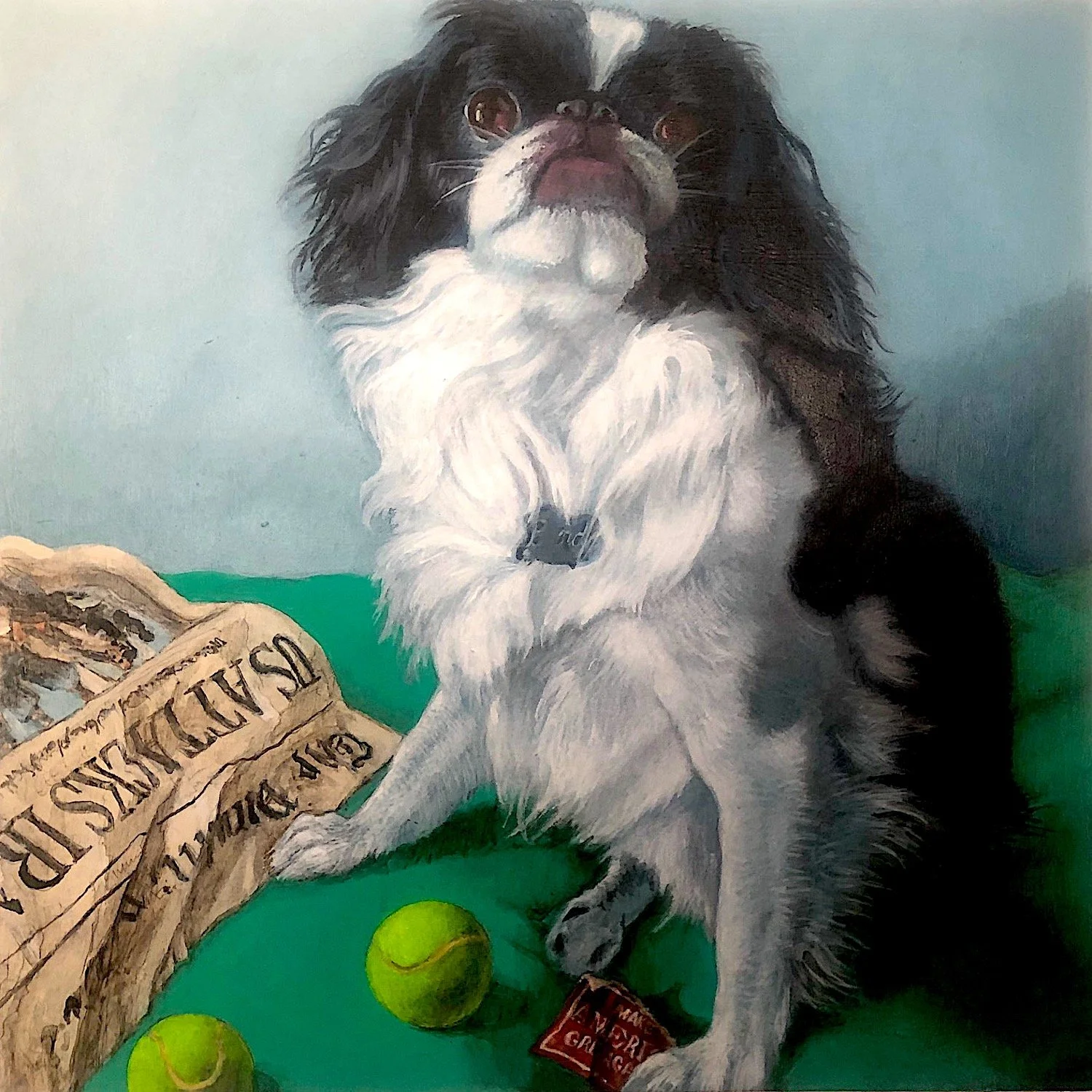
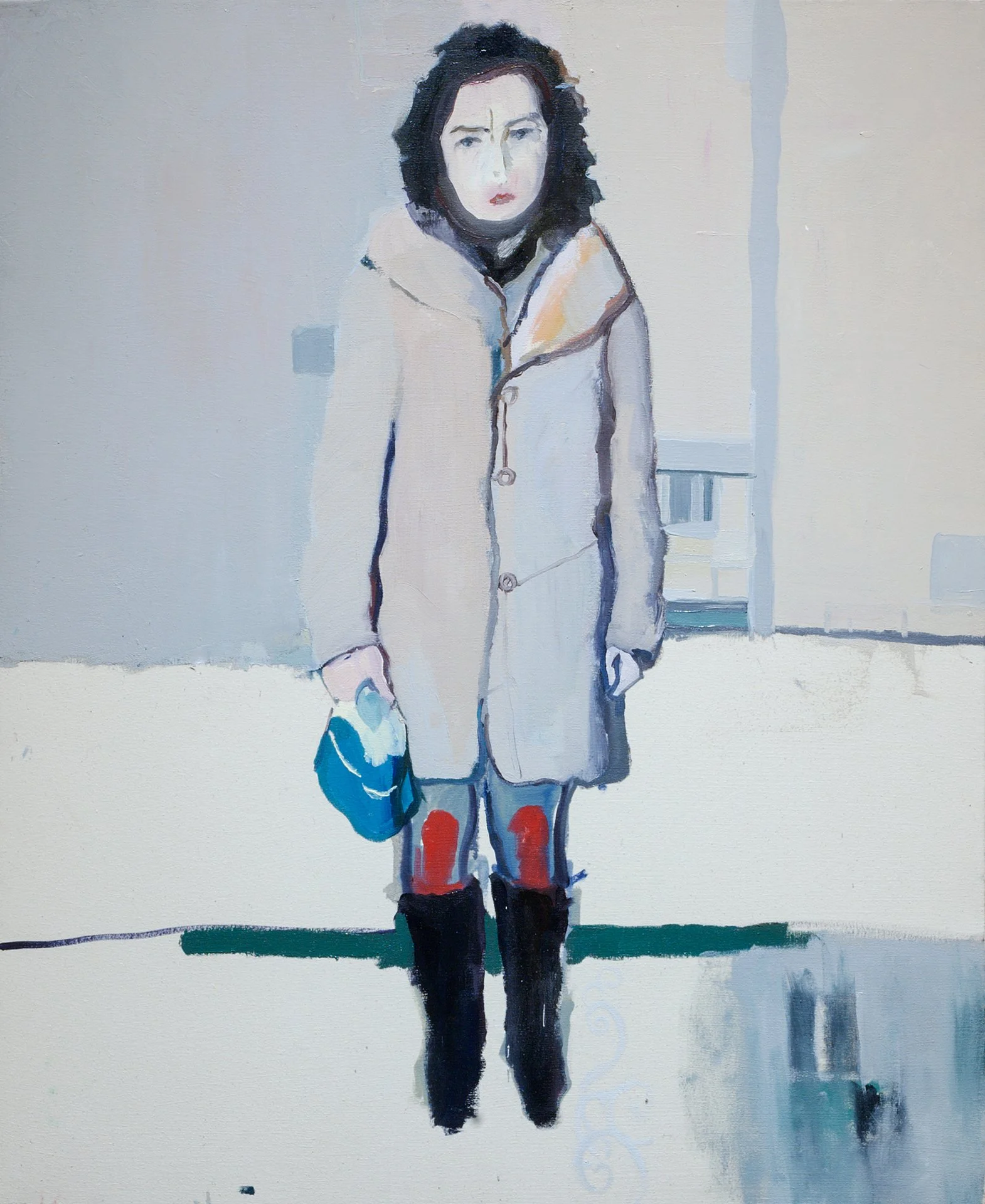
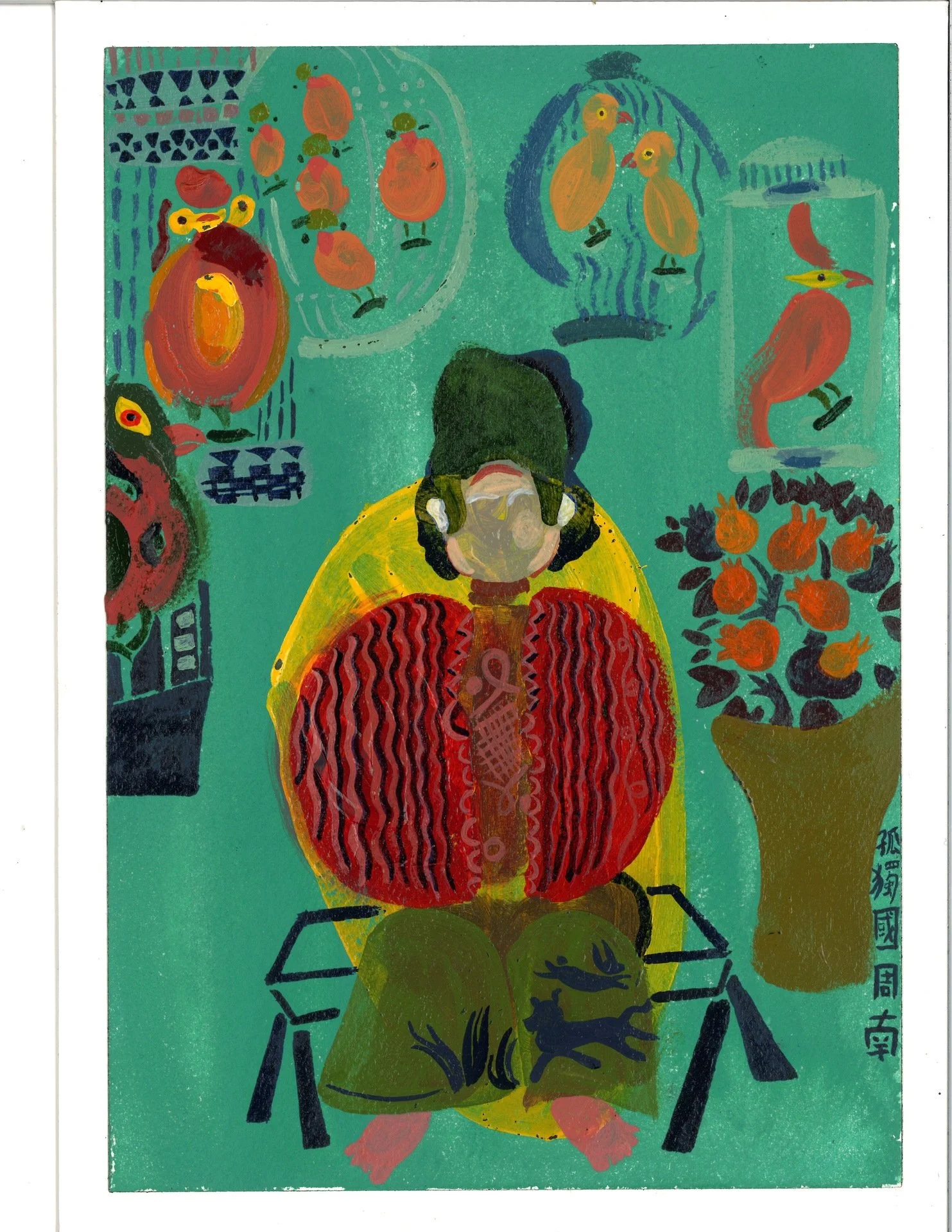
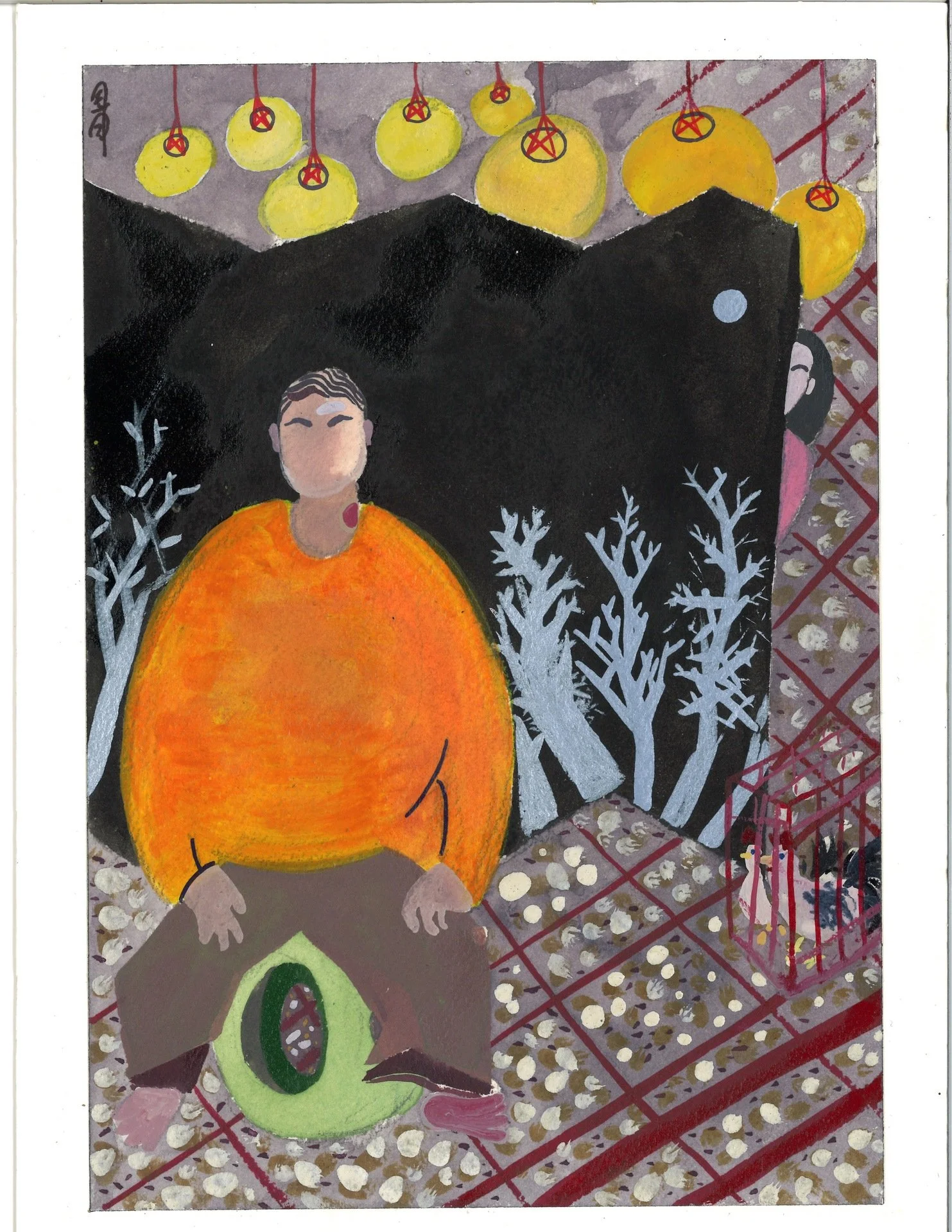
Curatorial Statement
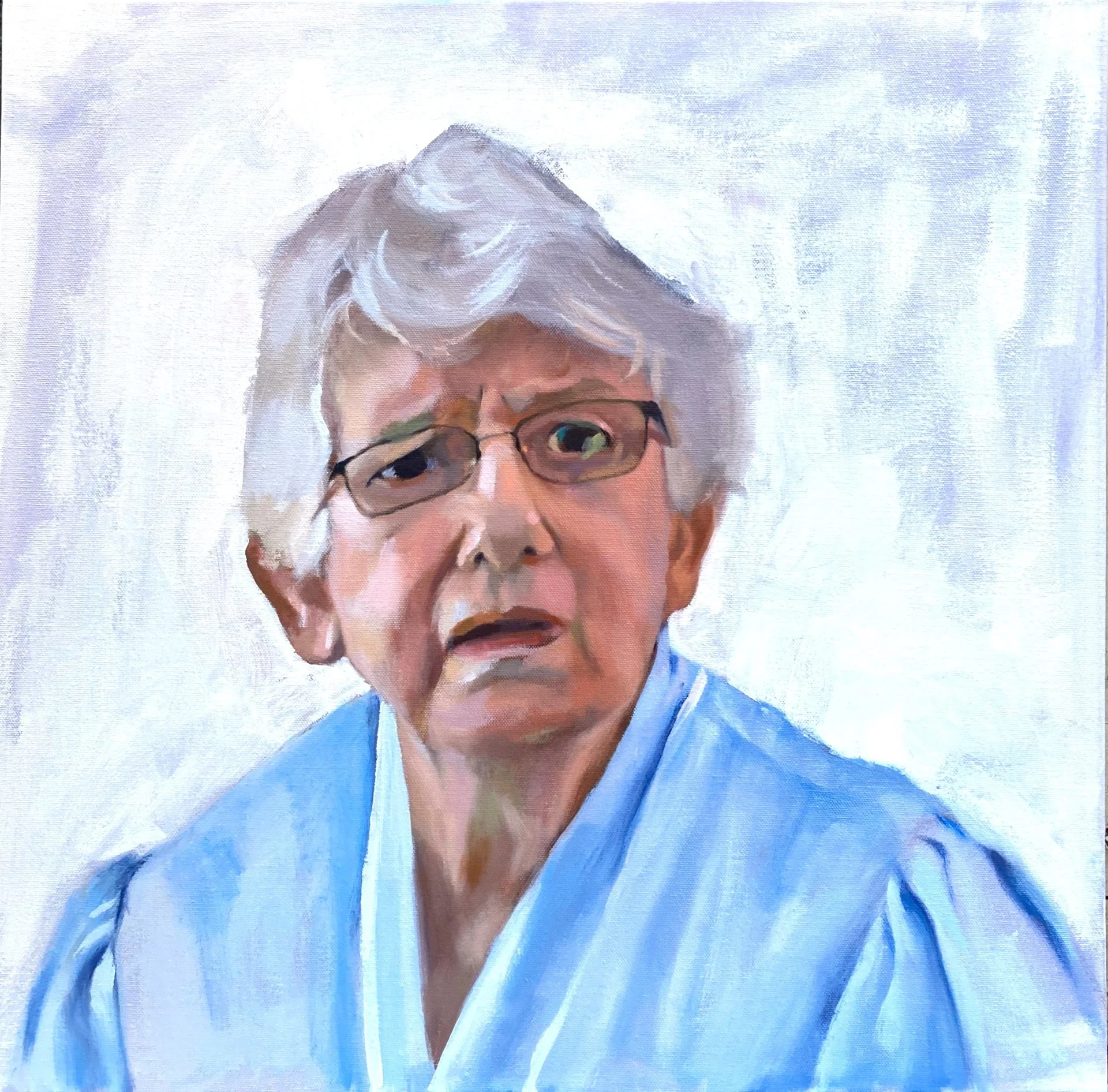
When I think of the modern portrait, I think of the shift to modernity more generally: the construction of self-determination through national revolutions, industrial progress and its invention of new forms of leisure, and the emergence of the subject as an individual rather than an anomalous member of a class, dynasty, or religious group. Prior to this epochal shift, portraiture had been a form of deification, a way of fixing gods and kings into perpetuity. In early modernity, those same techniques began to be applied to ordinary people: merchants, soldiers, artists, wives, children. At the same time, interior life was becoming newly legible. For much of human history, we had no language for consciousness as we understand it now. The internal voice with which we speak to ourselves was attributed to an angel, a demon, or God. With modernity came an understanding of self-referentiality, and with that an aesthetics guided by internal principles.
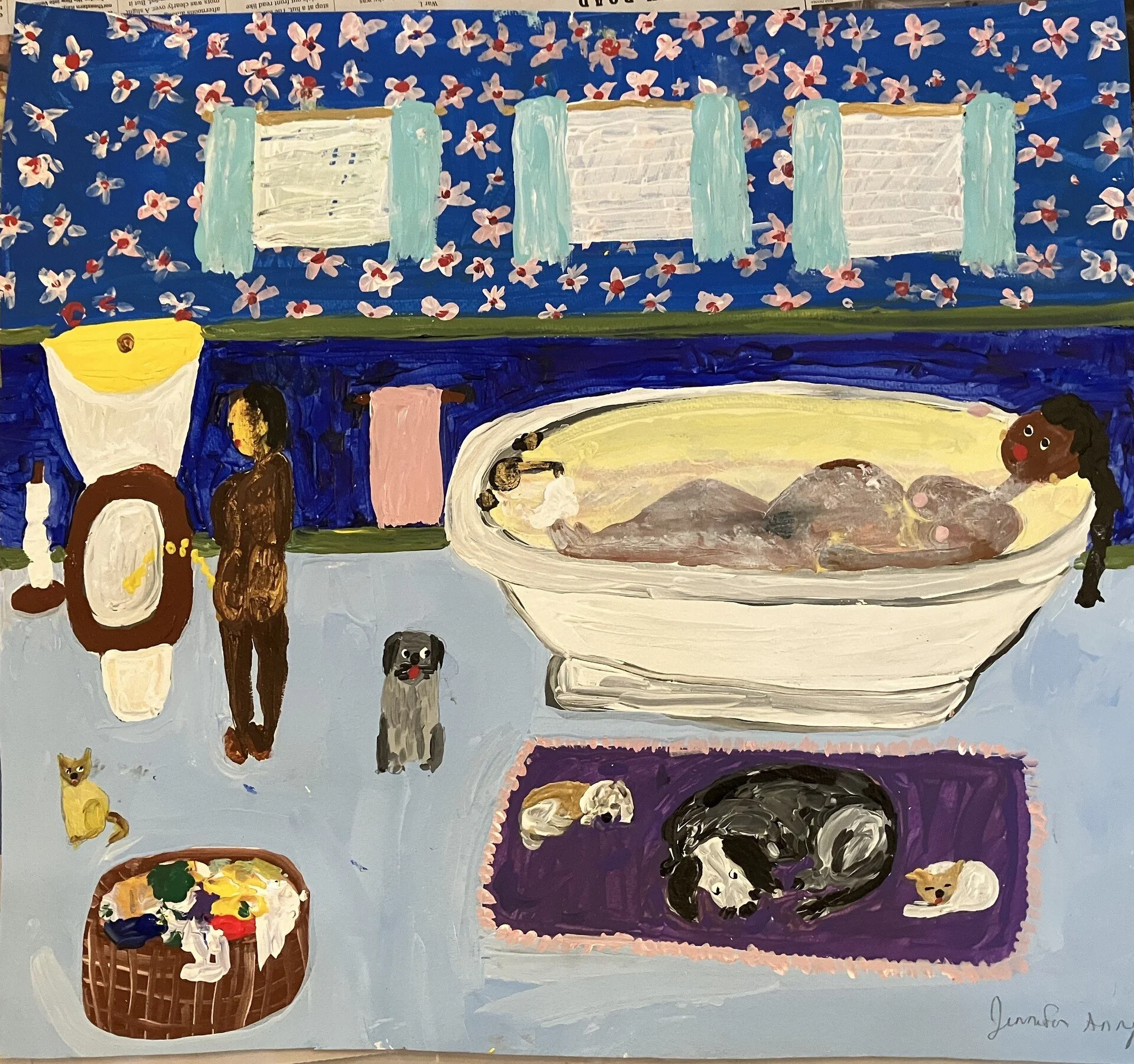
If pressed to think of the first modern portrait, a thought exercise I attempted when I learned of this exhibition’s thematic framing, I’d suggest David’s The Death of Marat. Drawing on his bellicose classical training in Paris and studies of the Renaissance masters, in his famed portrait David turns the French revolutionary into a modern saint: Marat arranged in his bath like a pietà, his body christened in a warm amber light. The modern portrait is characterized as much by its subject as by the individualized painter, and their own subjectivity. This duplicity invites an array of new aesthetic techniques.
About the Juror
Theadora Walsh is an art critic and poet living in New York. Work has appeared in e-flux, Frieze, The Los Angeles Review of Books, ArtReview, BOMB Magazine, KQED Arts, and elsewhere. She is the author of The Almond (1080 Press) and currently works as Writer and Editor at SculptureCenter, in Queens.
Purchase Inquiries
All works are available for purchase unless marked NFS (not for sale). For purchase inquiries, please contact the gallery.
Wall 1: Family Portrait
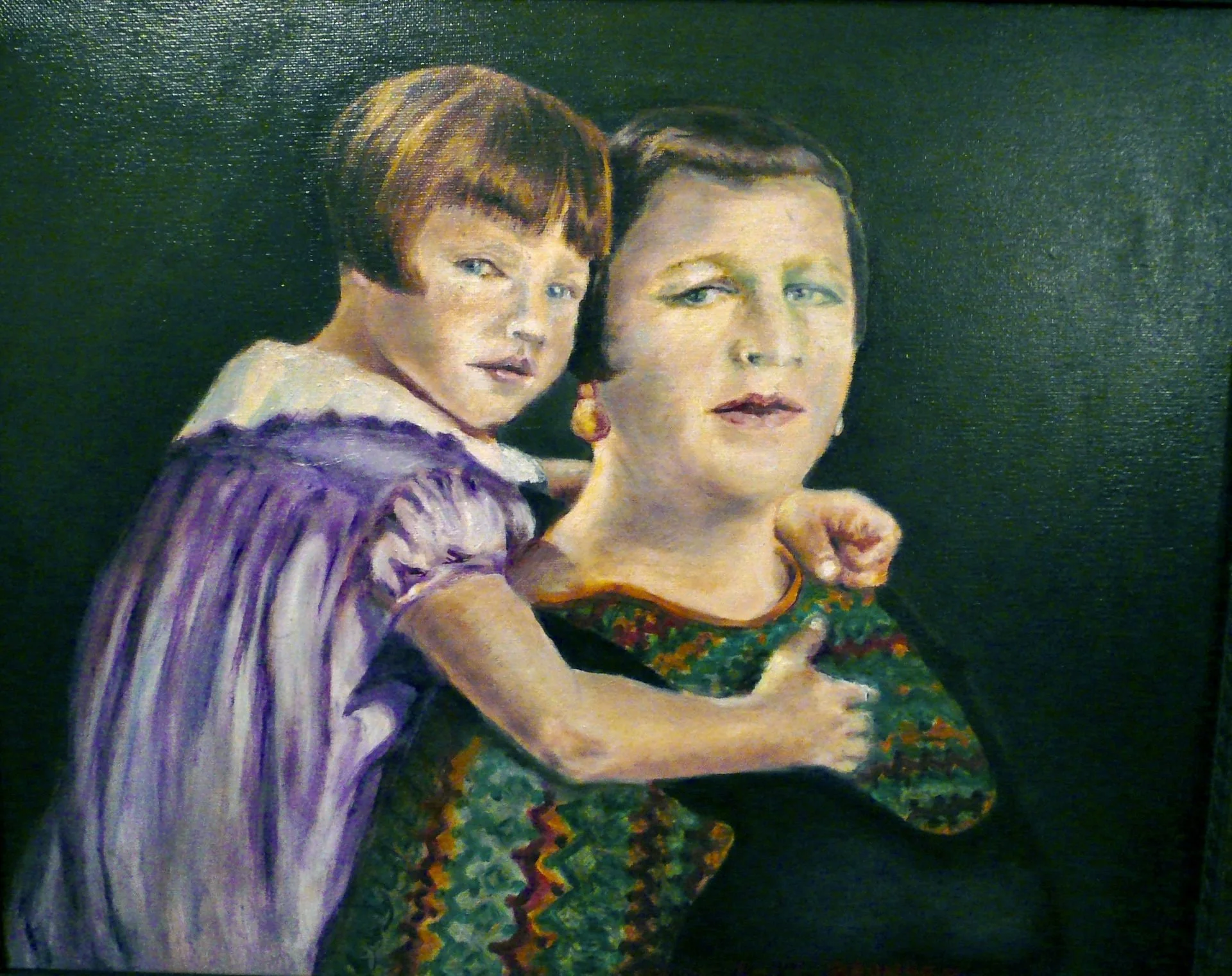
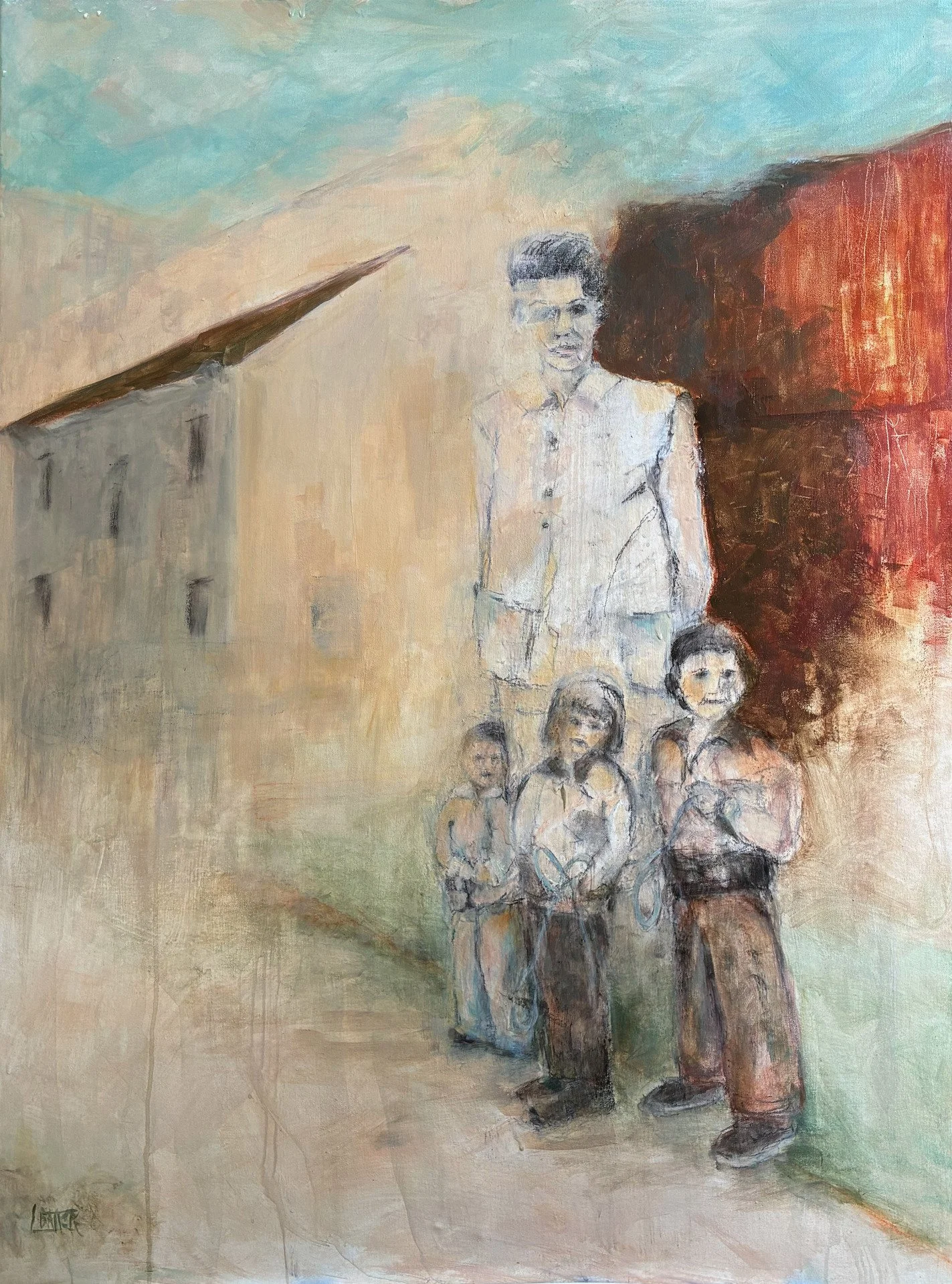
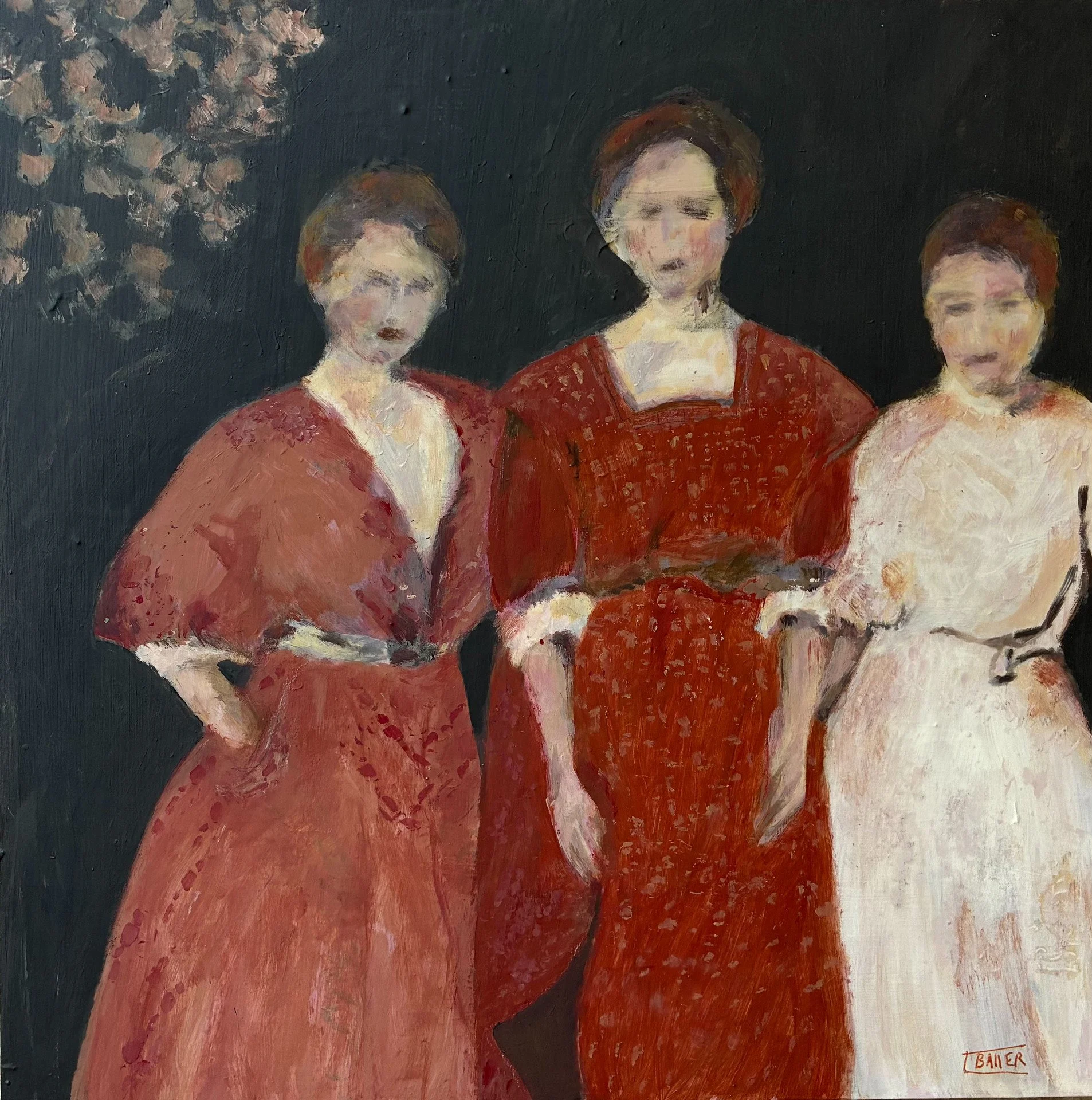
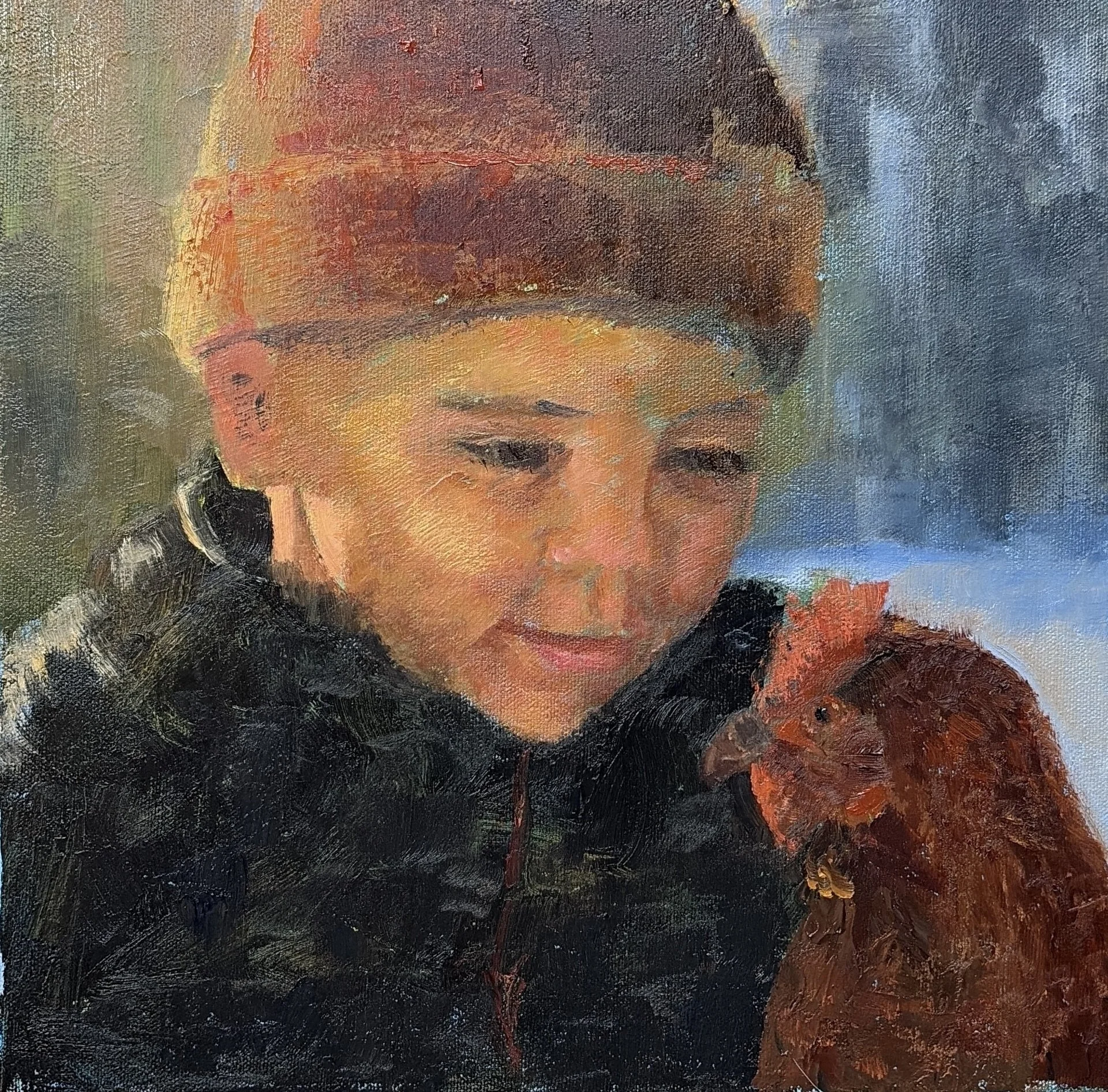
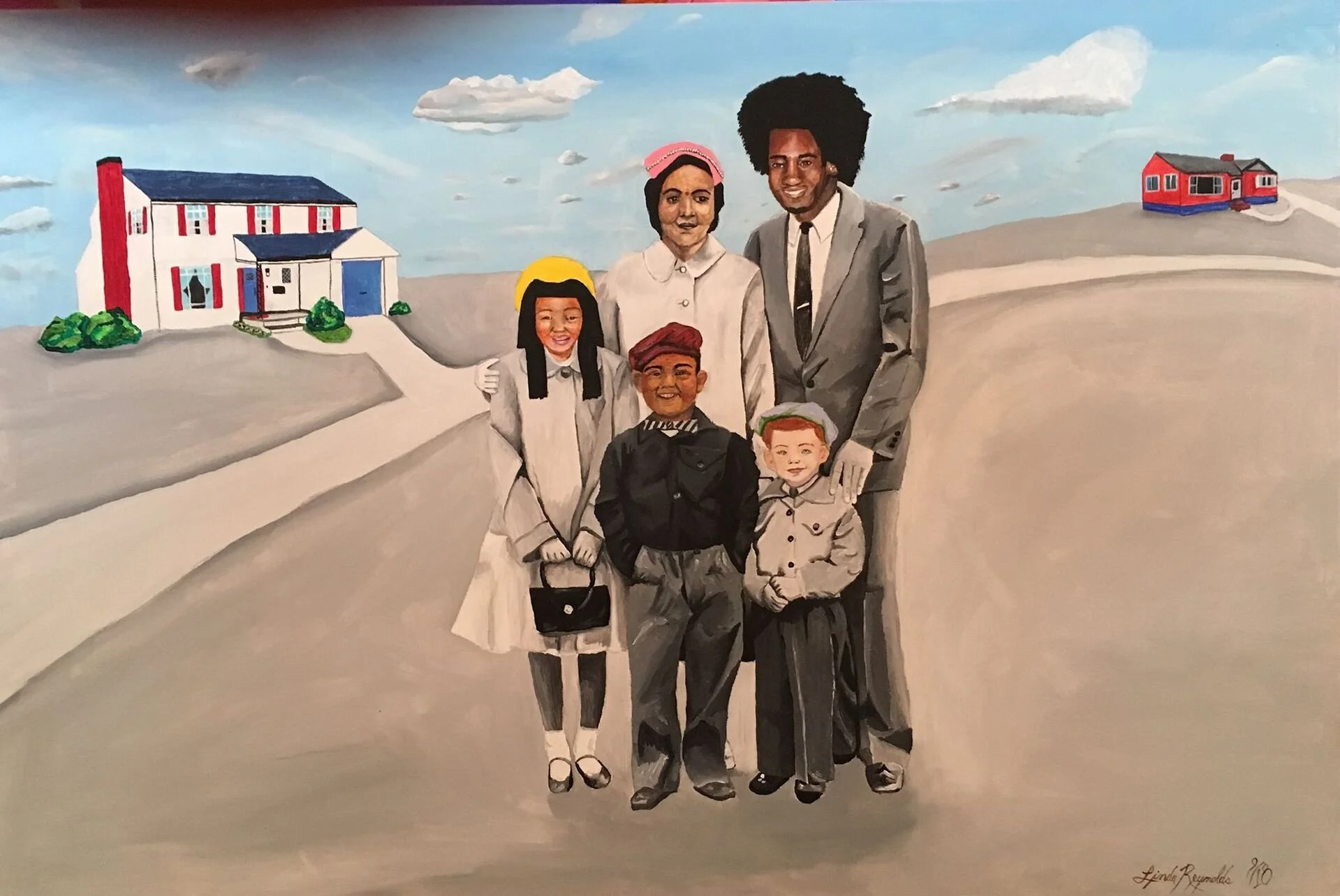
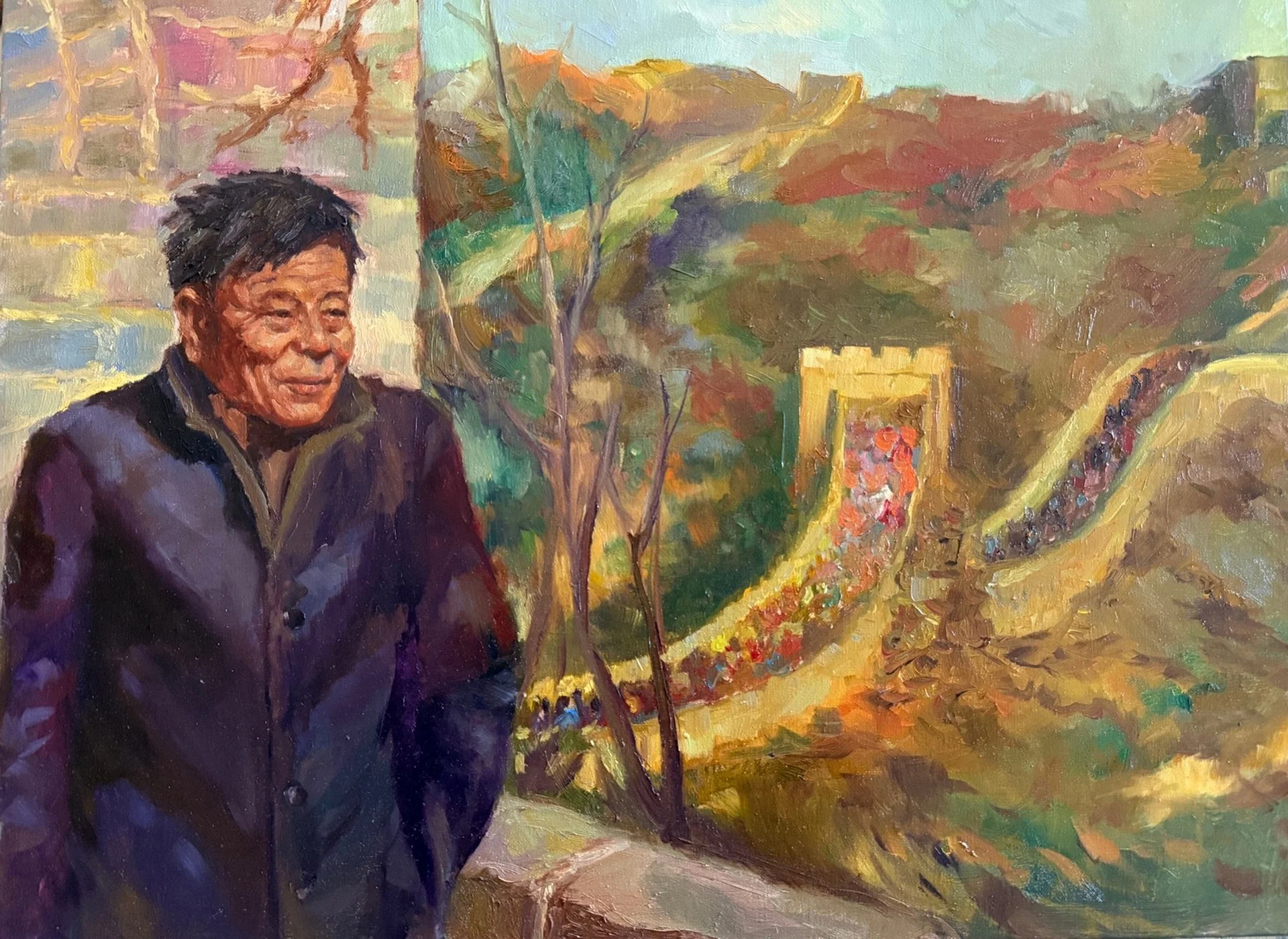
Through portraits of mothers, the staging of family genealogies, or tender moments as Kate Emery titles her portrait of a young boy holding a chicken, intimate relationships are stilled by the brush. In family portraits we see a kind of emotional projection; the feeling one has towards the subject painted is as much on display as the person themselves. Alice Neel, who often painted her sons, had a strange way of rendering a likeness onto everyone she depicted, as if the way she looked at someone, her careful attention, was what she was somehow capturing.
Adele Soll Aronson
Laurie Batter
Alexandra Bloch
Kate Emery
Elena Makarov
Linda Reynolds
Kate Swayze
Wall 2: The Female Subject
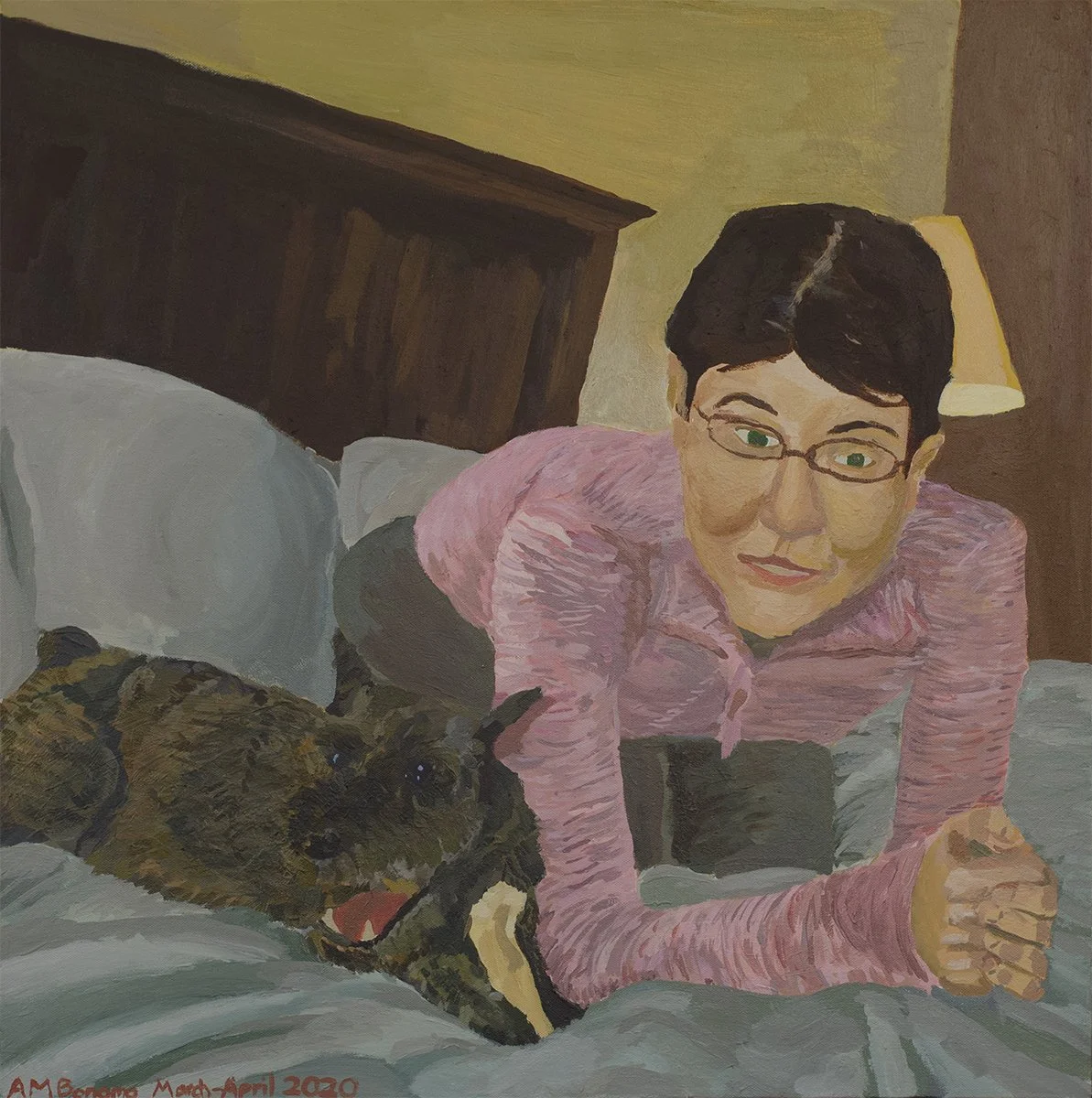
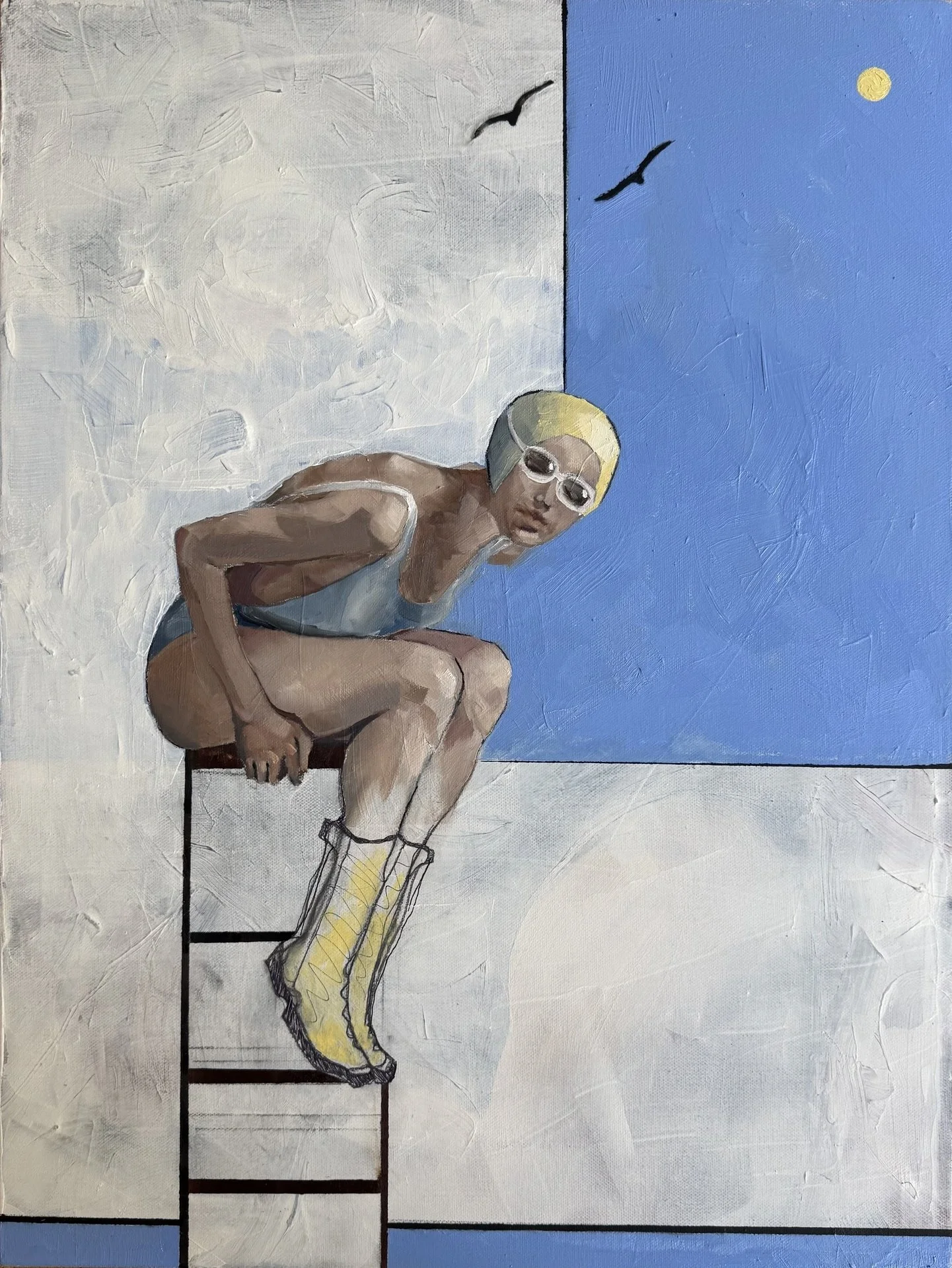
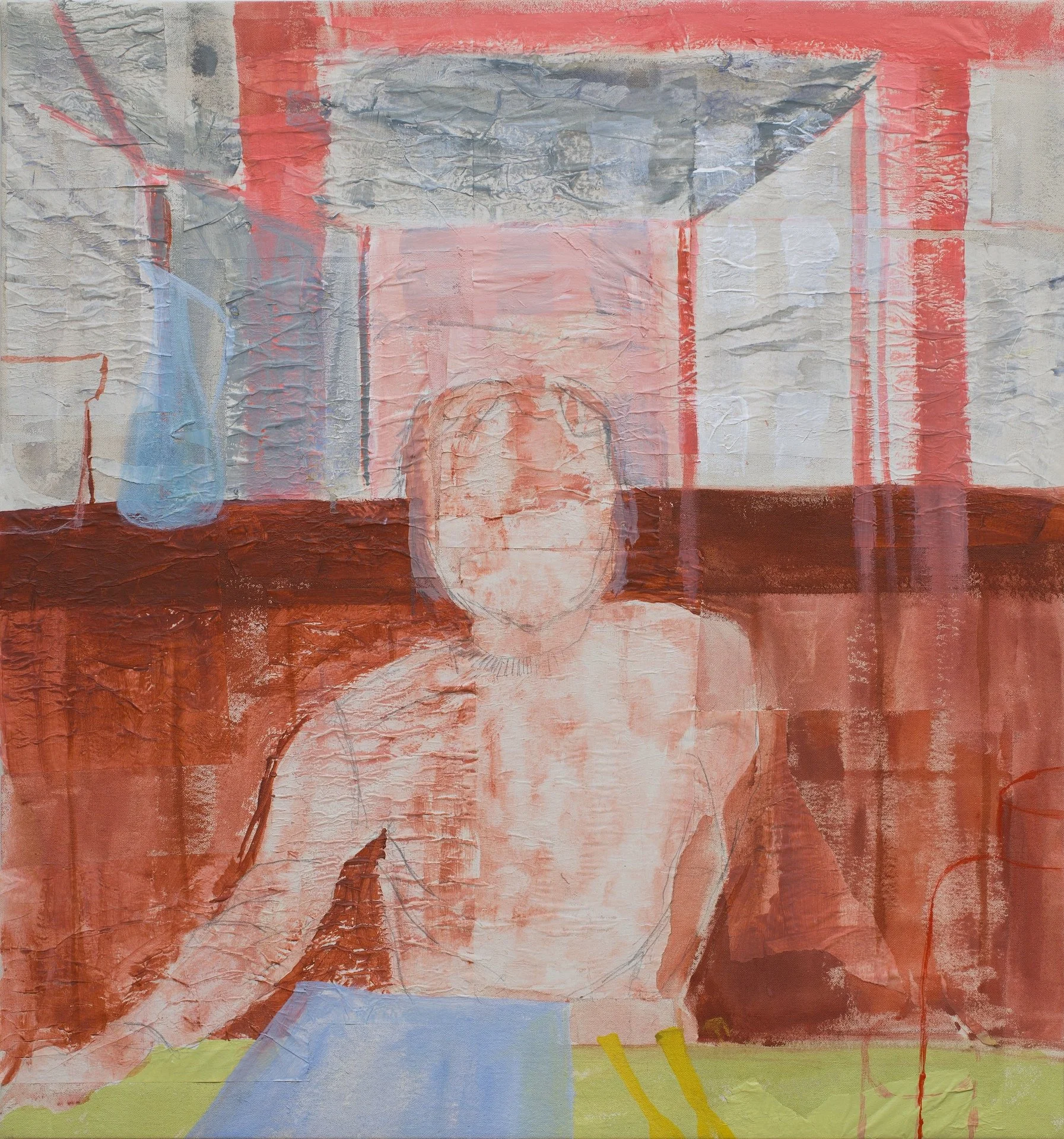
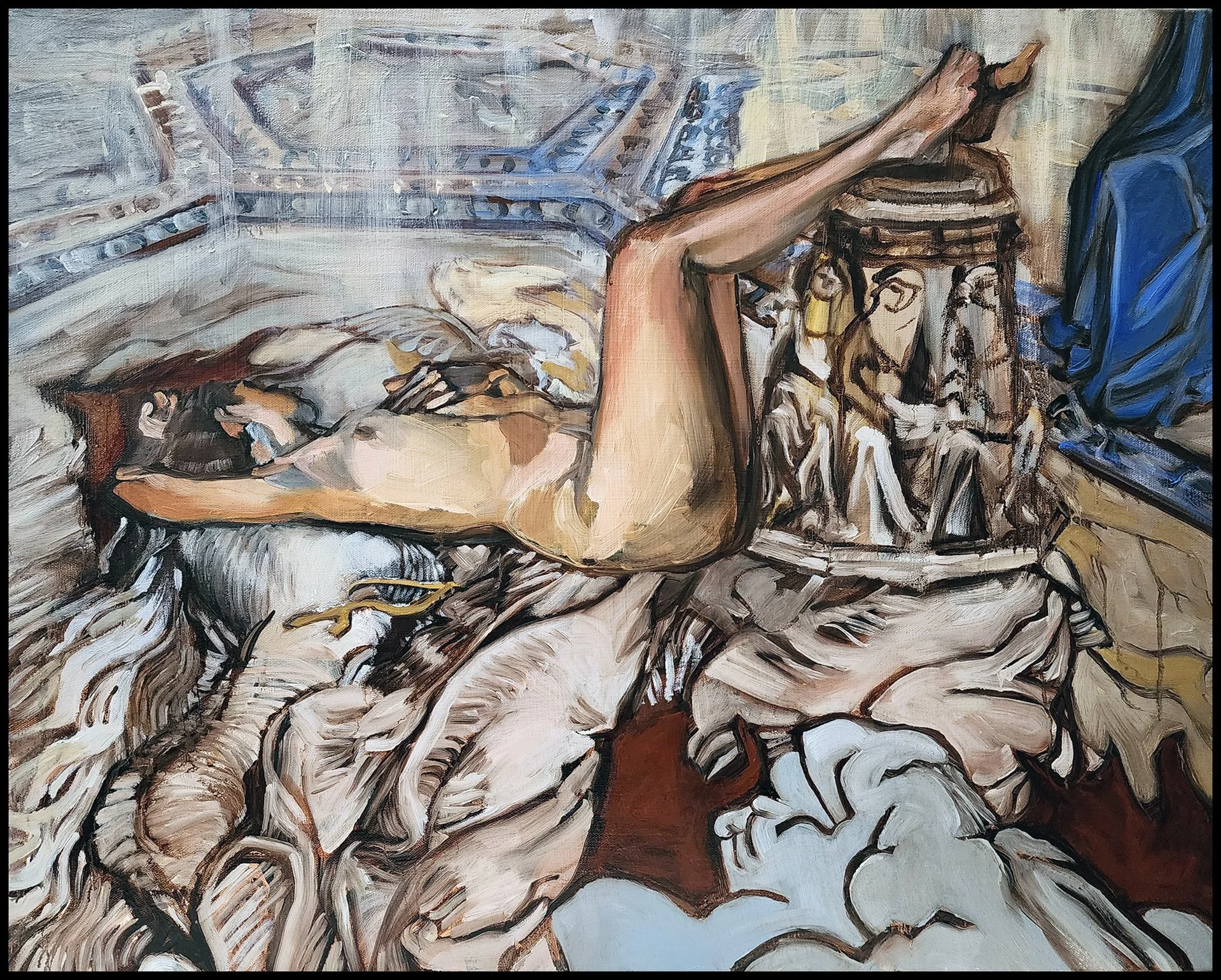
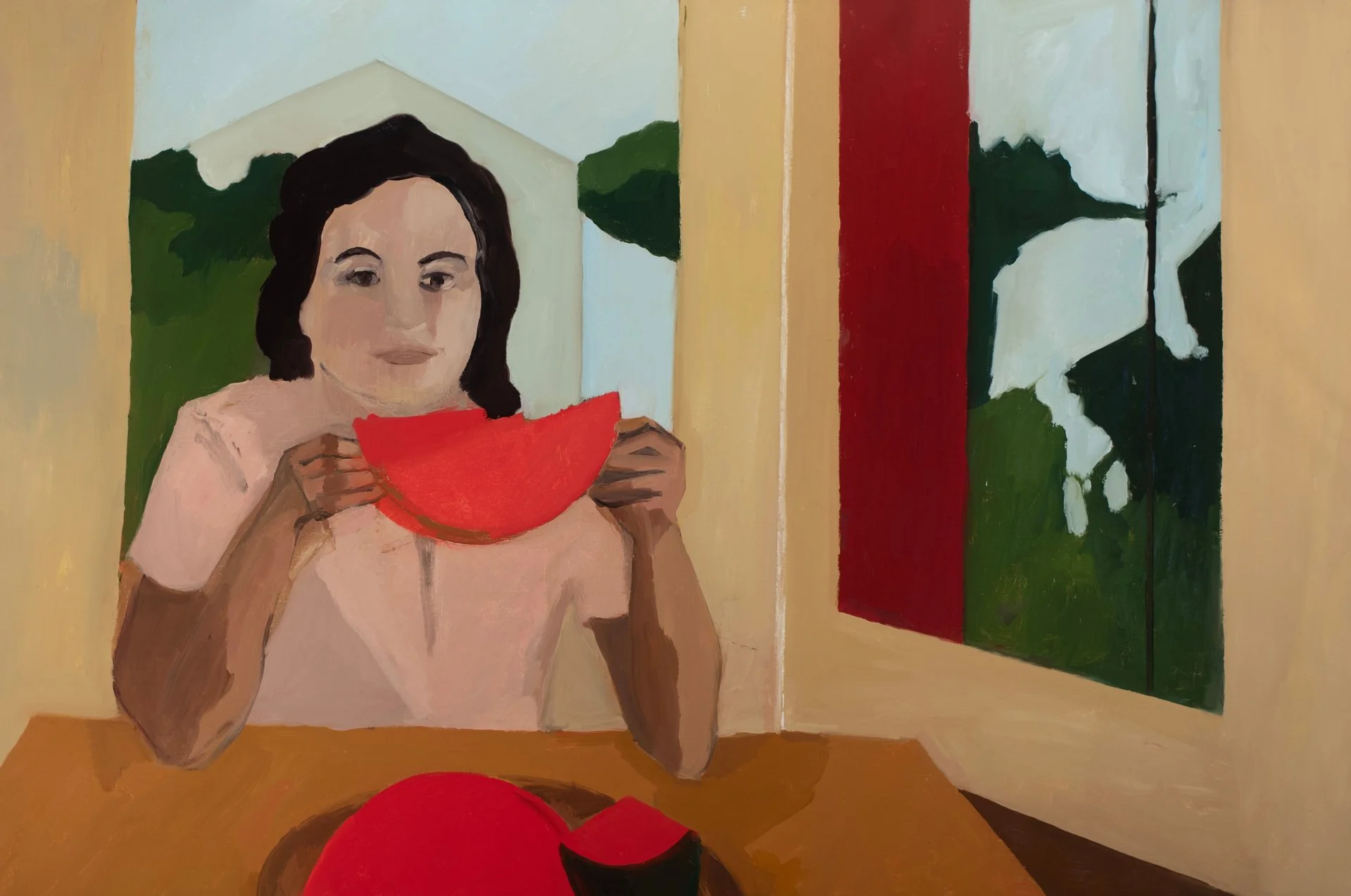
The first nude self-portrait was attributed to Paula Modersohn-Becker, who painted herself six months pregnant in an overtly naive style. Borrowing the framing of classical portraits of female nudes, she positioned her naked body in a meadow, dangling a yellow flower limply by her cheek with one hand, while the other cradled her swollen stomach. Only, she uses a thick brush stroke, a materialist style that would soon be deemed “degenerate,” and betrayed a radicalism. The works in this section update classical female portraiture, casting them as social realist like protagonists in Fiorenza Gorini’s Helpful Yellow Boots, or in private, natural postures not meant for an exterior gaze like in Alexandra Bonomo’s Self Portrait with Schnauzer.
Alexandra Bonomo
Rita Börlin
Julie Fox
Kim Frances
Fiorenza Gorini
Yuliya Kuzina
Donna Powers
Max Perman
Wall 3: Domestic Spaces
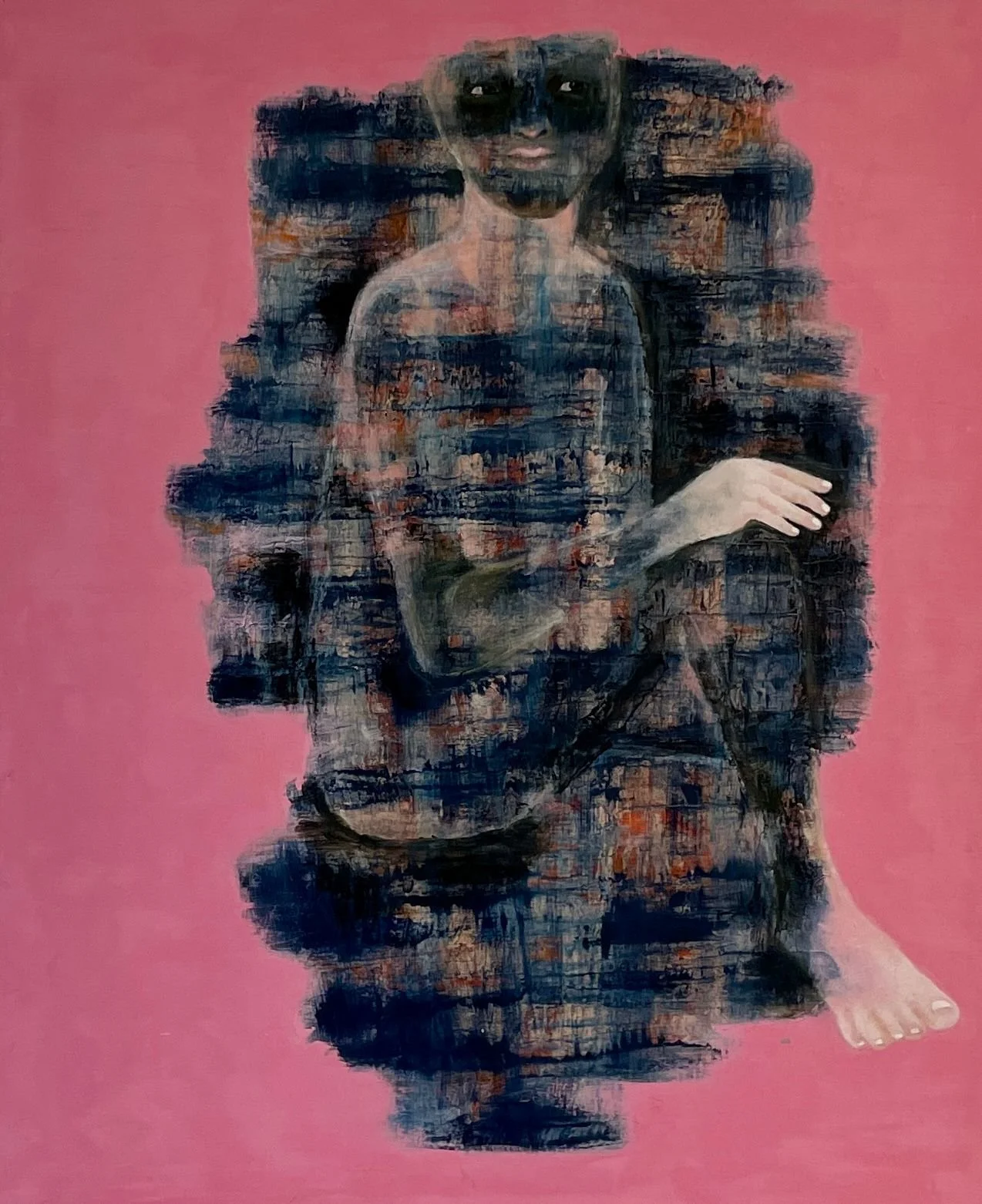
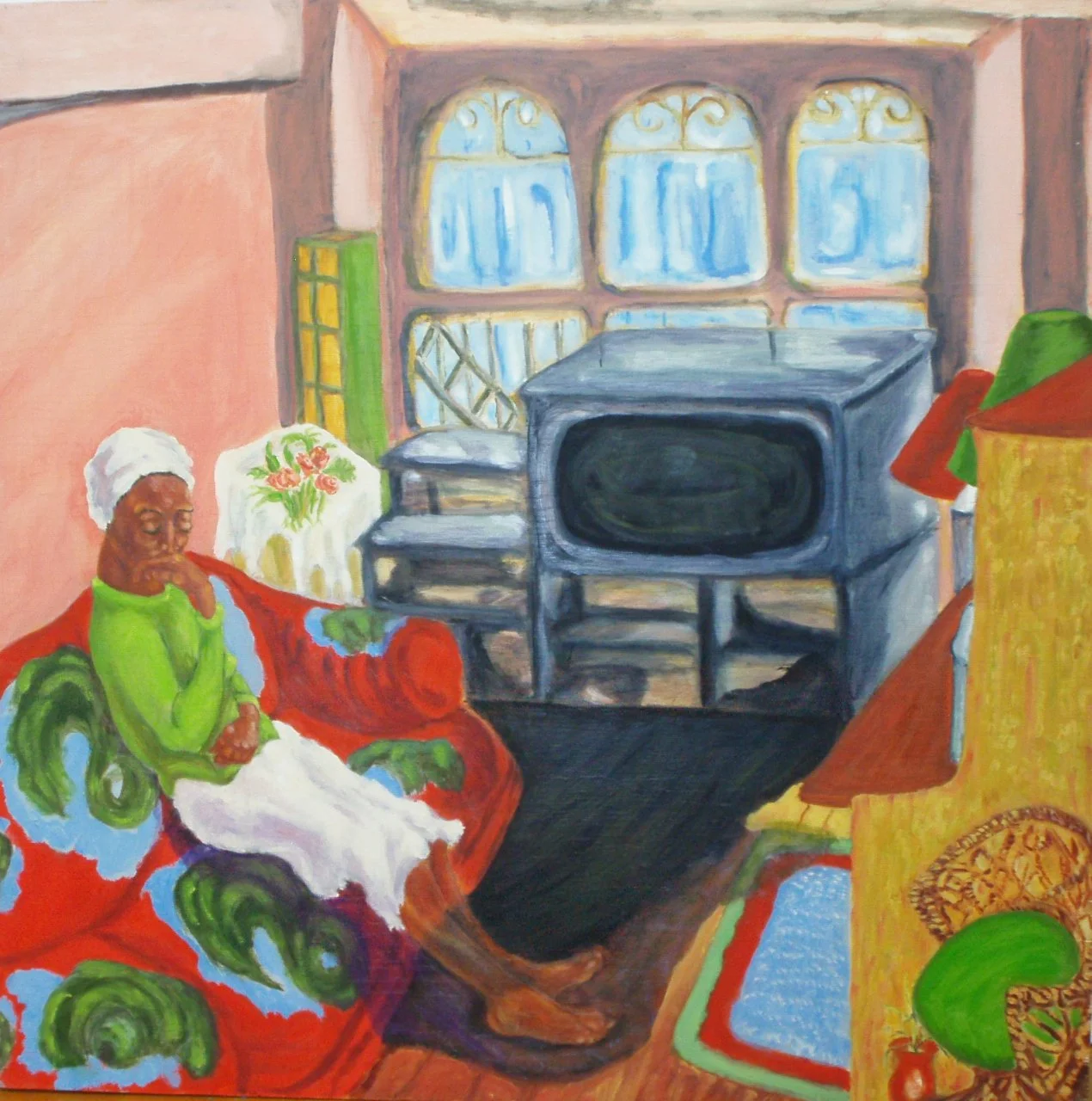
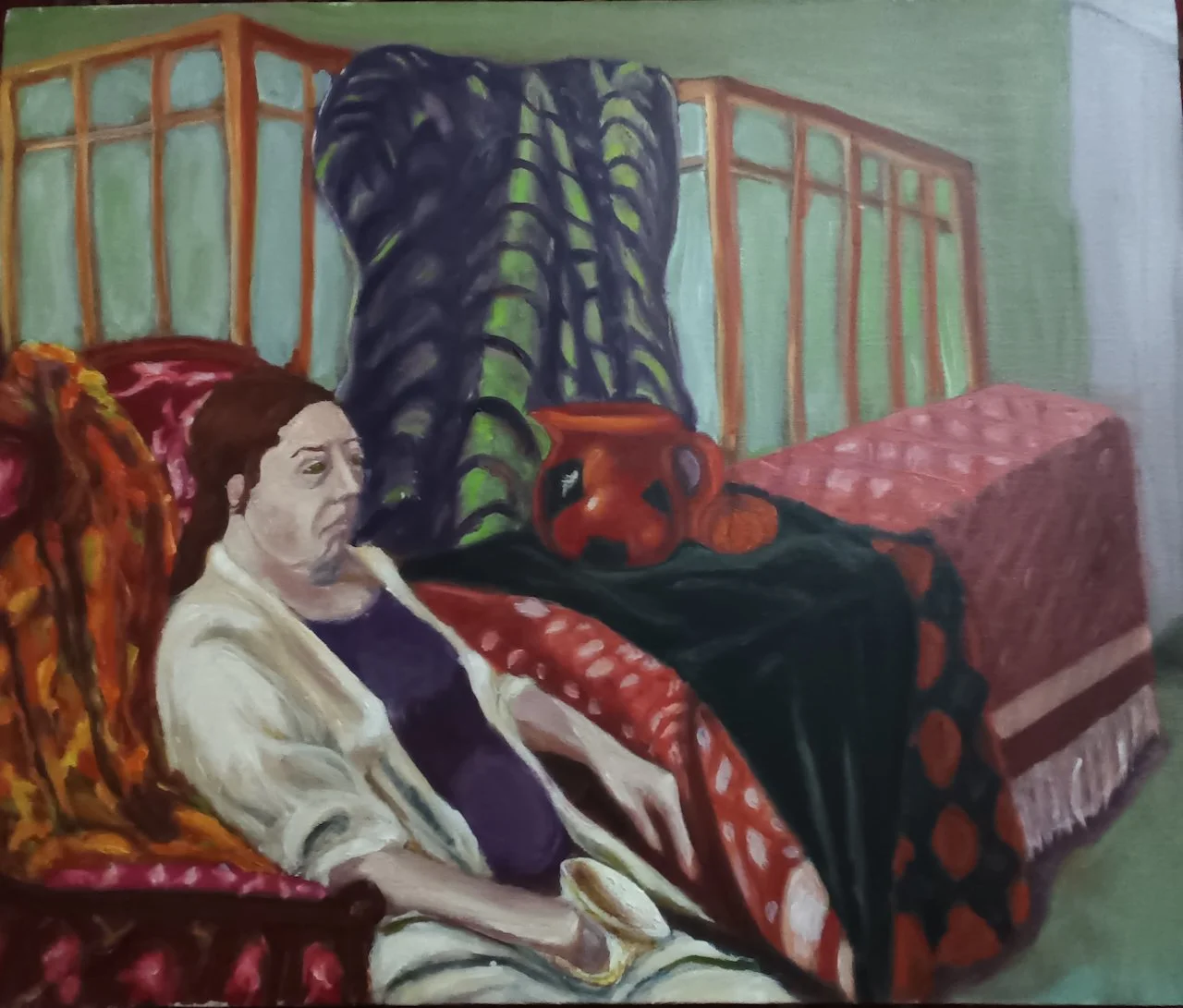
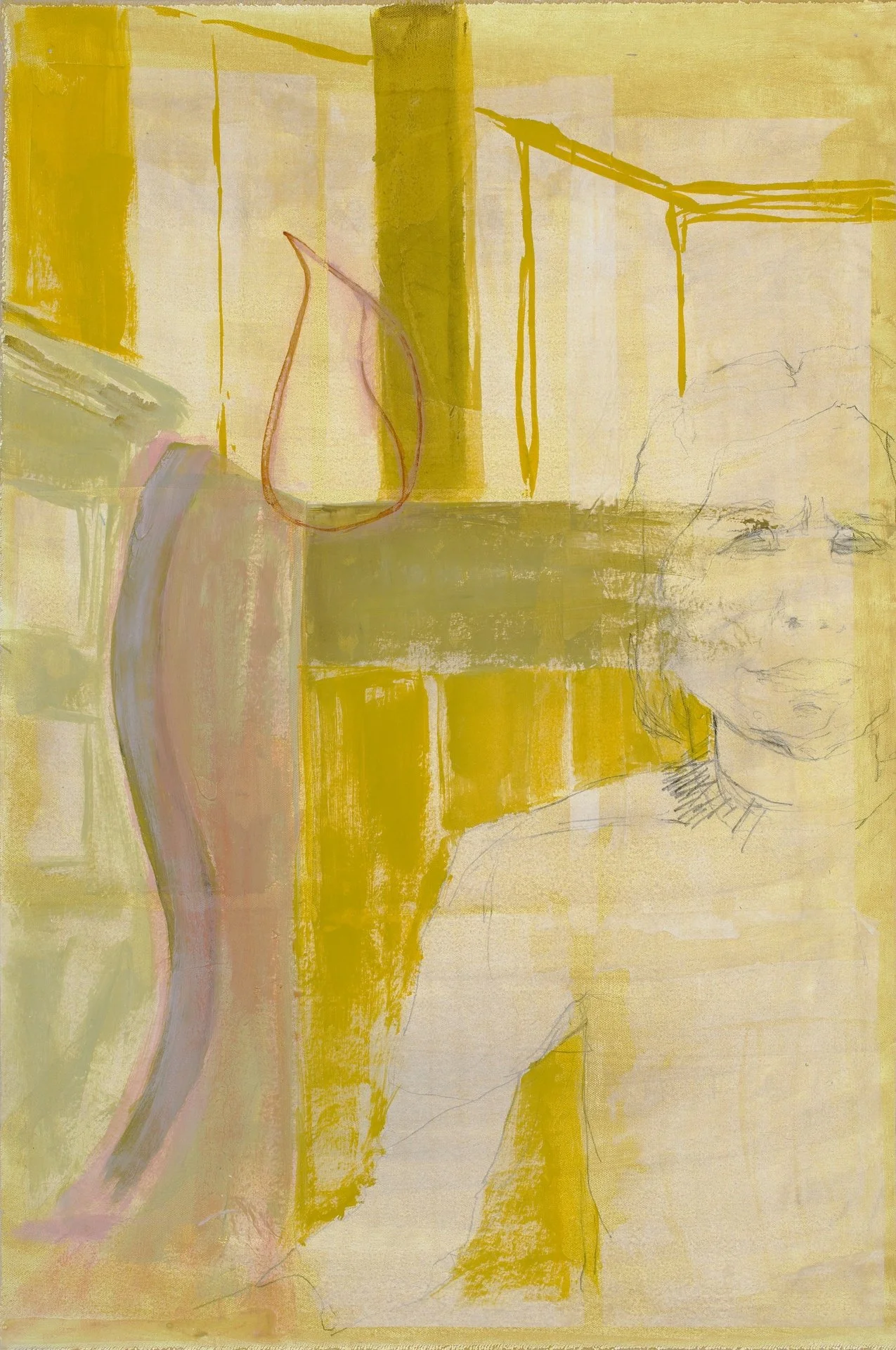
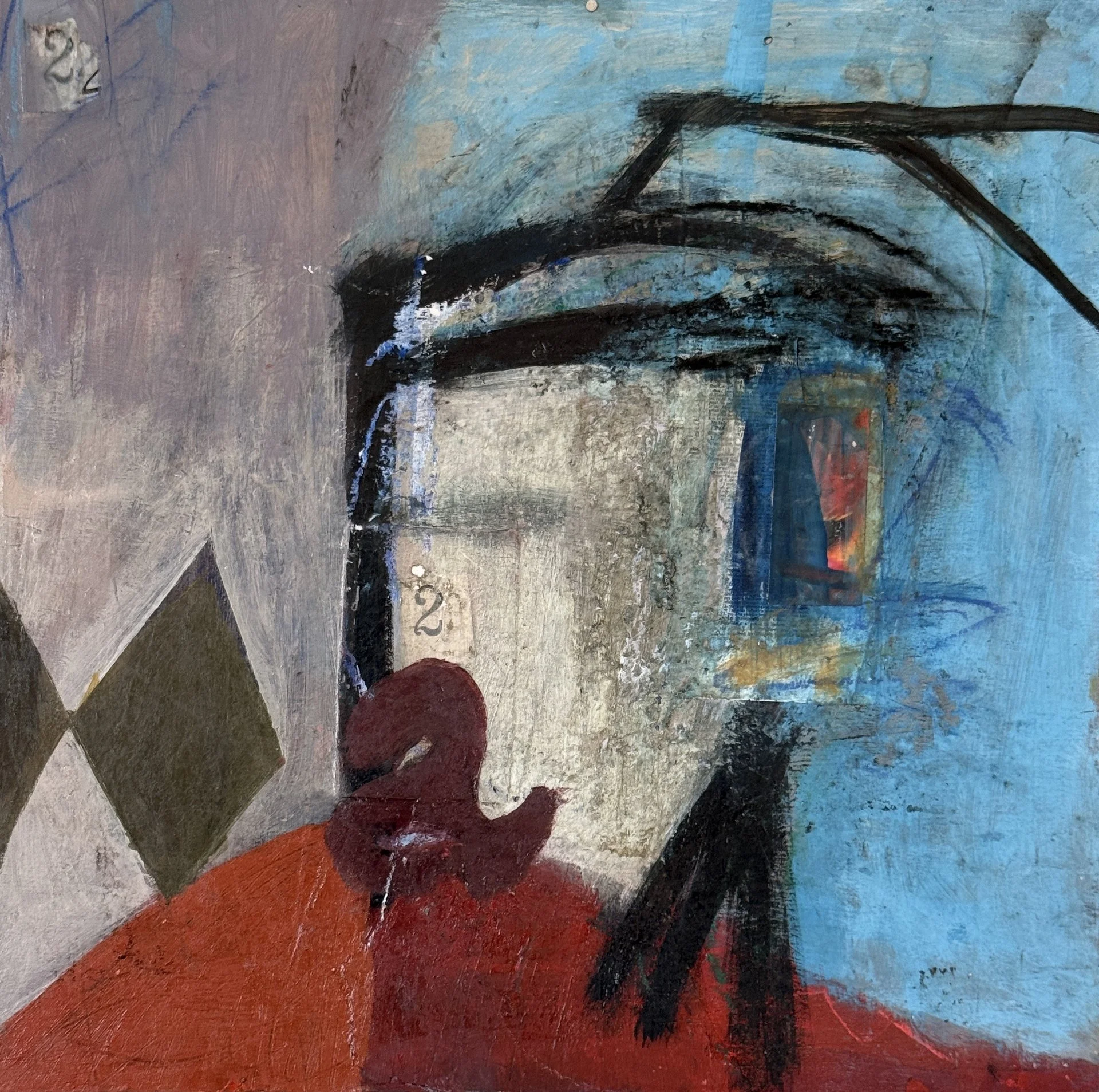
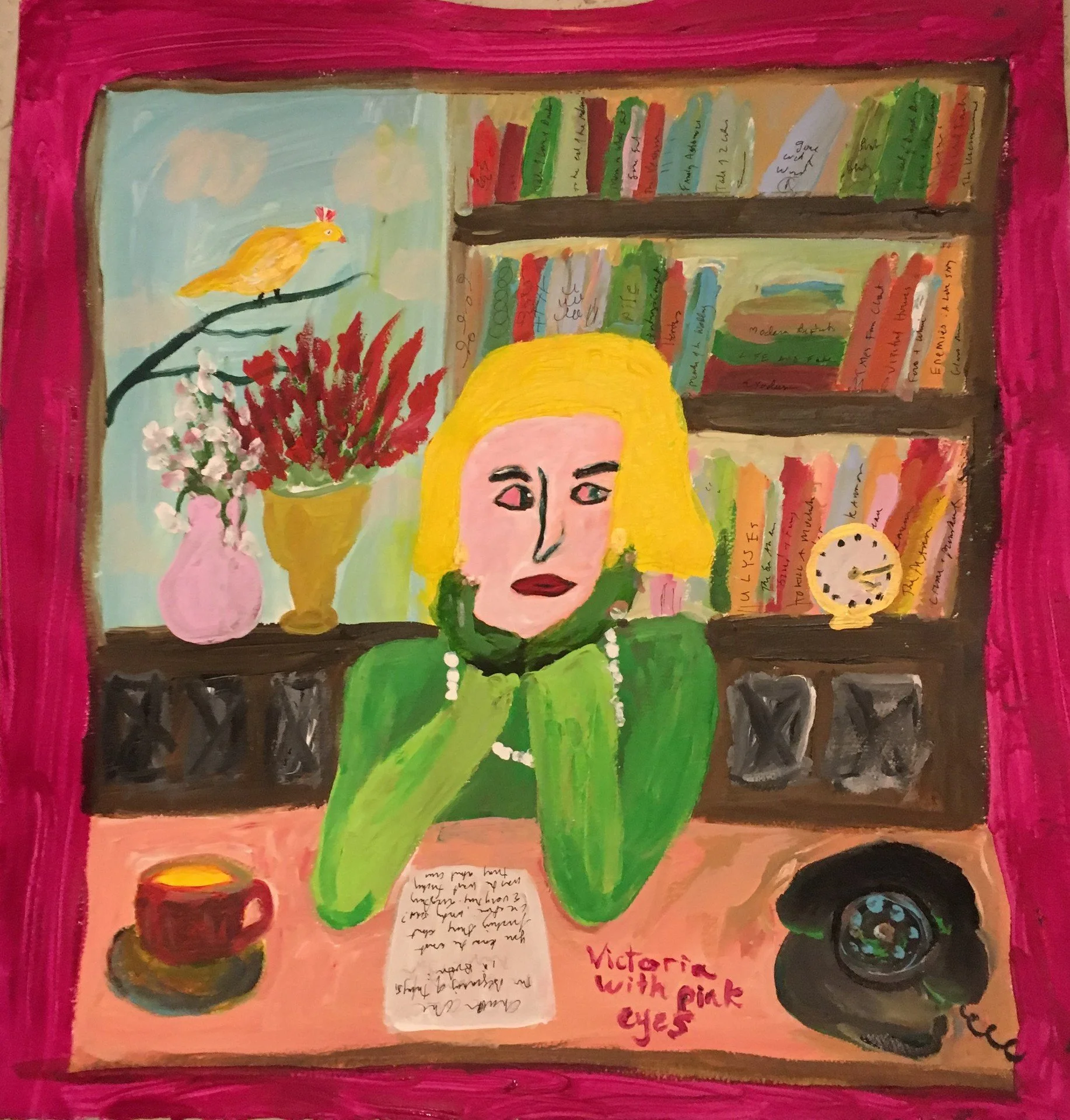
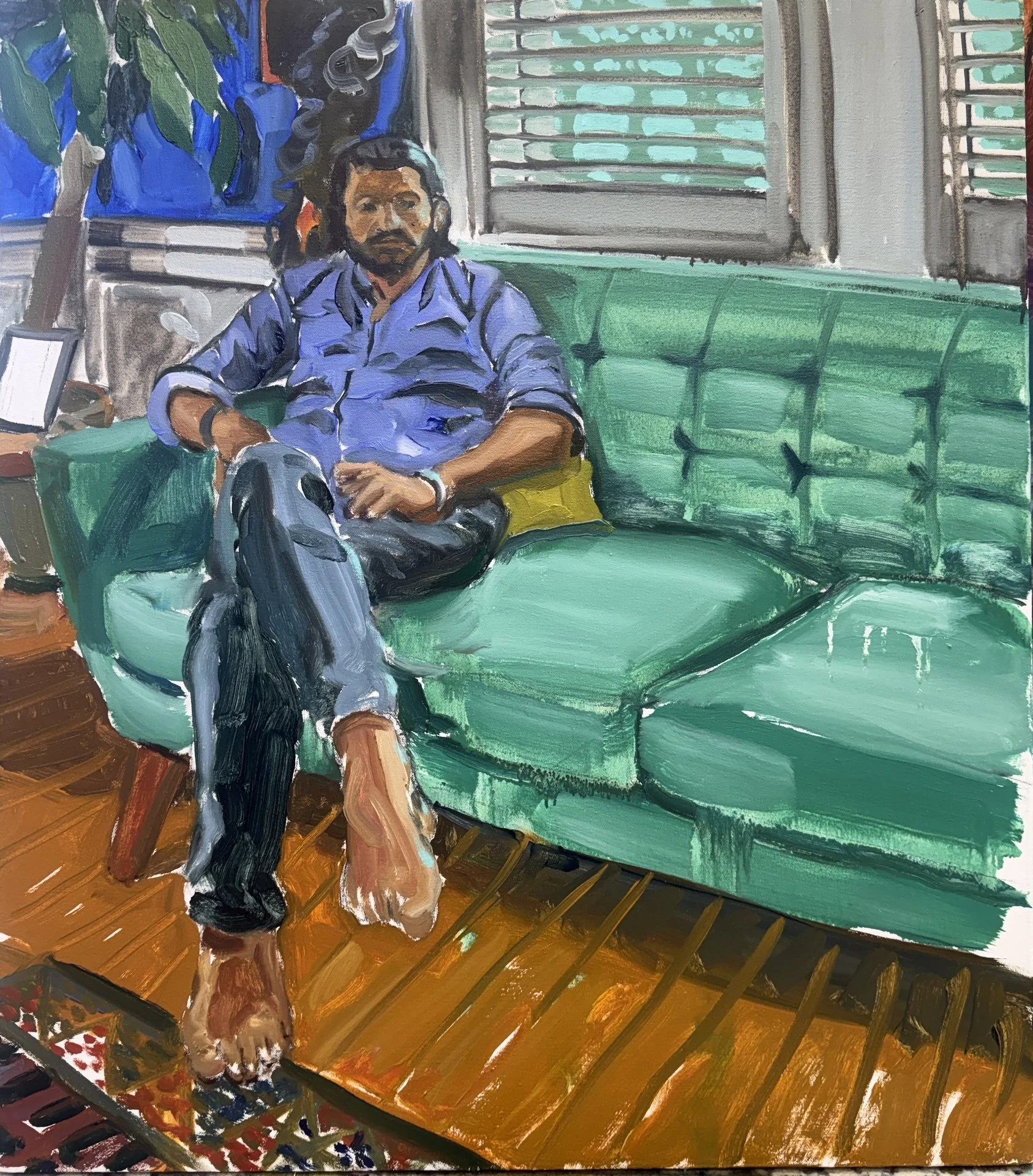
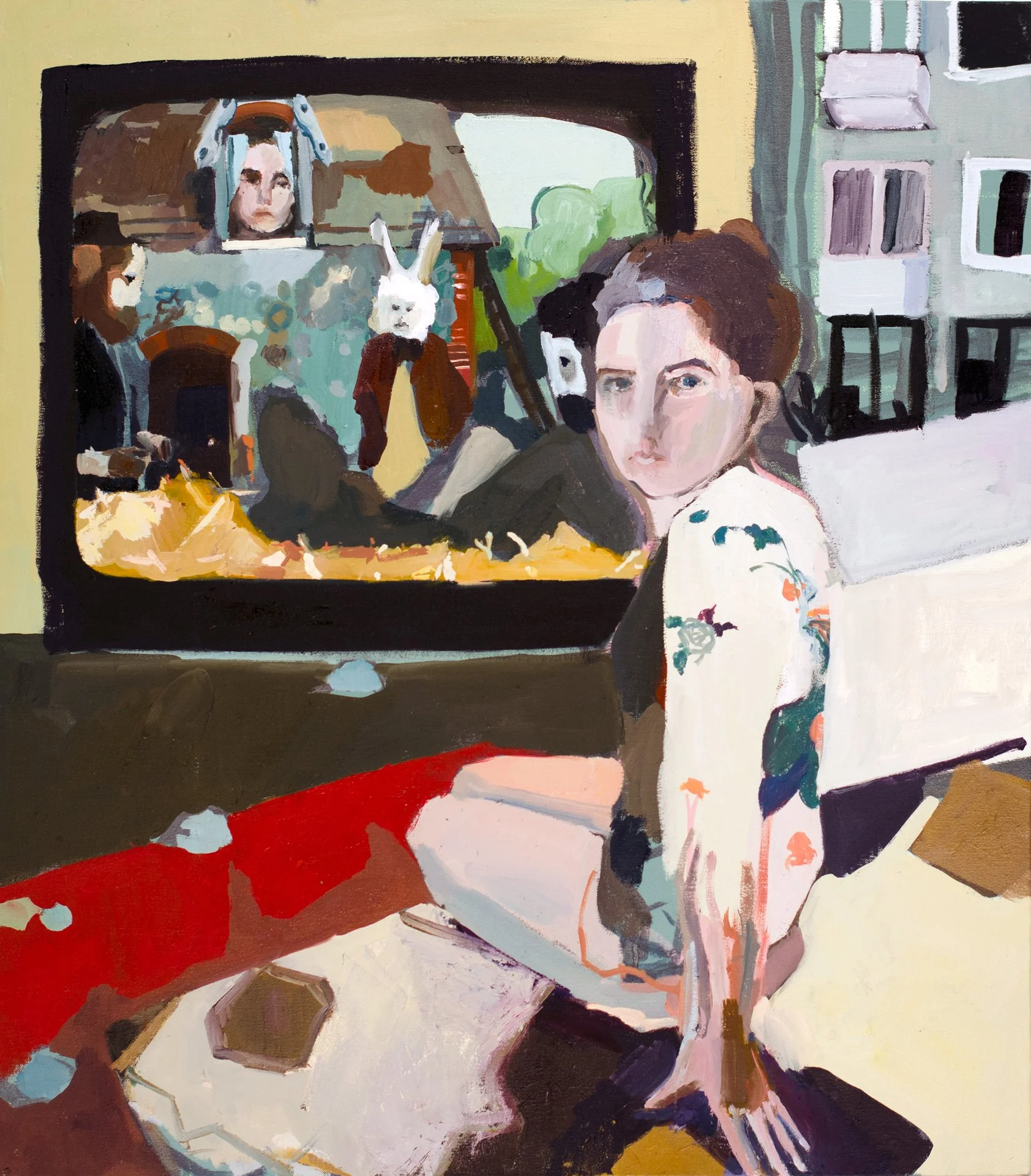
Domestic spaces locate a person through the wallpaper, random objects, or other arrangements that accrue around a life, the bricolage residue of living. In Victoria with Pink Eyes by Jennifer Moses, we see the intimate privacy of the subject, who sits pensively behind an exposed paper filled with writing just out of the viewer’s range of sight. Candler’s Lunch at a Café series host abstract color fields, that occlude the face of the subject, simulating a kind of fecund solitude. Domestic spaces also offer the chance for painters to stage still life arrangements, imbuing significance into the seemingly innocuous architecture of daily living.
Rebecca Buchanan
Virginia Candler
Lisa Marsh
Jennifer Moses
Sandra Moffat
Matt Pinney
Morgan Sommer
Ekaterina Vanovskaya
Wall 4: The Allegorical Portrait
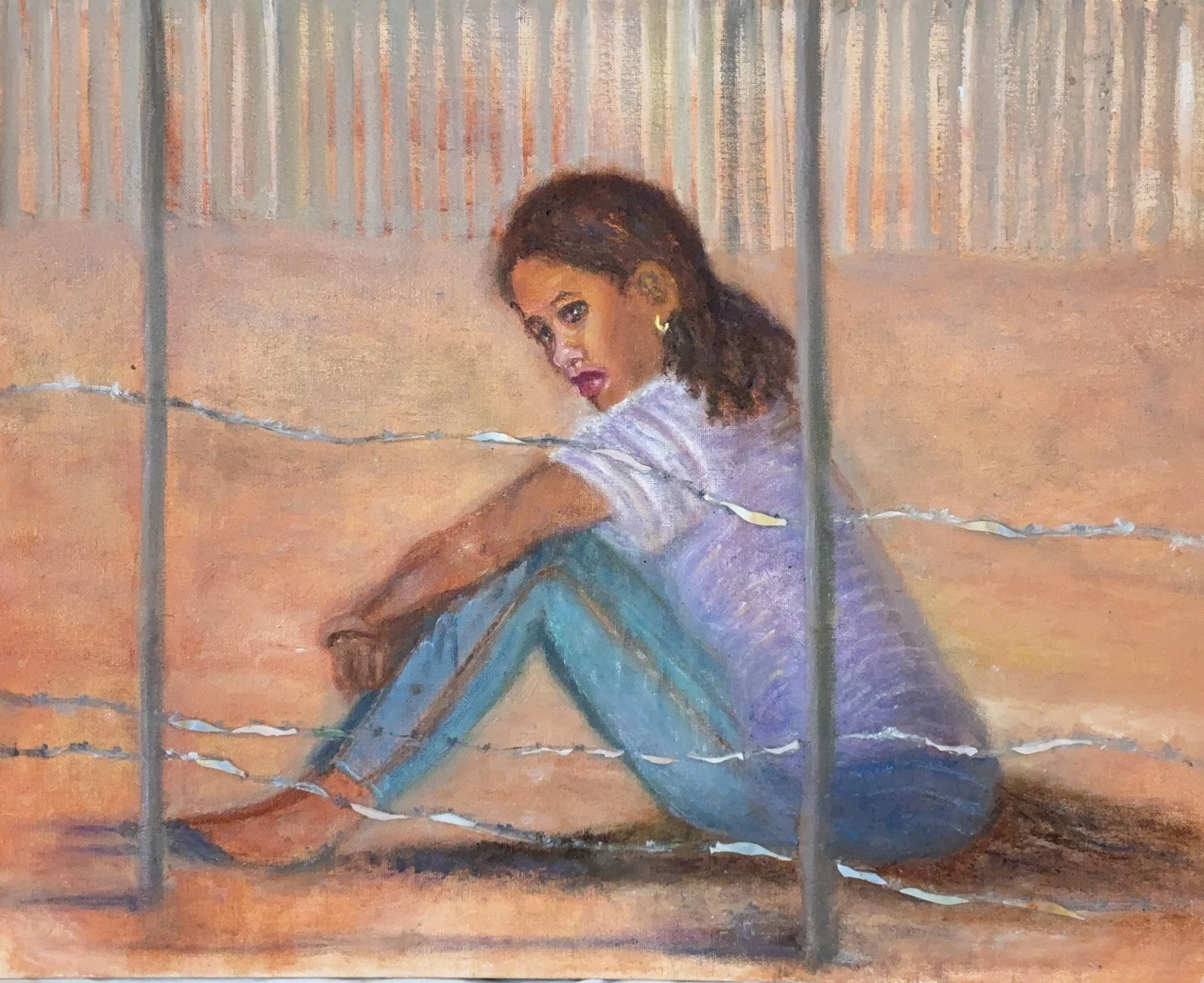
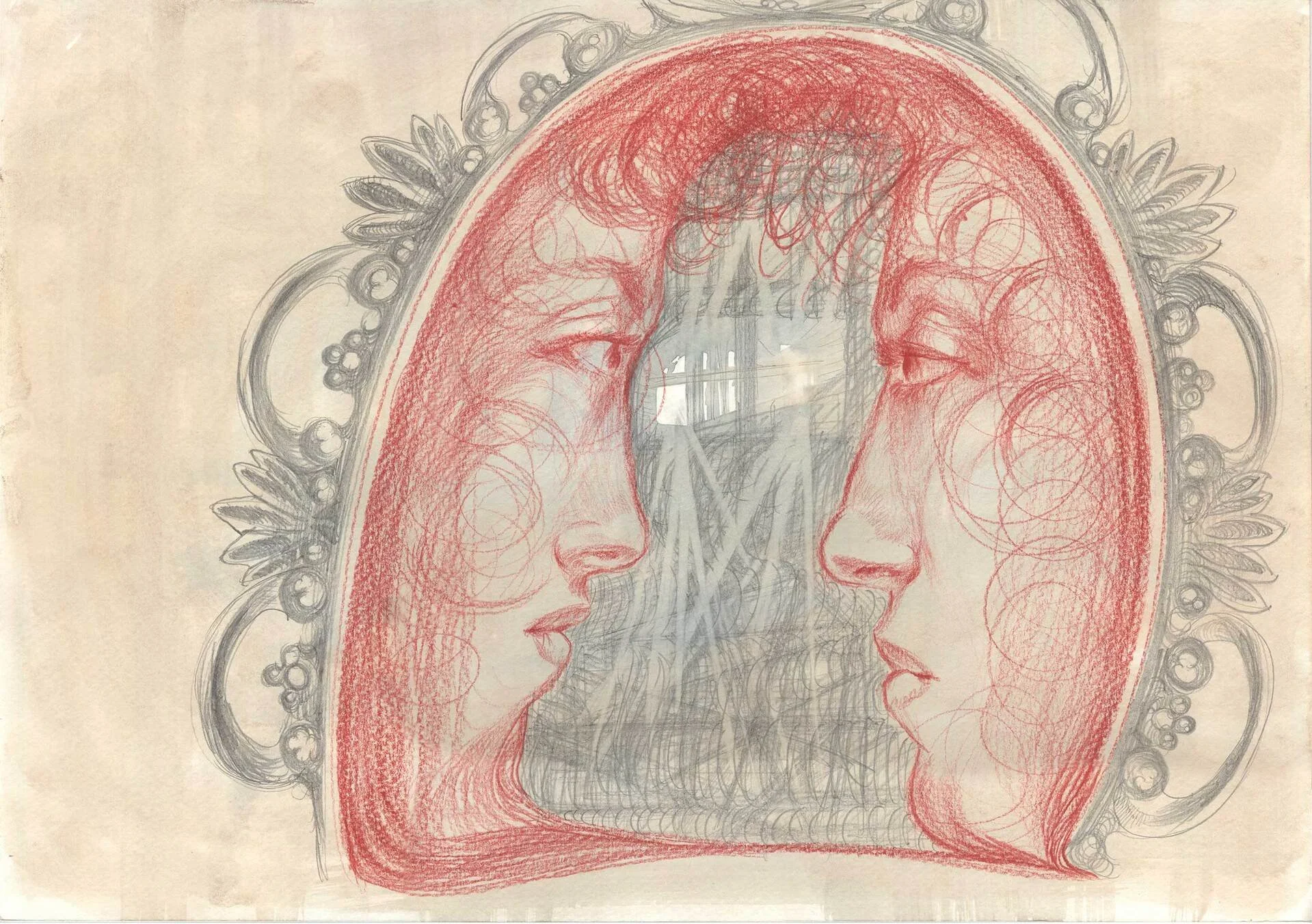
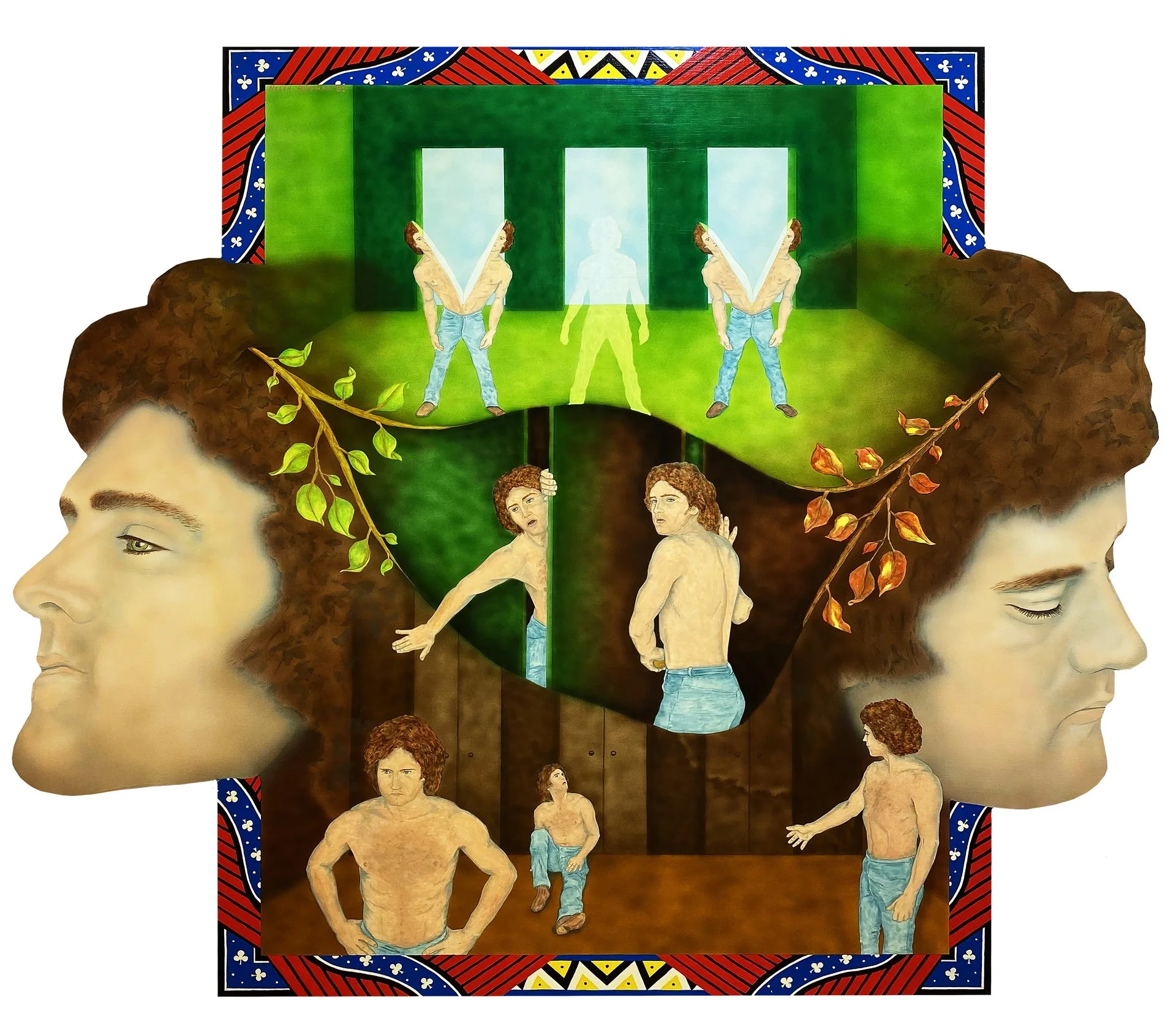
In this grouping, portrait takes on a distinctly narrative quality. Beyond the stilled form of the painting lie preordained symbols or physical gestures, that enter into the frame all sorts of associations. Many of these works originate in writing or myth making and then seek to use painting as a form of illustration, a kind of codex through which a morality, a politics, or a larger narrative can be accessed. Waiting by Roberta Cooks, for example, is a simple scene of a woman sitting behind a barbed wire enclosure. While the composition is simple, it immediately evokes stories of incarceration on the United States southern border by ICE agents, linking the figure in her work to many other images of women we’ve seen cruelly held and detained.
Jacqueline Buck Donadeo
Roberta Cooks
Chad Hines
Helen Shipman
Rin Mitchell
Jennifer Moses
Ian Molina
Irene Pomirchy
Wall 5: The Urban Figure
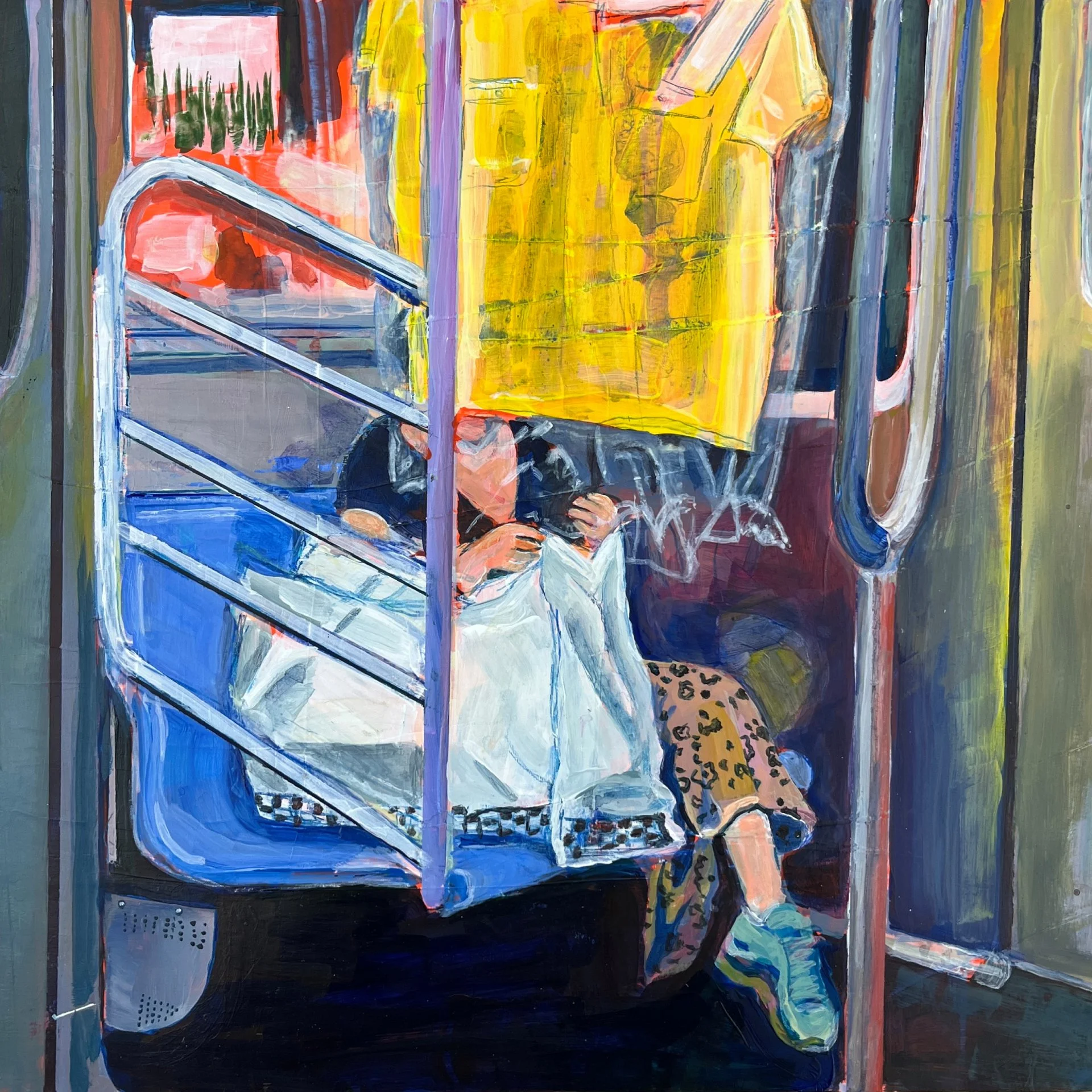
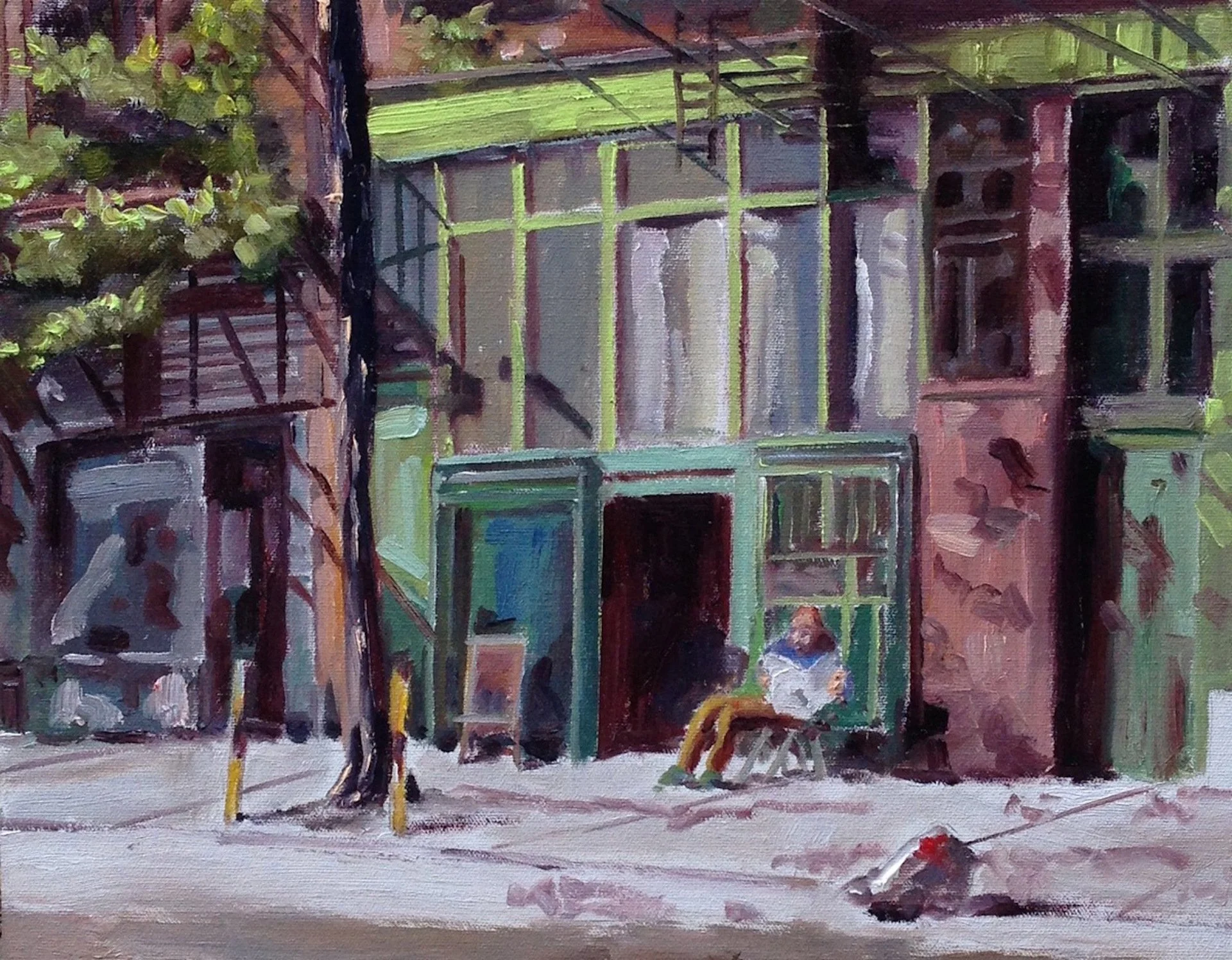
If modernity is often marked by a shift to self-determination, introspection, and self-organization the city takes on a central role. In the French revolution it was the canals, the landmarks and the physicality of Paris that determined the stations of the commune, that organized the people into central marches. In later modernity, theorists like Benjamin and Debord will theorize a sort of psychogeography, an intimacy with the city in which subconscious urges encourage urban spaces to reveal themselves and to make mirror images of the flaneur. In these paintings portraiture is shaped by proximity, and by chance encounter, and the particularity of the subject is dissolved into surrounding.