Geometry
The Shape of Things
Juried by Hannah Sage Kay
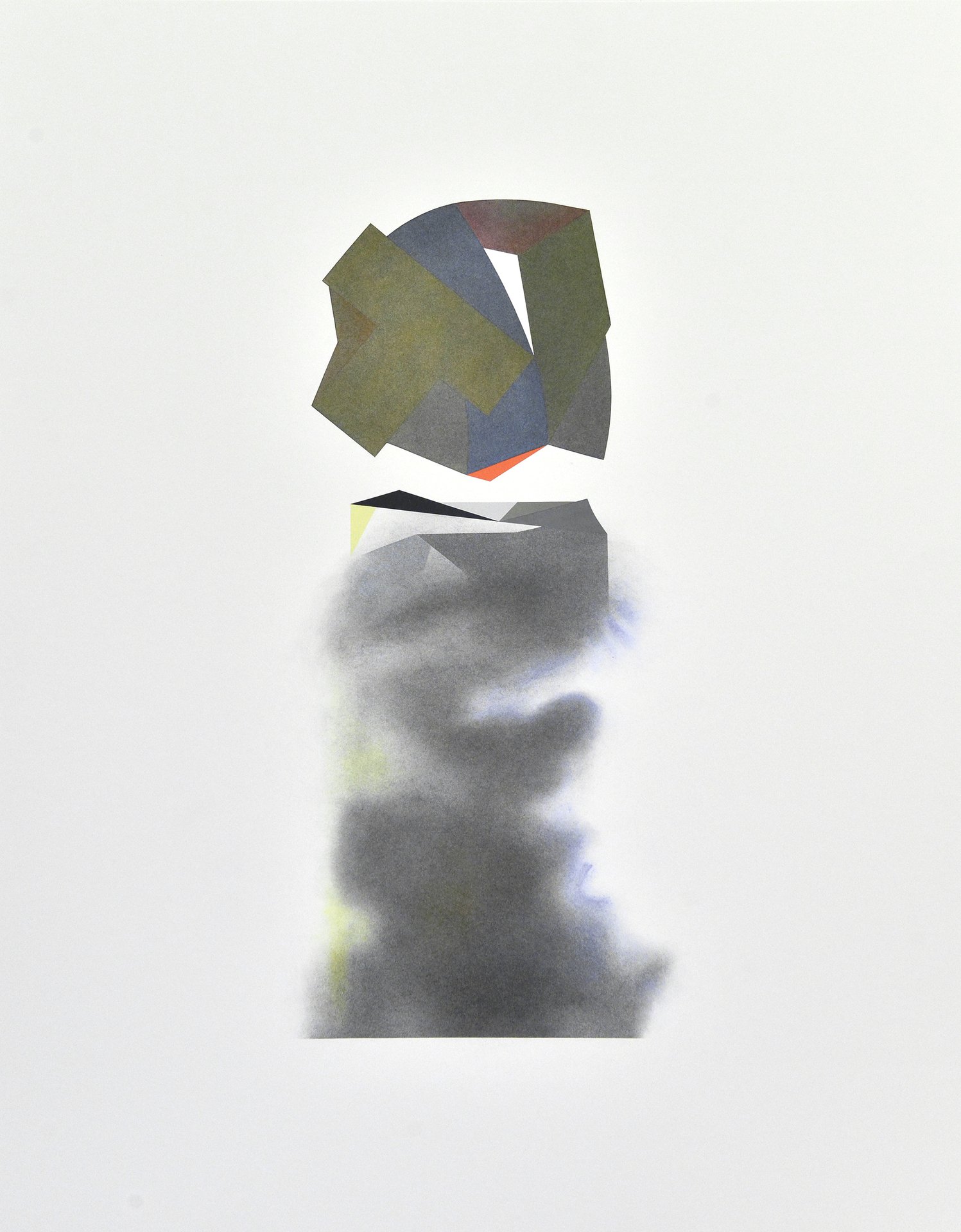
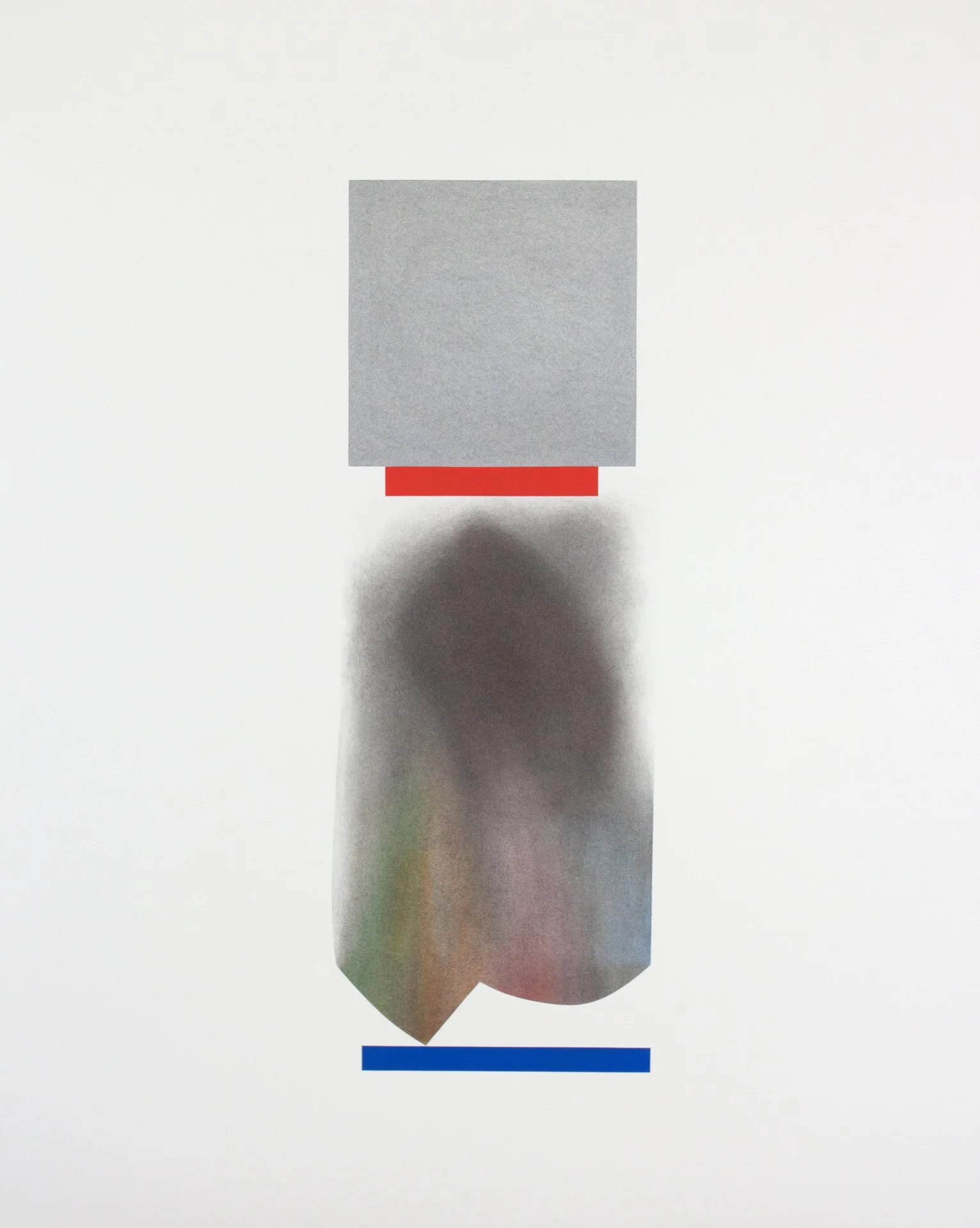
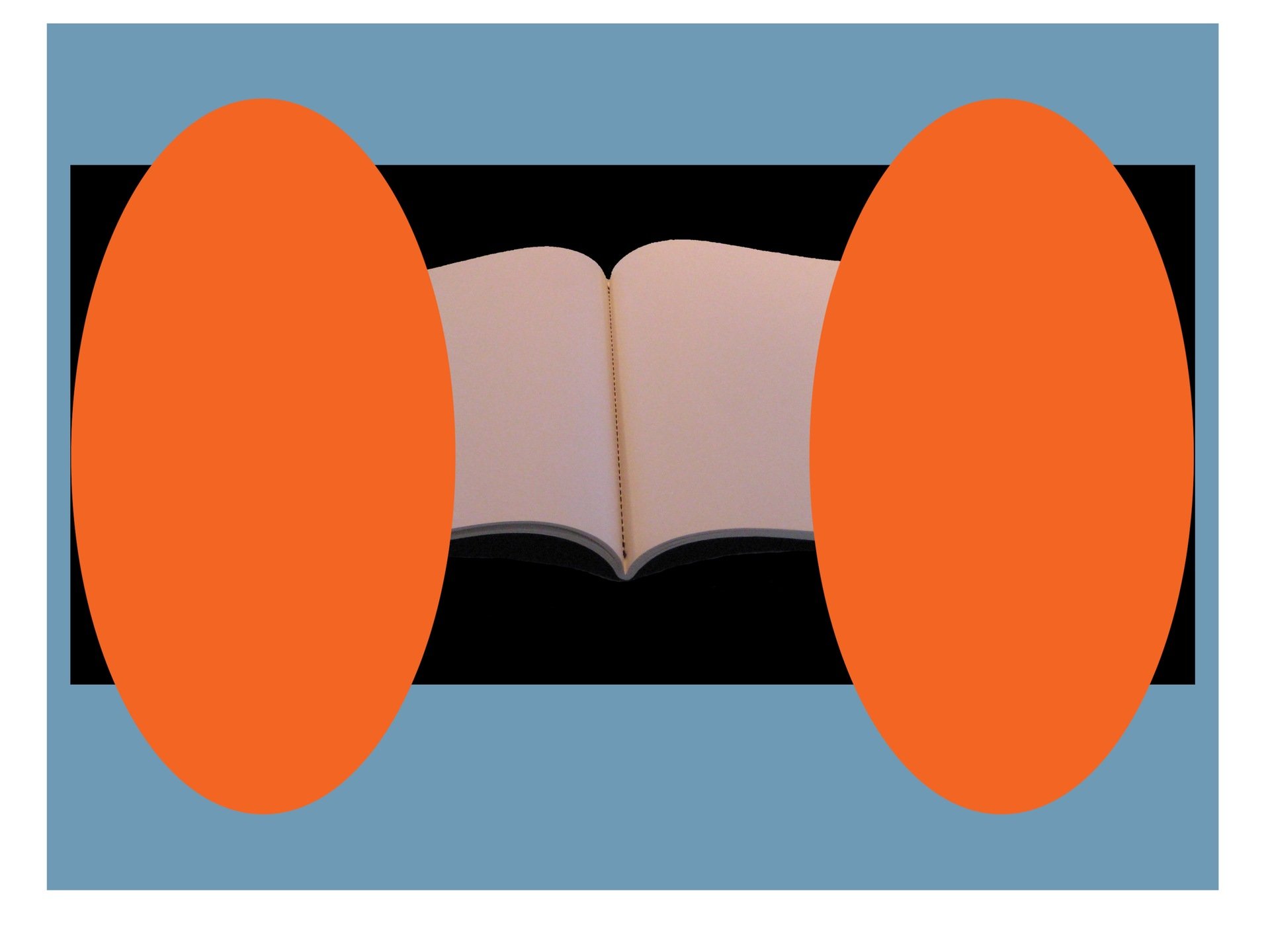
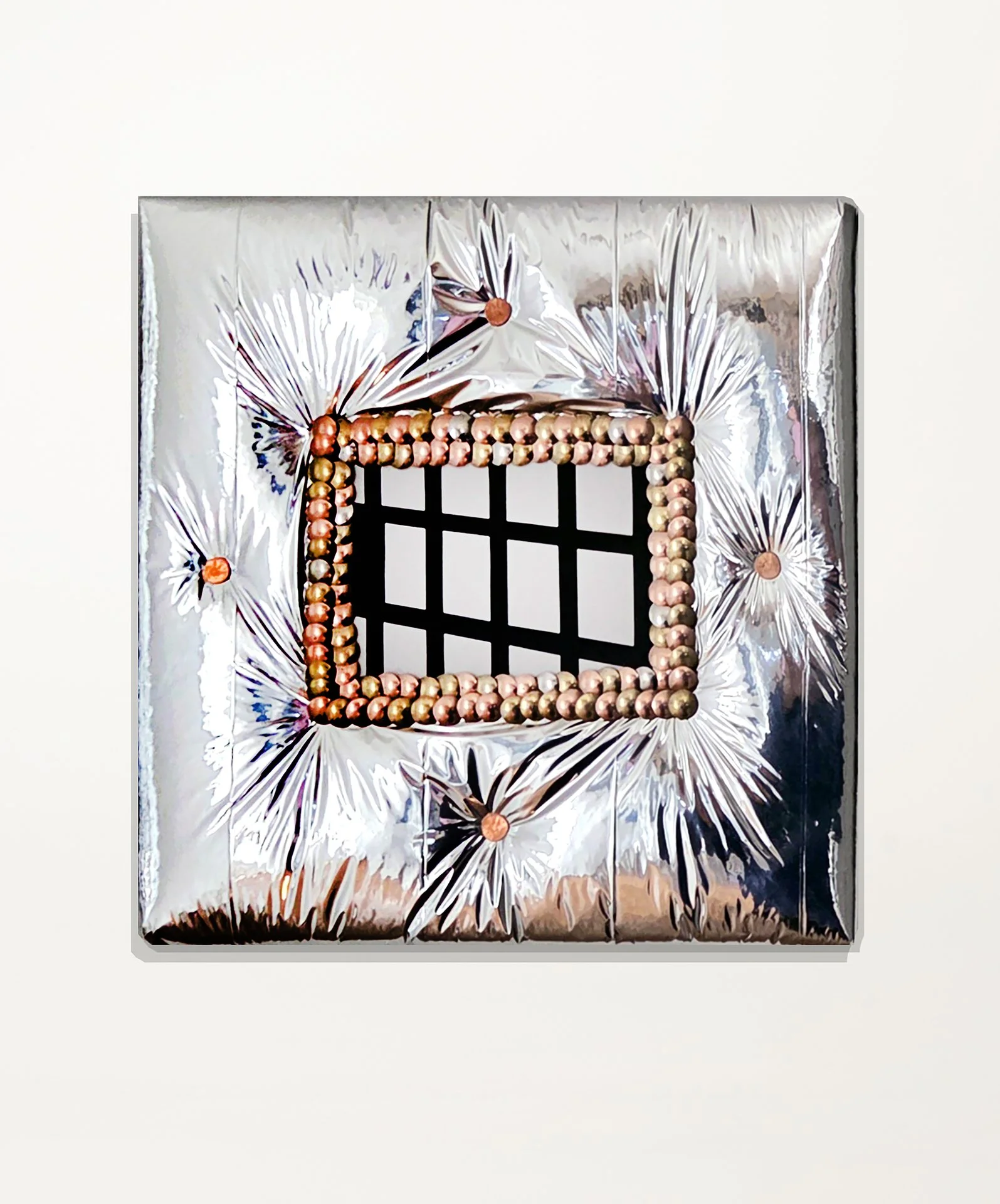
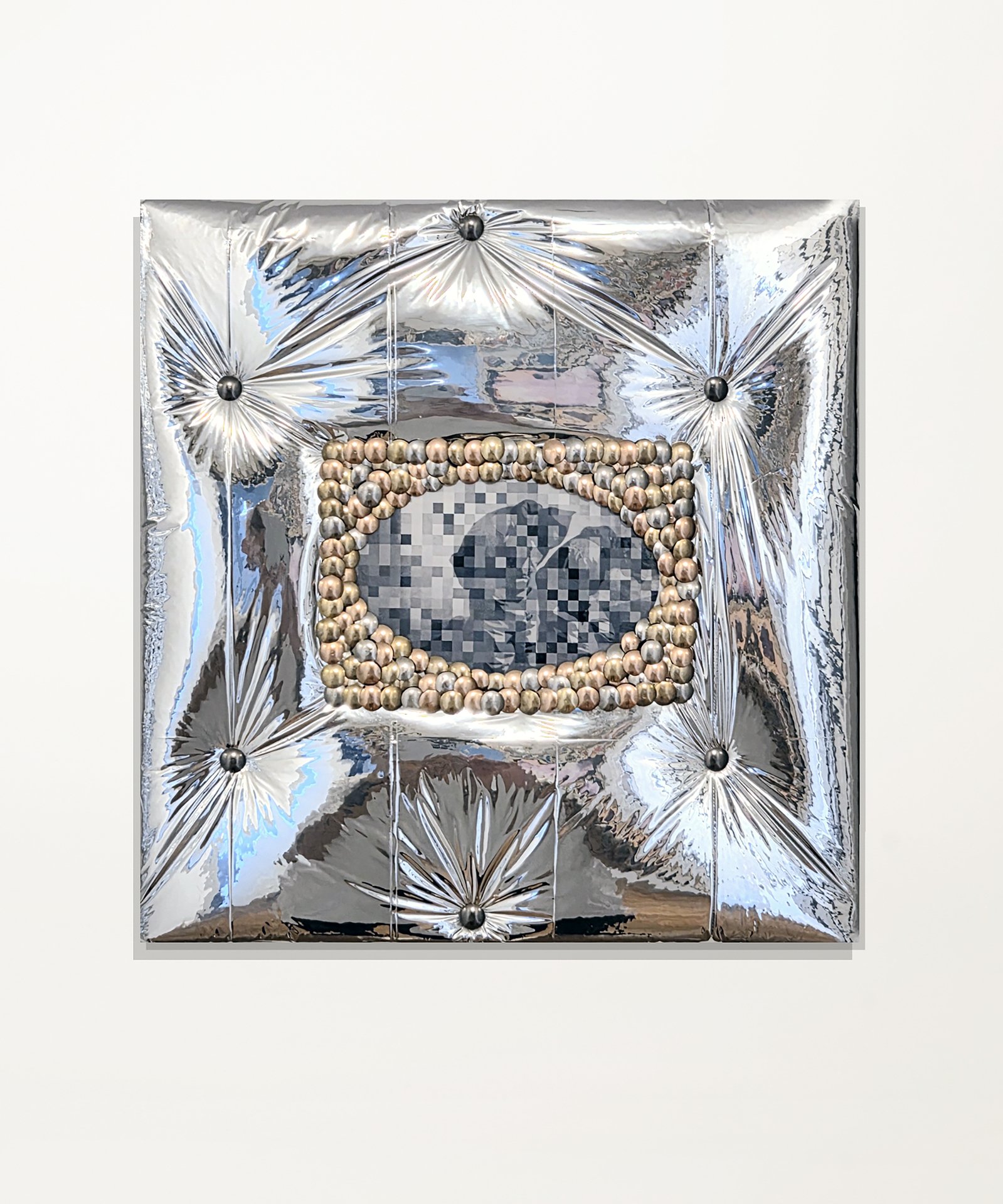
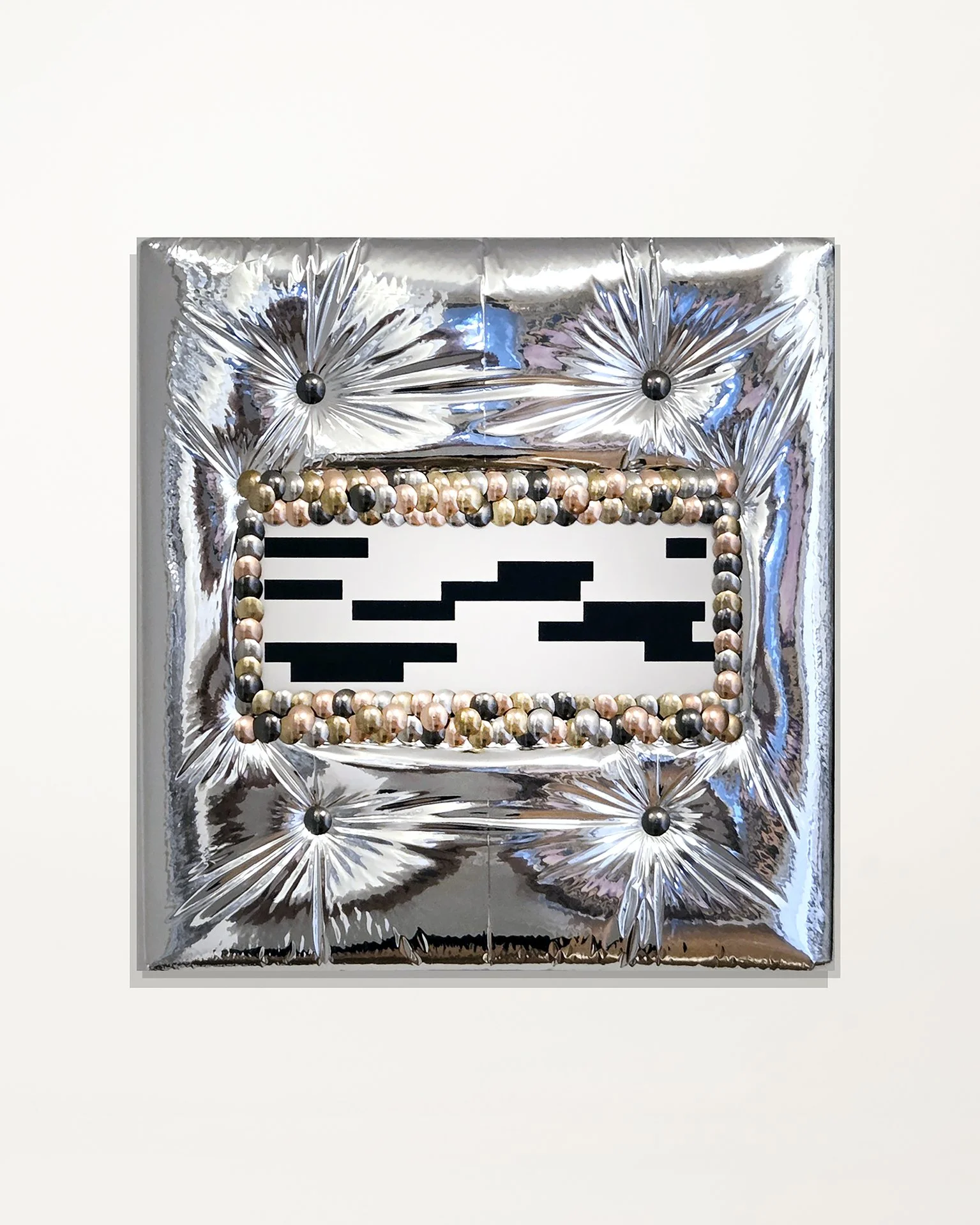
Curatorial Statement
Geometry’s mathematical foundation provides a false sense of certainty in its ability to measure the world we know and recreate with precision three dimensional objects and spaces on a two dimensional plane. As there is much that we can’t see, understand, or know, and even more to be intuited and imagined, artists have long approached geometry less as a set of rules than a lens to be explored.
From the tiled constellations of 6th century Islamic architecture, where repeating forms are thought conjure spiritual connection and provide a greater understanding of reality, to the Renaissance conviction that the world could be ordered through mathematical logics—articulated by Leon Battista Alberti’s treatises on art, architecture, and perspective and embodied in works such as Leonardo da Vinci’s Vitruvian Man—geometry has served as a bridge between vision and structure in an attempt at understanding the physical world. Modernism initiated a more intuitive and investigative use of geometry. The bold graphic designs of Russian Constructivism aimed to reflect industrial society and the built environment; the meditative compositions of Joseph Albers and Agnes Martin employed grids, planes, and color to express not only an external environment but an internal, emotional experience; and the seriality of Minimalism’s art objects sought to make viewers more attuned to their phenomenological relationships with space. These varied approaches suggest that shape is not a fixed system but a tool and a language that can articulate mathematical principles as much as it can convey ideas, emotions, and experiences.
Geometry: The Shape of Things gathers artists who engage this lineage not as prescriptive but as generative—a method by which to comment on art history, better understand the world, and imagine new relationships to space and perception.
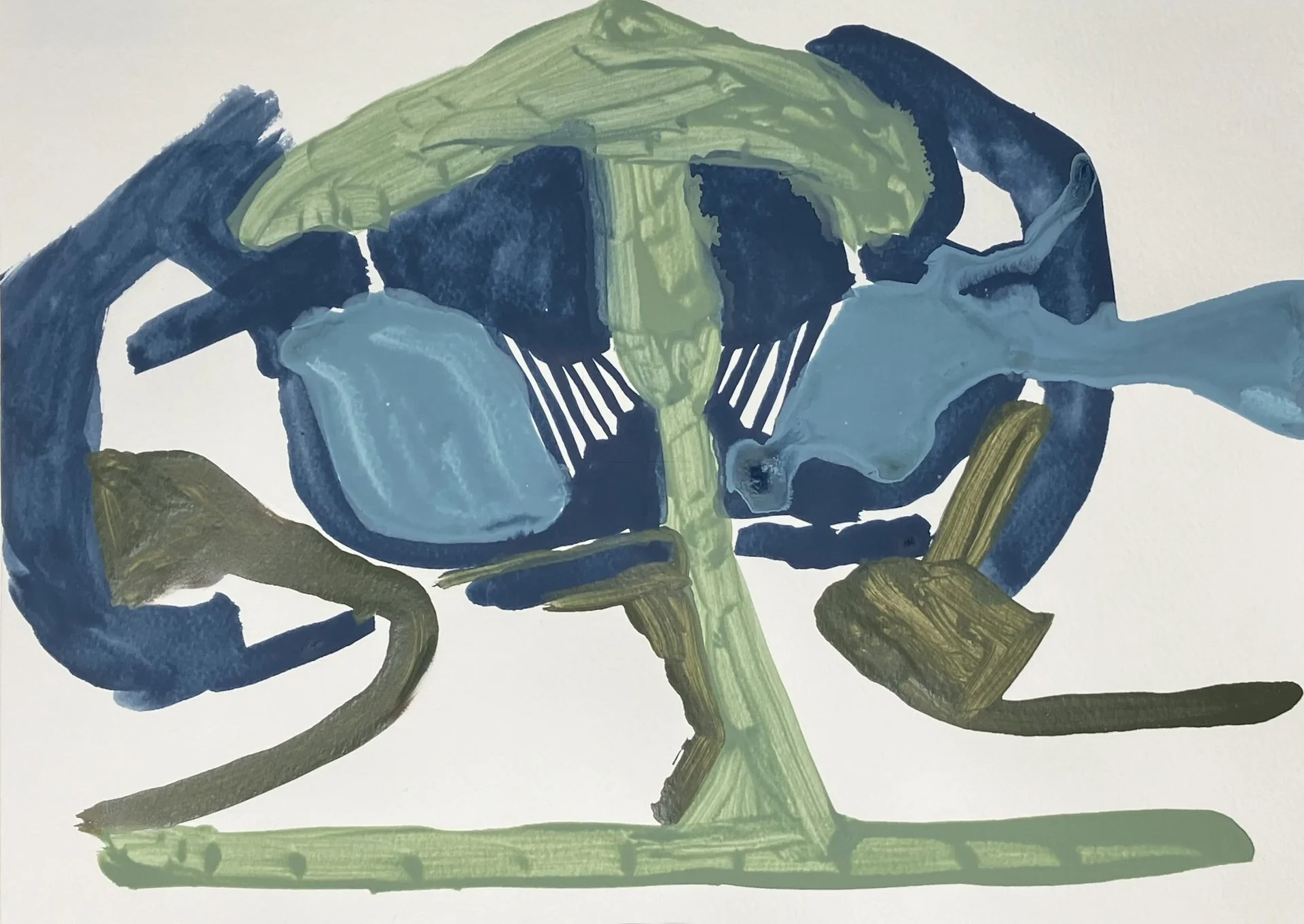
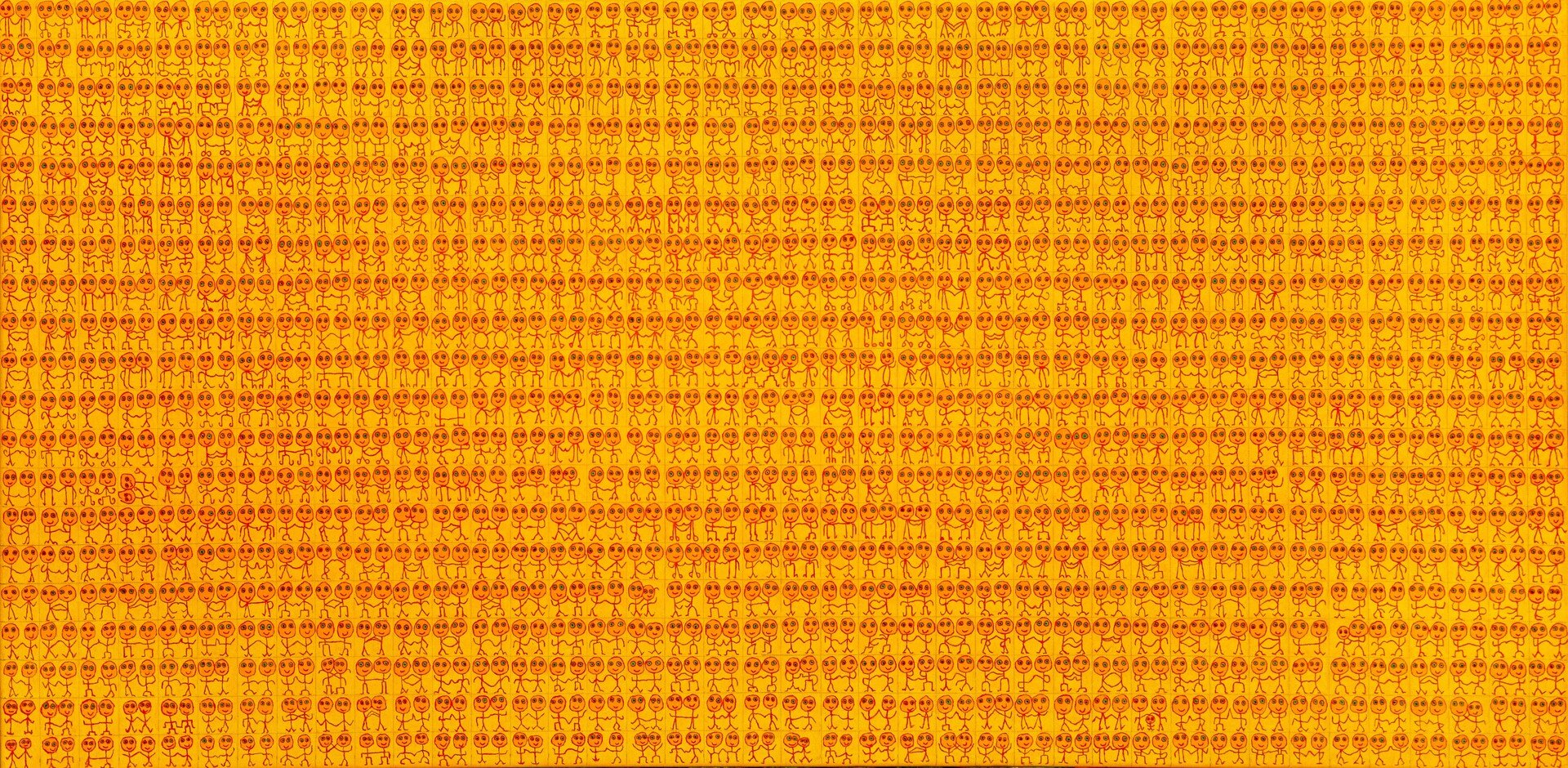
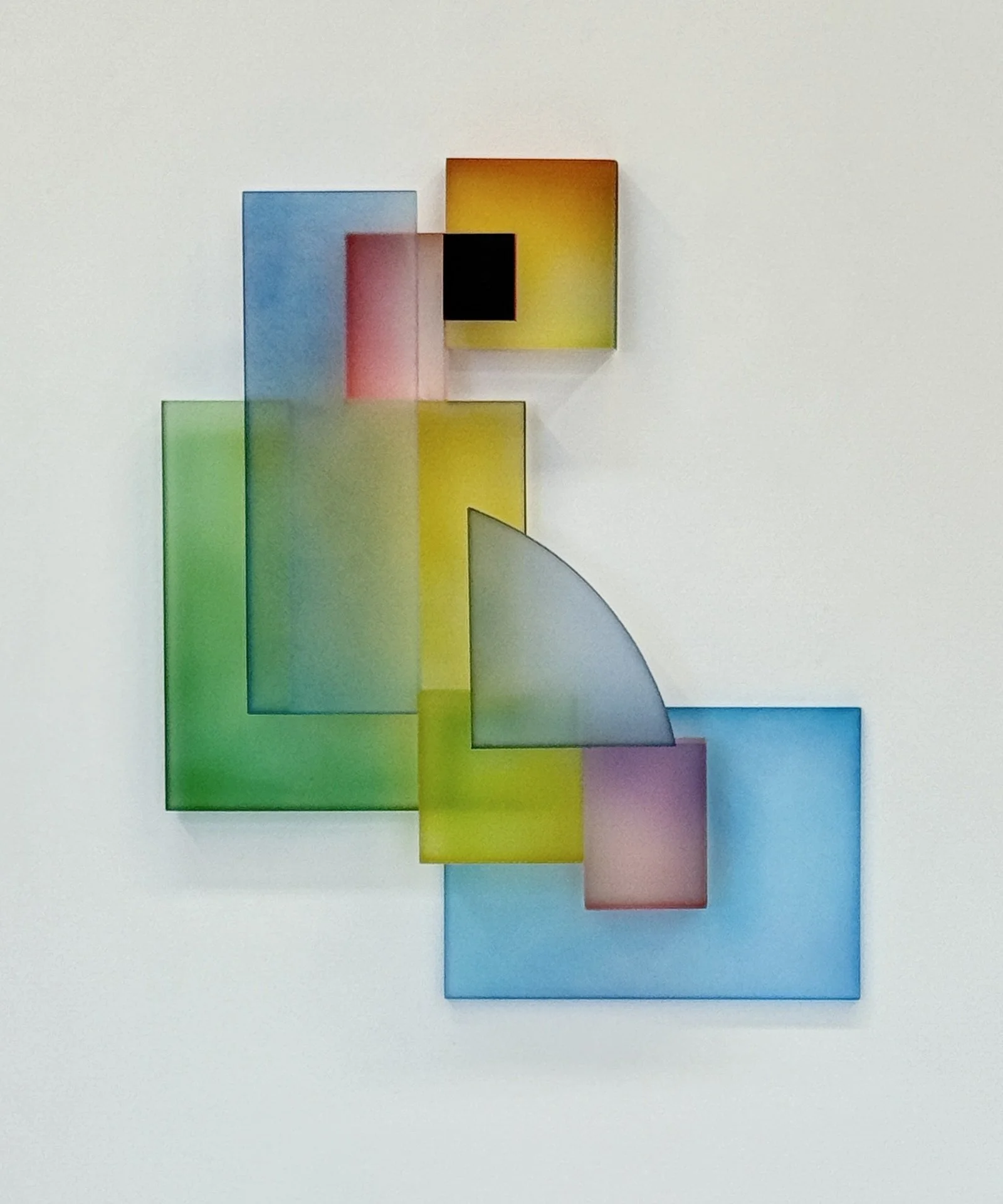
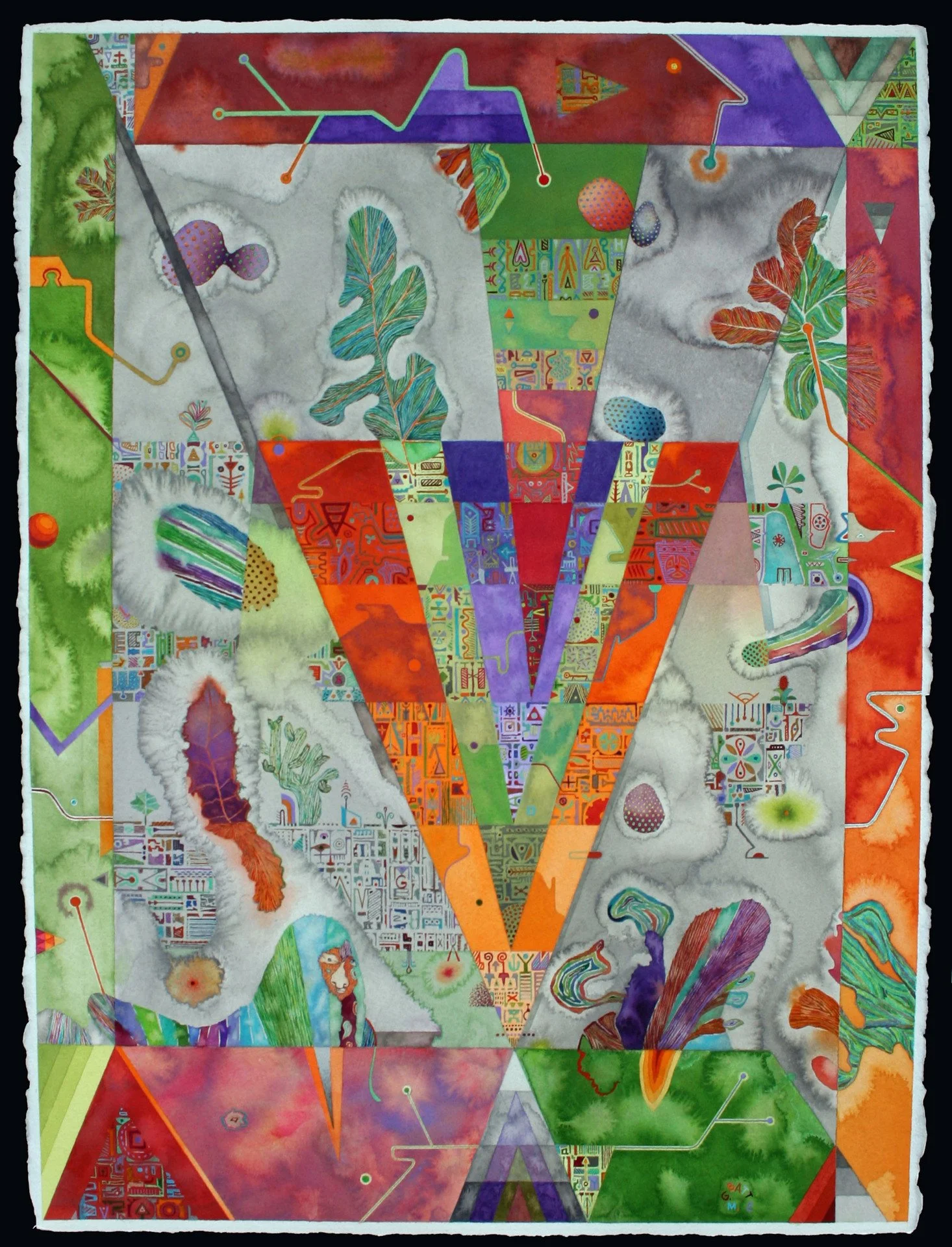
Organized in four sections, the exhibition begins with Vector, wherein artists employ geometry in its most distilled form: planes, lines, and ratios that echo the clarity of twentieth-century abstraction while testing its continued relevance. Omni loosens the grid, as artists play with unconventional materials, irregular processes, and improvisational gestures. Interzone turns inward and outward at once, drawing on spiritual symbolism, new-age cosmologies, and cultural memory. Finally, Uncanny looks toward speculative horizons, where geometry becomes a tool for imagining unfamiliar dimensions, alternate spatial logics, and relationships to time.
About the Juror
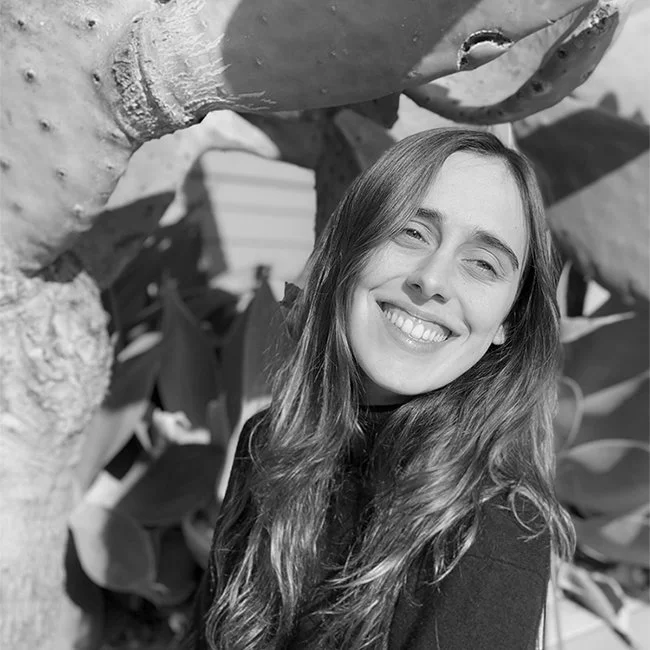
Hannah Sage Kay is an arts writer and critic based between New York and Los Angeles. She studied art history at New York University's Institute of Fine Arts and Bard College, and has contributed to such publications as Artforum, The Art Newspaper, Autre, The Brooklyn Rail, BOMB, Financial Times, The Guardian, and Los Angeles Review of Books, amongst others.
WALL 1: VECTOR
Marcel Ceuppens / Christopher Griffith / Sui Ki Law / Frederick Smith / Julia Deckman / Don Fortenberry / Julia Berkman / Kevin Daly / Stella Berezovsky / Jamie Kost / Andrea Jachetti
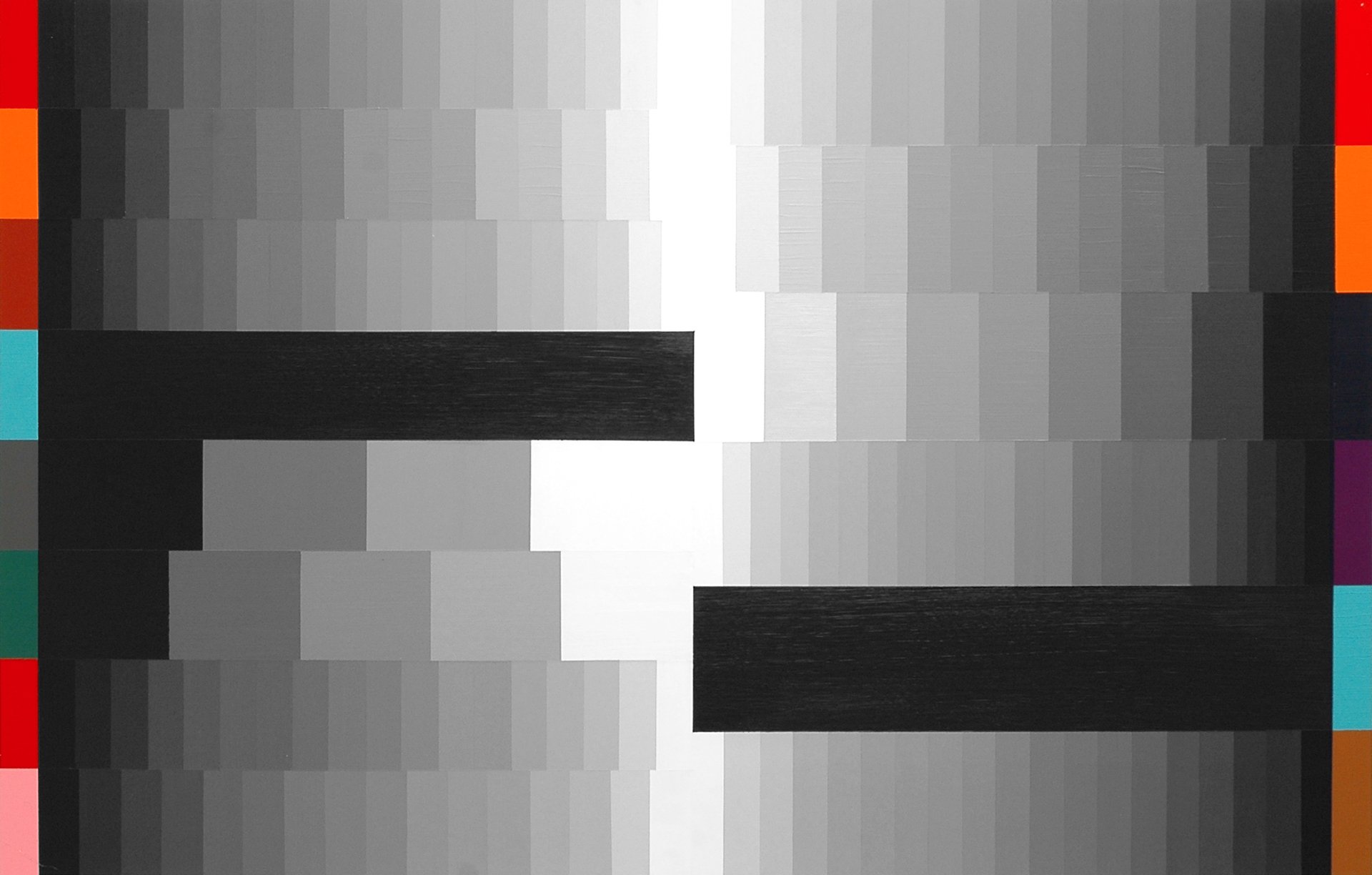
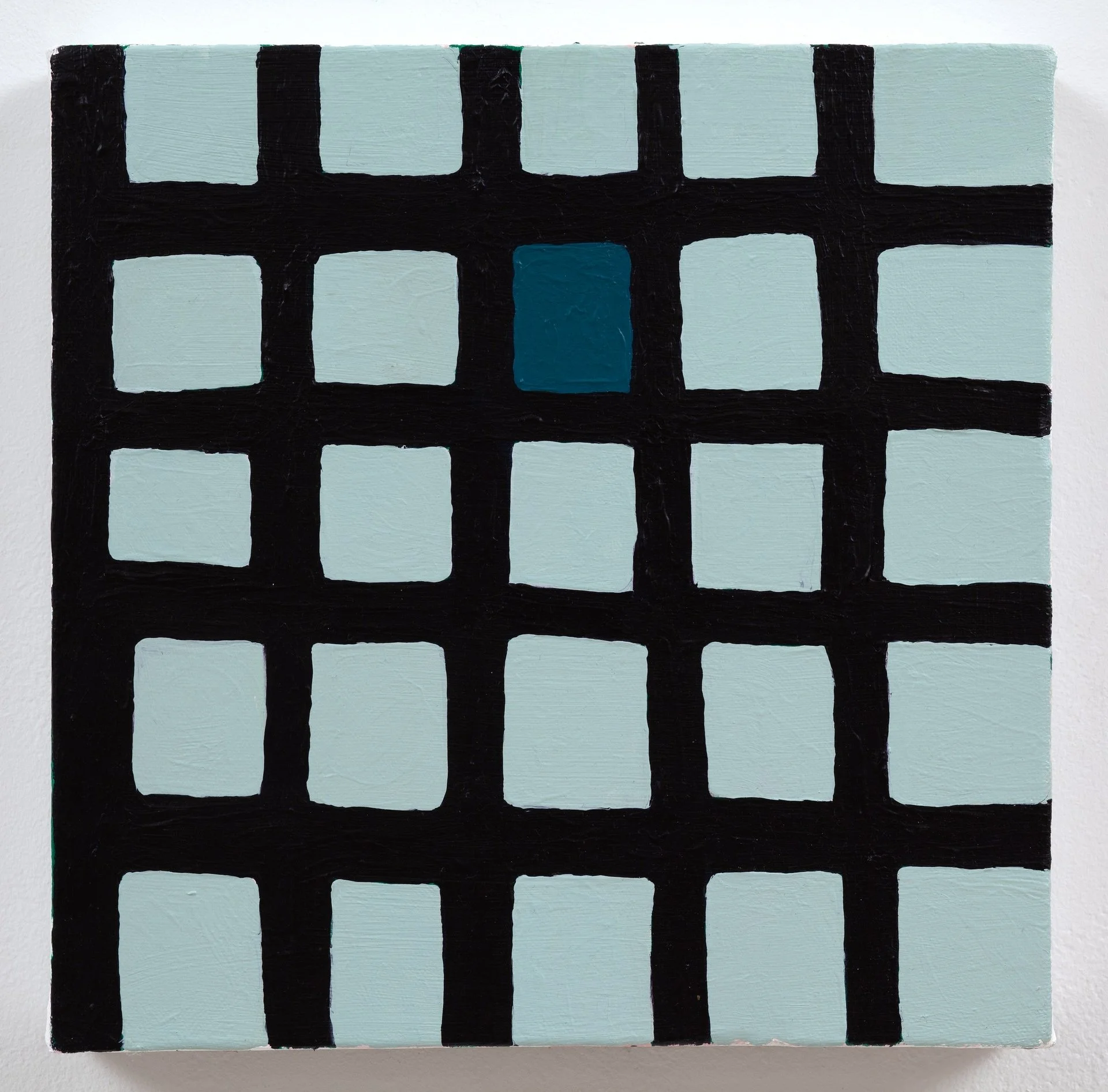
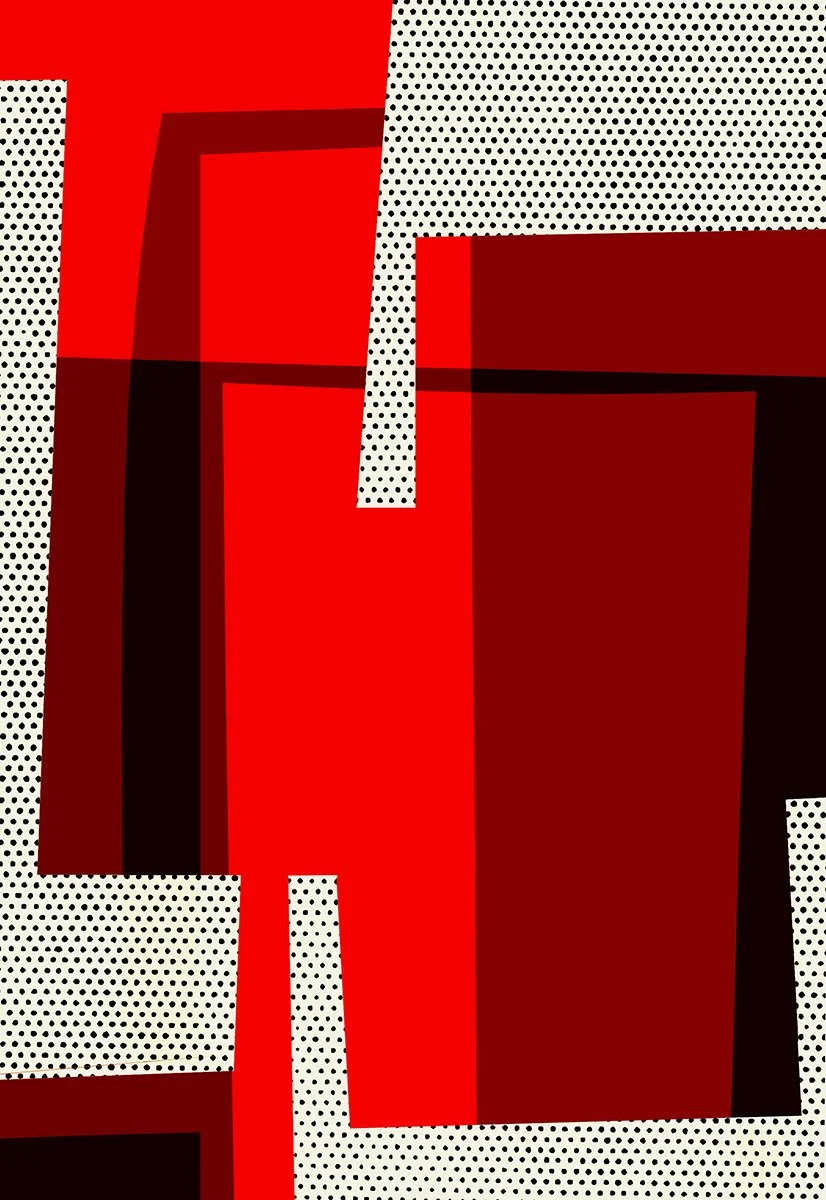
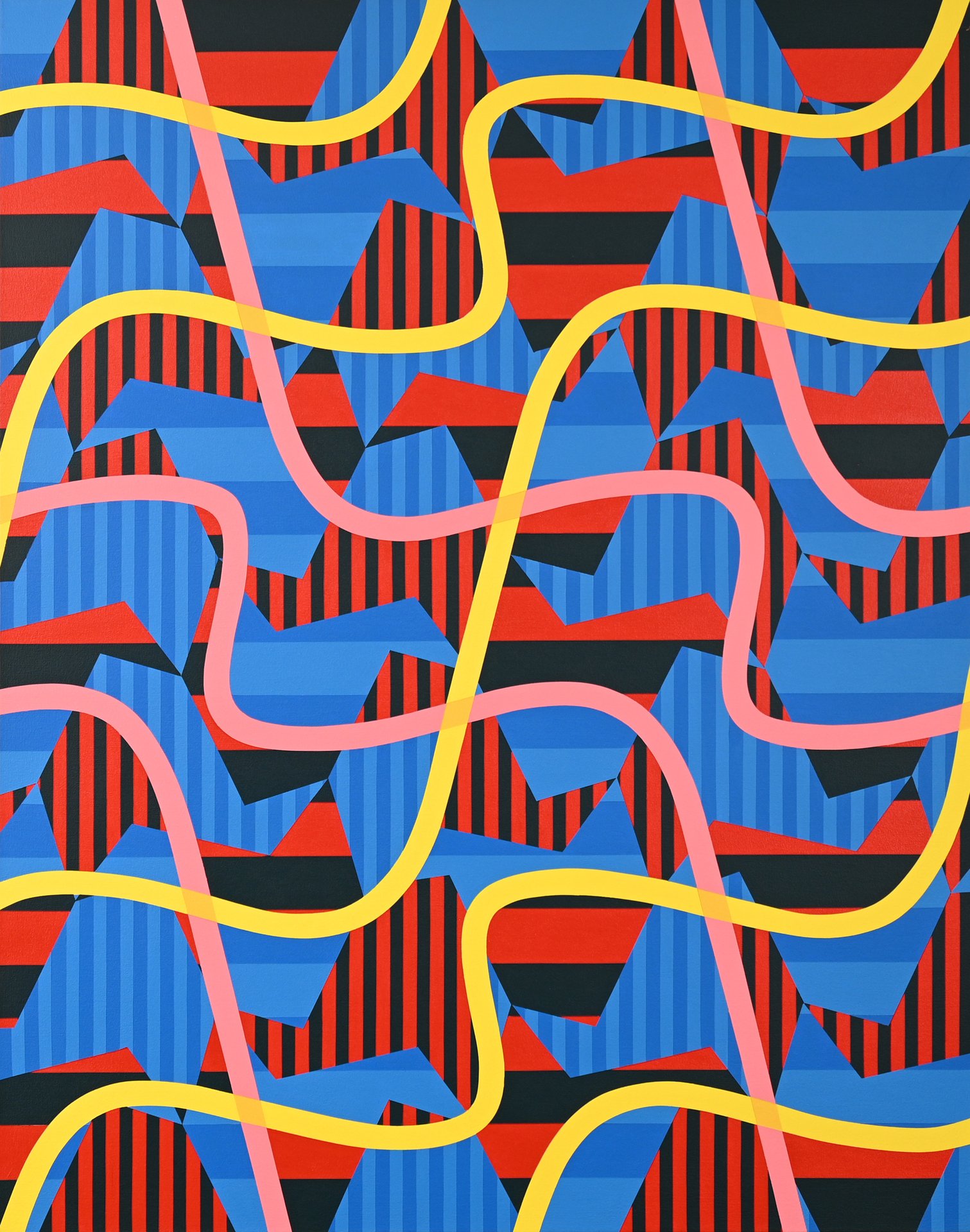
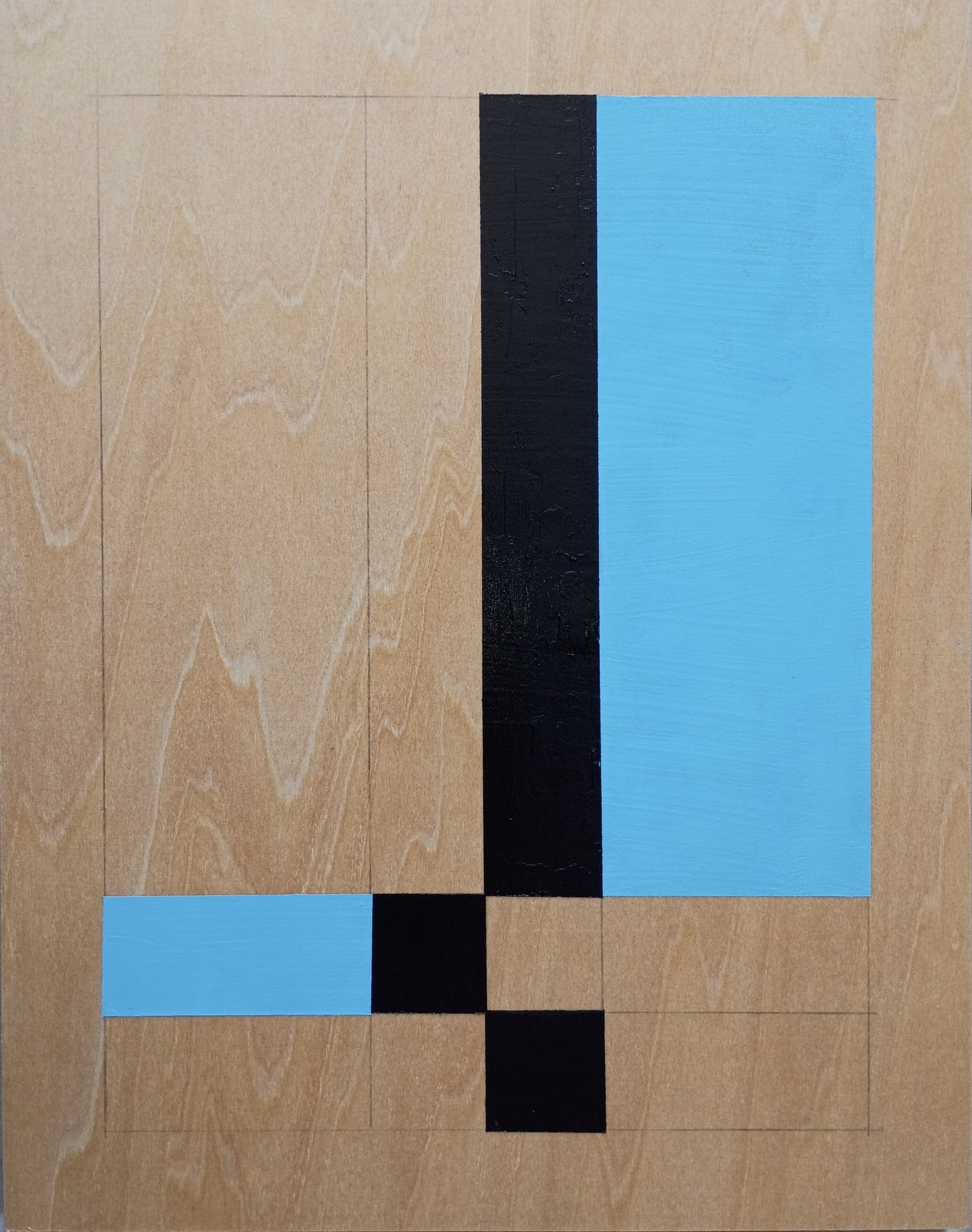
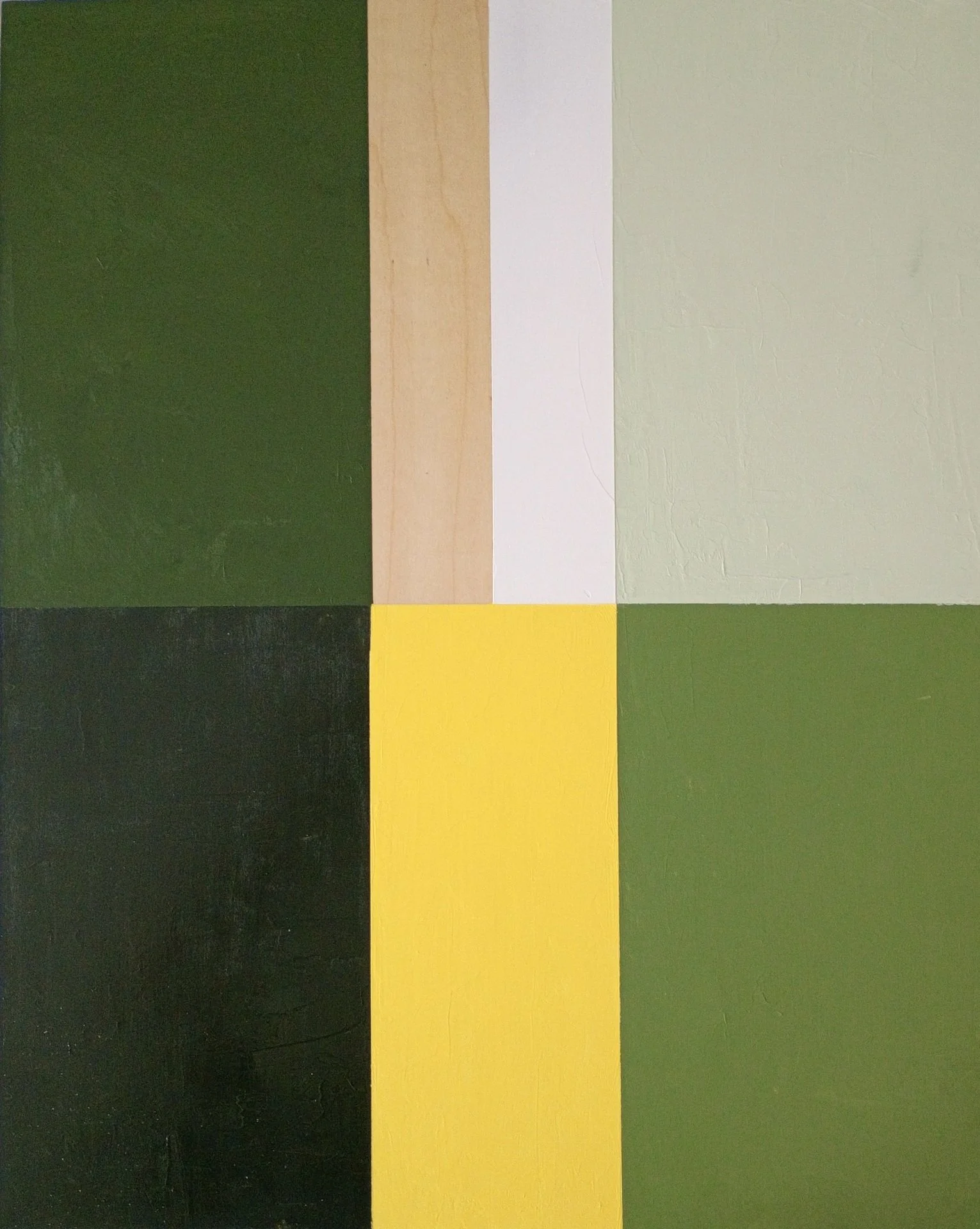
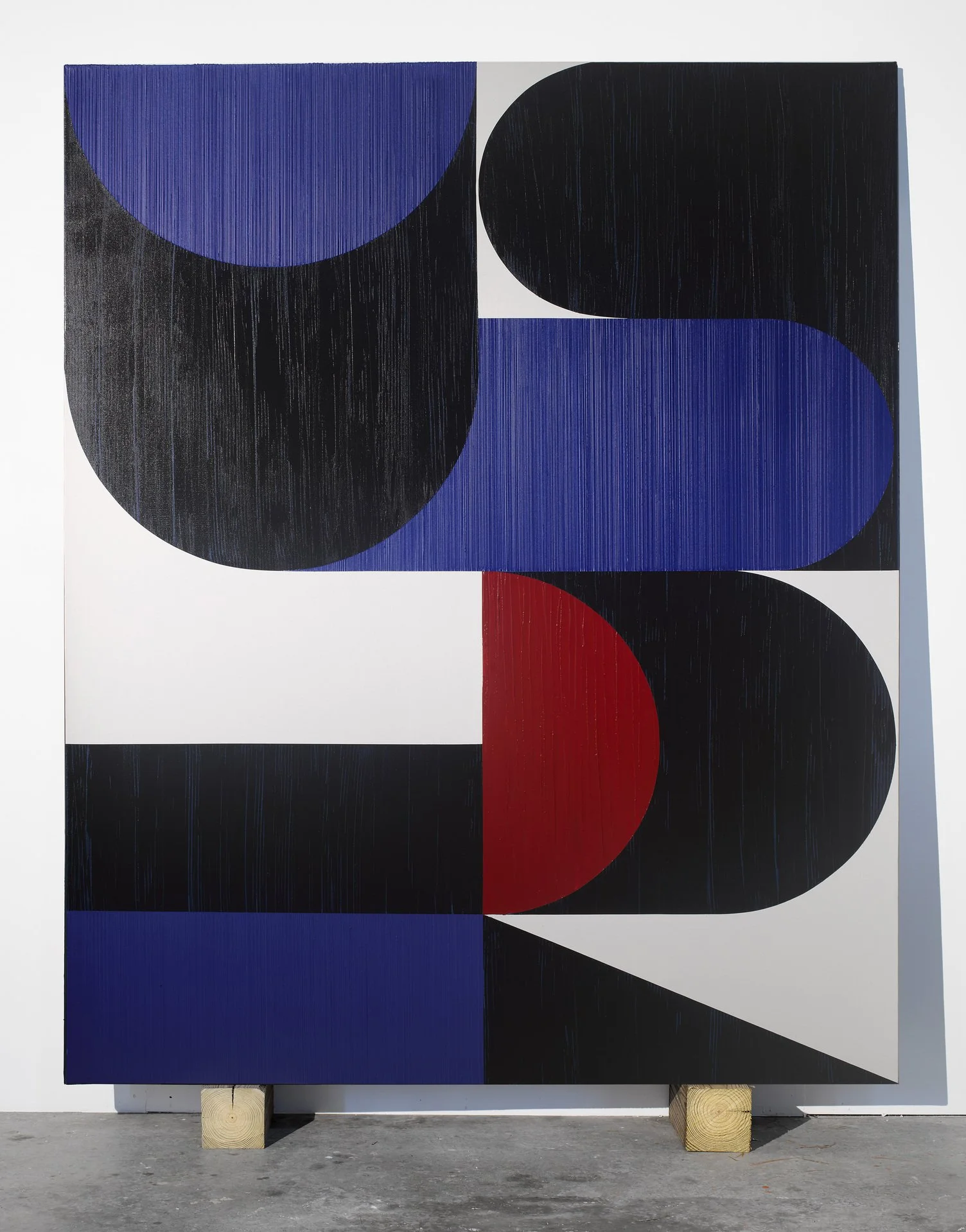
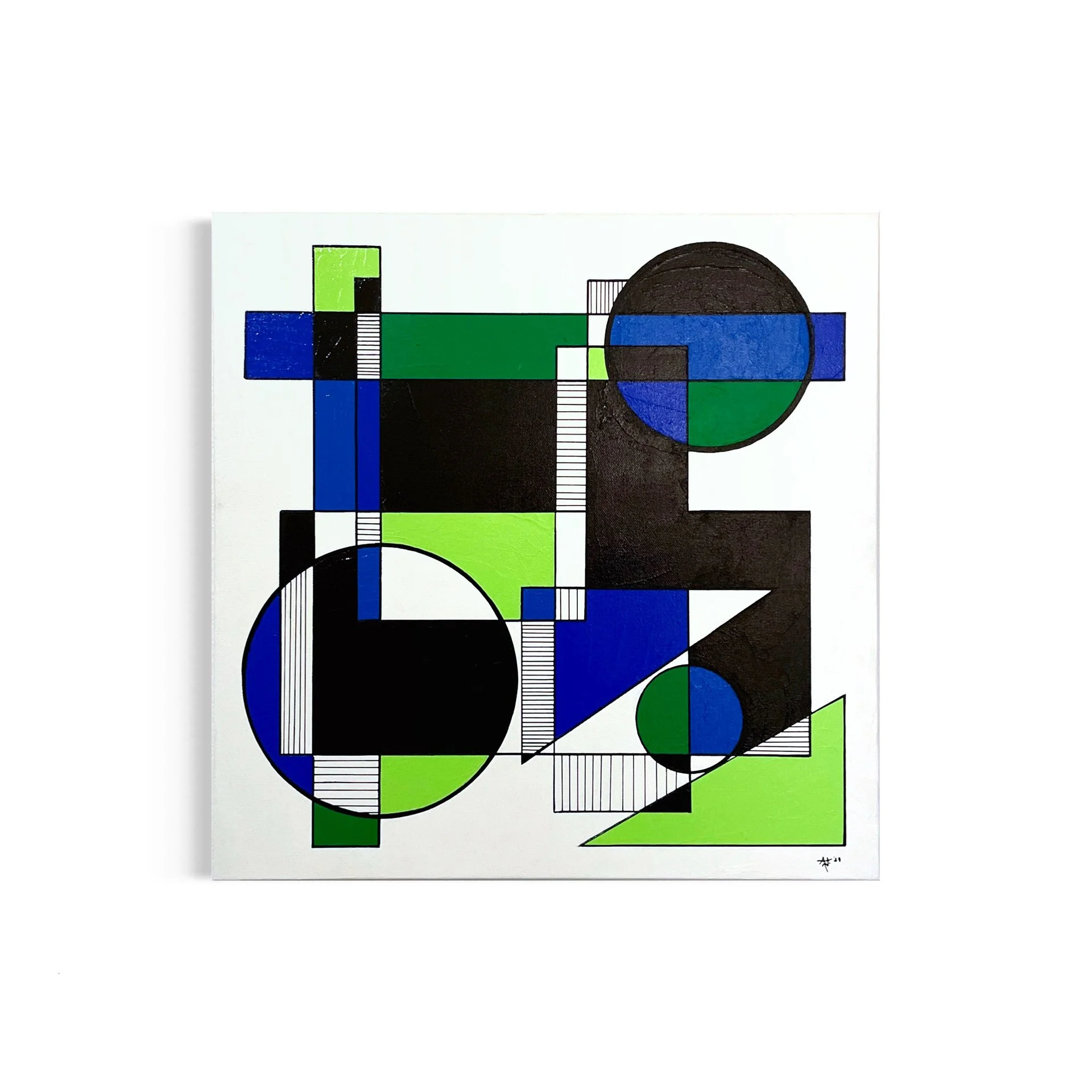
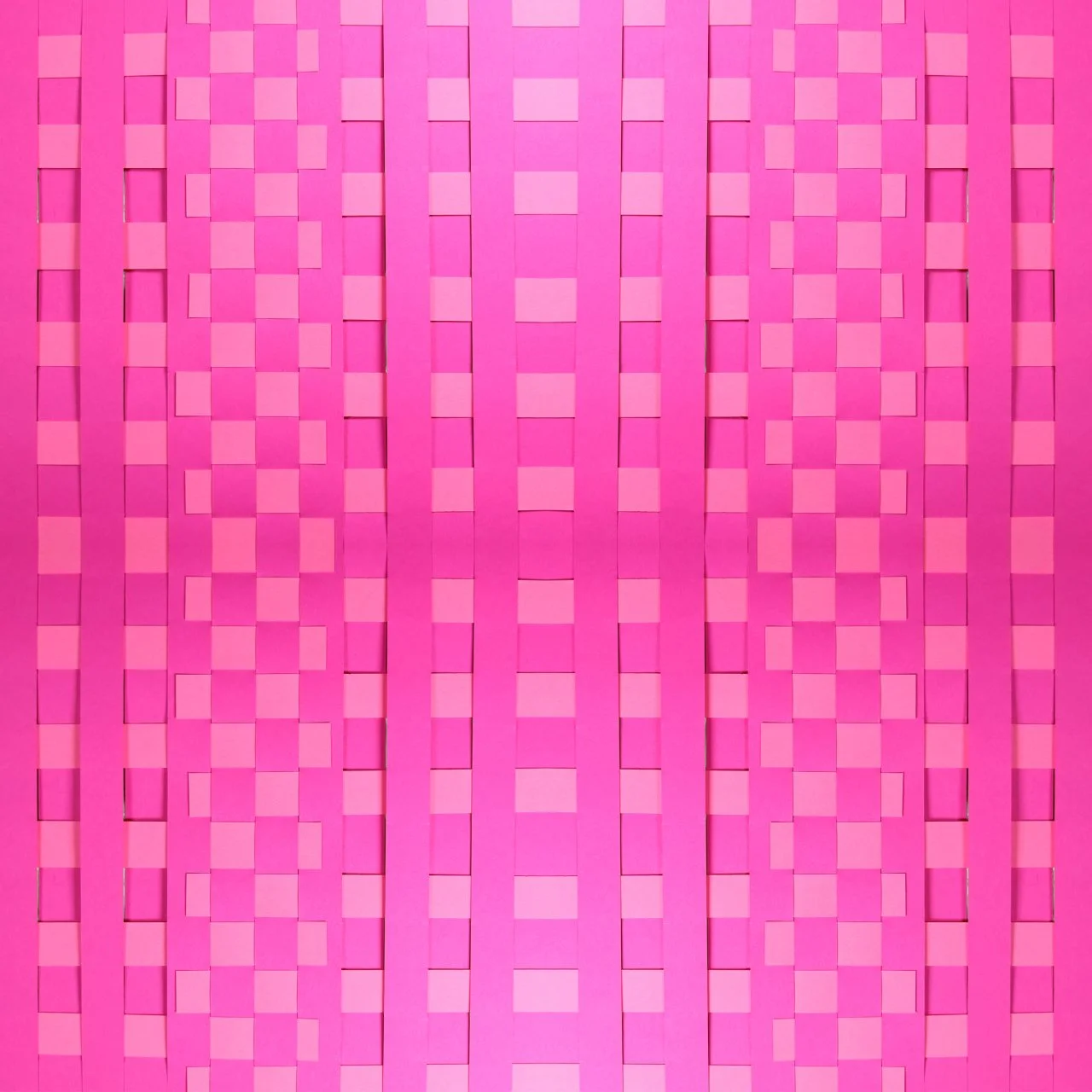
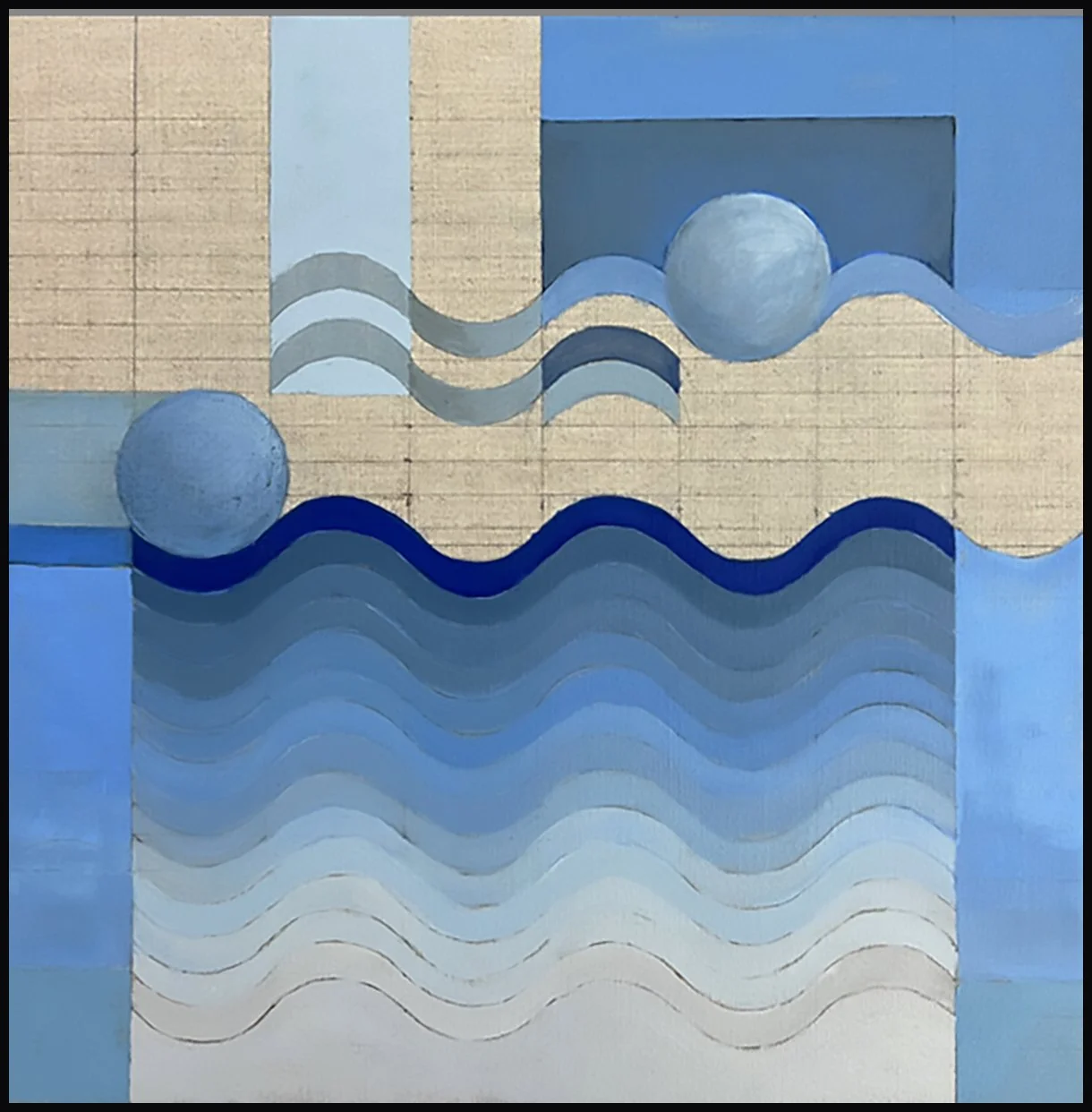
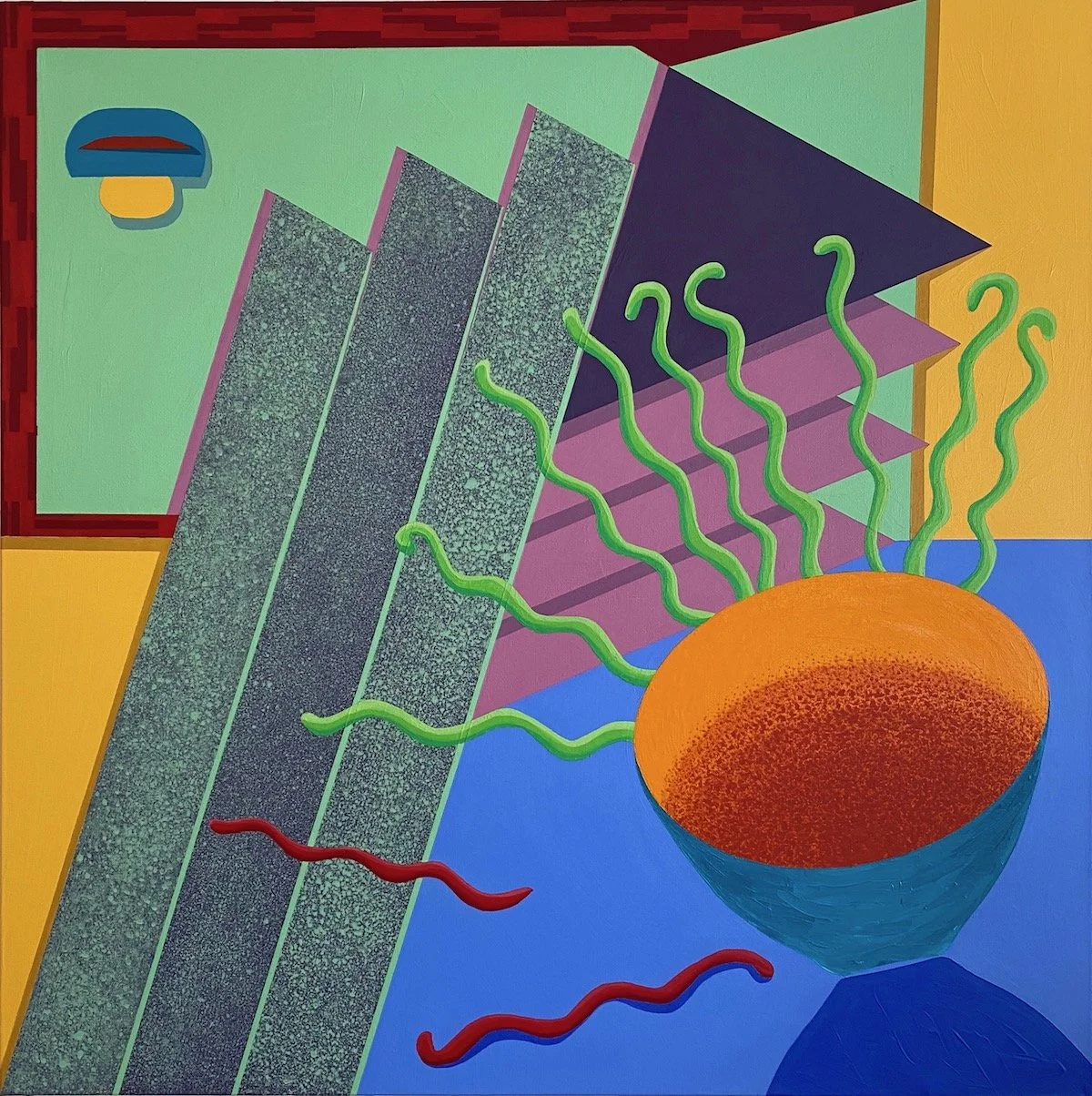
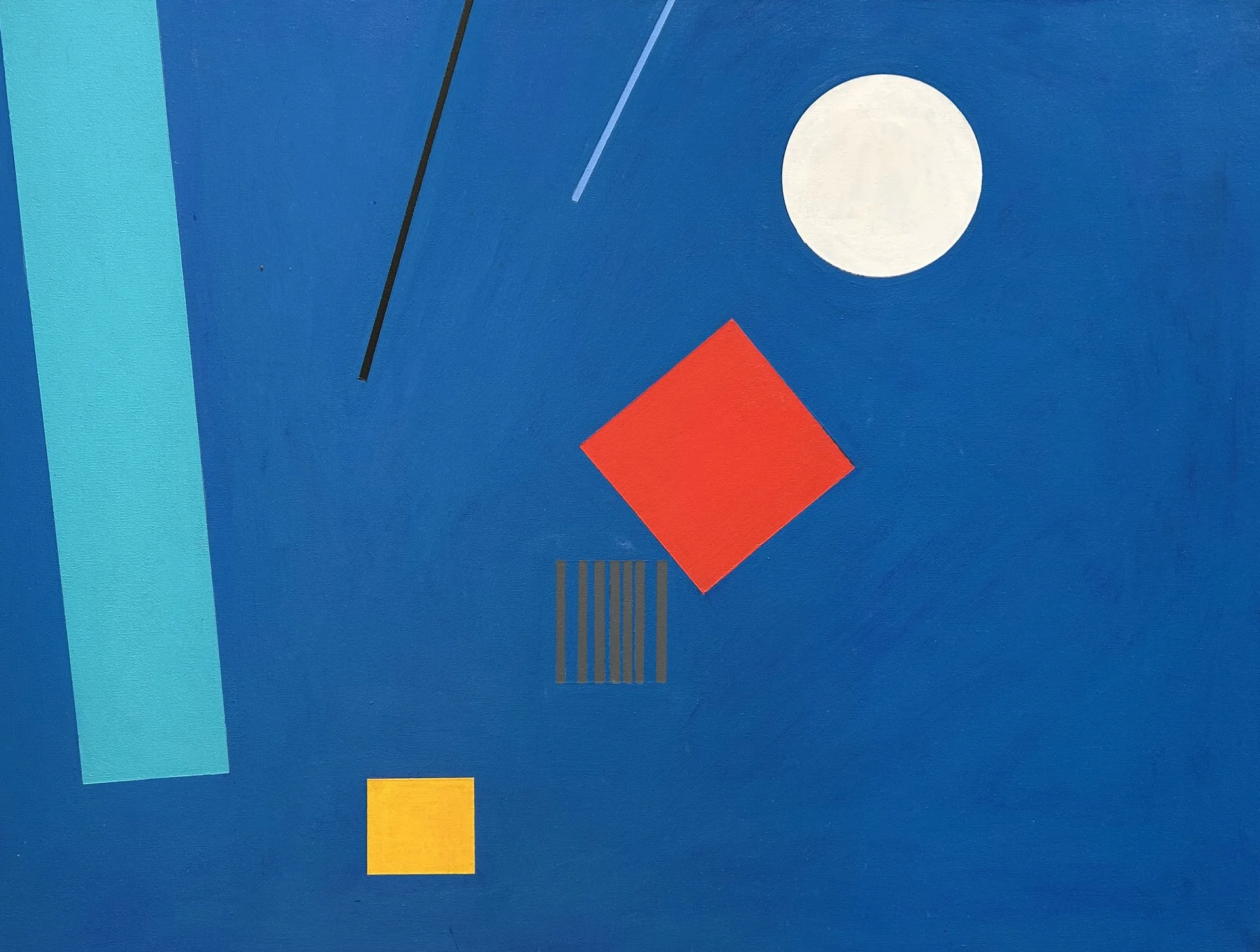
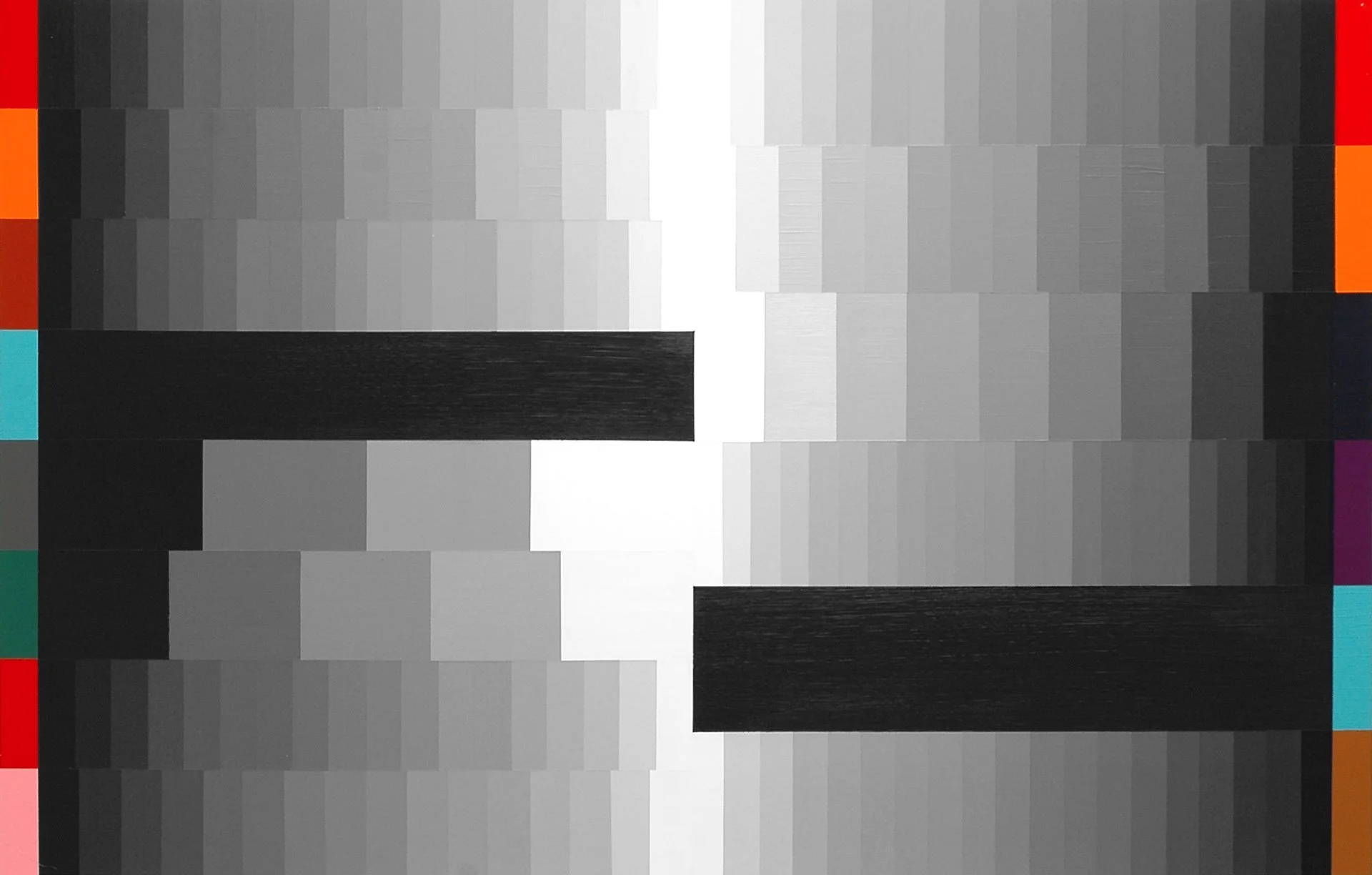
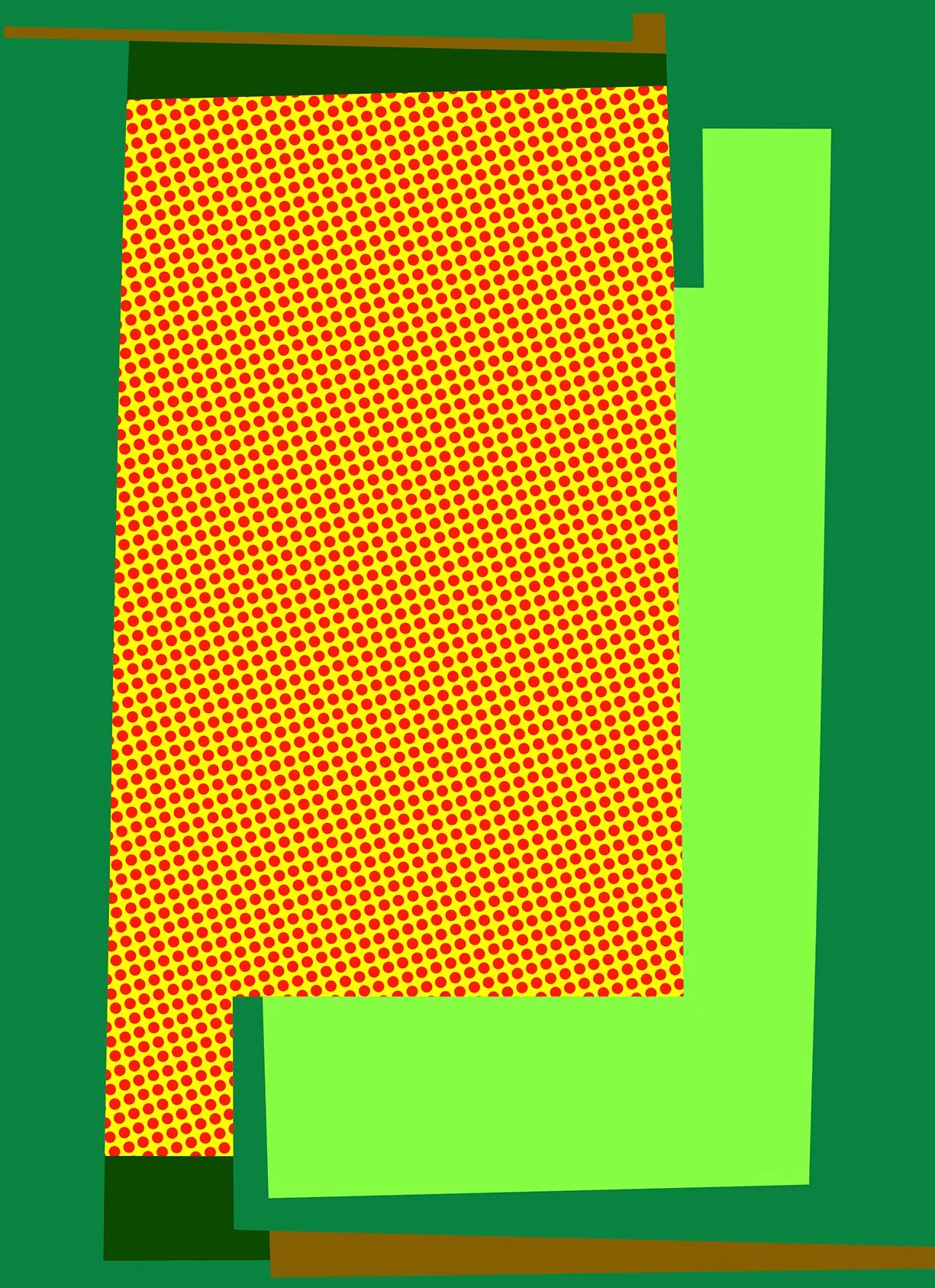
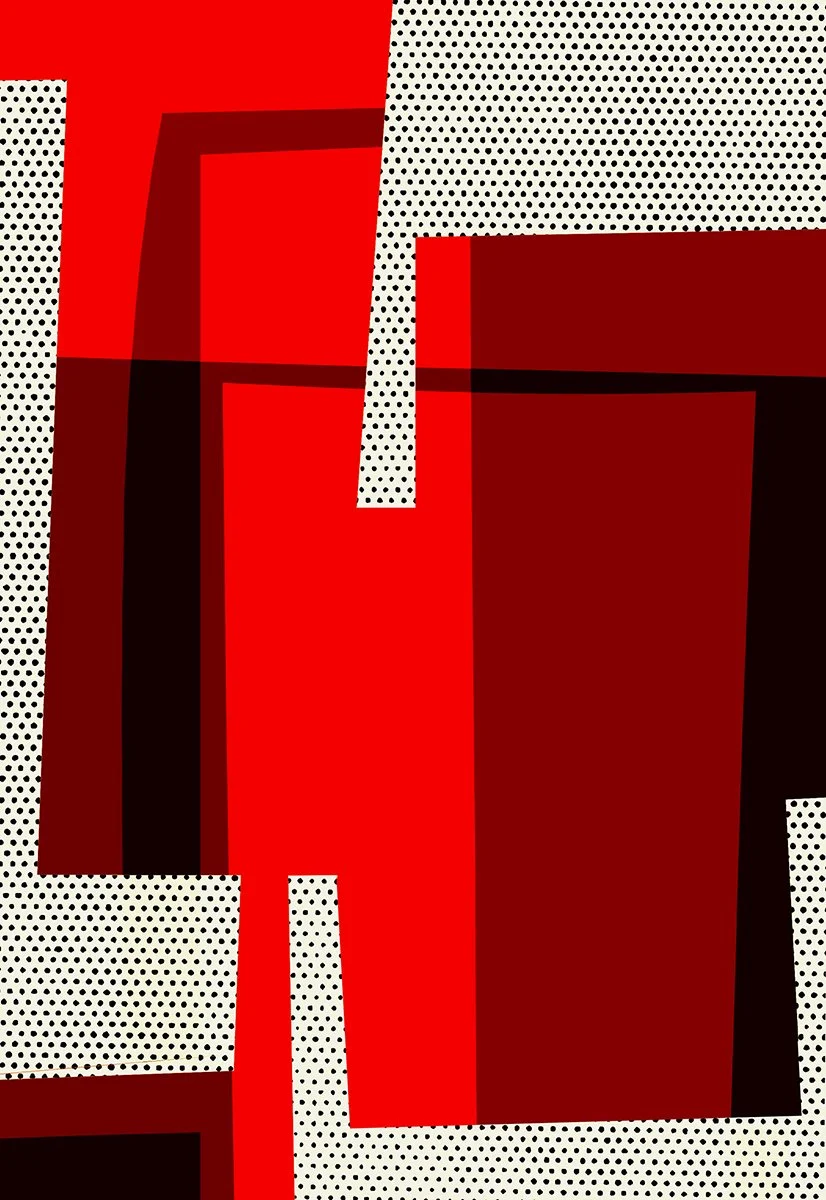
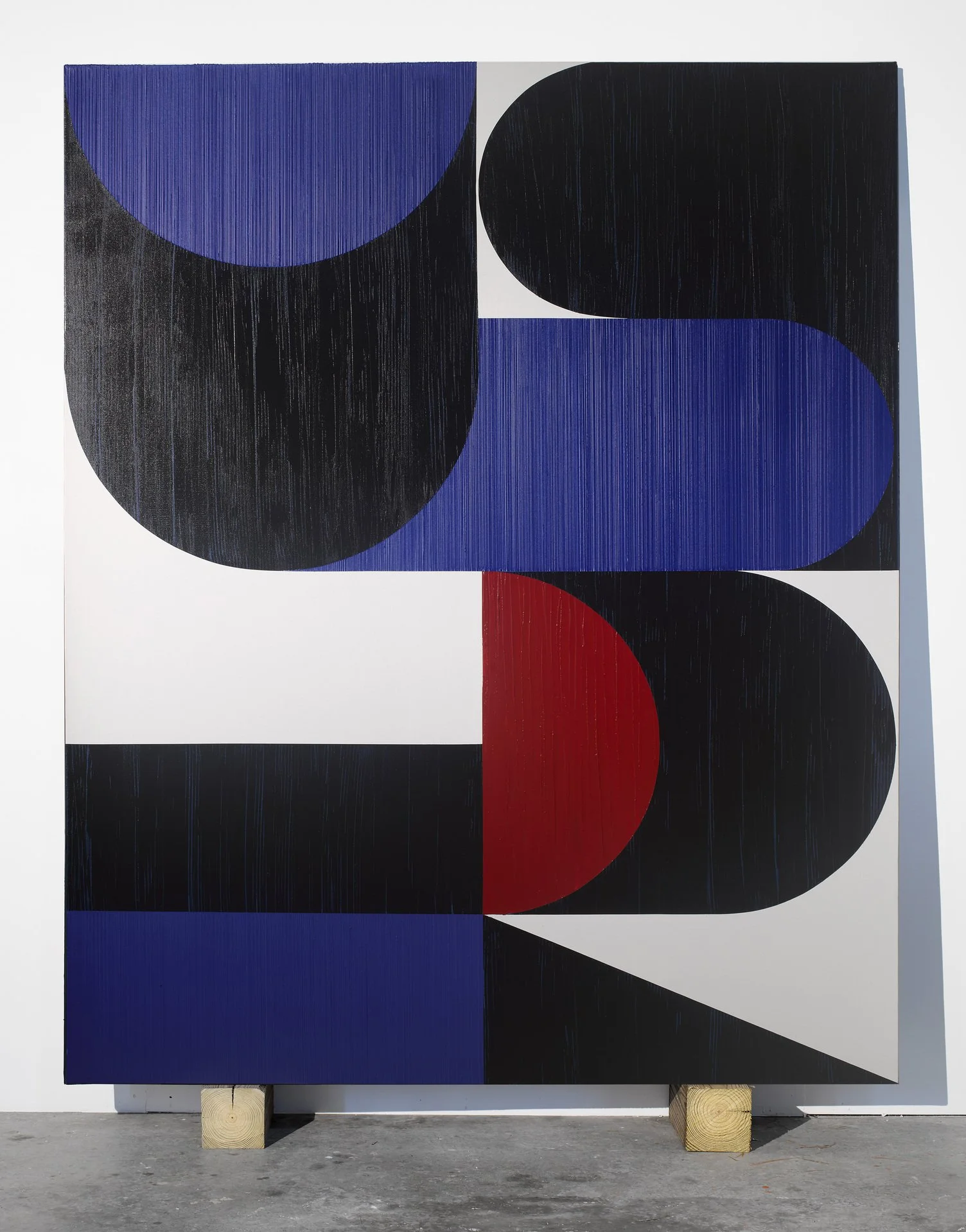
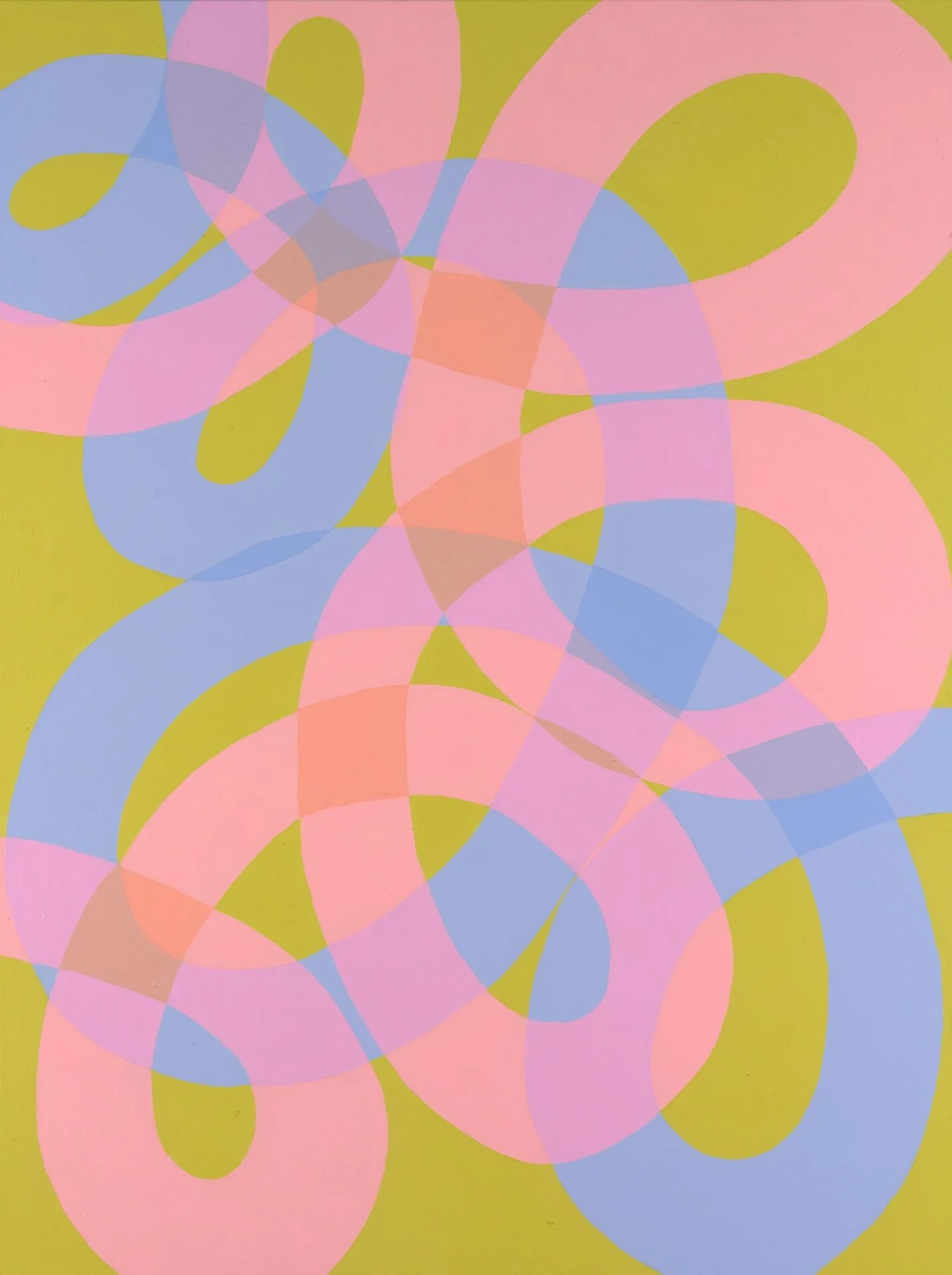
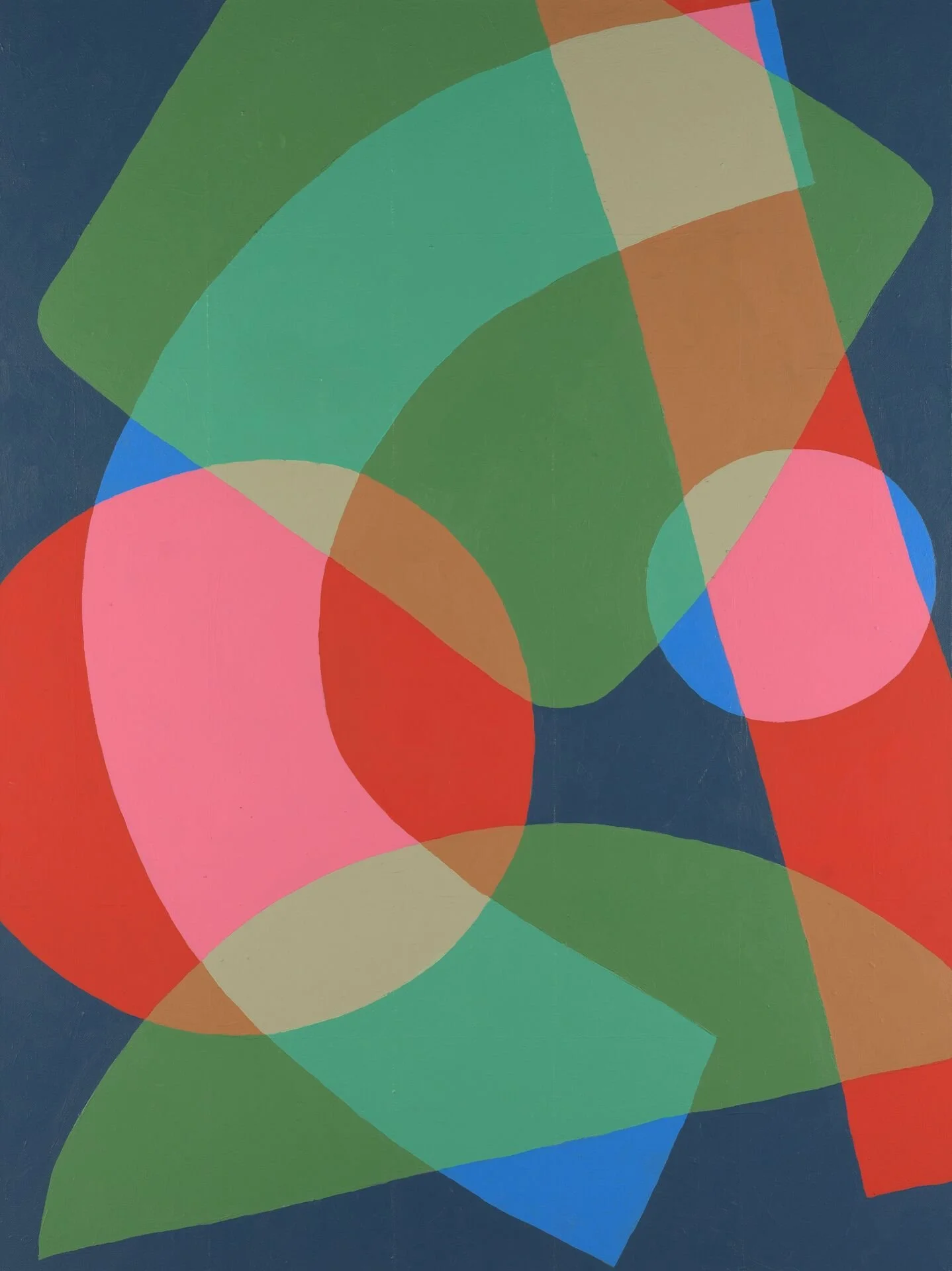
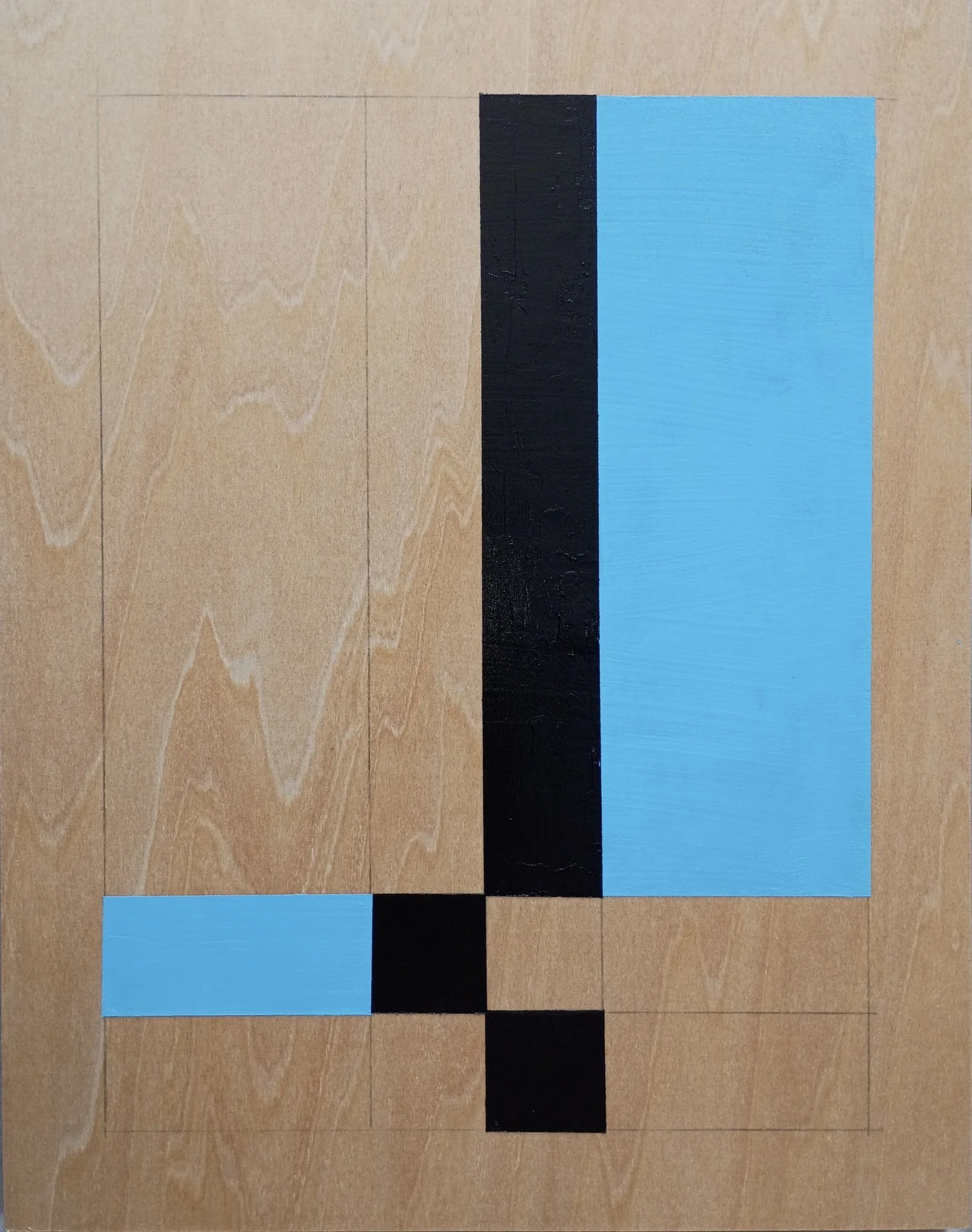
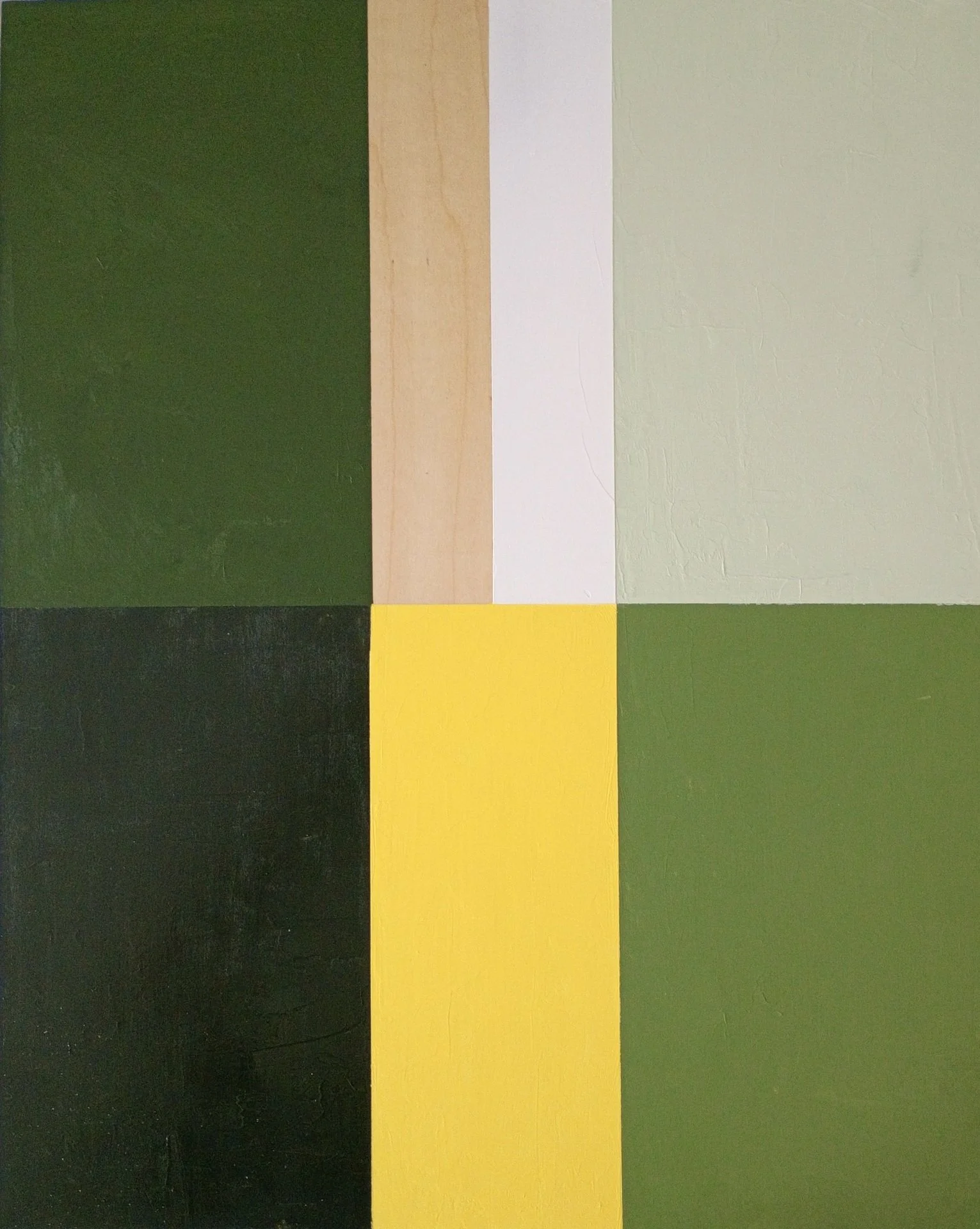
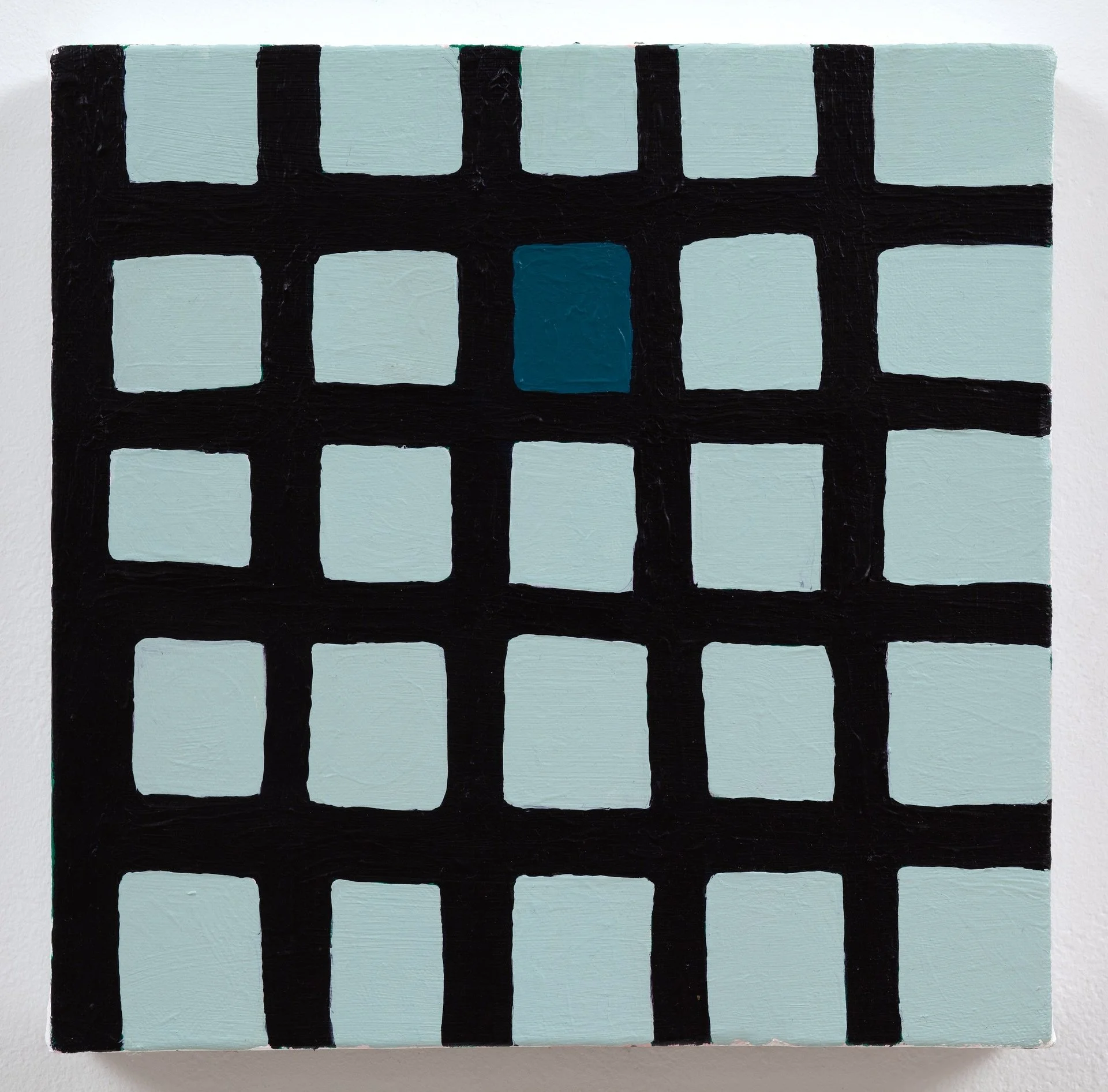
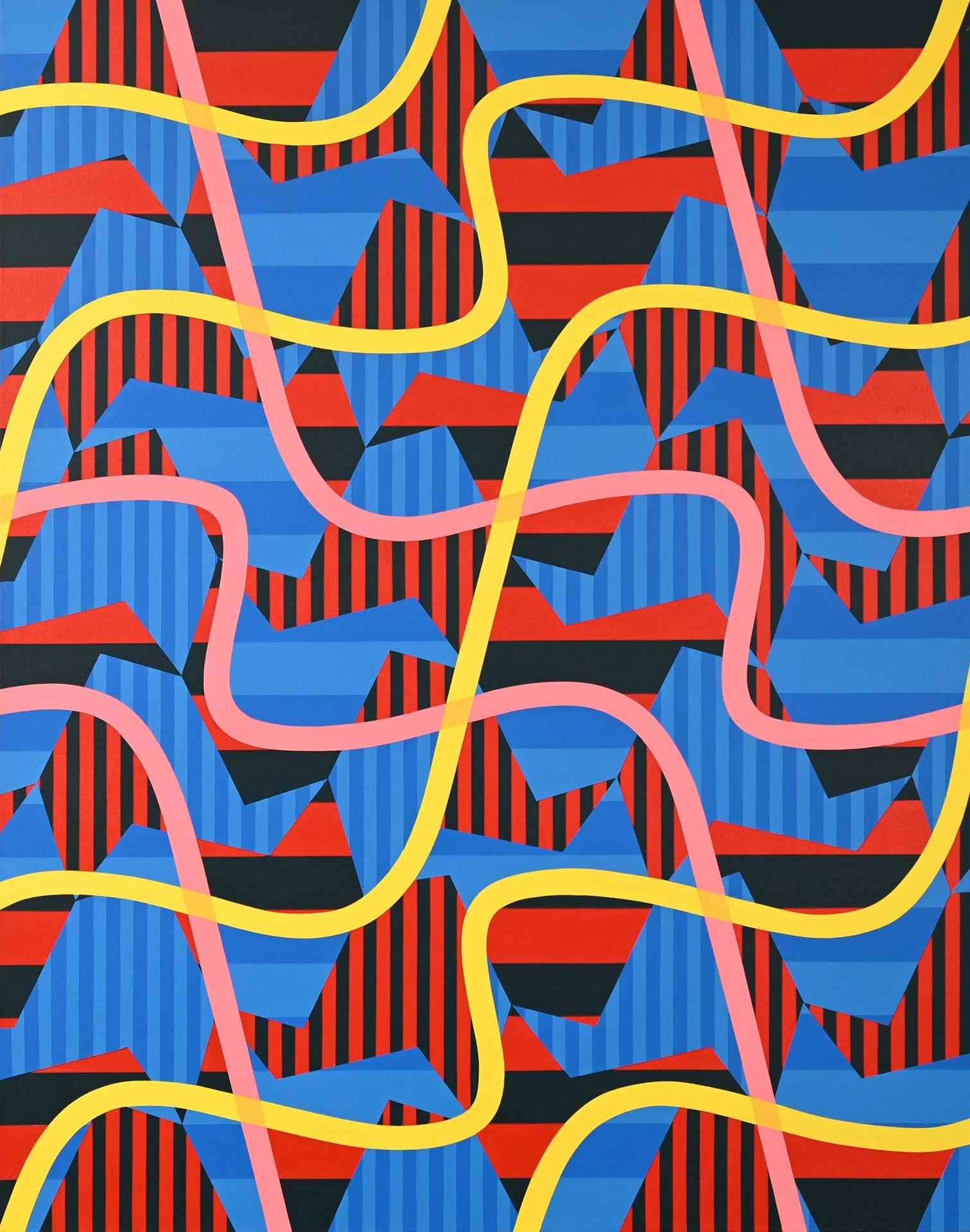
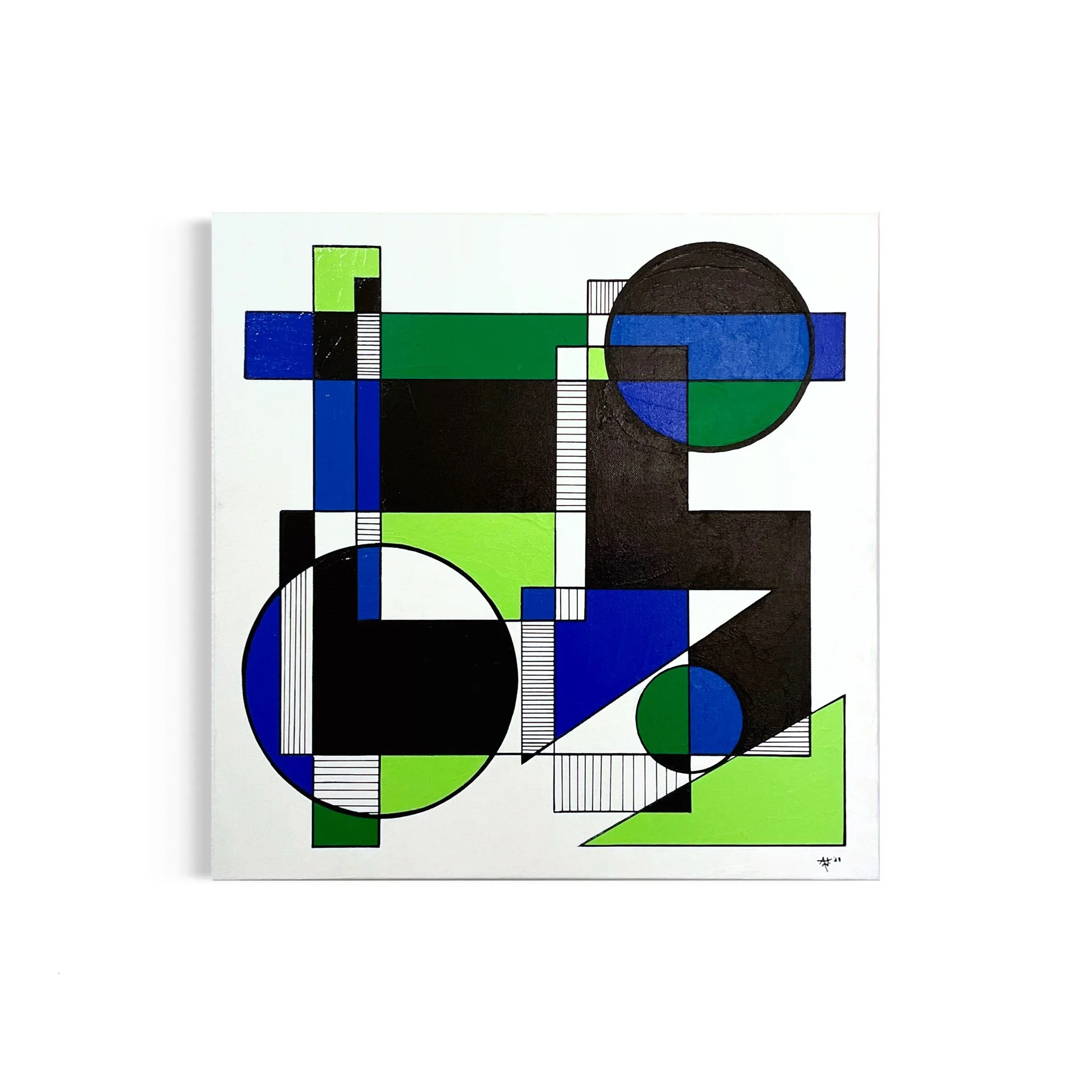
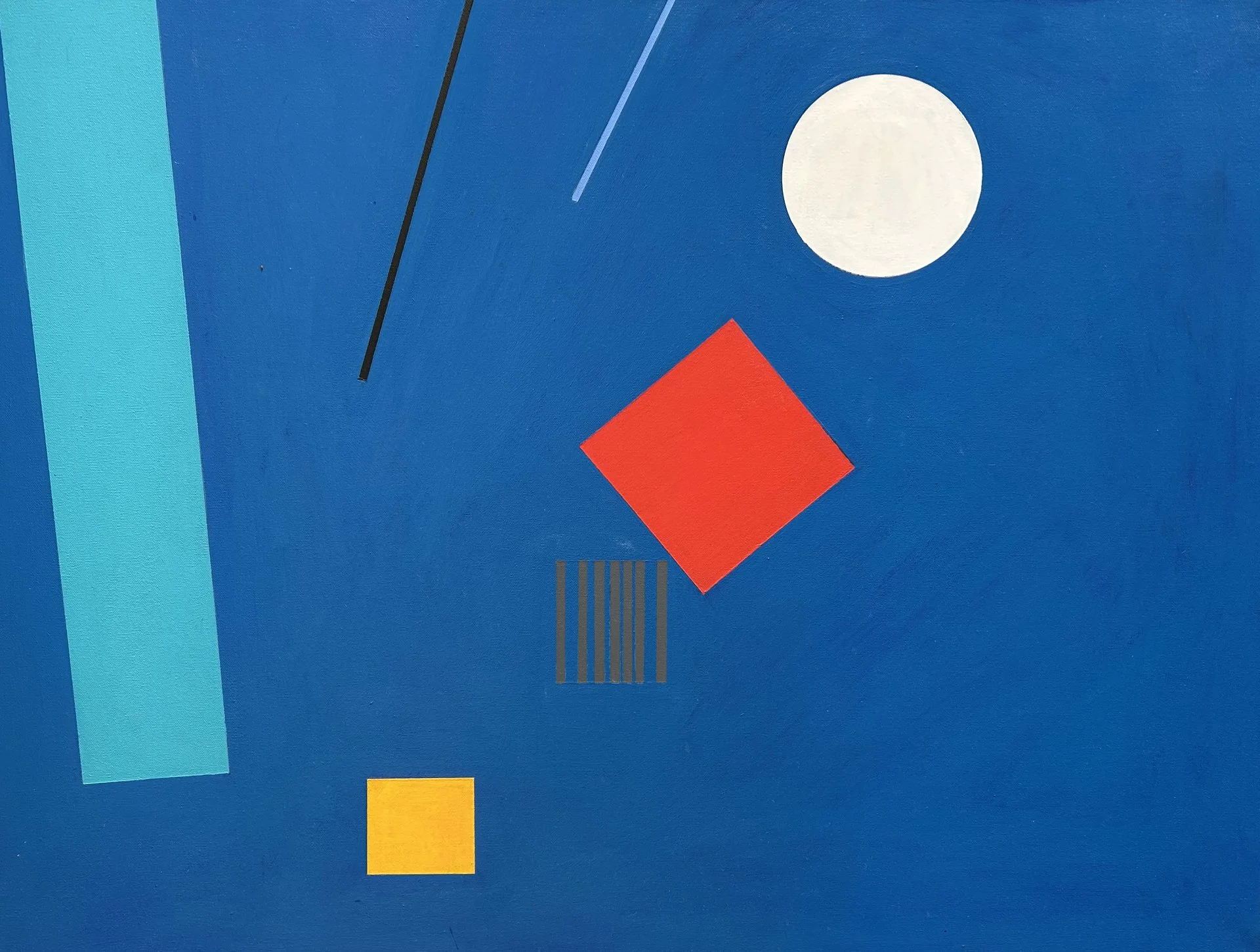
The artists in this section take their cues from a more recent history of abstraction. In an exploration of color, shape, and perspective, they create compositions that variously produce strong gestalt effects, strike a harmonious balance, and vibrate with disorienting spatial illusions.
Some artists invoke geometry as a conceptual system, exemplified by Marcel Ceuppens, who approaches his compositions like visual riddles and Christopher Griffith, who reduces language into geometric fragments, transforming four-letter words into ambiguous graphic forms; whereas Sui Ki Law resists symmetry and hierarchy by creating forms that are partial and unstable.
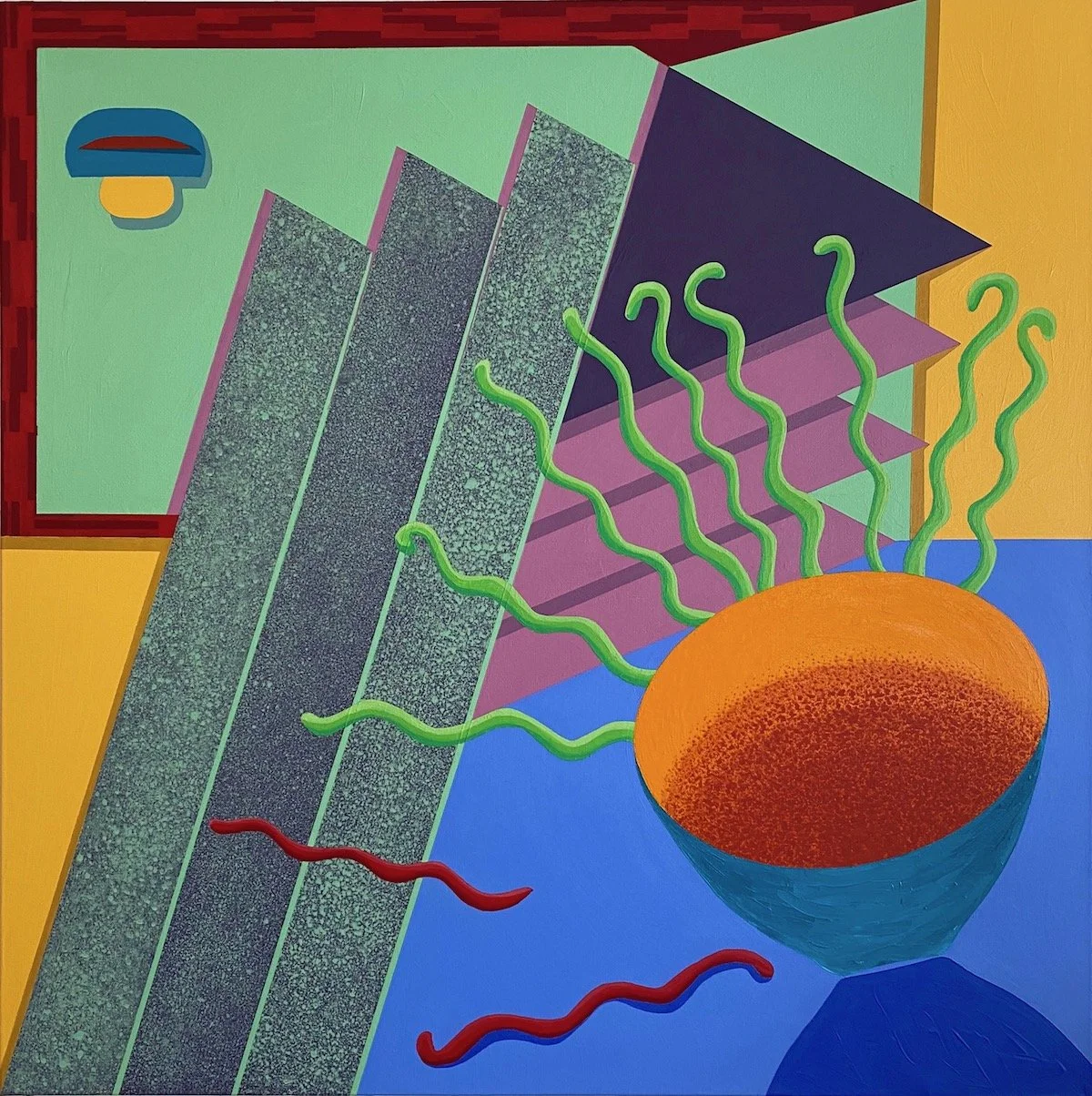
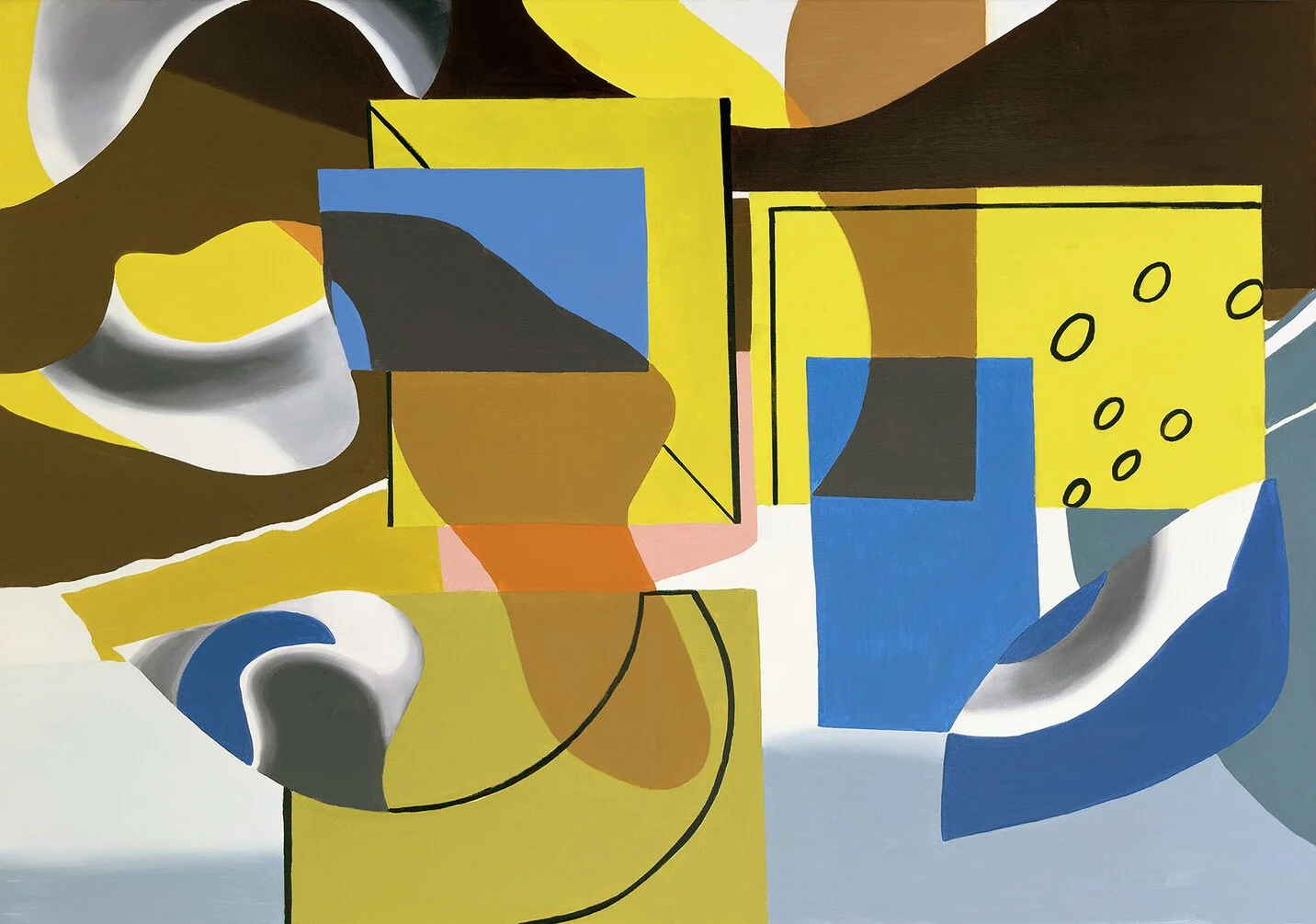
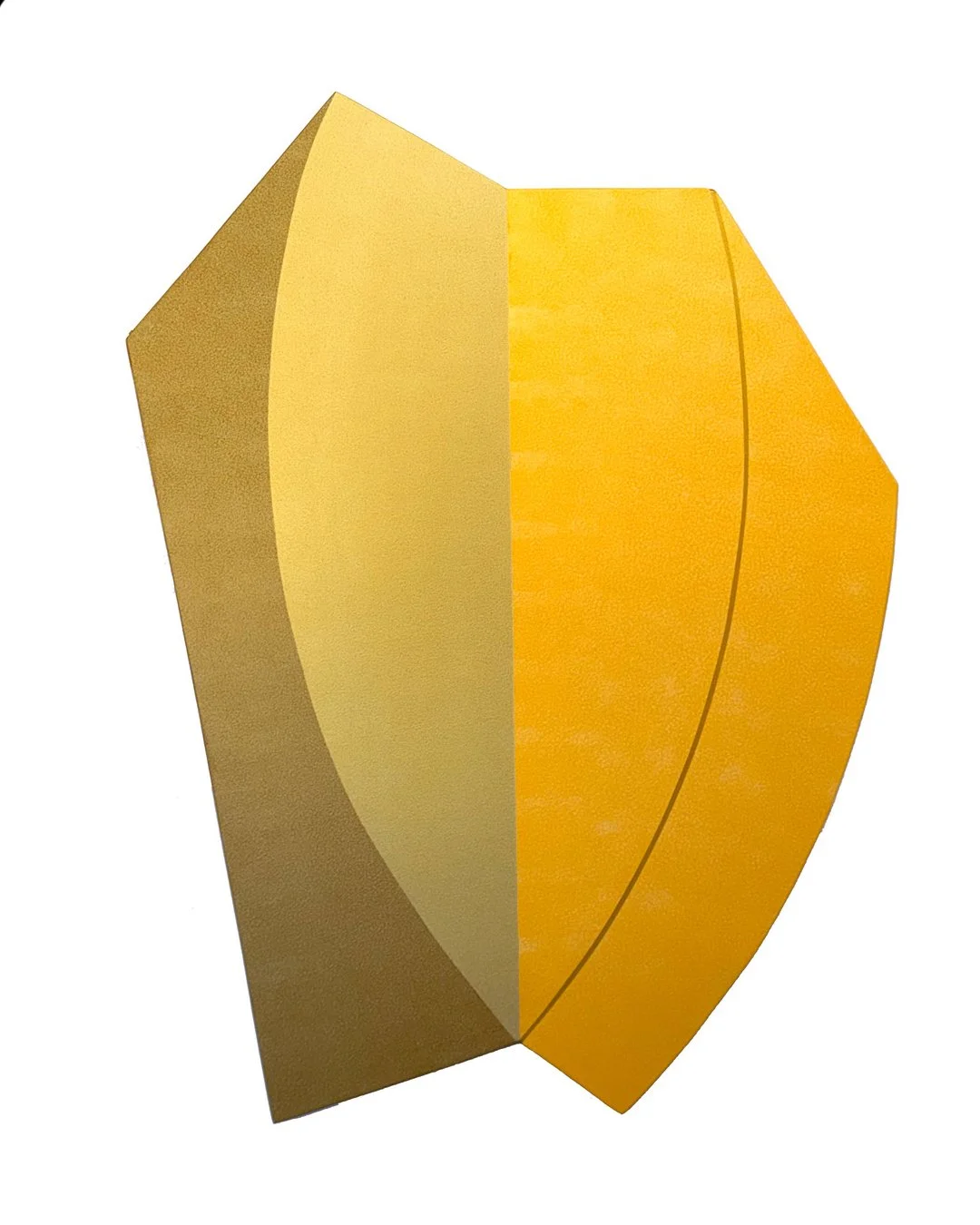
While Frederick Smith uses shaped canvases to enhance spatial illusion and the objecthood of the painting, painters such as Julia Deckman and Don Fortenberry approach geometry as a generative language of color and scale, wherein each form influences the next. In a similar manner, geometric order becomes more improvisational in the work of Julia Berkman and Kevin Daly.
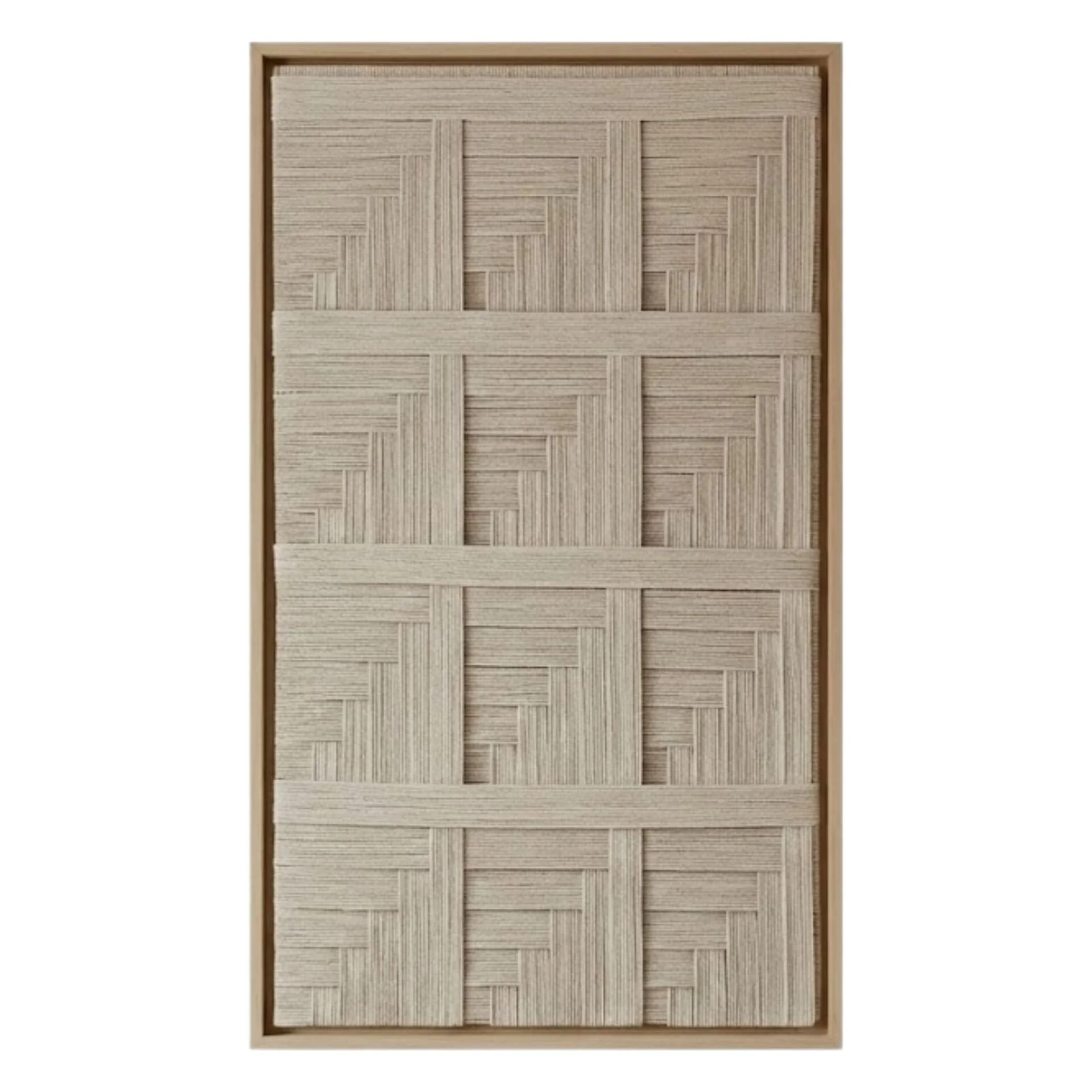
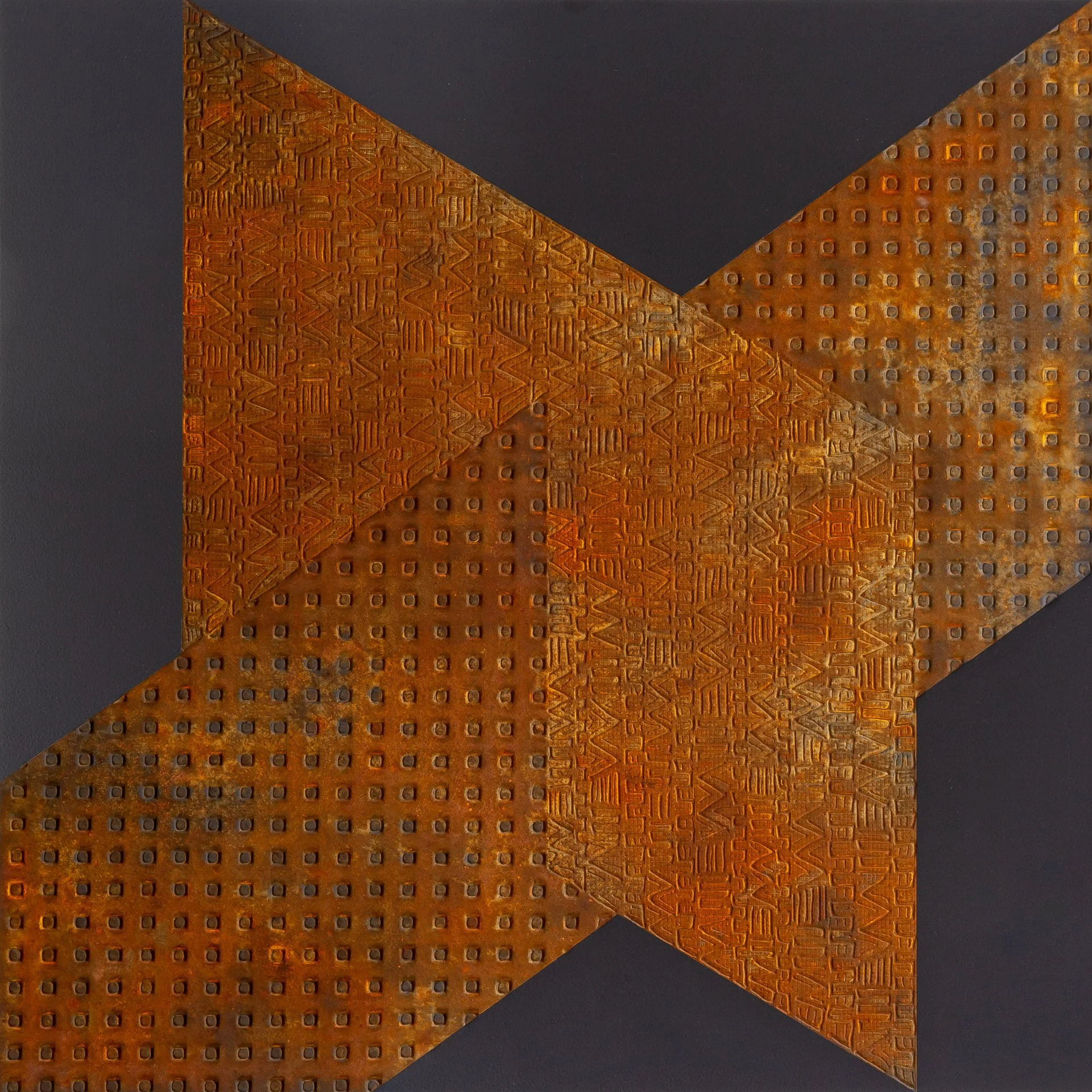
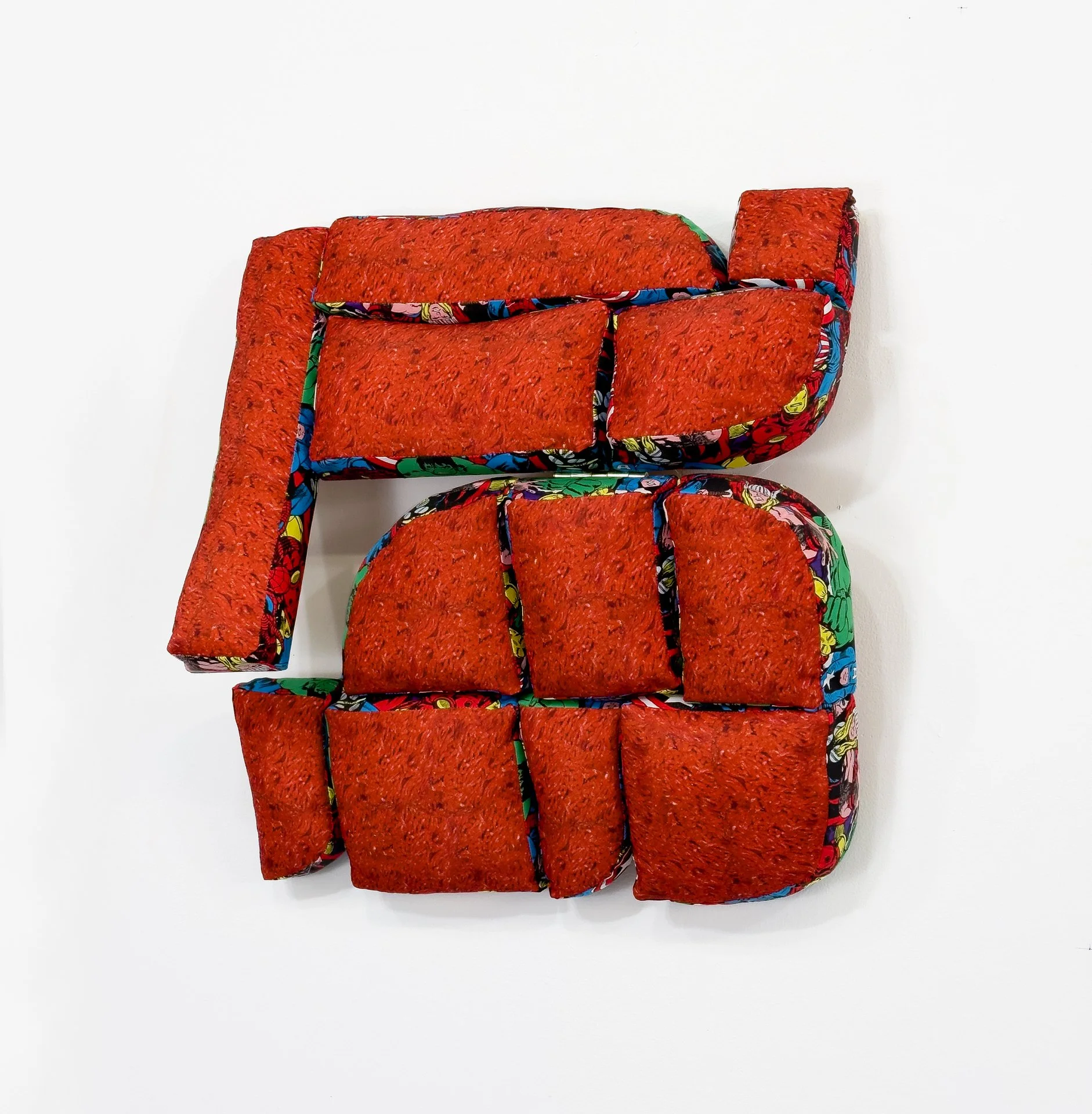
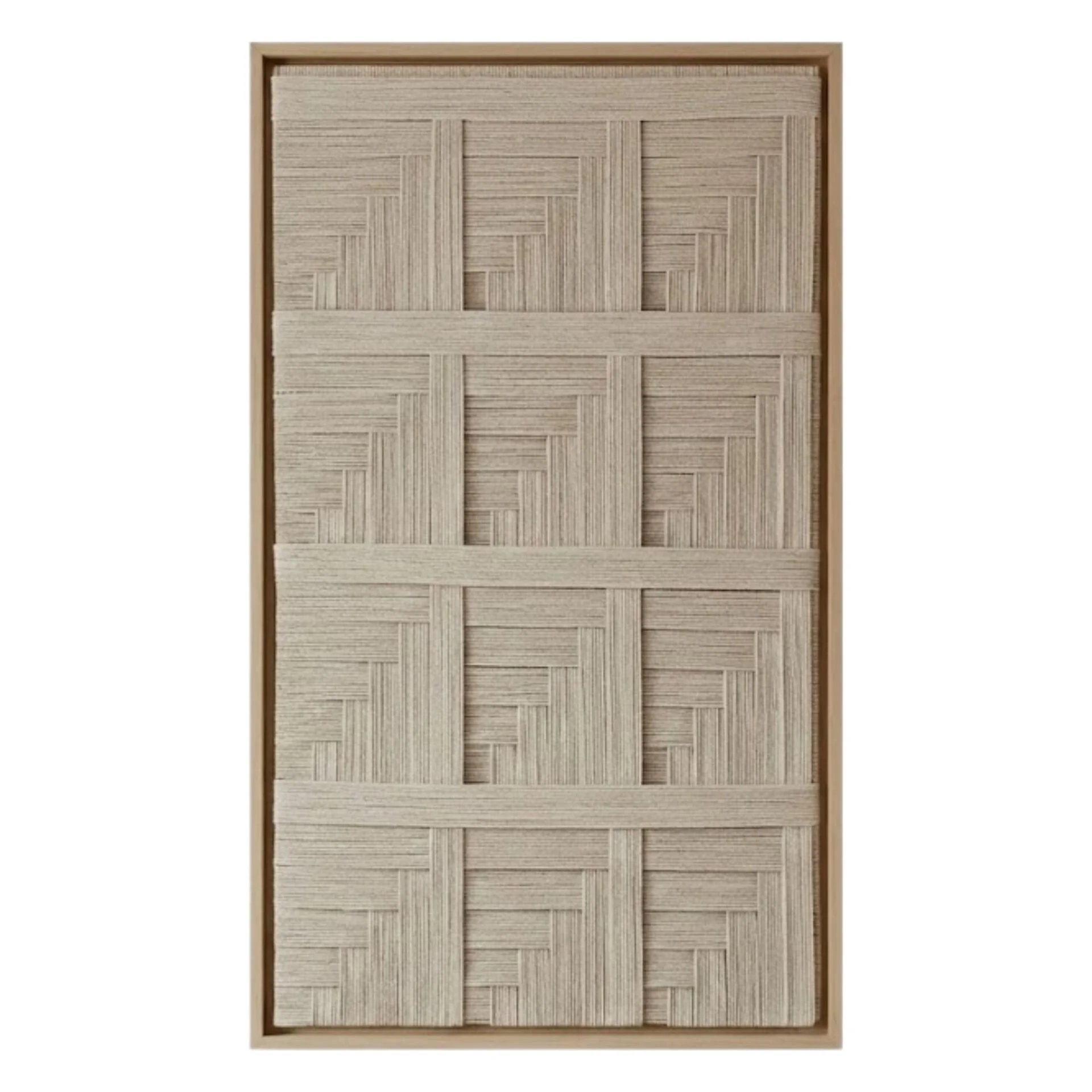
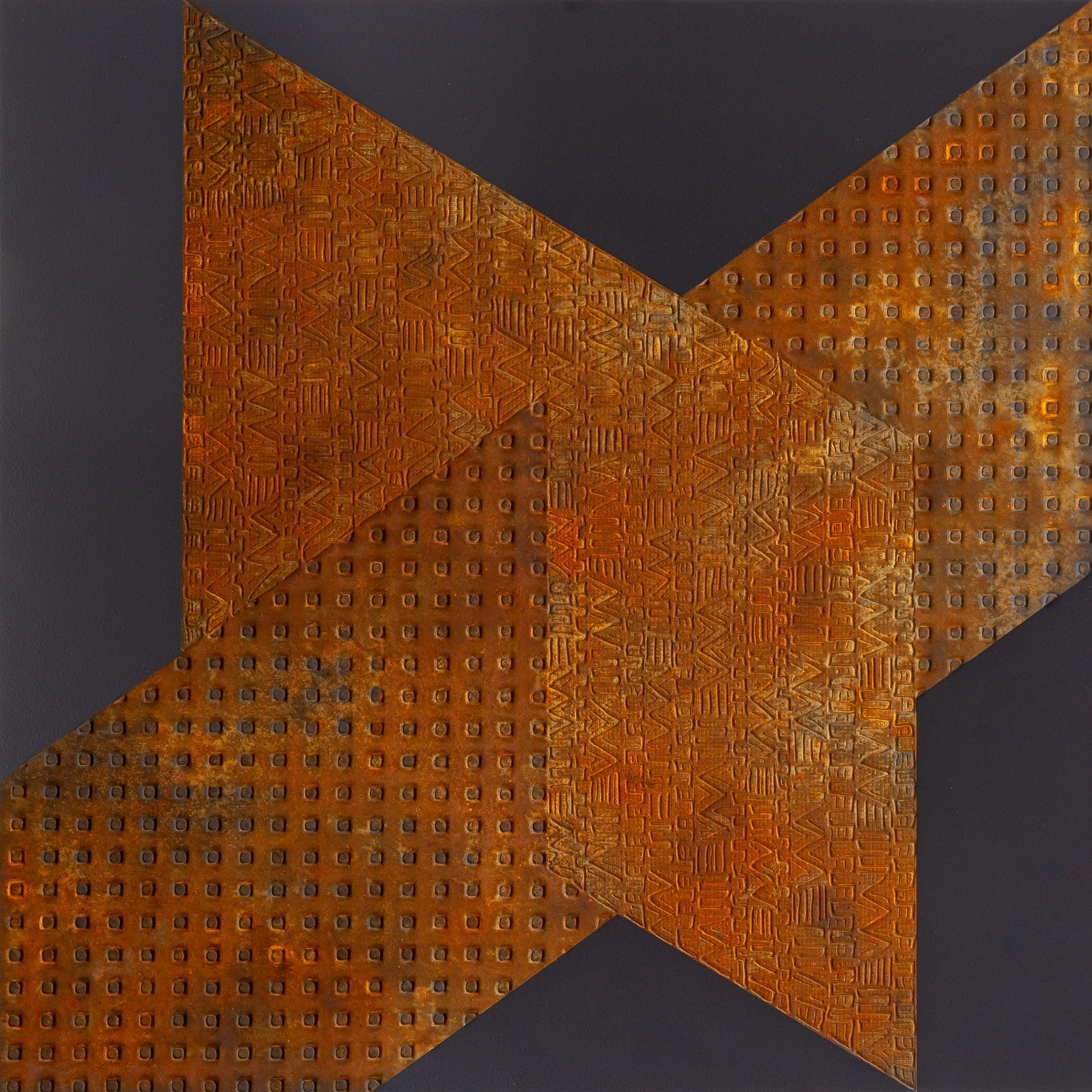
Material properties come to the fore in the work of Stella Berezovsky, as she builds expansive textile compositions from cotton cord arranged in grid systems, and Jamie Kost, who constructs works through architectural systems of alignment and repetition, layering rust and mixed media to introduce organic texture into otherwise precise linear frameworks.
WALL 2: OMNI
Jolie Hossack / Stephen Scrivener / Craig Wood / Tom Hecht / André Brik / Ori Aviram / Veronica Primerano / Meg Cook / William Waggoner / Joe Arts / Gregg Chann / Ginnie Gardiner
In this section, artists take greater liberties, playing with unconventional materials, bold colors, and sculptural forms, such that their works possess a lightheartedness and joyous exuberance.
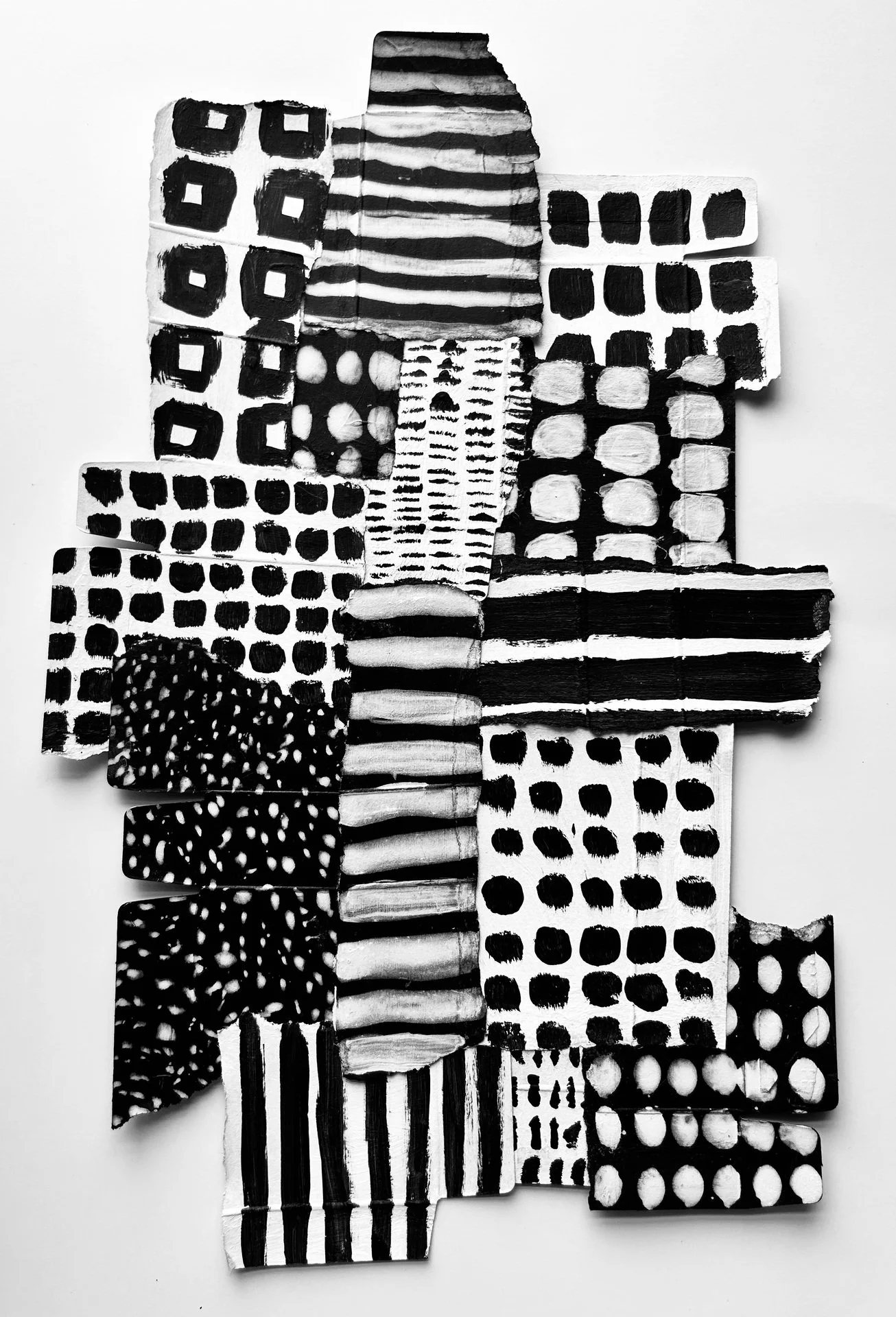
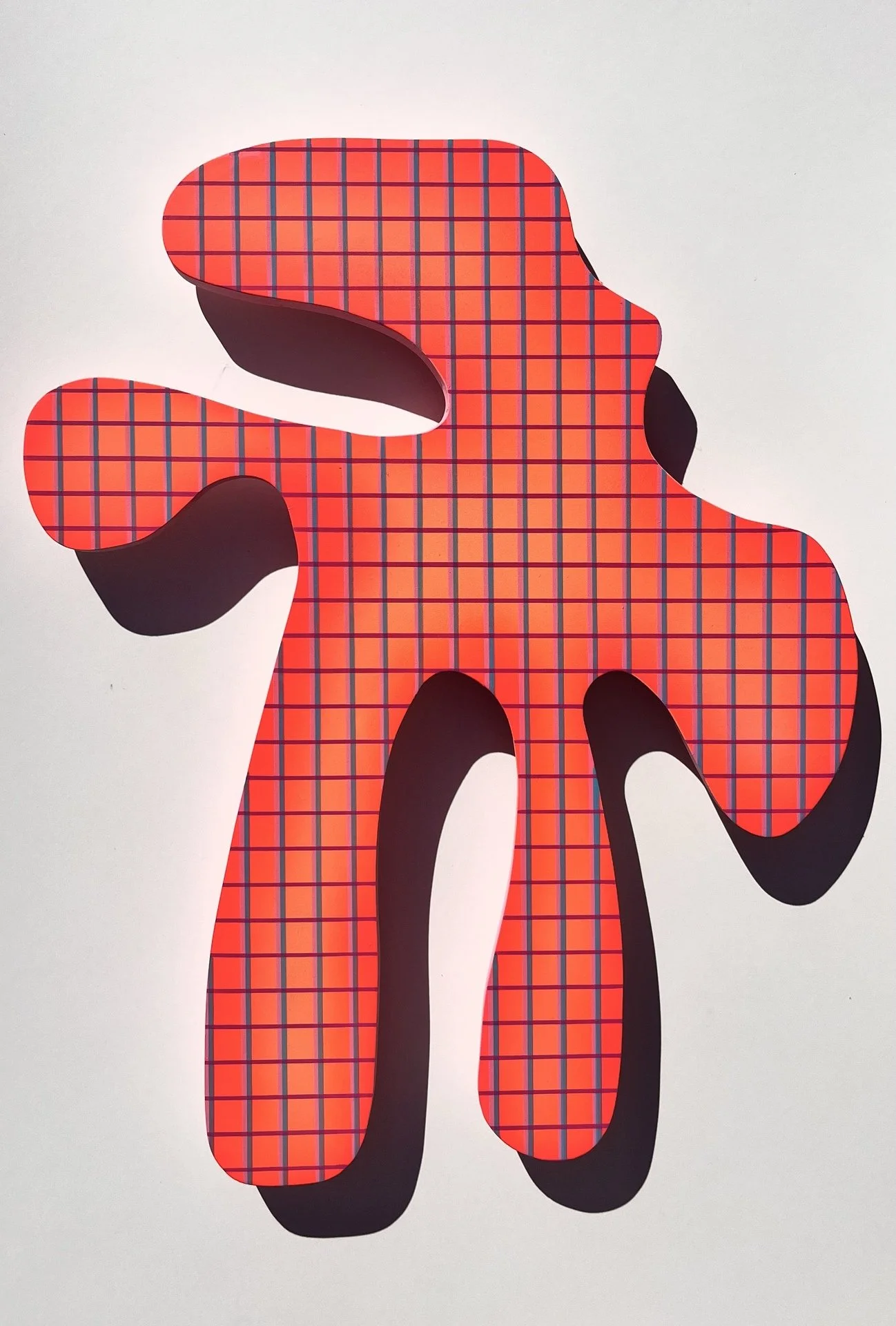
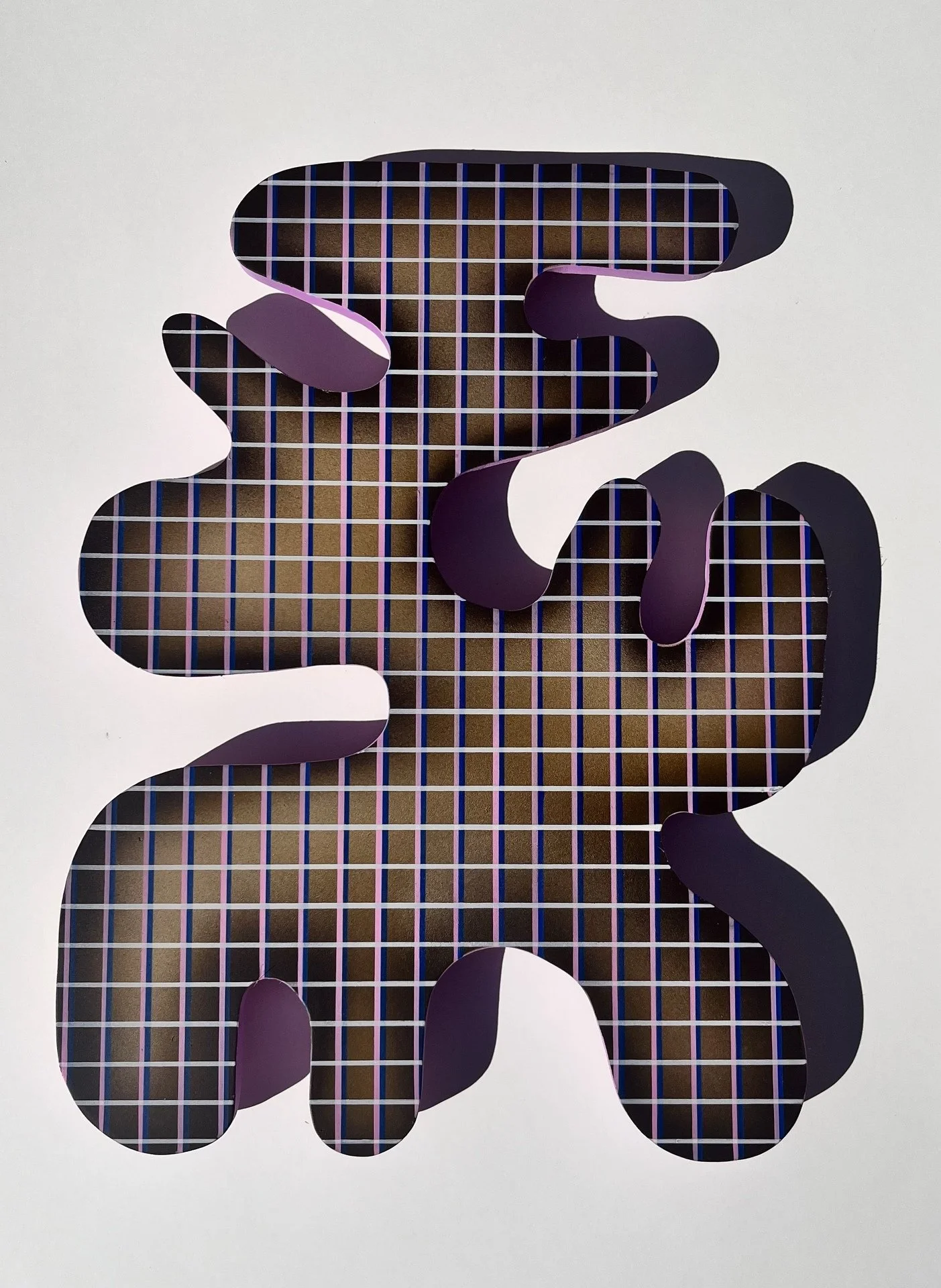
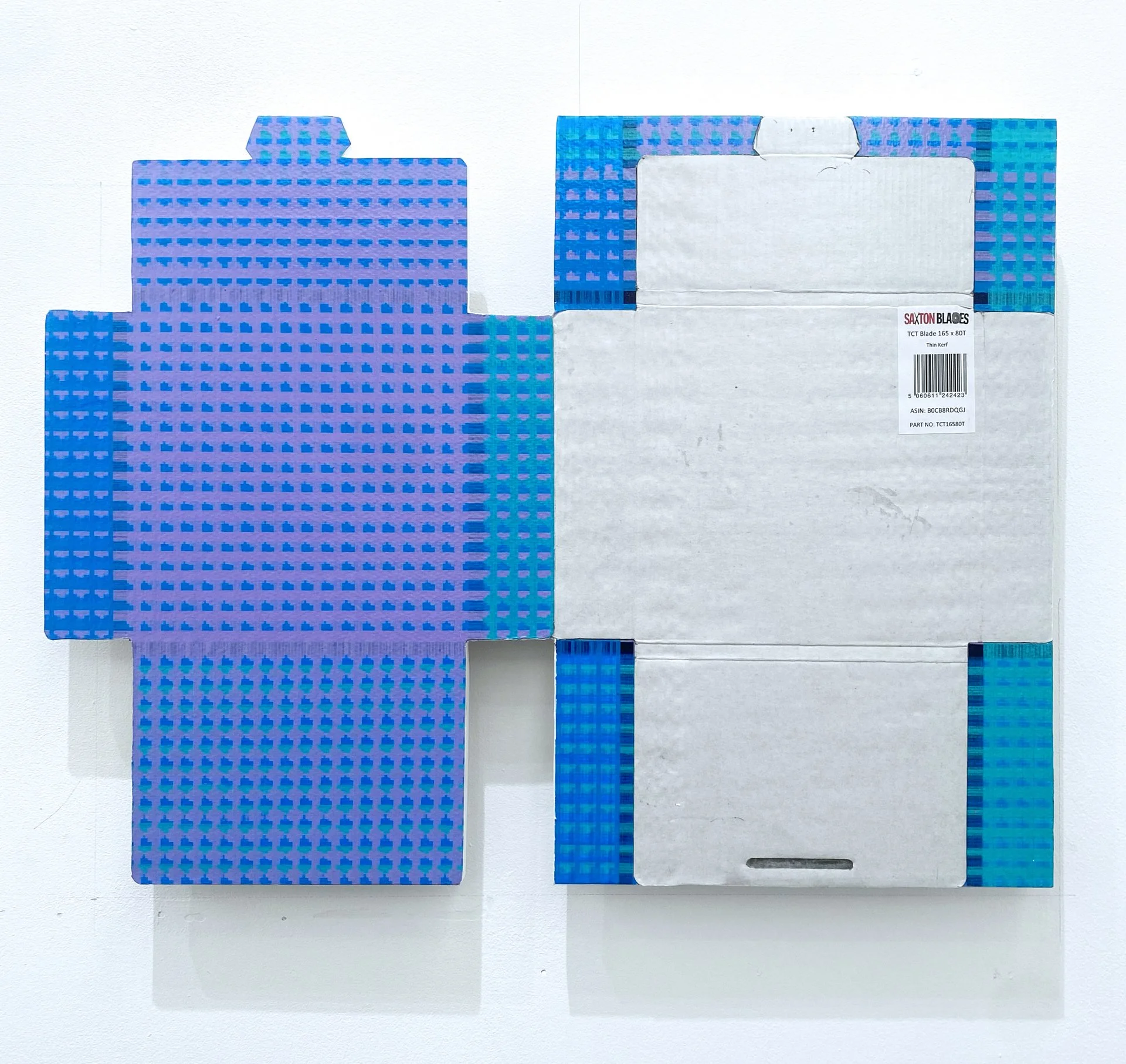
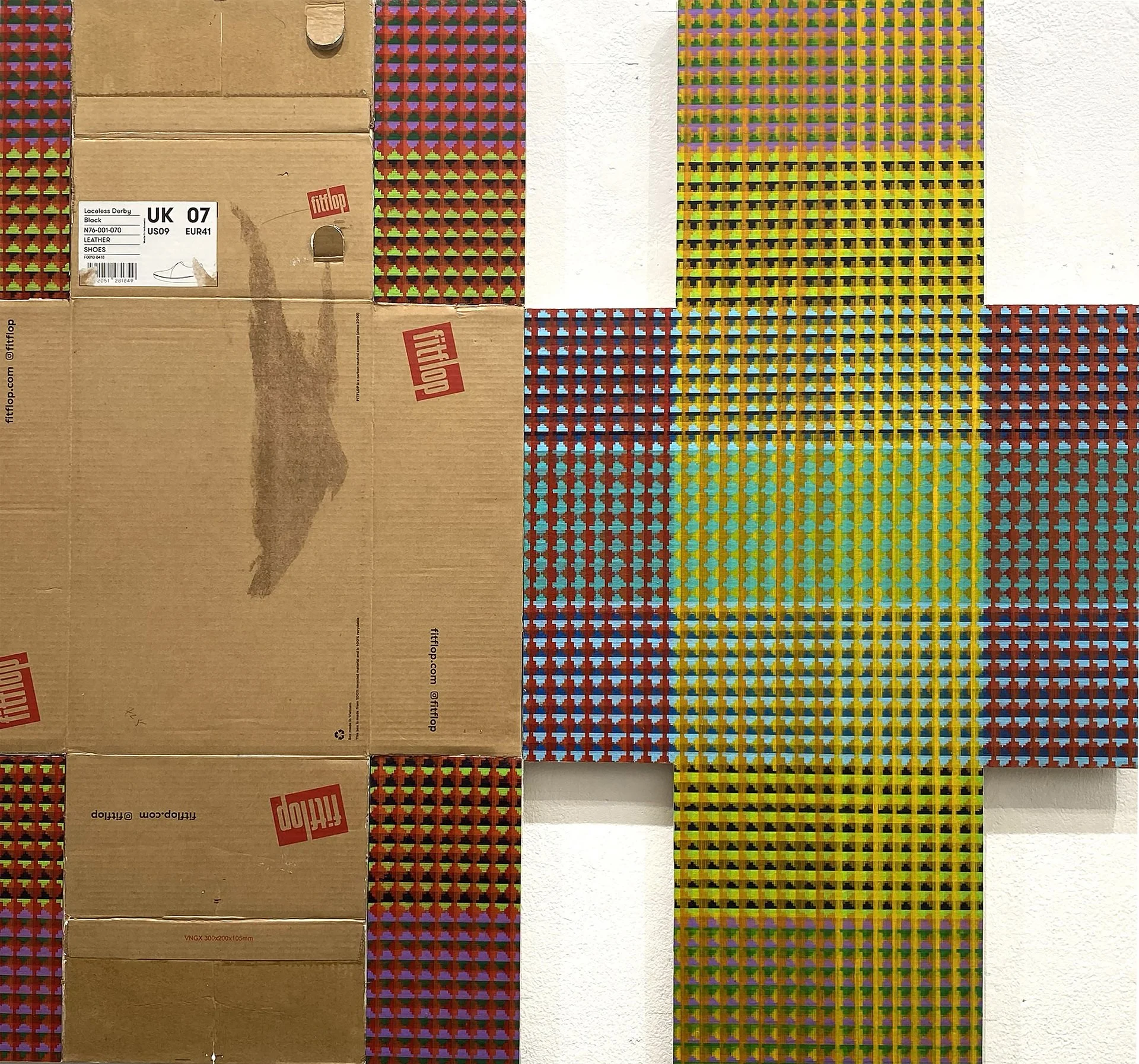
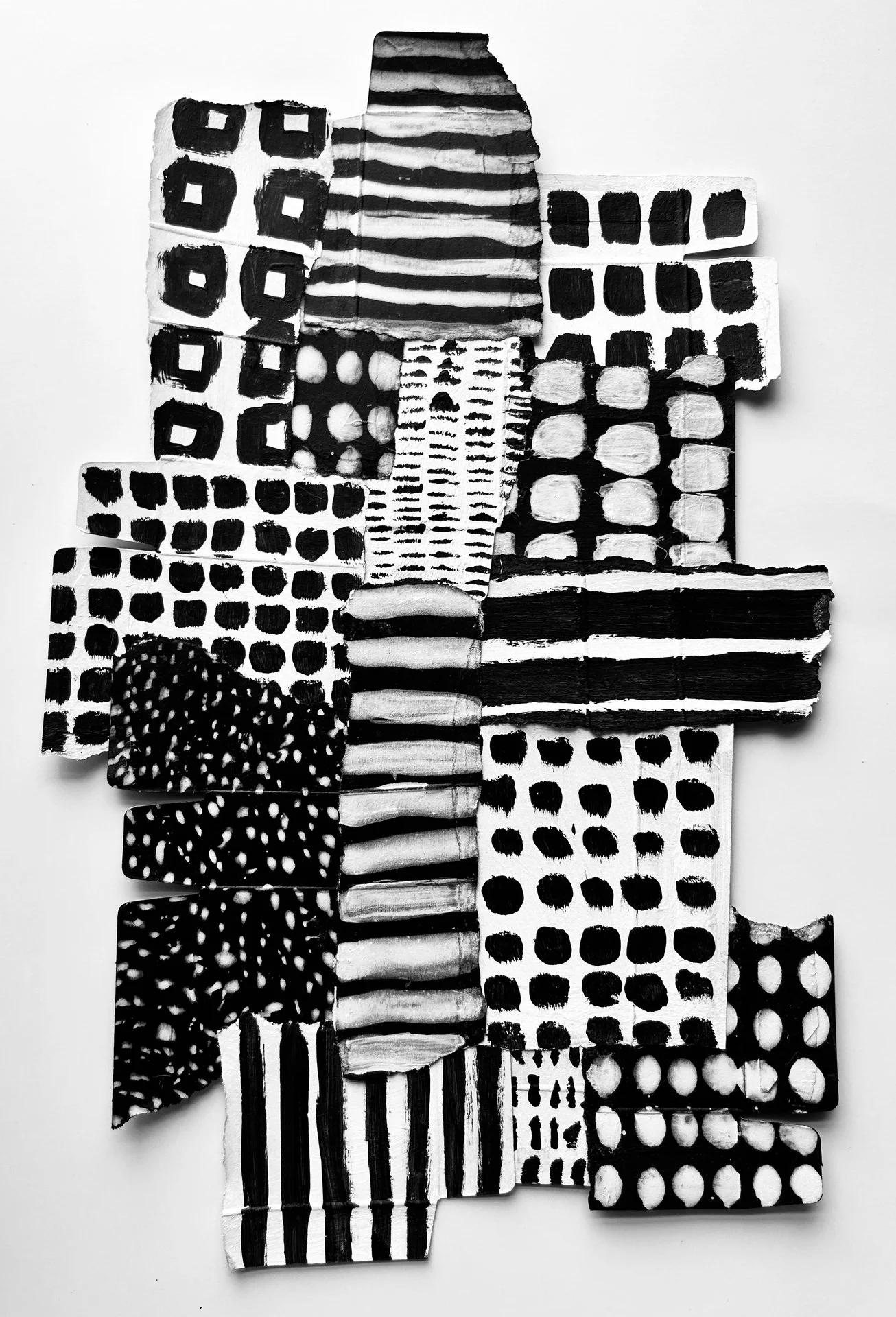
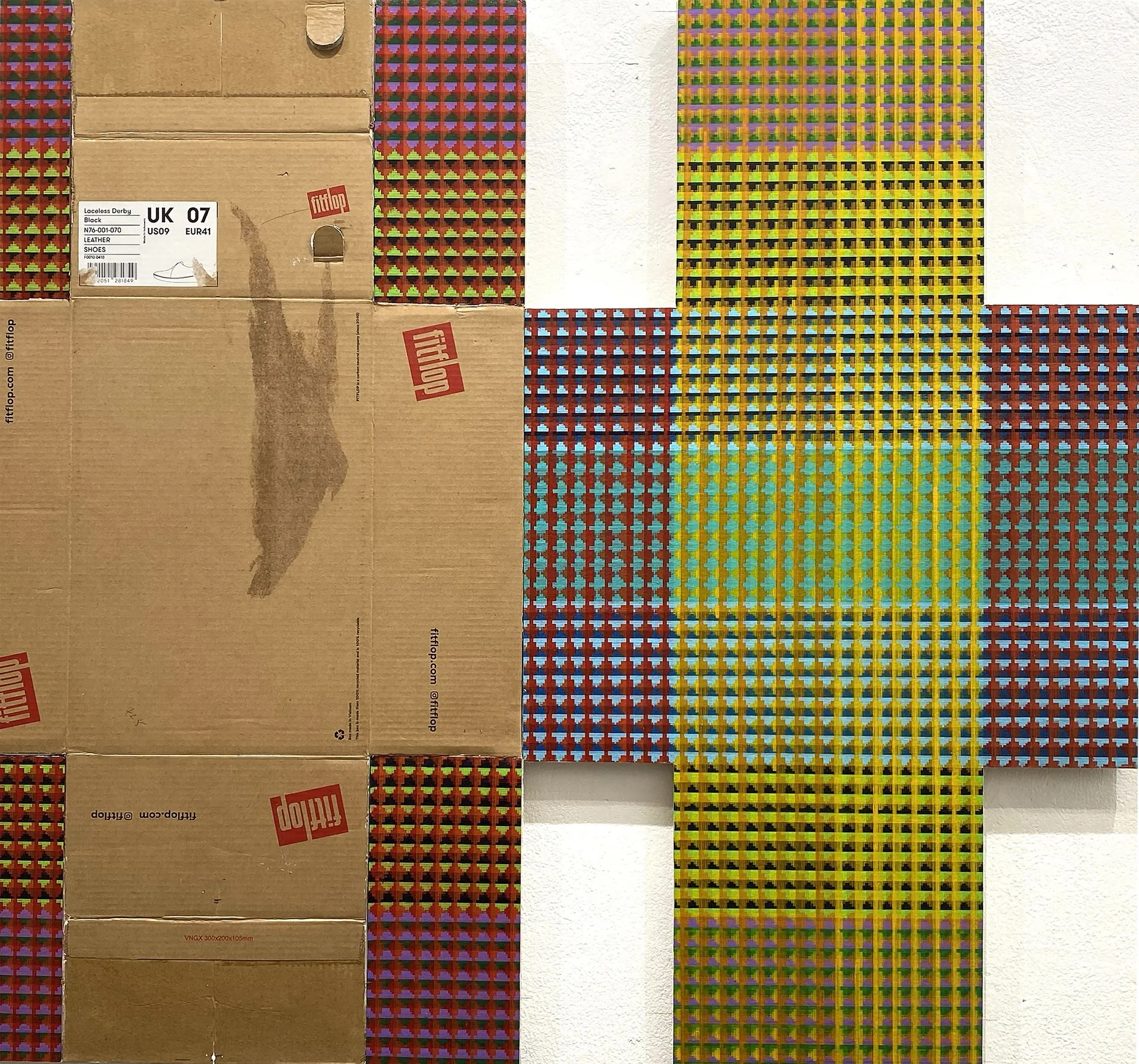
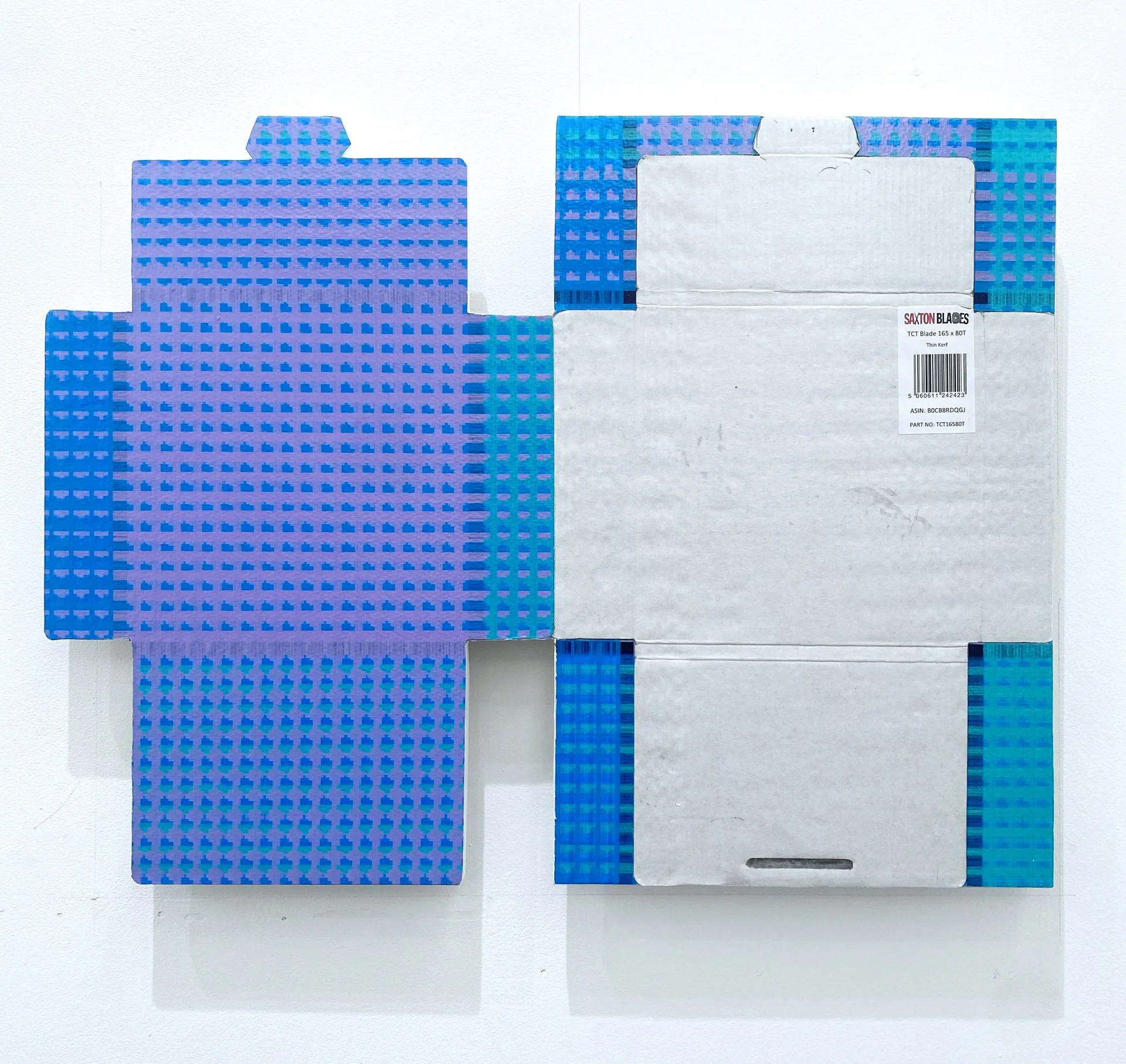
Material experimentation is exemplified by the work of Jolie Hossack, who combines discarded materials and adorns them with bold patterns, and Stephen Scrivener who similarly deconstructs cardboard boxes to use as canvases, on which he paints gridded patterns in semi-monochromatic palettes inspired by Suprematism, De Stijl, and Op Art.
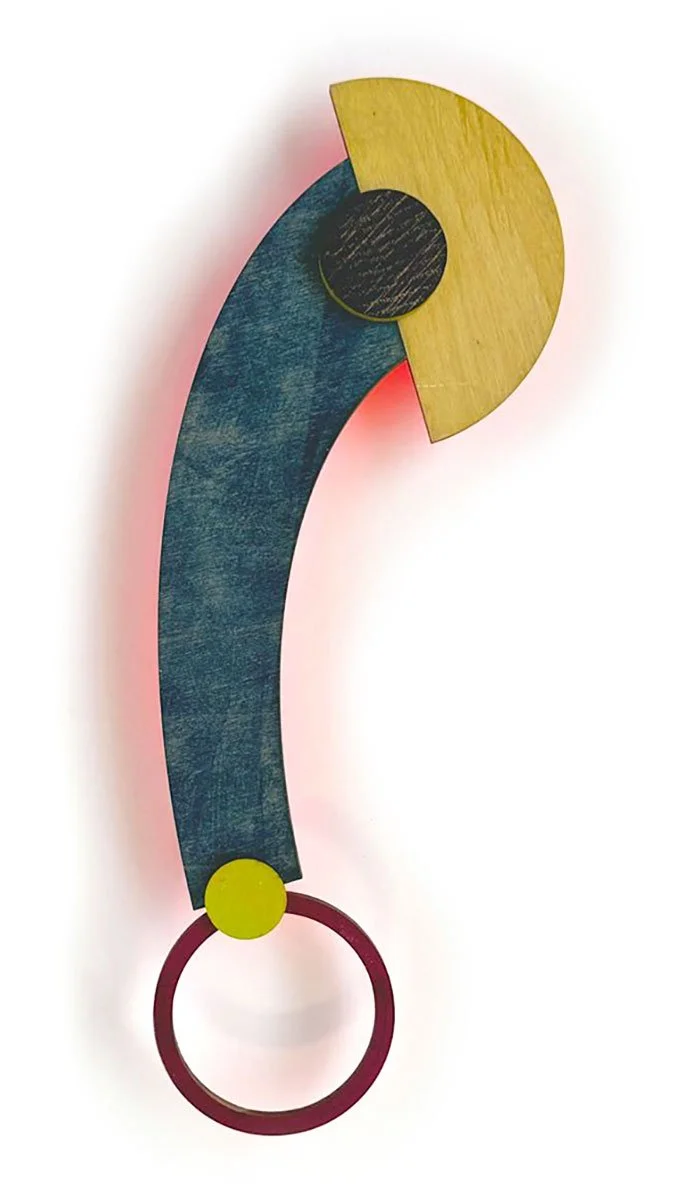
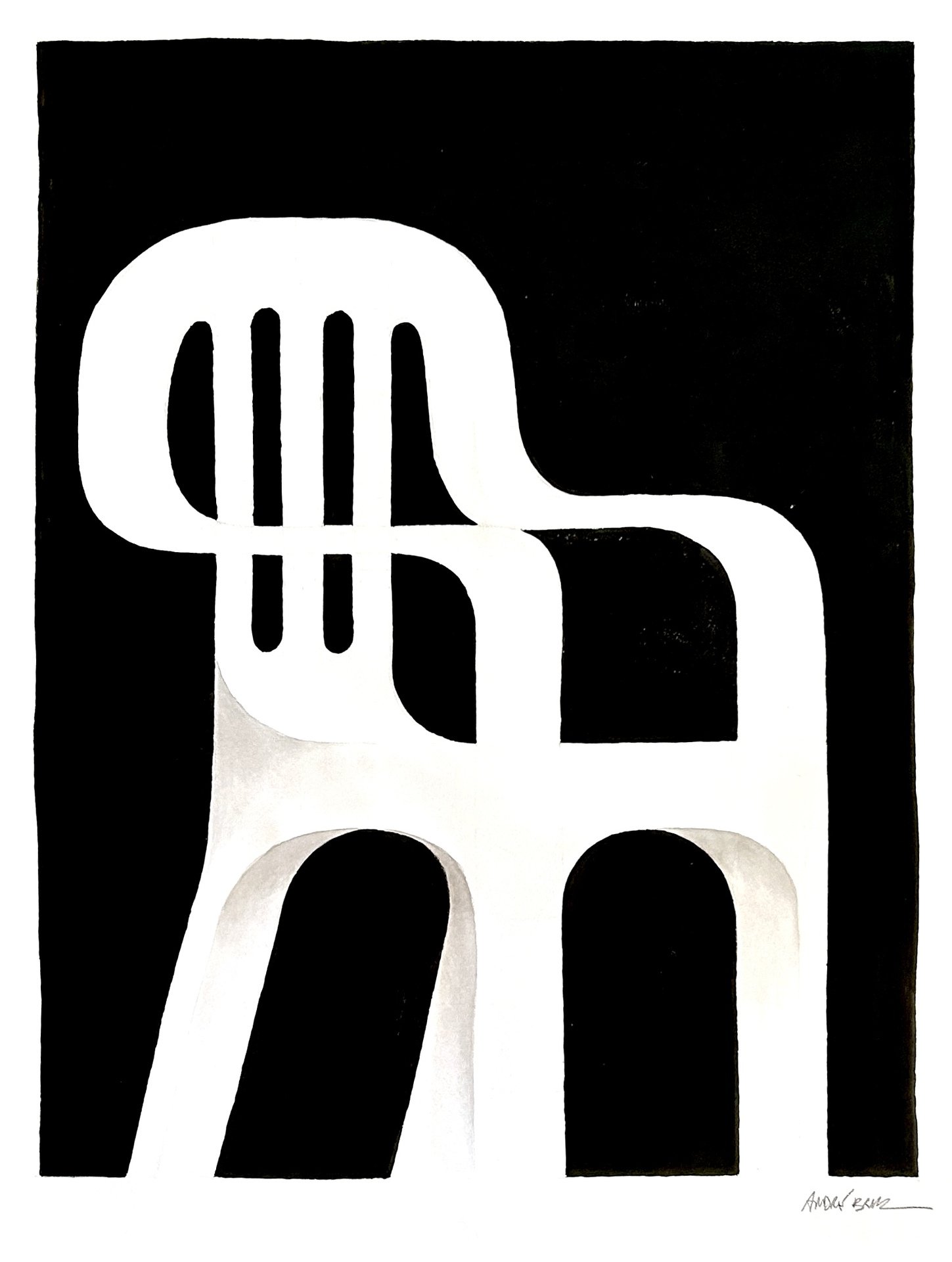
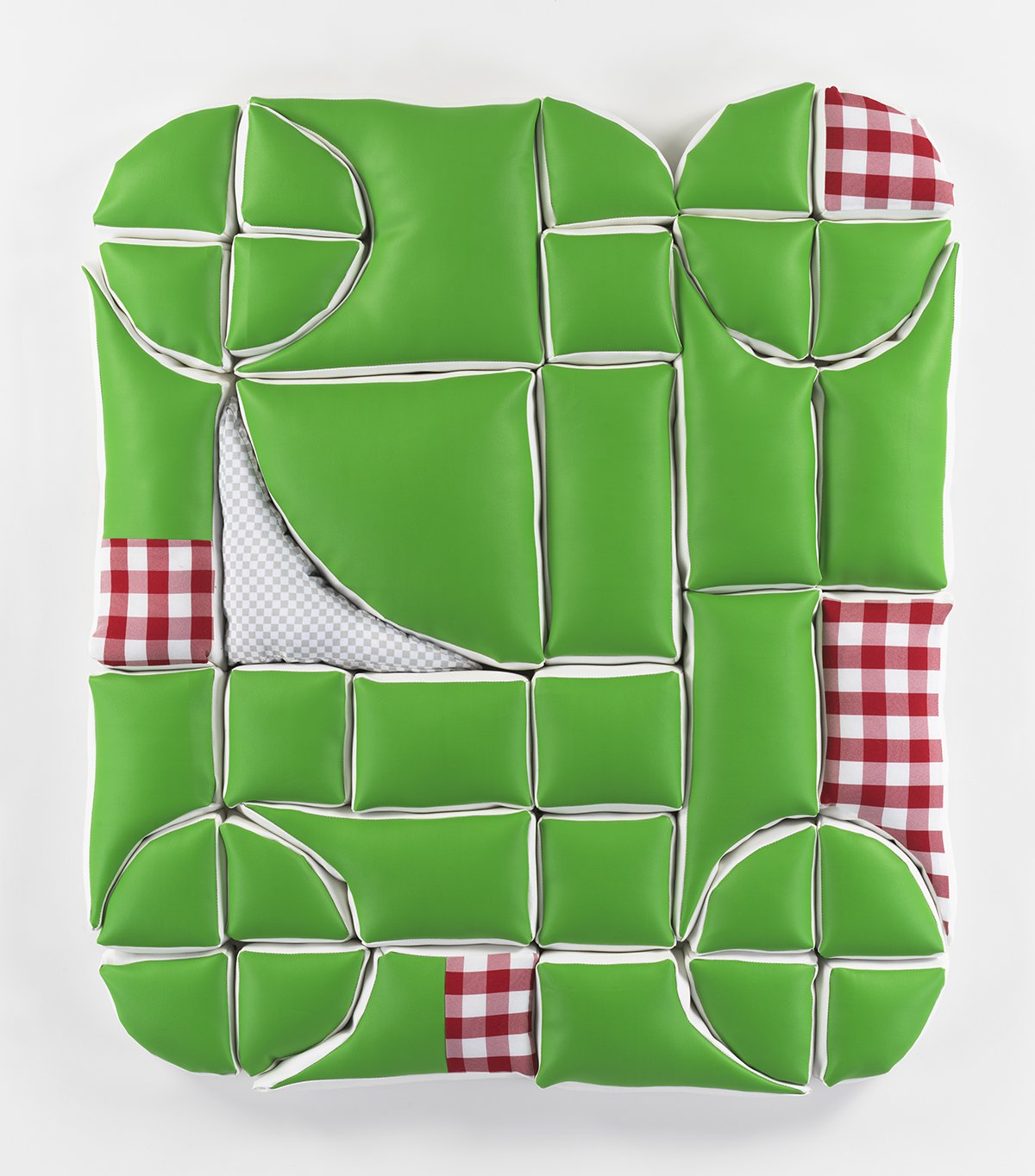
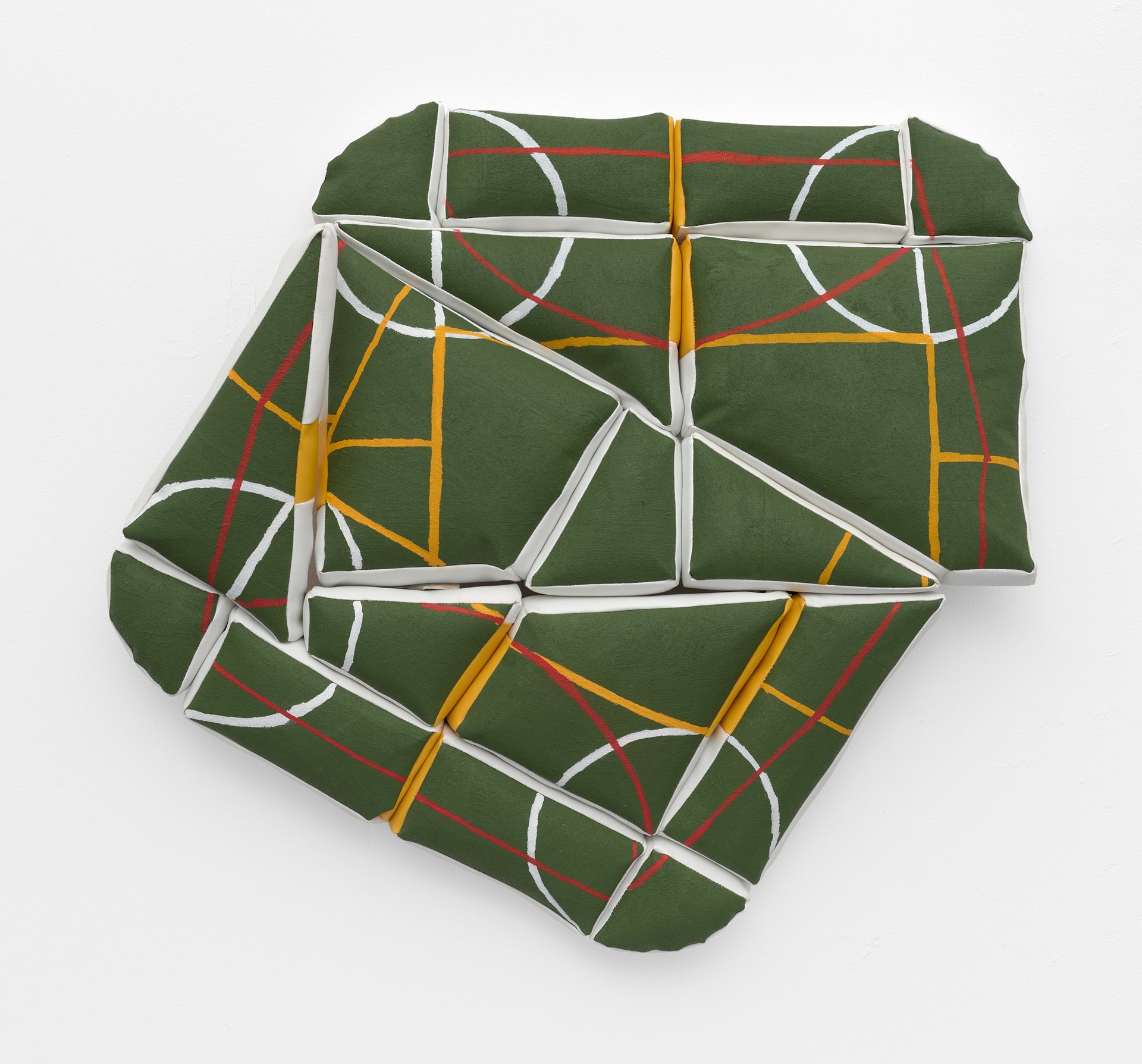
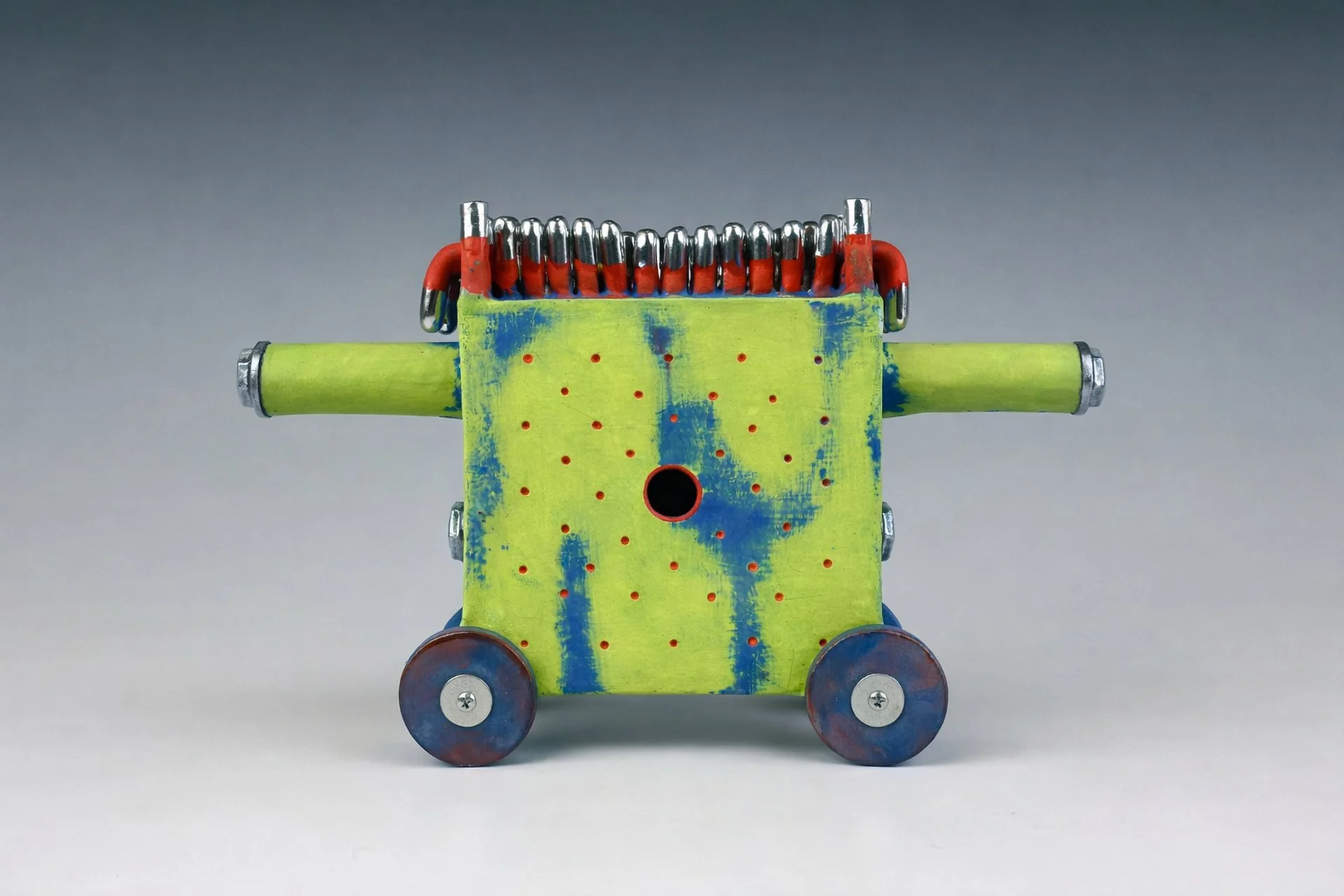
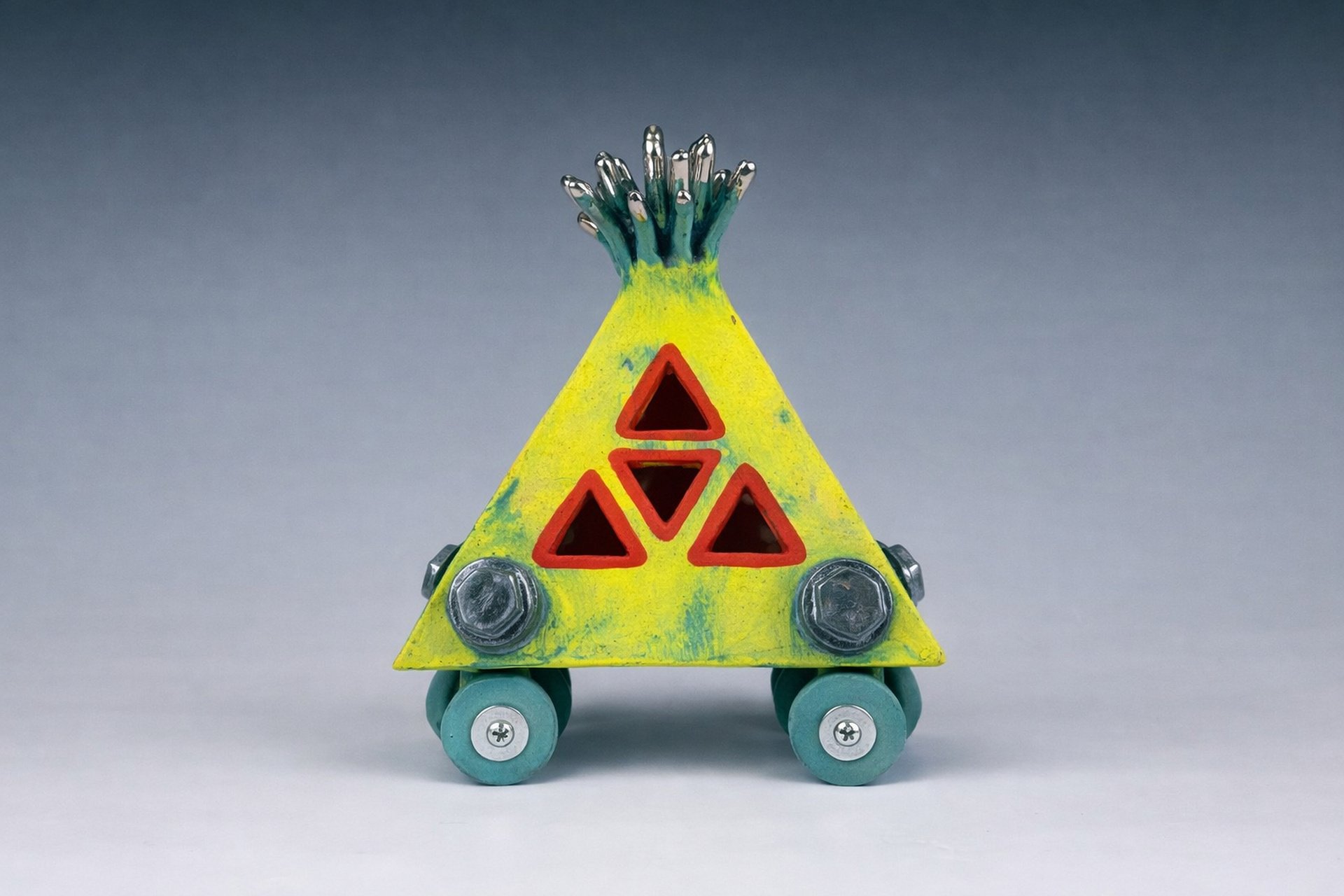
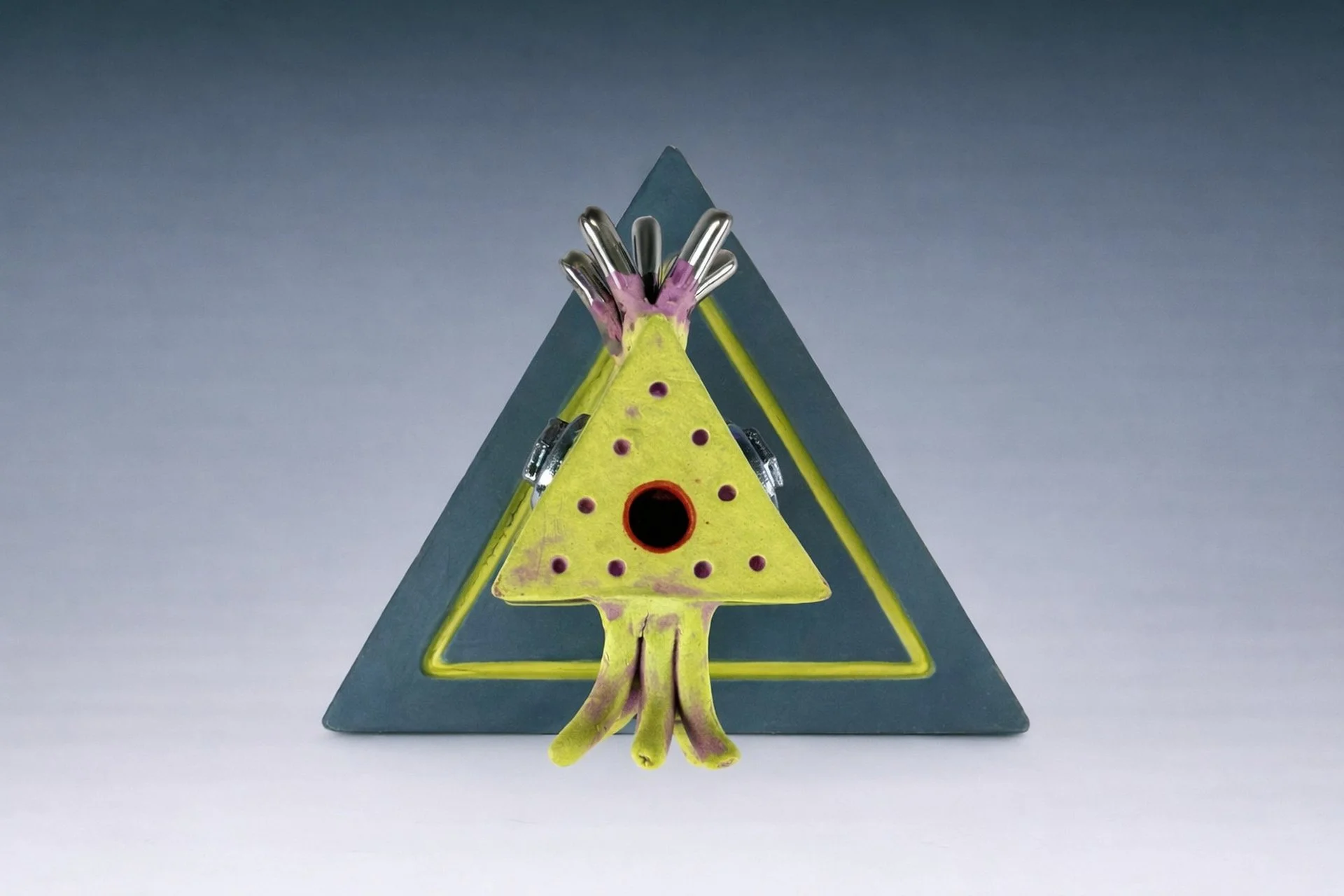
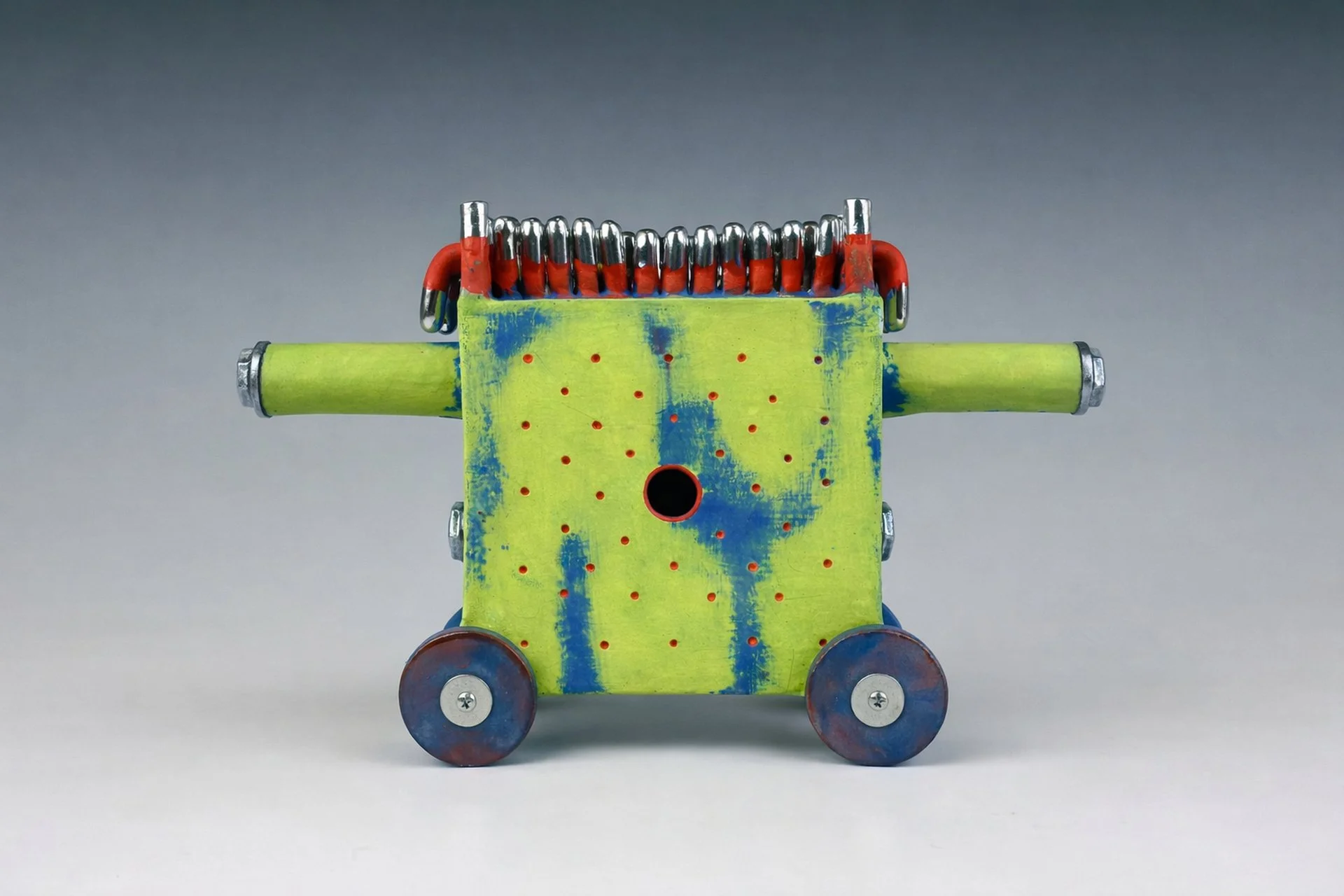
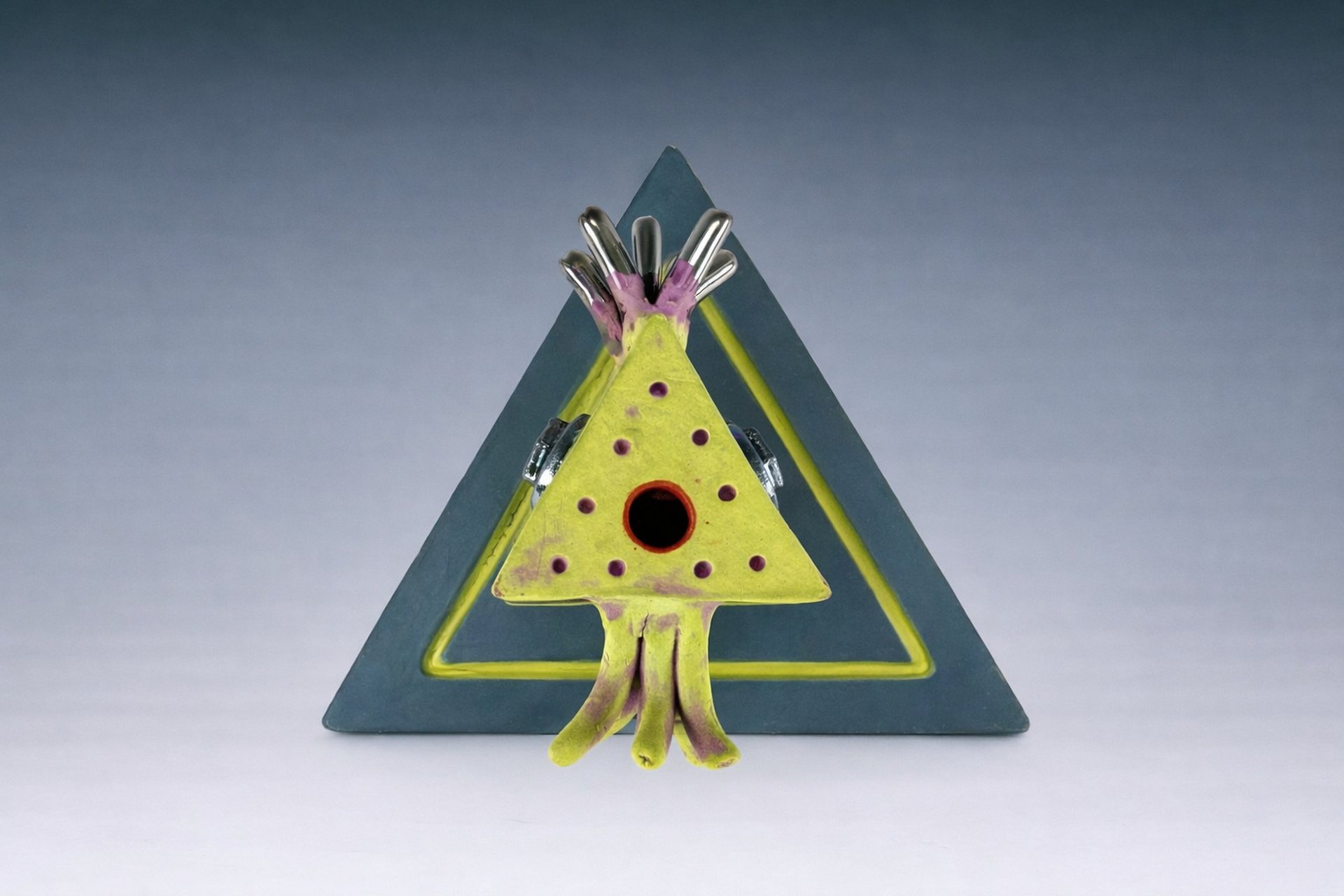
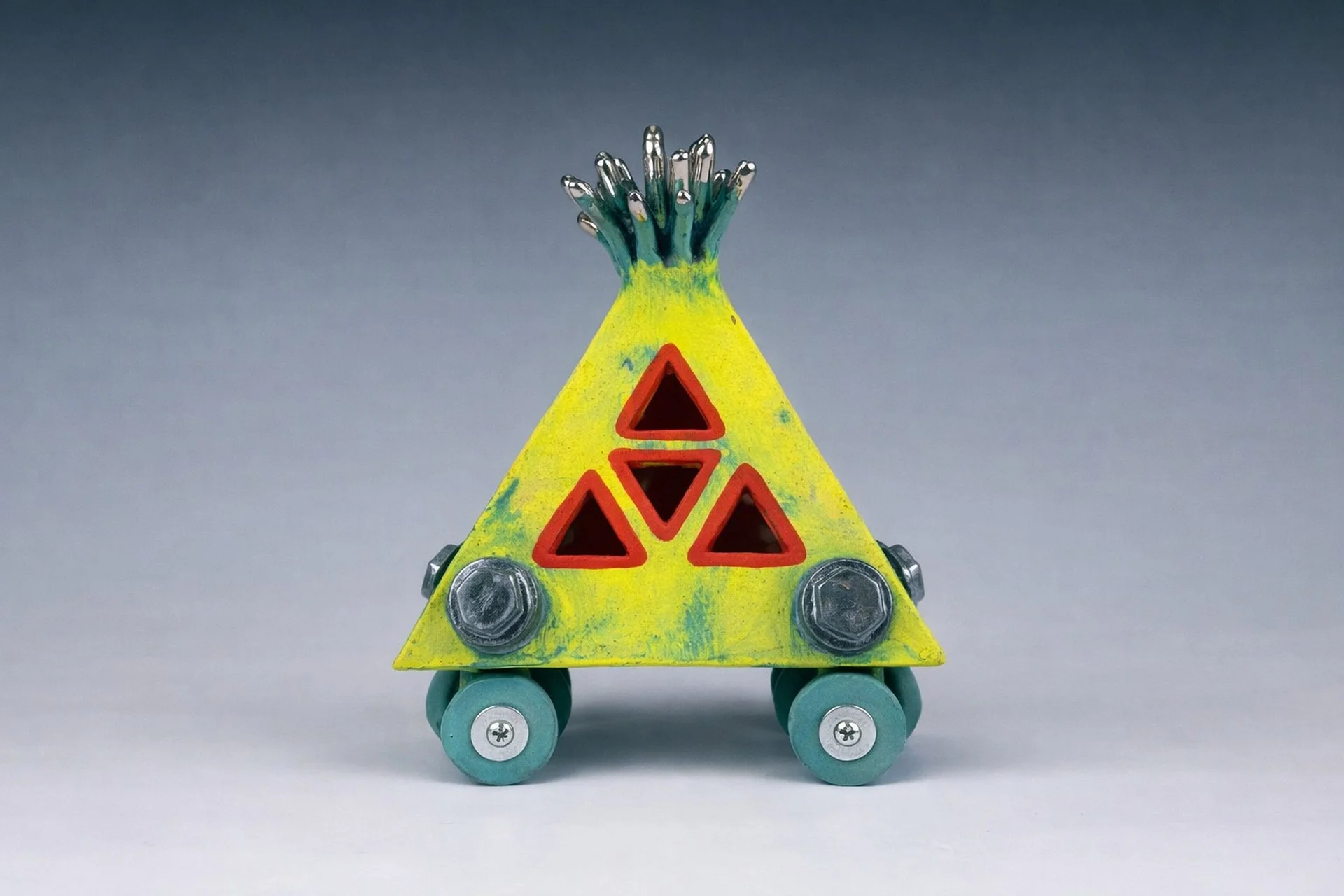
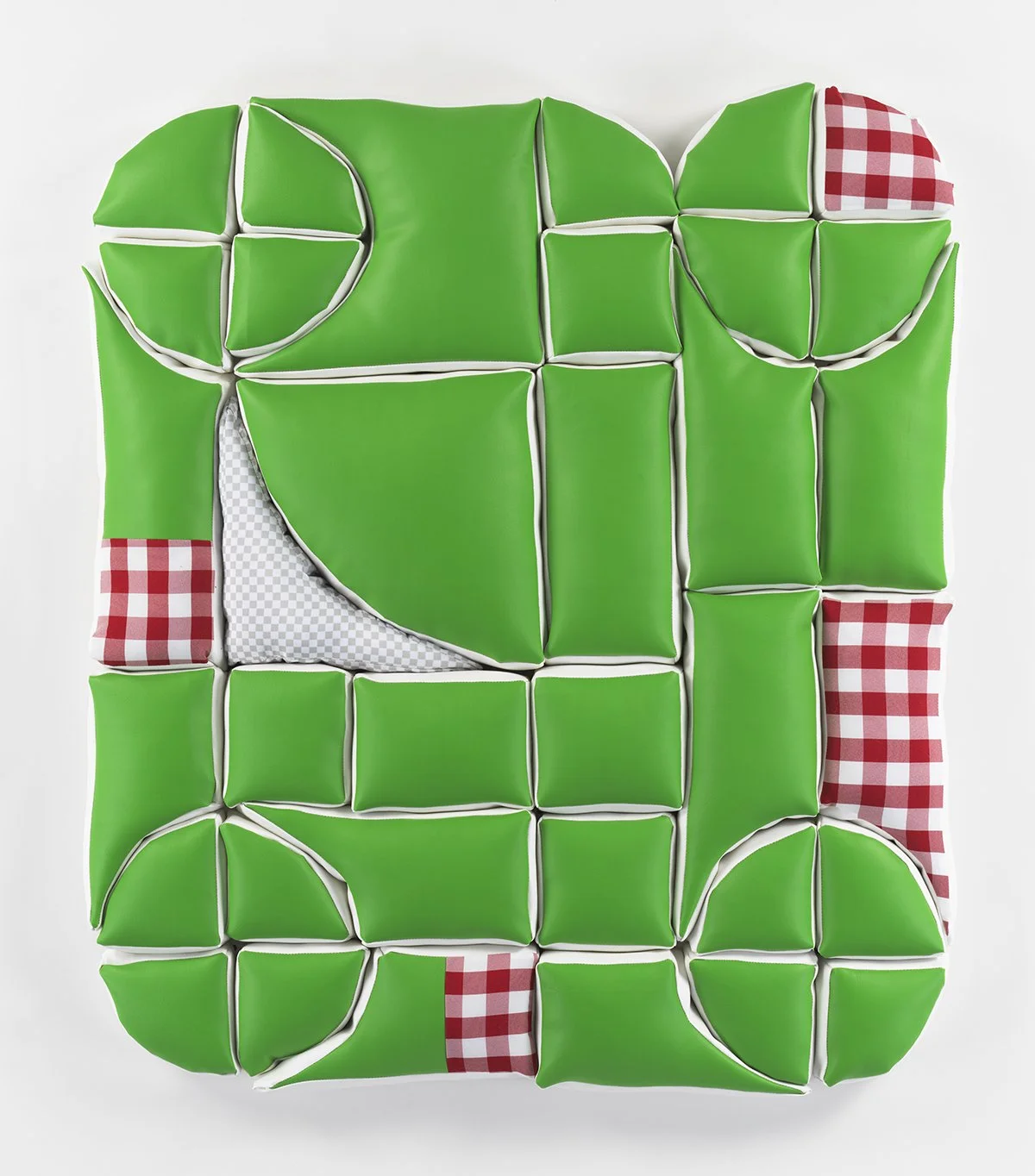
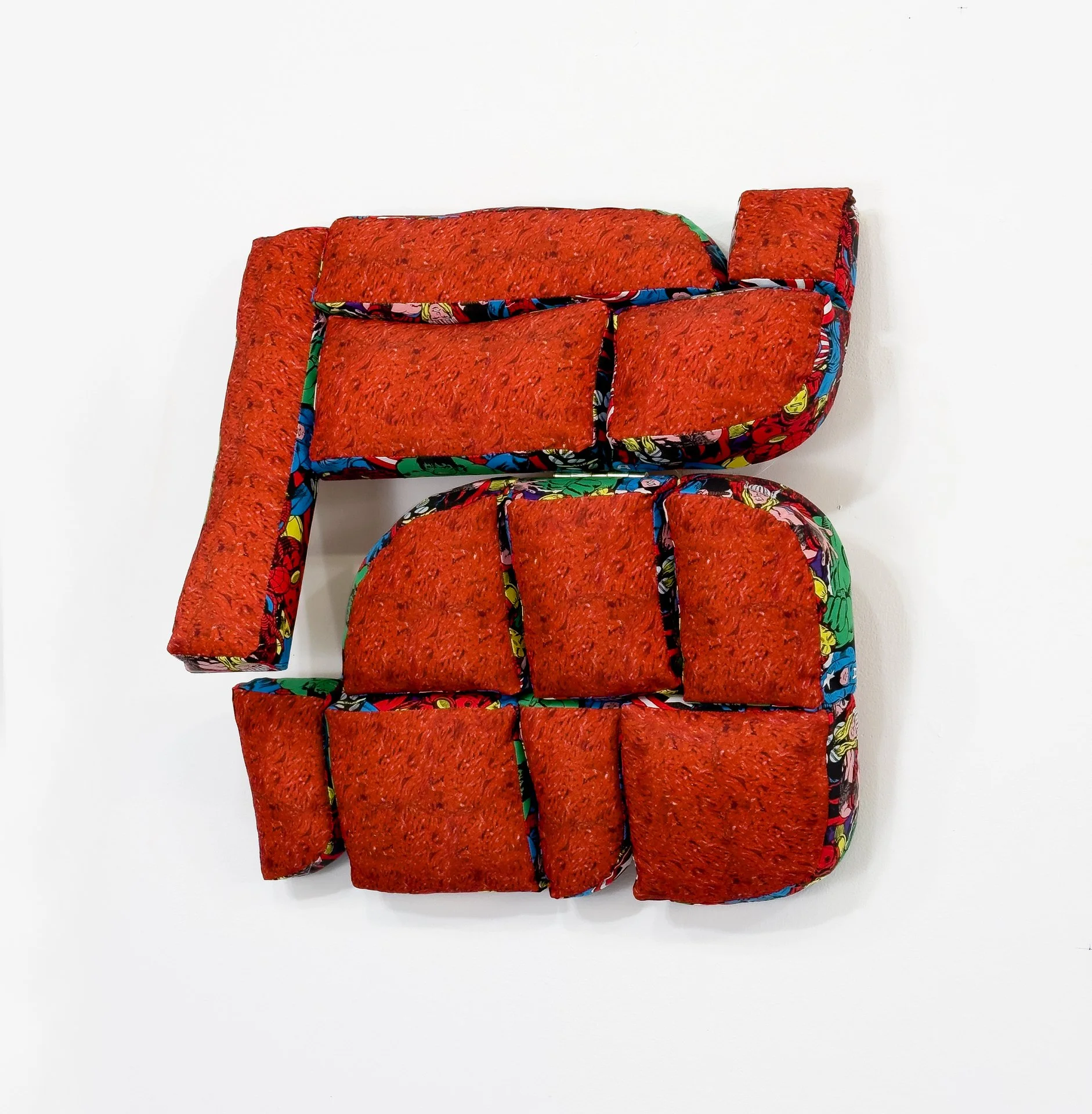
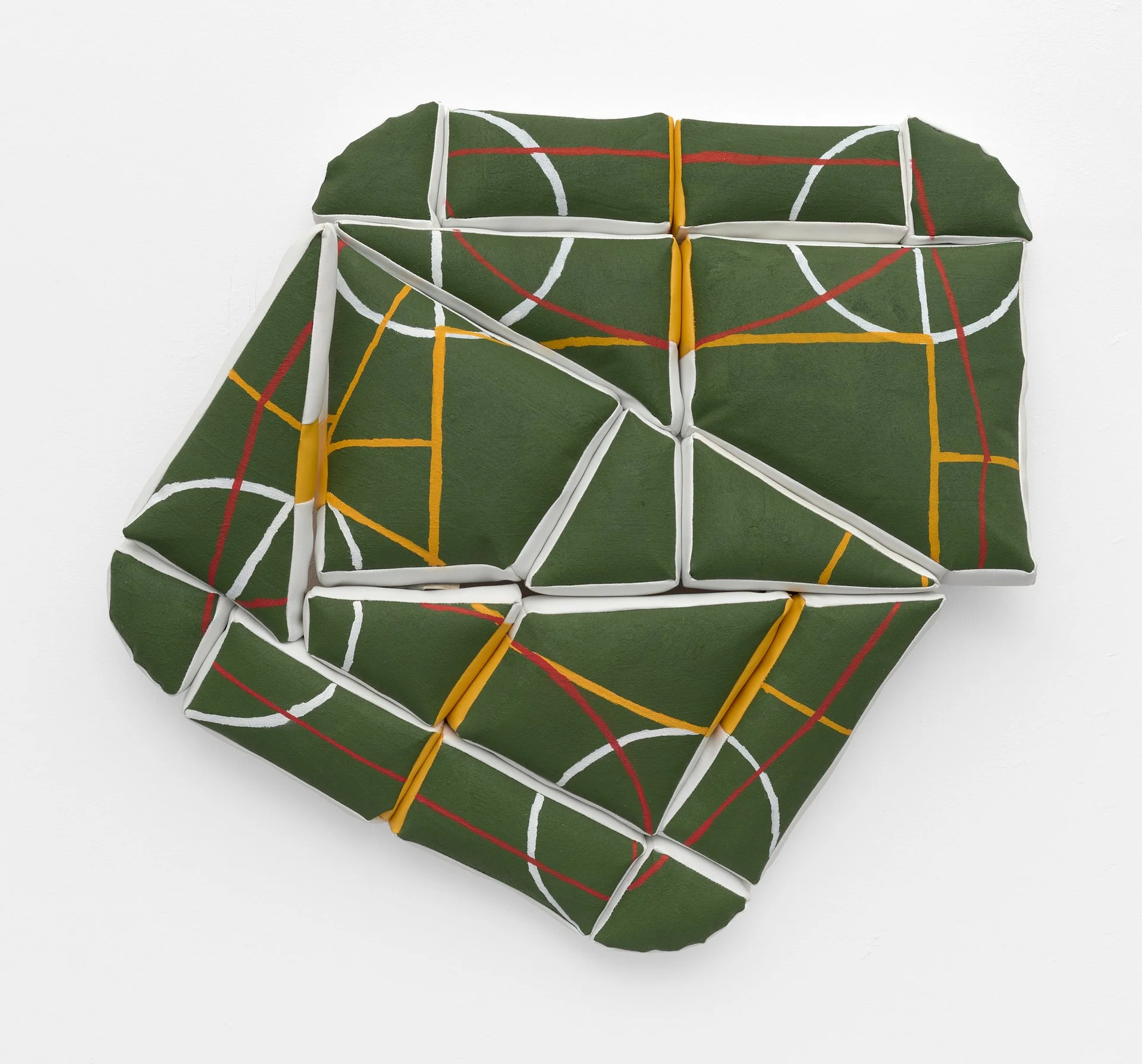
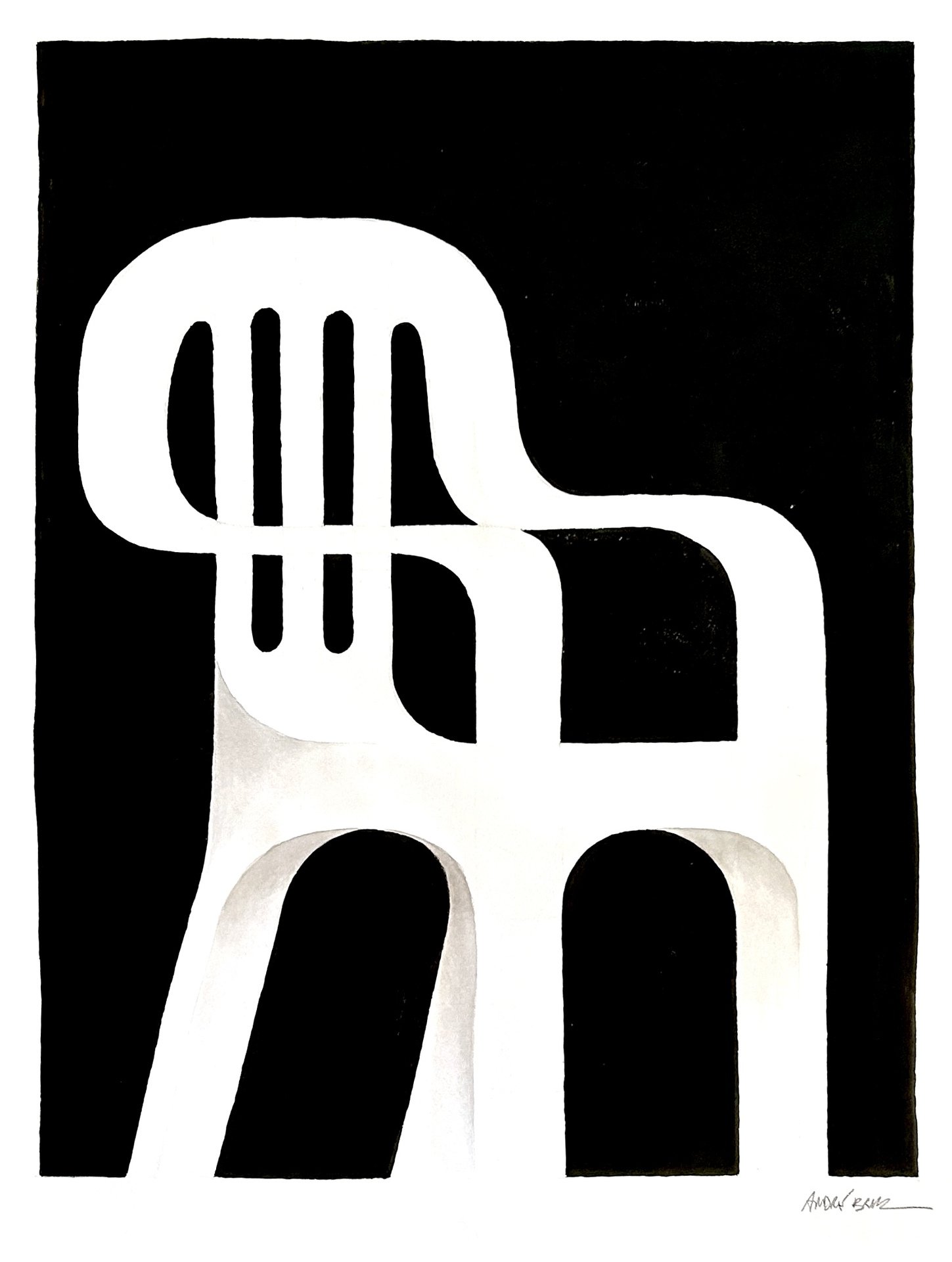
Artists working in sculpture or three-dimensions similarly employ unusual materials. Craig Wood creates pyramidal ceramic structures that stand on short legs or wheels and possess a rather anthropomorphized, cheerful character. Tom Hecht also ventures into sculpture with his semi-soft wall works—comprised of stitched fabric and stuffed forms that are arranged to recall the layout of tennis, basketball, soccer and other courts—whereas André Brik takes quotidian objects, in this case a chair, and deconstructs their shapes and colors into graphic compositions.
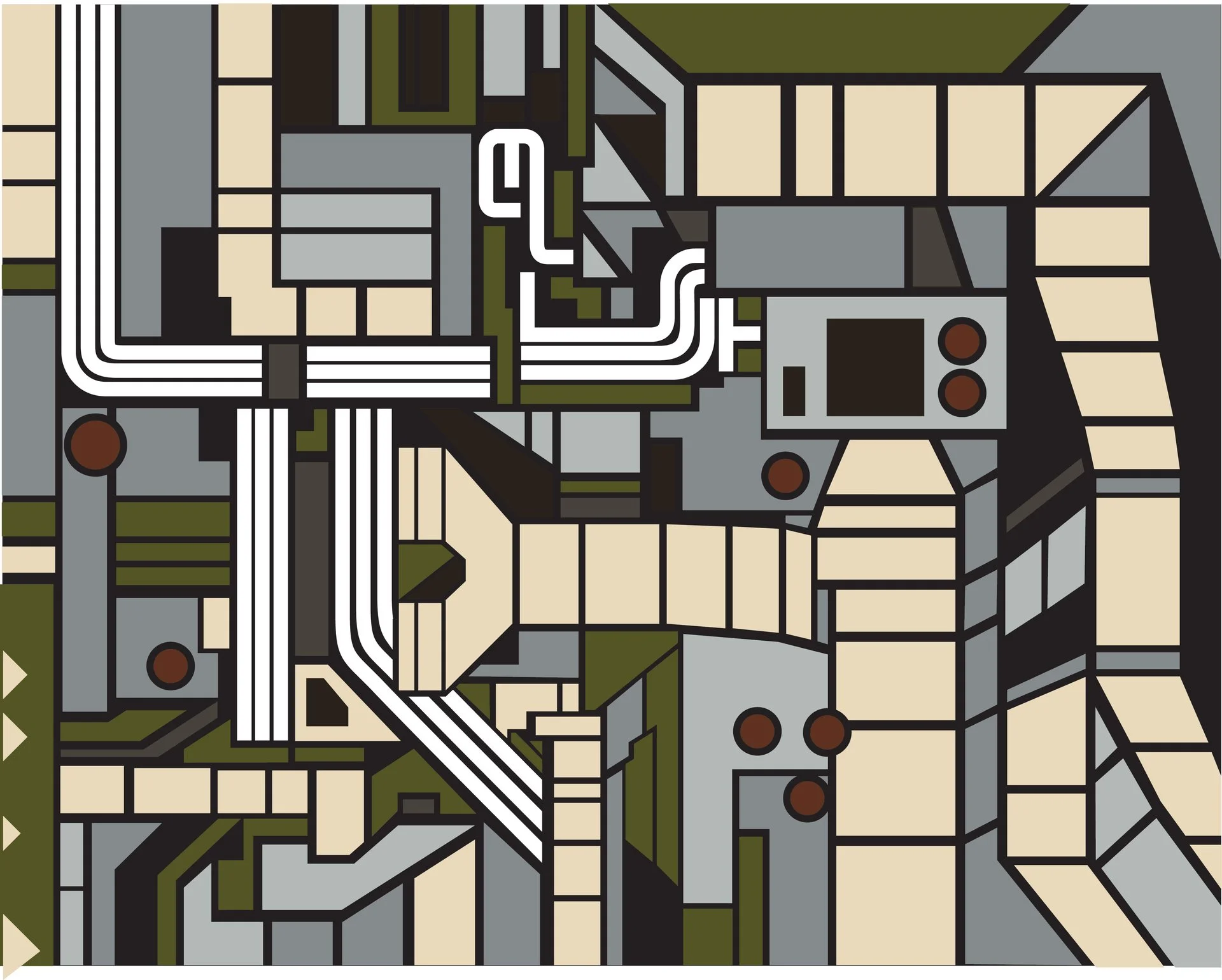
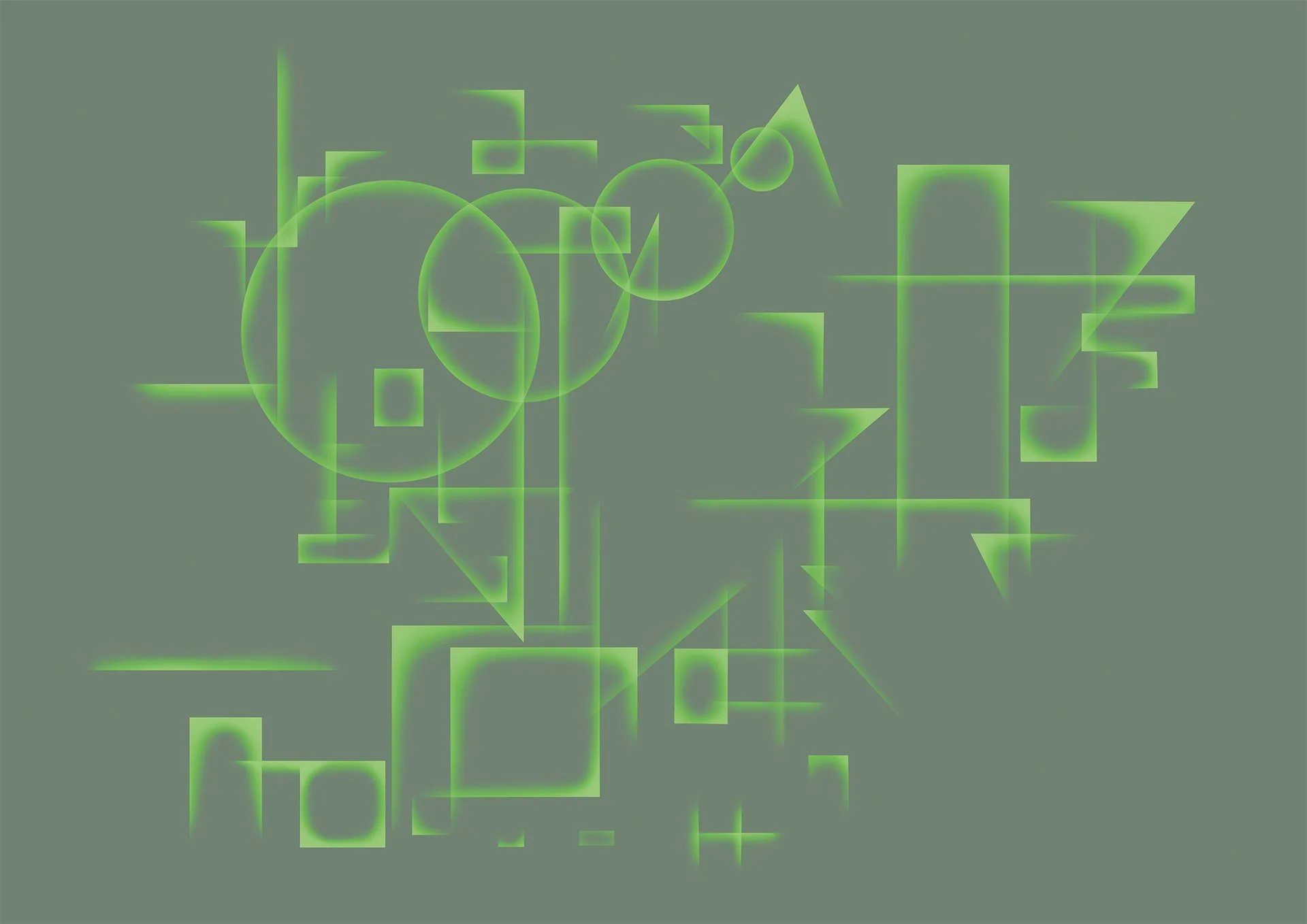
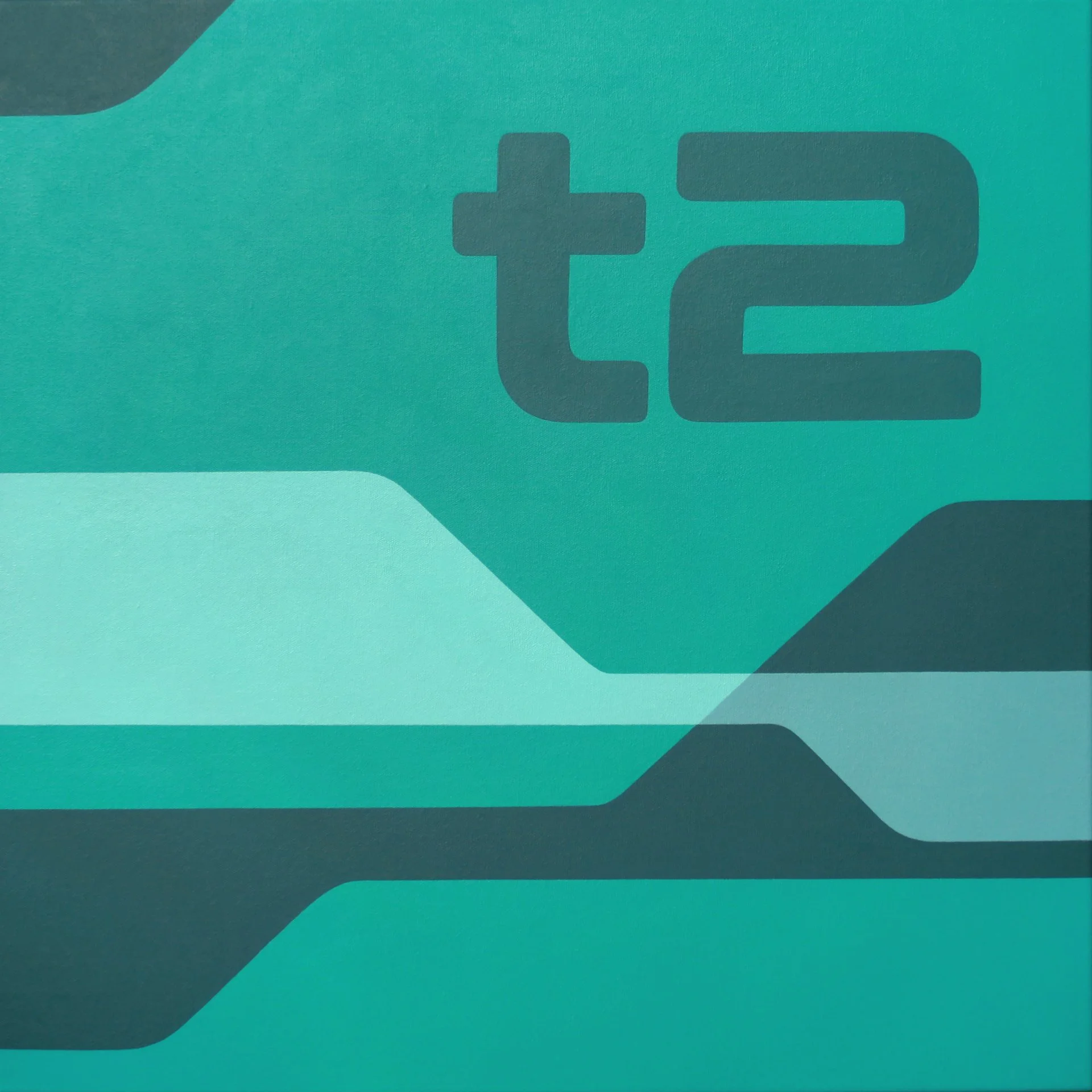
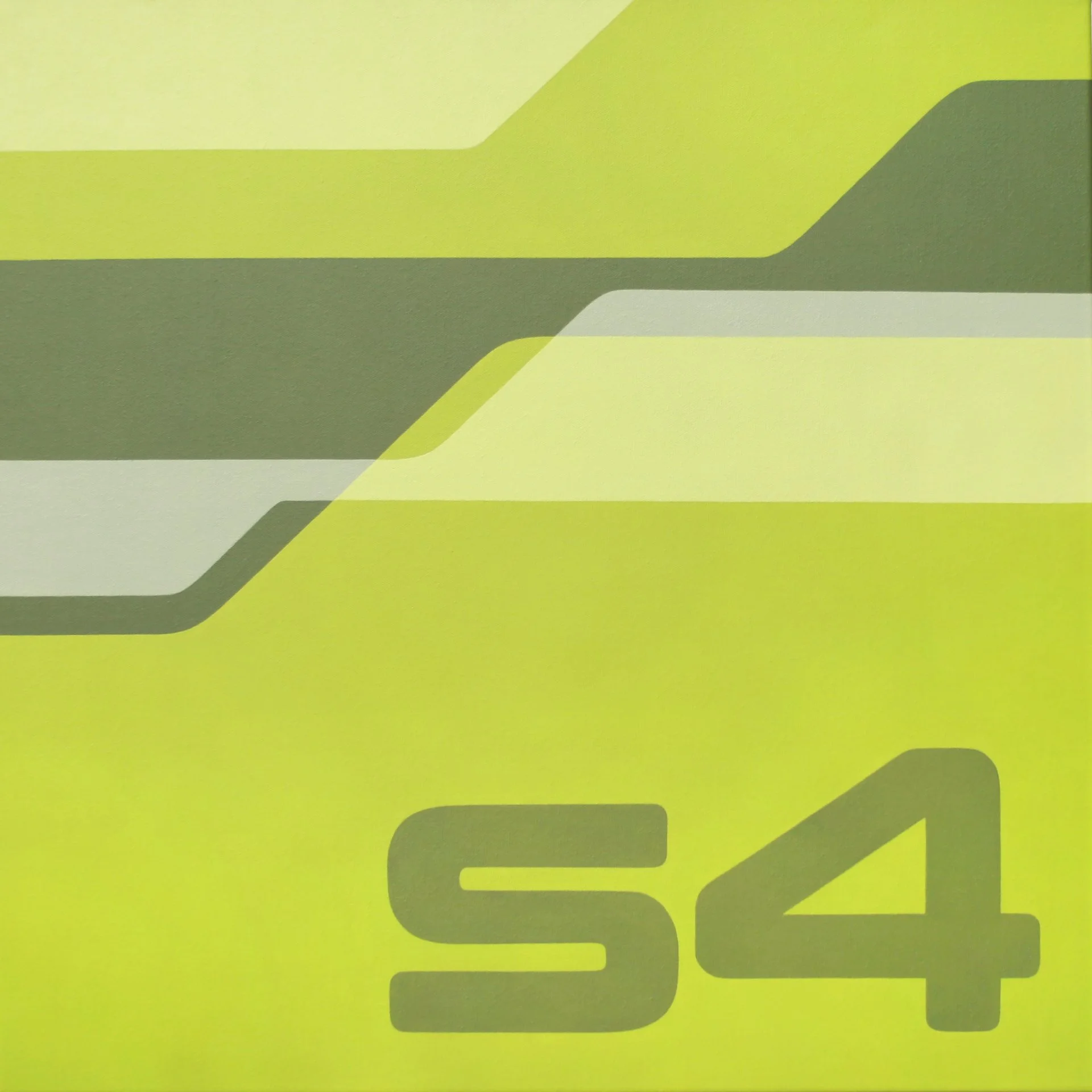
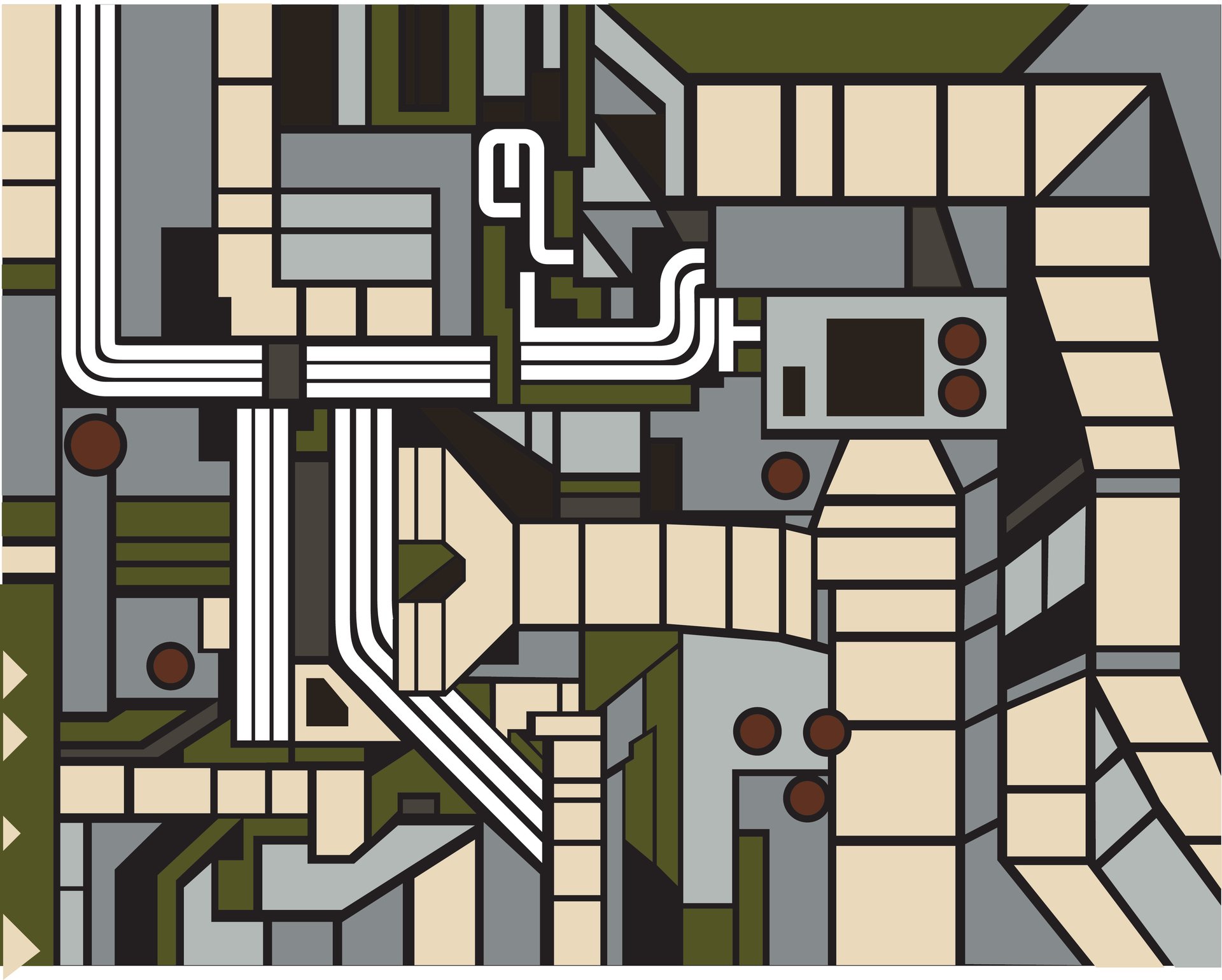
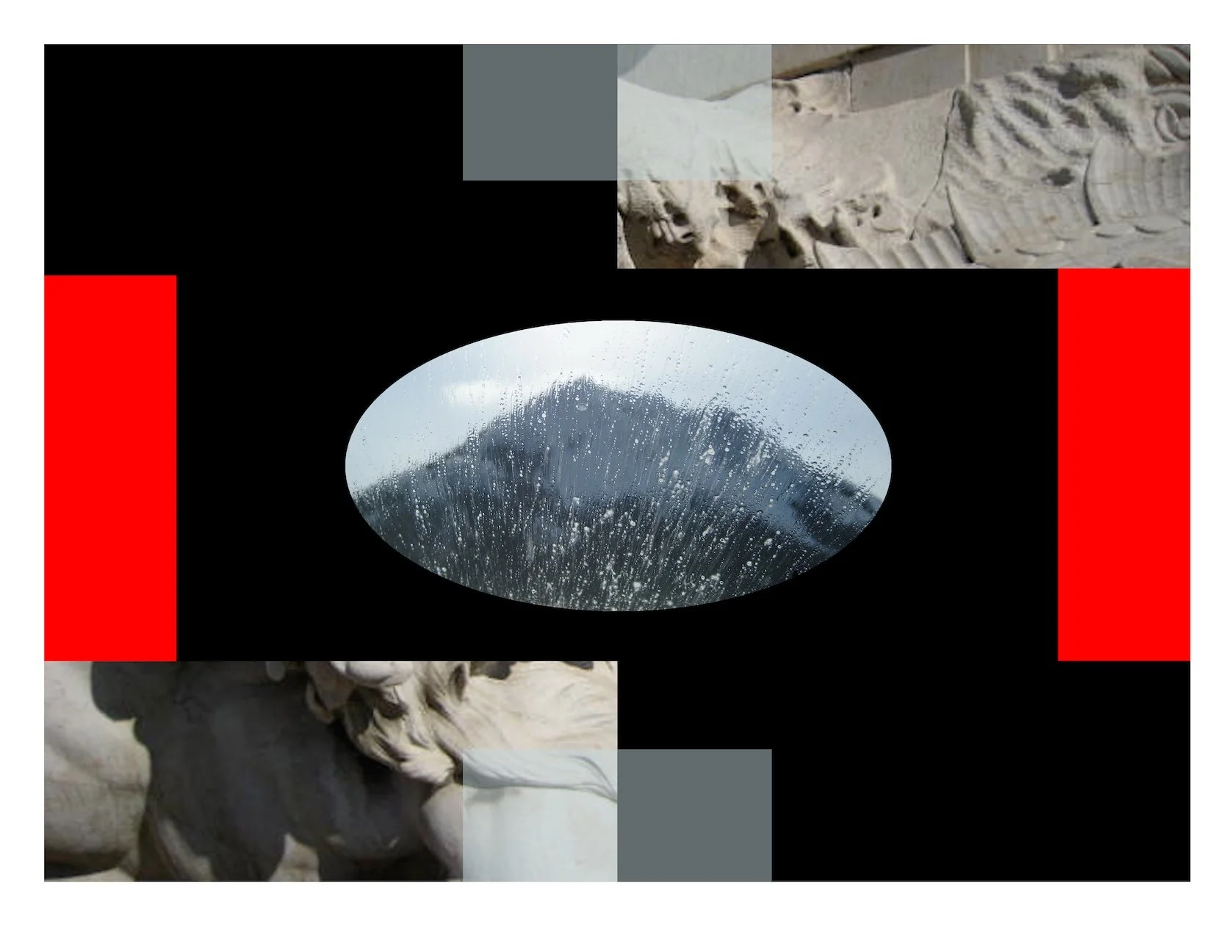
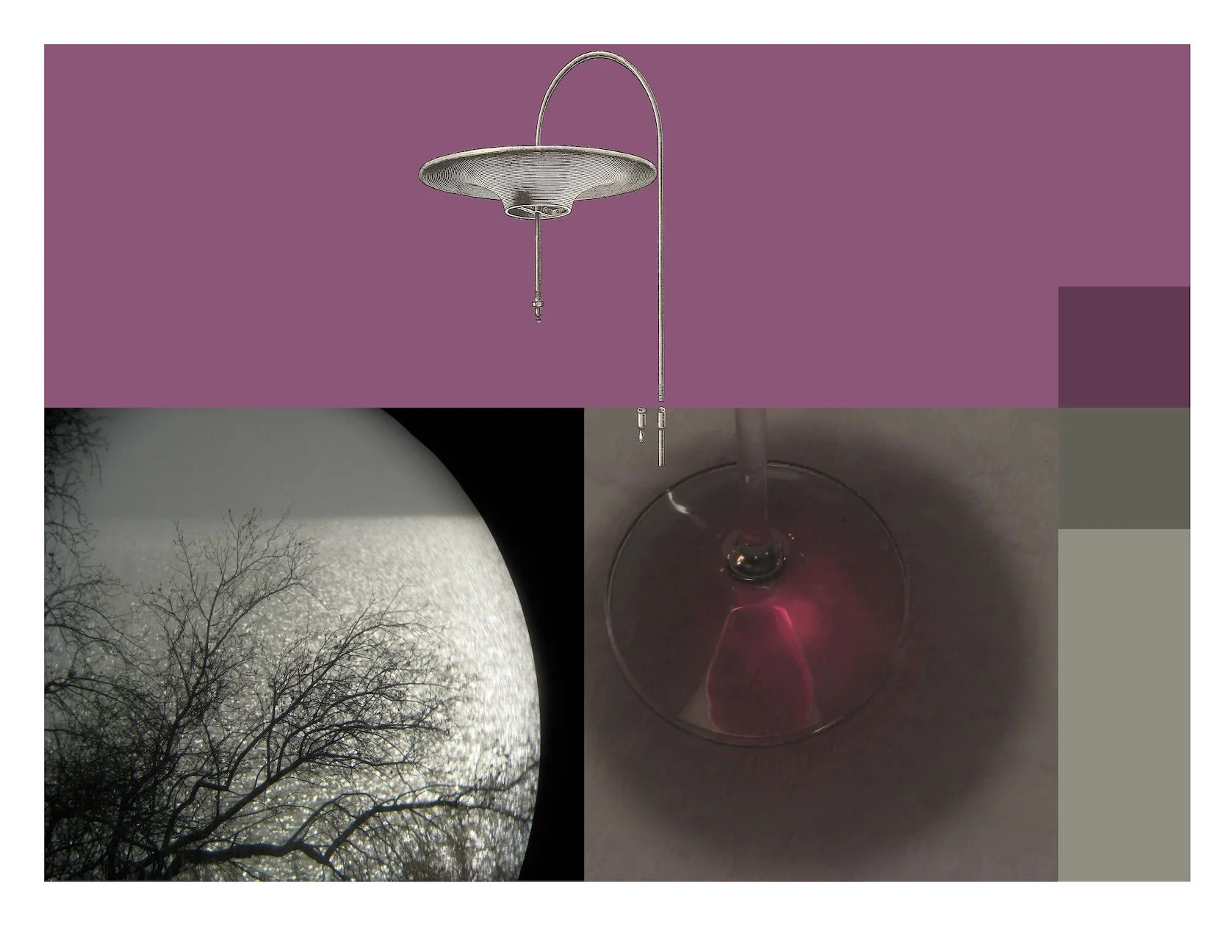
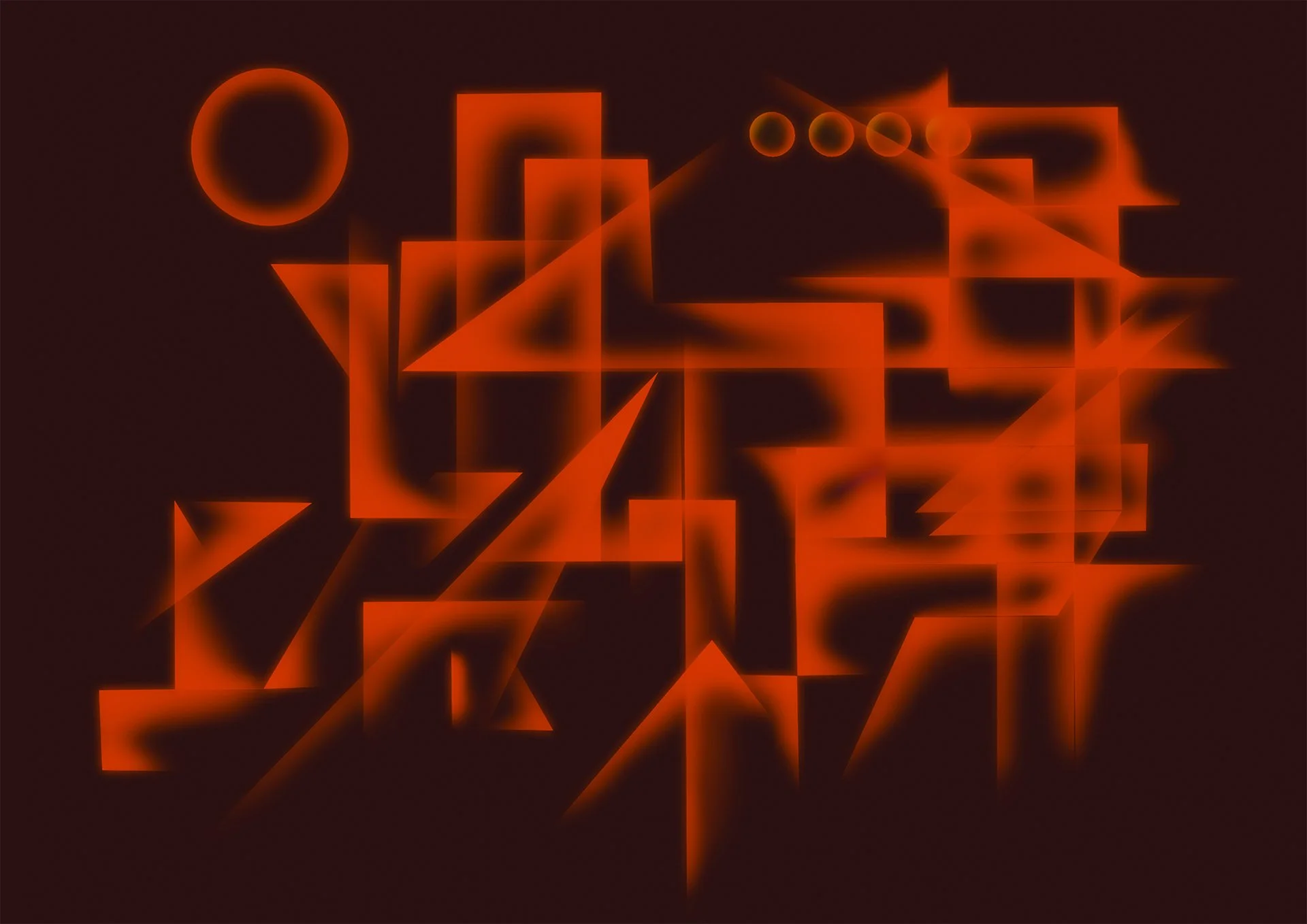
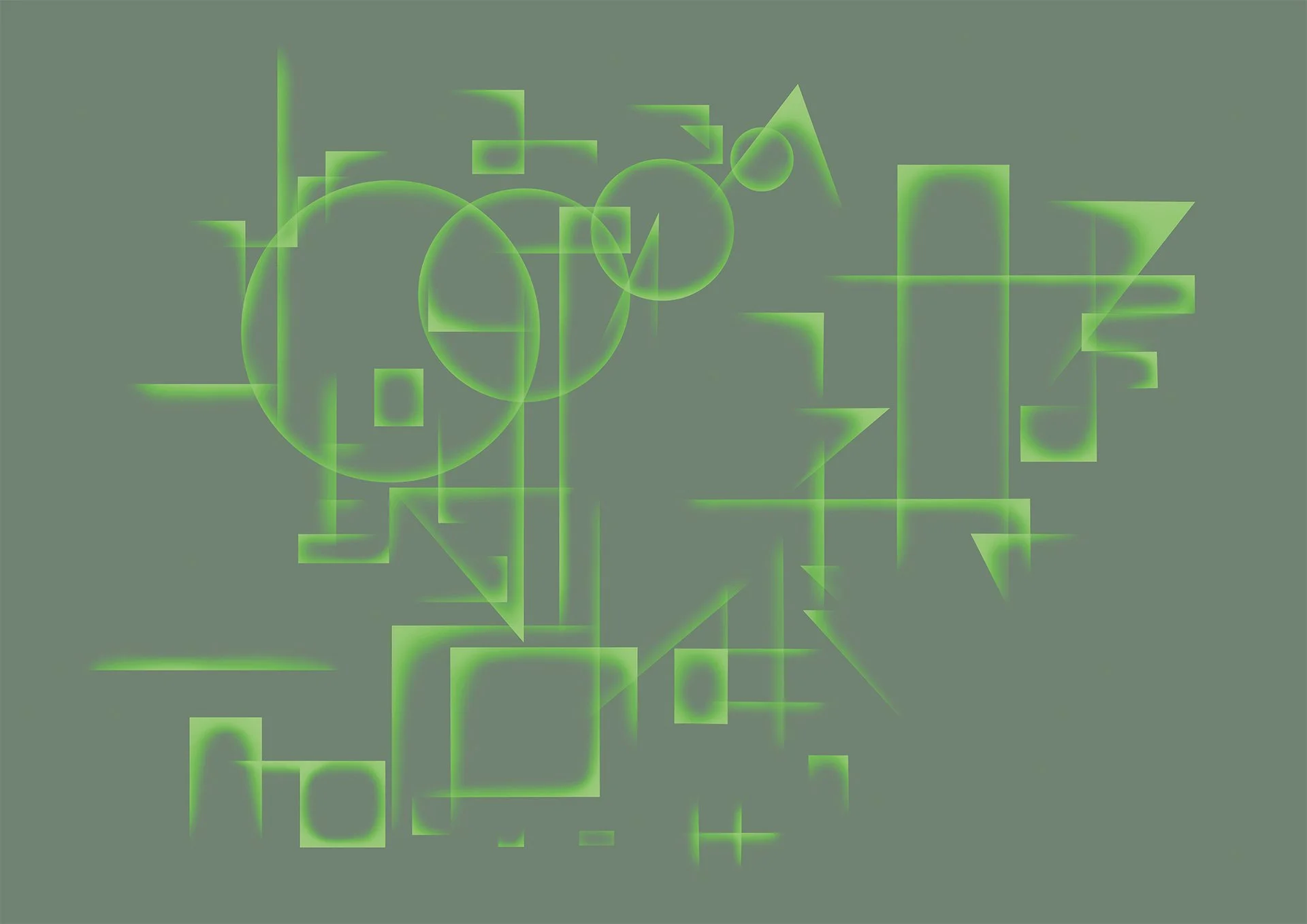
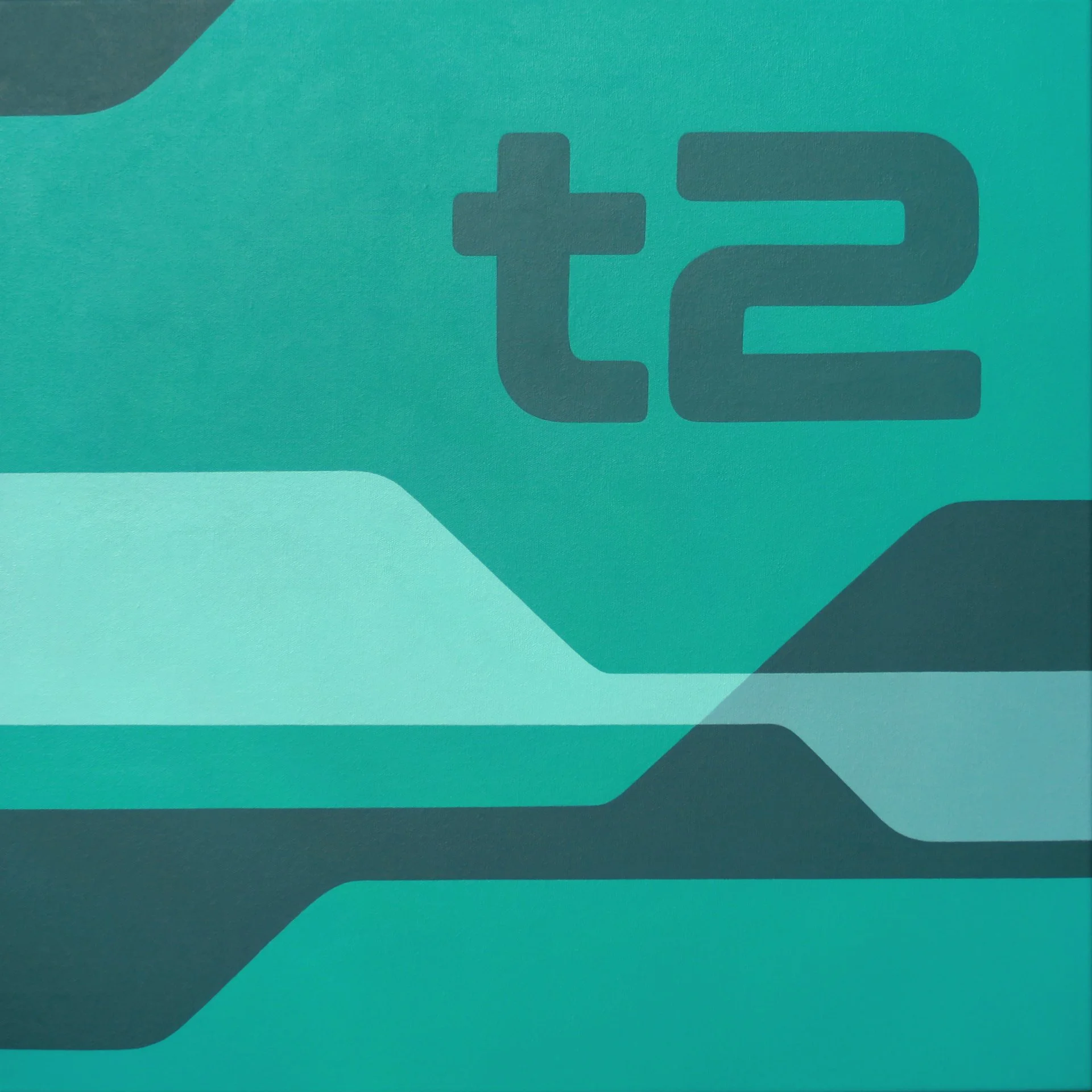
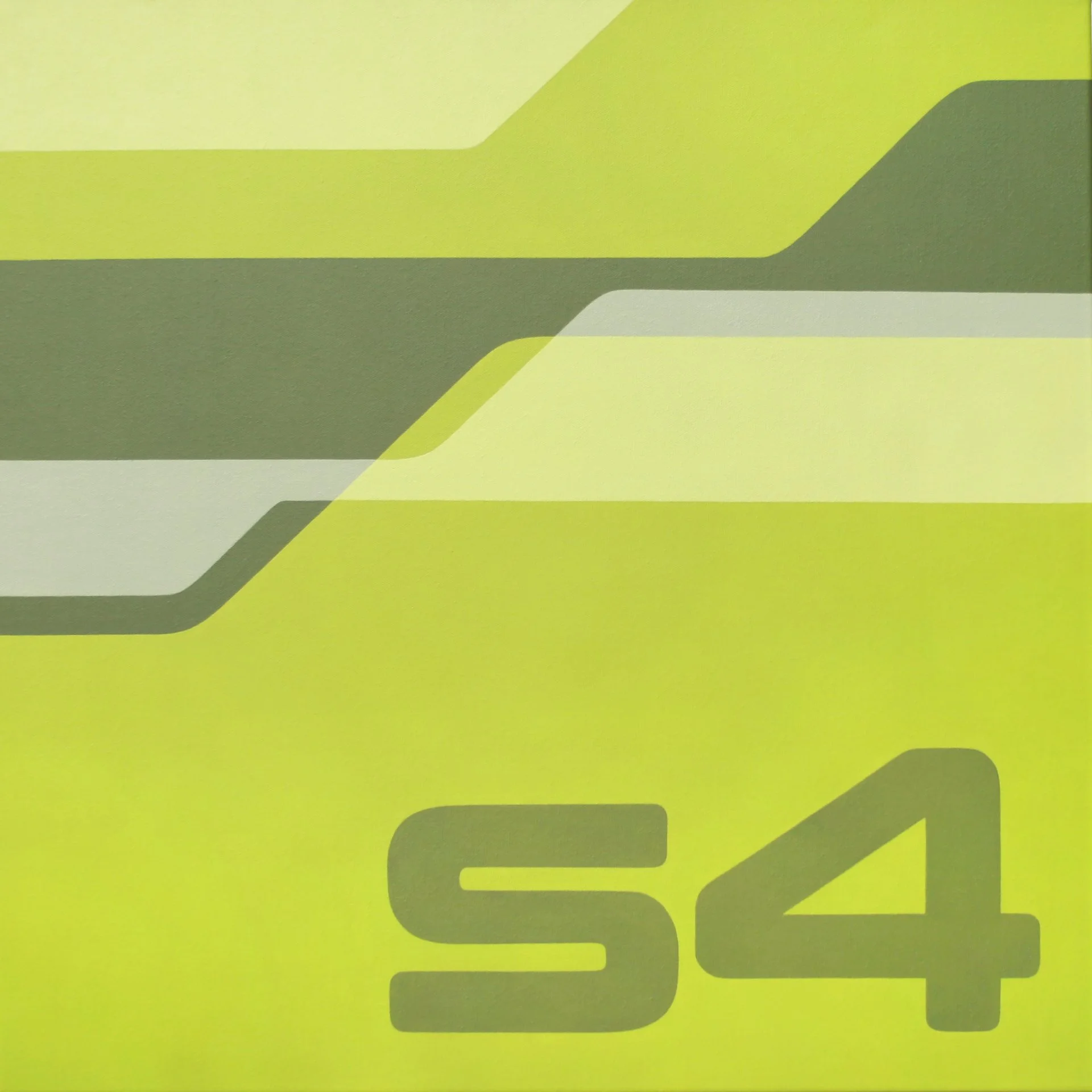
Others like Ori Aviram, Veronica Primerano, Meg Cook and William Waggoner employ geometry more directly. While Premerano turns to the grid as a protective structure that organizes color while offering psychological clarity in uncertain times, Waggoner evokes the unrealized technological optimism of the late twentieth century through circuit-like abstractions that recall signals, codes, and imagined futures.
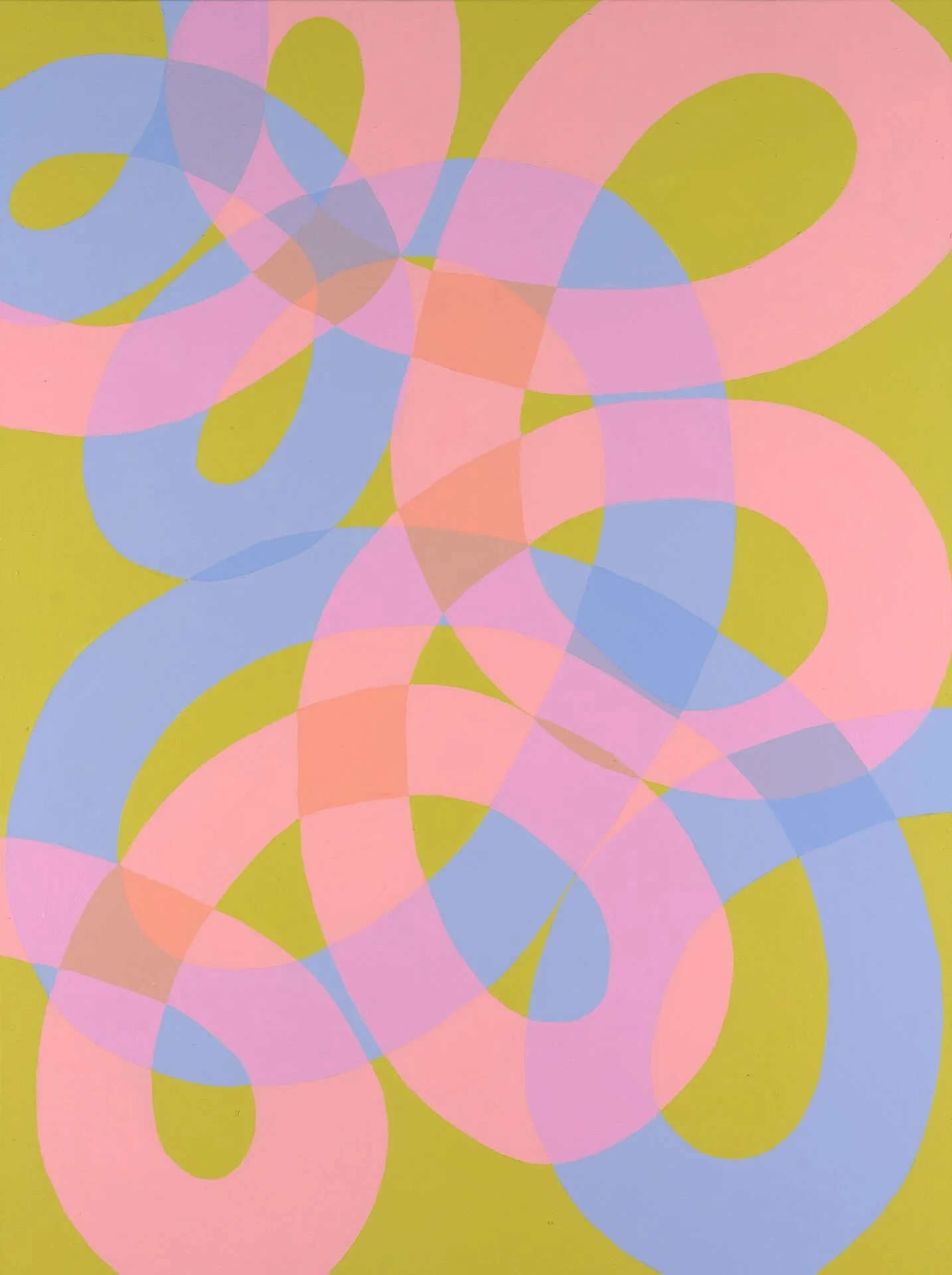
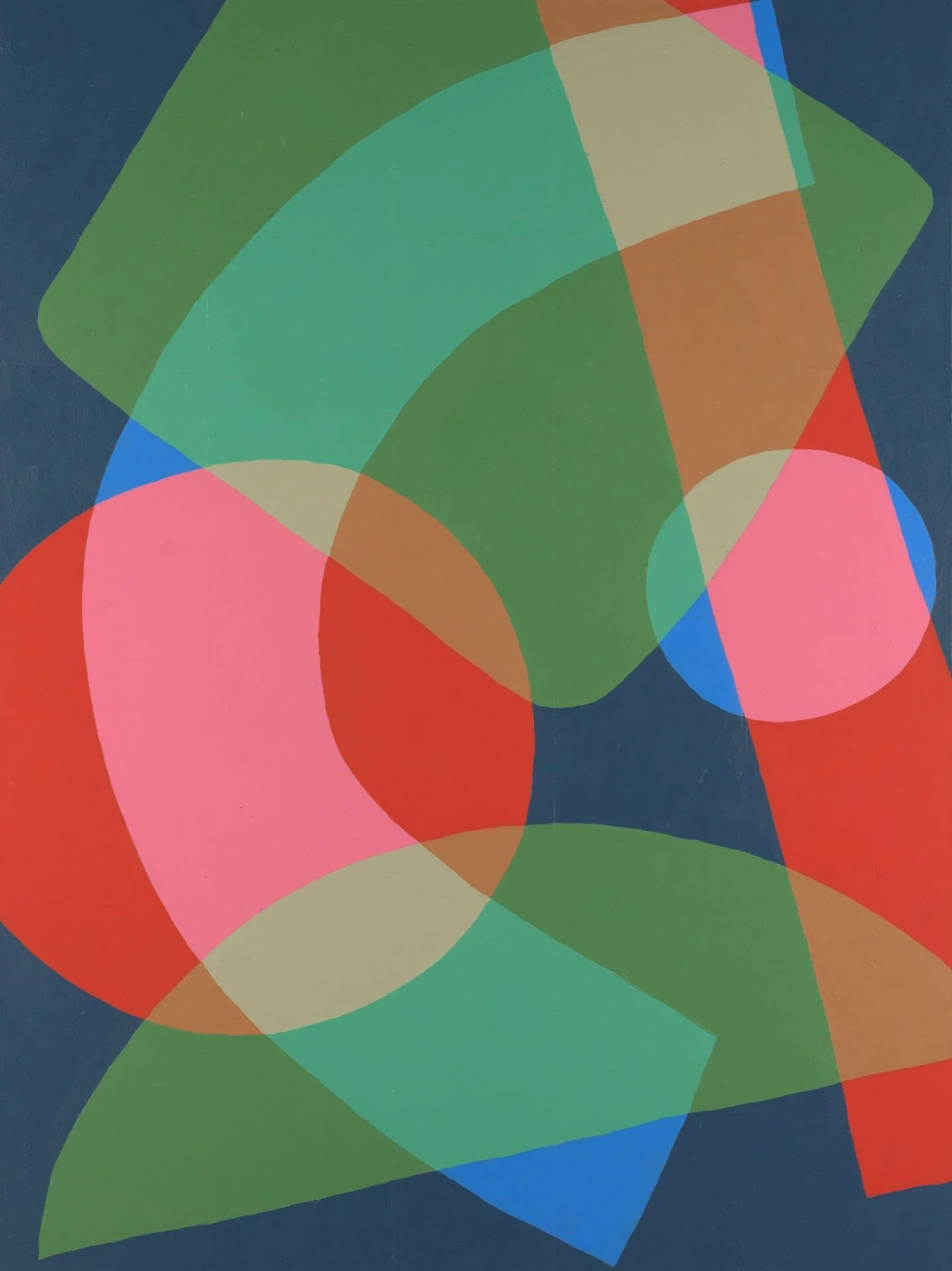
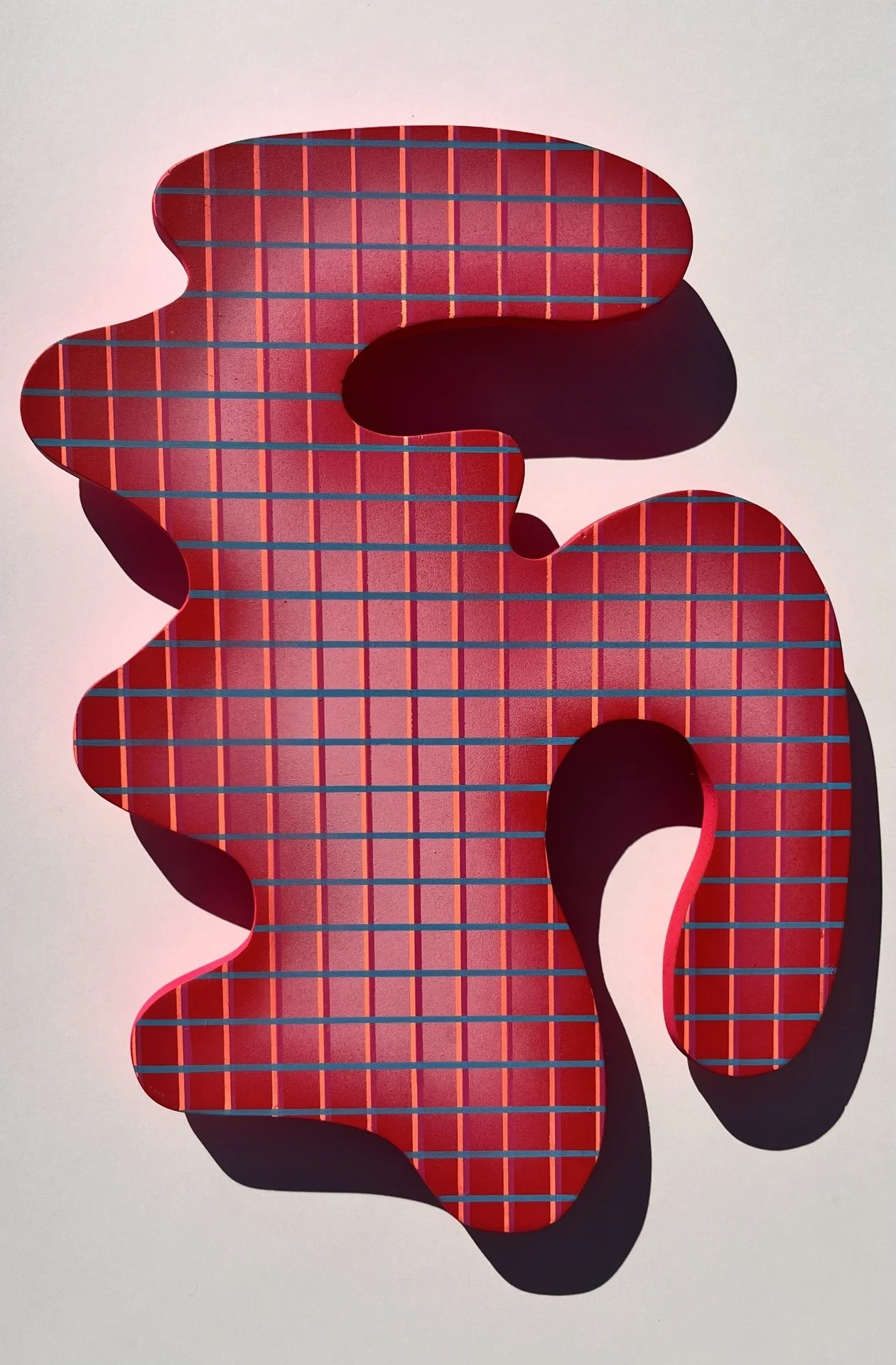
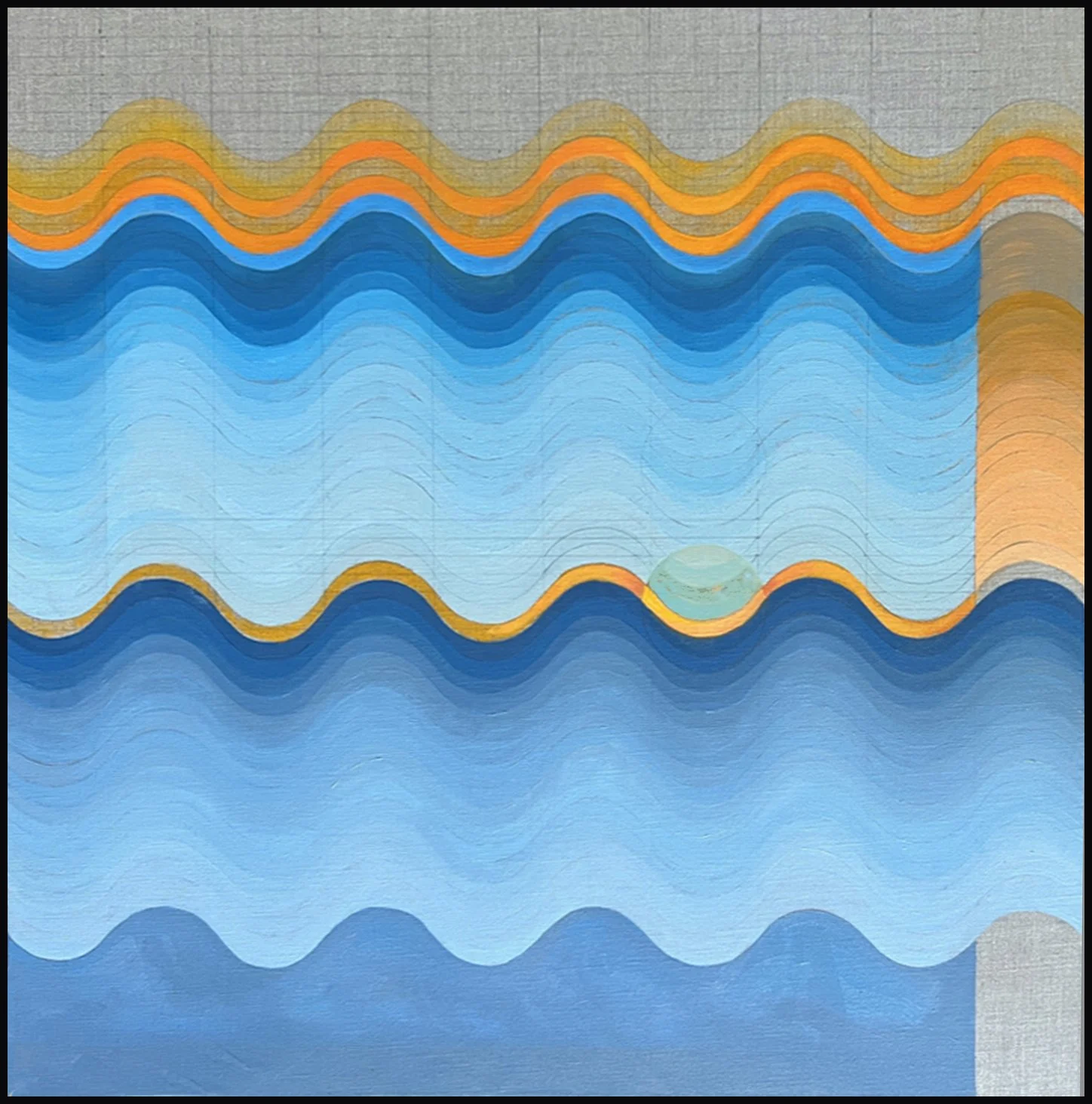
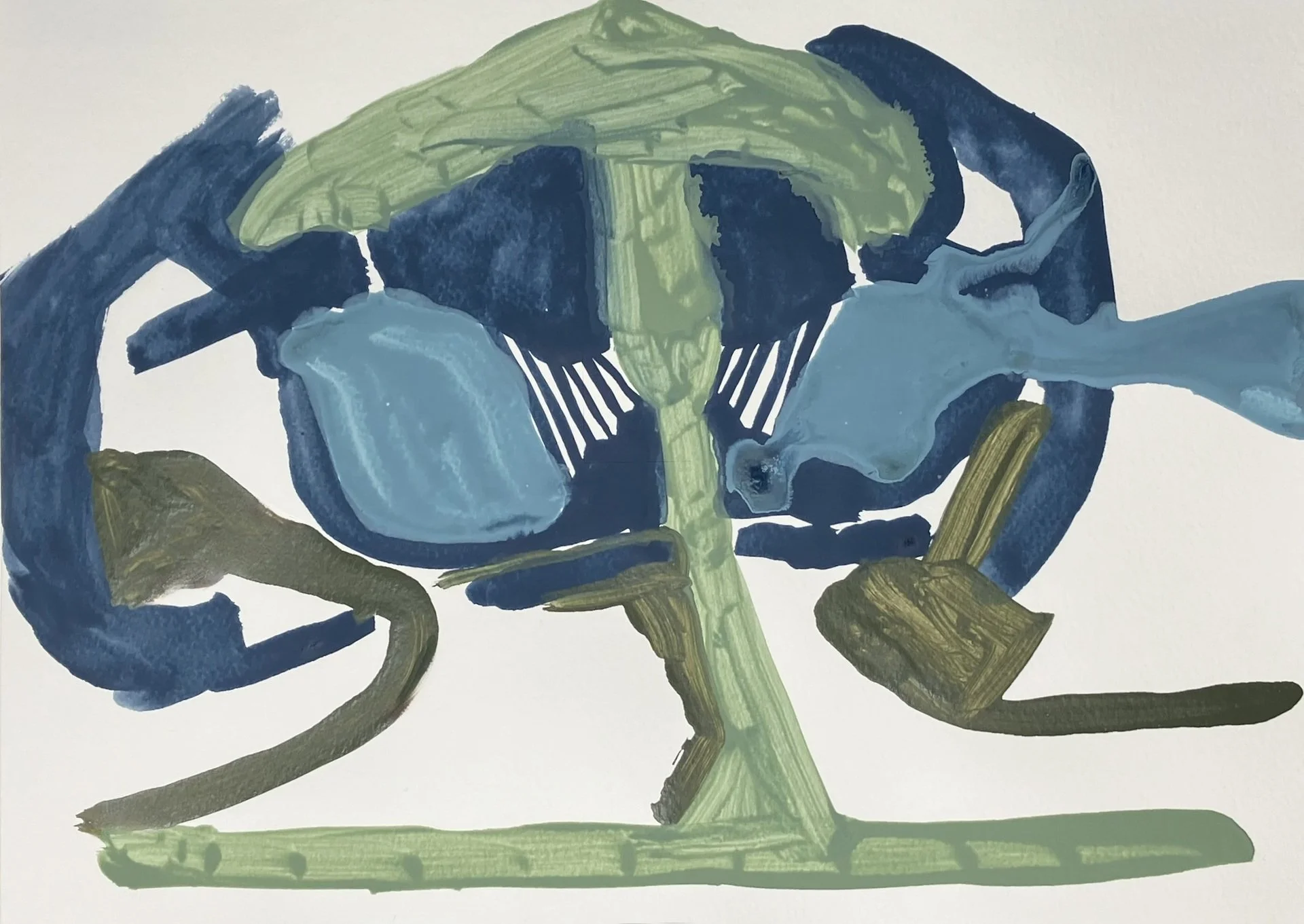
Finally, Joe Arts, Gregg Chann, and Ginnie Gardiner all move between non-objective abstraction and subtle references to nature or architecture, allowing form and color to suggest possible perspectives and environments without dictating any fixed reading.
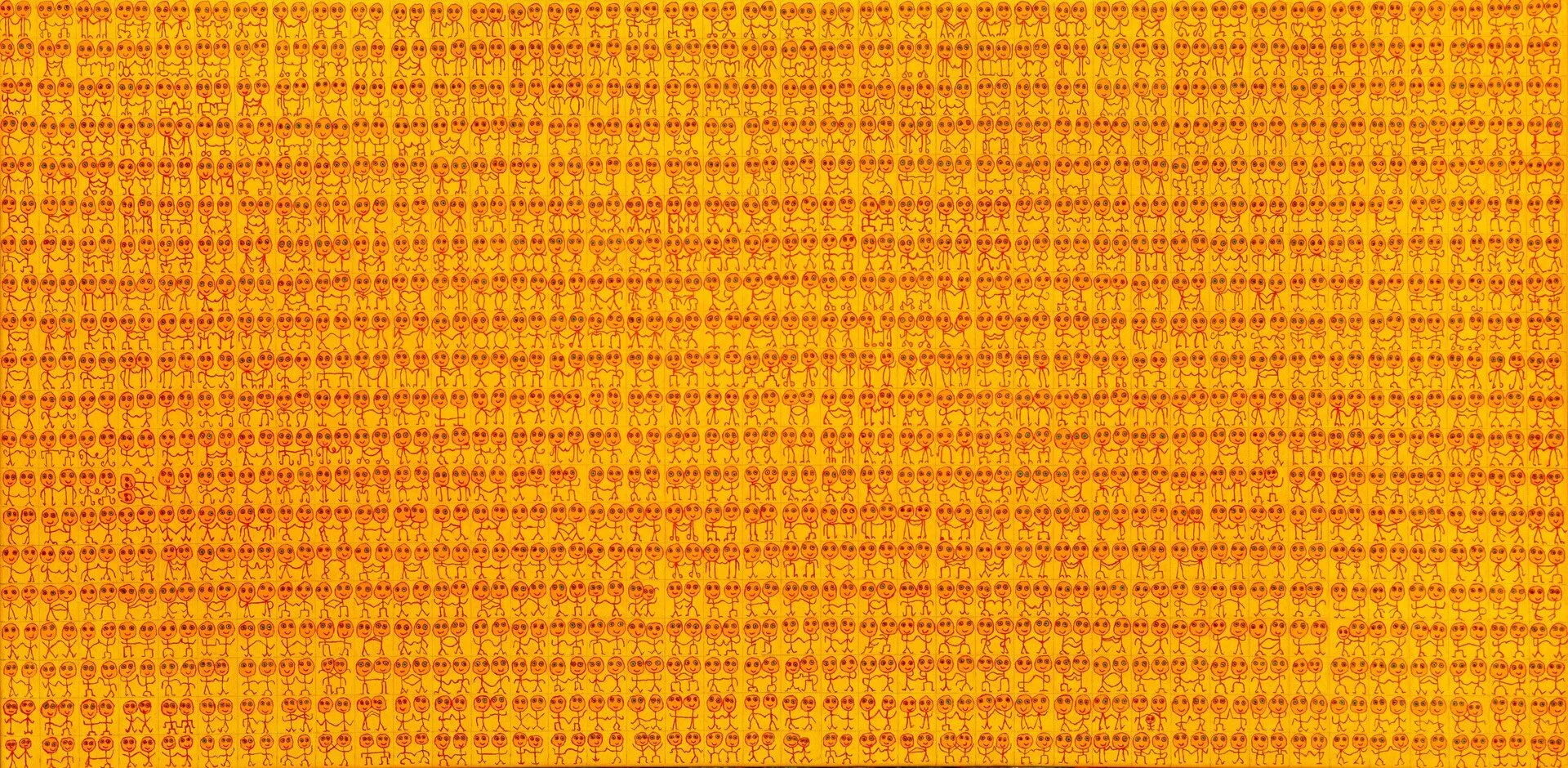
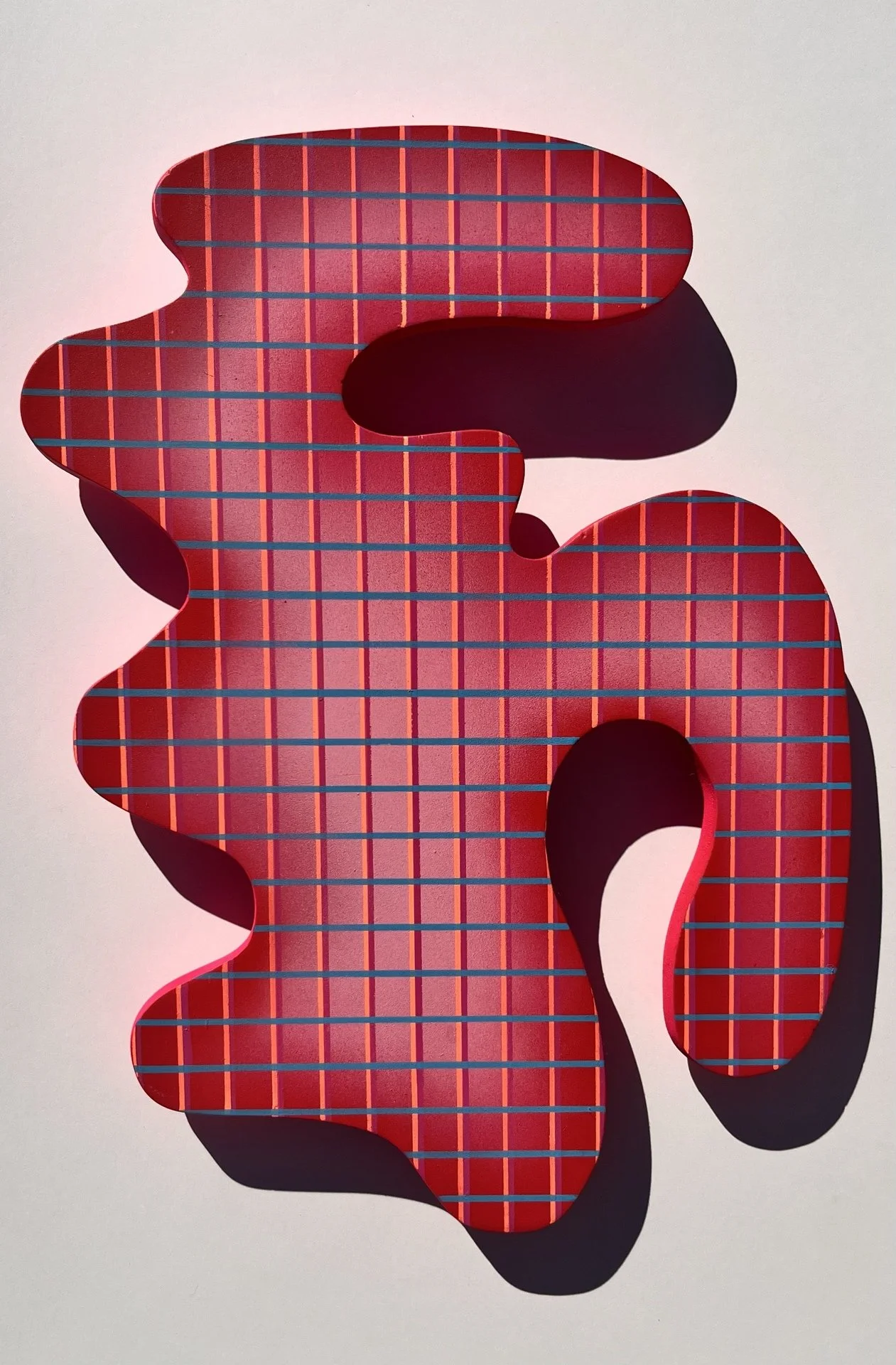
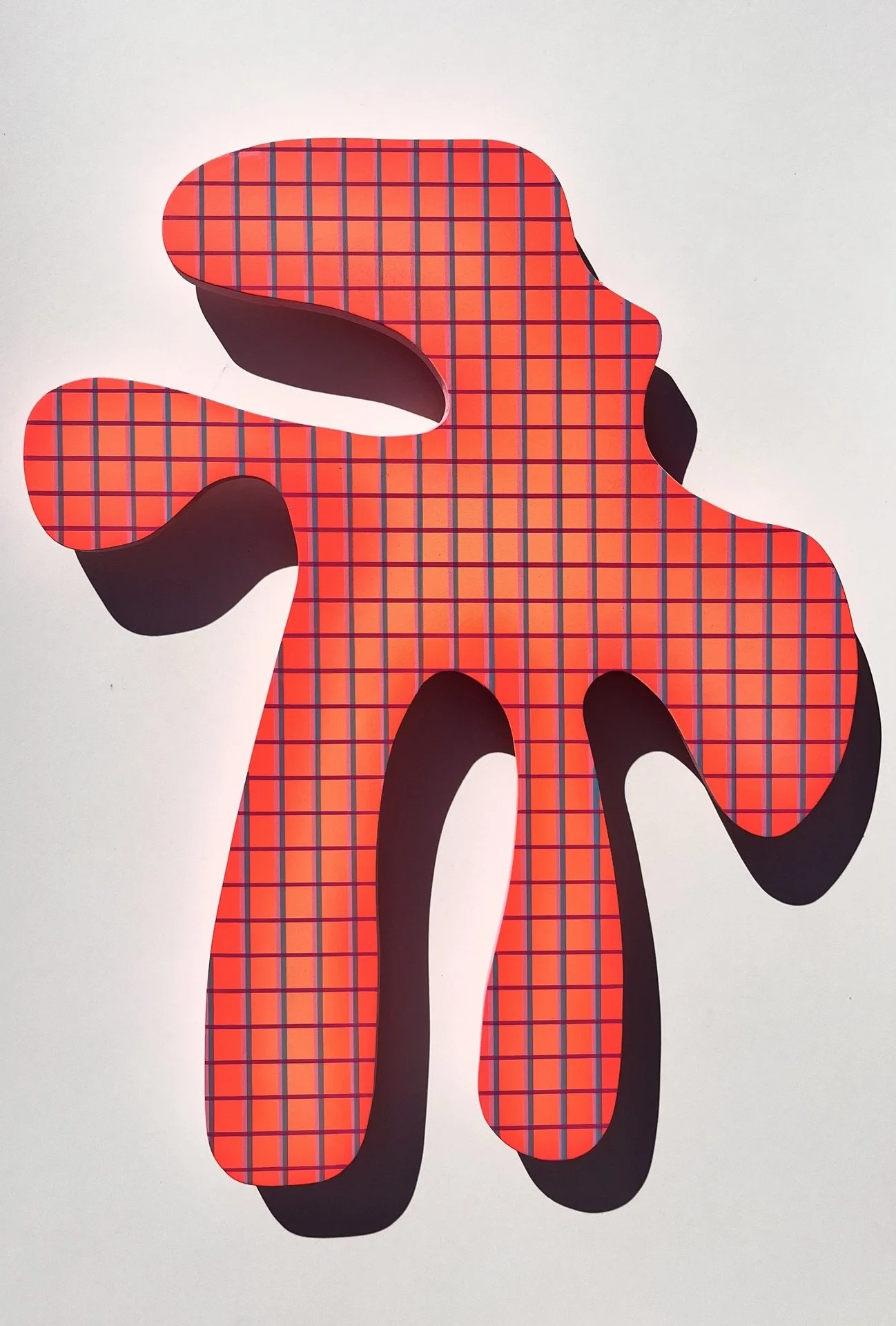
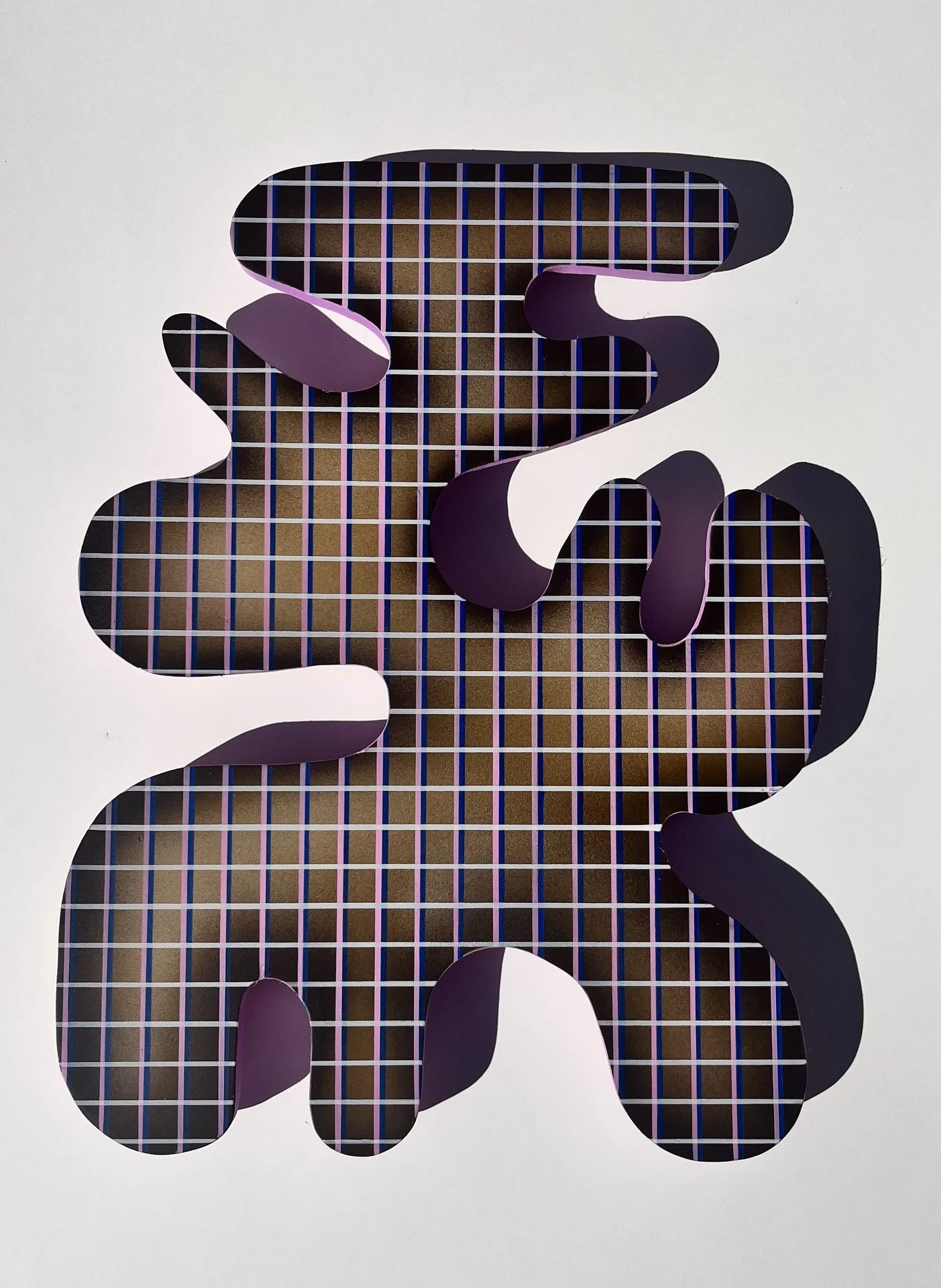
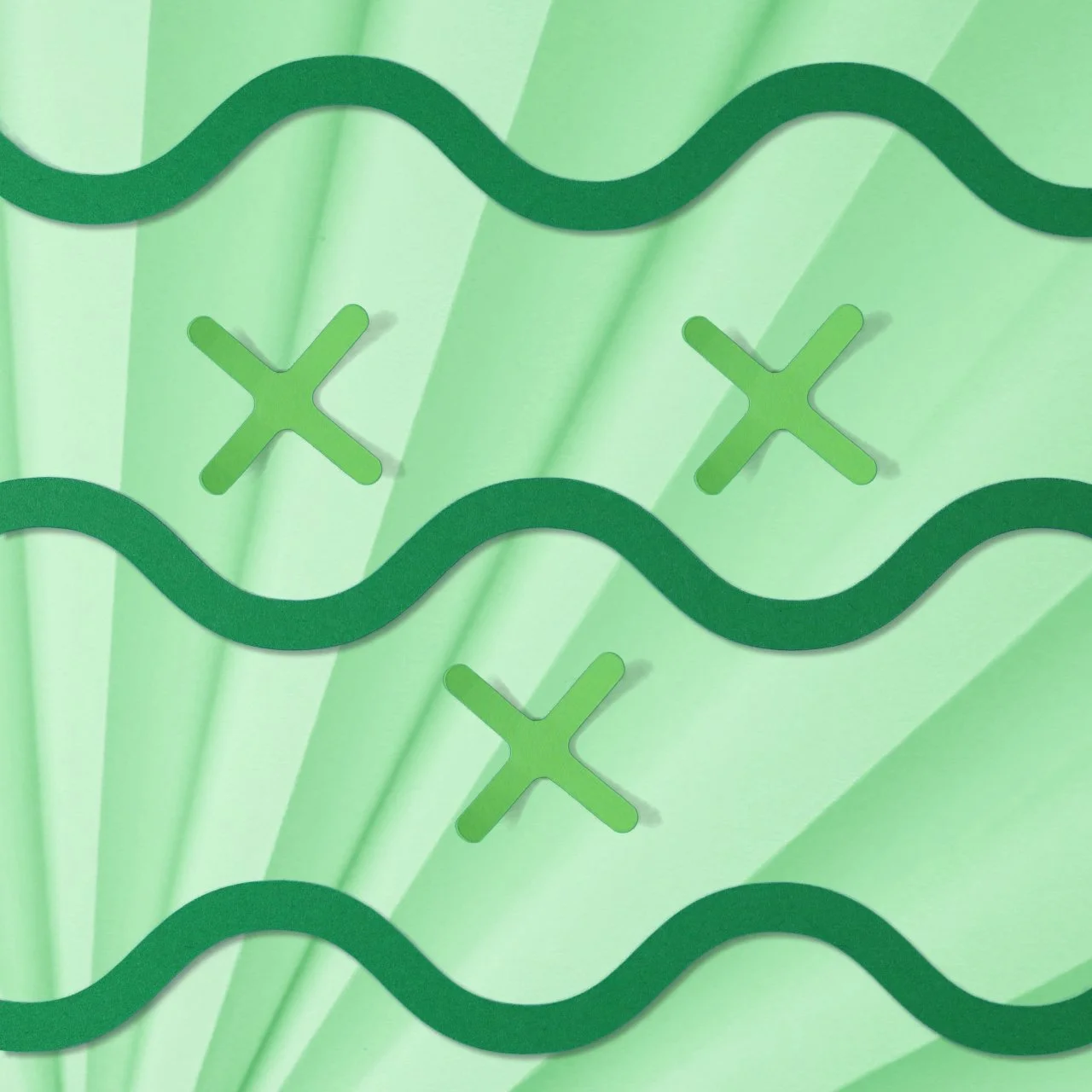
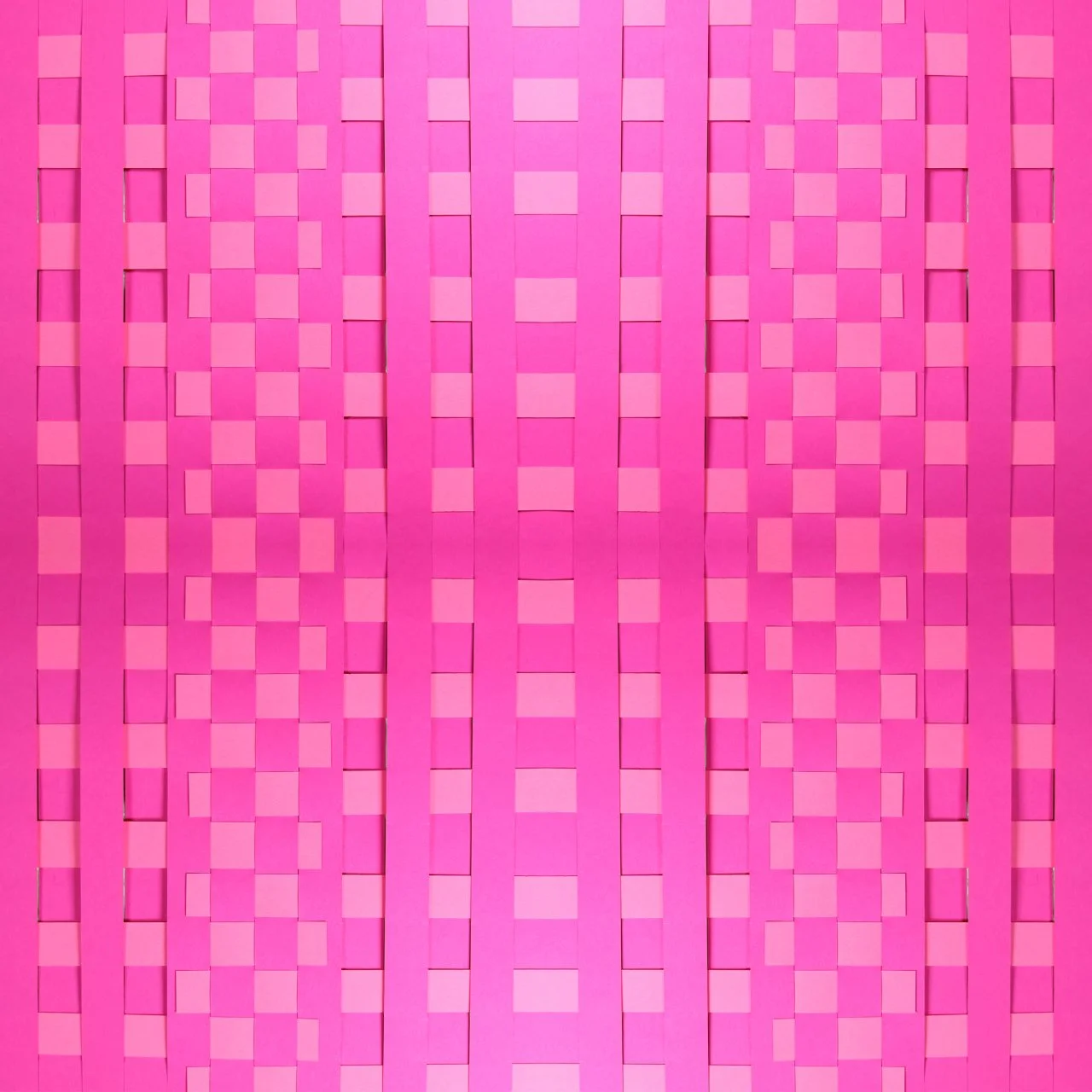
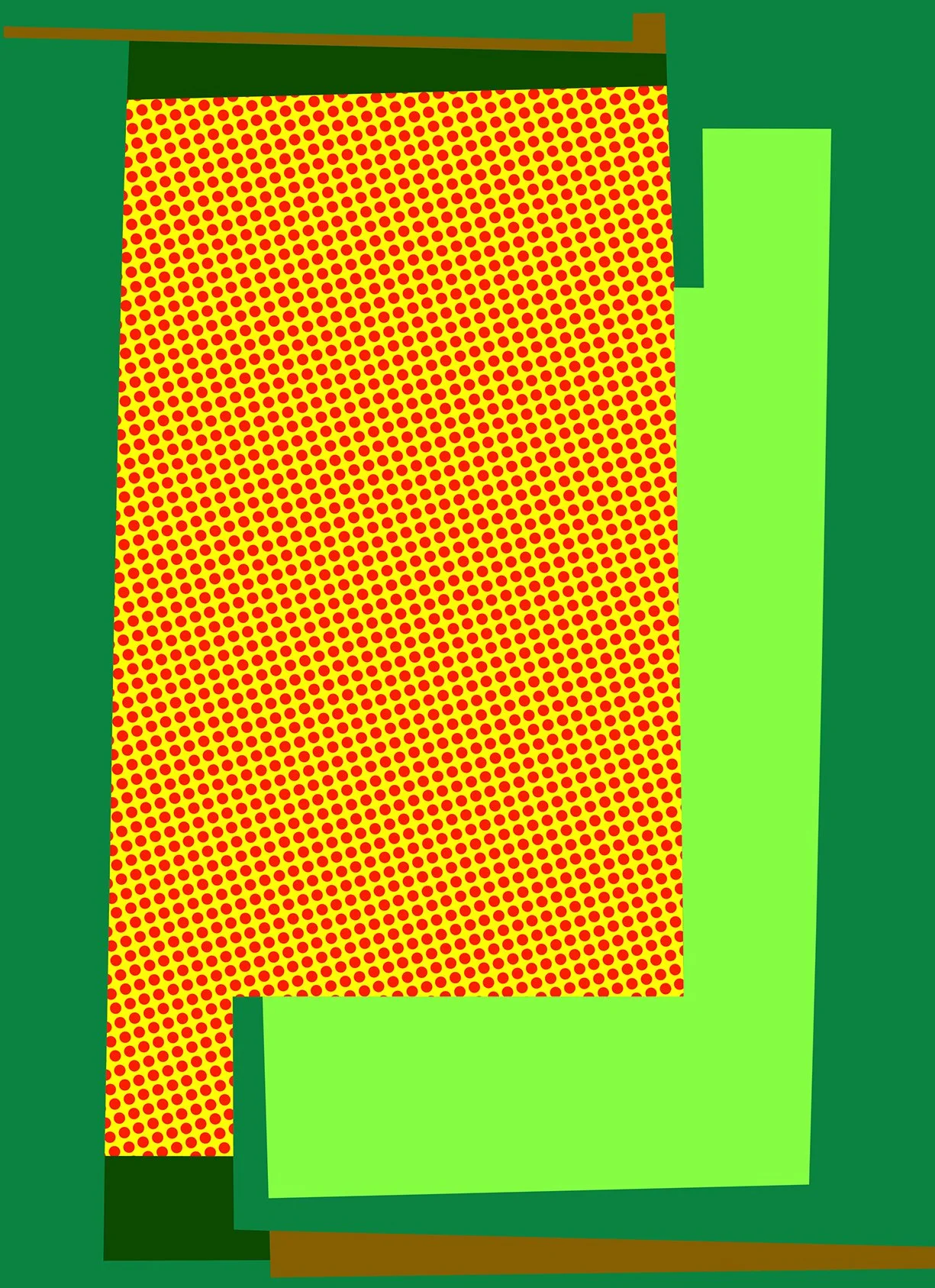
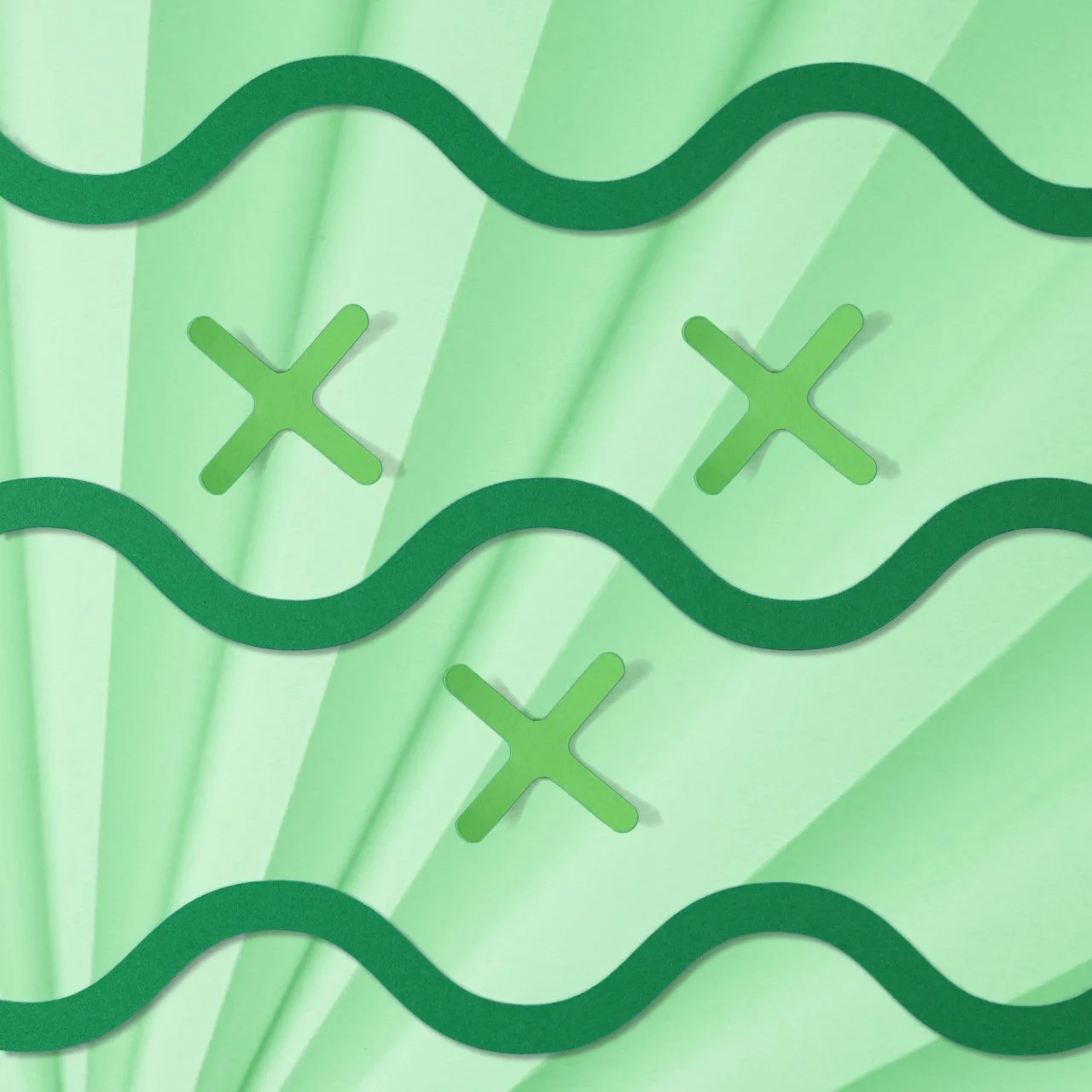
Meg Cook
Patch (Film Still 2)
Digital photography
4.2" x 4.2" x 0"
$100.00
Meg Cook
Patch
Video
4.2" x 4.2" x 0"
NFS
WALL 3: INTERZONE
Wenslo Garcia / Ahchipaptunhe / Meron Alon / Todd Mufffatti / Trudy Borenstein-Sugiura / Virginia Primozic / Magda Igyarto / Paula Elliot / Carleen Zimbalatti / Rain Worthington / Meryl Blinder
Gathering artists who approach geometry as conduits for memory, belief systems, and metaphysical reflection, this section features artists that aren’t seeking a greater understanding of the outside world but rather endeavoring to better connect with their internal experiences and cultural inheritance.
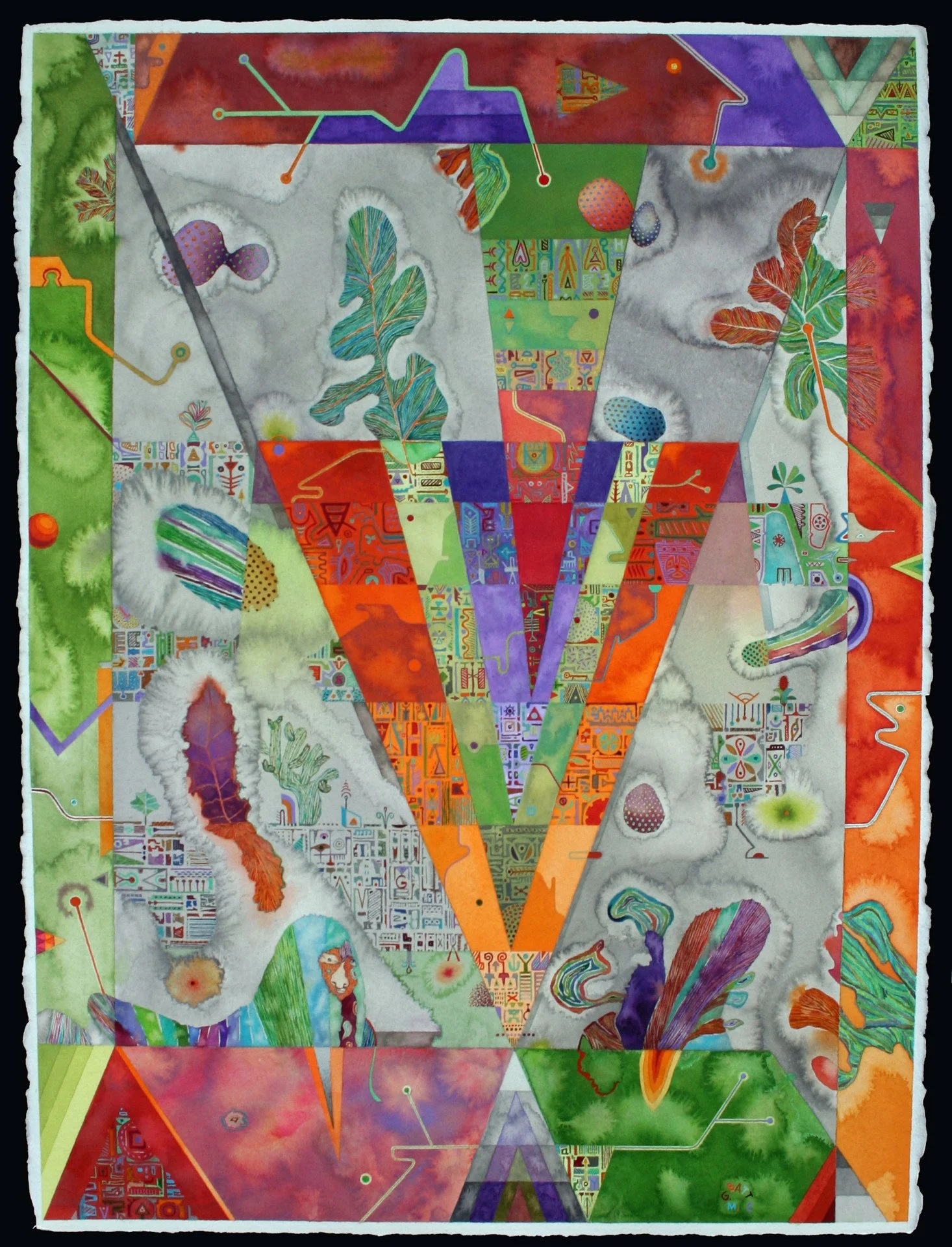
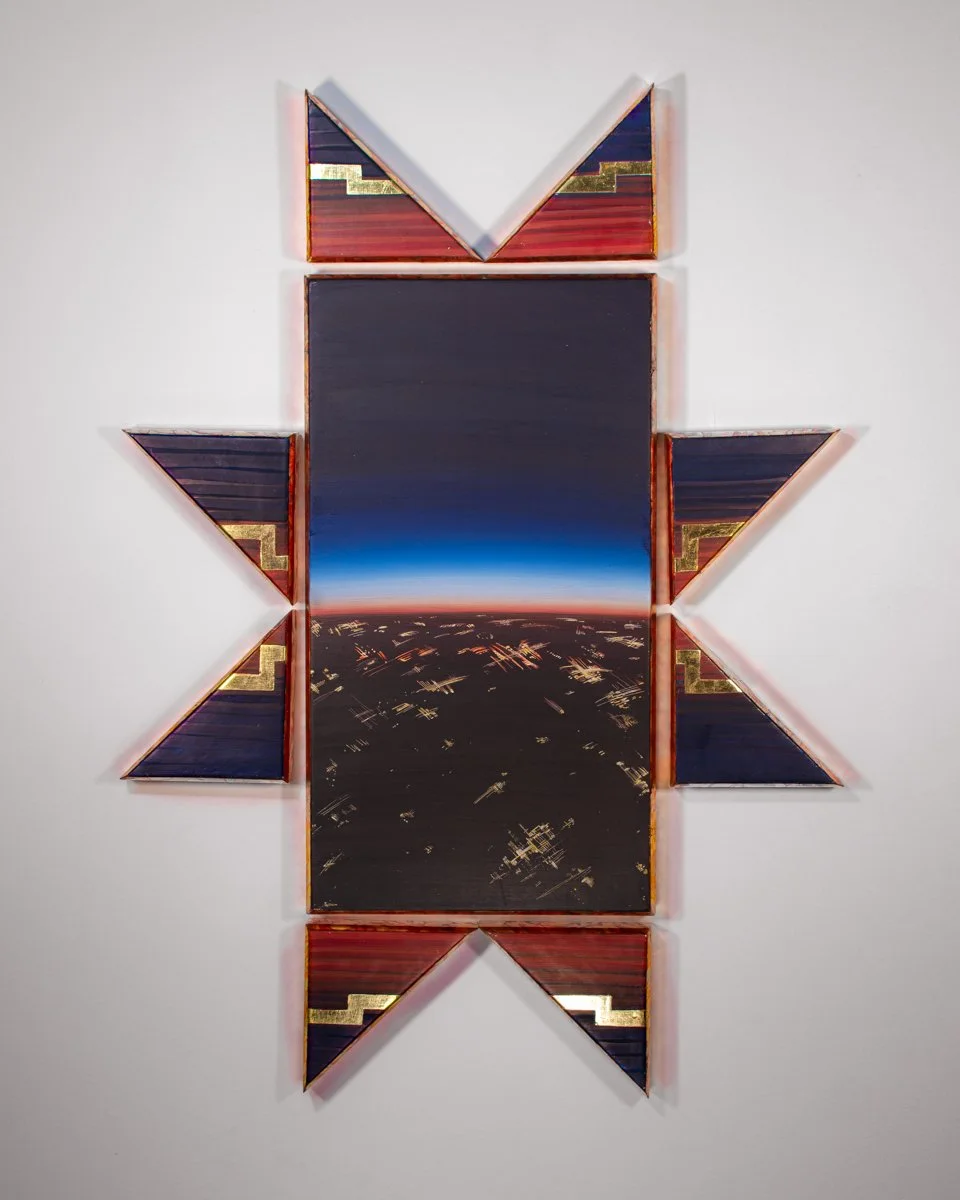
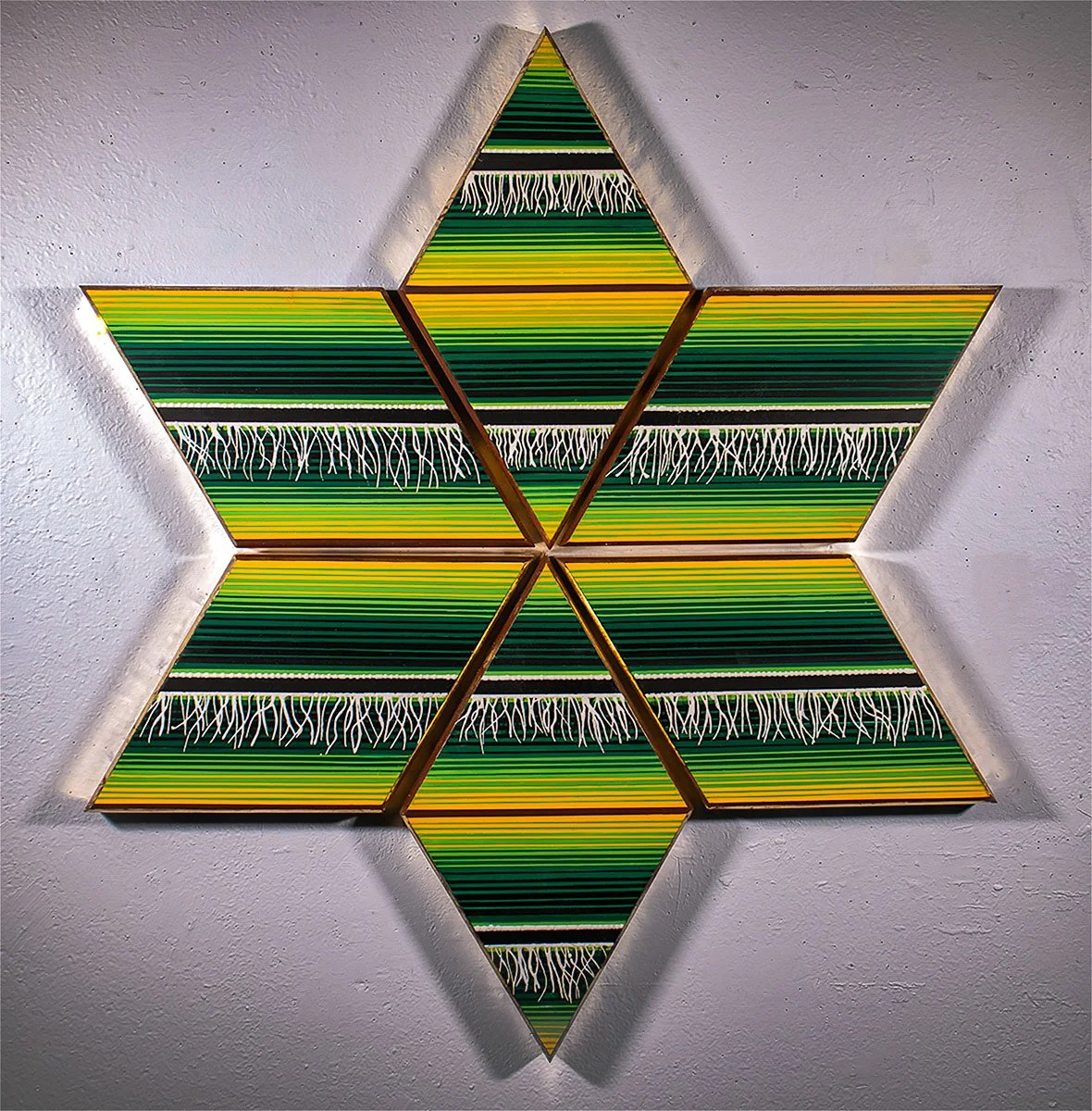
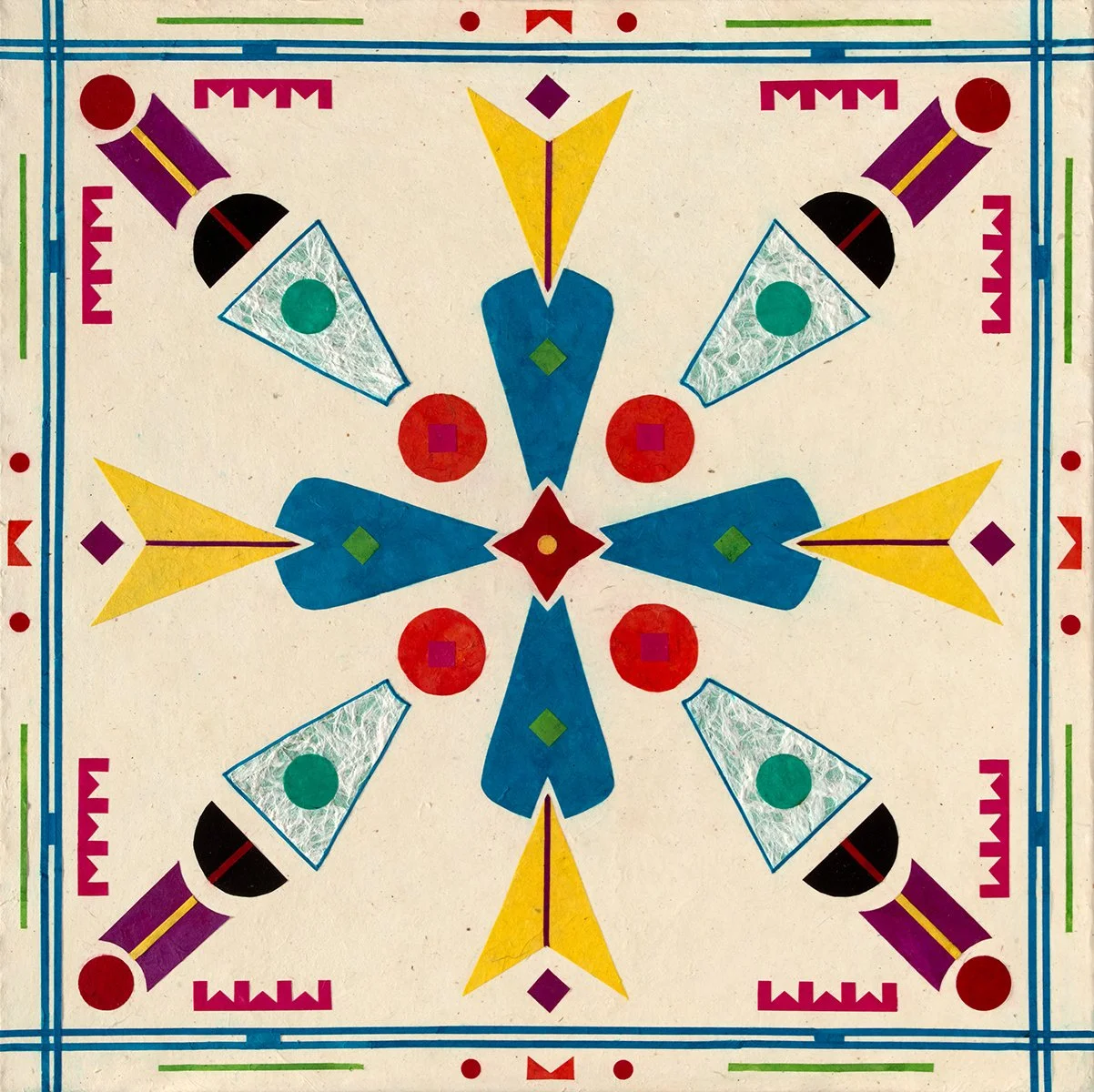
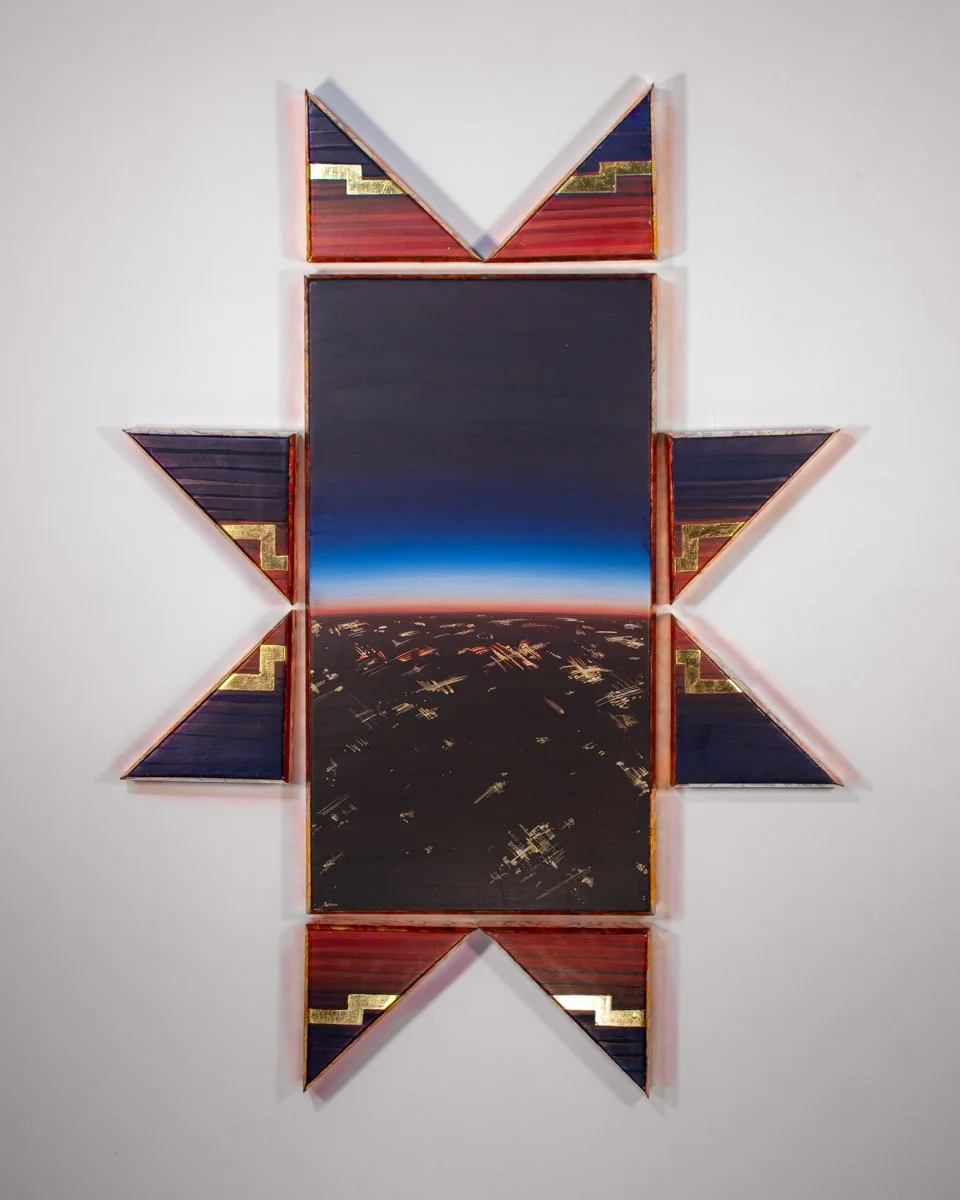
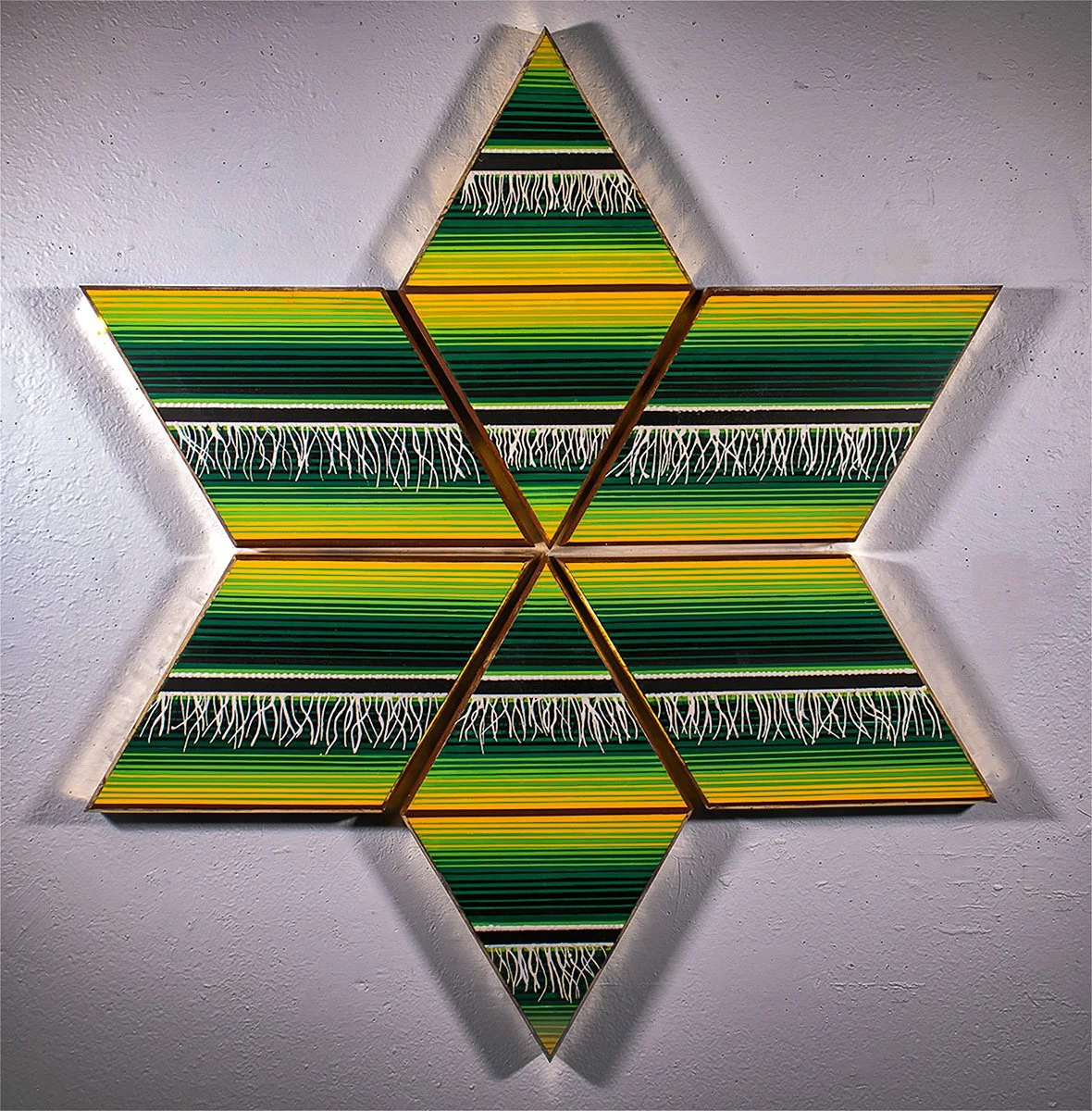
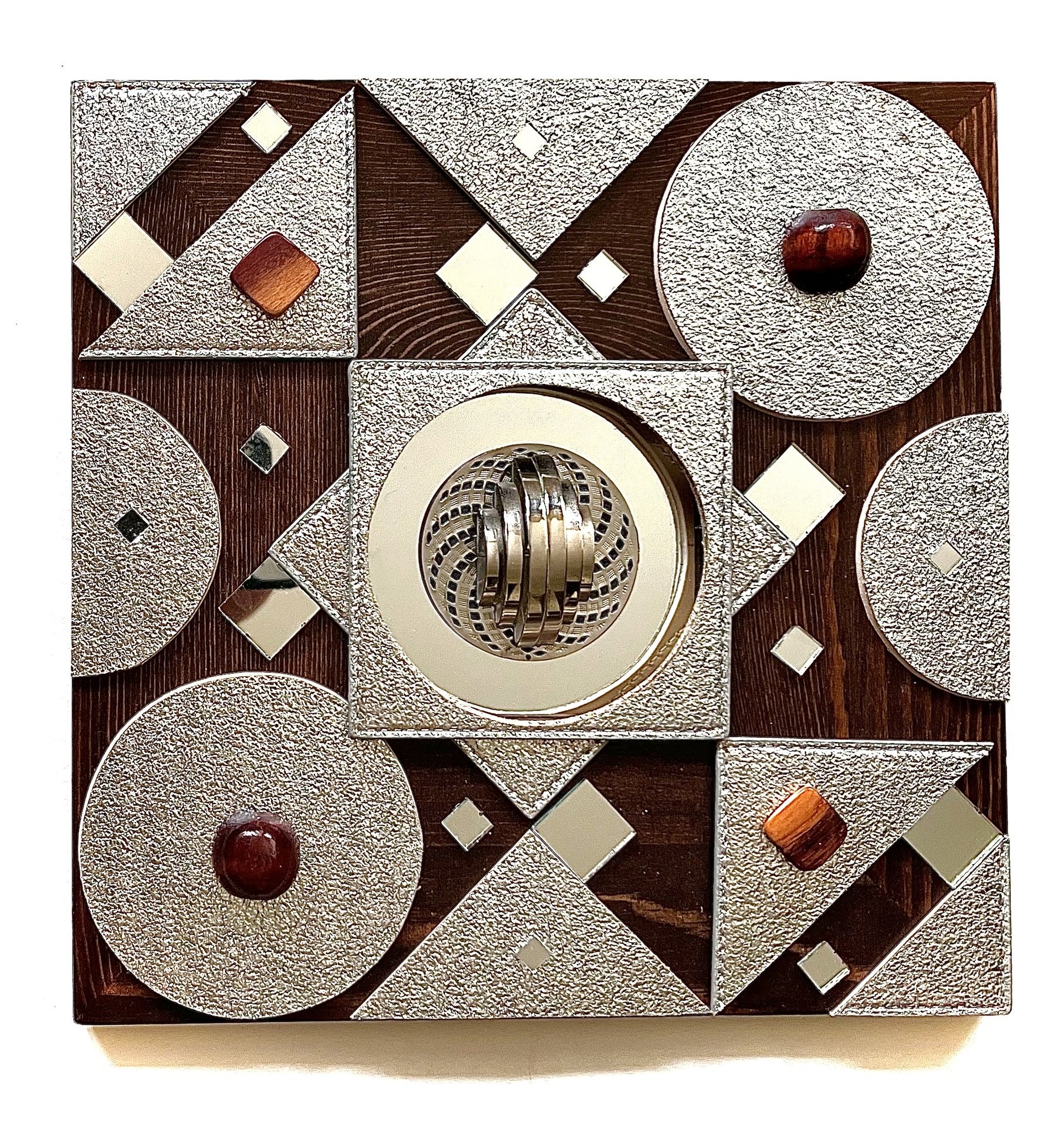
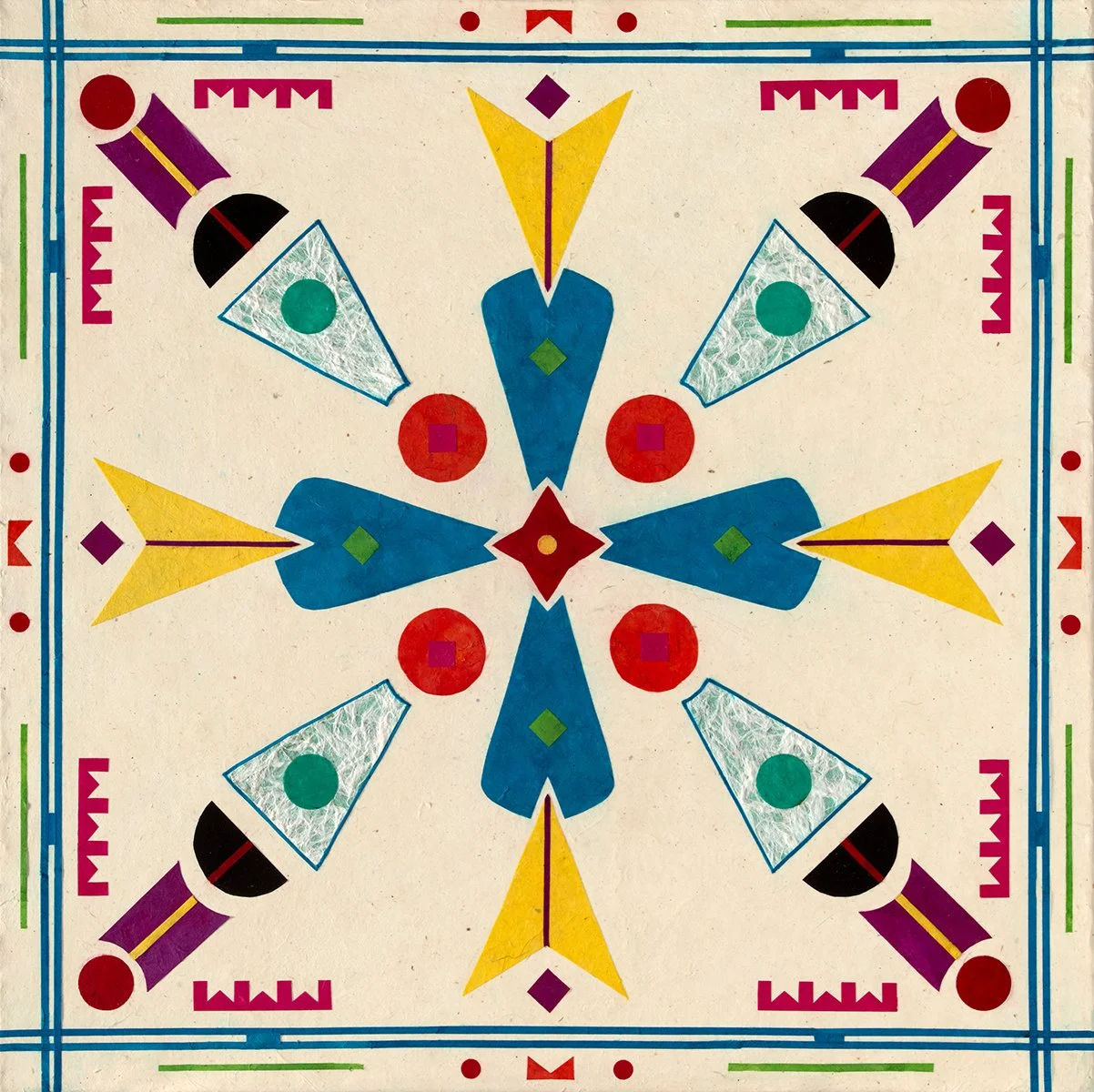
Approaching geometry as a vessel for personal and cultural memory, Wenslo Garcia layers egg tempera, metal leaf, and patterned surfaces influenced by Hispanic ornament and devotional imagery, weaving together family history and inherited visual language. Similarly, David Haff draws on storytelling traditions from the Tribe of Delaware Indians to transform simple geometric forms into visual narratives that connect contemporary life with ancestral knowledge.
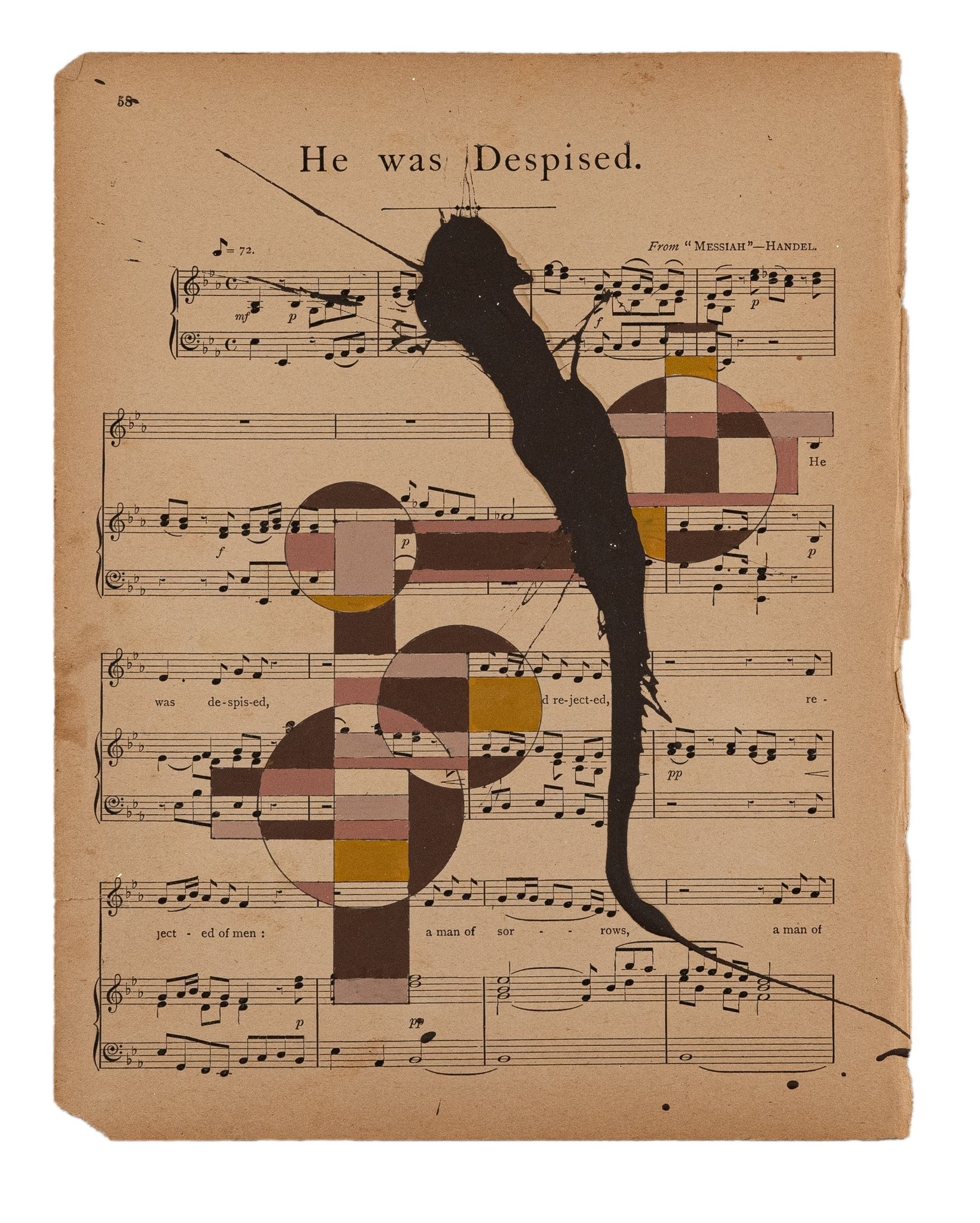
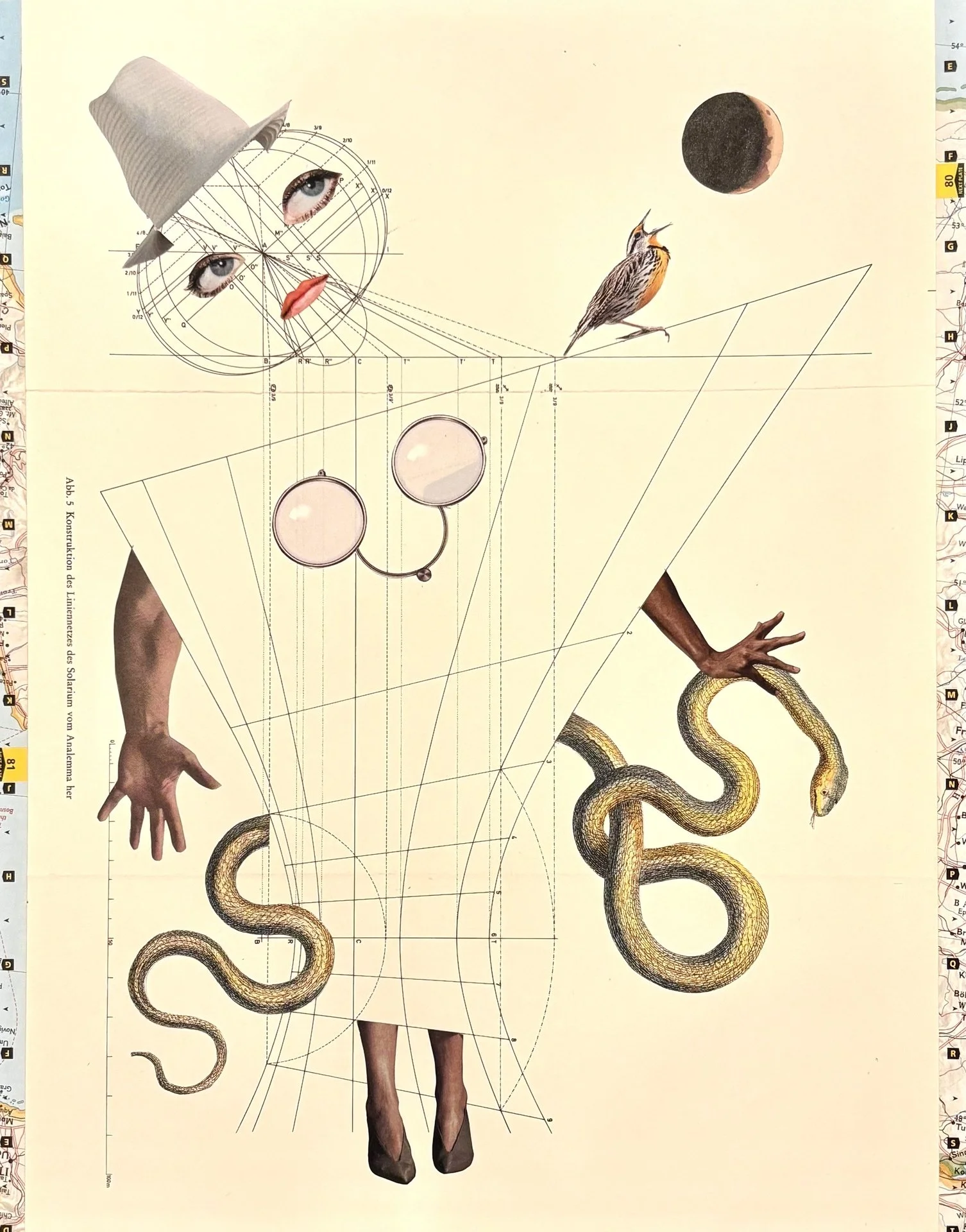
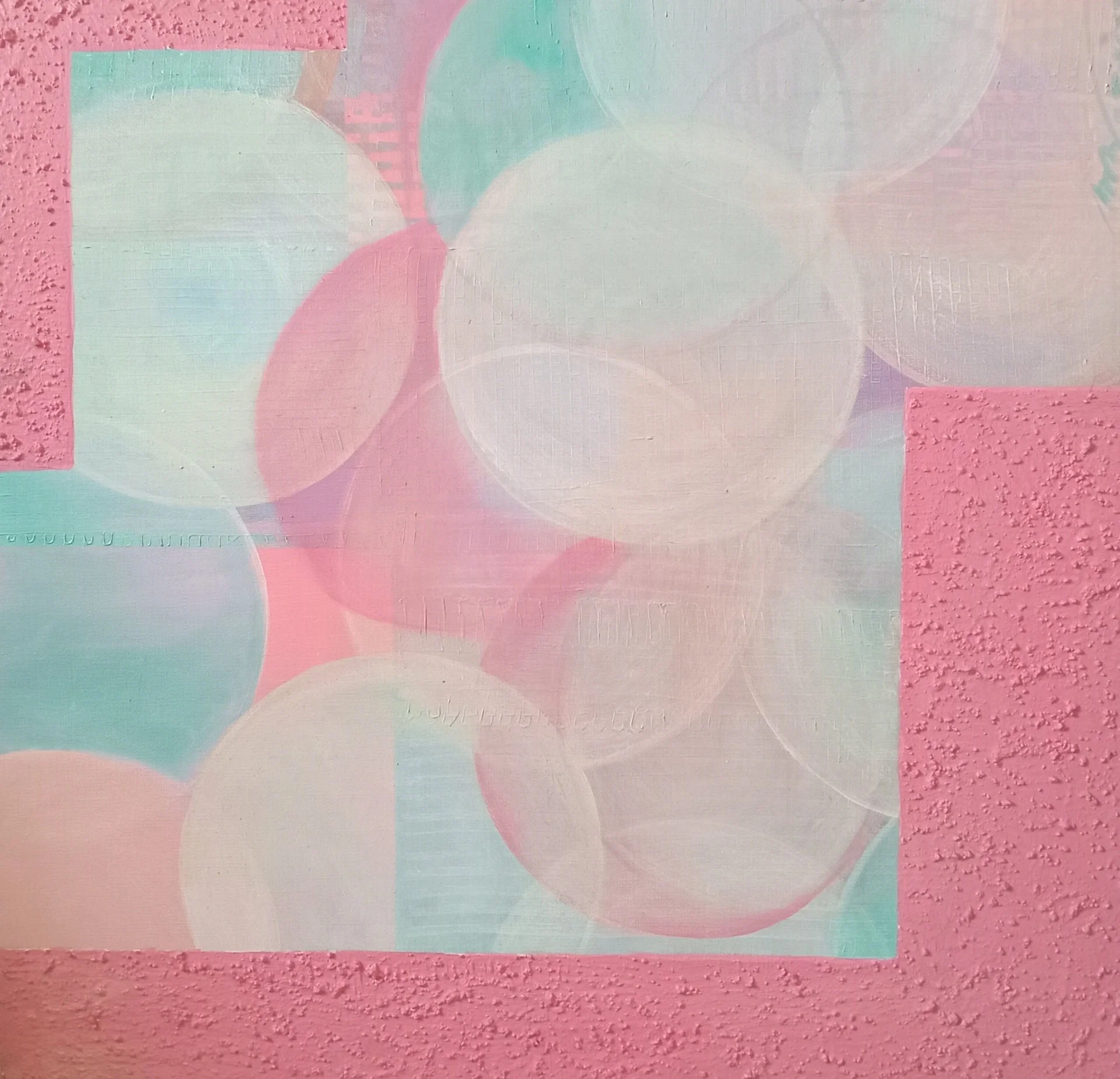
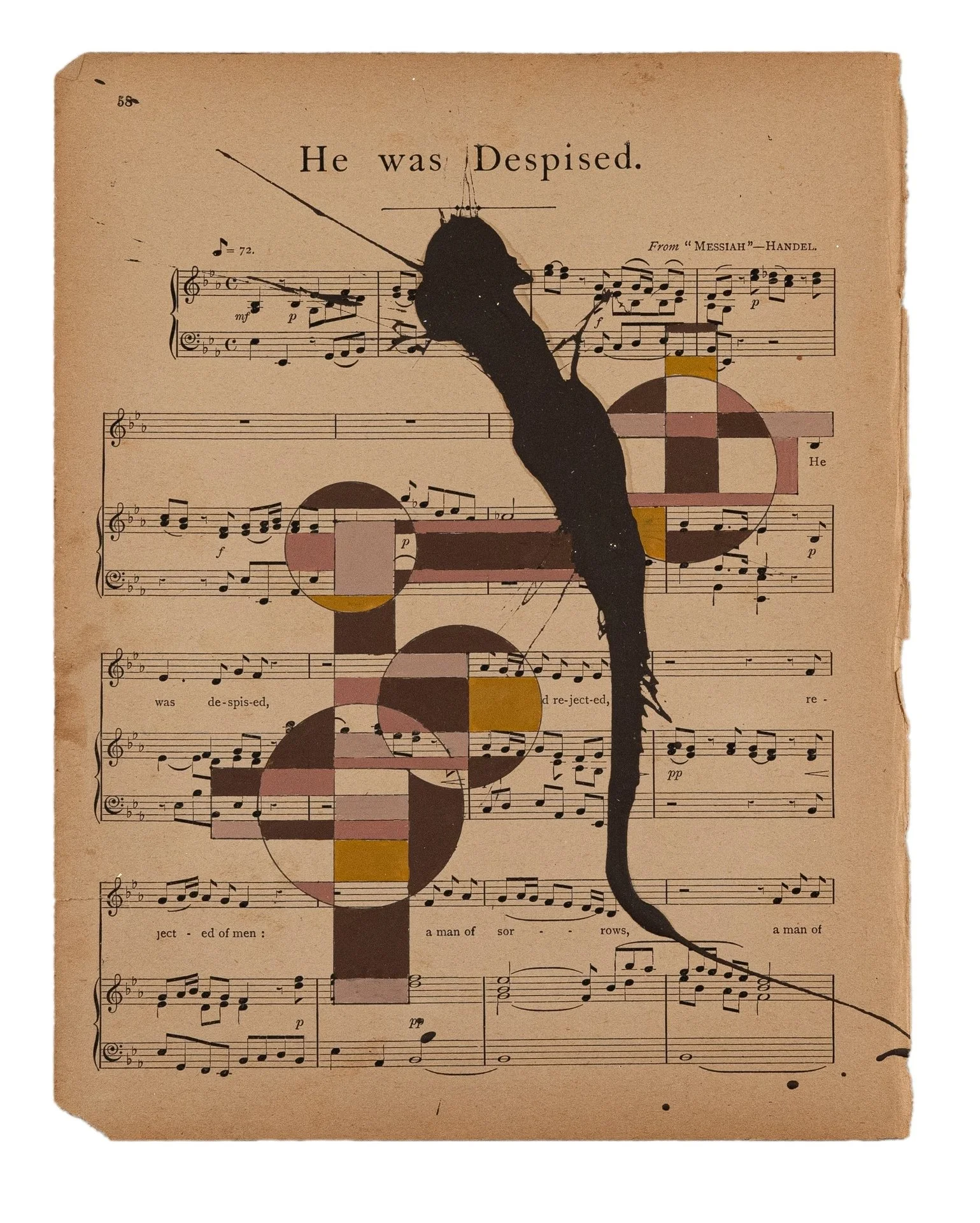
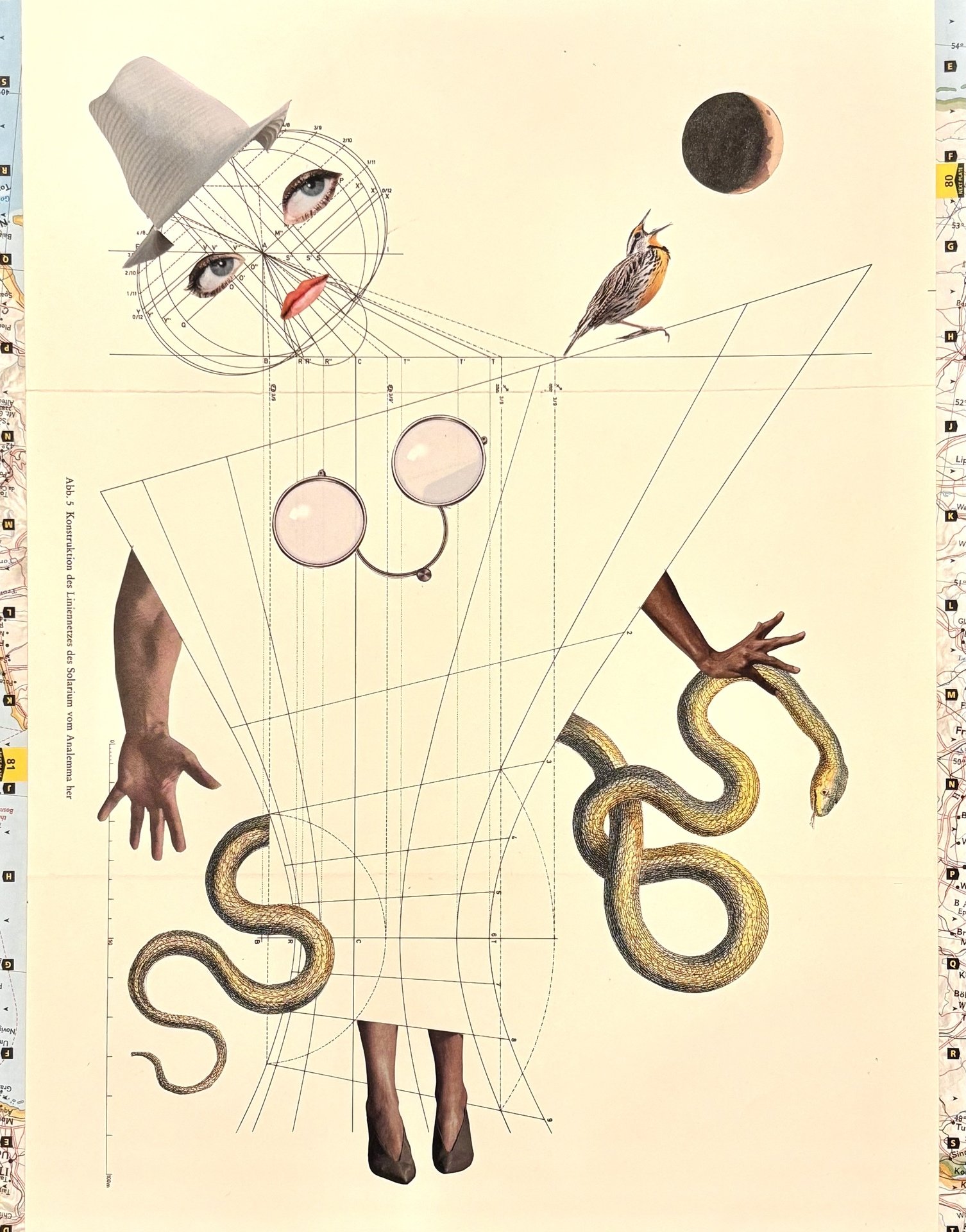
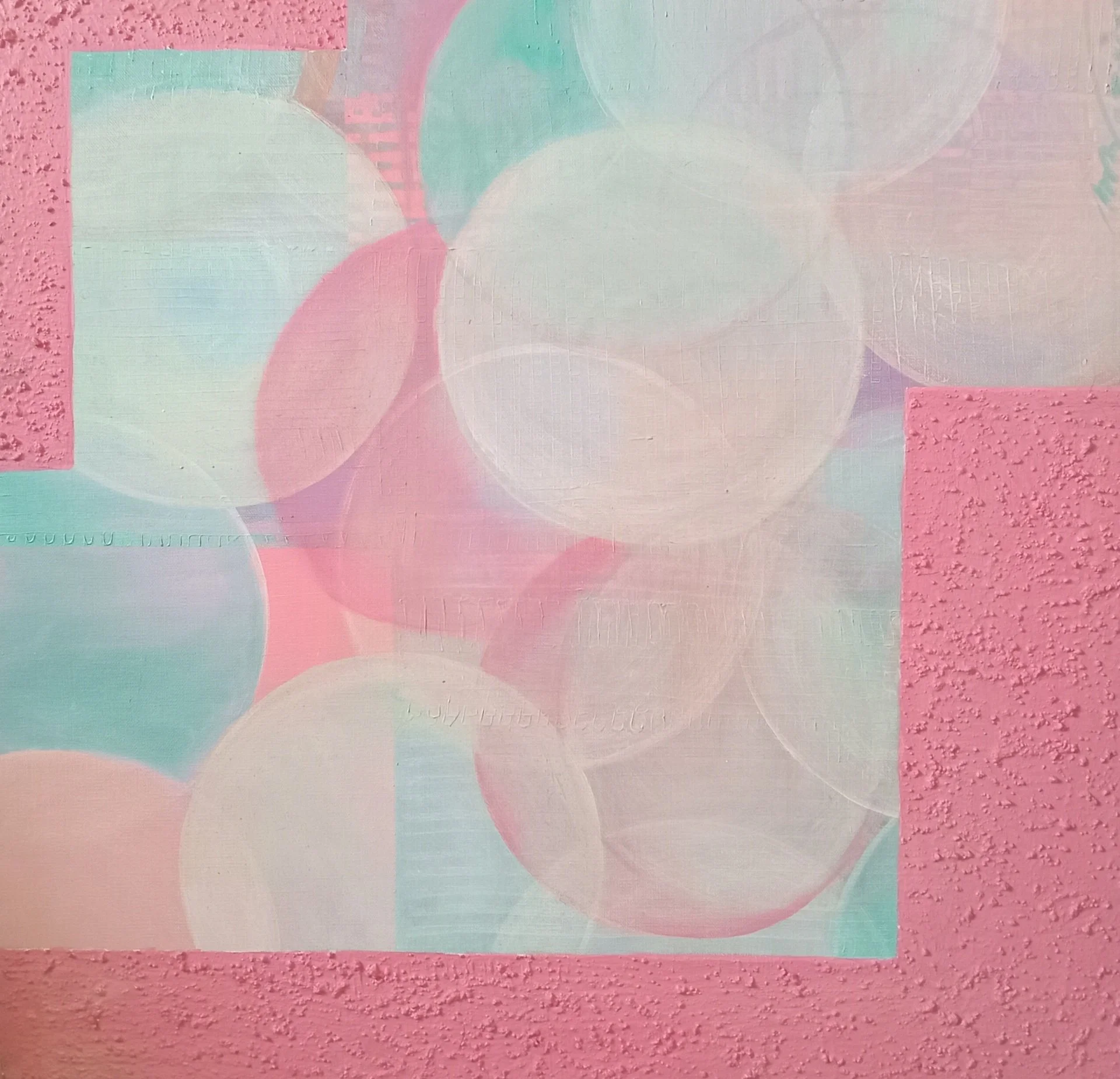
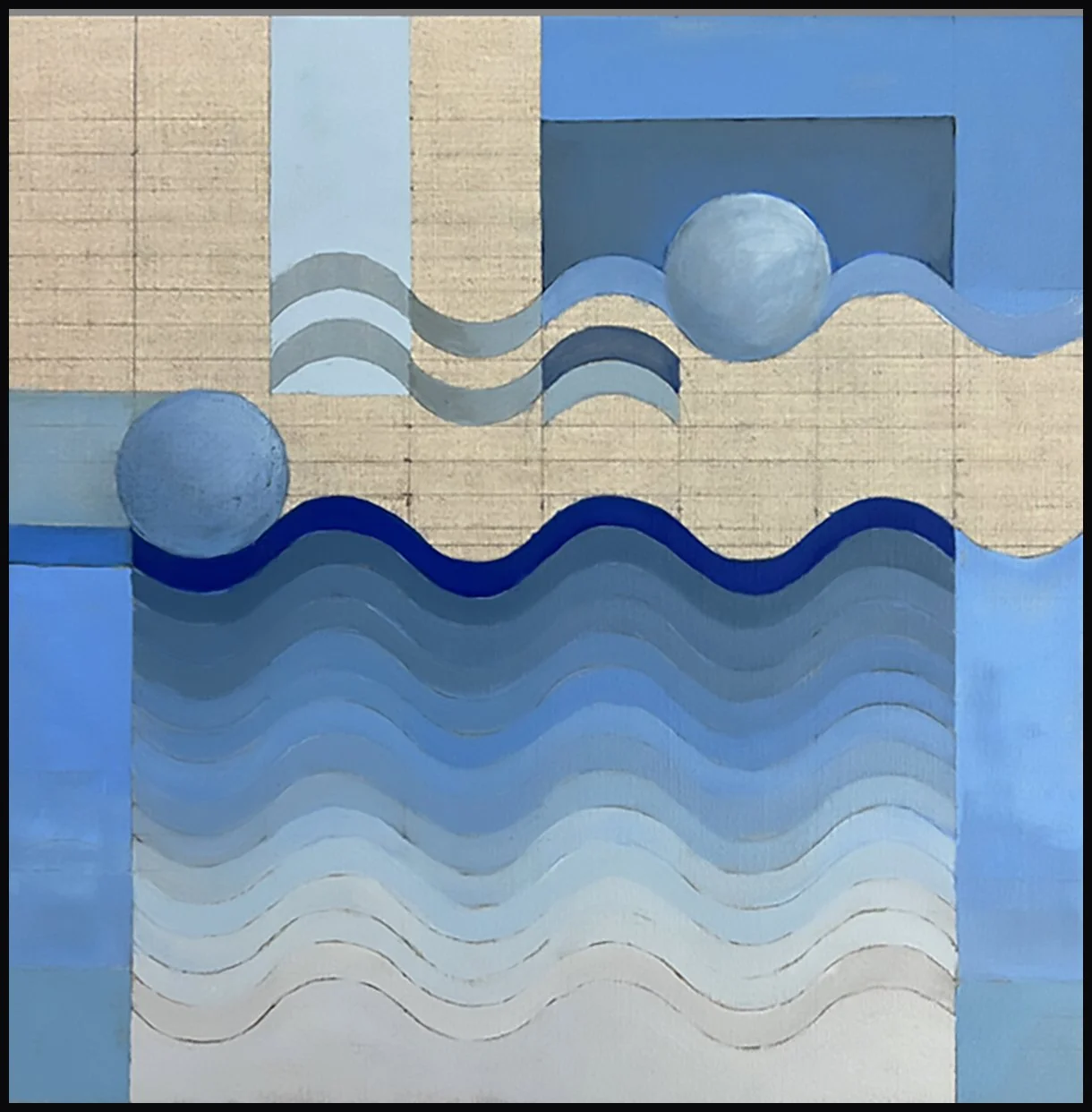
In creating collages and assemblages, Meron Alon and Todd Mufffatti layer found materials with geometric abstraction, as does Trudy Borenstein-Sugiura, who specifically draws upon maps, documents, and personal papers, allowing fragments of history to dissolve into geometric arrangements that read like quiet cartographies of memory. Though Virginia Primozic also works with paper, she invokes it exclusively as pigment, layering textures and fibers to transform humble materials into contemplative environments of color and light.
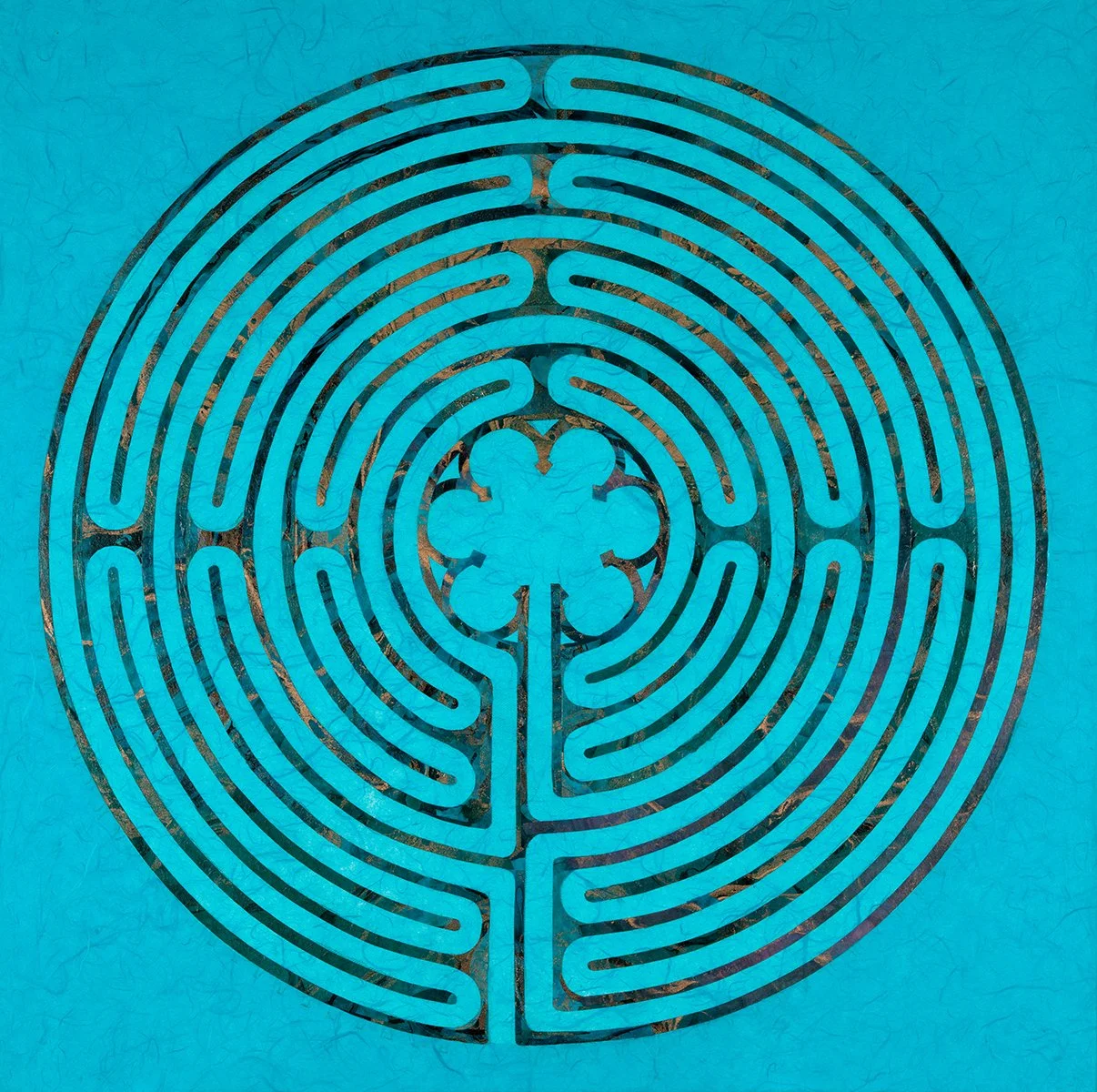
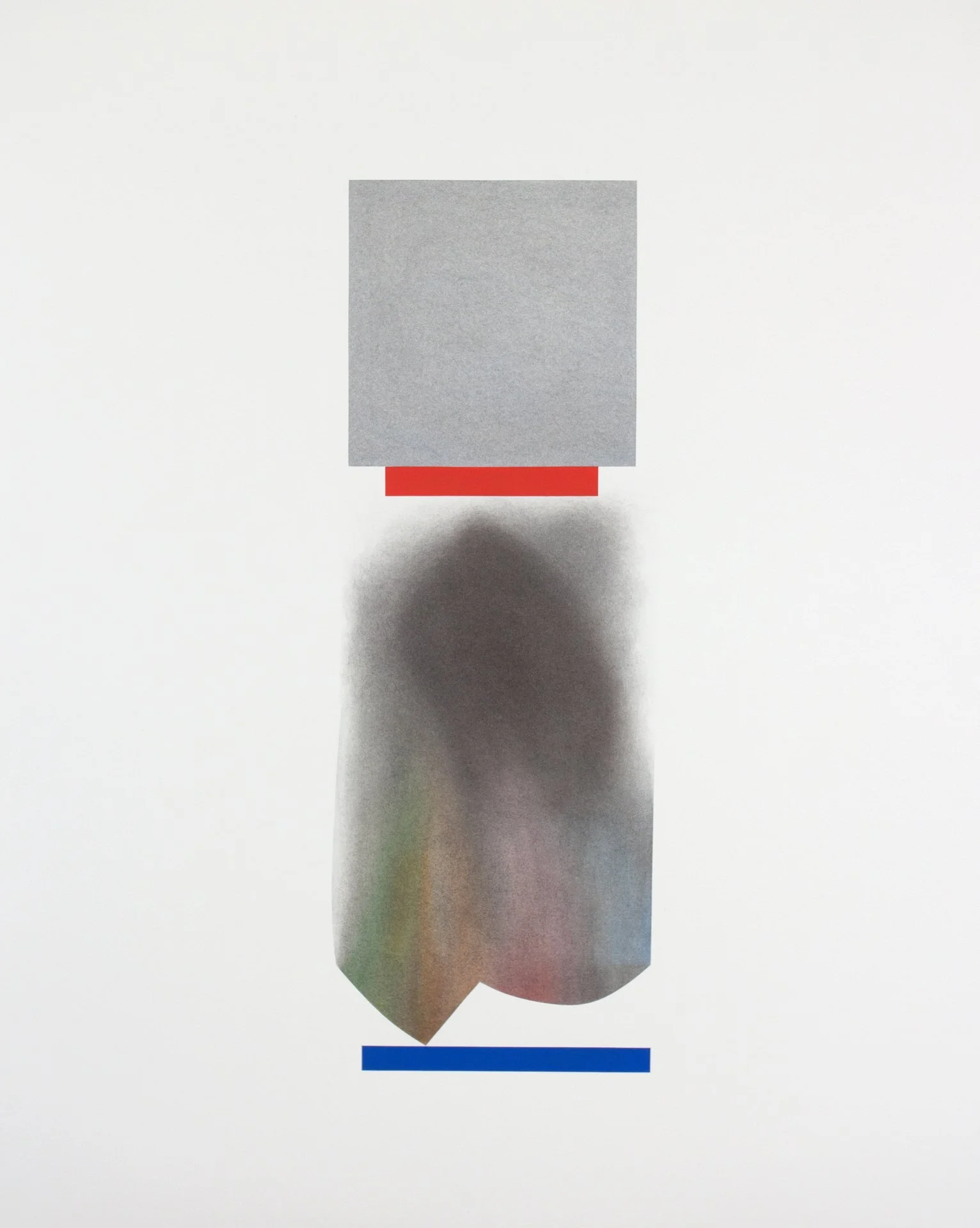
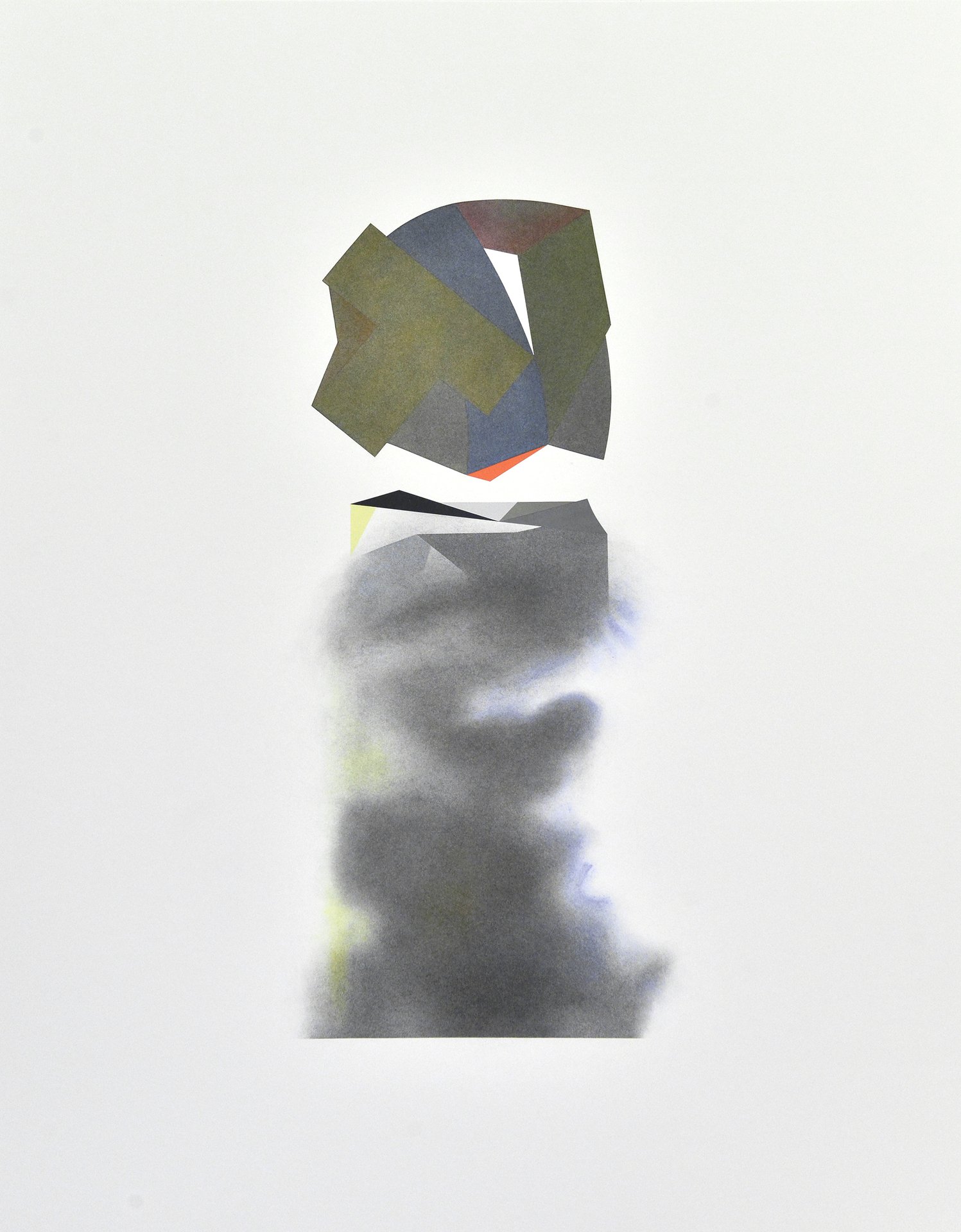
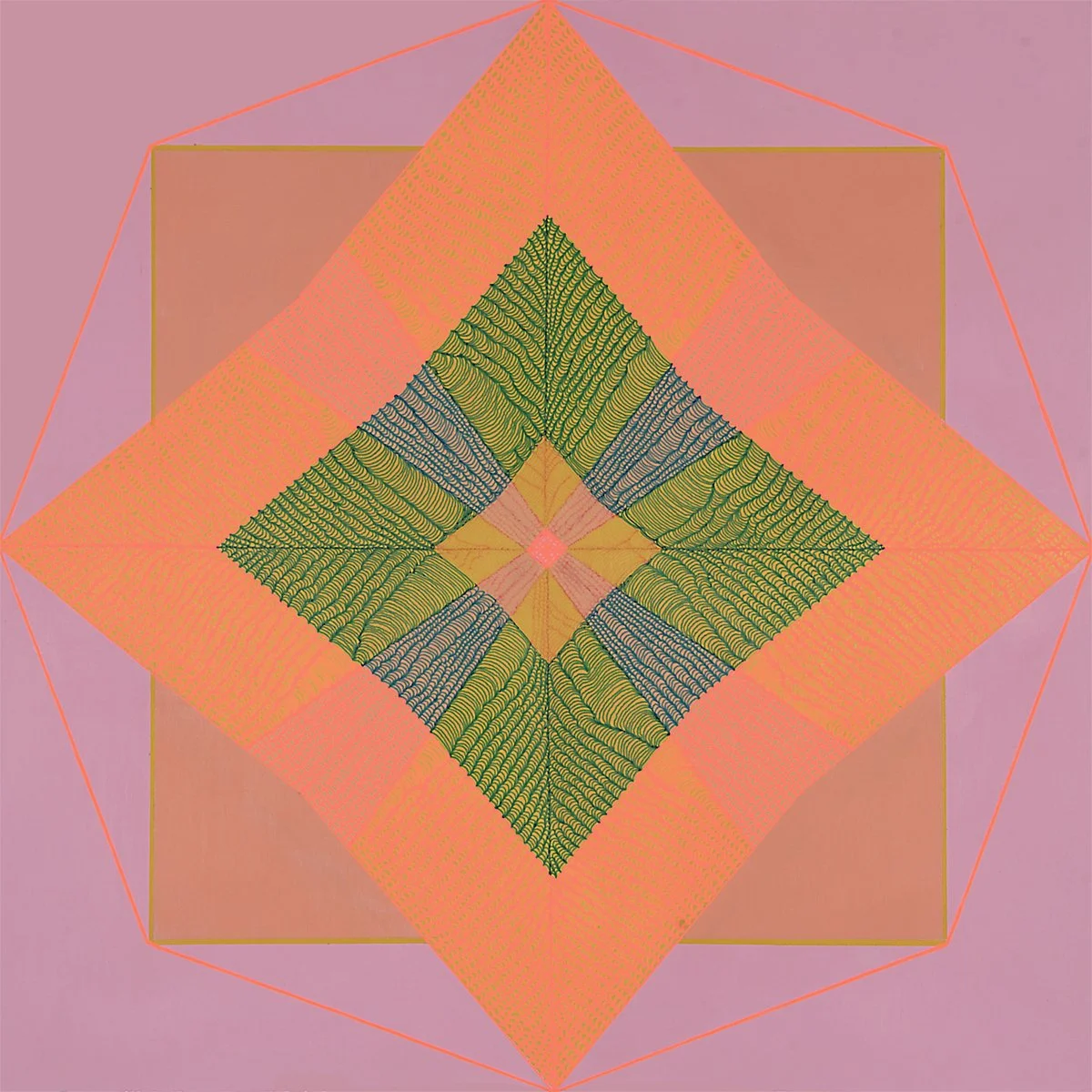
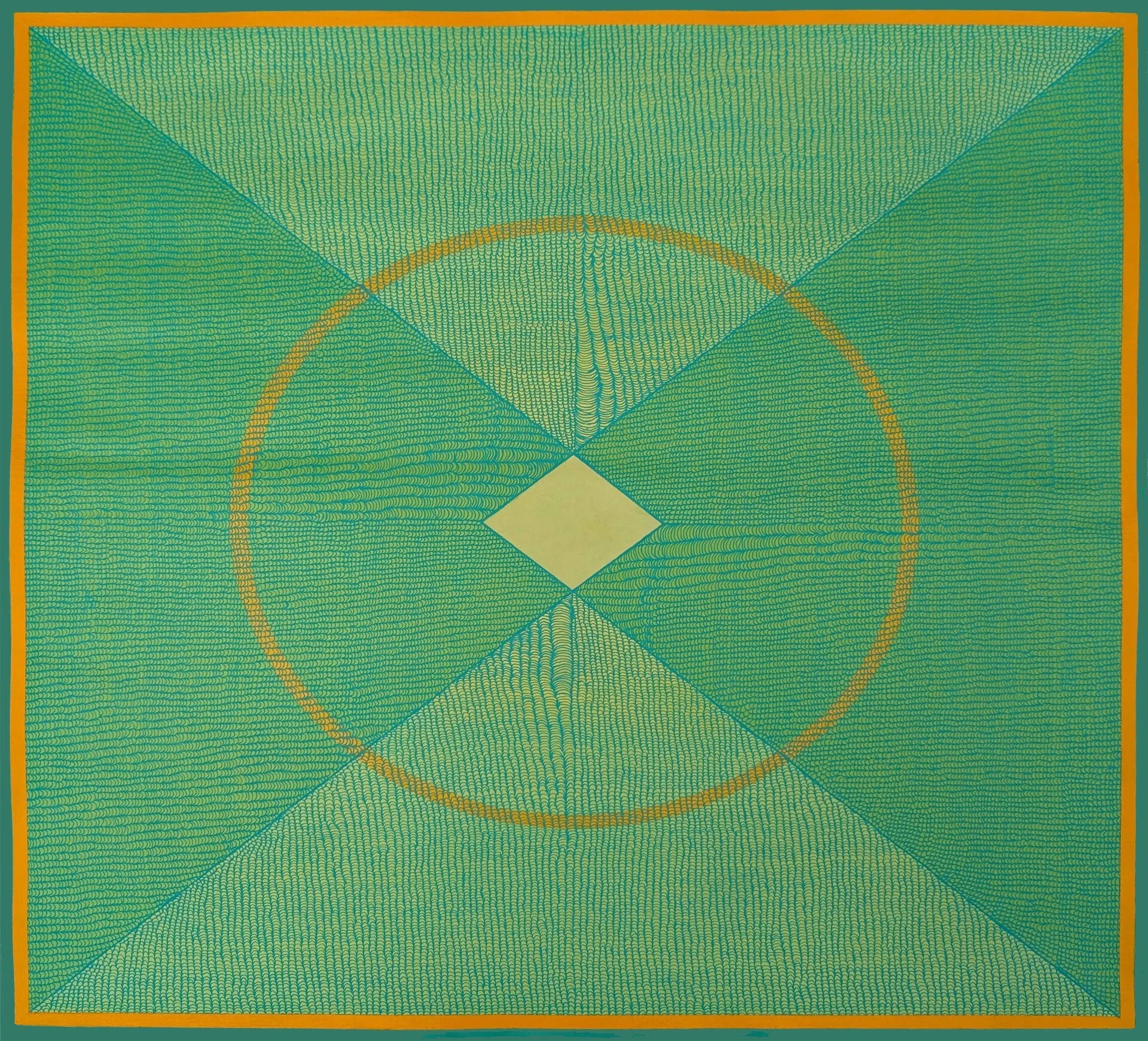
Elsewhere, geometry becomes a practice of concentration and inward balance to restore equilibrium, exemplified by the works of Magda Igyarto, Paula Elliot, and Carleen Zimbalatti. Comparable to Zimbalatti, who treats line itself as a continuous thread that moves hypnotically across the surface of her canvases, Rain Worthington creates compositions shaped by translucence, suspended motion, and subtle illumination that evoke awe and emotional resonance in a similar manner as her music.
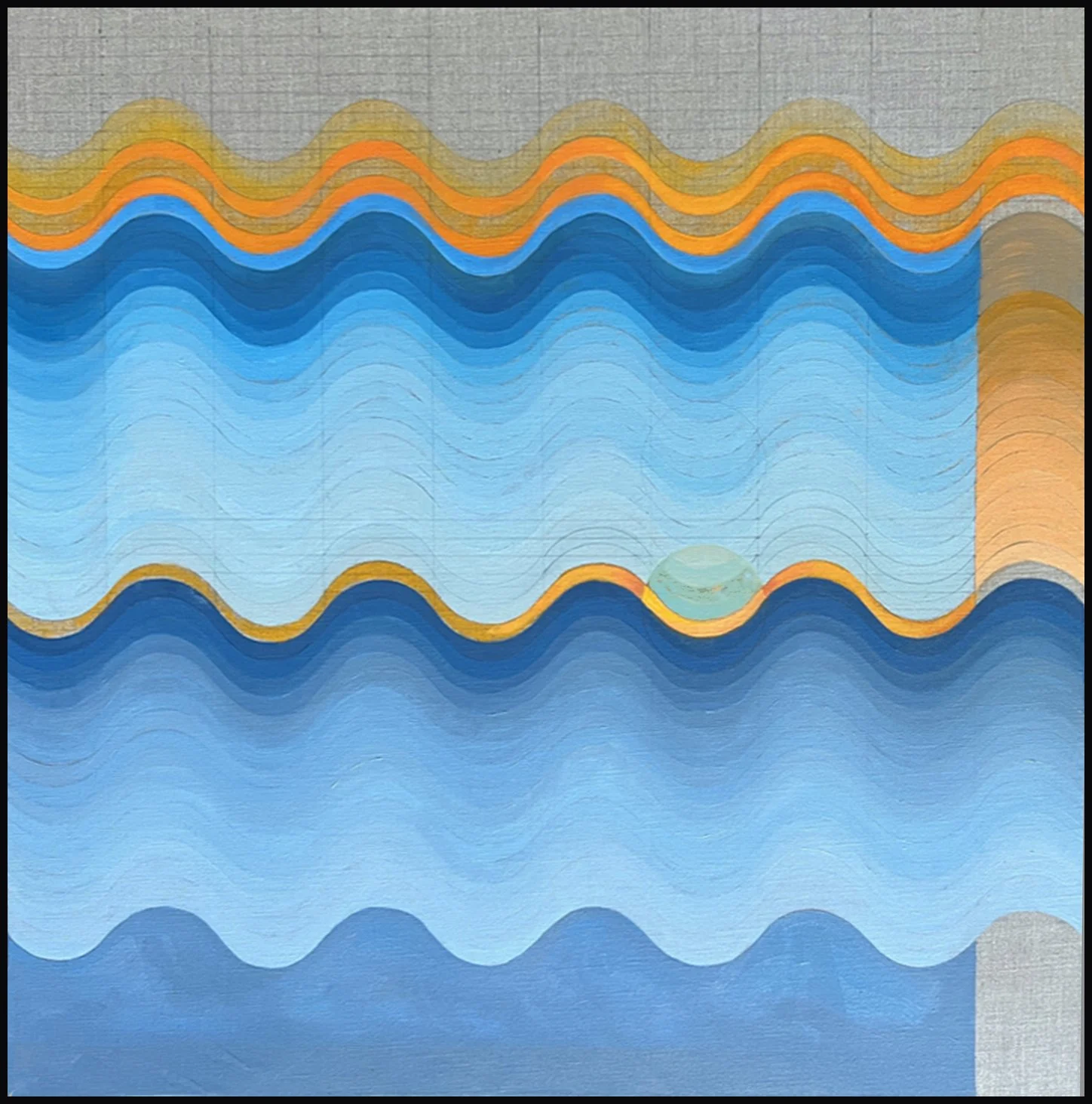
WALL 4: UNCANNY
Miles Batt / Jan Christopher-Berkson / Andrew Traub / Len DeLuca / Christine Beneman / Ben Dimock / David Hutchinson / Sean Livingstone / Mark Gens / Blanca Estela Rodríguez / Beth Fein / Monique Fouquet
Here, geometry becomes a tool for imagining other worlds, systems, and as yet unknown perspectives. By making the familiar unfamiliar, the artists in this section suggest other ways of seeing and inhabiting space.
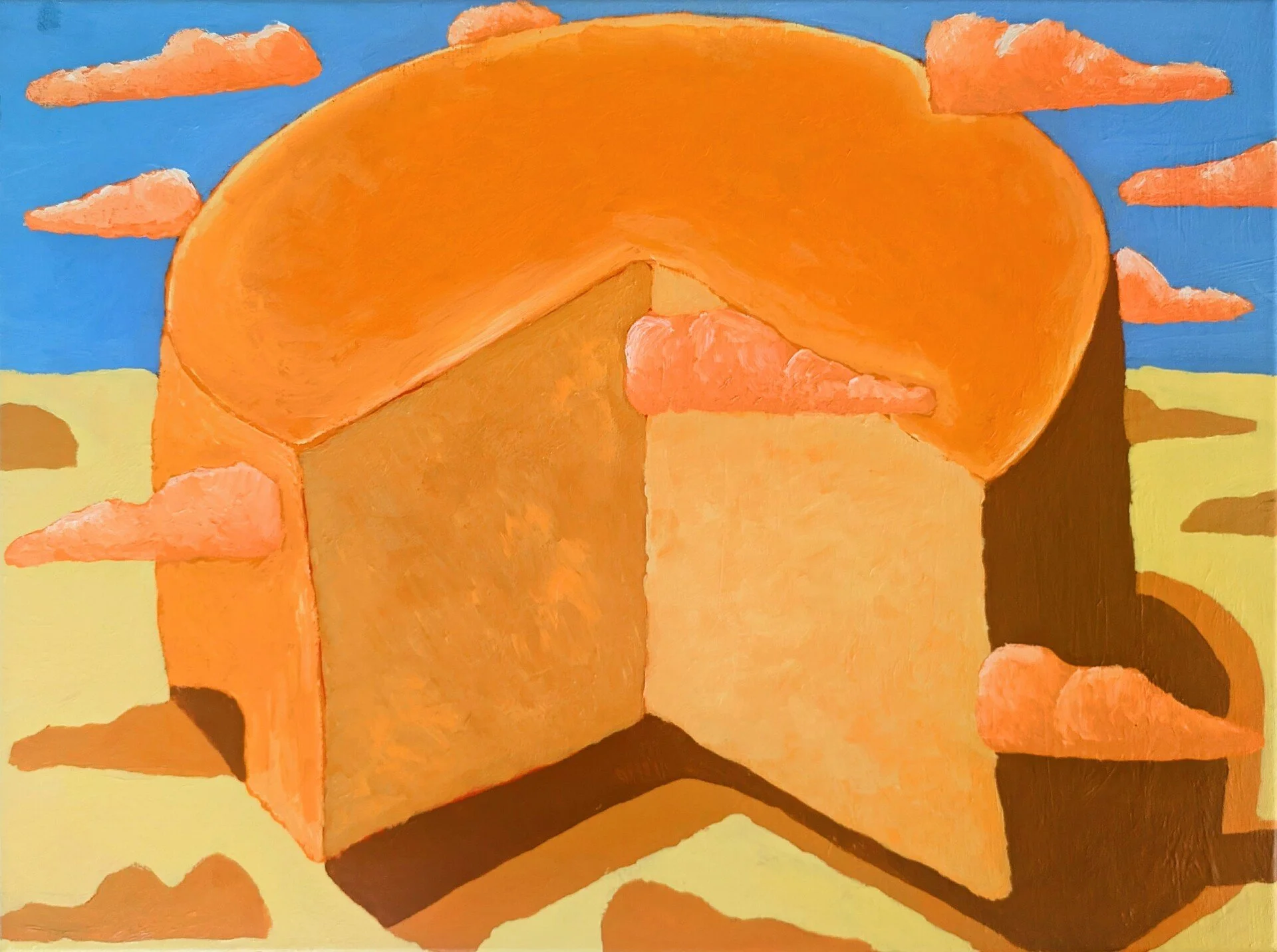
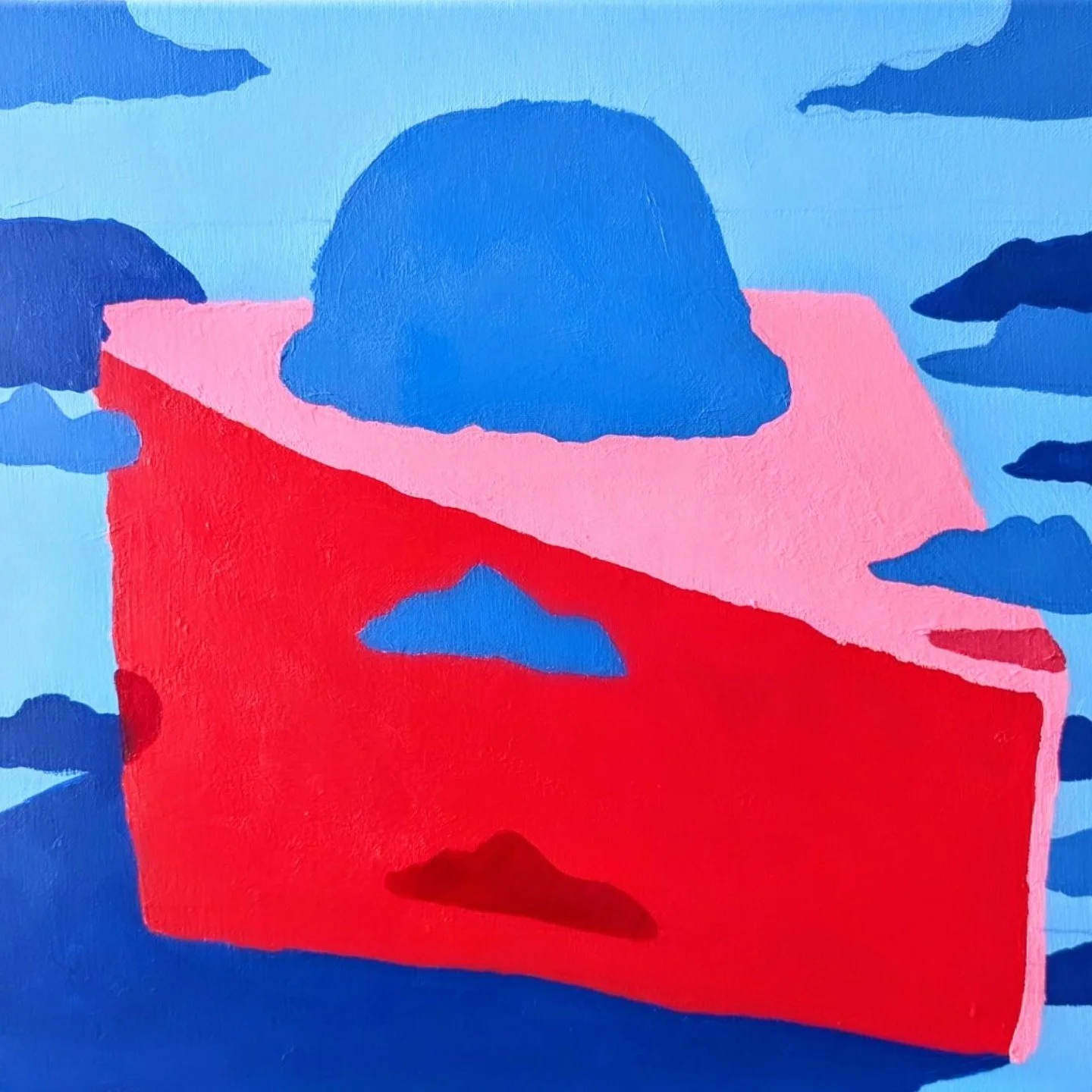
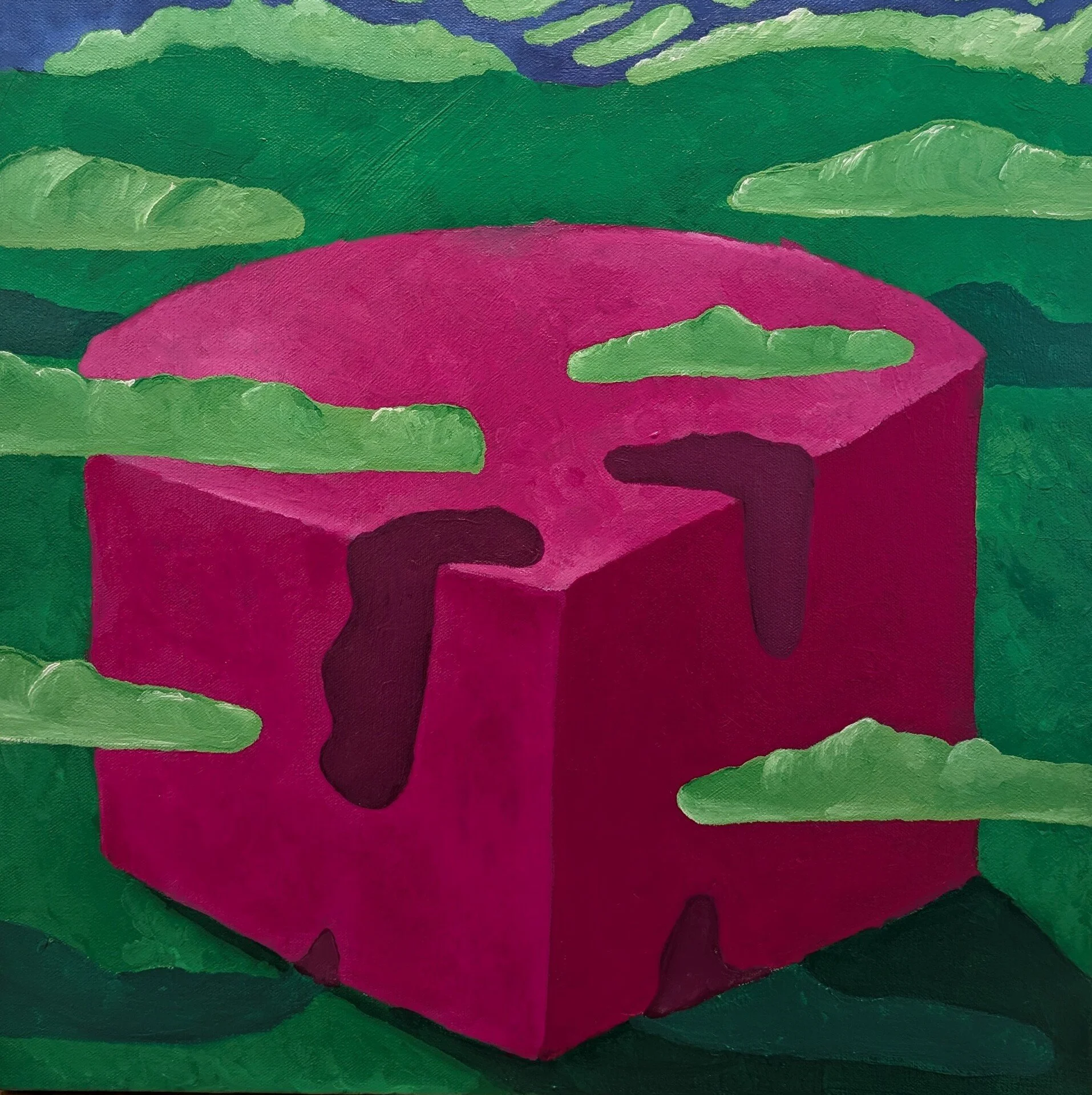
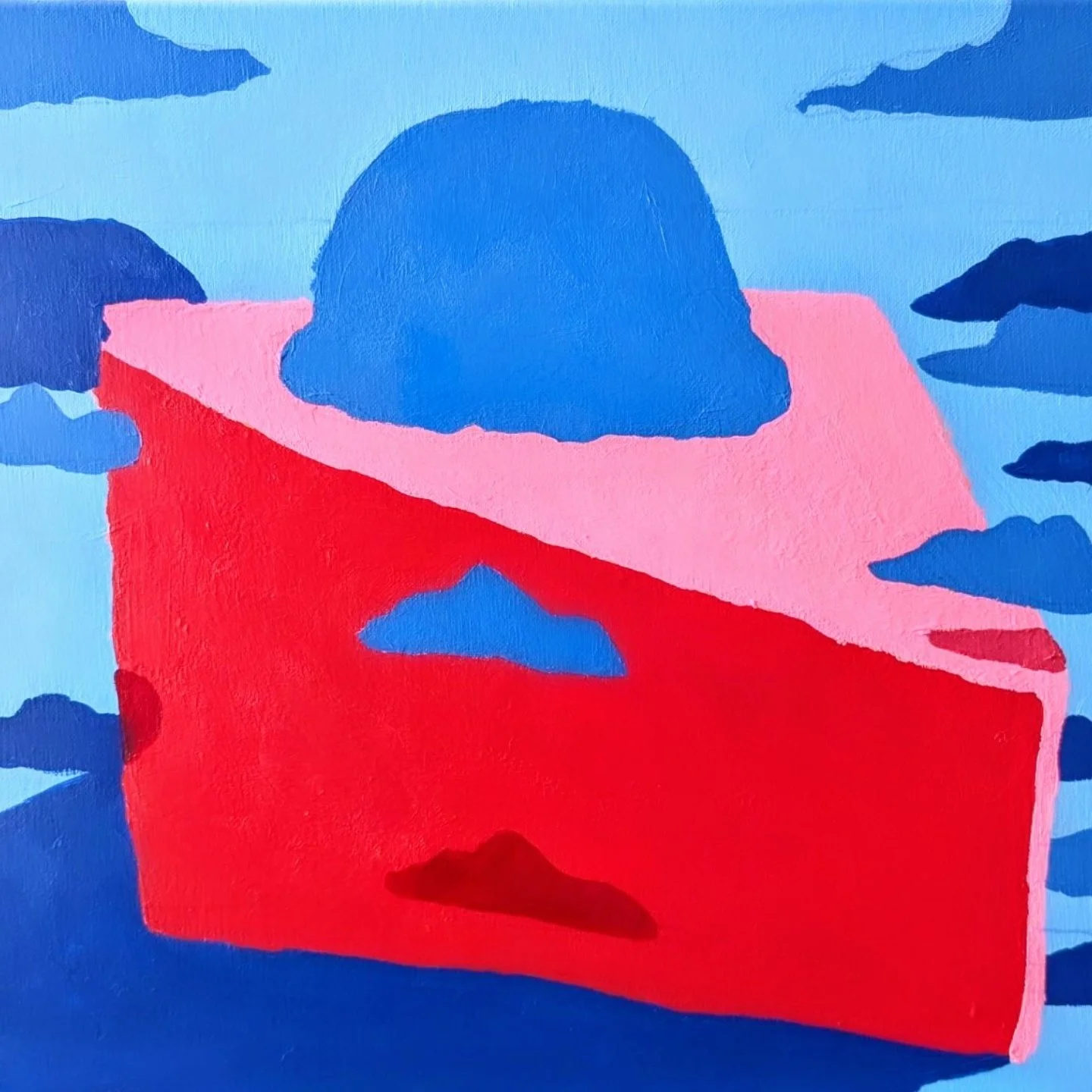
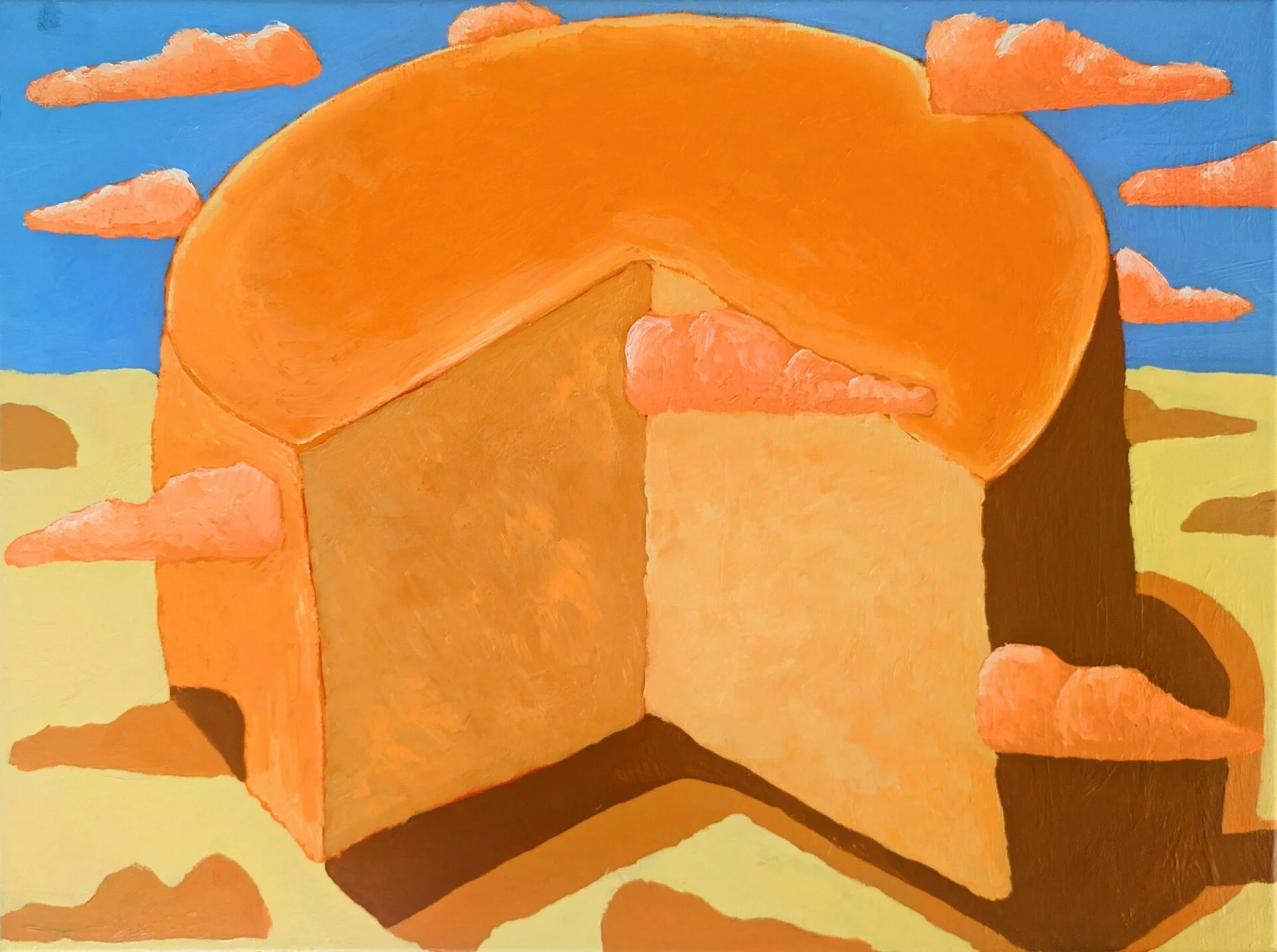
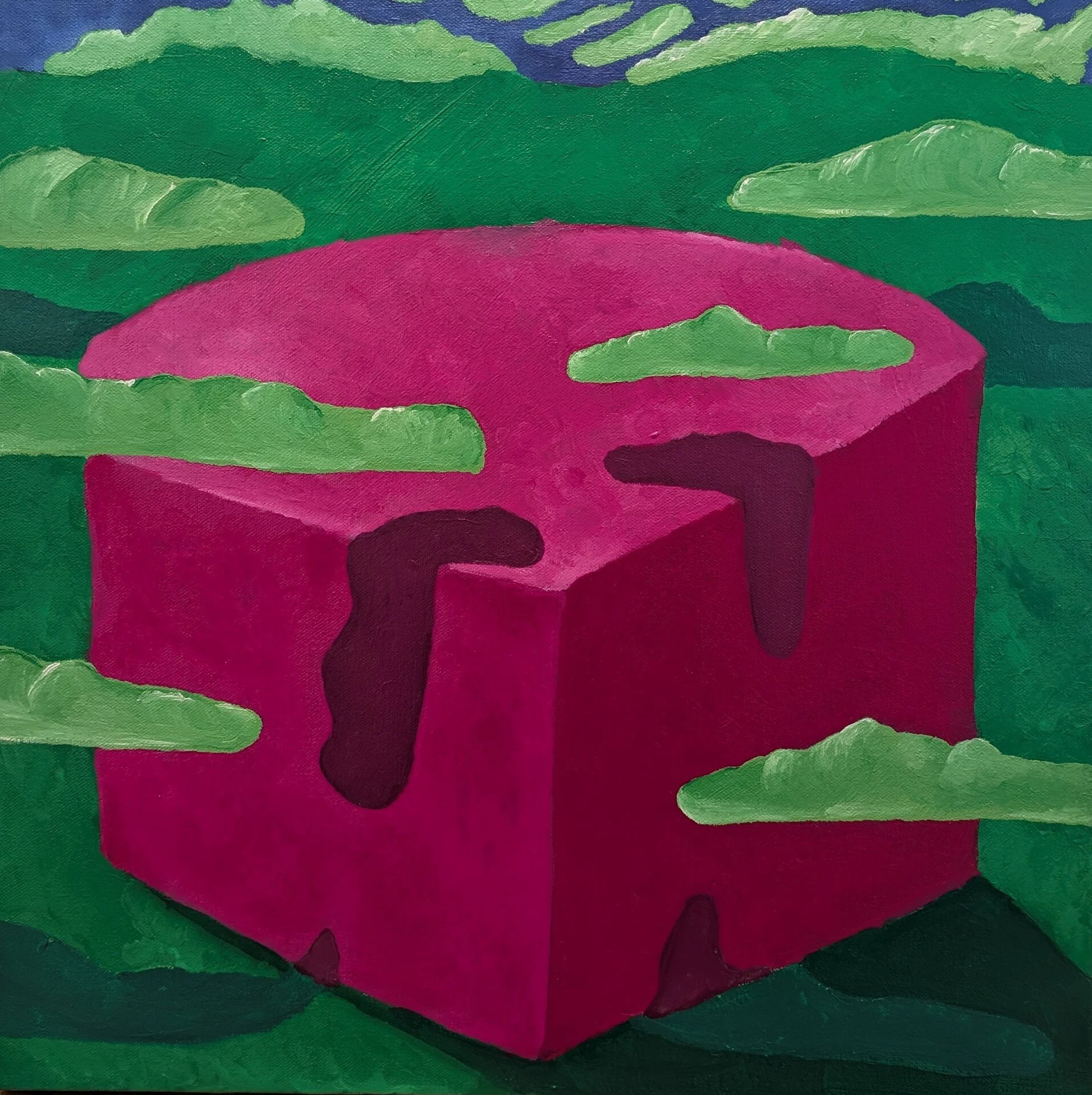
While painters like Miles Batt and Jan Christopher-Berkson approach nature as a point of departure in their work which borders on surrealism, Andrew Traub reframes the everyday rituals of food by depicting wedges of cheese and slices of cake in cloudy, dreamlike landscapes.
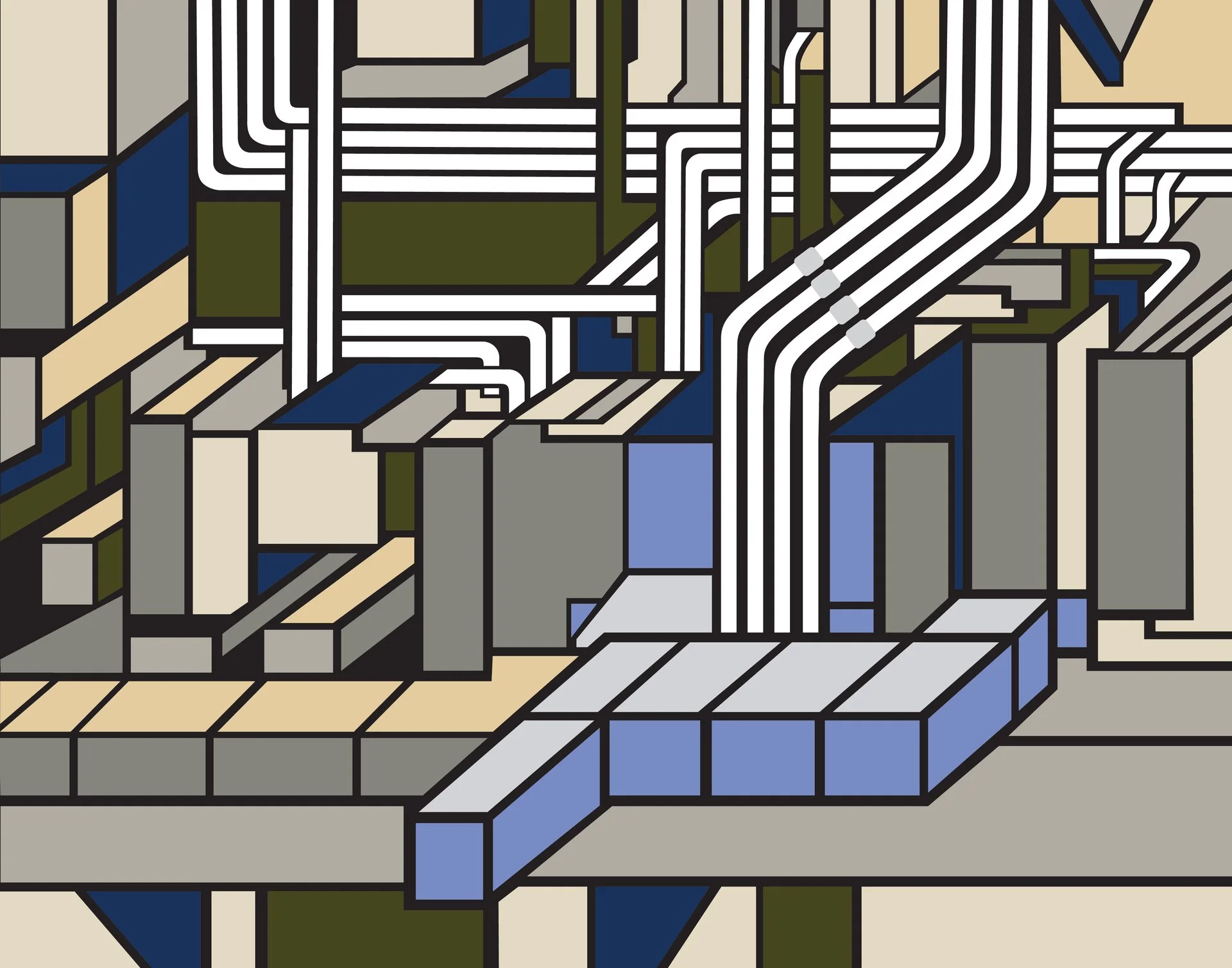
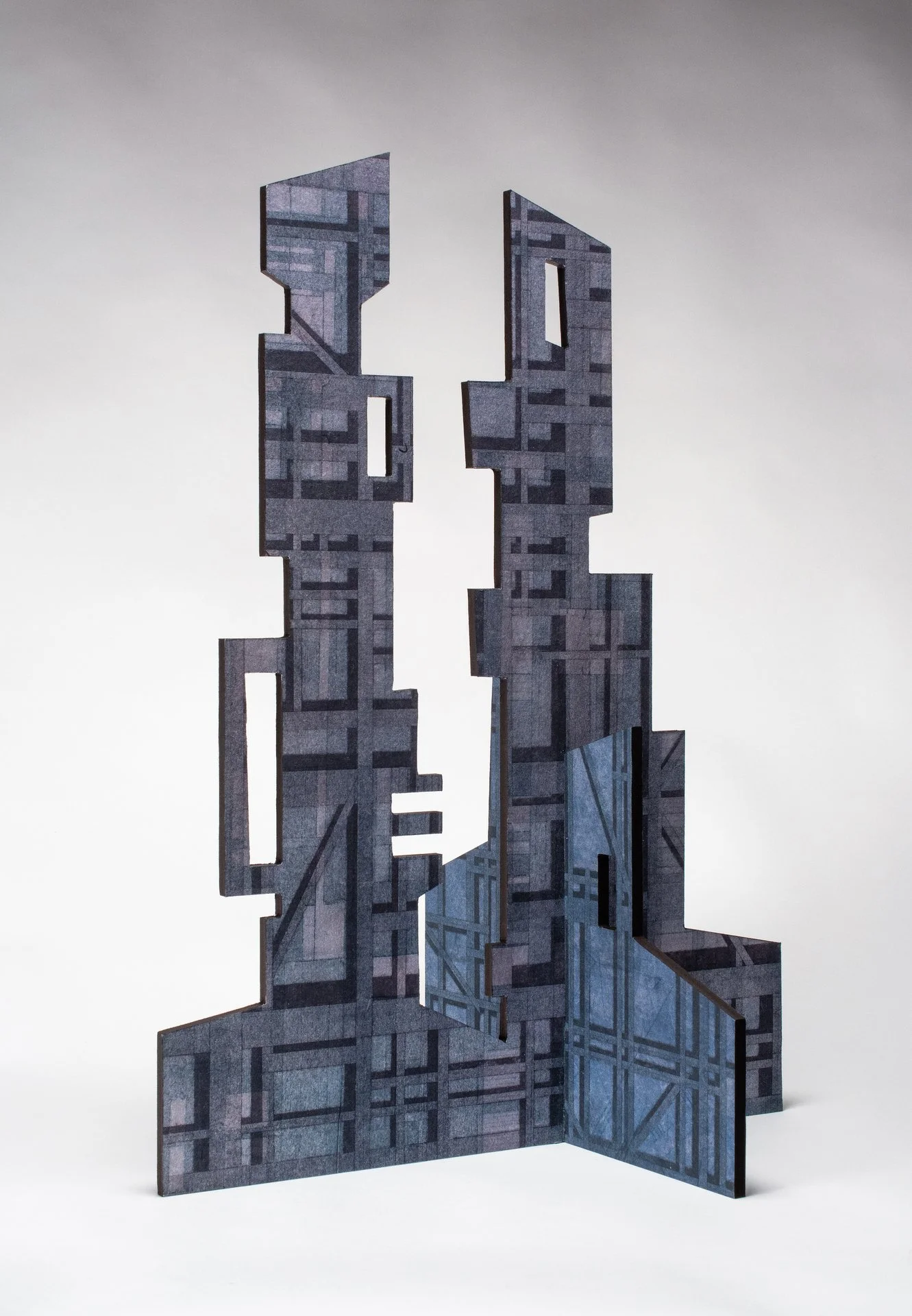
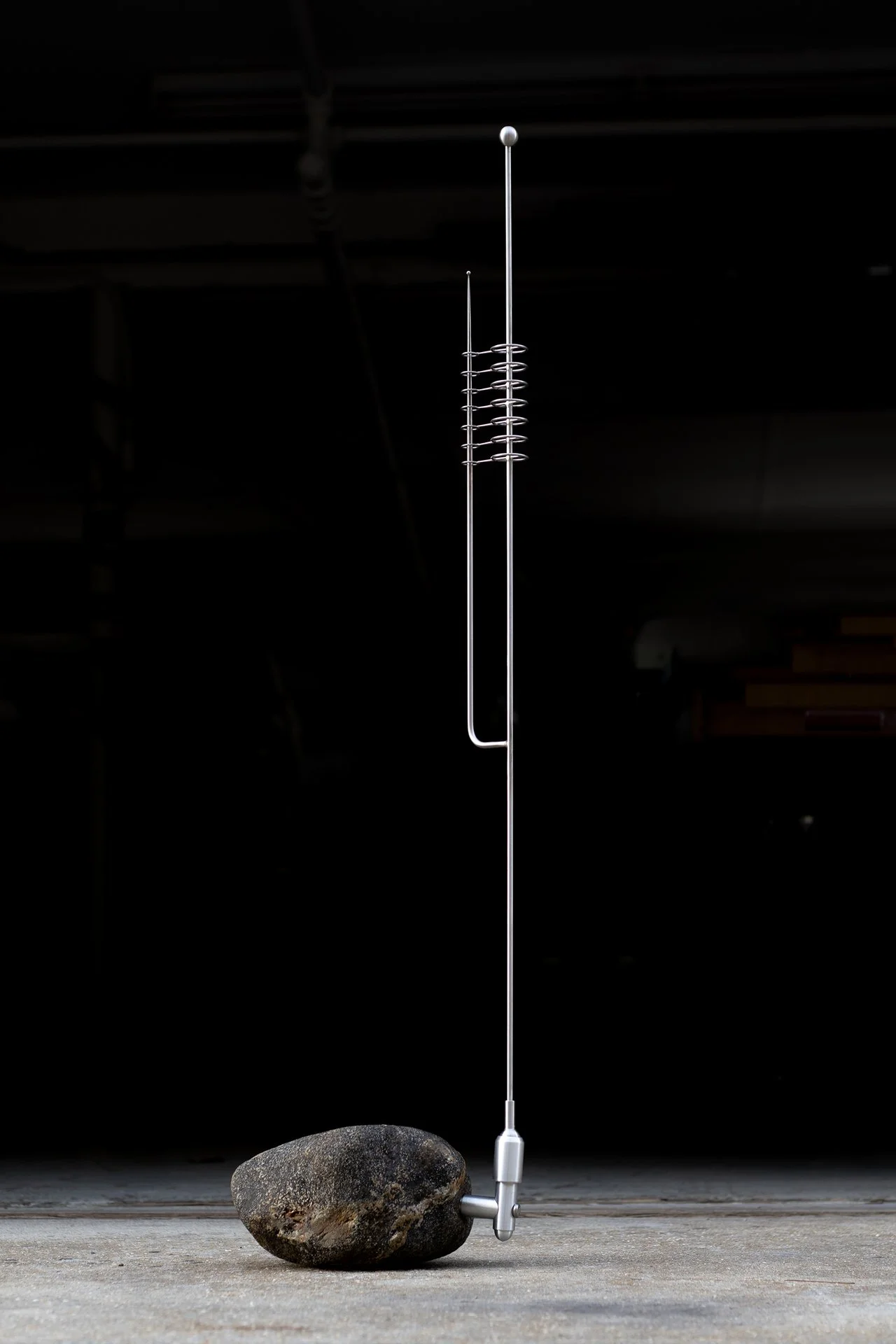
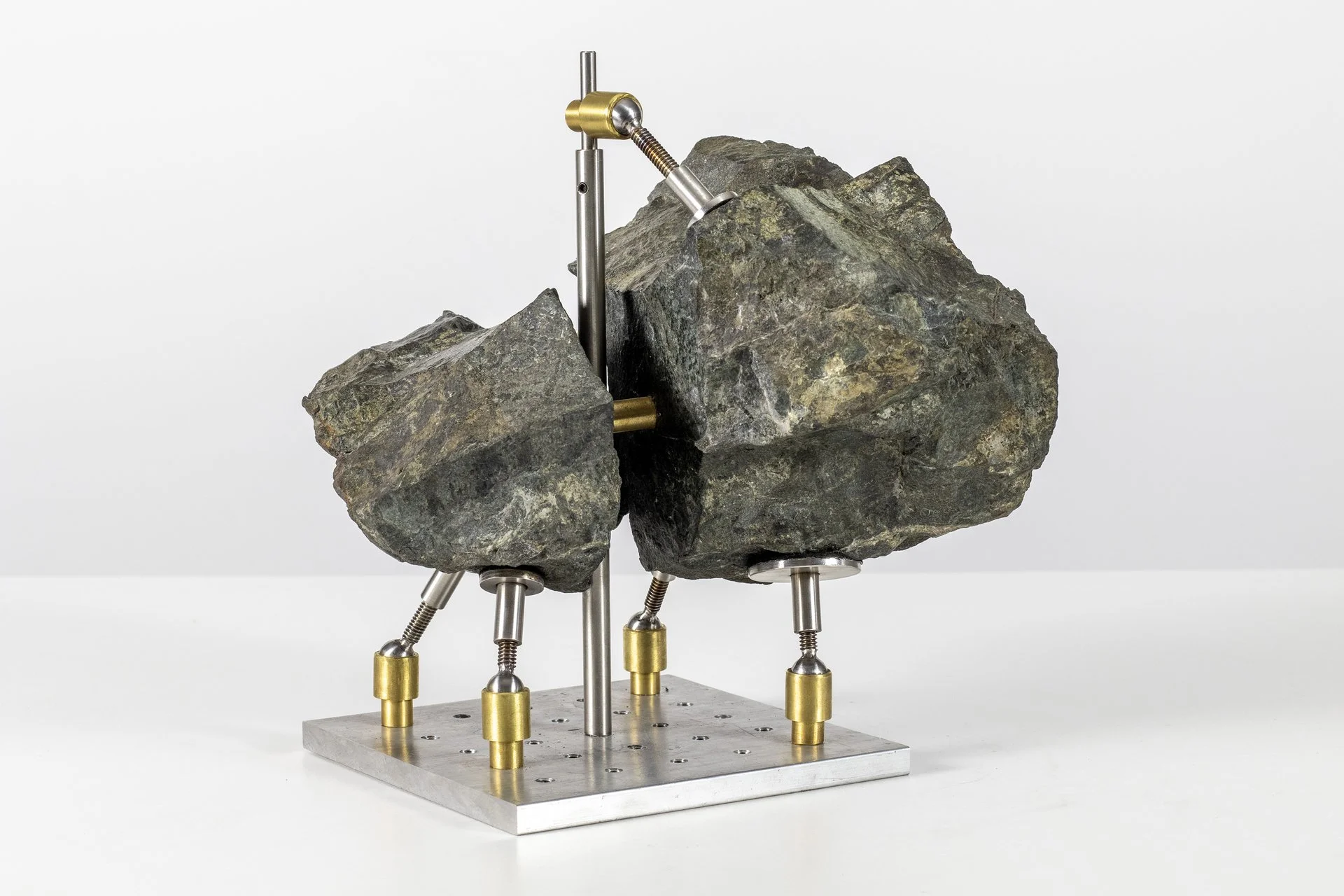
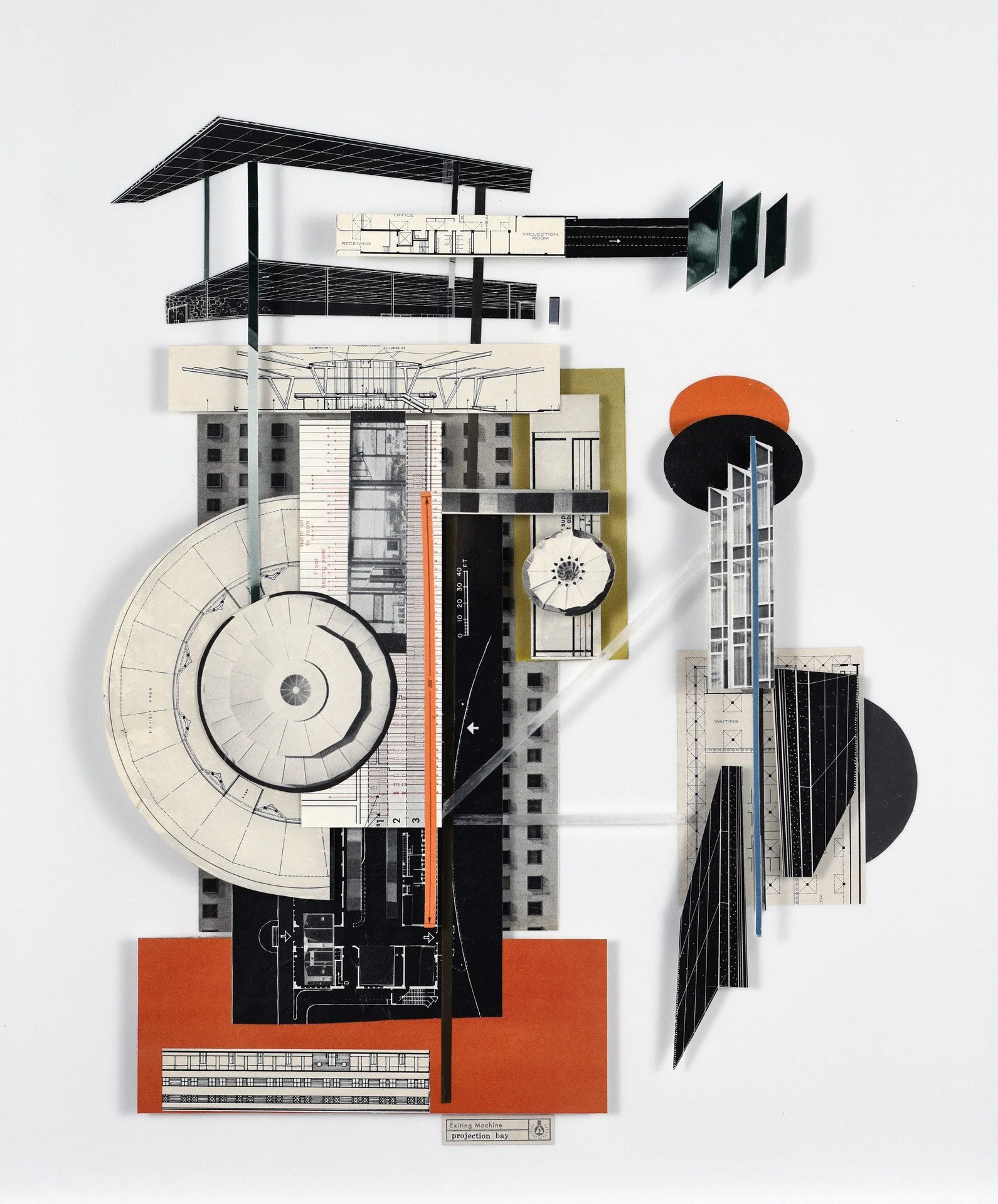
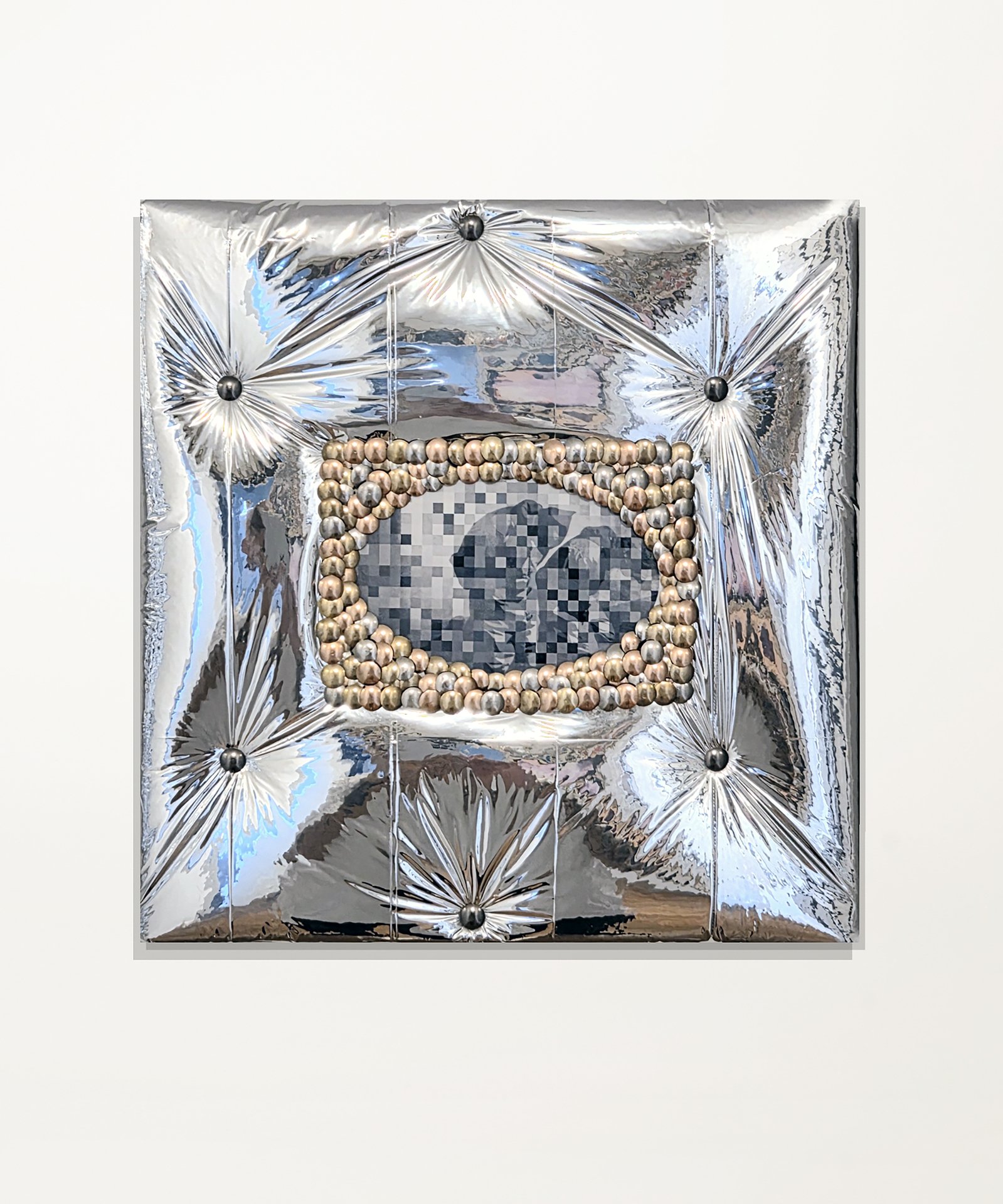
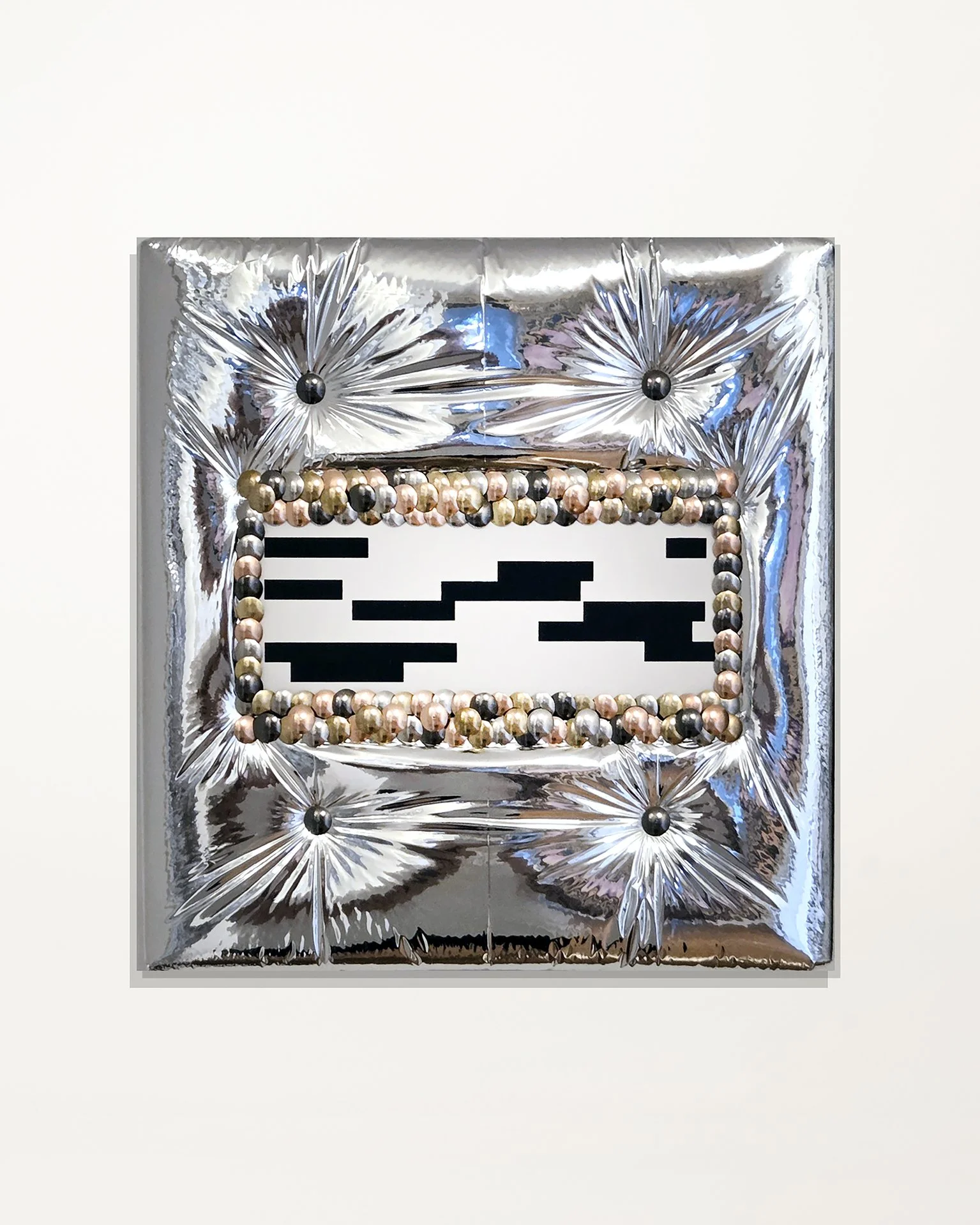
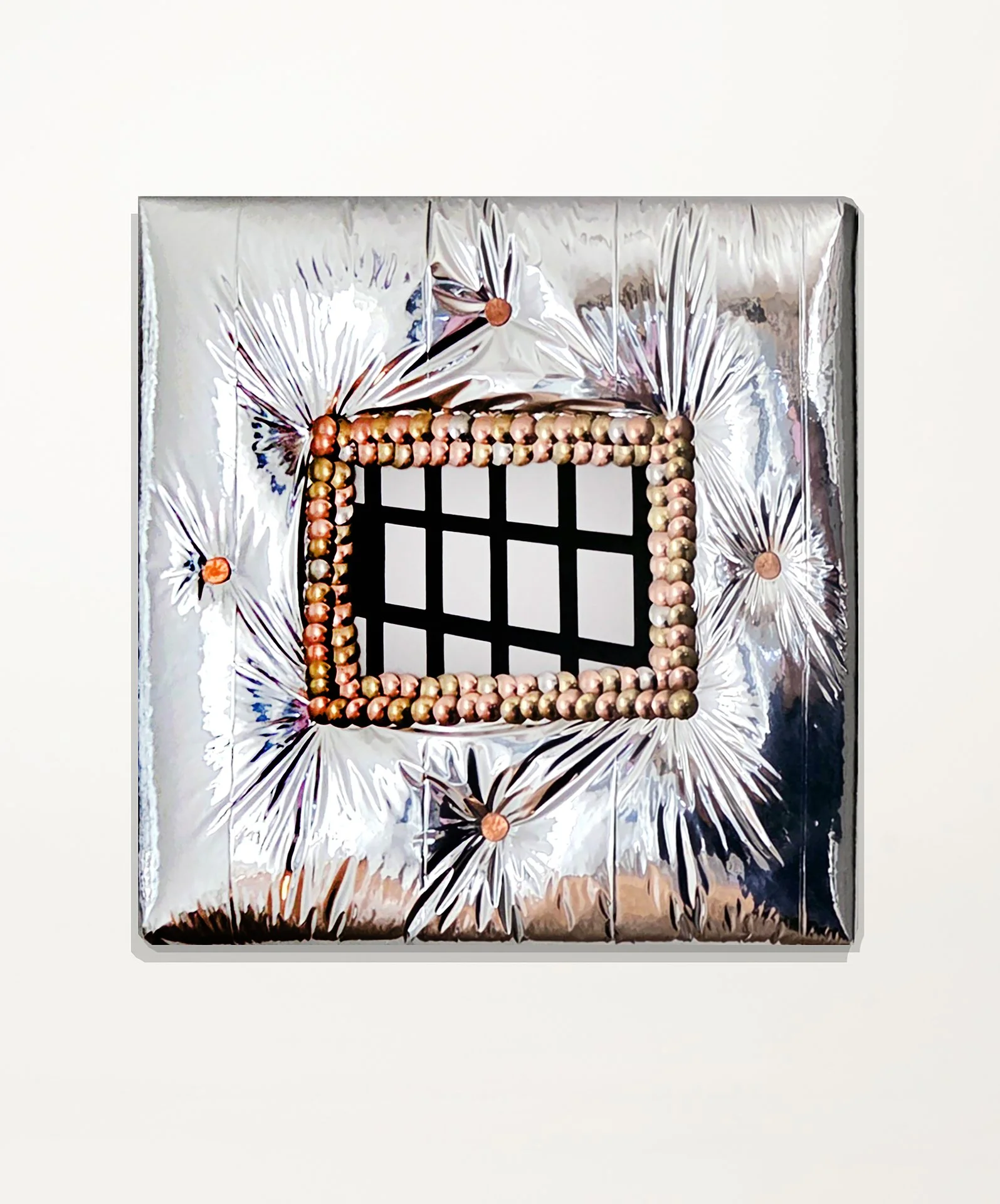
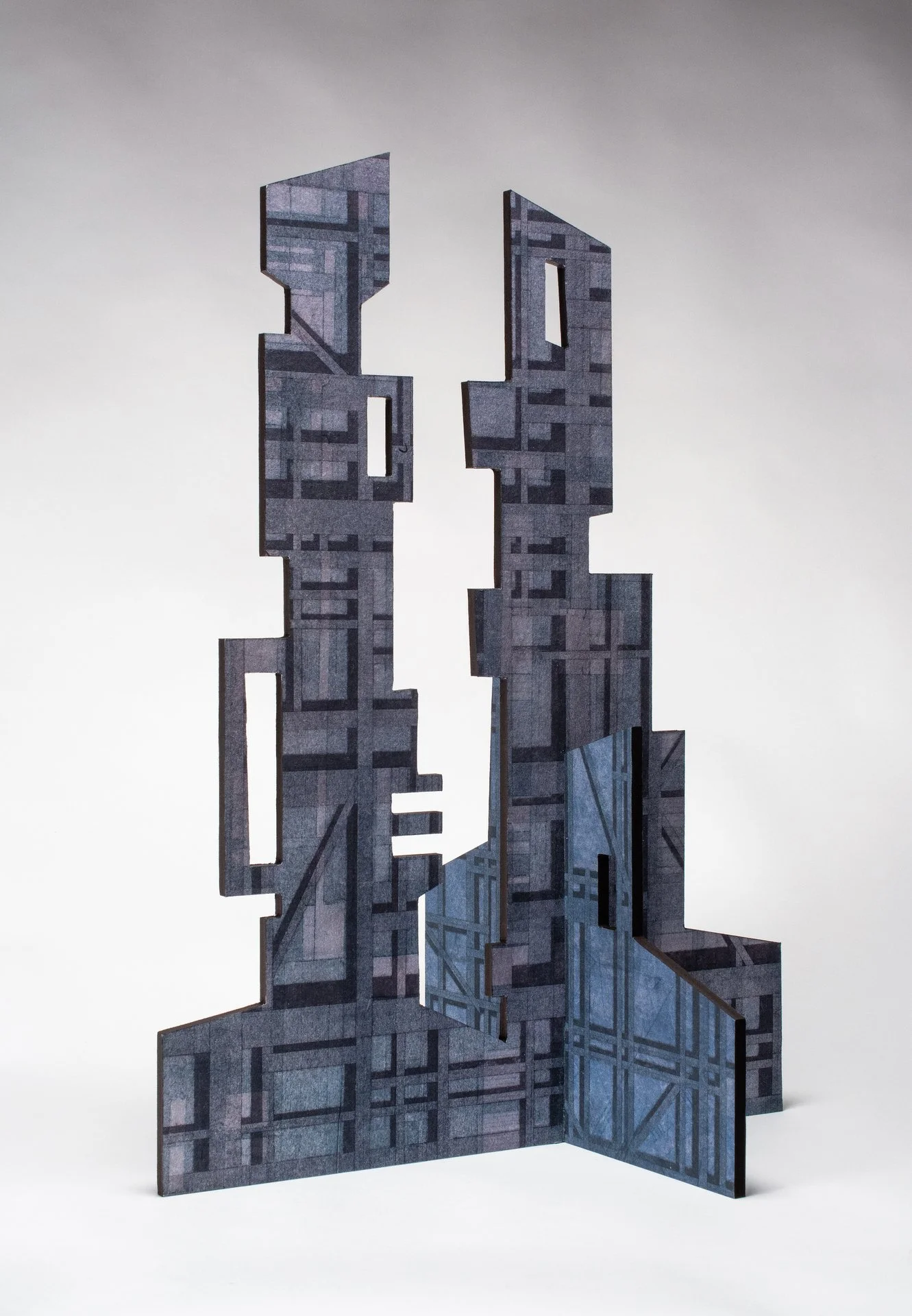
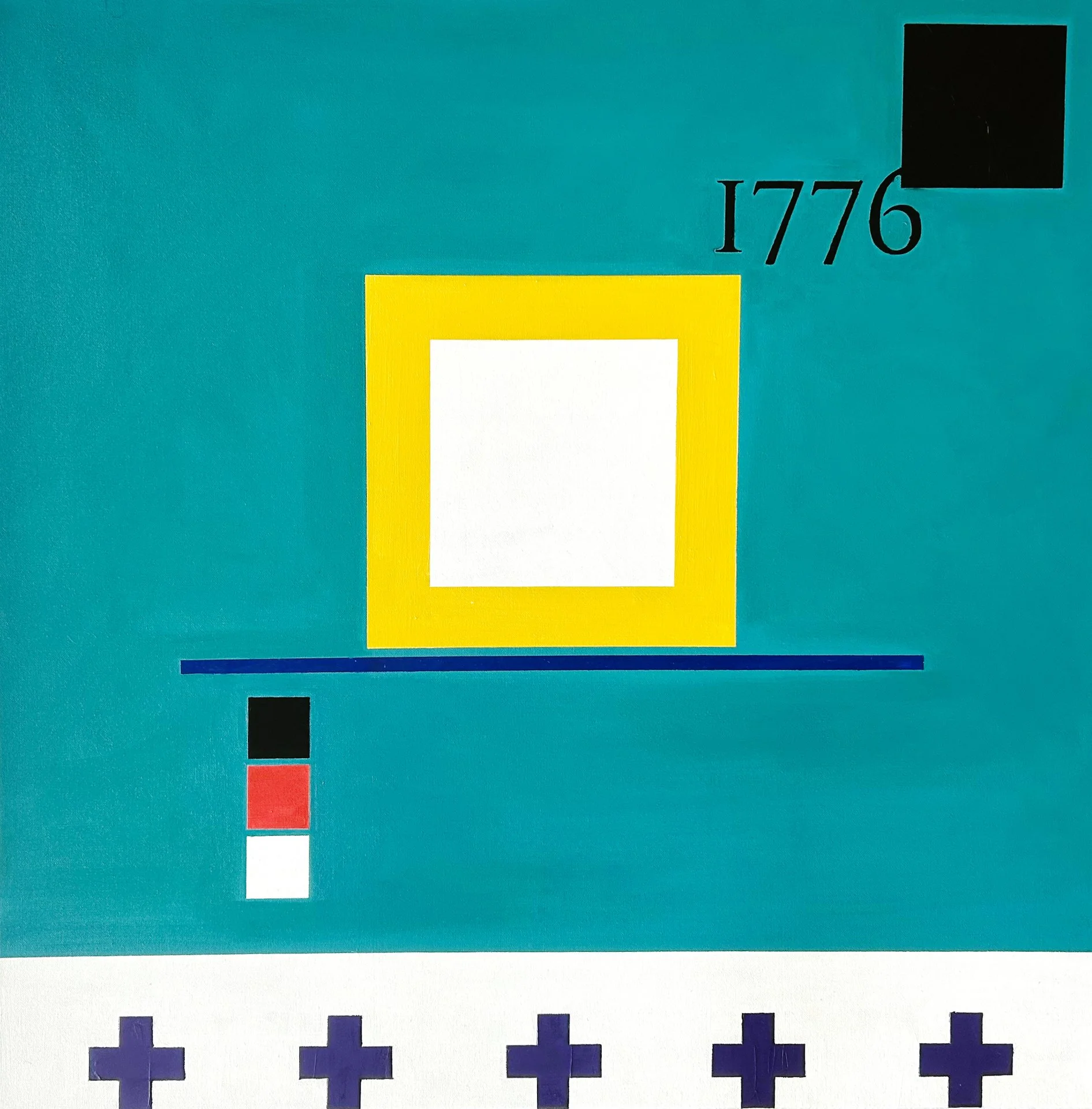
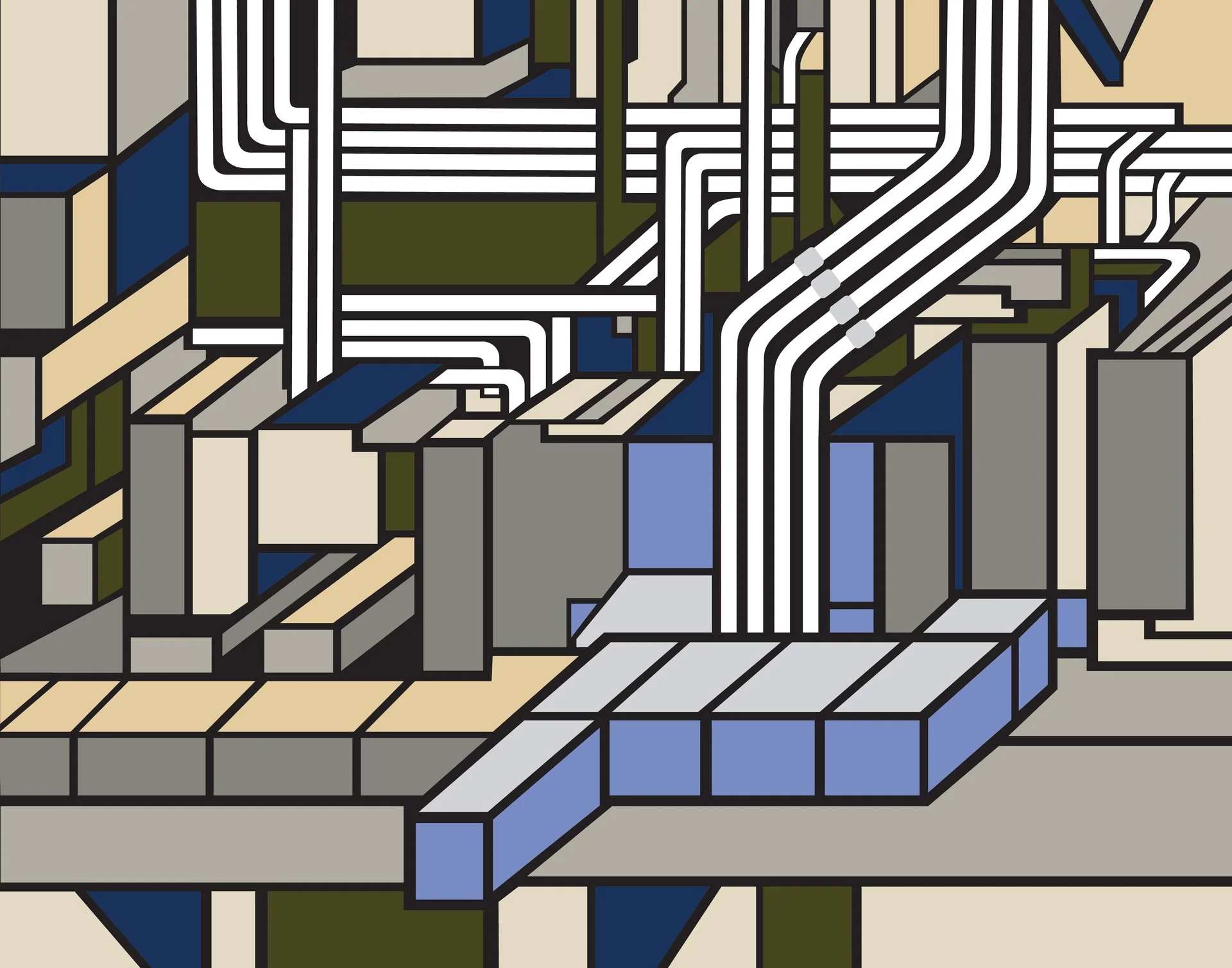
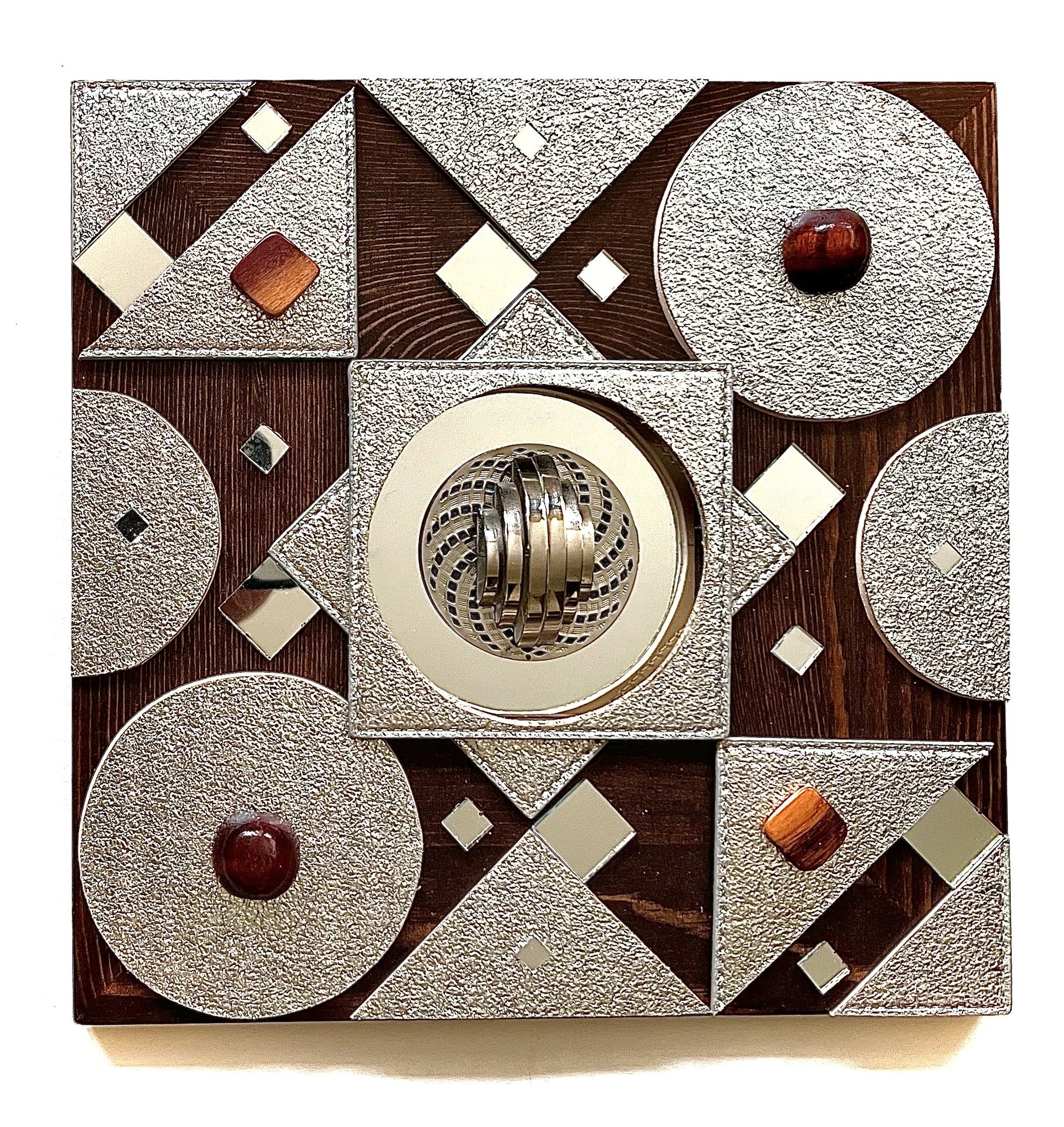
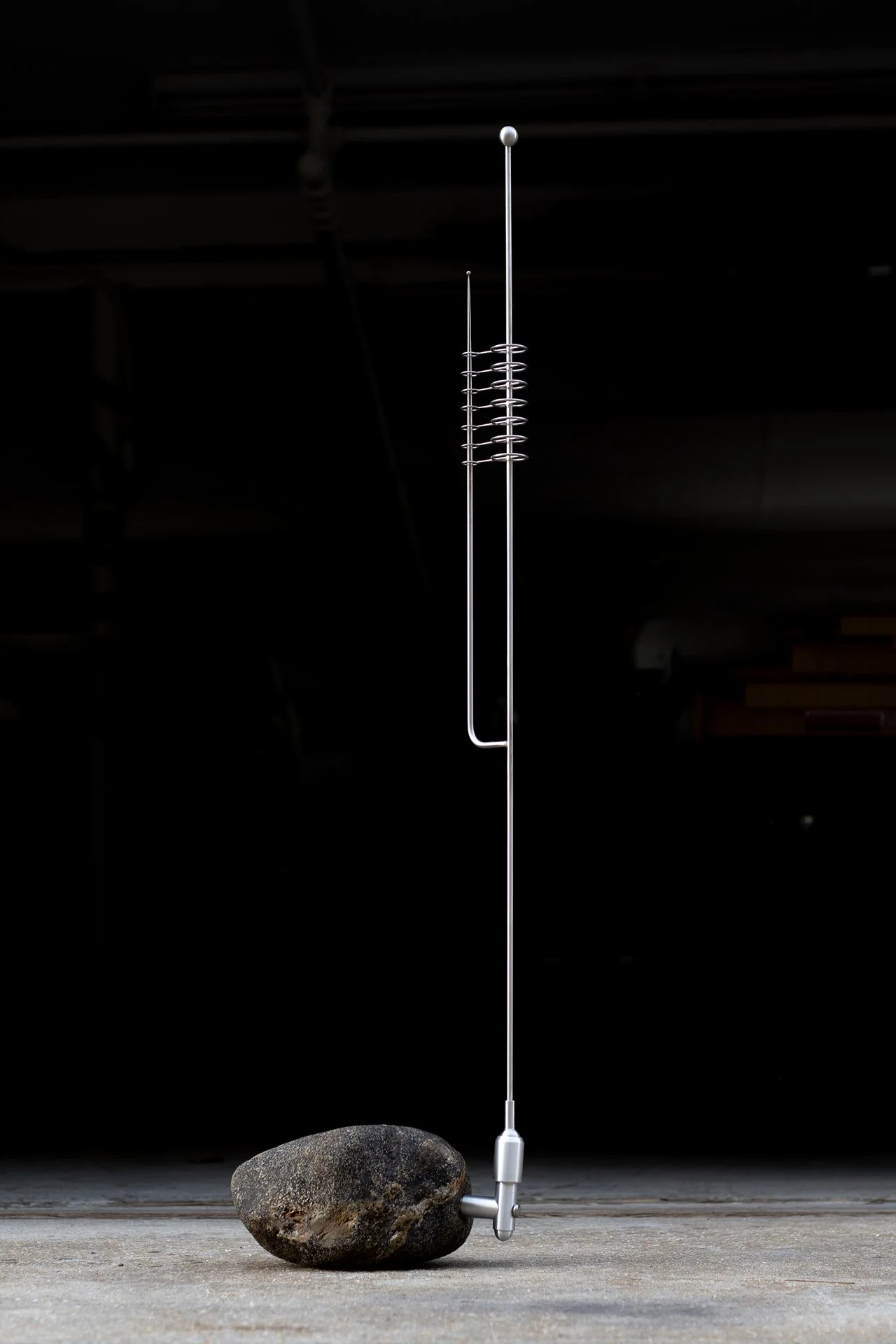
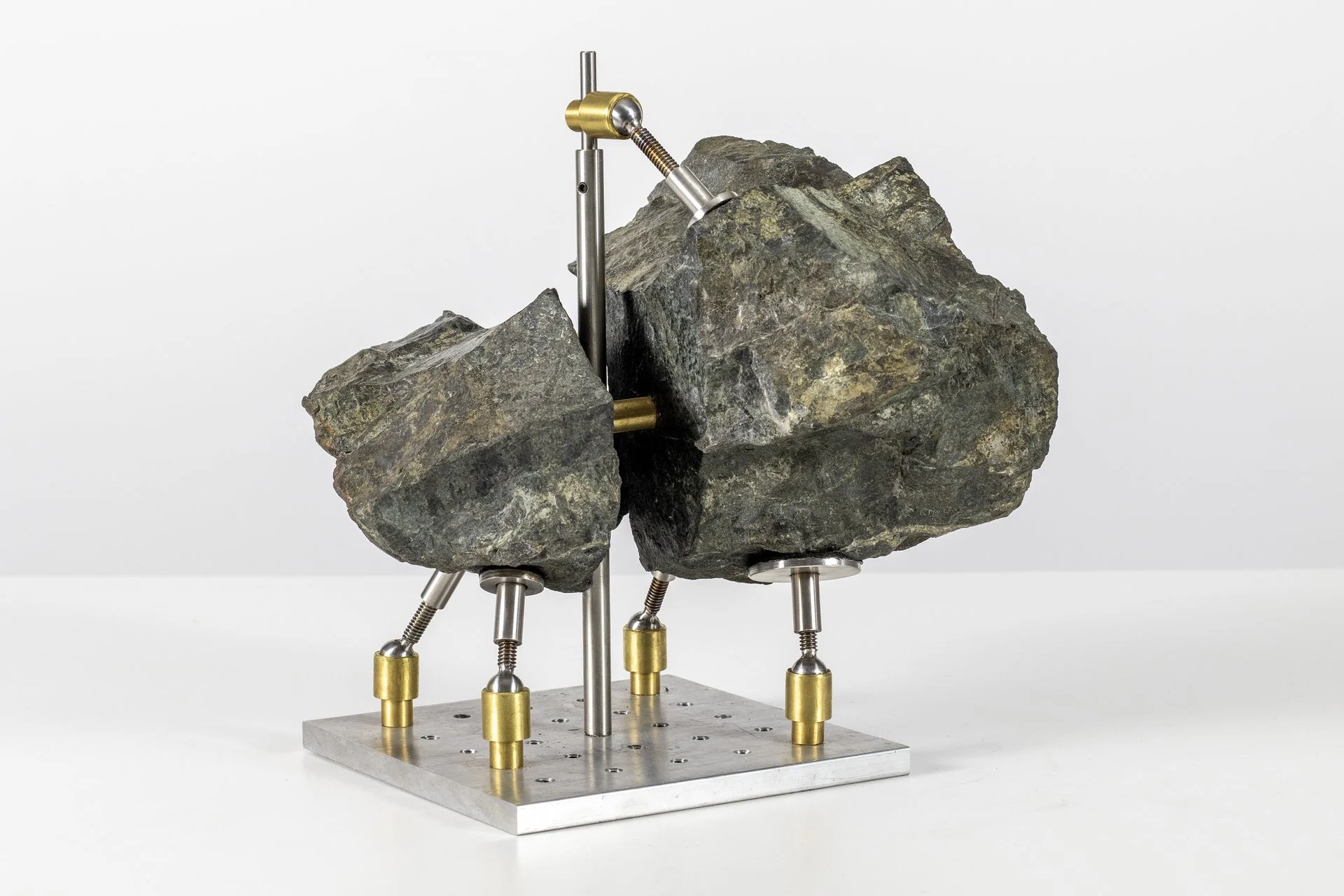
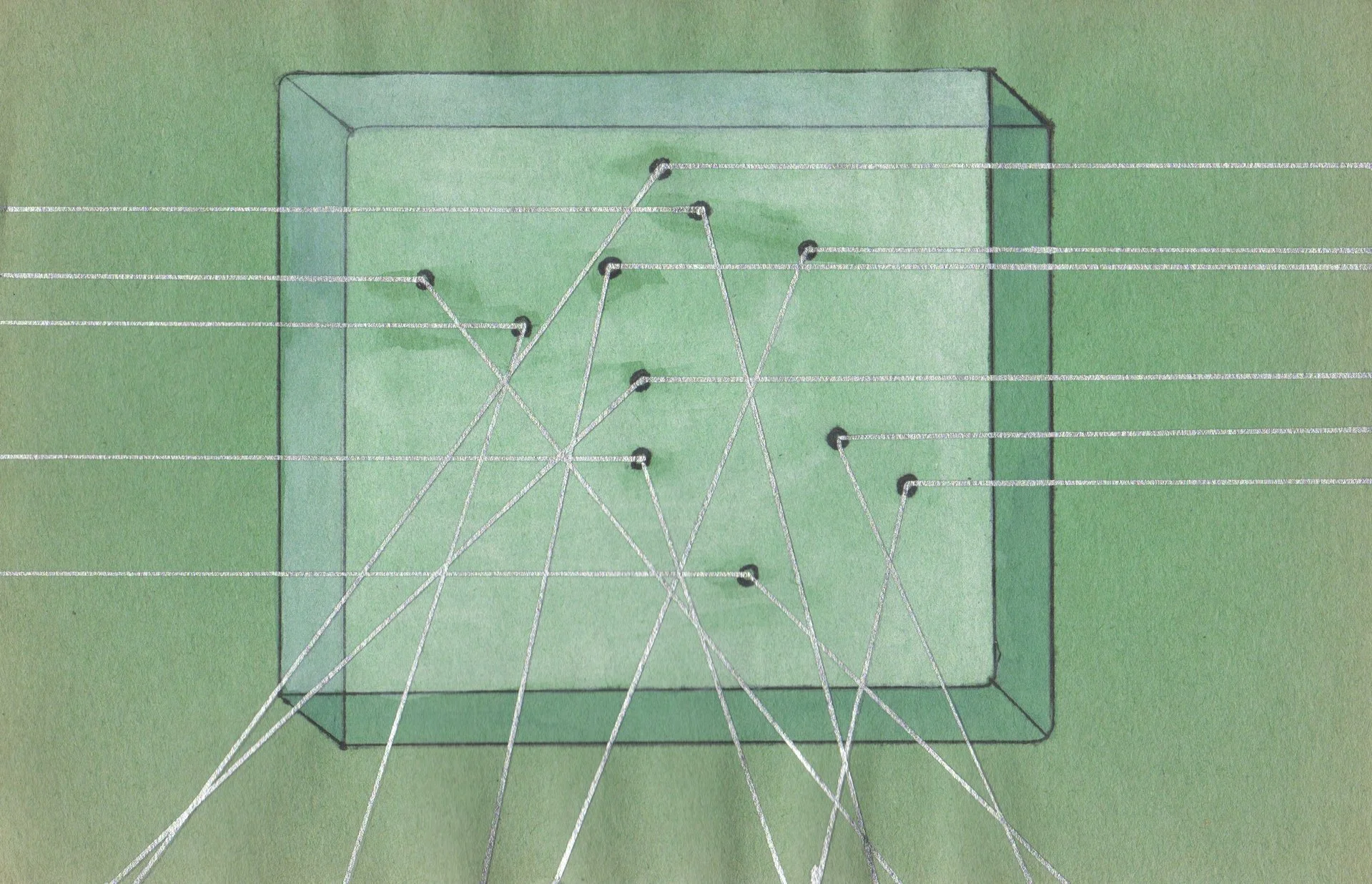
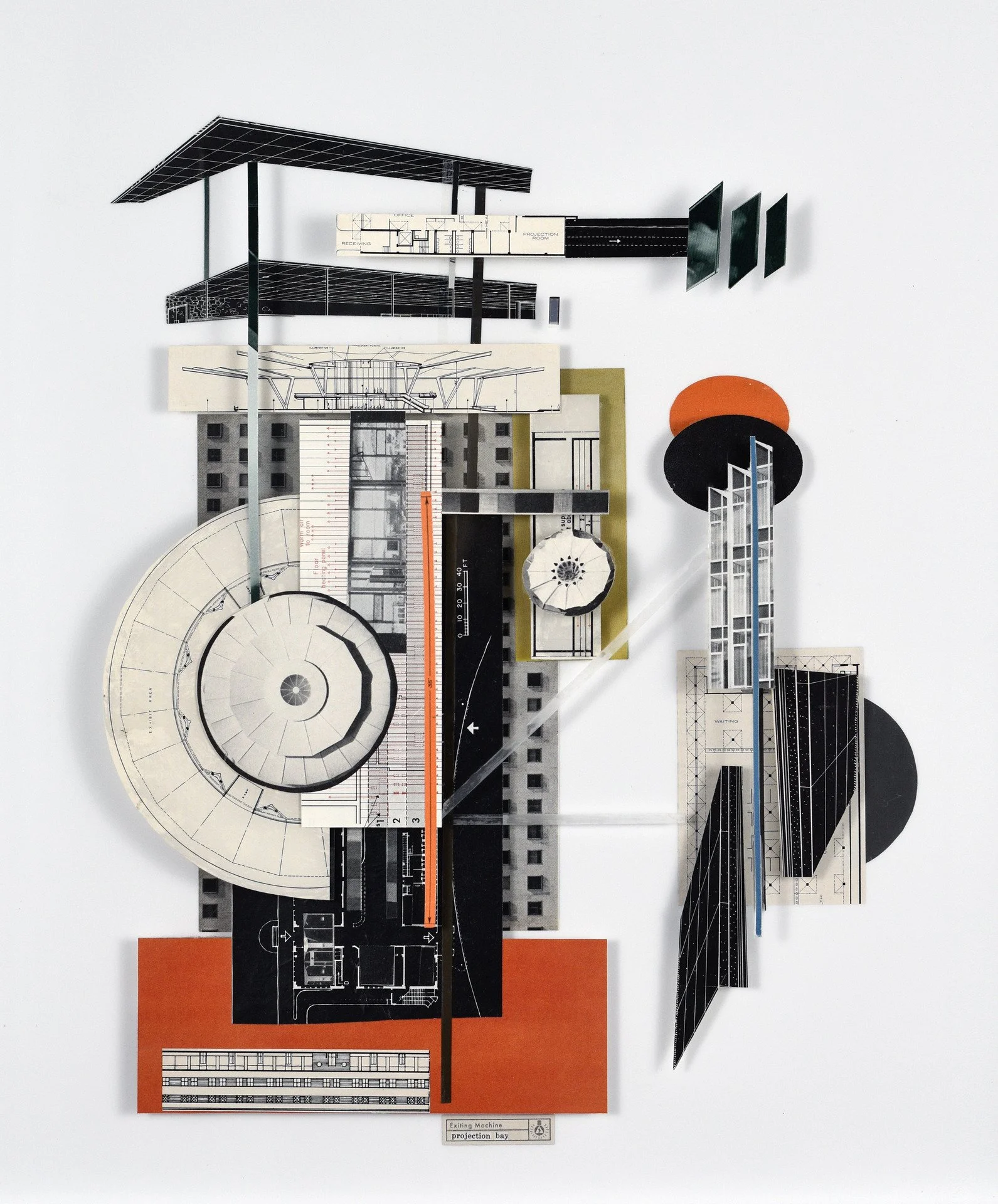
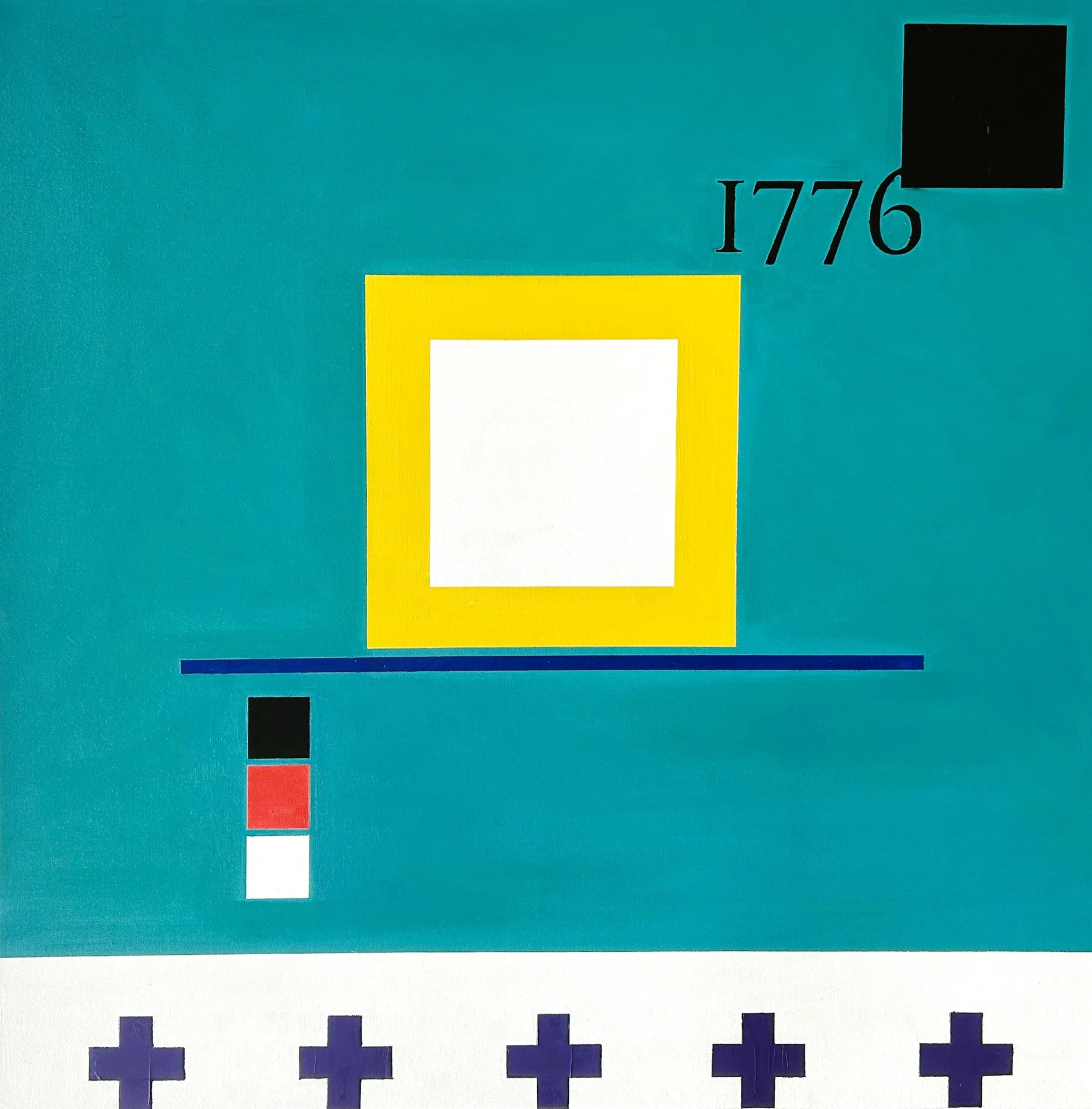
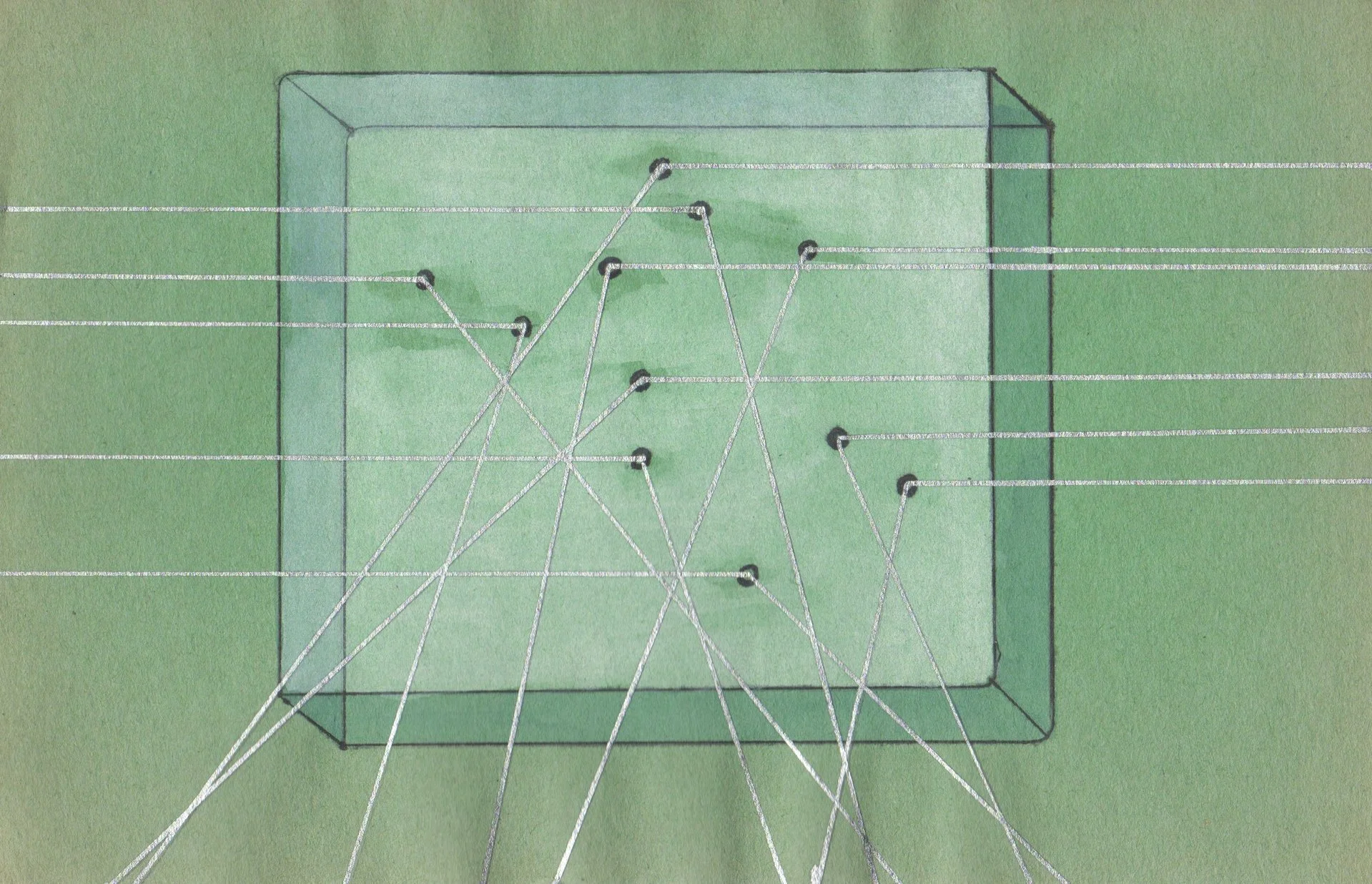
Other artists examine the built environment, as well as technological and mechanical structures. For example, Len DeLuca and Christine Beneman build fragmented urban cityscapes in two and three dimensions, respectively; Ben Dimock fabricates sculptural instruments—jointed metal armatures, measuring devices, and telescoping structures—that echo both scientific tools and speculative machines; David Hutchinson translates language into geometric codes, converting words into sequences of numbers and colors; and Sean Livingstone creates portal-like structures with found objects that possess an indeterminate function. Conversely, Mark Gens inverts the historical promise of geometric order to reveal how shapes such as squares, grids, and crosshairs can operate as instruments of control—structures that implicate the viewer within systems of power.
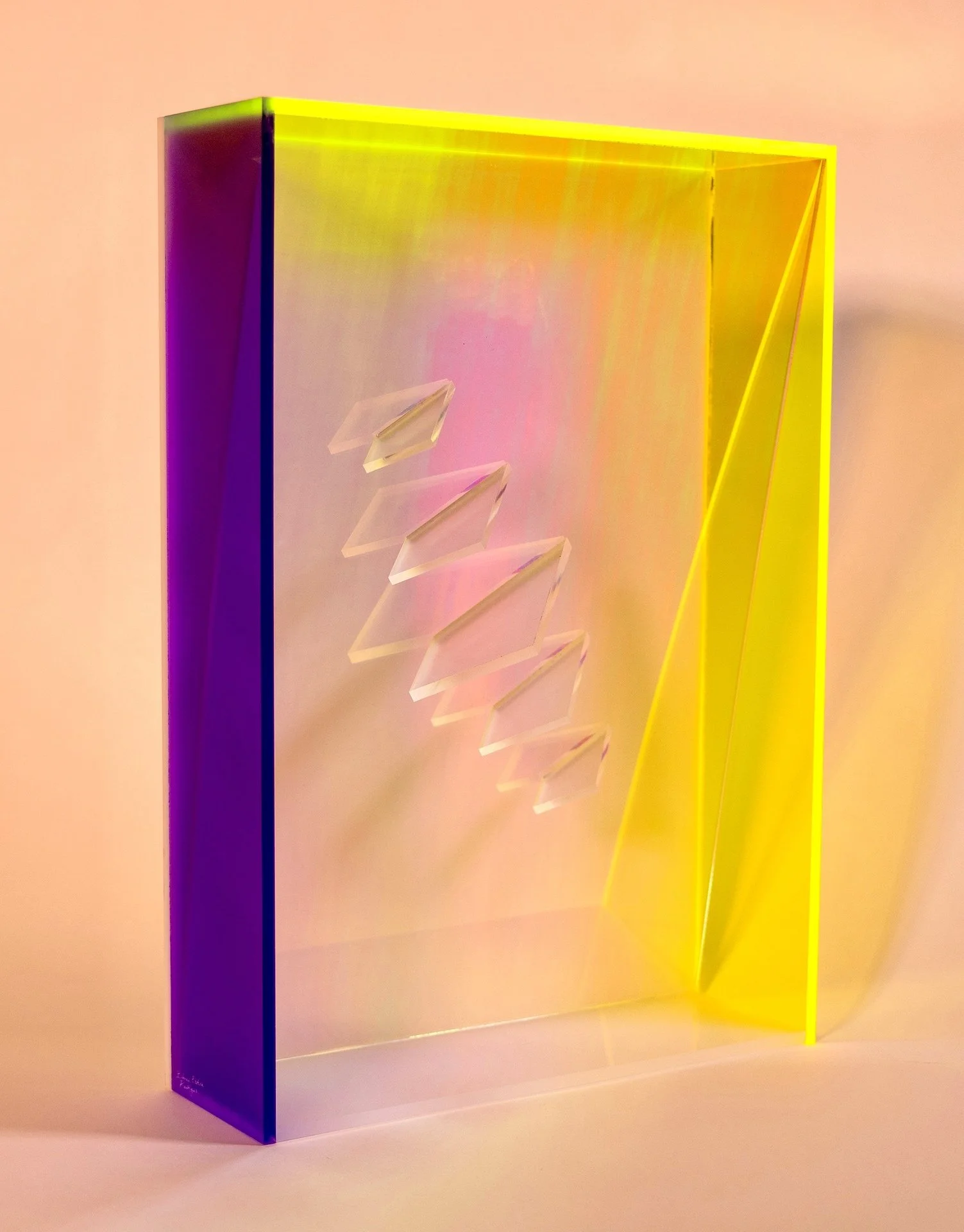
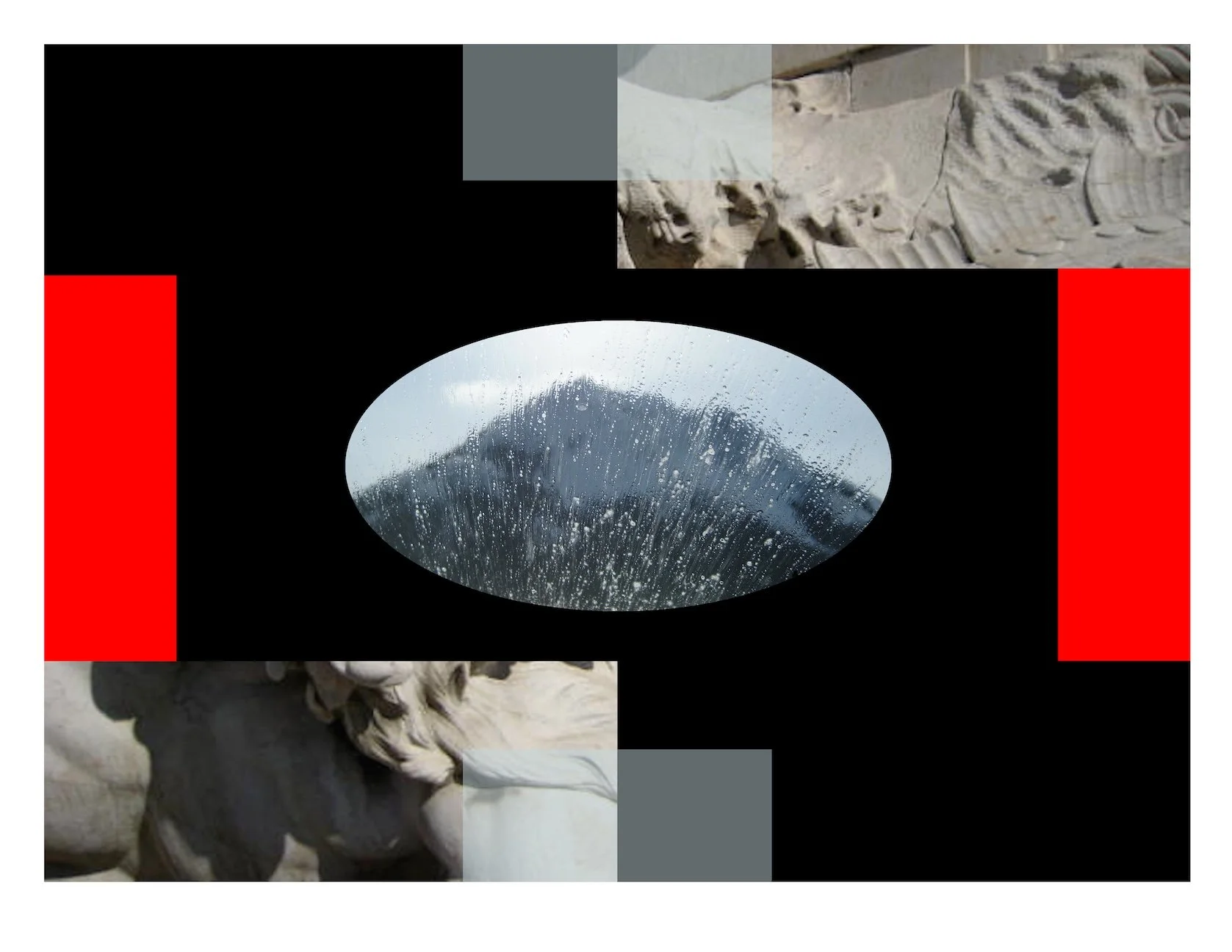
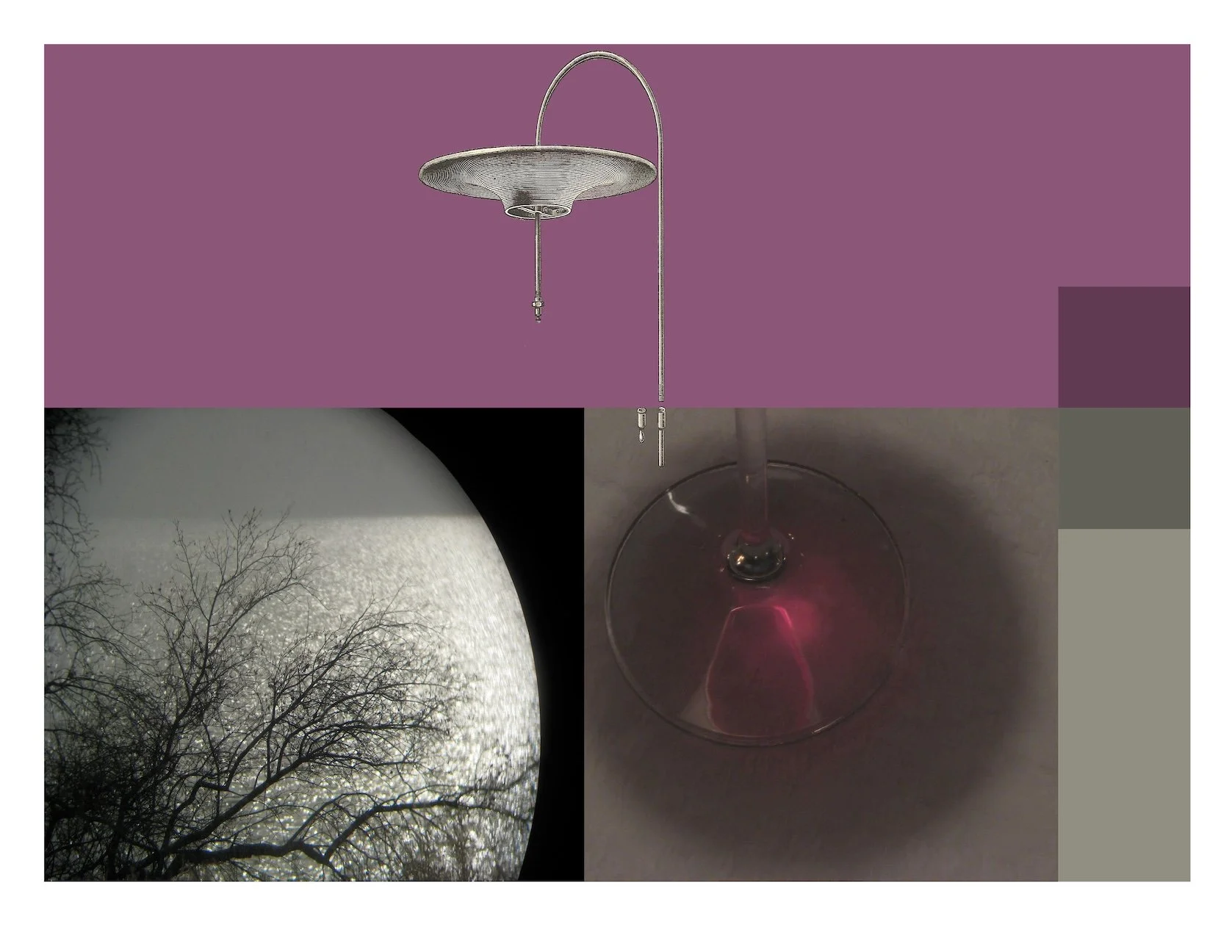
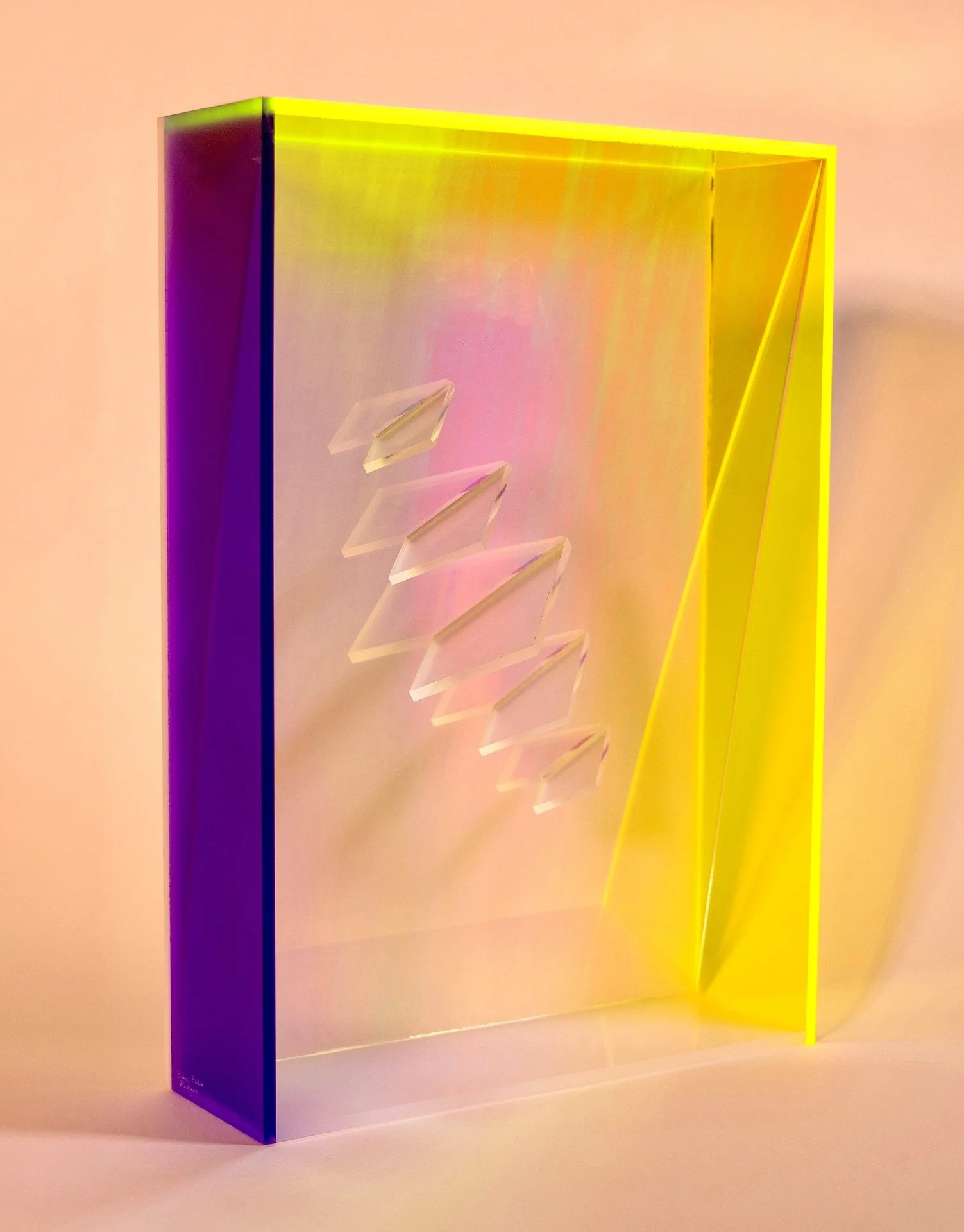
Examining emotional terrains and the contours of memory, Blanca Estela Rodríguez and Beth Fein create luminous, meditative compositions and installations that bend light, reflection, and geometry into shifting environments, whereas Monique Fouquet overlays photographic fragments with fields of color to reveal memory as a shifting construction.