Blue
Juried by Claire Voon


Curatorial Statement
Blue is a color, a mood, a universe of its own, as seen in our unending sky and oceans, the bloom of a bruise, a rivulet of veins beneath skin, the swirls of a kitten’s eye. Across history and cultures, it has carried contradictions: depth and intimacy, calm and turbulence, protection and exposure, power and fragility. Its timeless hold on artists is evident in the indigo works of pre-Columbian peoples; the deep blues of Tibetan thangka paintings; the grounded lapis lazuli of Renaissance art; the cobalt of Chinese porcelain; the monochrome works of Yves Klein; the enveloping brushwork of Helen Frankenthaler.
This exhibition brings together 42 international artists who continue the boundless pursuit of blue’s meaning and potential. As Goethe is often said to have observed: “If blue is anything on this earth, it is abundant.” Organized into six themes—flow, environments, reuse, form, meditations, and refuge—these works celebrate the ubiquity of blue and its many lives; they approach the color not as a single symbolic register but as a spectrum of material, emotional, and lived experiences. For some artists, the color alone holds psychological charge, with the capacity to heighten awareness, unease, or quiet recollection. For others, blue defines external environments, whether bodies of water, domestic interiors, or the unexpected beauty of a neighborhood sidewalk. Blue is structural for several artists, activating surface, spatial tension, texture, light. The color also has the capacity to bring time to a standstill or open into a space of refuge.
Brought together, the works in this exhibition assert that blue is far from passive. It is alive and dynamic—a vessel for transformation and transcendence. Blue does not simply surround us. It holds us, unsettles us, all the while drawing us toward it.
About the Juror
Claire Voon is a writer and editor based in Brooklyn. Her work has also appeared in publications including the New York Times, New York Magazine, Artforum, ARTnews, Frieze, American Craft, Artsy, VICE, Atlas Obscura, Architectural Digest, Brooklyn Rail, Cultured, and Smithsonian Magazine.
Wall 1: Flow states
Sophia A Hatzikos / Anita Bracalente / Emma Hines / Barbara Hocker / Bonnie Levinthal / Denise Jill Marshall / Kerry McAleer-Keeler
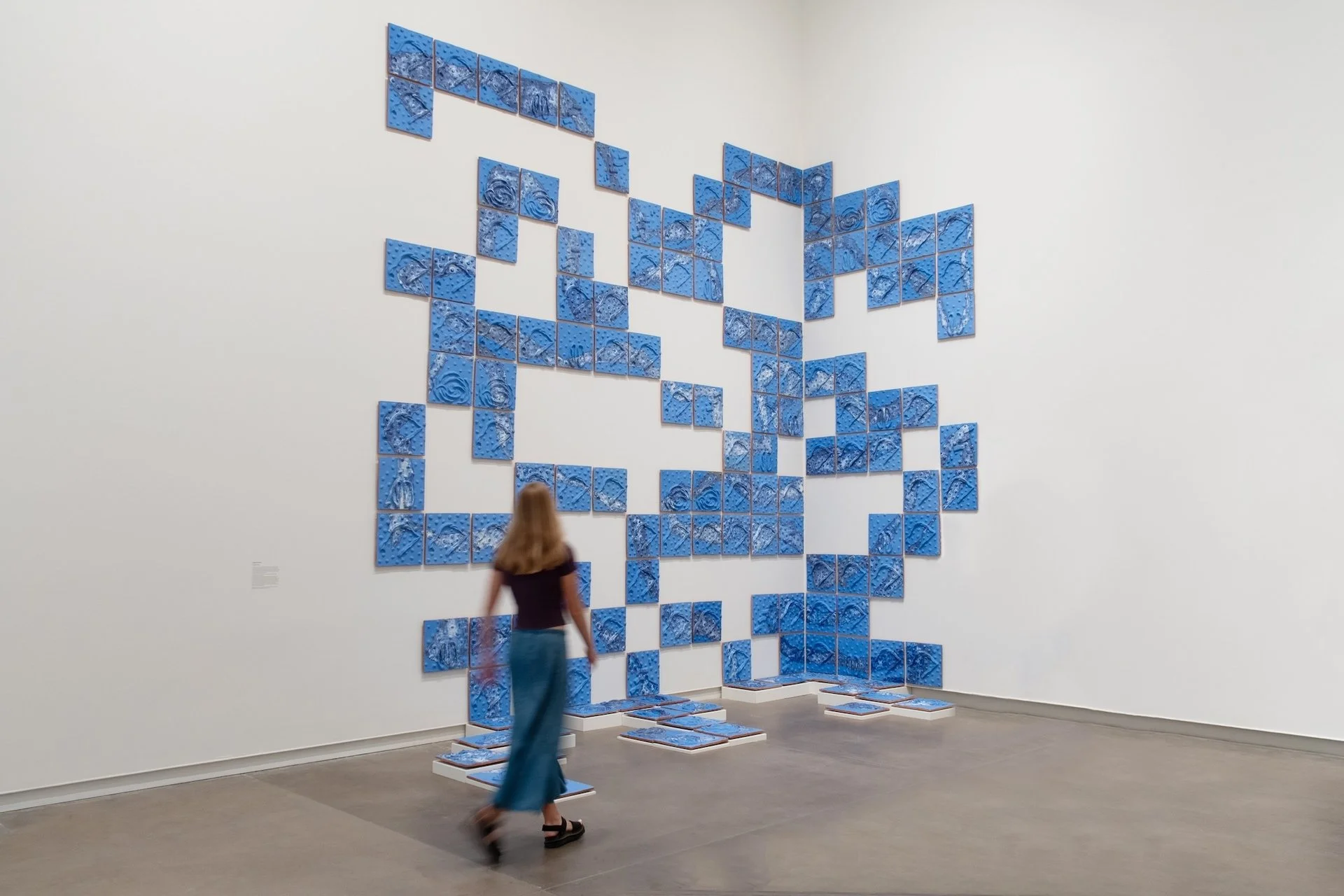
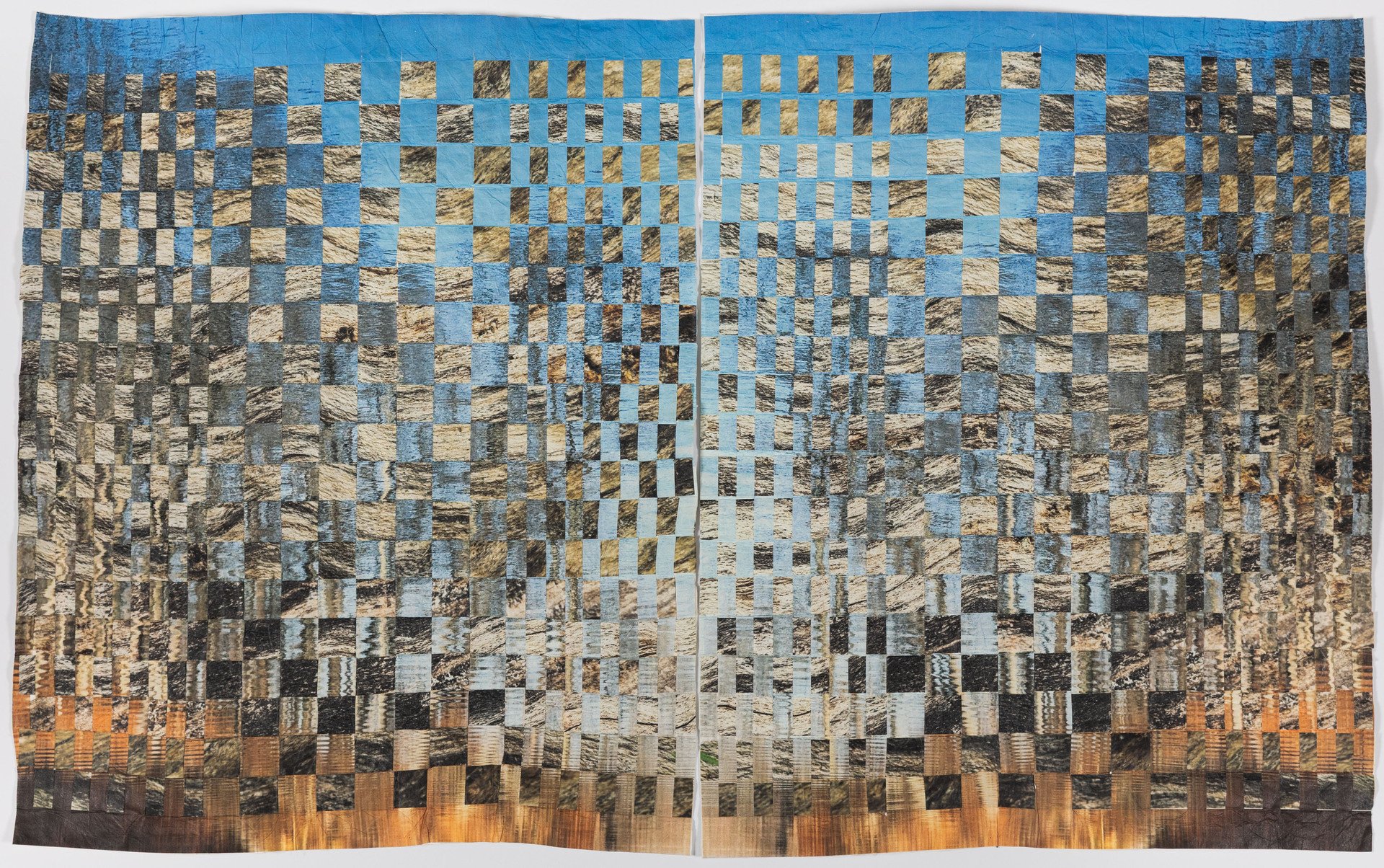
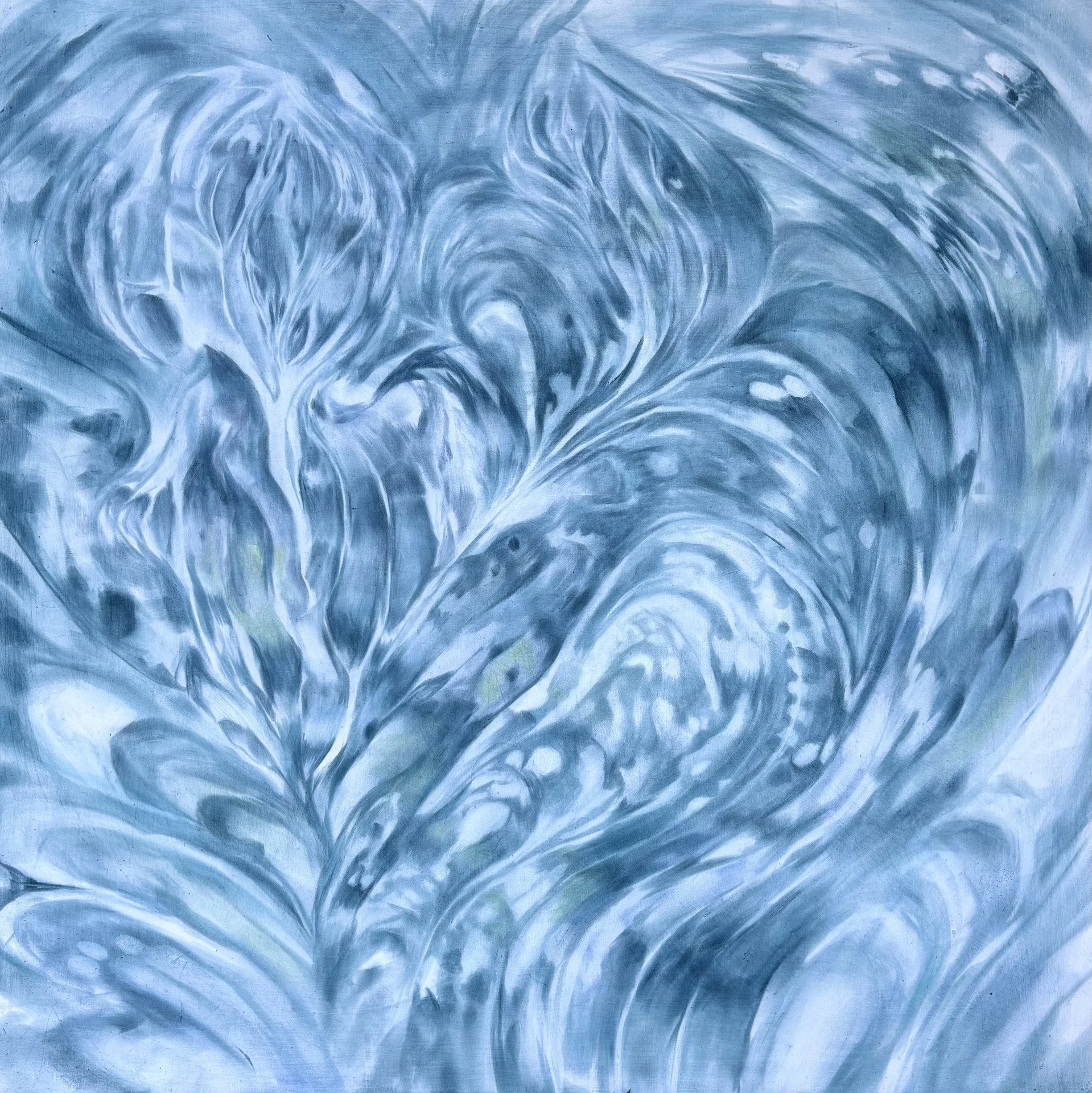
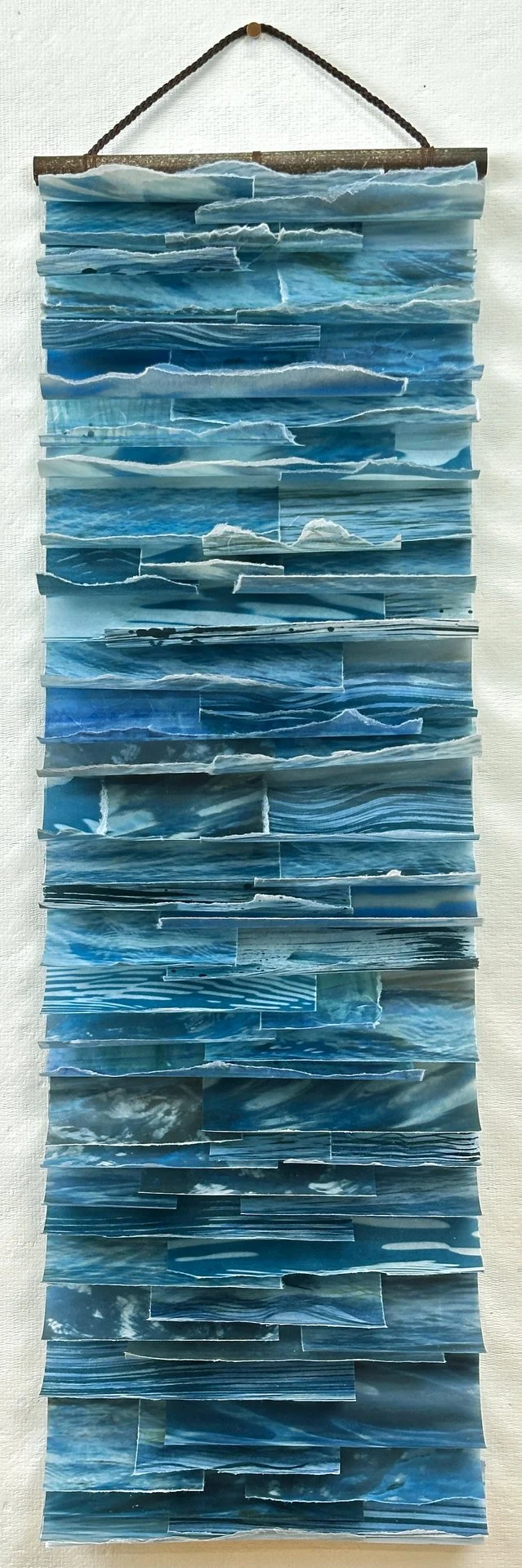
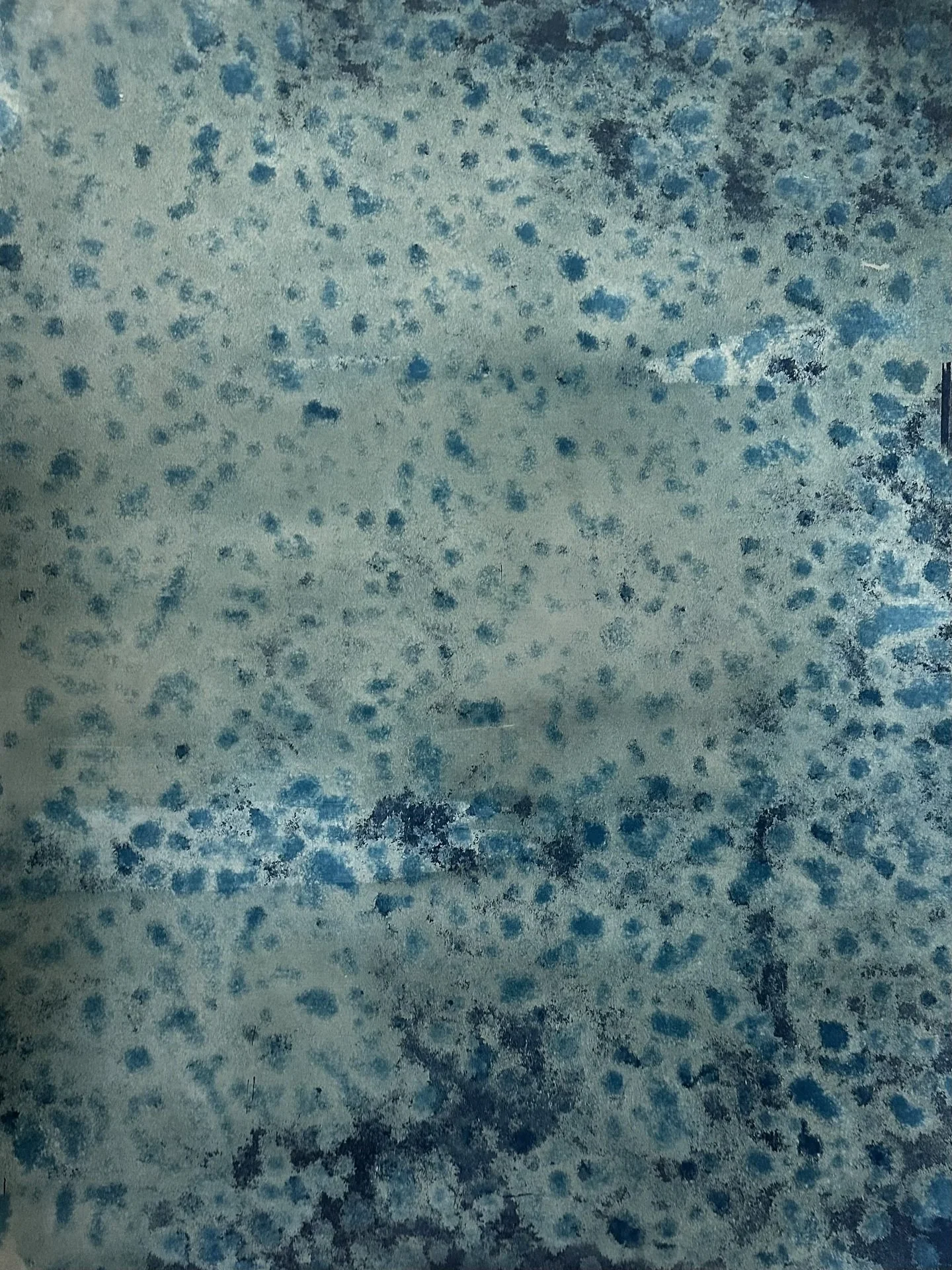
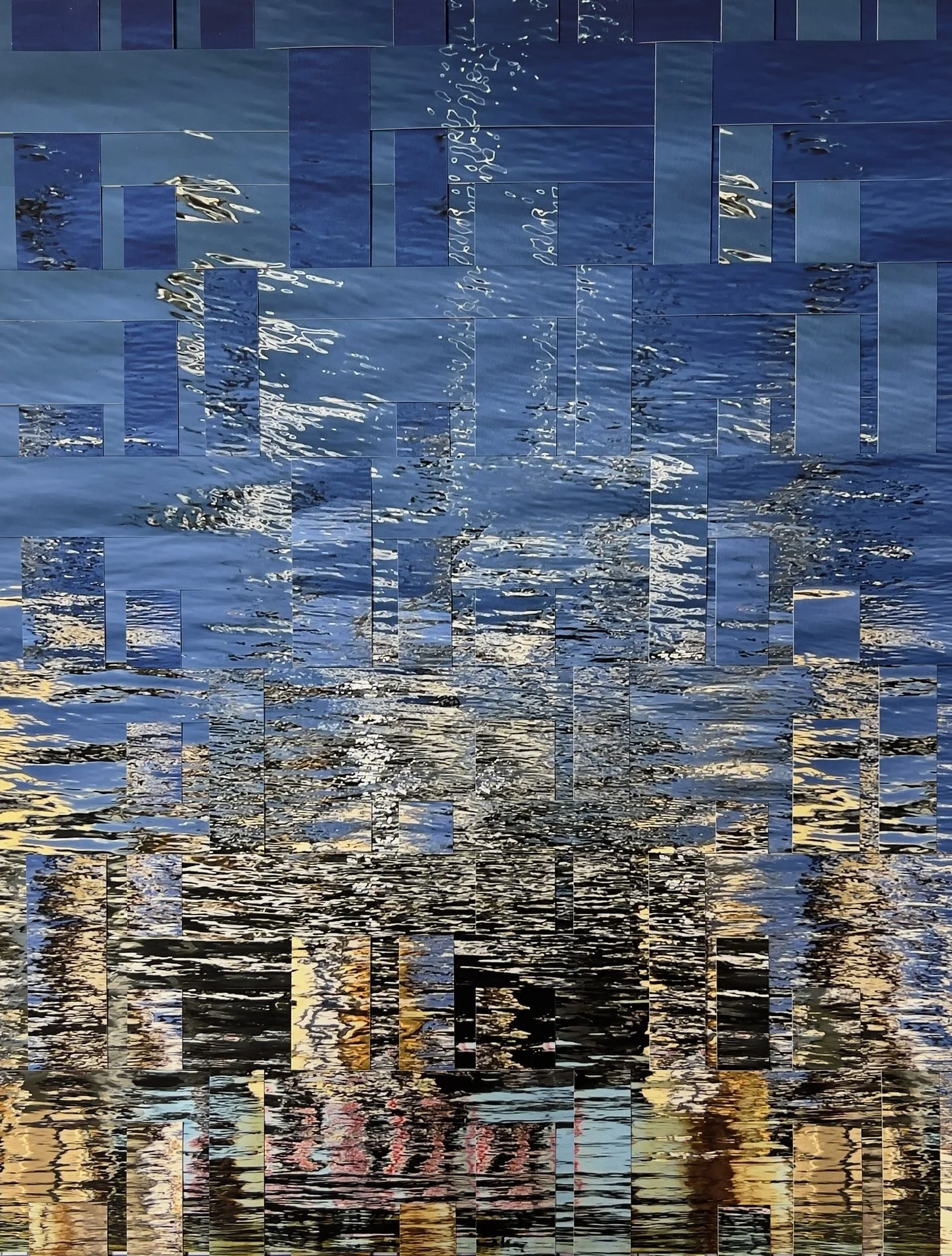
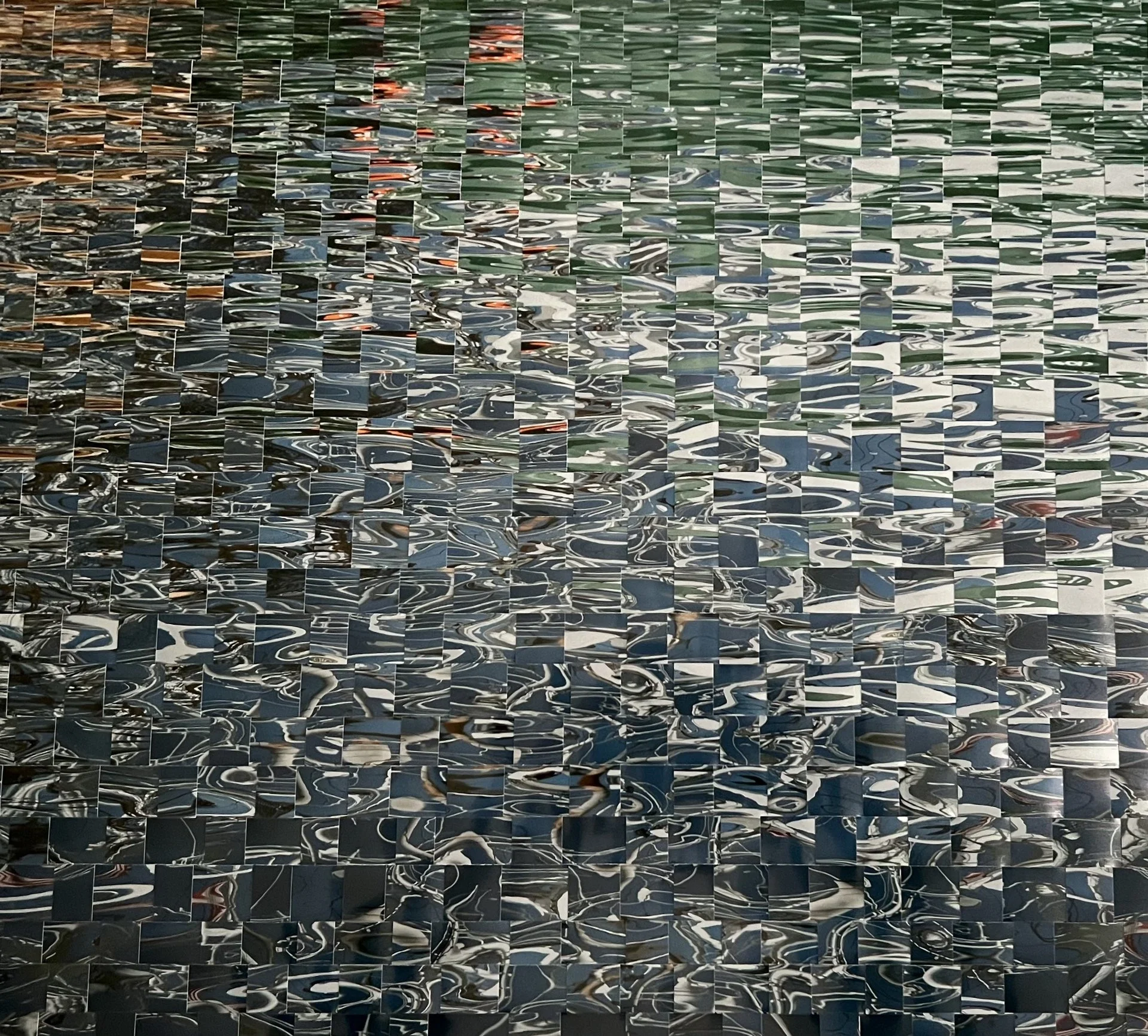
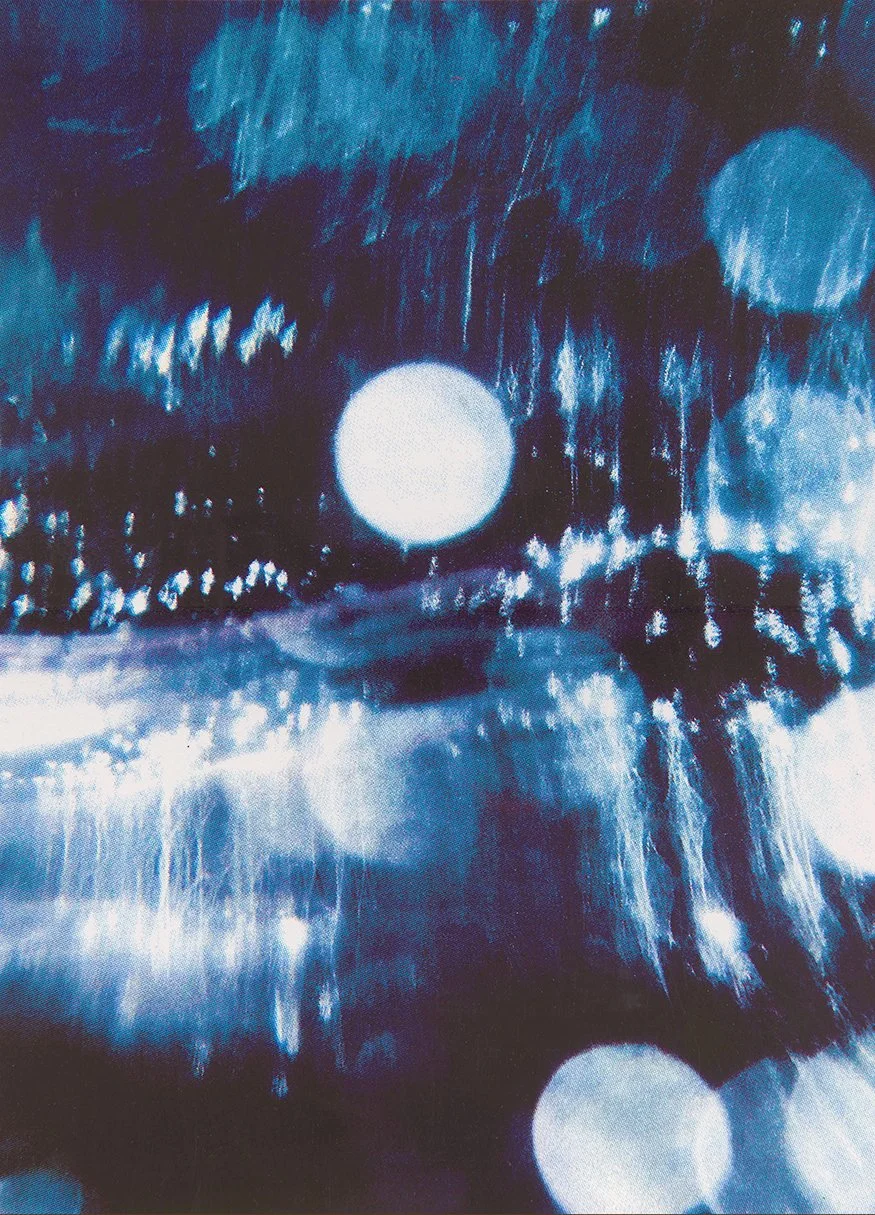
The artists in this group are drawn to the physical and emotional qualities of water, representing it as a resource, a force, a metaphor. Emma Hines uses pastels to visualize an animated eddy, immersing viewers in disorienting yet controlled swirls that remind us water is everywhere, and that we exist within its natural cycle of chaos and calm. Kerry McAleer-Keeler similarly channels water’s energy to evoke passion and fury. Her abstract prints, part of a series titled Boiling Points, capture water drops and bubbles in motion, intended to reflect, as the artist writes, “social concerns bubbling to the surface.” Bubbles and ripples also abound in a wall installation by Sophia Hatzikos that revels in the physical sensation of swimming. Ceramic tiles, arranged in a seemingly random pattern, bear traces of limbs moving through water and the marks made in their wake—a record of place, person, and pleasure. Other artists turn to photography to document this ever-changing element. Barbara Hocker stitches together digital images of bodies of water and watercolor paintings into long, cascading wall scrolls, each piece a discrete narrative of the primordial. Anita Bracalente similarly weaves digital prints of watery landscapes into quiltlike compositions whose surface seems to undulate endlessly. Denise Jill Marshall , in her own photographic weavings, captures the luminous shimmer of water through layered images that emulate its mesmerizing dance. Bonnie Levinthal records Earth’s vital resource by collaborating with it directly, exposing cyanotype paper to the ocean and rain to produce portraits of the environment—while honoring nature’s role as a creator.
Wall 2: Environments
ThaBlueCat / Moss Collins / Never Federico / Bryan Hutchison / Jacob Li Rosenberg / Liv Sciford / Qin Shen / Yunjia Zhang
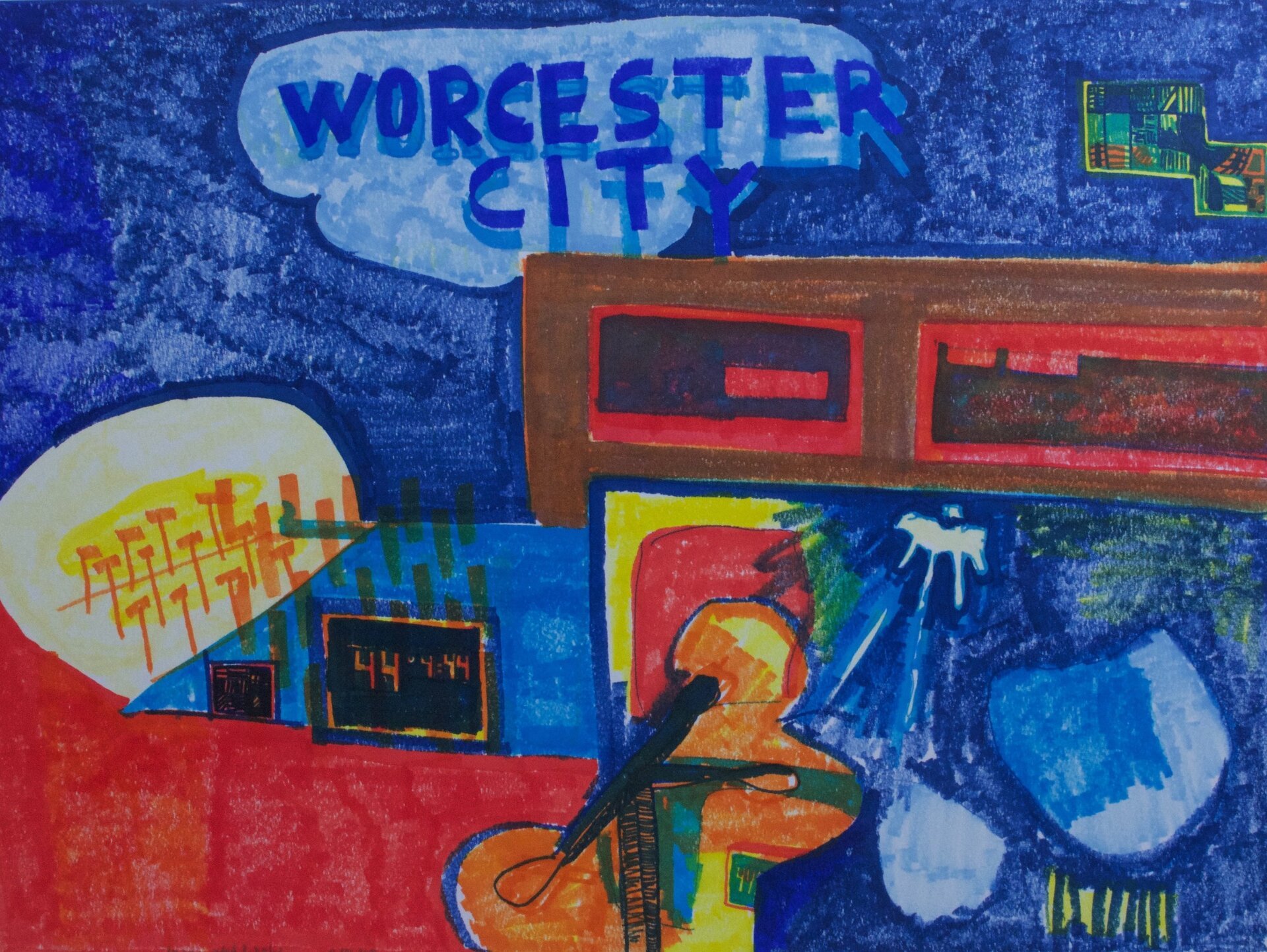
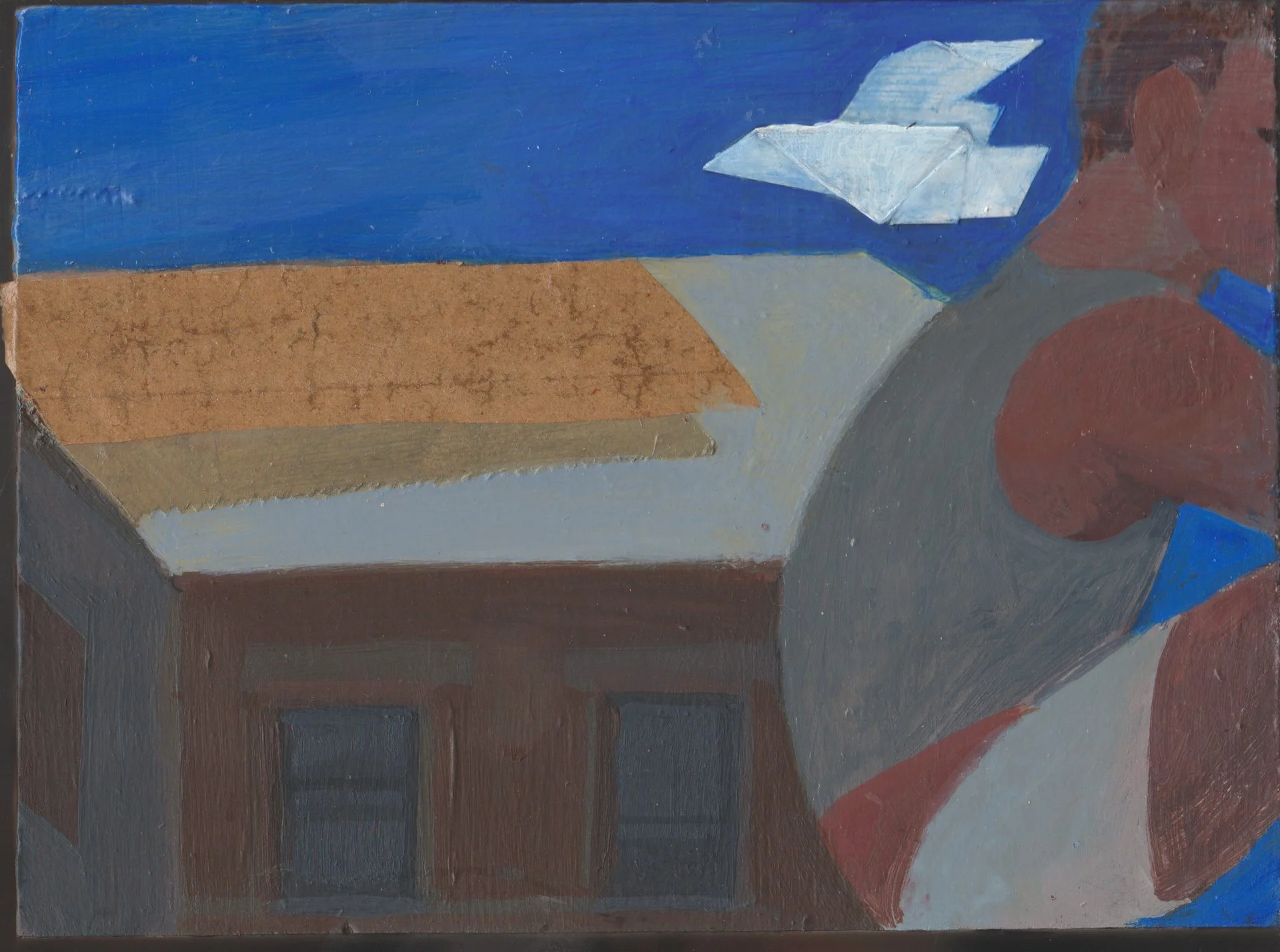
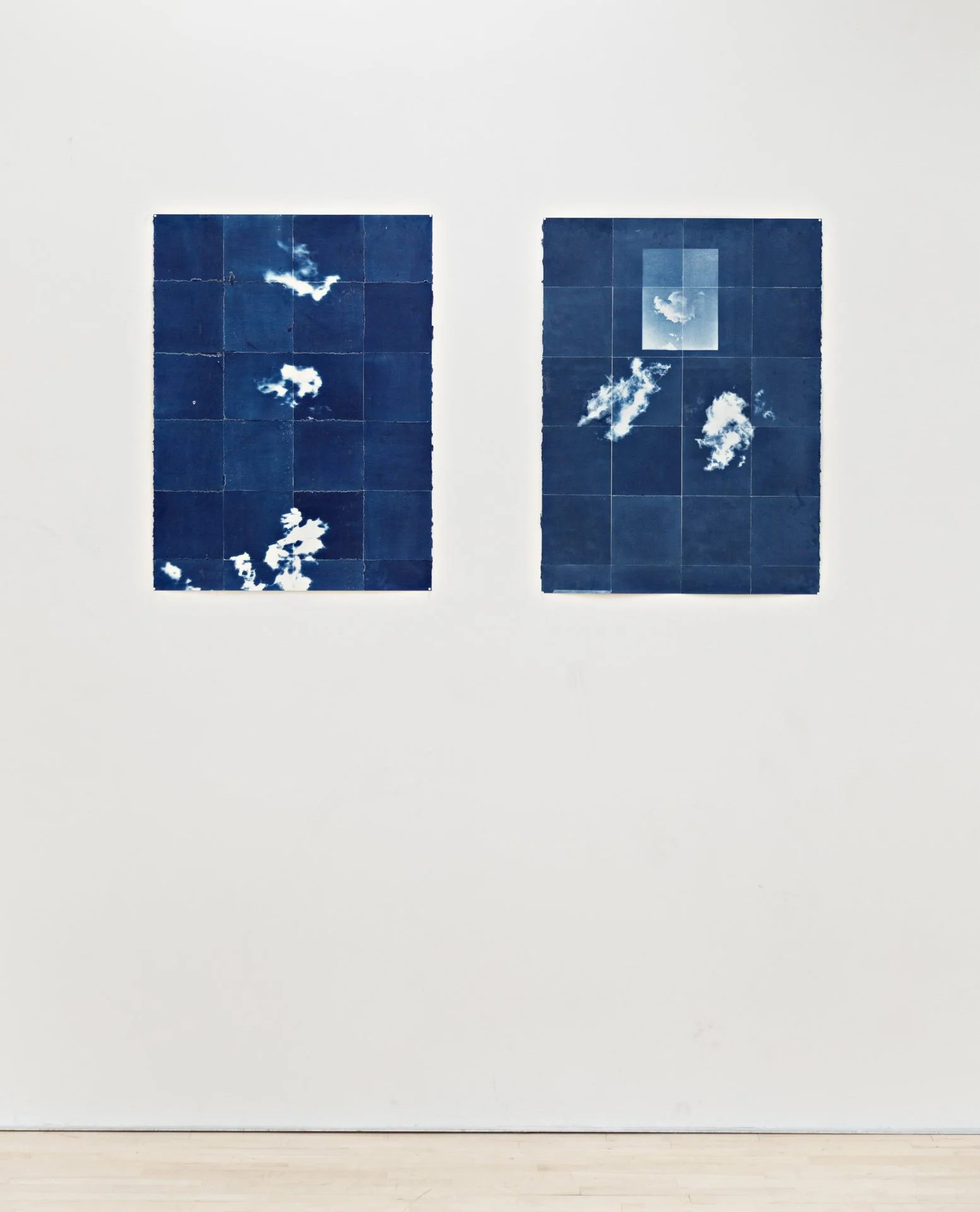
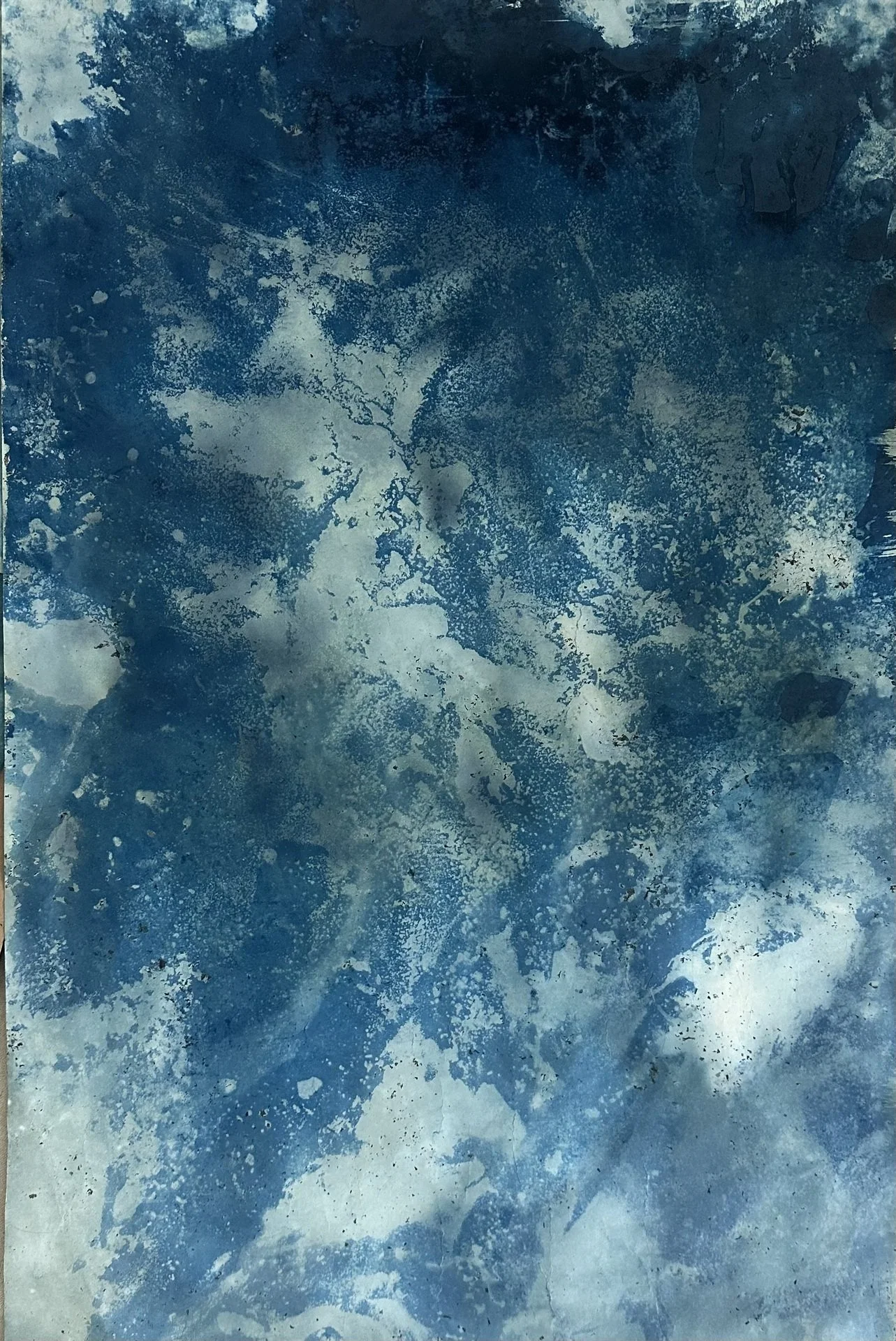
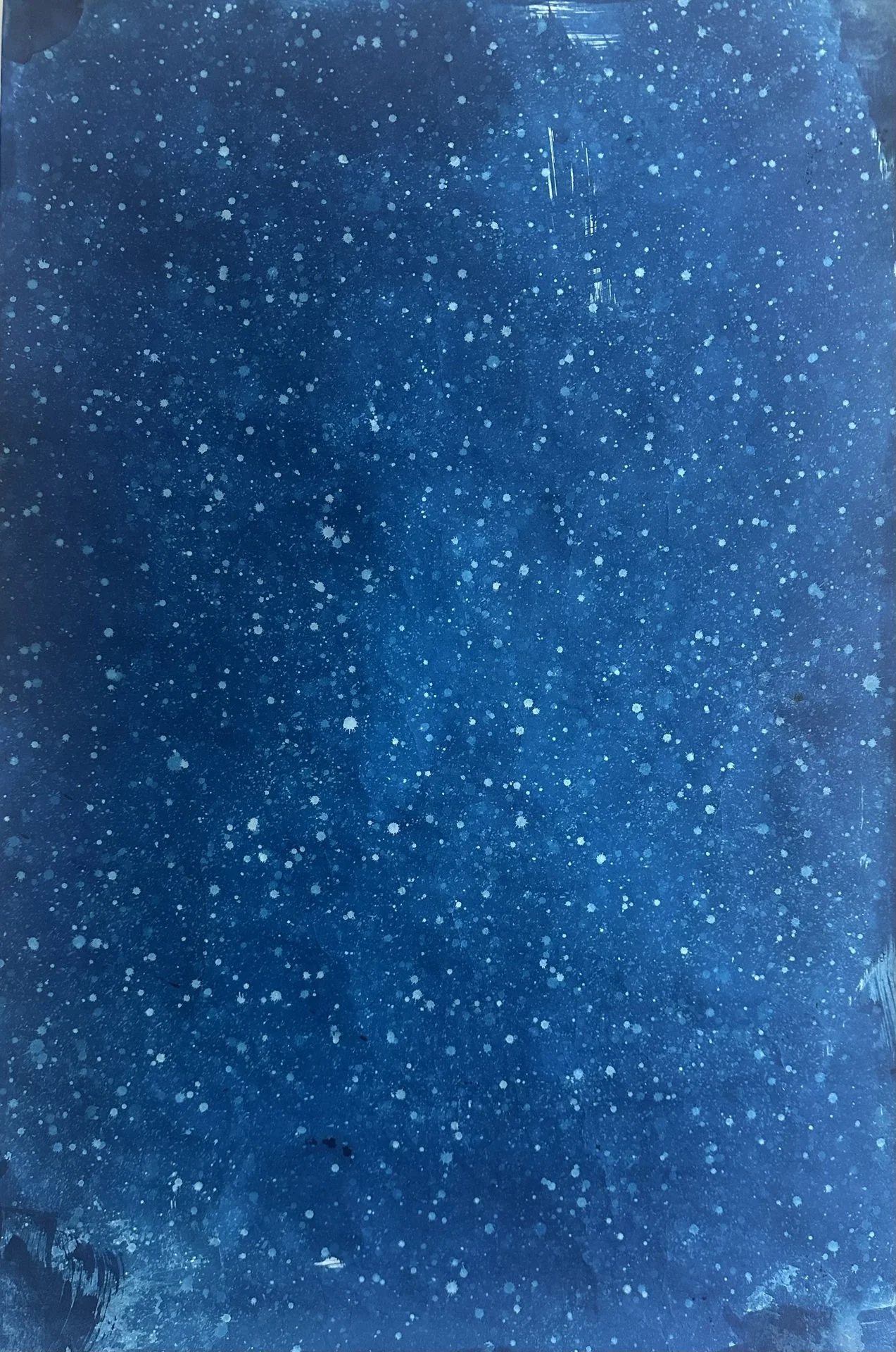
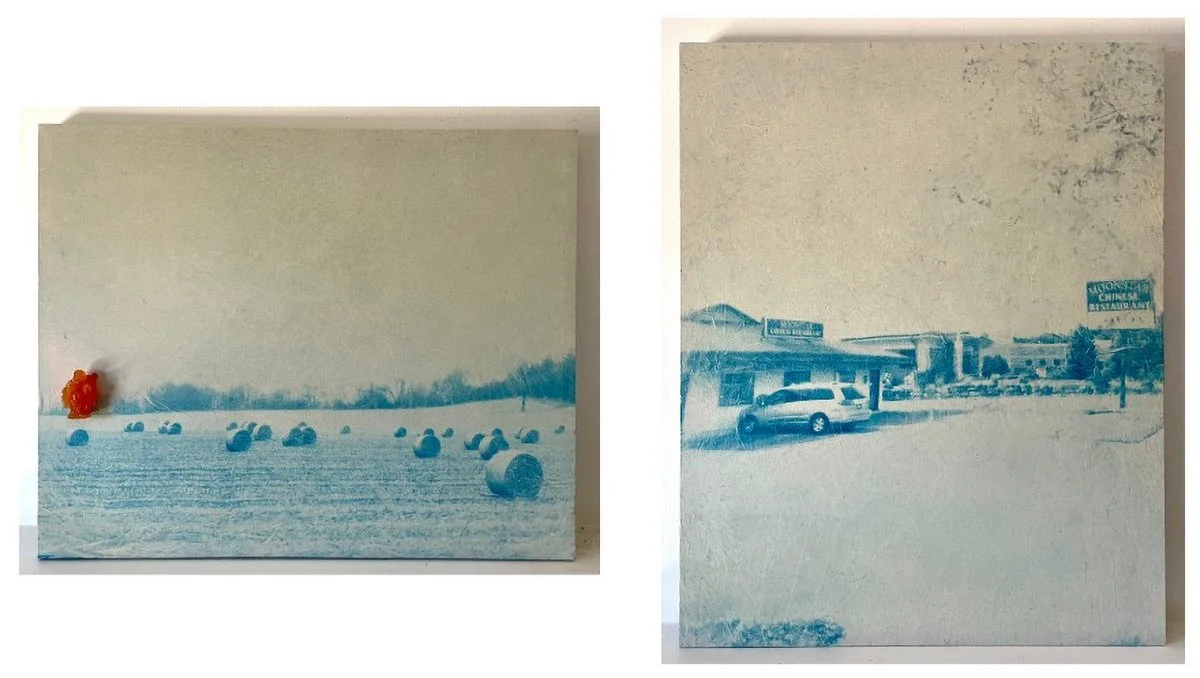
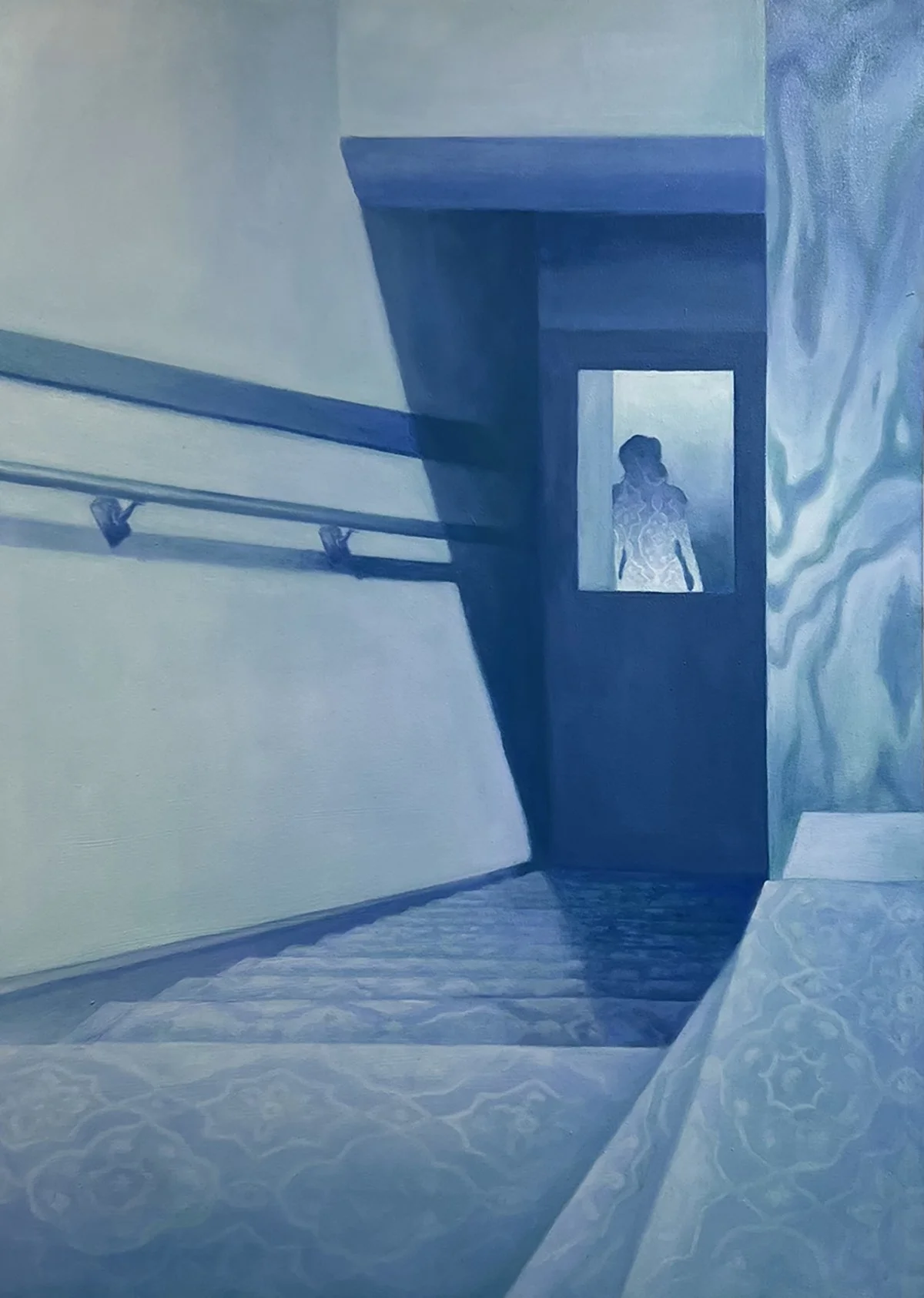
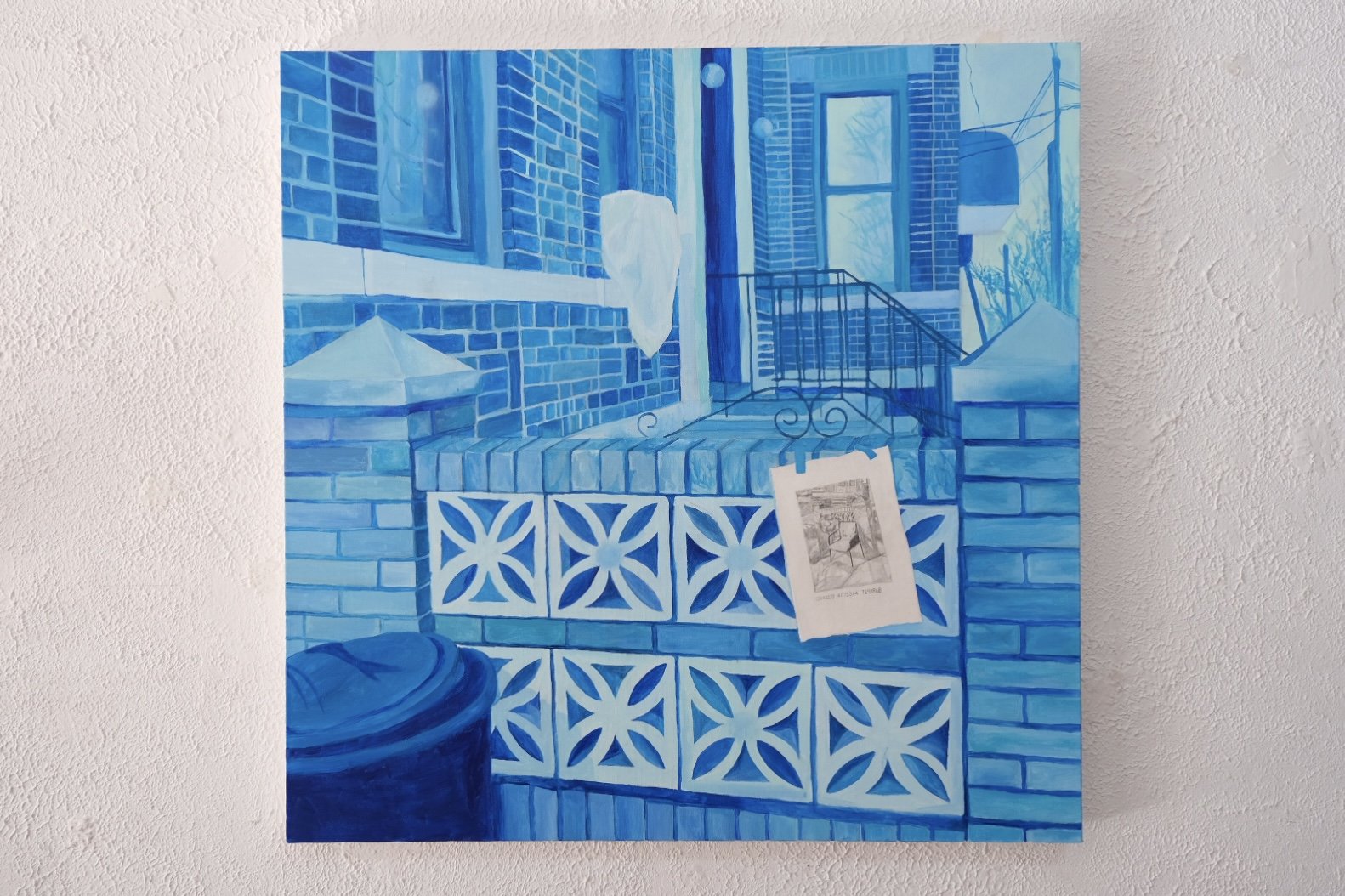
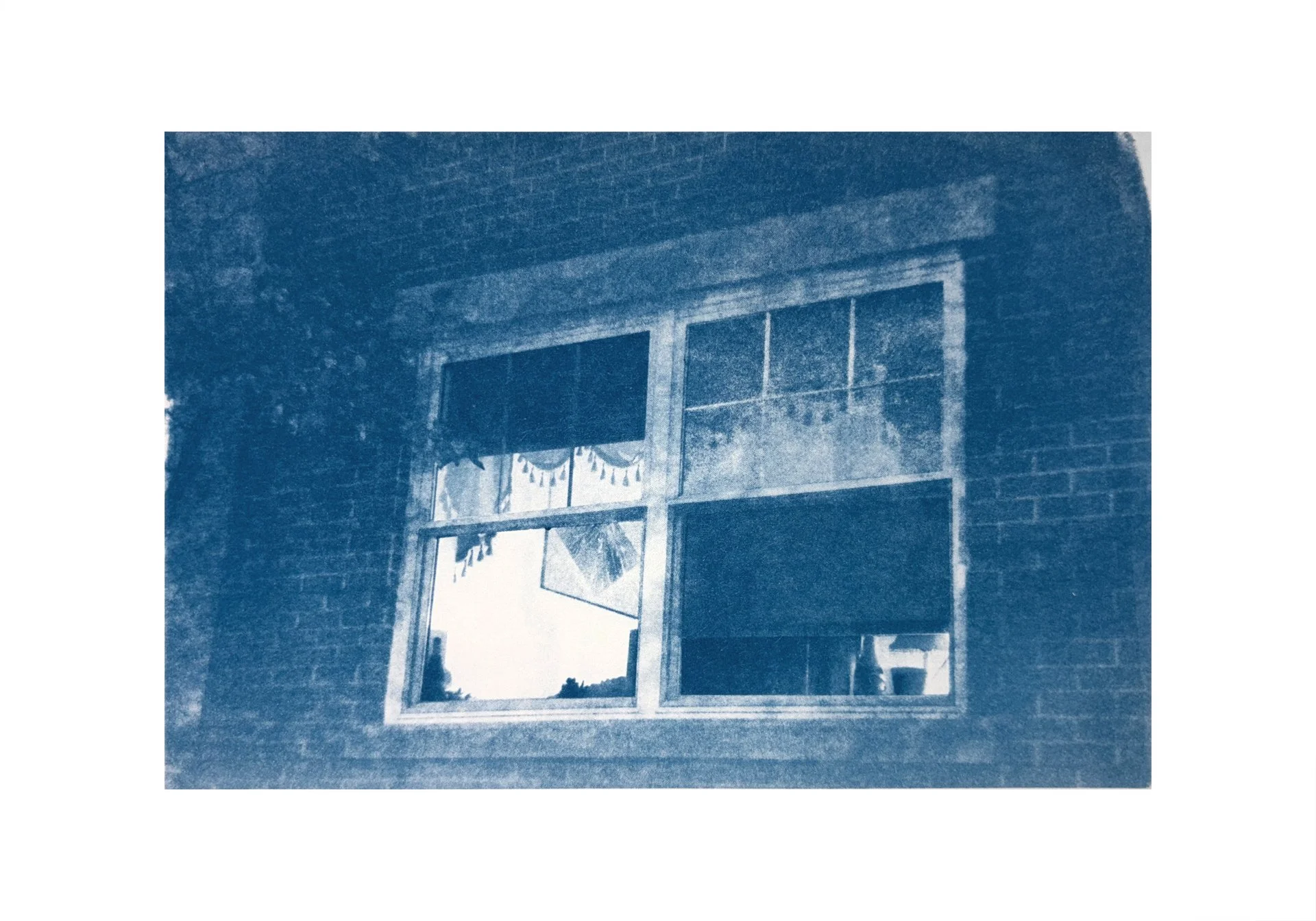
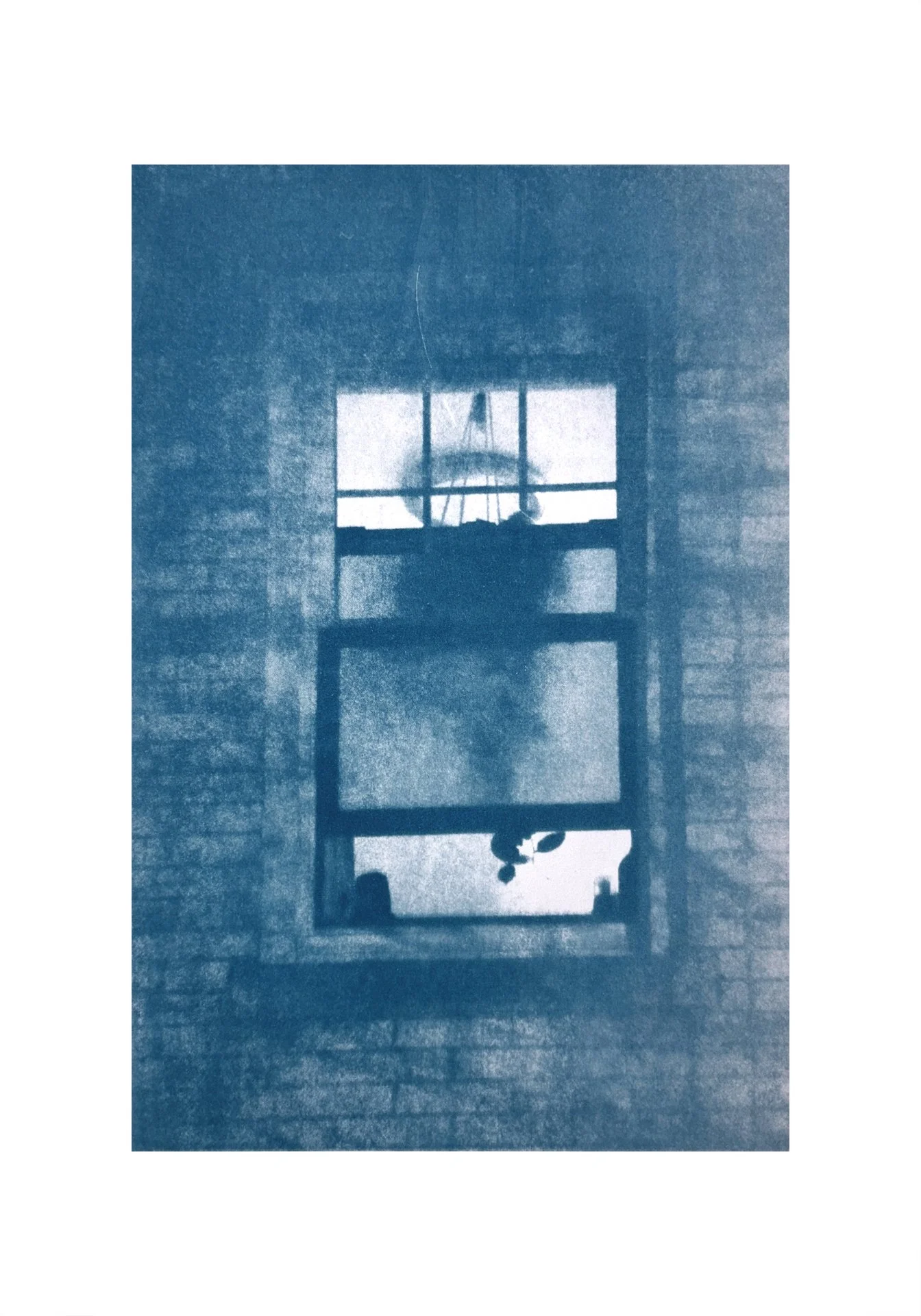
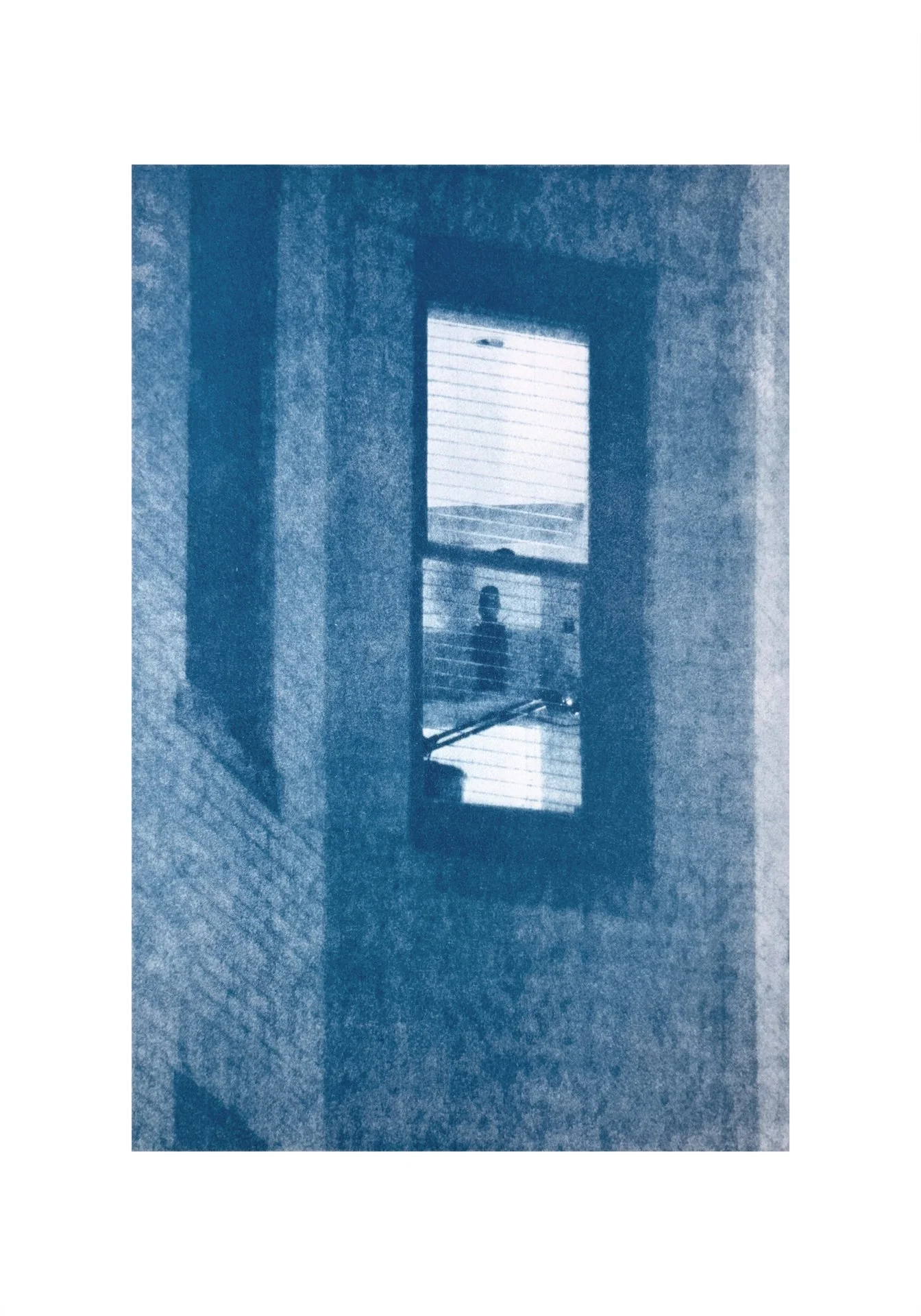
In this section, artists use blues to draw out the emotional tenor of a place or setting, whether meditative depth, hushed nostalgia, cool stillness, or interior turbulence. Tha BlueCat distills daily experiences as an autistic person into a pulsing pastel work, in which hard-edged lines and layered symbols create a discordant yet introspective atmosphere. In a dynamic marker drawing, Moss Collins conveys the sights and sounds of commuting down Route 9, weaving together illuminated road signs and highway arcana beneath a blurred evening sky. Never Federico explores the quieter, precarious experiences of city life in their portrait of a youth whose face is cropped at the edge of the canvas. The outsize figure sits outside a building as a bird flies overhead, evoking notions of home, belonging, and freedom. In their blue-tinged drawing, Qin Shen zooms in on a stoop of breeze blocks carrying a lost-and-found sign. Cool tones build a sense of unease and detachment, hinting at the psychological resonance and hidden meaning of everyday sites. Liv Sciford also engages a subtle tension between place and interiority in their painting of a threshold: a carpeted staircase viewed from above, with a figure glimpsed behind a door. Sciford’s monochrome work recalls a dream, or perhaps a nightmare, enticing for all its ambiguity. Three other artists bend the contours of reality through documentation, specifically with the cyanotype. Bryan Hutchison’s diptych forms an orderly yet poetic grid of the sky, dramatizing nature’s blues and portraying clouds as ghostly masses. Jacob Li Rosenberg’s softly tinted cyanotypes of a Chinese restaurant and a field of hay bales flit between photograph and painting, exploring the interplay of site, identity, culture, memory, and value. In her cyanotype series Foreign Land, Yunjia Zhang focuses on home interiors as seen from the street, the glow of interior lights against soft blues satisfying the human impulse to look while underscoring the fragile boundaries between private and public.
Wall 3: Reused, reworked, renewed
Aiko Wakao Austin / Tatiana Ginsberg / Miguel Limon / Sarah Matthews / Megan Prince / Maddy Underwood
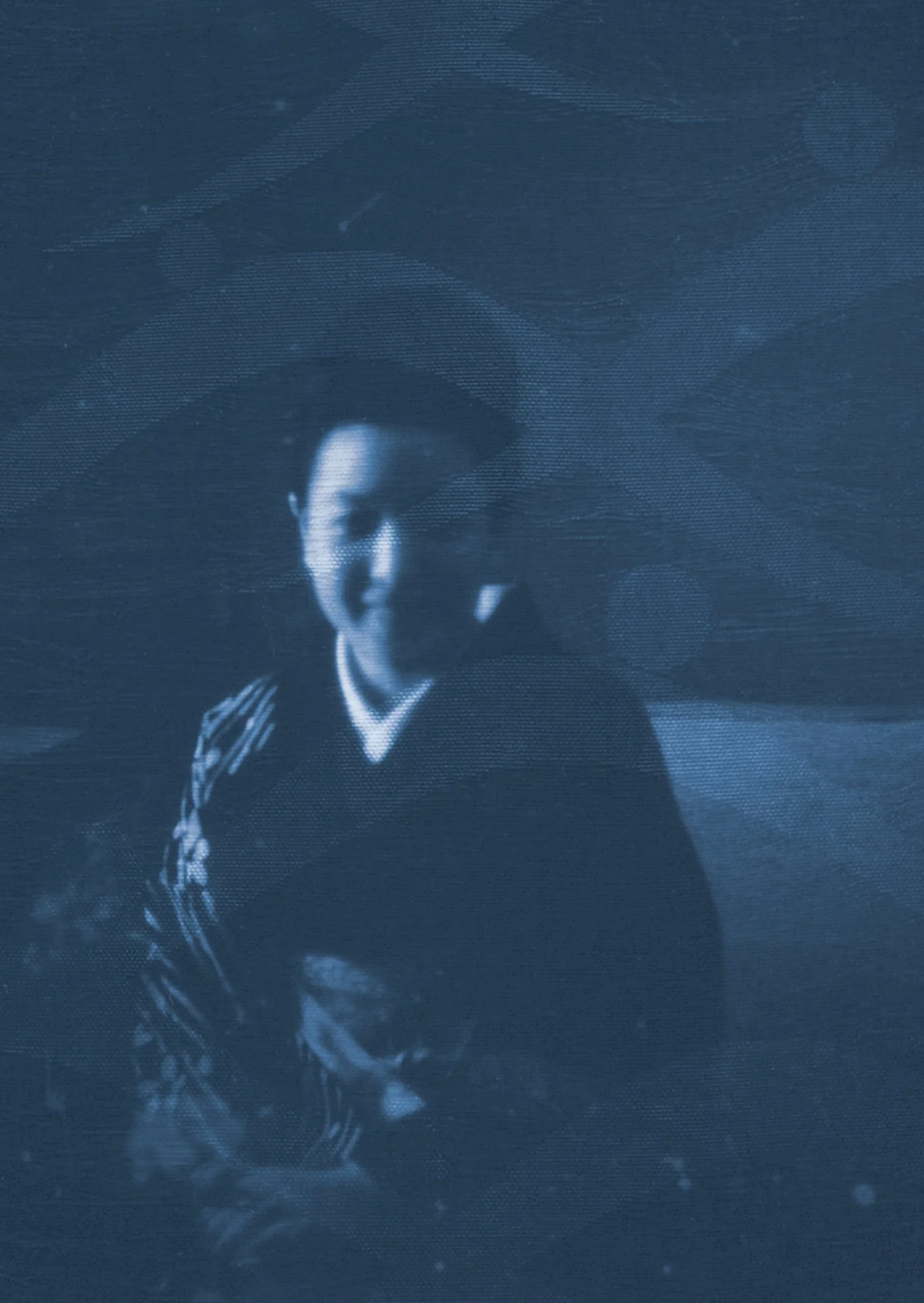
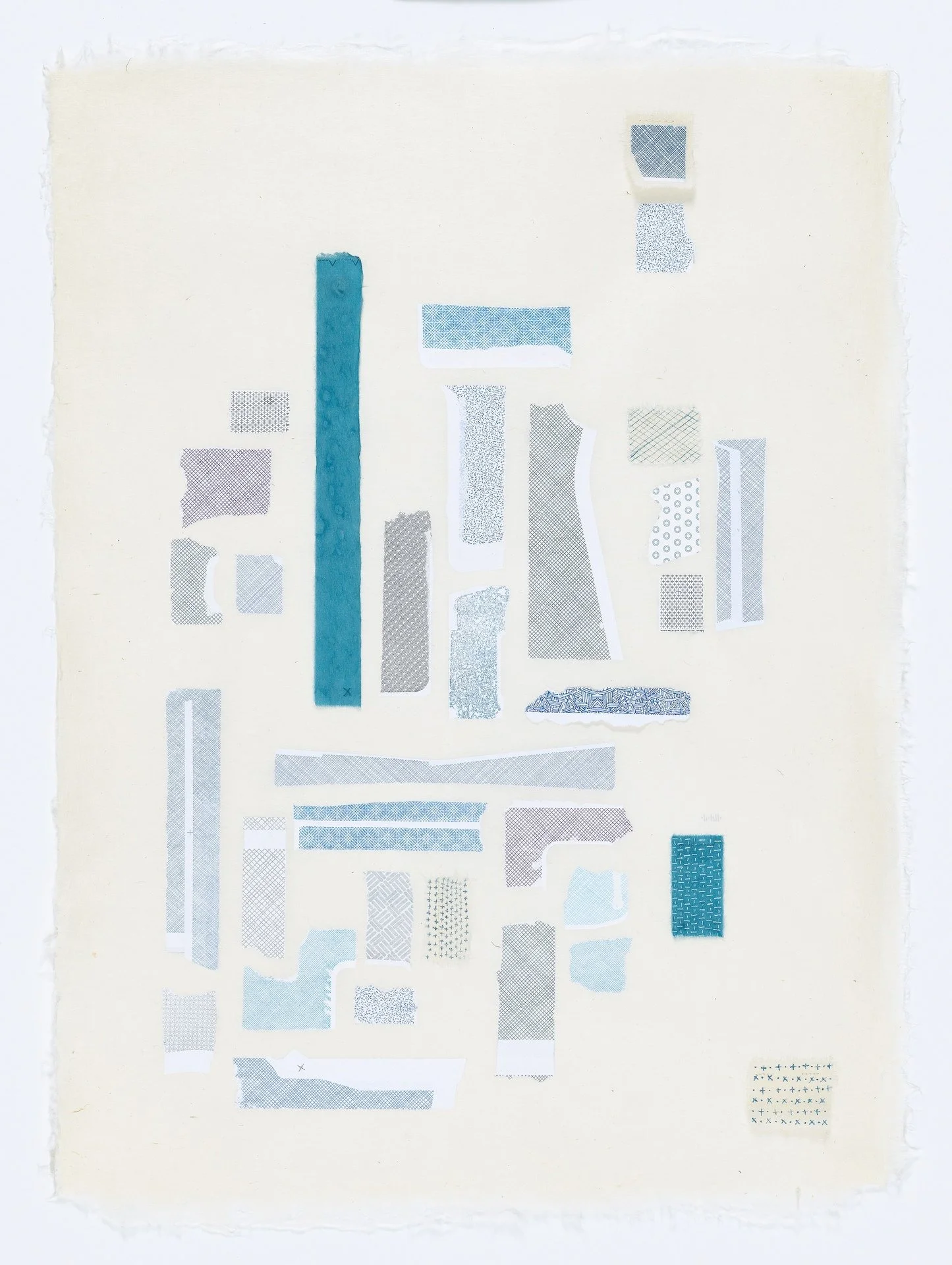
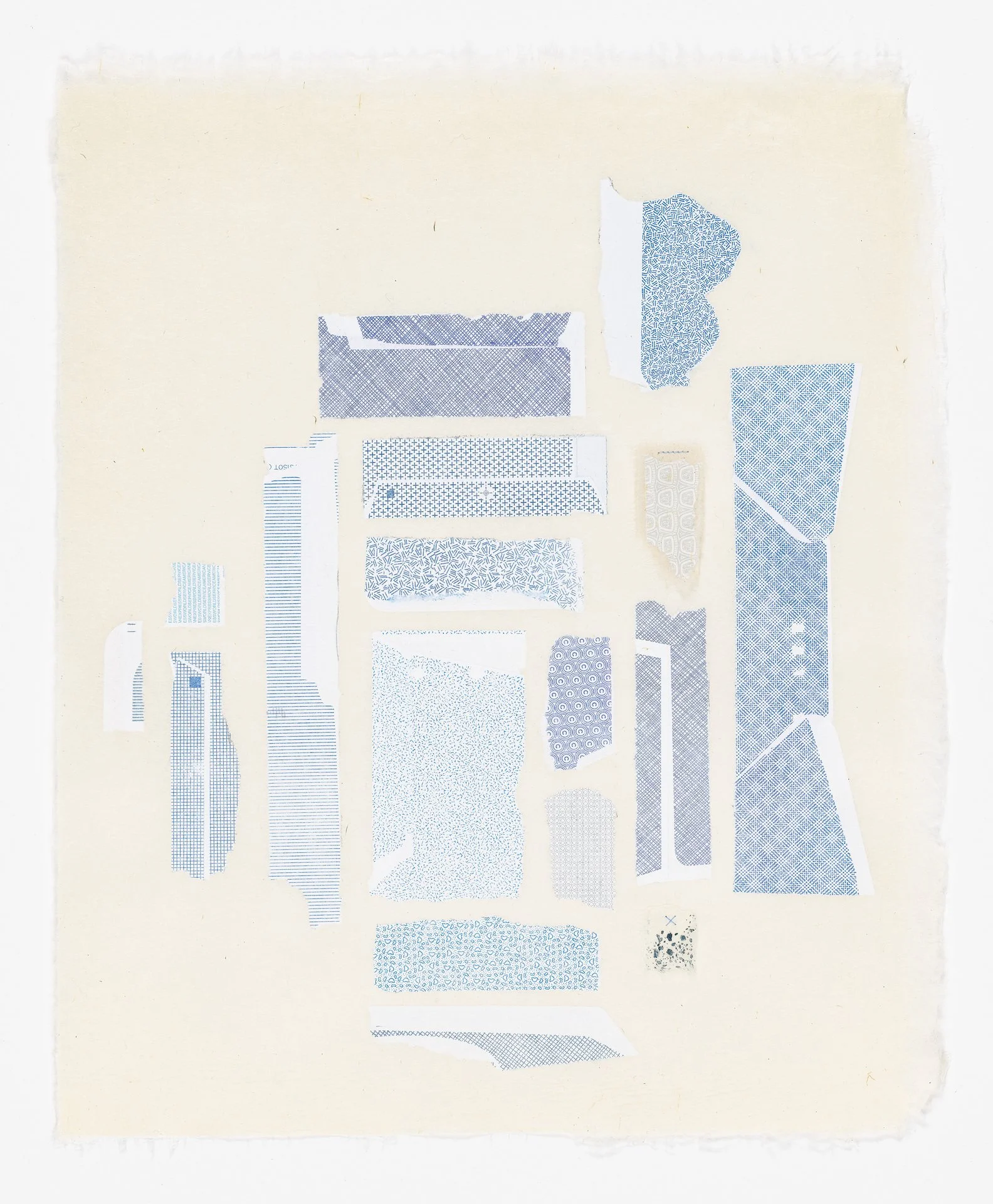
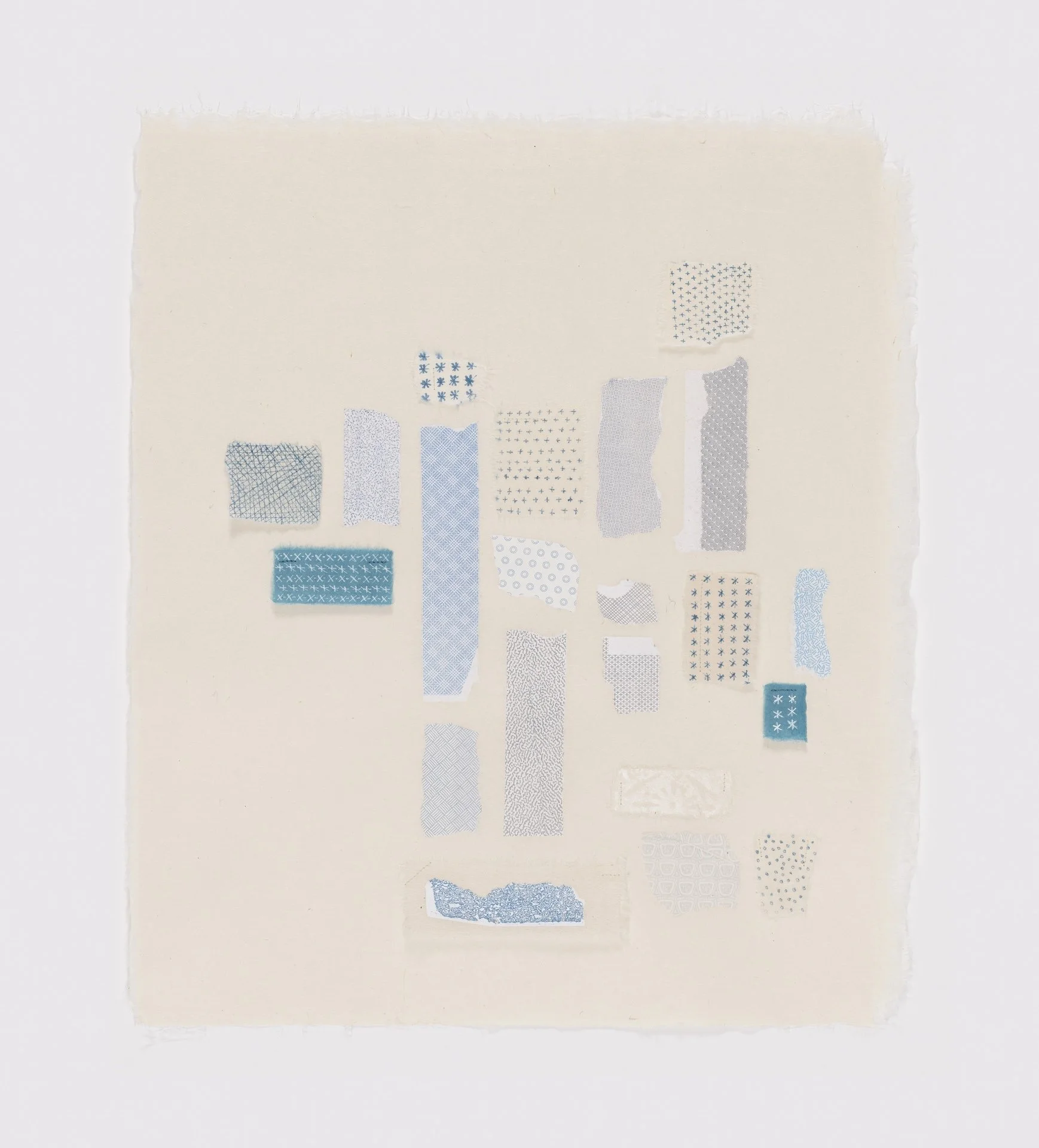
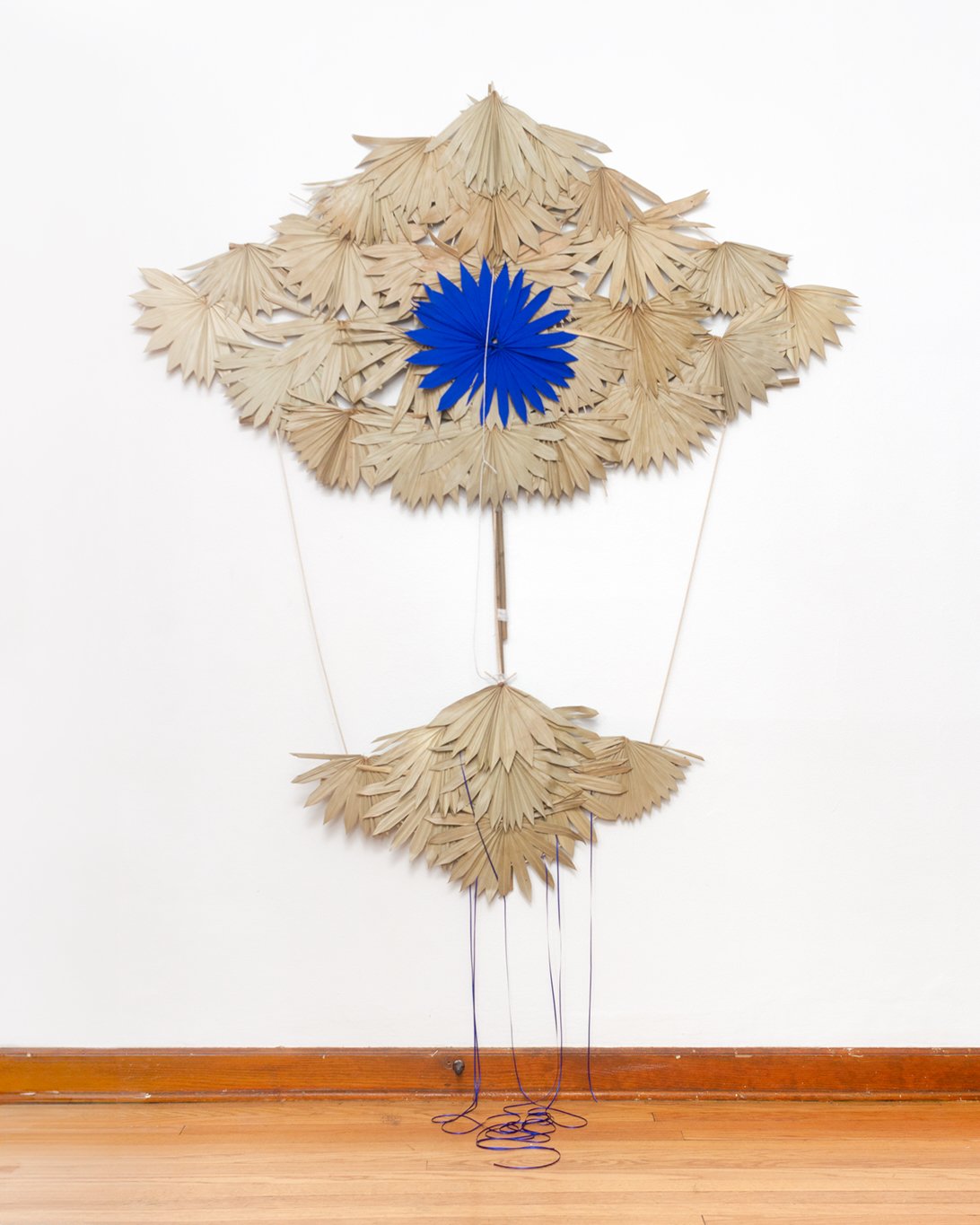
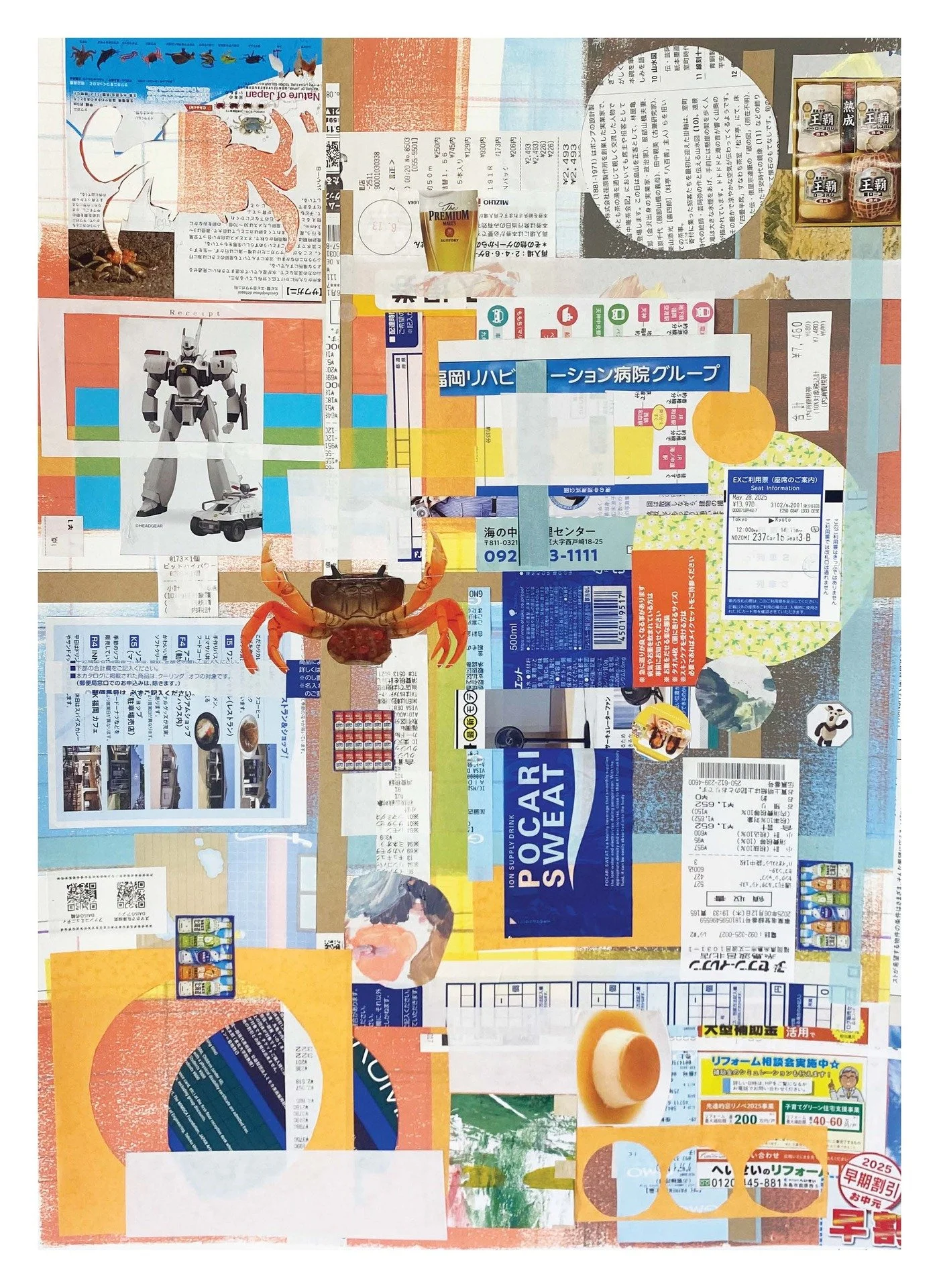
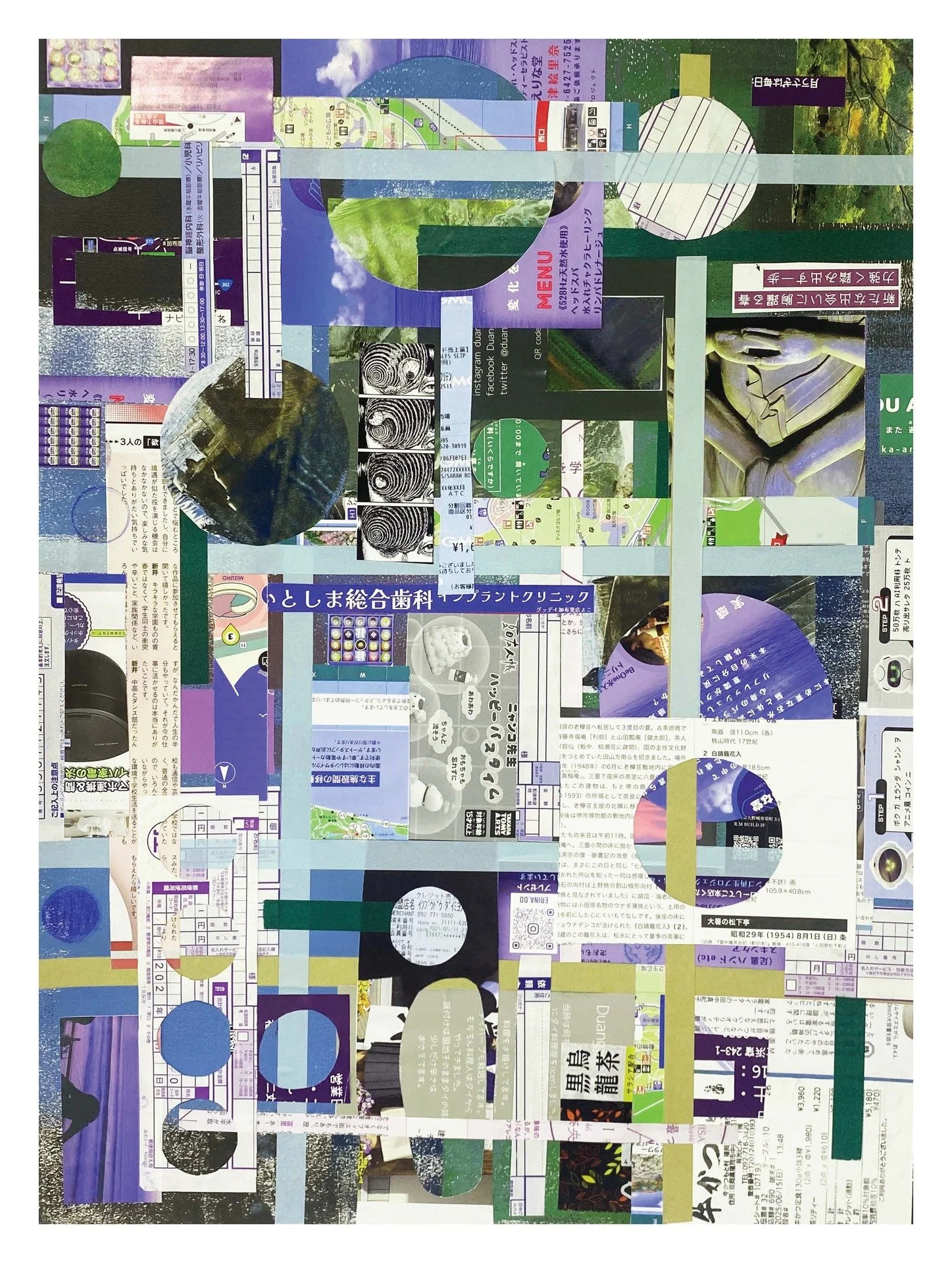
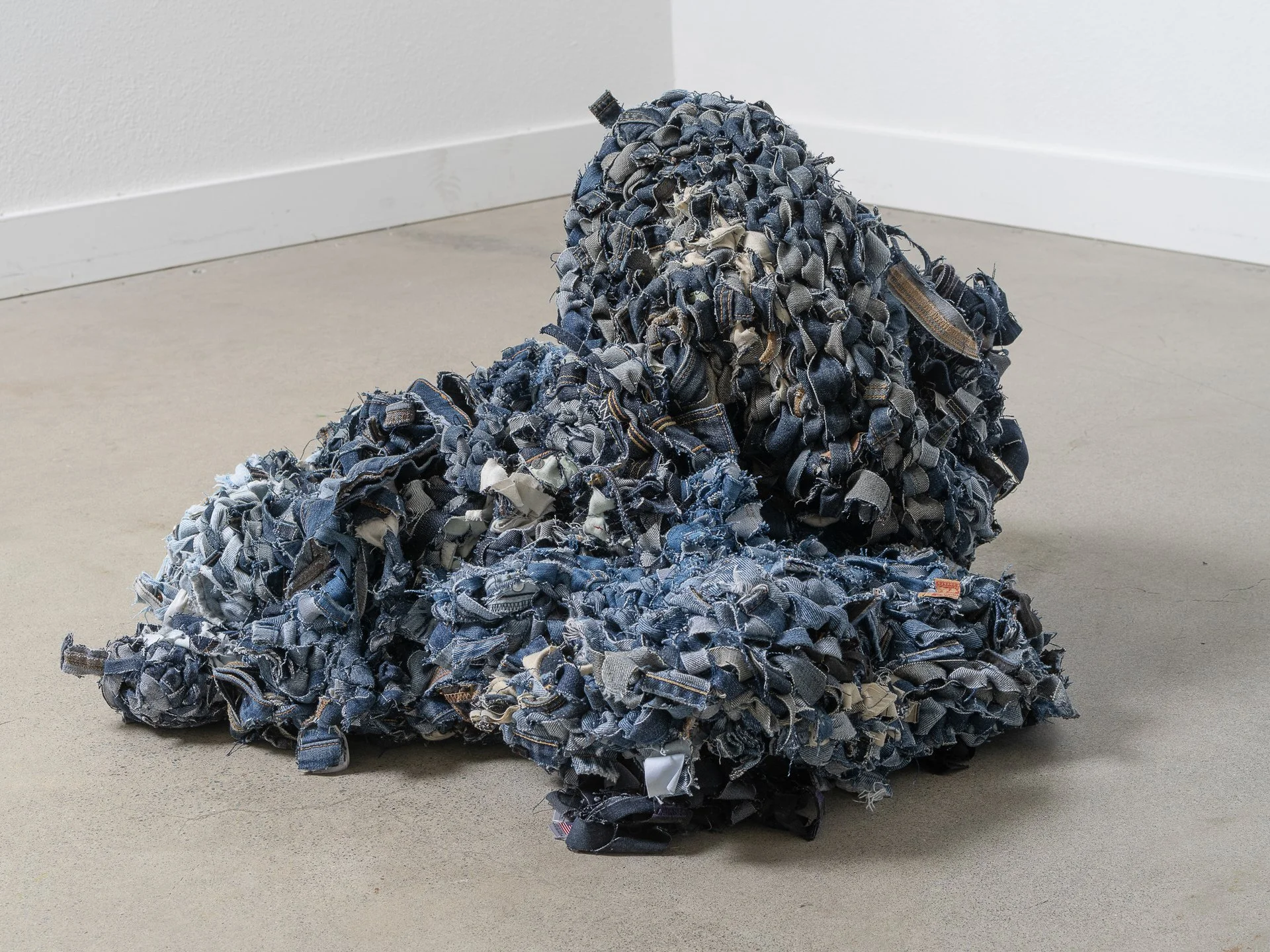
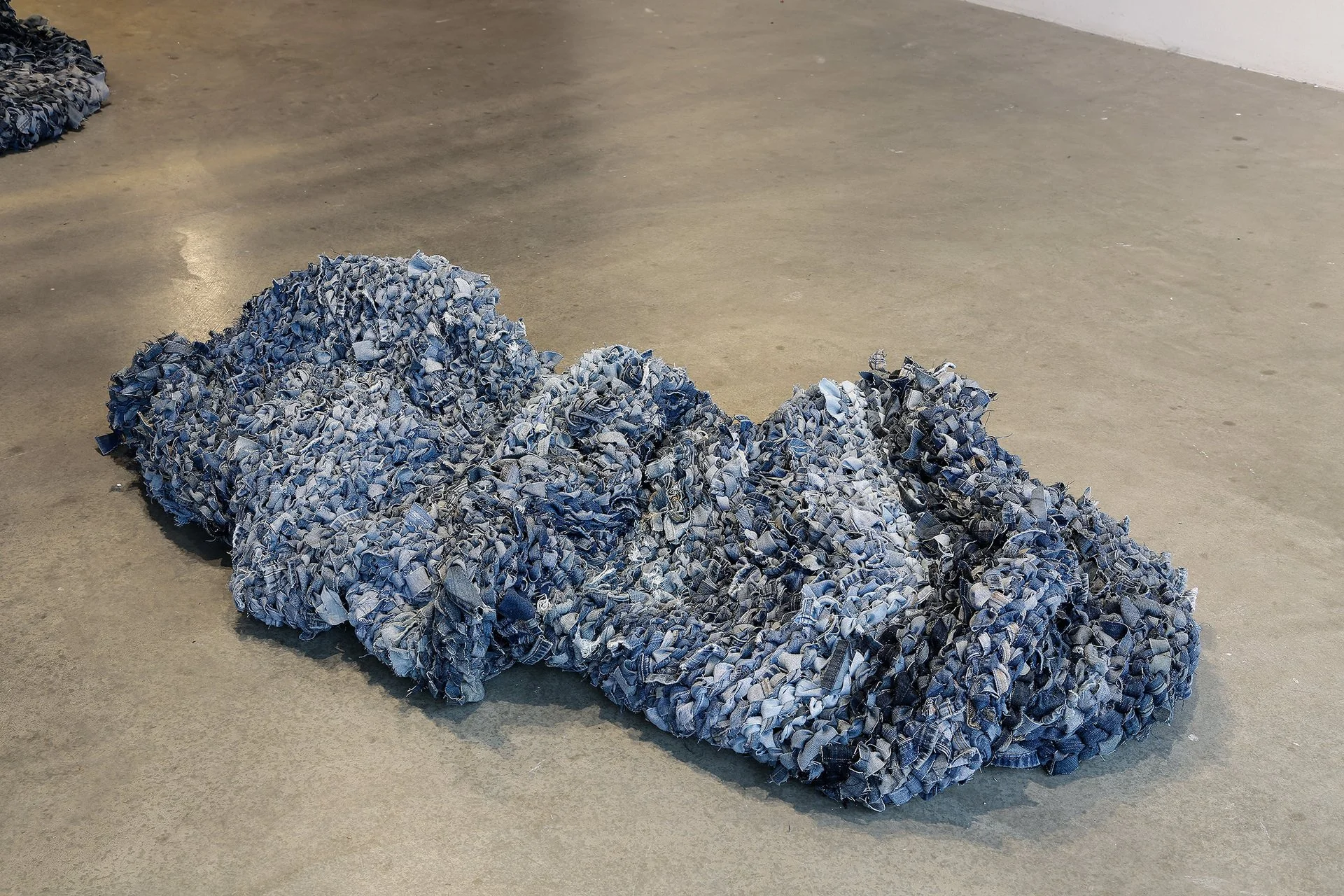
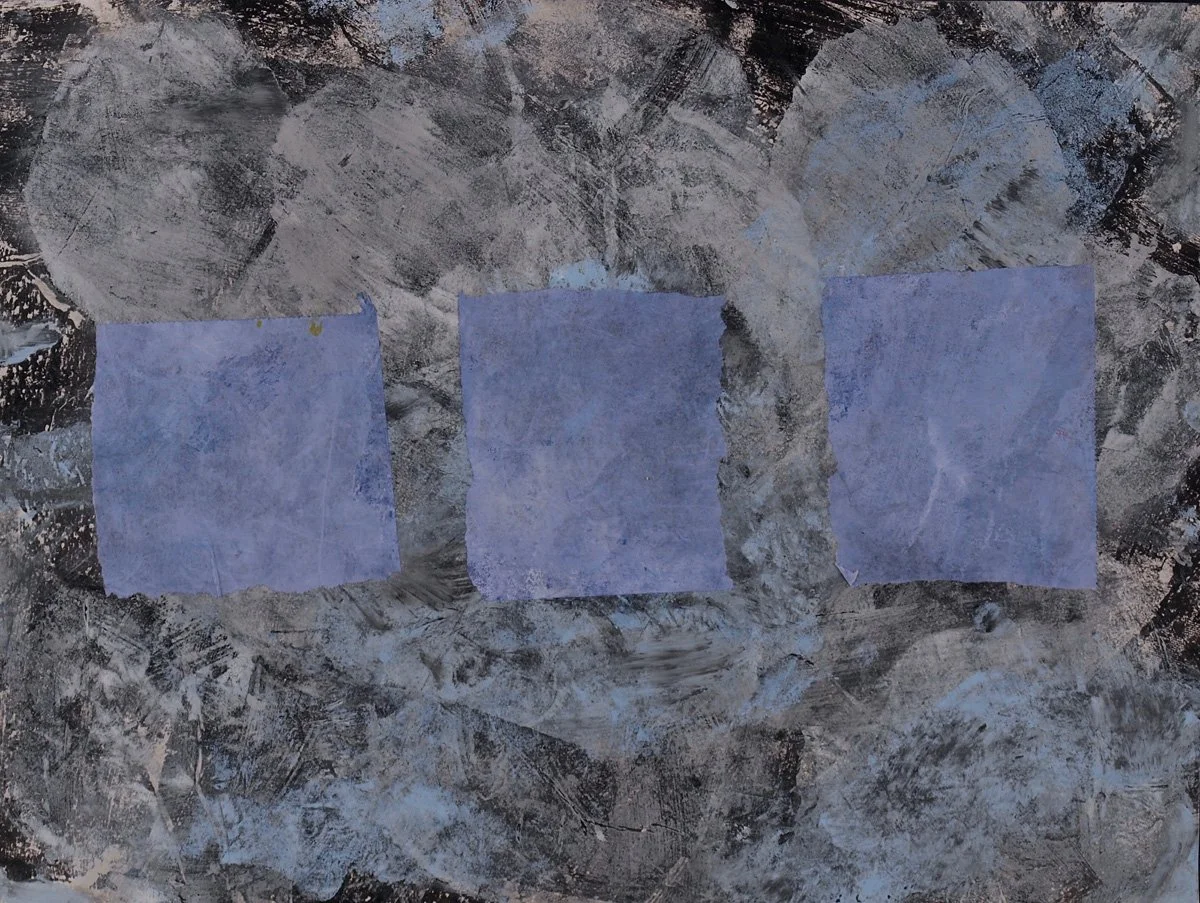
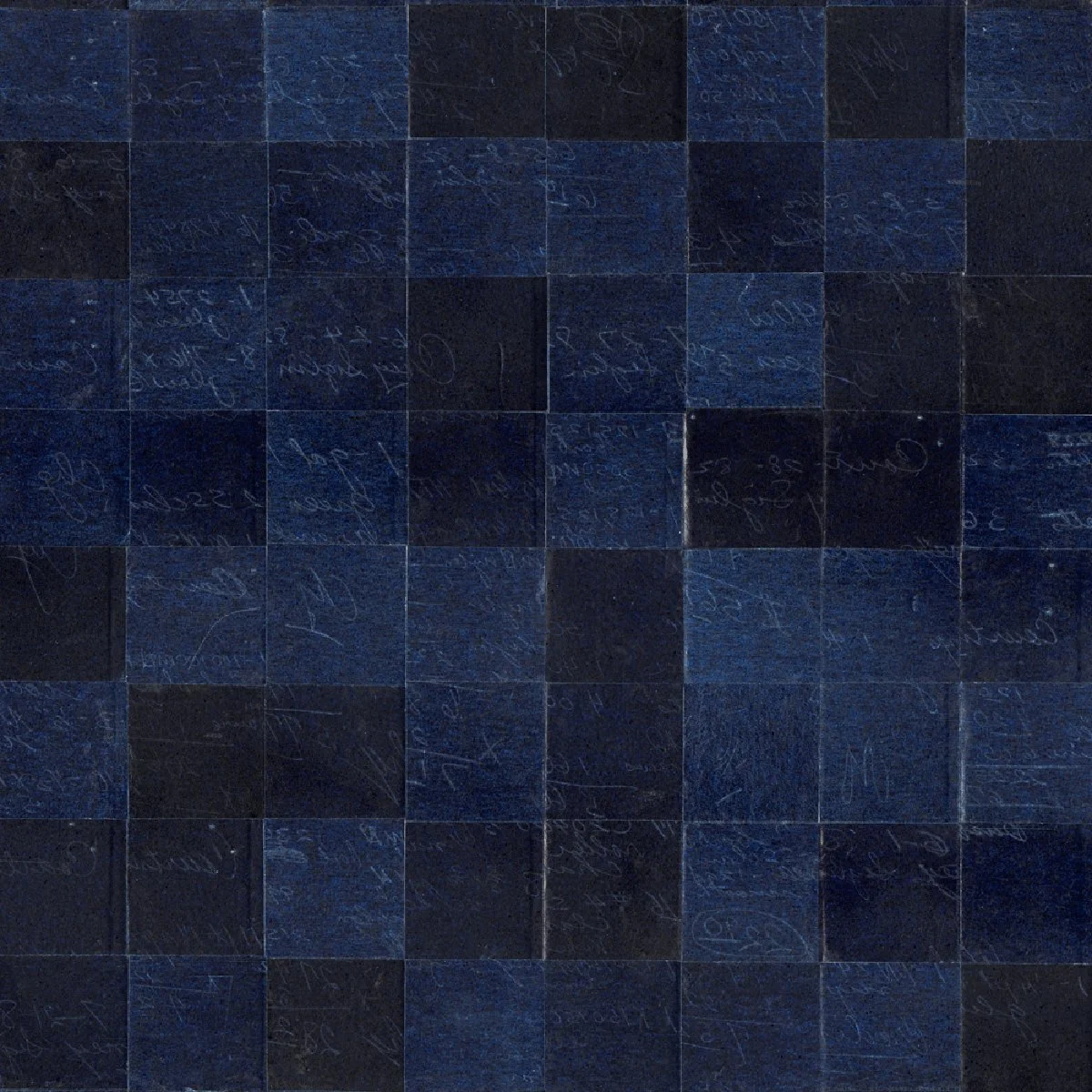
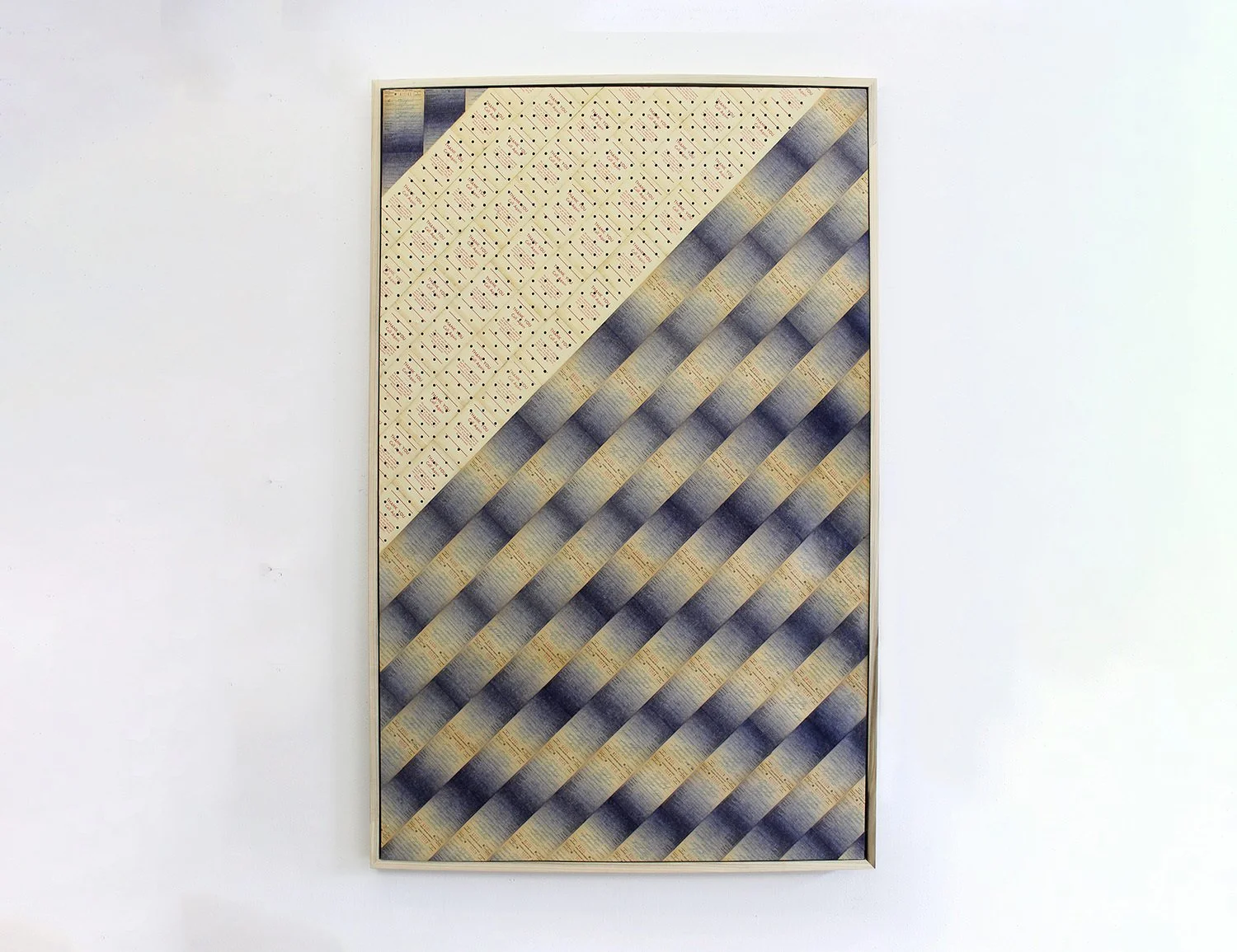
The works of these six artists share a deep material sensibility, incorporating found or inherited objects to craft new meaning. Maddy Underwood finds unexpected beauty in the mundane, turning old receipts into seamless collages. In Fry’s Millerton, for example, the blues of carbon paper form a calming, contemplative grid, while ghostly white text and other traces of human hands stand out—relics of exchanges lost to time. Tatiana Ginsberg similarly elevates everyday scraps. She tears and arranges various security envelopes in a process inspired by indigo-dyed boro textiles, highlighting their blue motifs and turning the detritus of administration into patchworks of artistry. Sarah Matthews collects discarded papers, such as receipts, pamphlets, and newspaper clippings, creating time capsules of contemporary consumer culture—layers of accumulated daily life. Megan Prince’s sculptures of discarded jeans, hand-tied into large-scale, overflowing masses, also reflect on material circulation and accretion, specifically the global production of denim and its environmental cost. Another sculptural work, by Miguel Limon, pieces together palm fronds into a large-scale kite with a bright-blue palm frond at its heart. Drawing on Indigenous Mexican traditions, the work evokes flight, movement, and freedom, while also connecting earth, sky, and the beyond. Aiko Wakao Austin’s series What we inherit revisits photographs passed down from her grandparents, including an image of a woman in a kimono. Rendered in a blue monochrome reminiscent of early photographic processes and overlaid with subtle white designs, the intimate portrait blurs timelines and invites reflection on memory, ancestry, and legacy.
Wall 4: Form and texture
Corine Adams / Steffani Bailey / Naomi Cohn / Beverly Glascock / Stephanie Martin / Jackie Robbins / Jacqueline Sferra Rada / Zan Wang
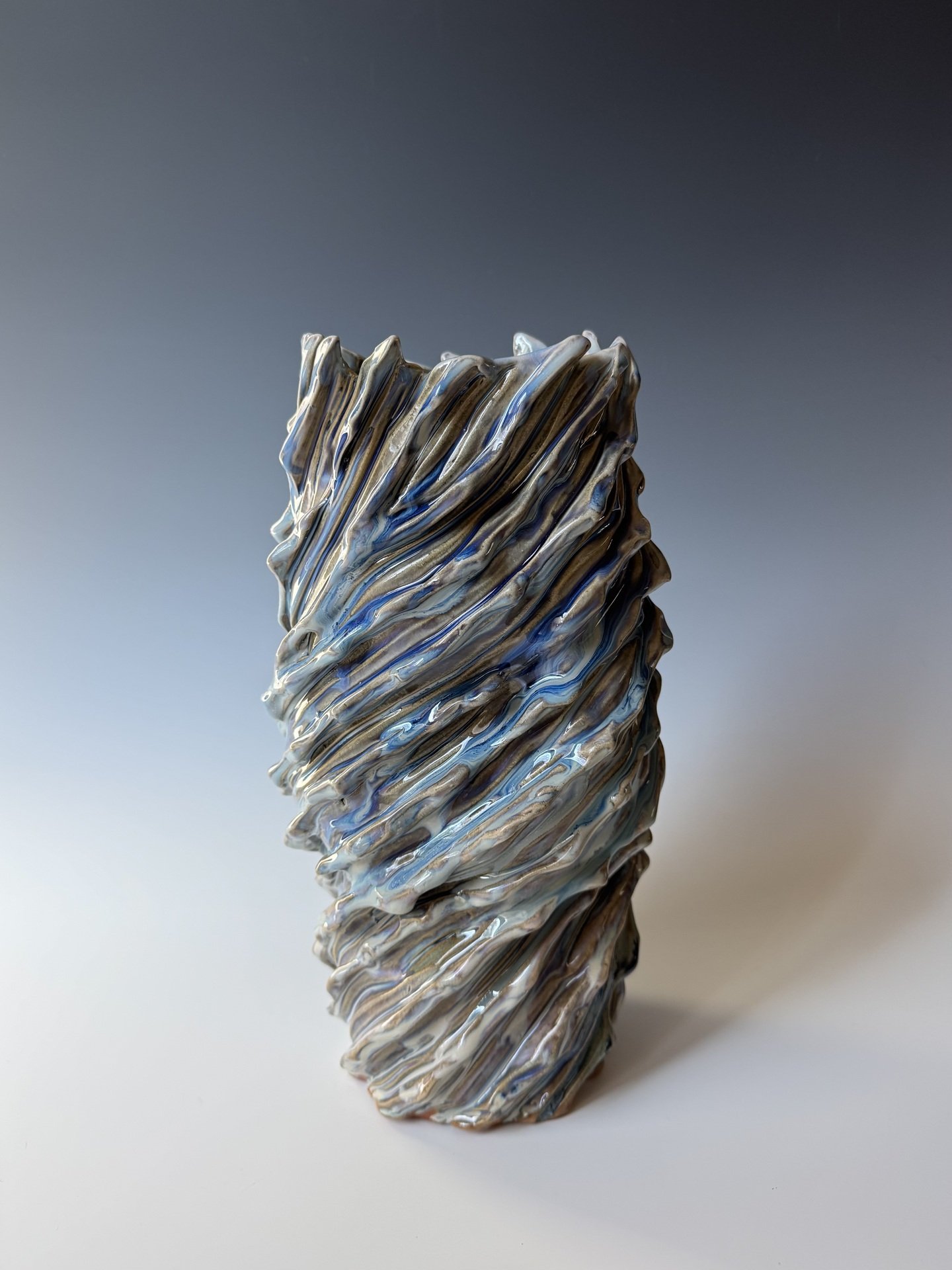
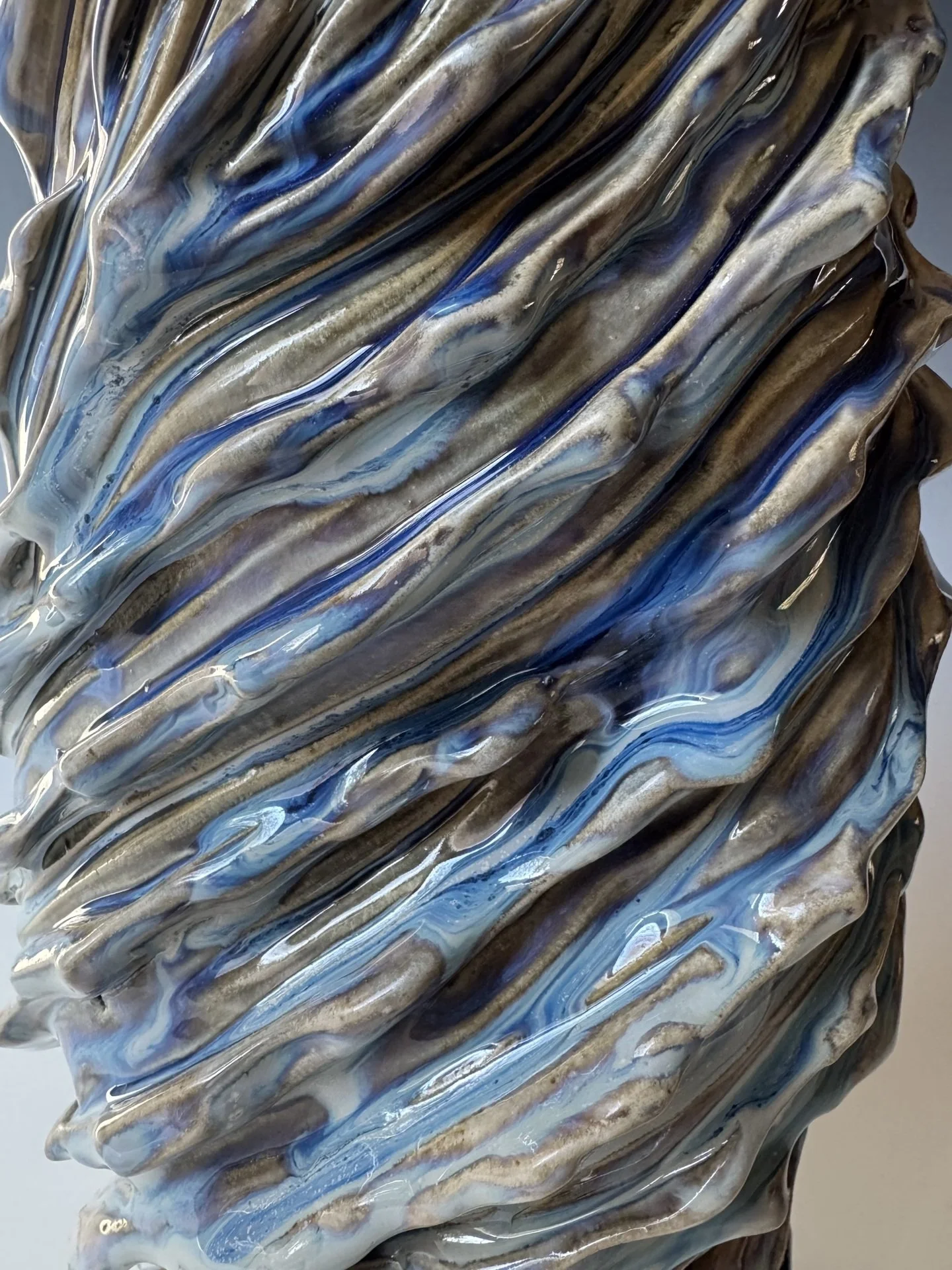
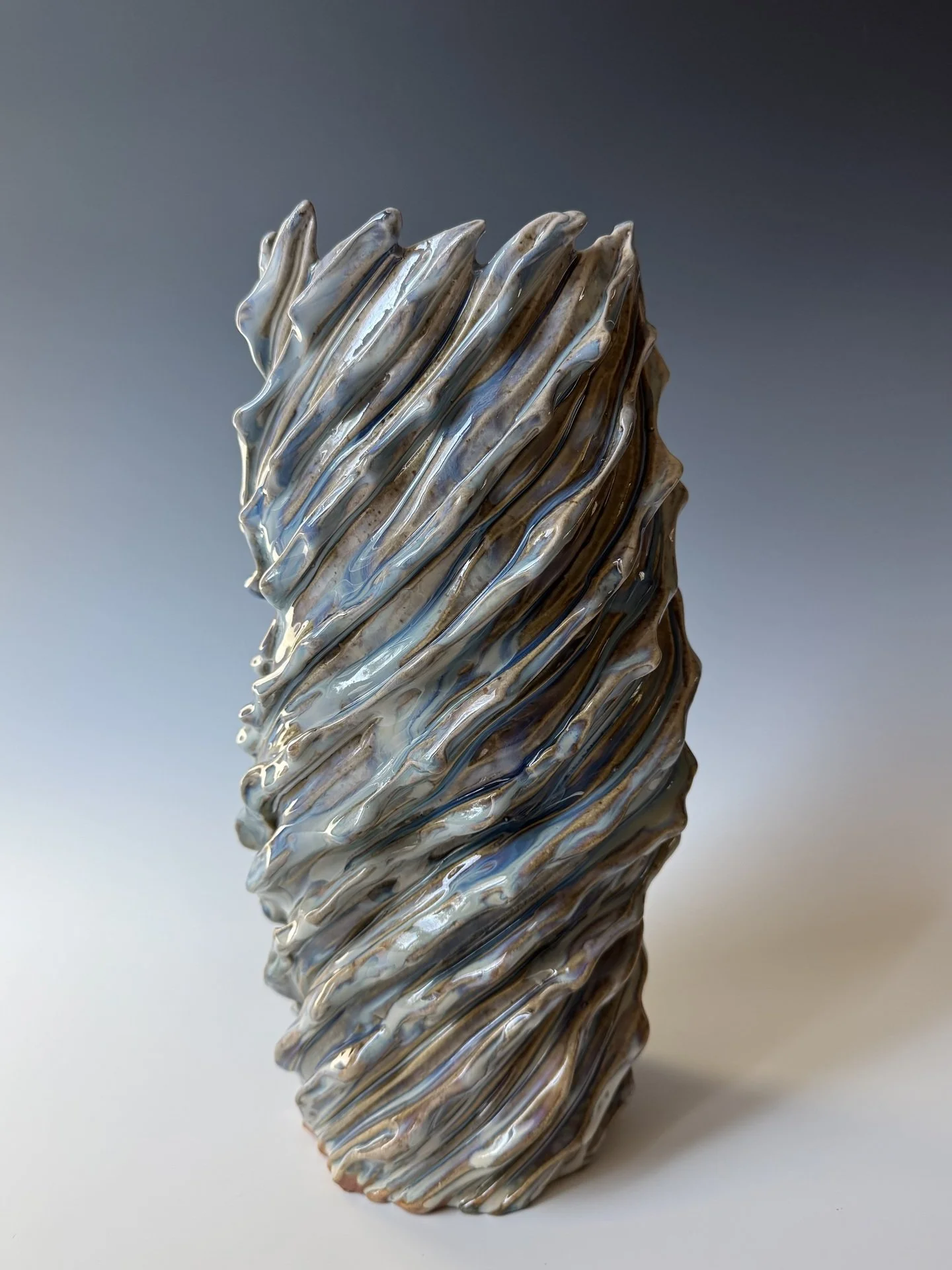
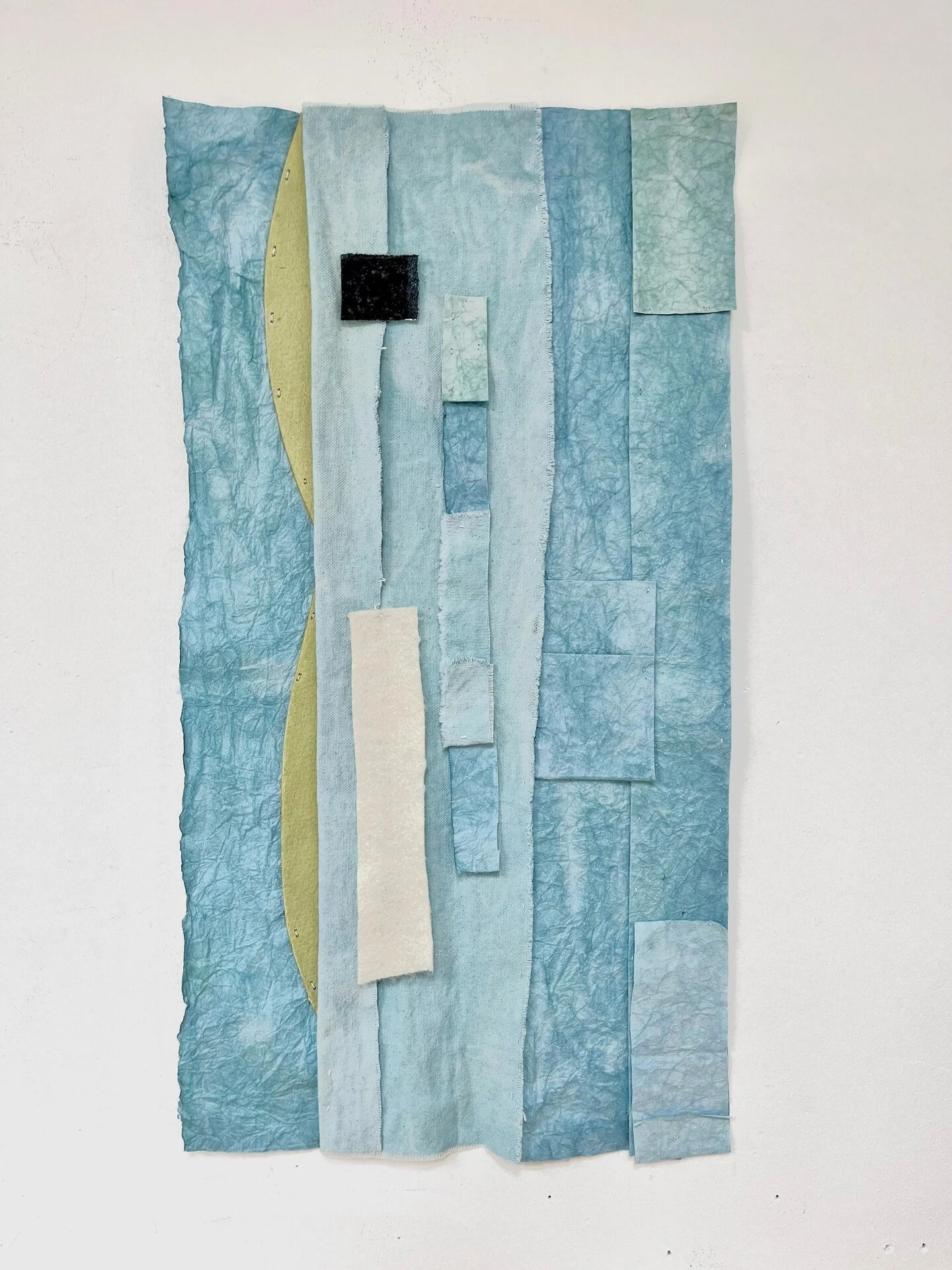
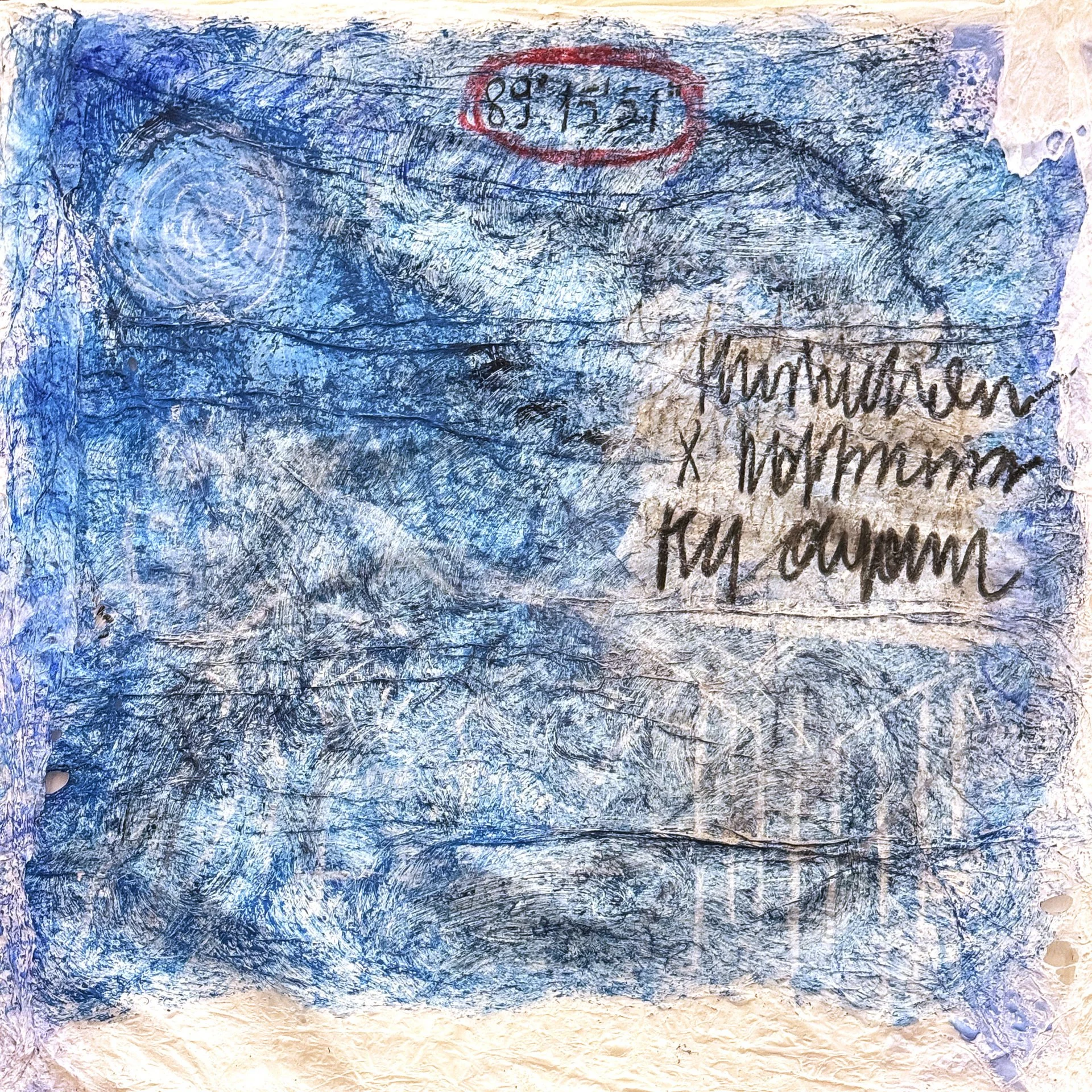
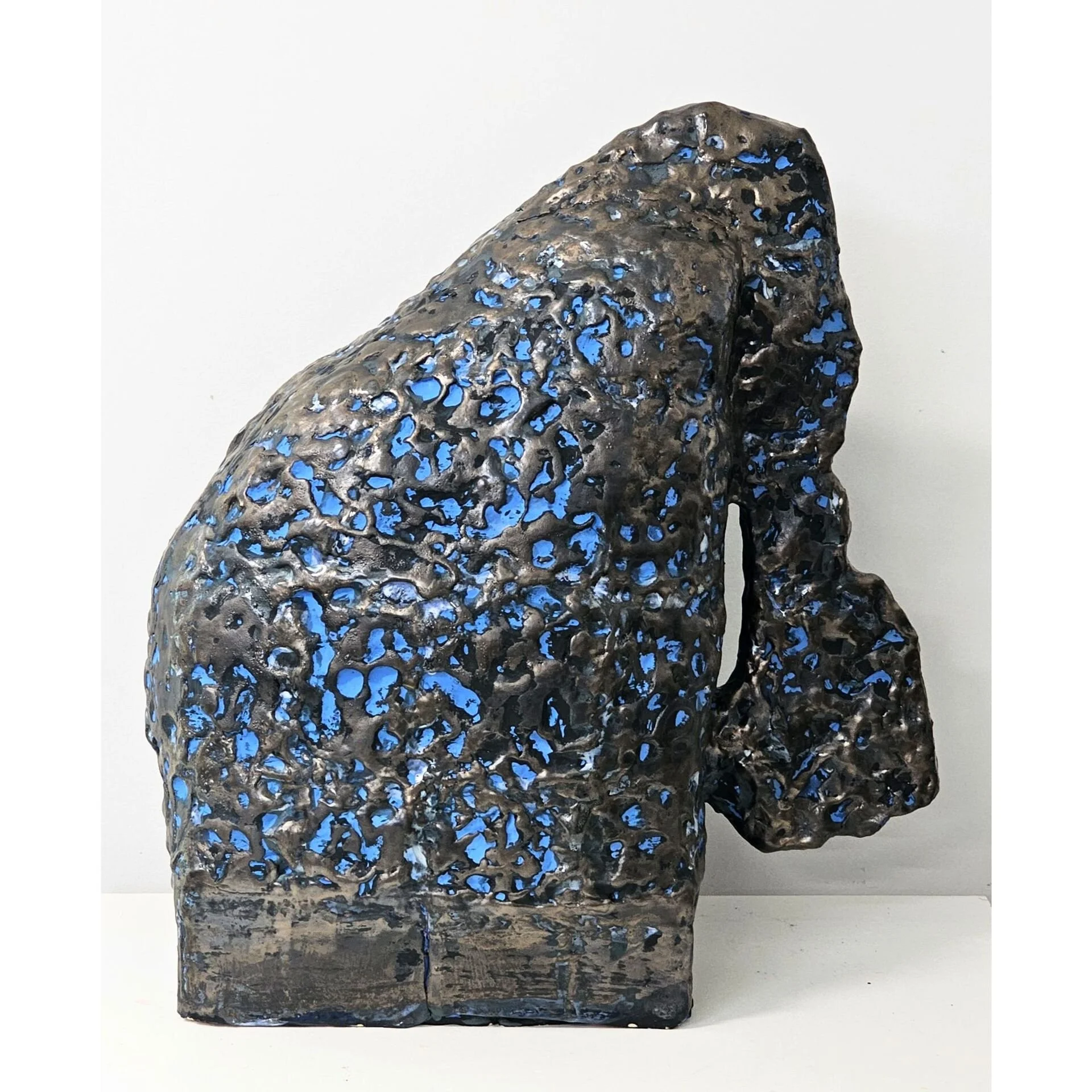
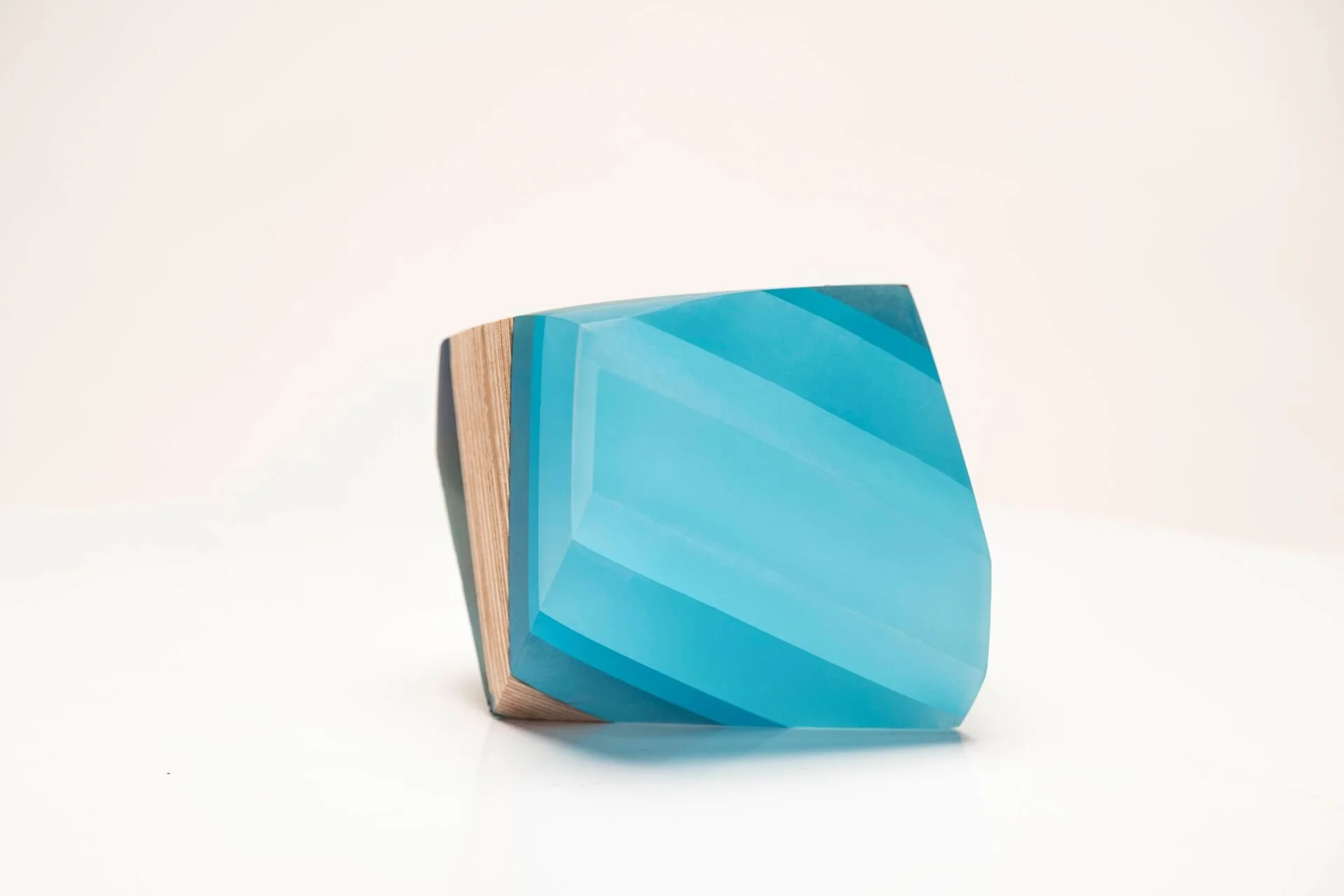
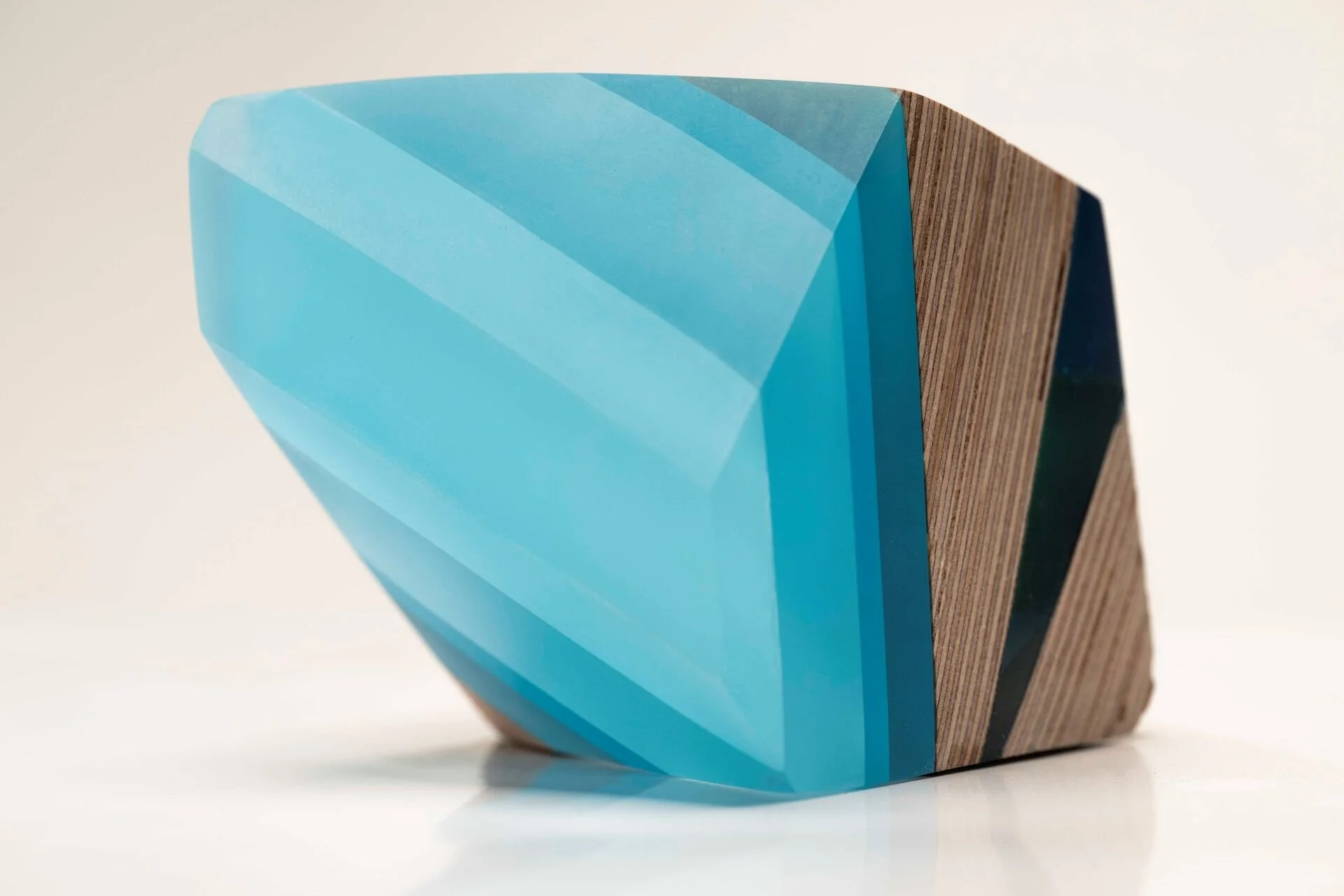
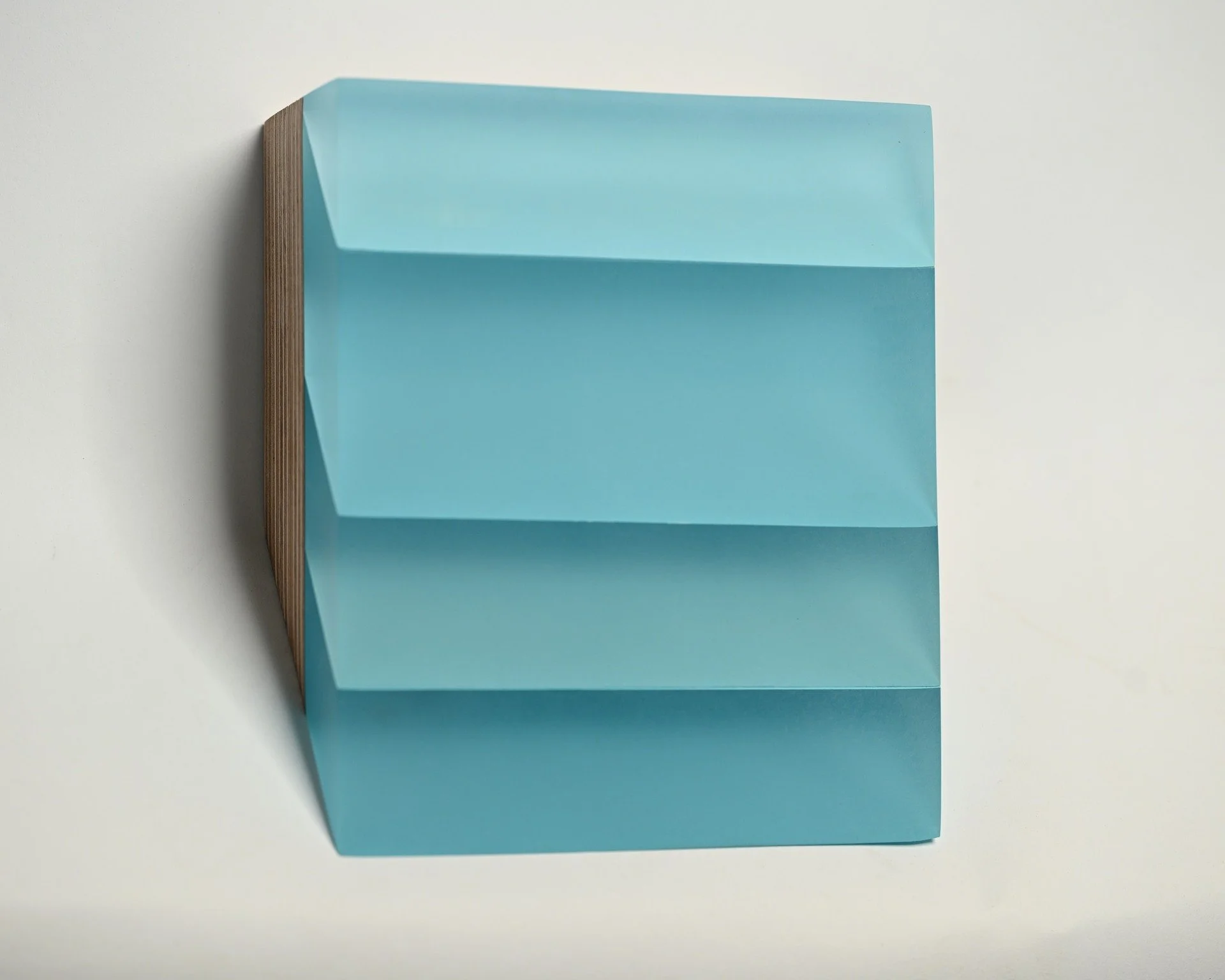
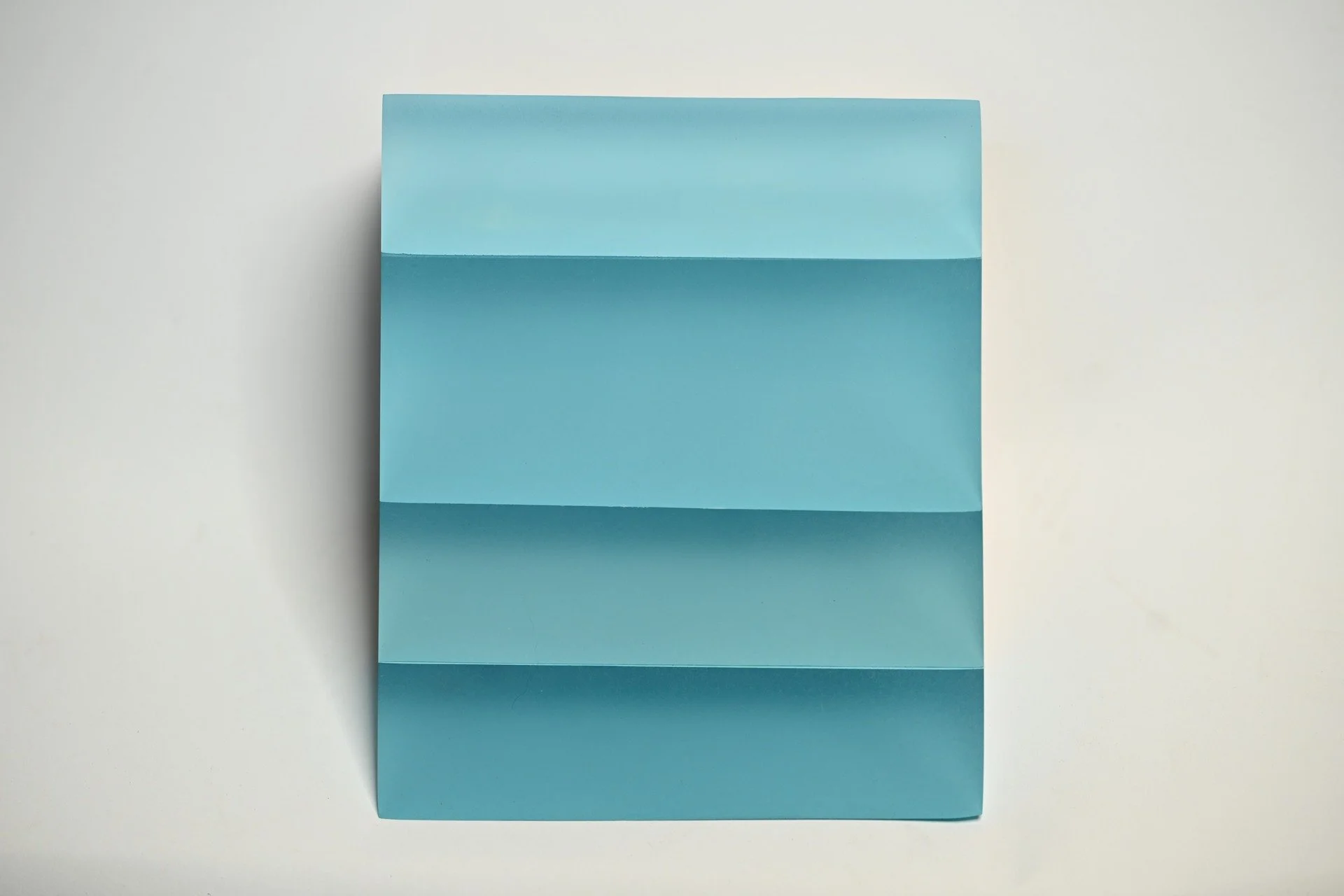
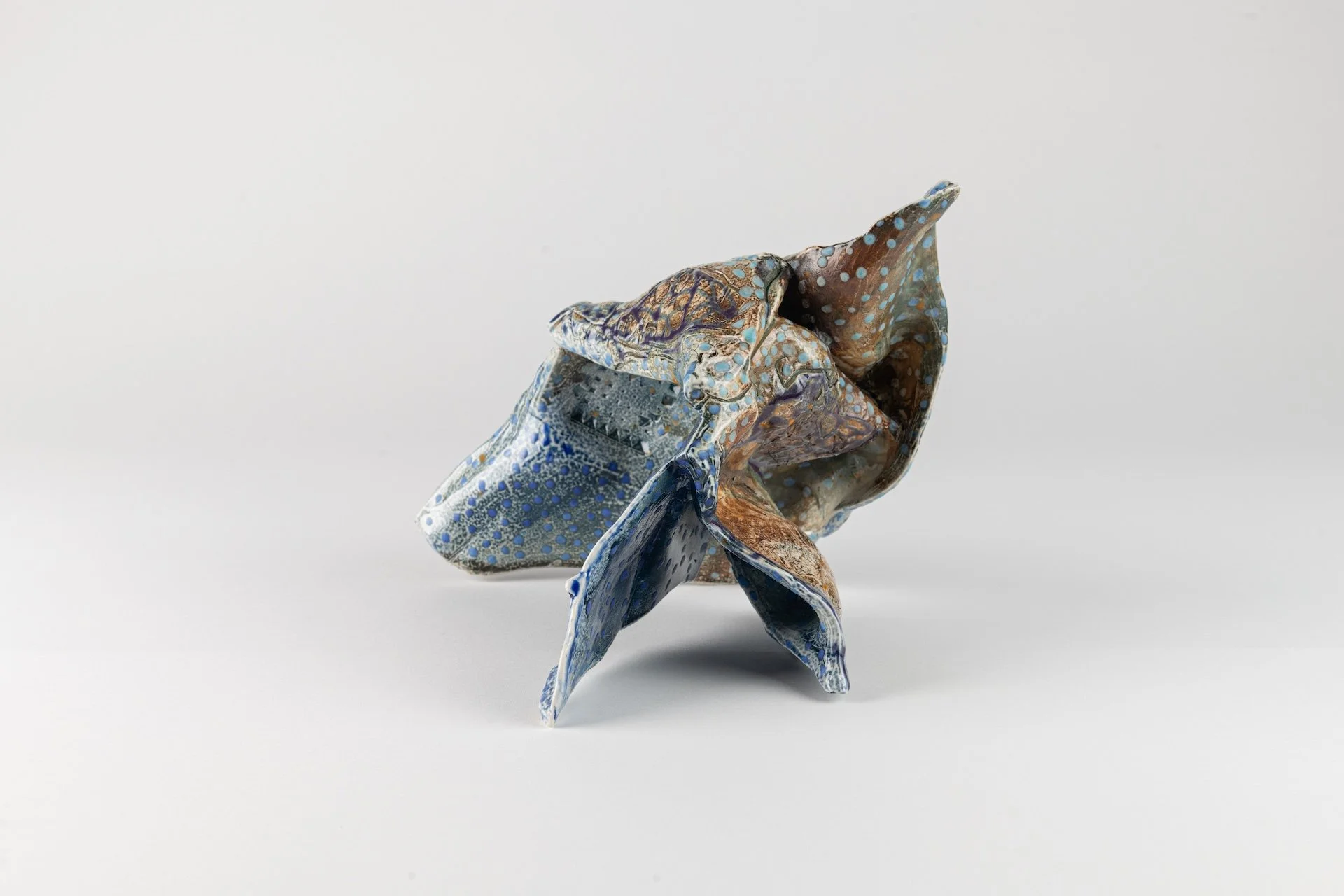
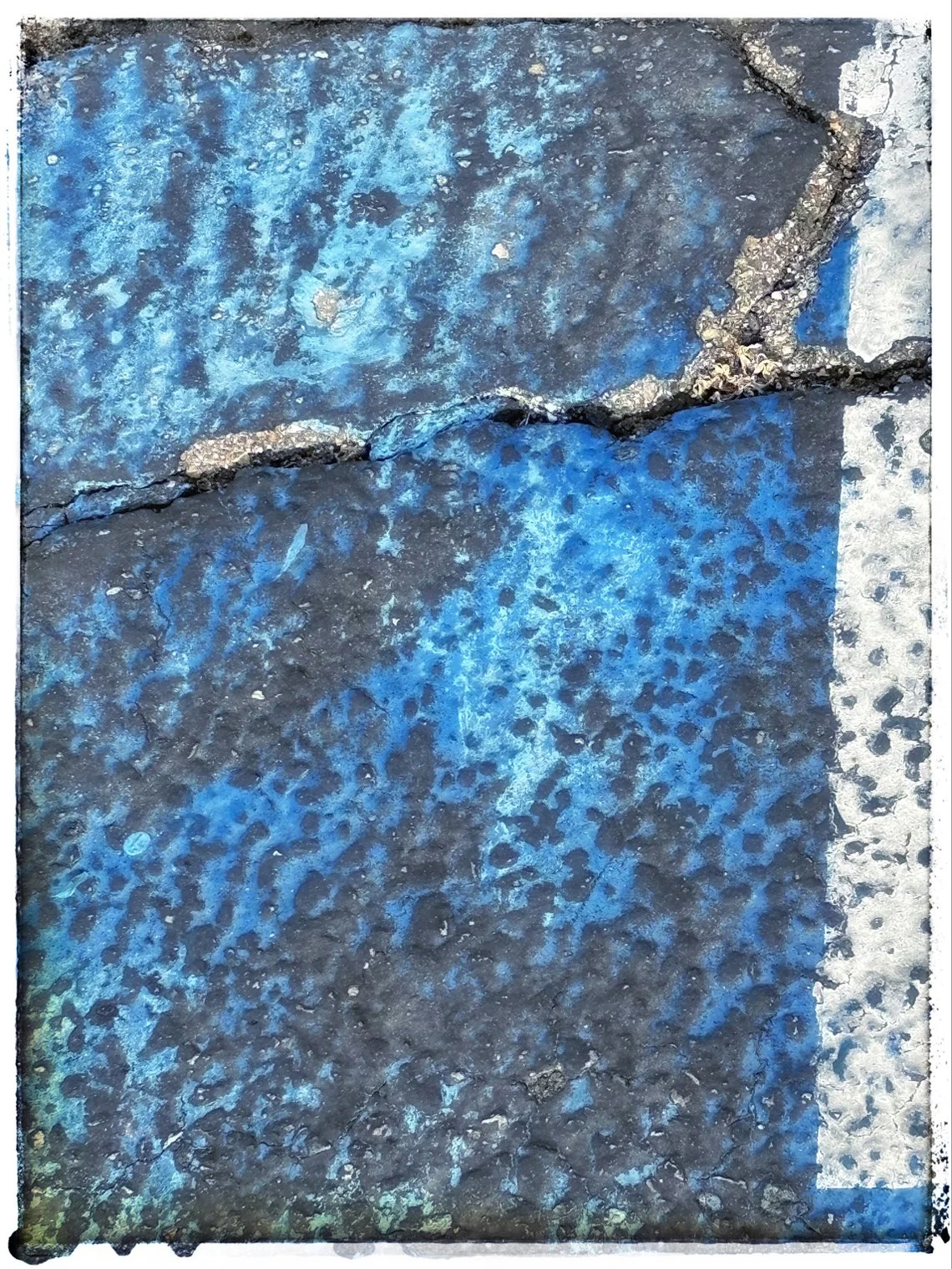
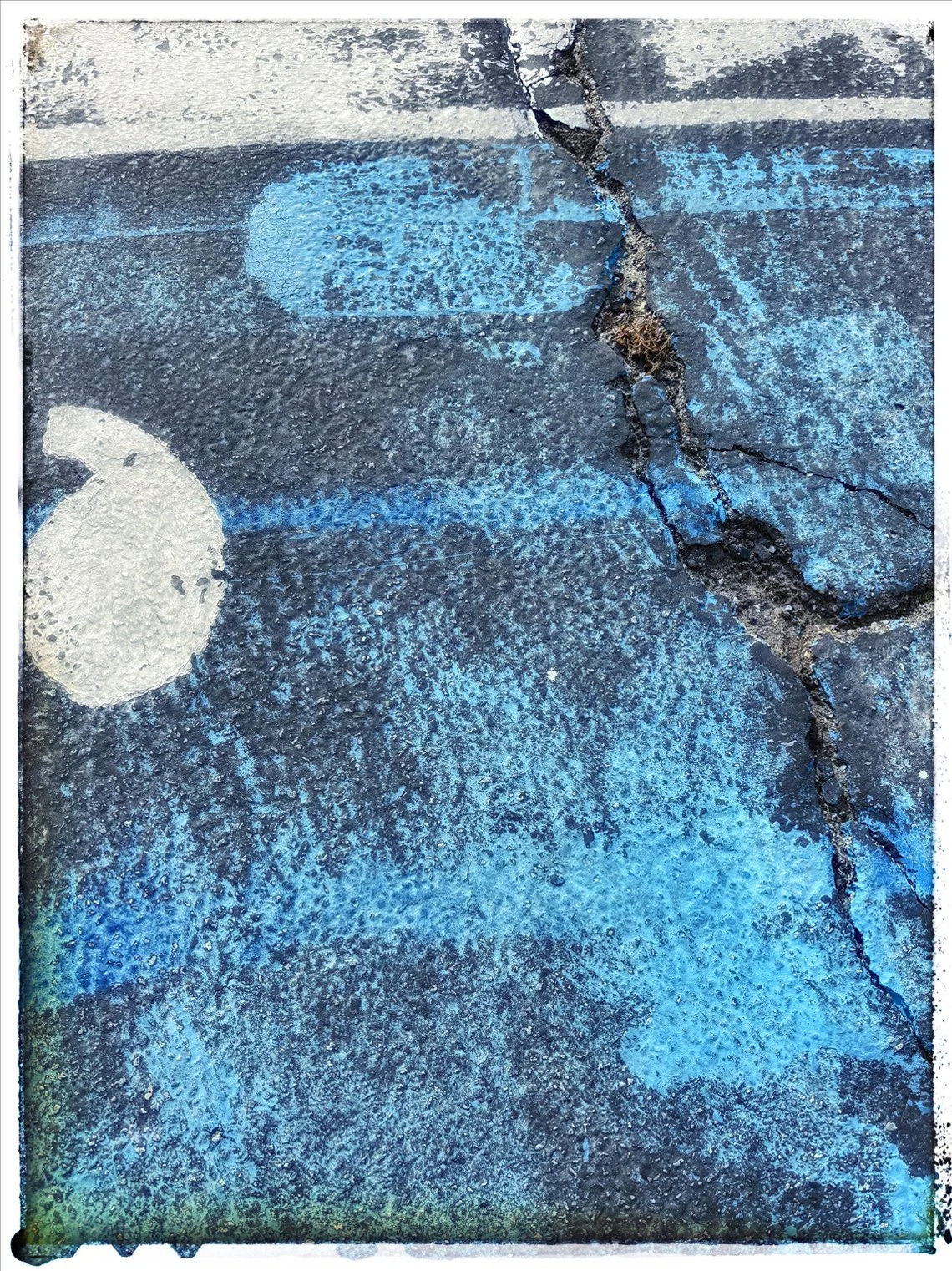
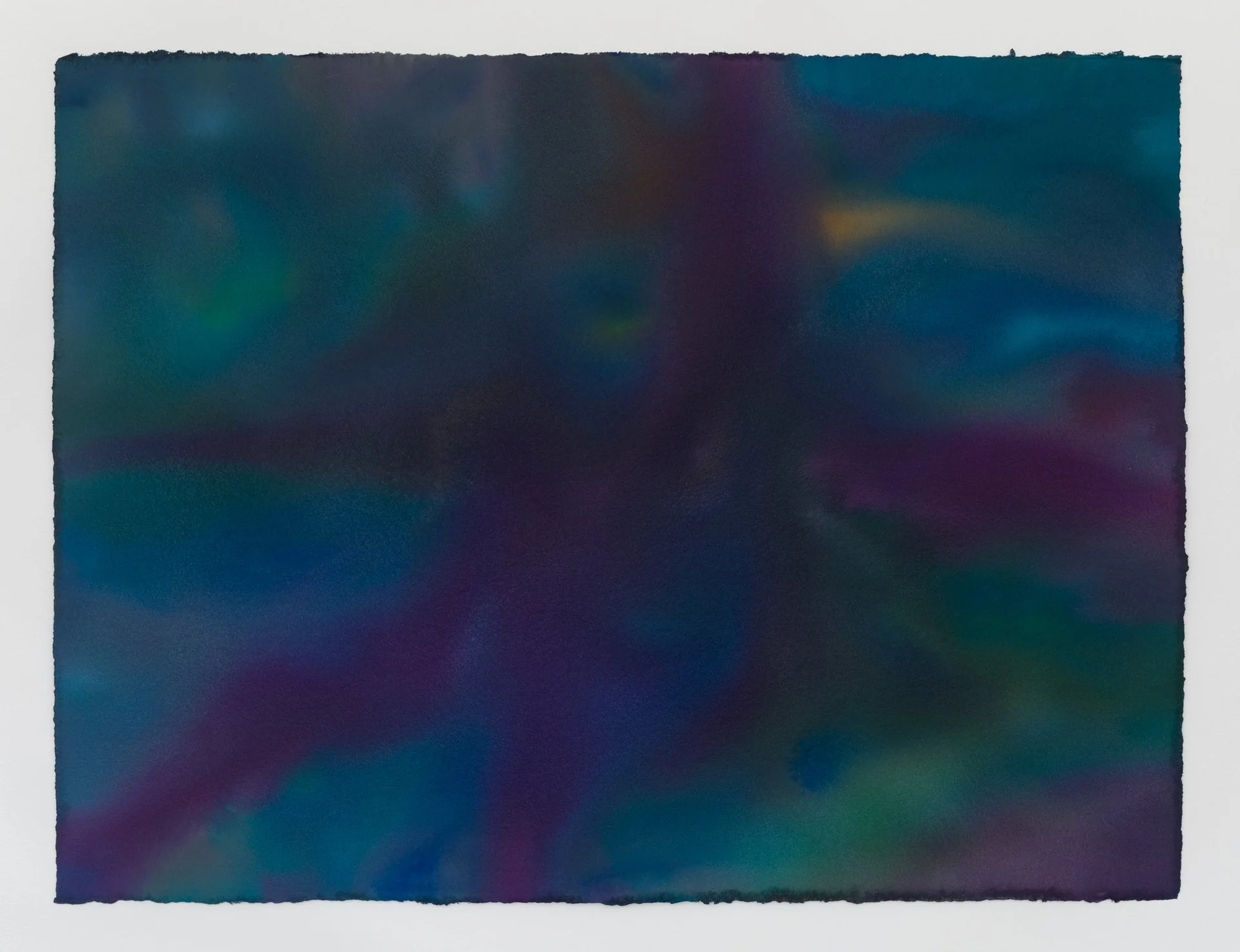
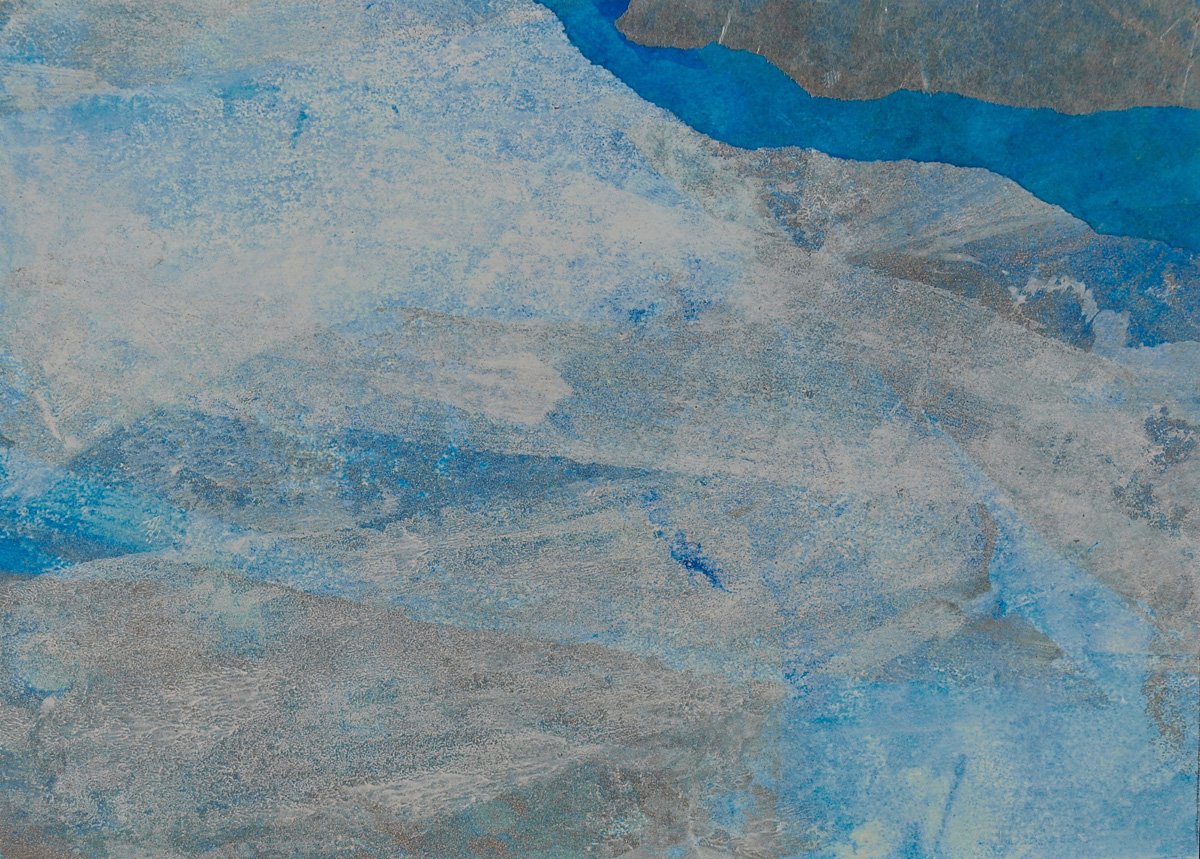
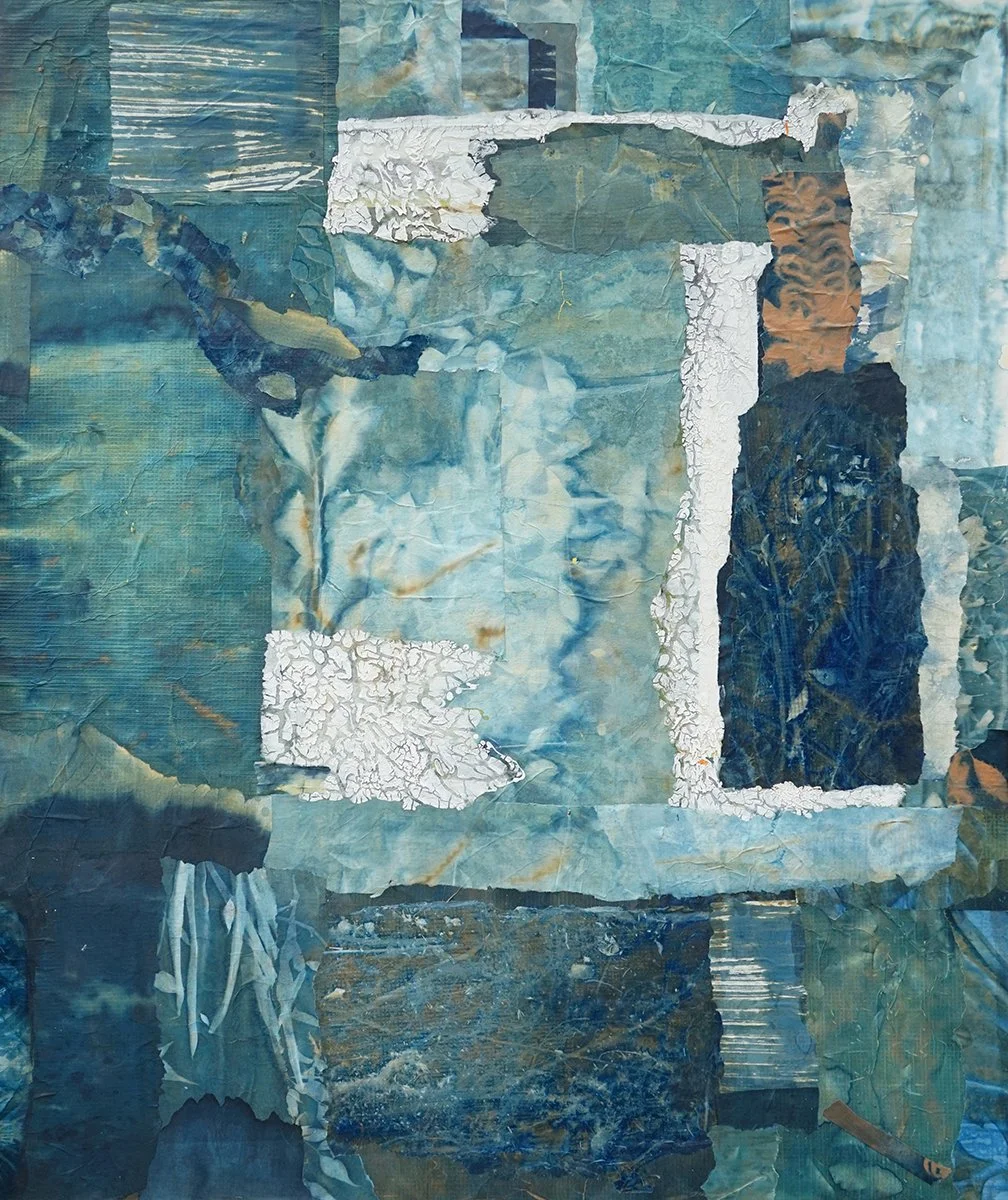
The artists in this section use blue as a foundational element, harnessing its formal qualities to activate texture, line, space, and relationships between colors. Steffani Bailey collages rough-edged, watercolor-soaked rice paper, felt, and raw canvas in varying blues; their diverse surfaces form a rhythmic composition that evokes water, erosion, and weathered rock. Zan Wang creates a denser, more turbulent patchwork of blues. Blue-greens, teals, and slate tones, punctuated by flashes of rusty orange, suggest mineral deposits and oxidation, conjuring geography and the passage of time. In Jacqueline Sferra Rada’s monoprint collages, overlaid with hand-printed tissue, blue has a delicate, atmospheric presence, floating or drifting across abstract landscapes. Ceramicist Corine Adams renders blue as a sinuous line on her wood-fired vessel, the glaze following the rippled surface like streams tracing terrain. While Adams emphasizes the color’s softness, Naomi Cohn employs a deep, saturated blue to heighten the physicality of her ceramic sculptures—arched, asymmetrical forms with quiet tension that recall fragments of architecture or weathered organisms. Blue marks the scars in the landscape in Jackie Robbins’s tightly framed photographs of pavement, where attention to color and composition echo the sensibilities of color-field paintings. Working in porcelain, Stephanie Martin creates a biomorphic form with multiple shades of blue, painted and dotted across carefully sculpted folds. The colors contribute to the subtle illusion of unfurling and contraction, lending the object a sense of movement reminiscent of a sea creature or a dancer. Beverly Glascock’s minimalist geometric sculptures fuse bands of hand-cut, blue Lucite arranged in calibrated gradients, presenting a systemic exploration of color, light, shadow, and structure.
Wall 5: Meditations in blue
Fern Apfel / Janine Brown / Caroline Hamel / Janice Nakashima / Paula Praeger / Esme Saccuccimorano / Andrew Schwartz
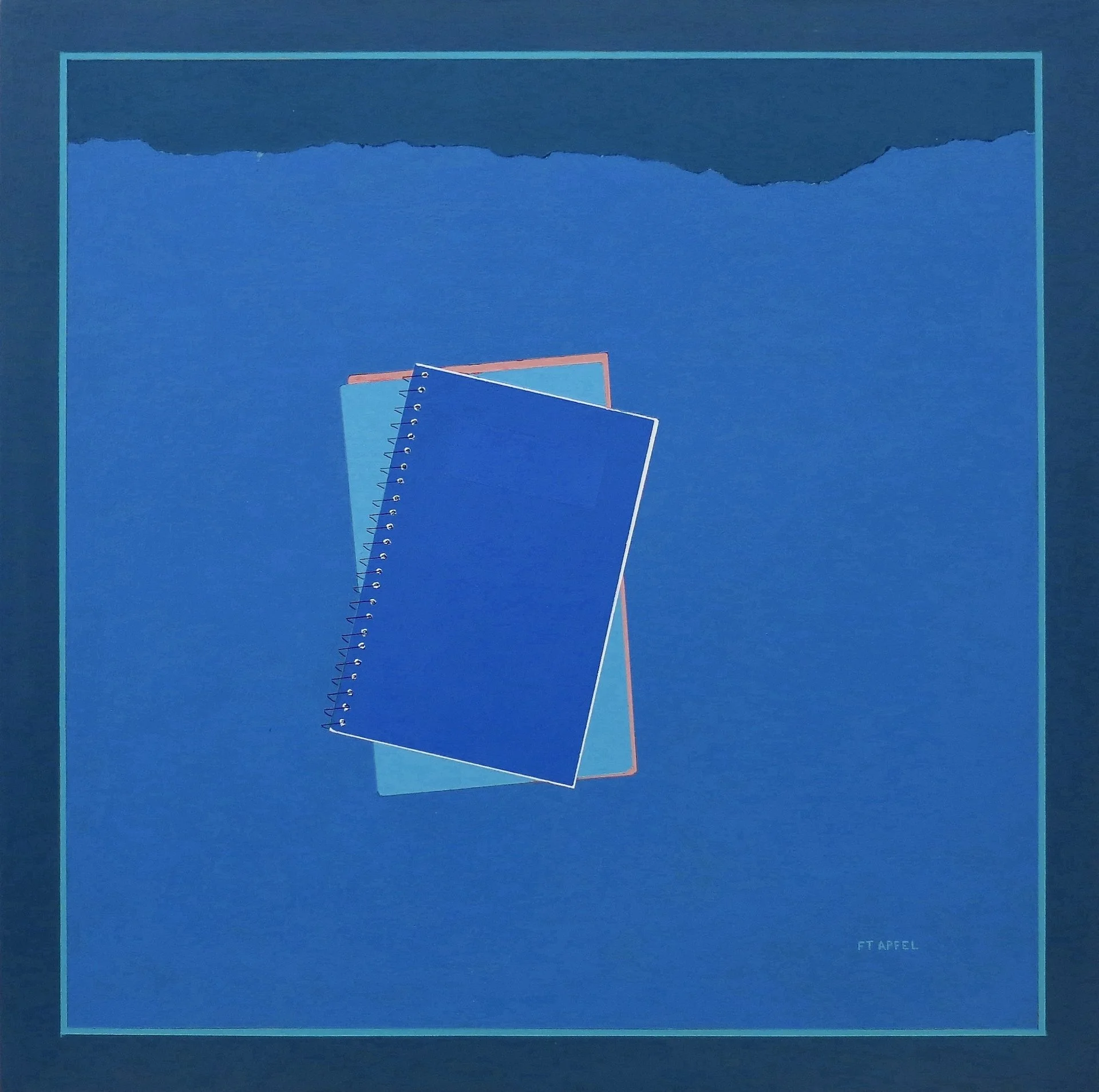
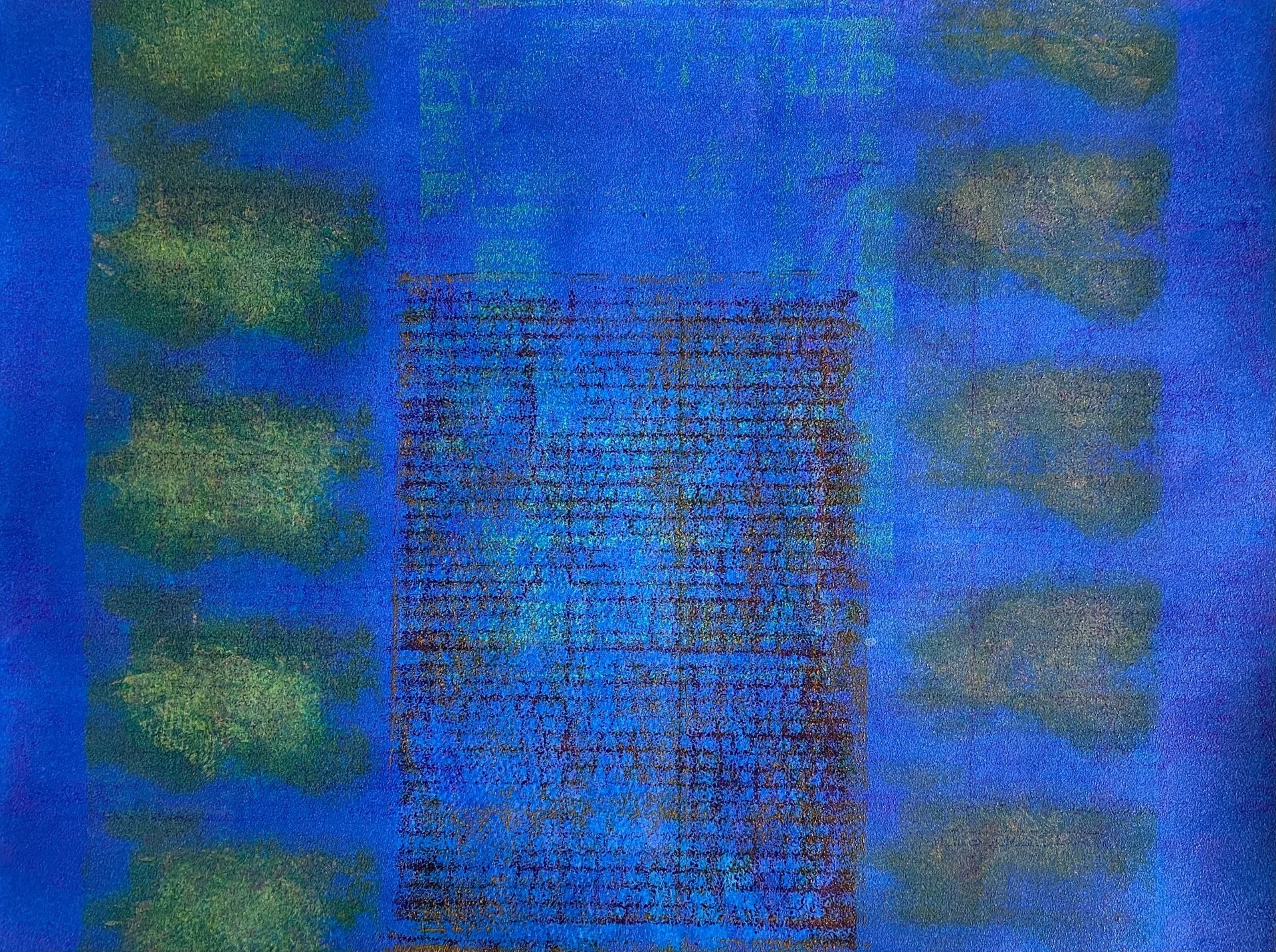
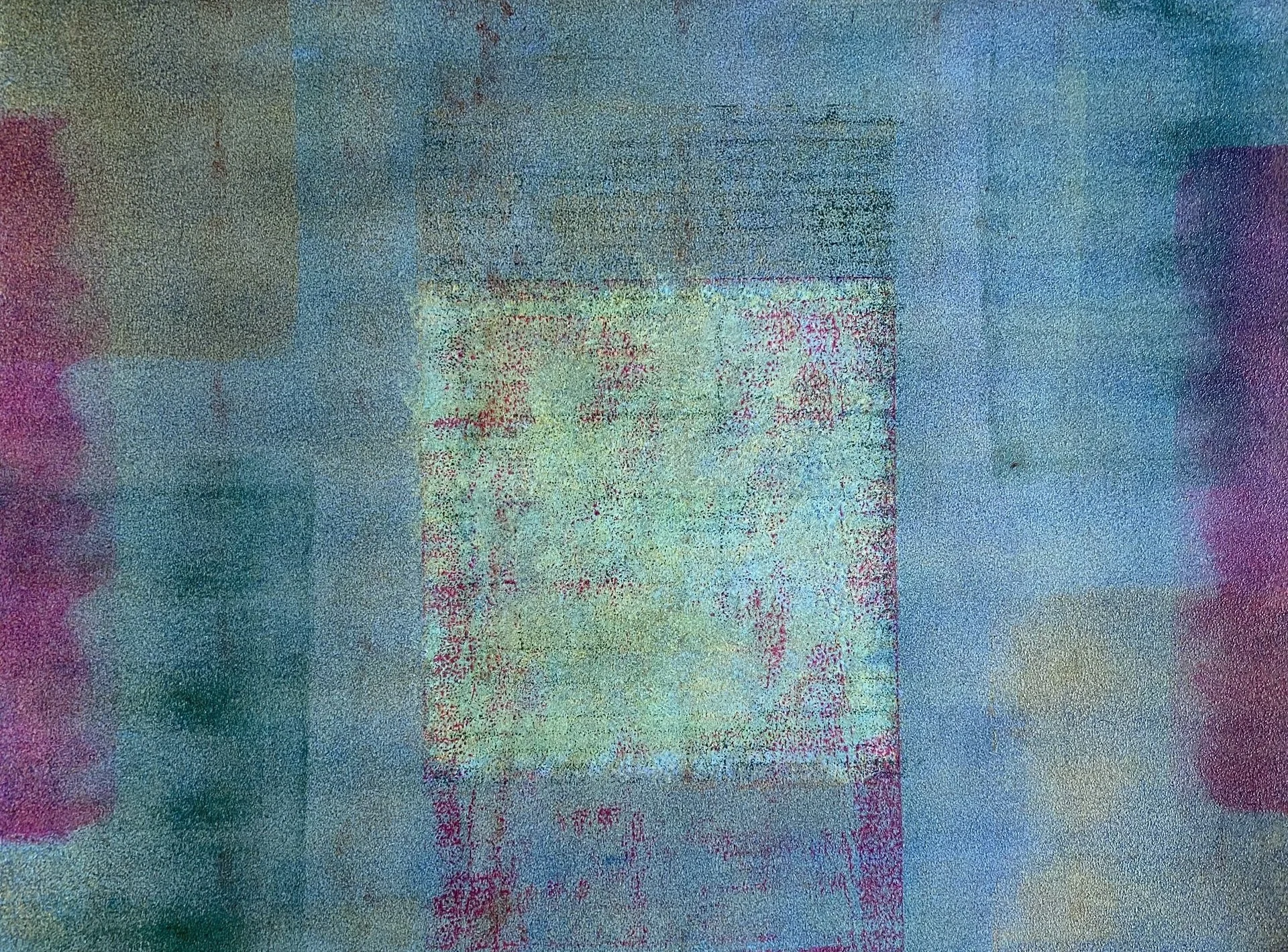
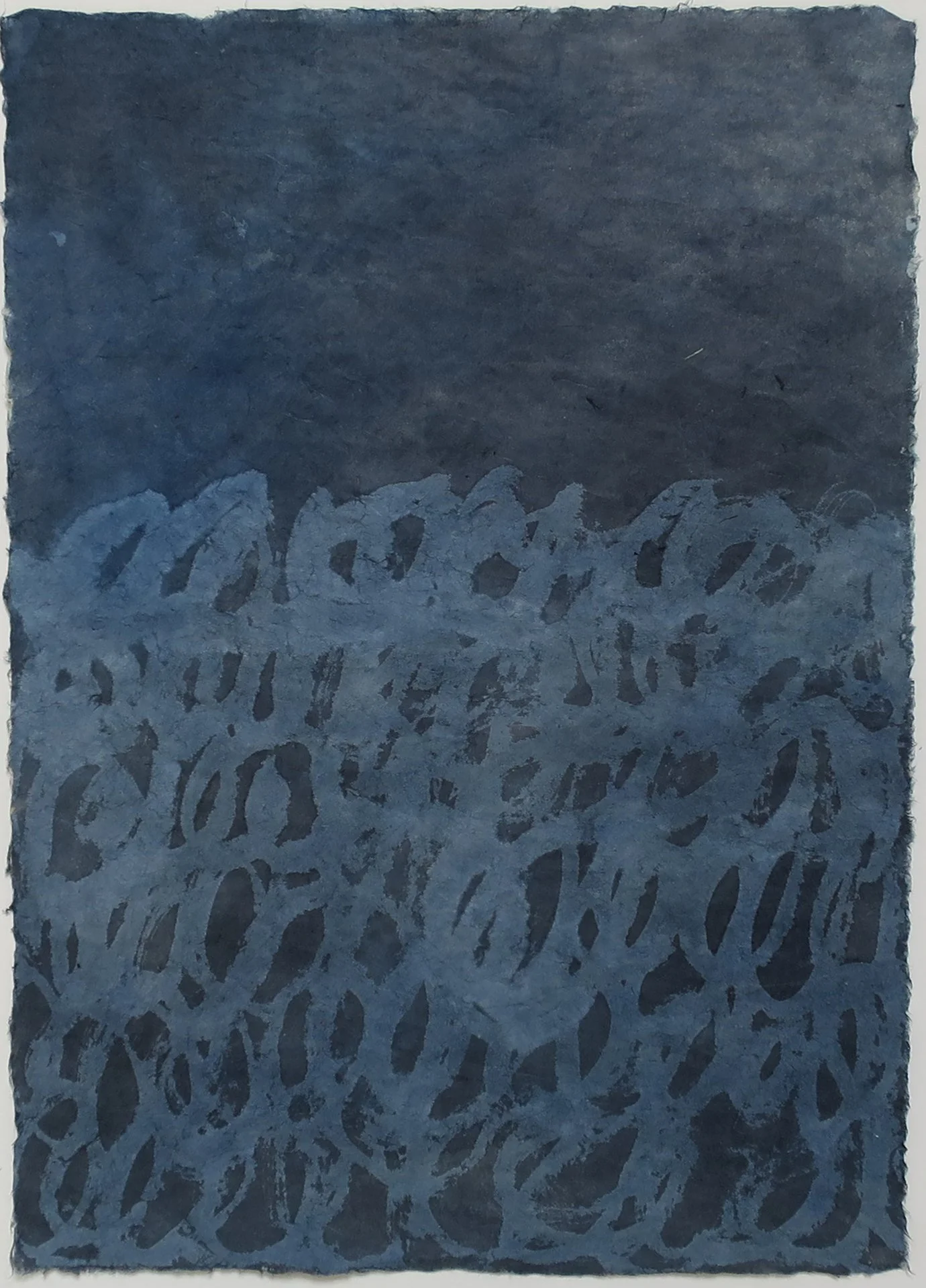
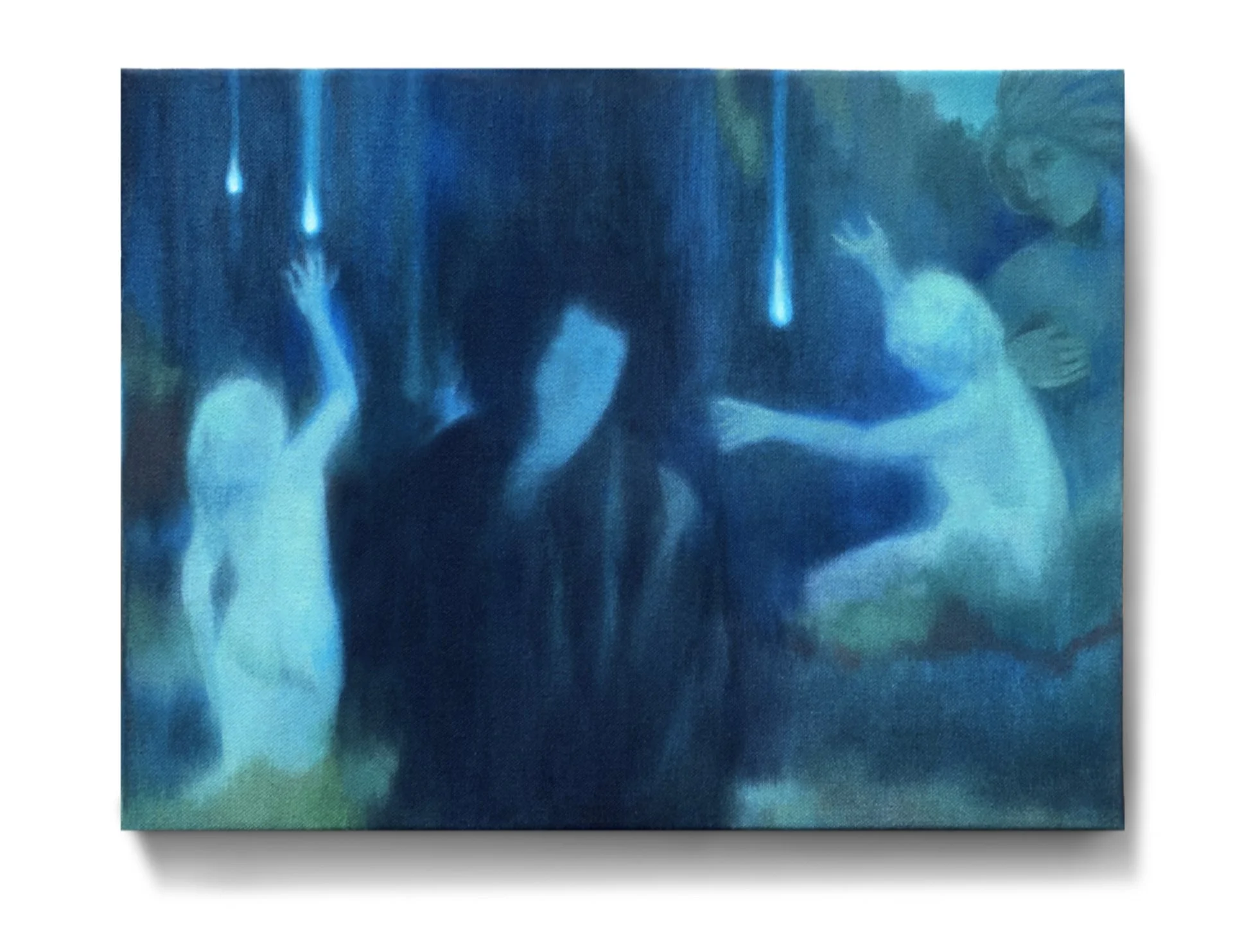
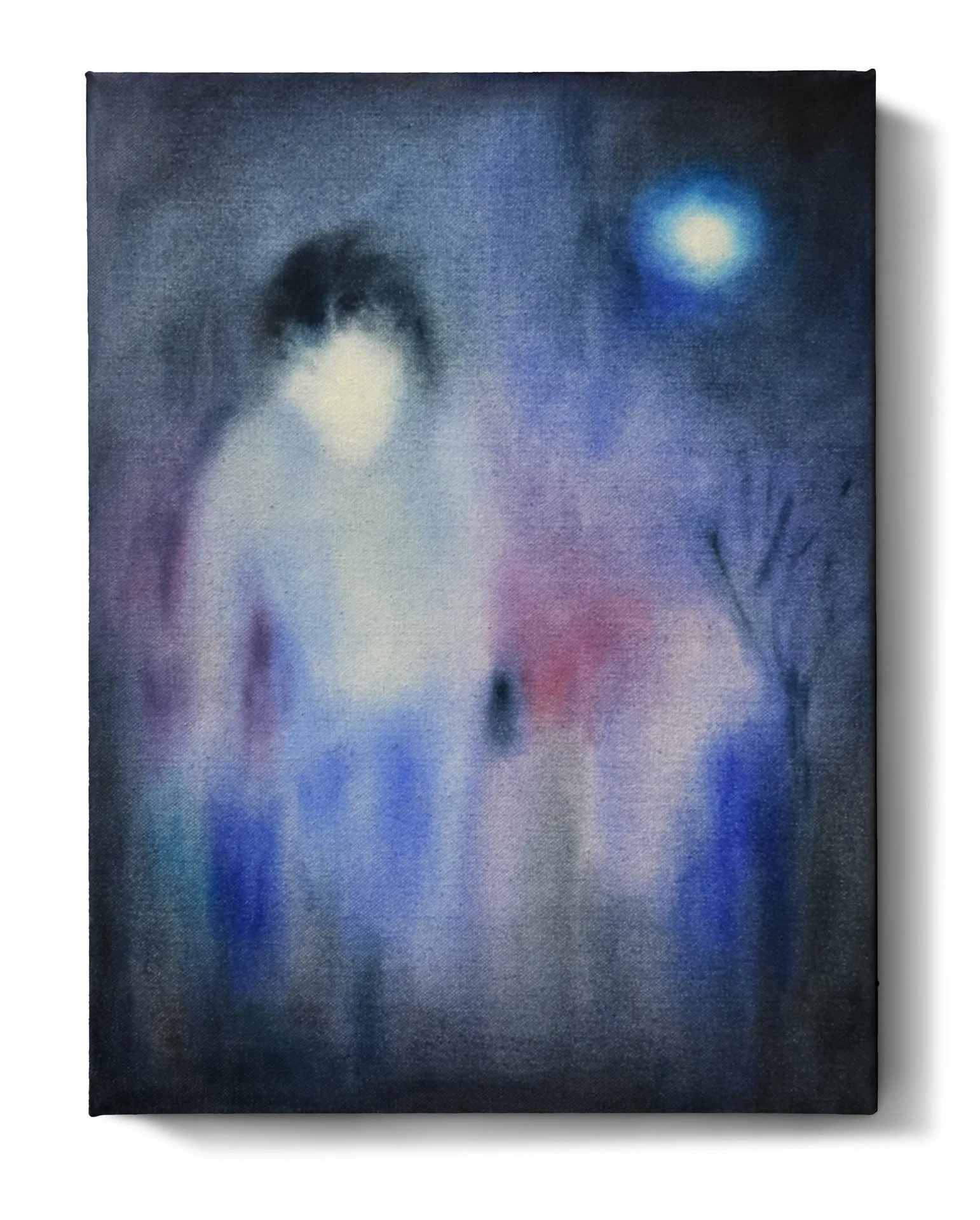
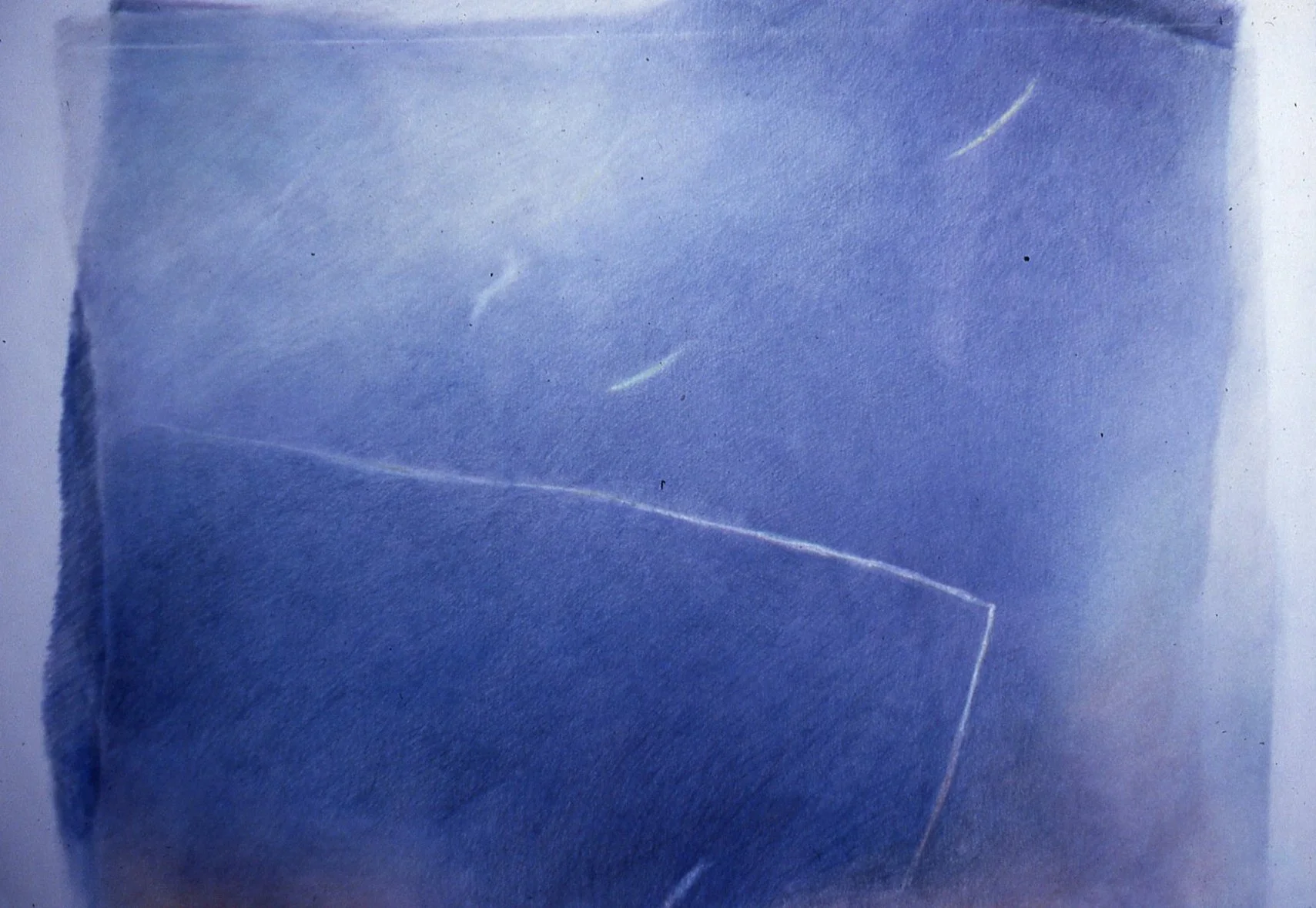
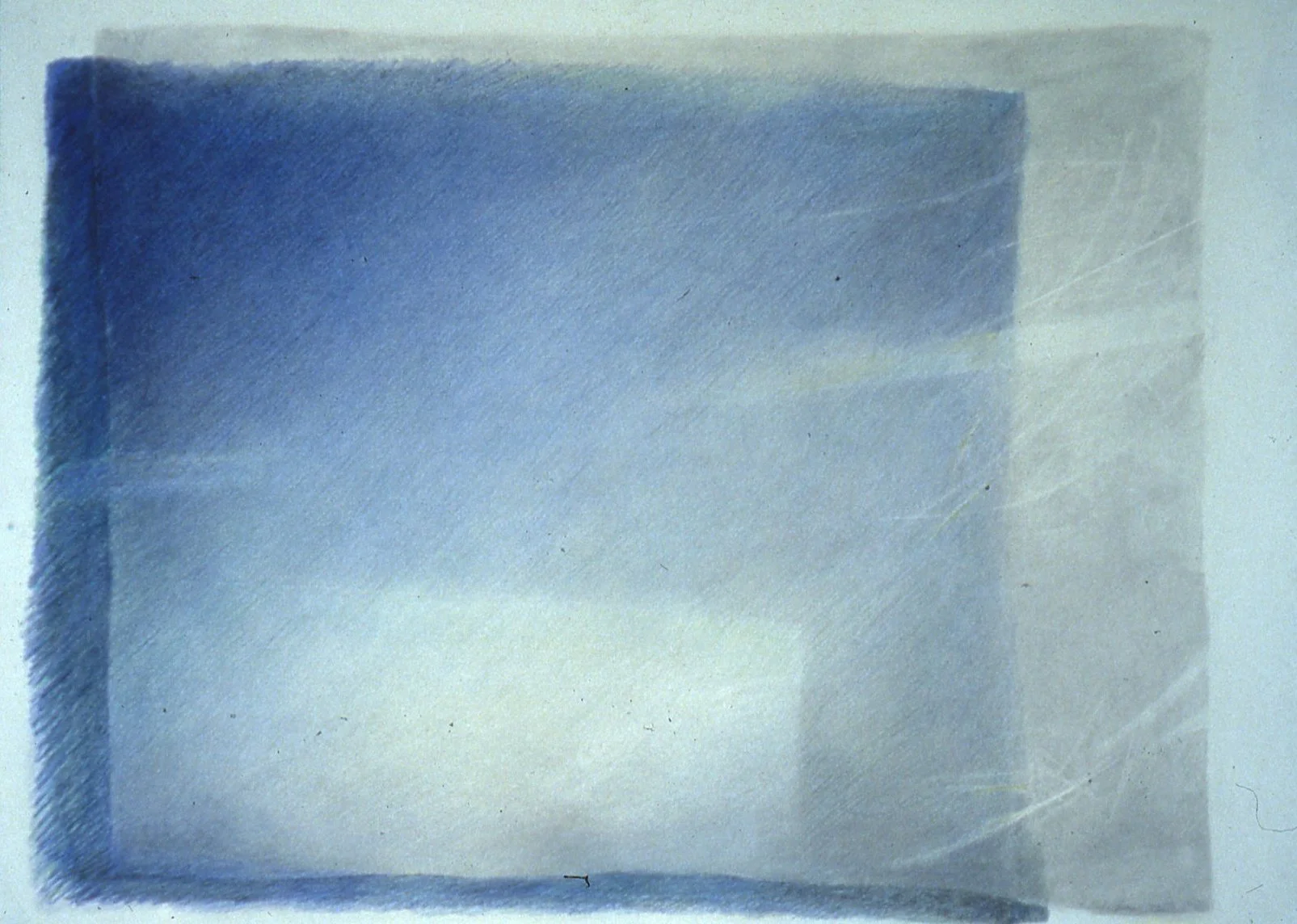
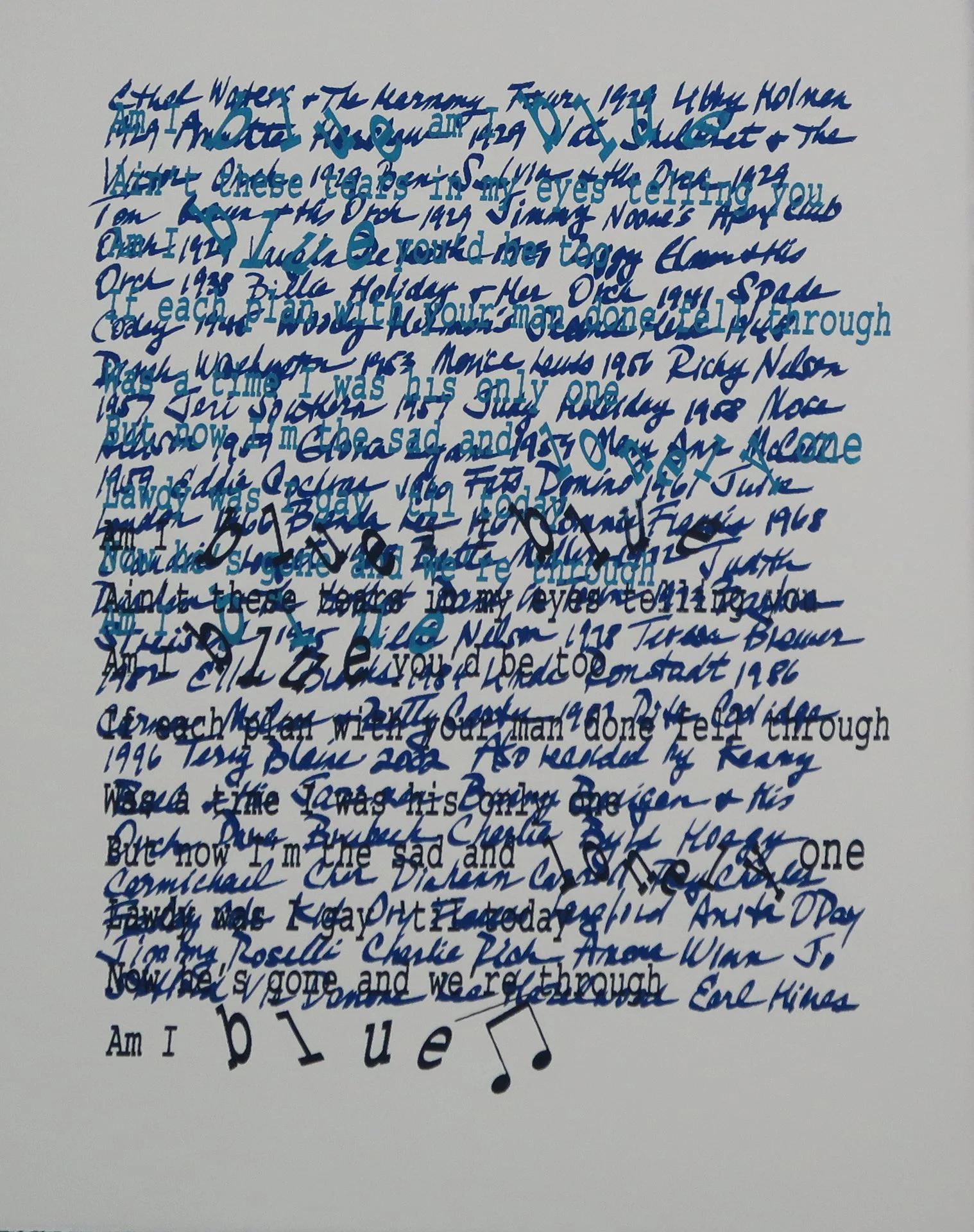
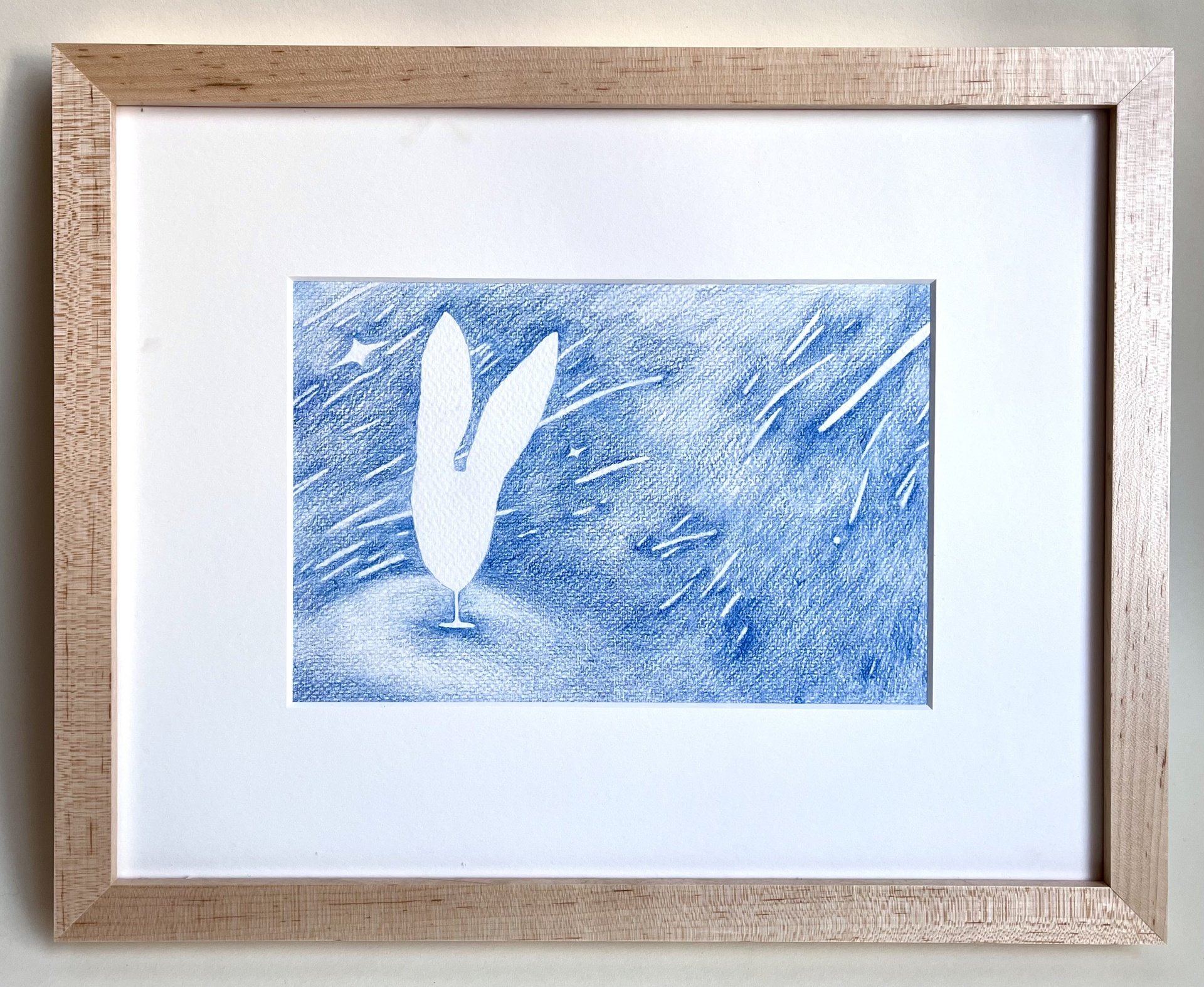
Blue has a singular ability to draw one into a contemplative state, a quality powerfully asserted by the works in this section. Using ink, Janine Brown paints controlled, repeated loops of blue that function like a visual mantra, pulling attention into the painting’s internal rhythm. Paula Praeger writes the names of blues singers in a highly compressed, overlapping script, accumulating references in a playful emulation of the raw, cathartic, emotional release of the genre. Fern Apfel also mines the written word in her facsimile painting of notebooks suspended within an infinite field of blue. The restrained composition invites self-reflection, suggesting empty pages and latent potential. Andrew Schwartz’s abstract paintings engage with spatial ambiguity as well, layering blues, purples, greens. His marks feel residual, their edges blurring as color fields float or recede, producing atmospheres of impermanence tempered by moments of gentle clarity. In Janice Nakashima’s drawings, blue appears to hover as graphite and colored pencil accumulate in translucent rectangular forms. The illusion of layering prevents the work from resolving into a single, fixed state, and pulls the viewer into quiet contemplation. In Esmé Saccuccimorano’s drawing, stillness emanates from the central form: a curious white figure set against cool, desaturated blue. Reminiscent of a fairy-tale illustration, the scene conveys a sense of vastness that activates the imagination and invites possibility. Caroline Hamel’s paintings use blue as an encompassing atmosphere, creating spaces suspended between presence and erasure. Her brushwork dissolves edges, rendering figures as if recalled rather than observed—a deliberate abstraction that prompts questions about memory and inner perception.
Wall 6: Chromatic refuge
Catherine Baumhauer / Dean Brown / Austin Li Chang / Robin Haller / Nuohan Jiang
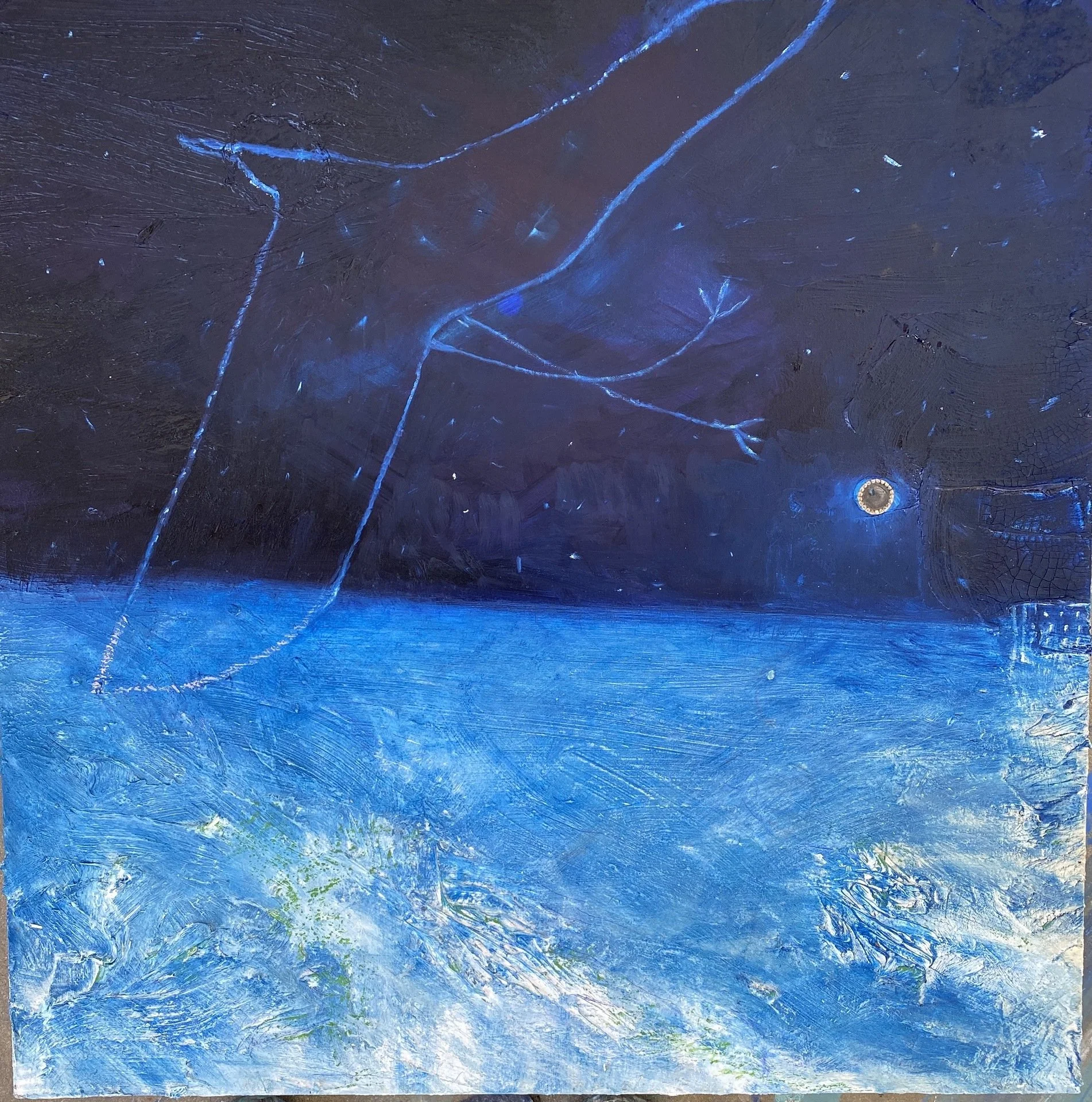
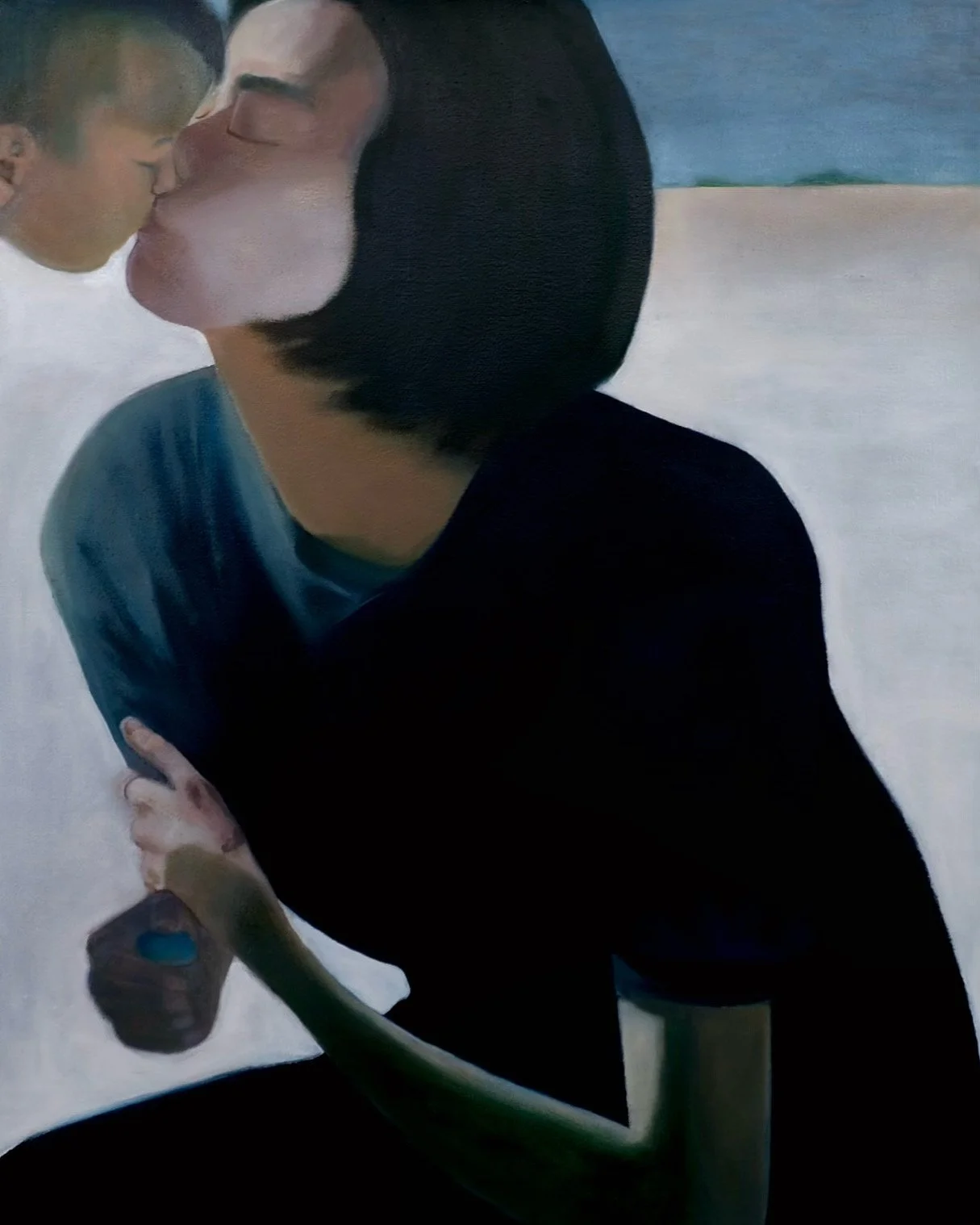
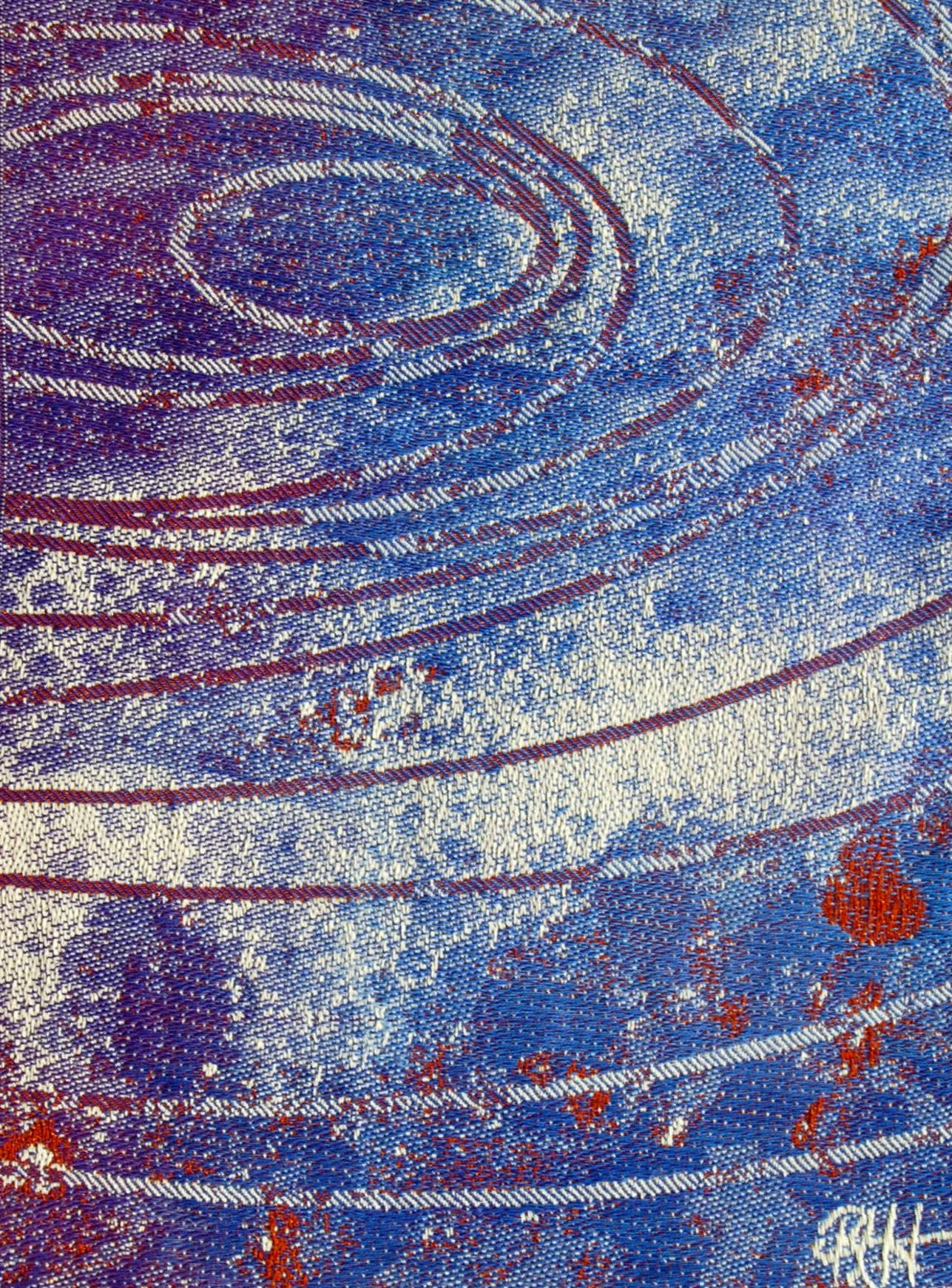
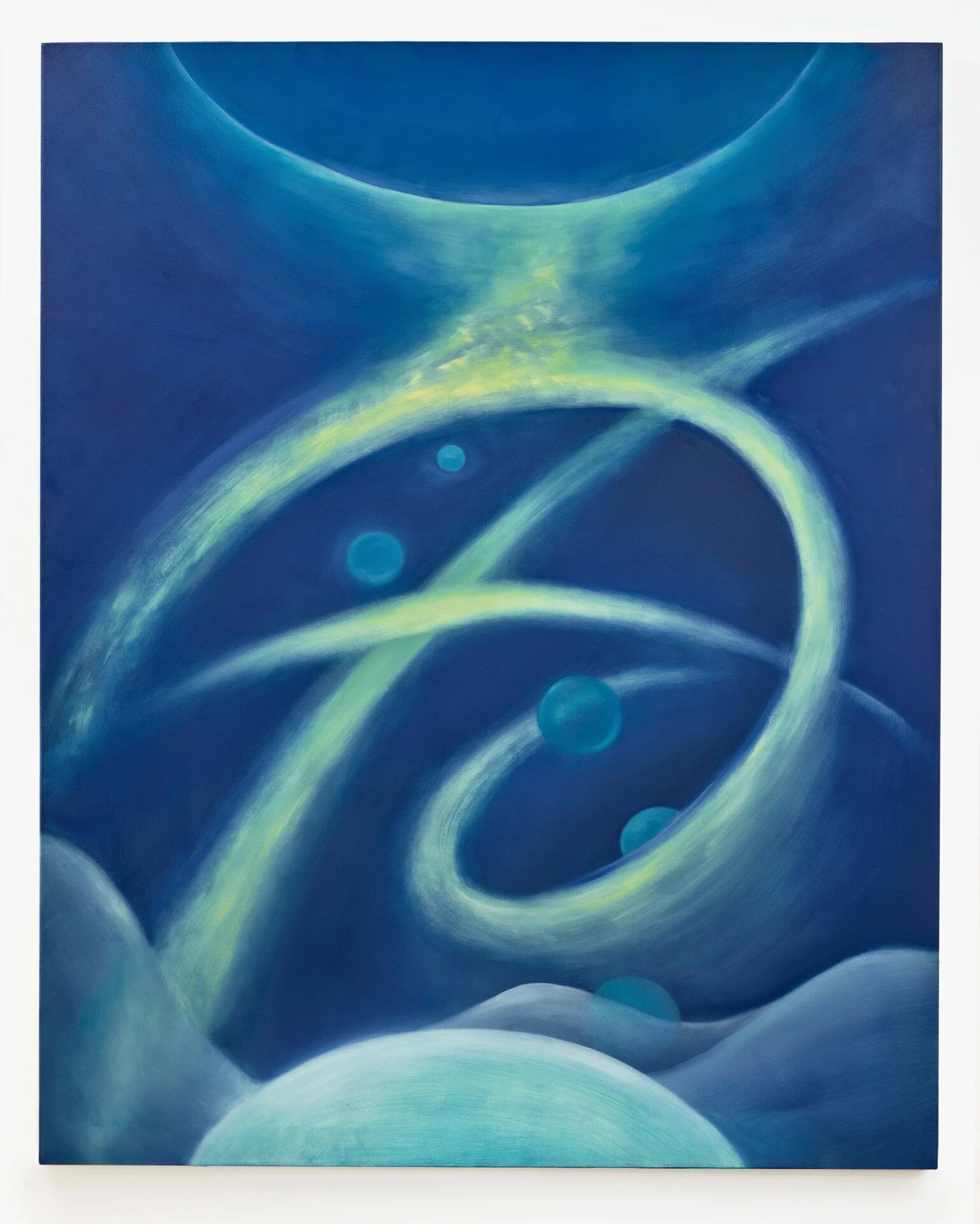
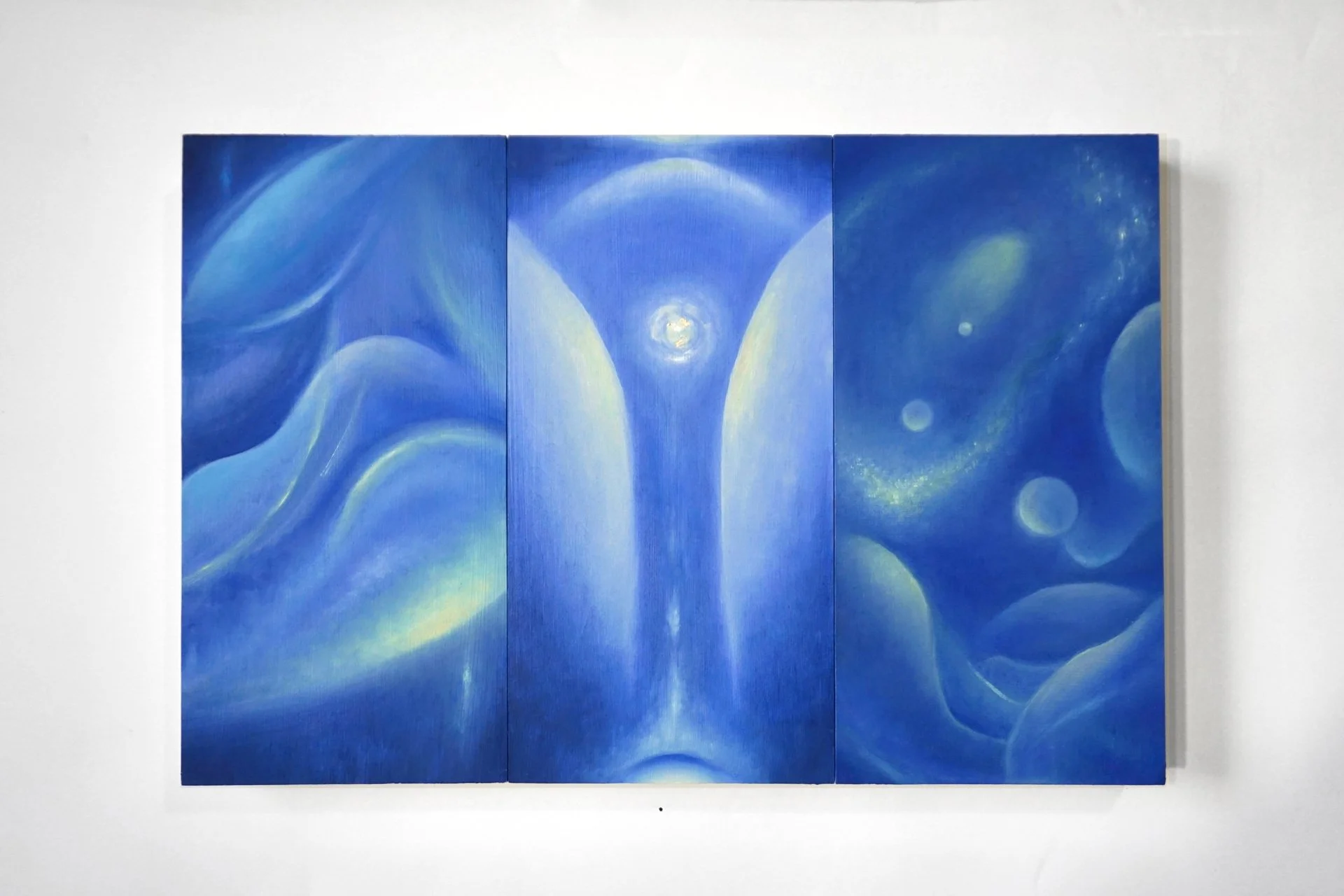
In this final section, artists tap into the quiet presence and restorative powers of blue, offering spaces to recalibrate and heal. Nuohan Jiang employs deep ultramarine in abstract paintings that evoke both the cosmos and the womb, collapsing the distance between the otherworldly and the intimately human. Using a TC2 digital jacquard loom, Robin Haller weaves hand-dyed fabrics into swirling motifs the artist likens to the “distorting effects of grief.” Set against a skylike expanse of blues, looping and overlapping lines orbit one another in routes that mirror rumination and emotional persistence. In his acrylic paintings, Dean Brown layers luminous rectangles into restrained color fields with subtle shifts in texture and density. These shapes ground the viewer in a state of quiet attention without consuming us. Catherine Baumhauer turns to blue as a vehicle for transcendence, outlining a large-winged bird in outer space as it glides above a glowing, aqueous planet. Unbound by gravity or geography, the image suggests a release from earthly constraints—a vision of freedom oriented toward exploration rather than escape. Austin Li Chang presents a more intimate scene of a woman kissing her firstborn, a lapis lazuli in her hand. In this quiet moment of connection, the surrounding world seems to dissolve, leaving only touch, tenderness, and unconditional love.