Series: One Thing After Another
|
Series: One Thing After Another |
Juried by Matt Stromberg
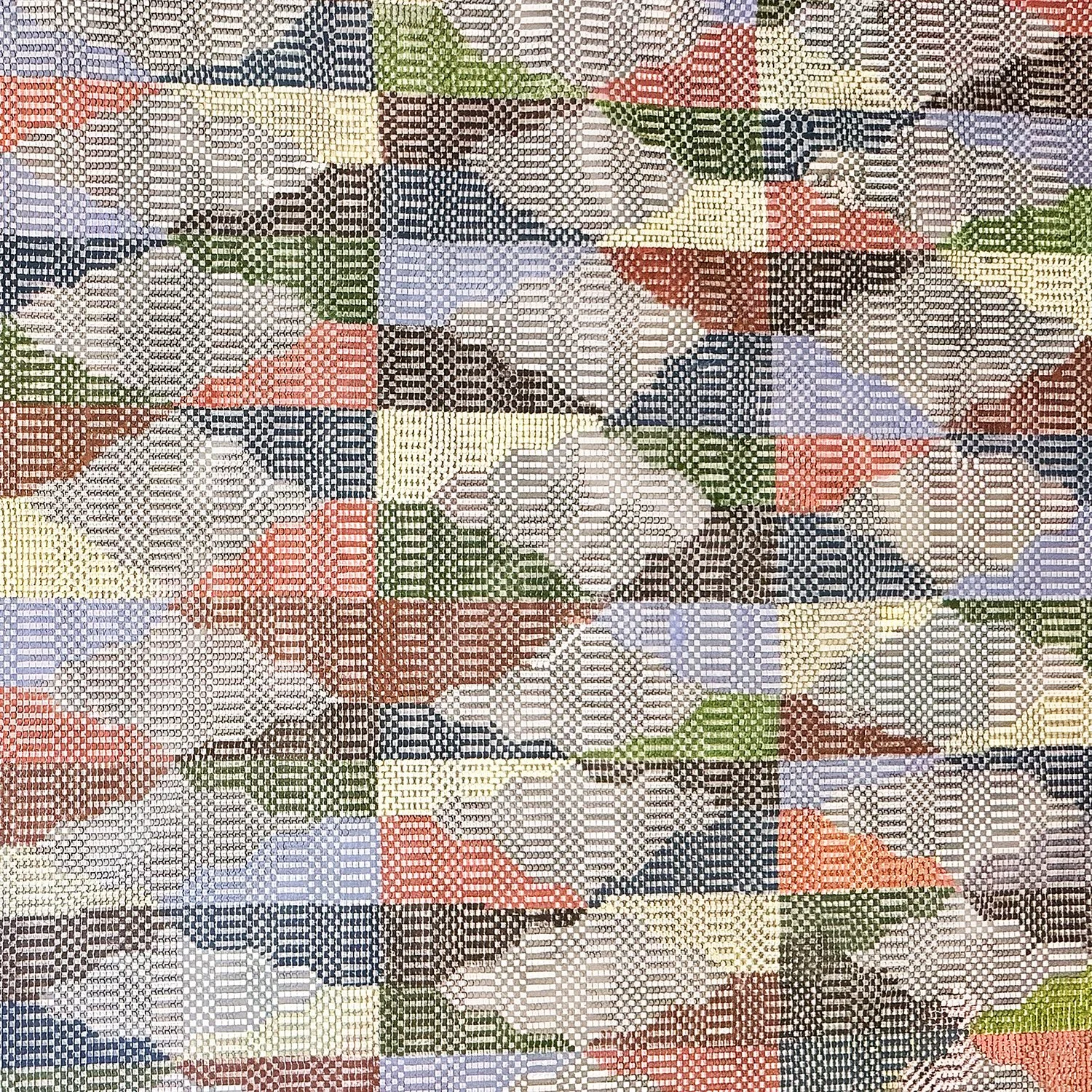
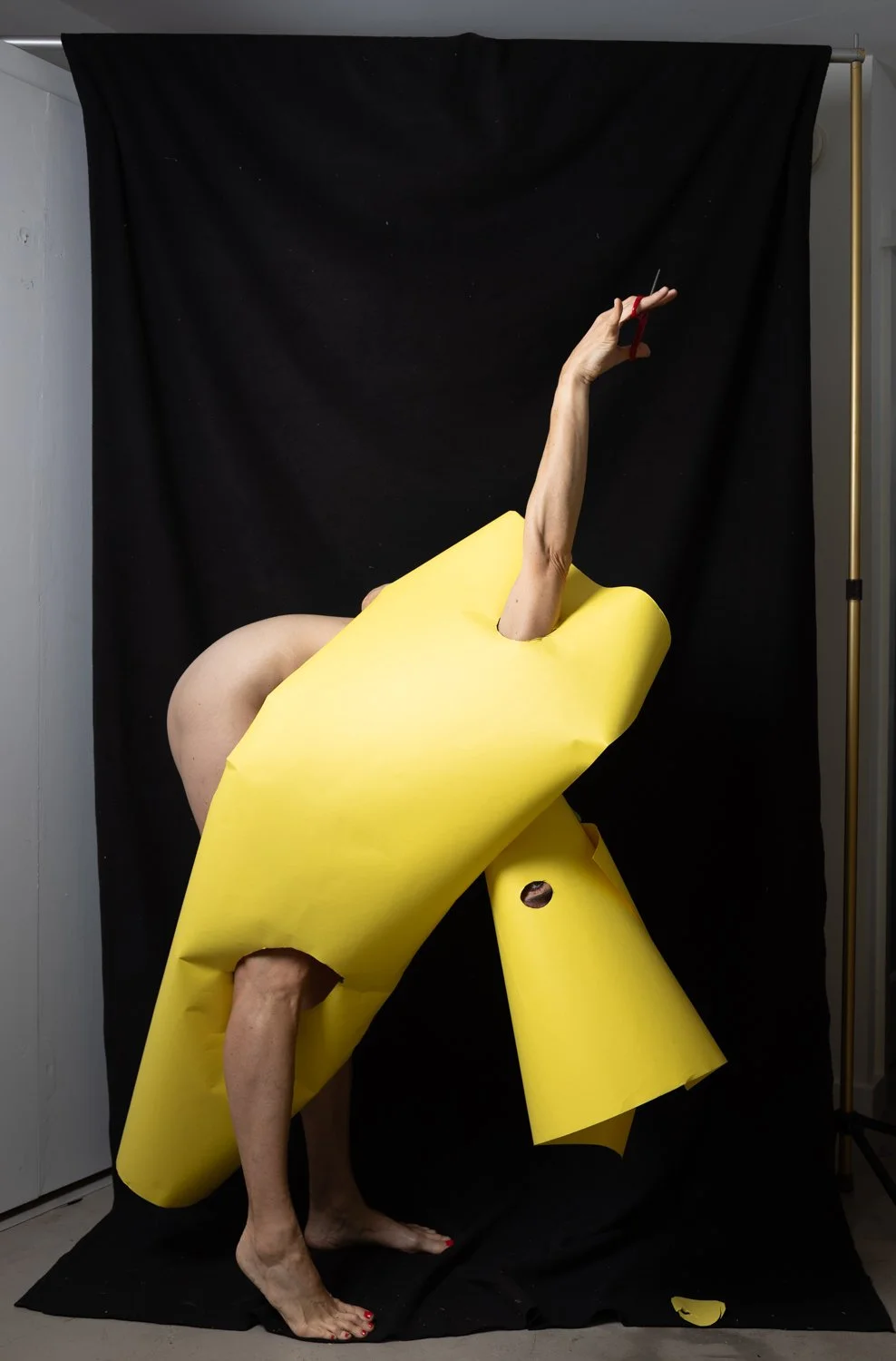
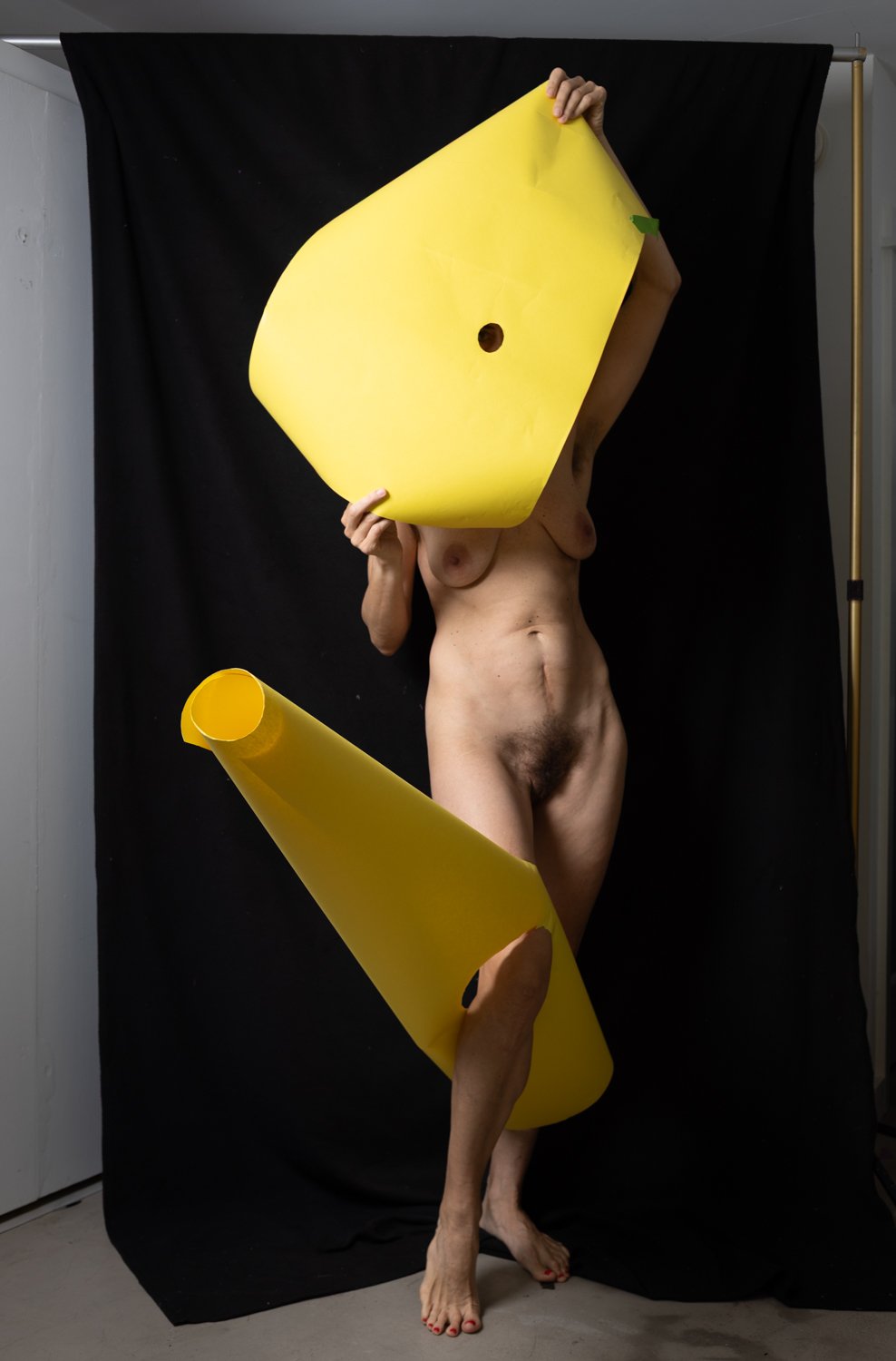
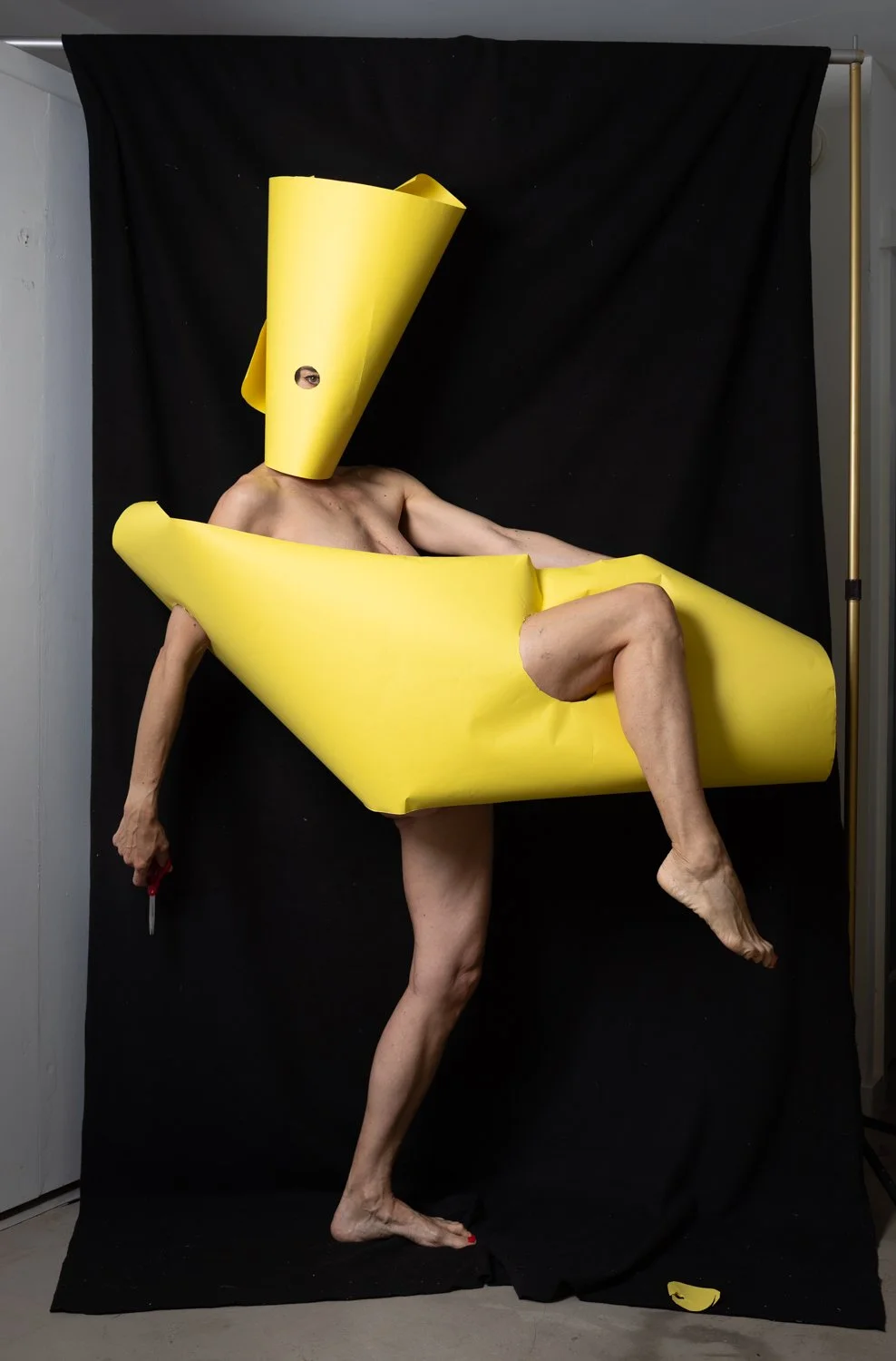
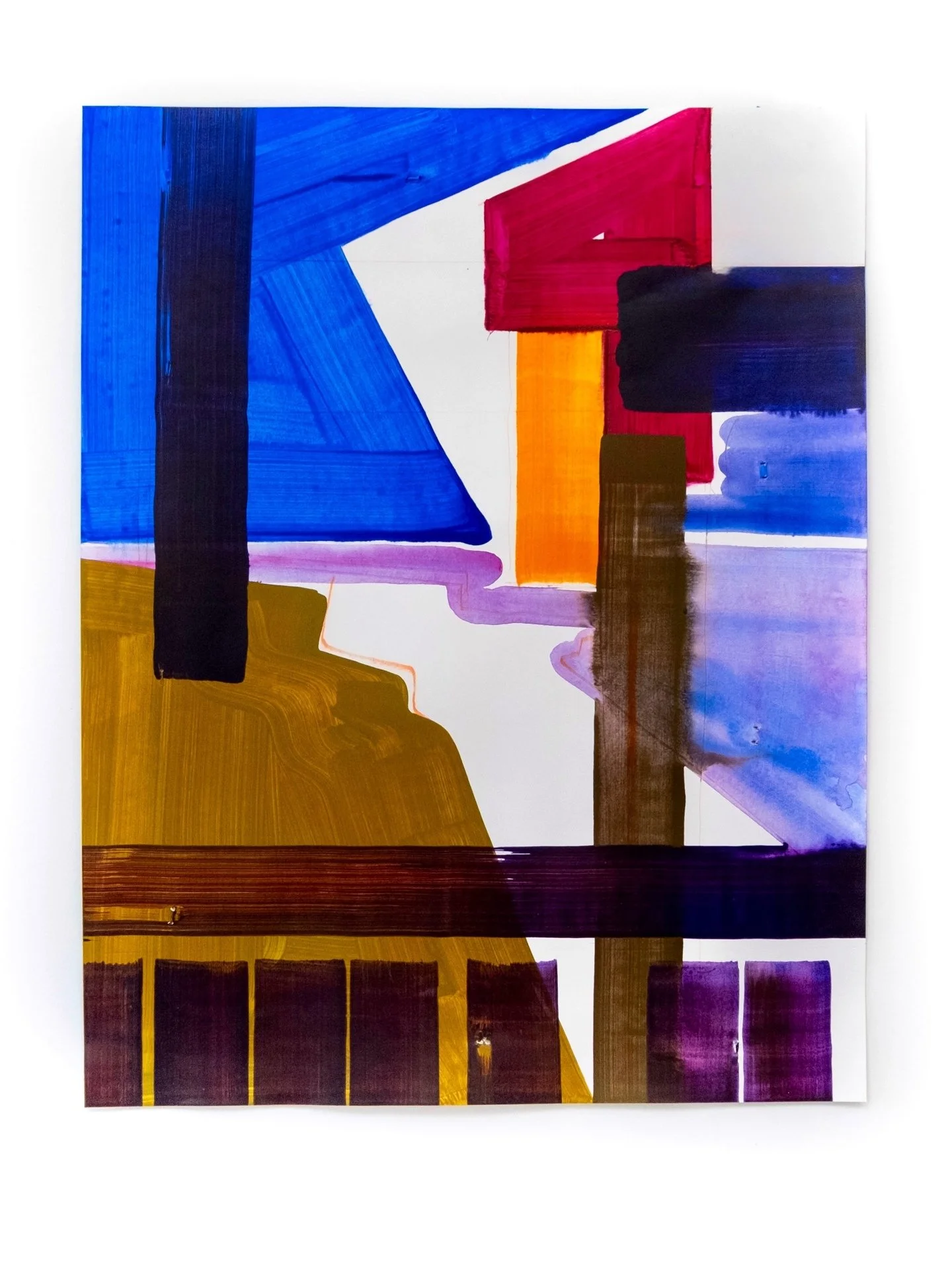
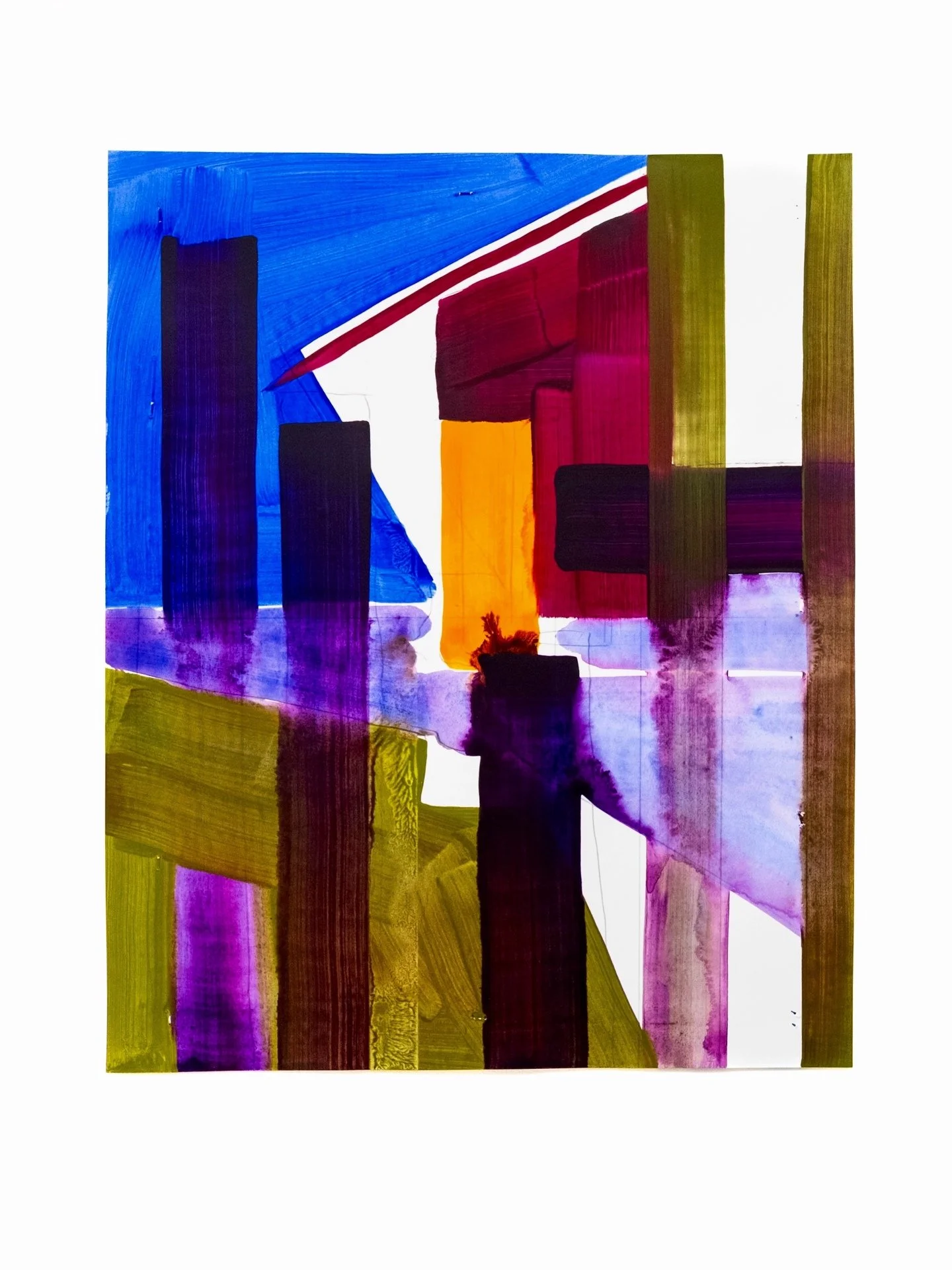
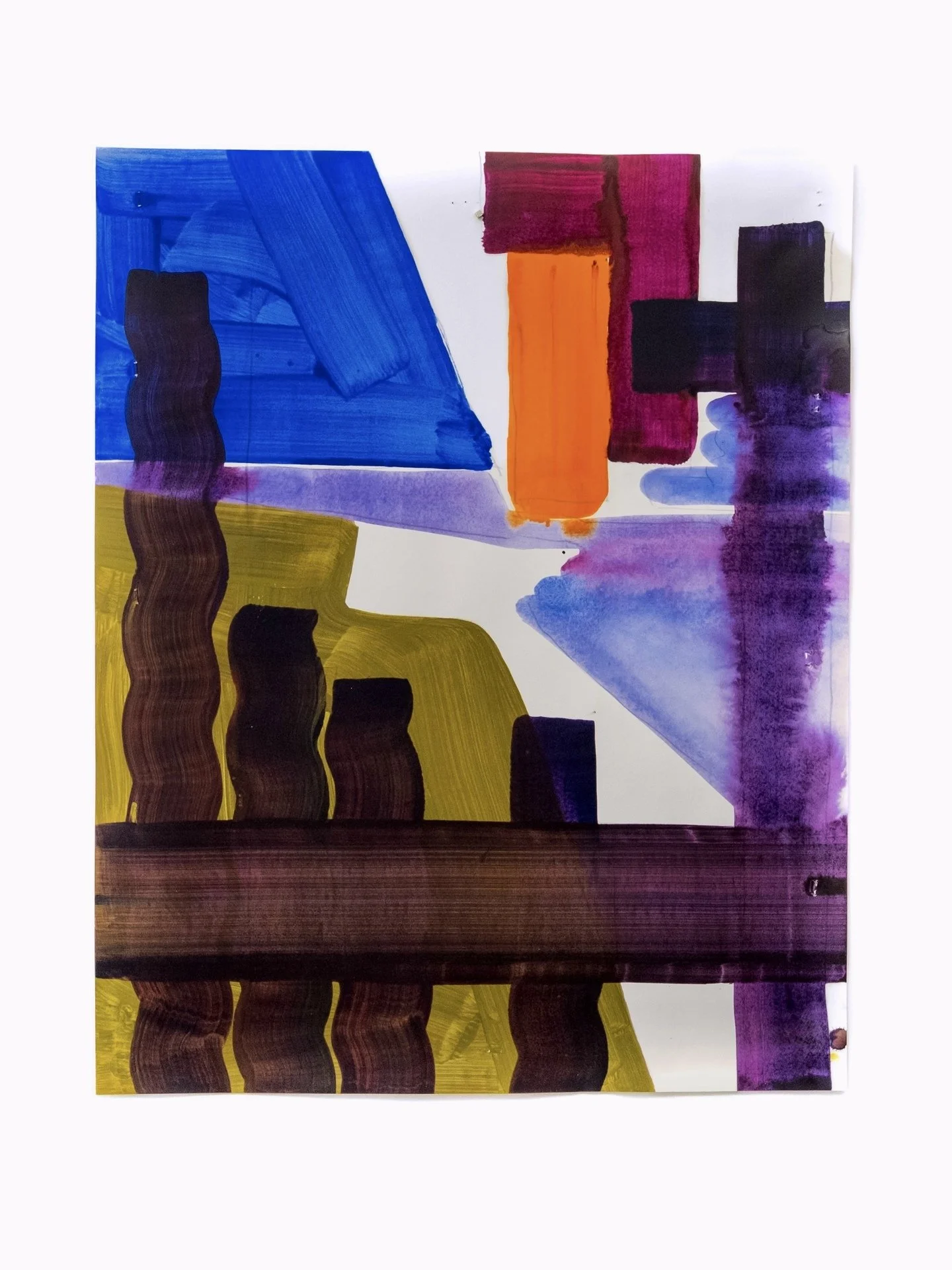
Curatorial Statement
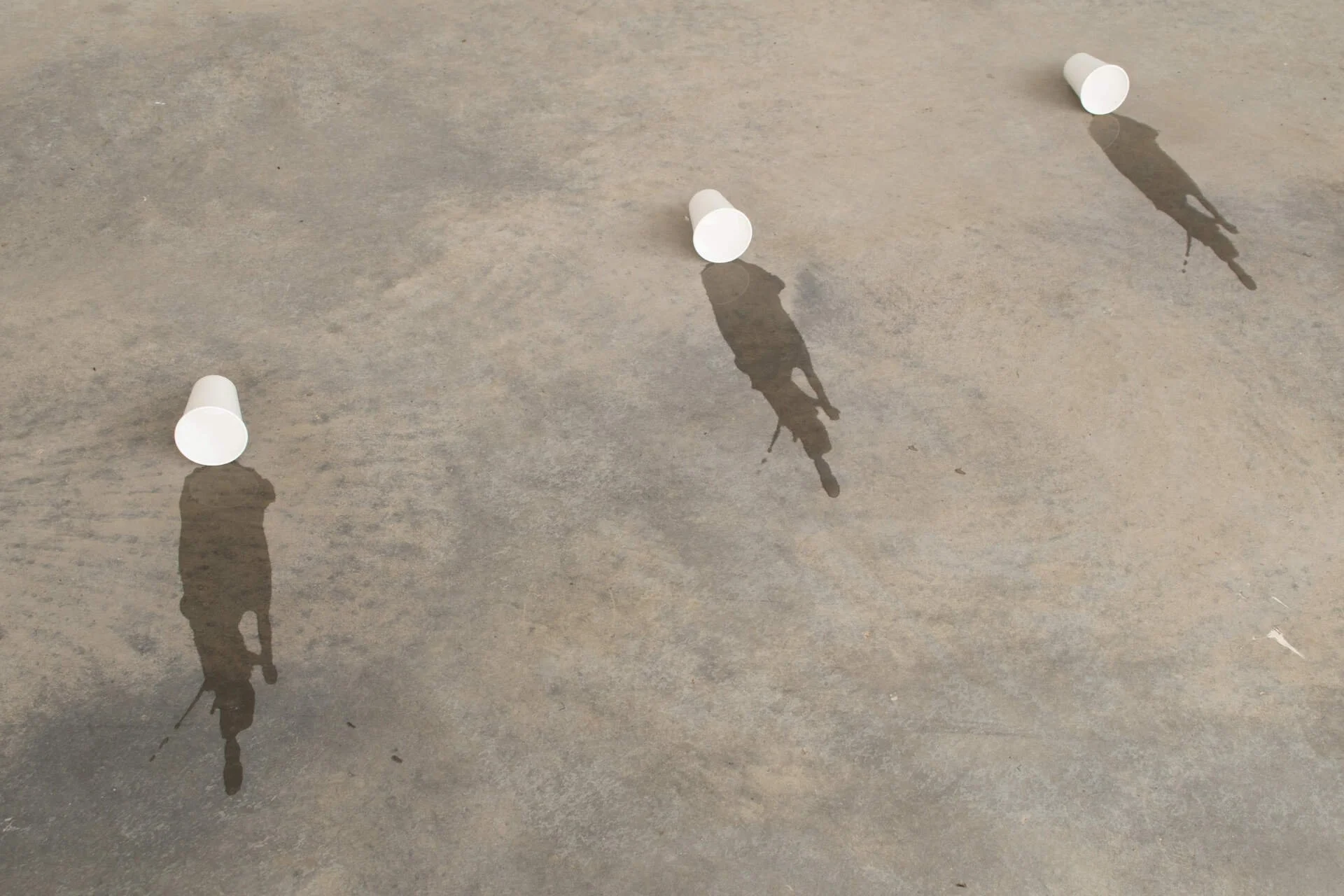
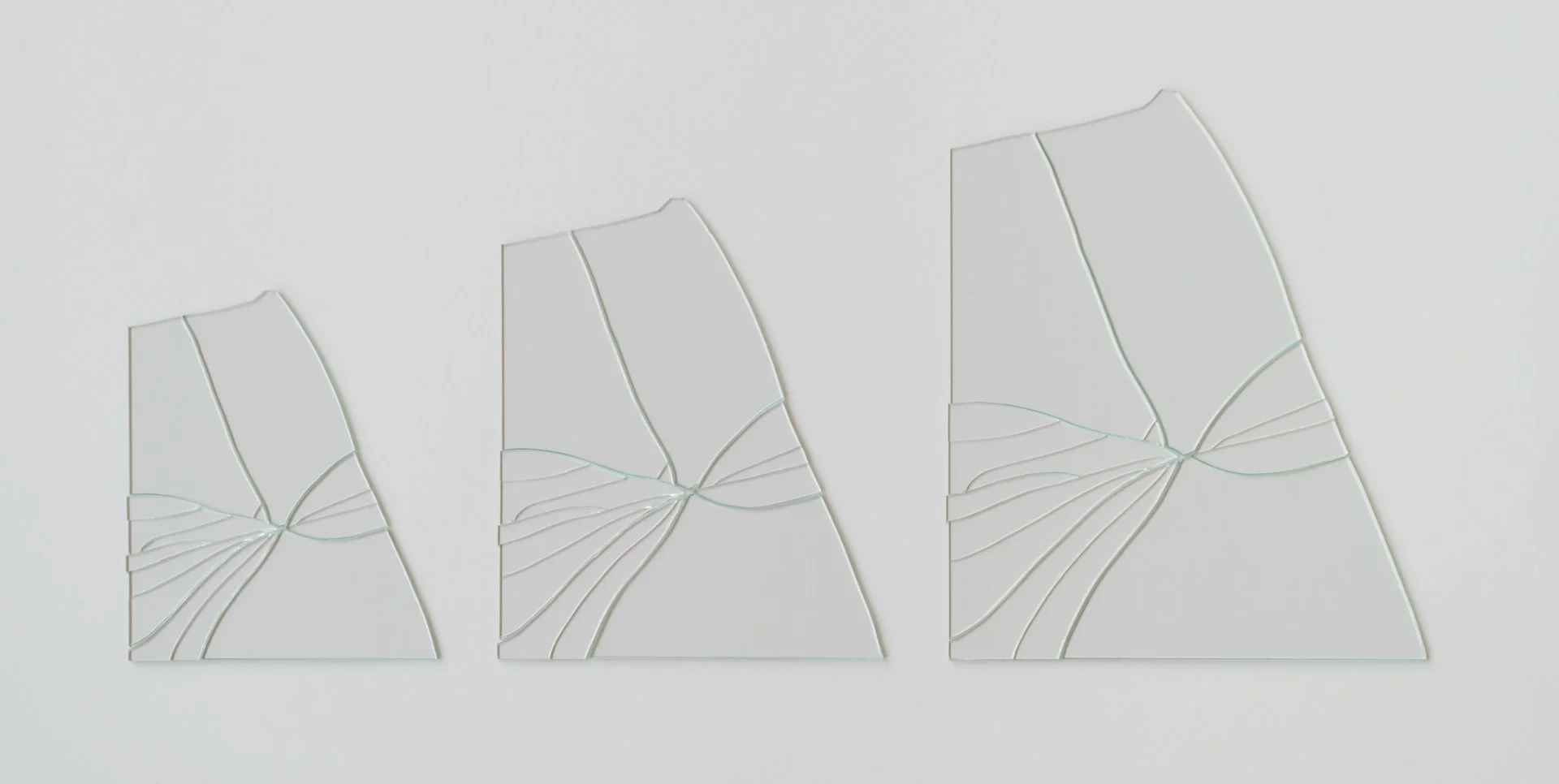
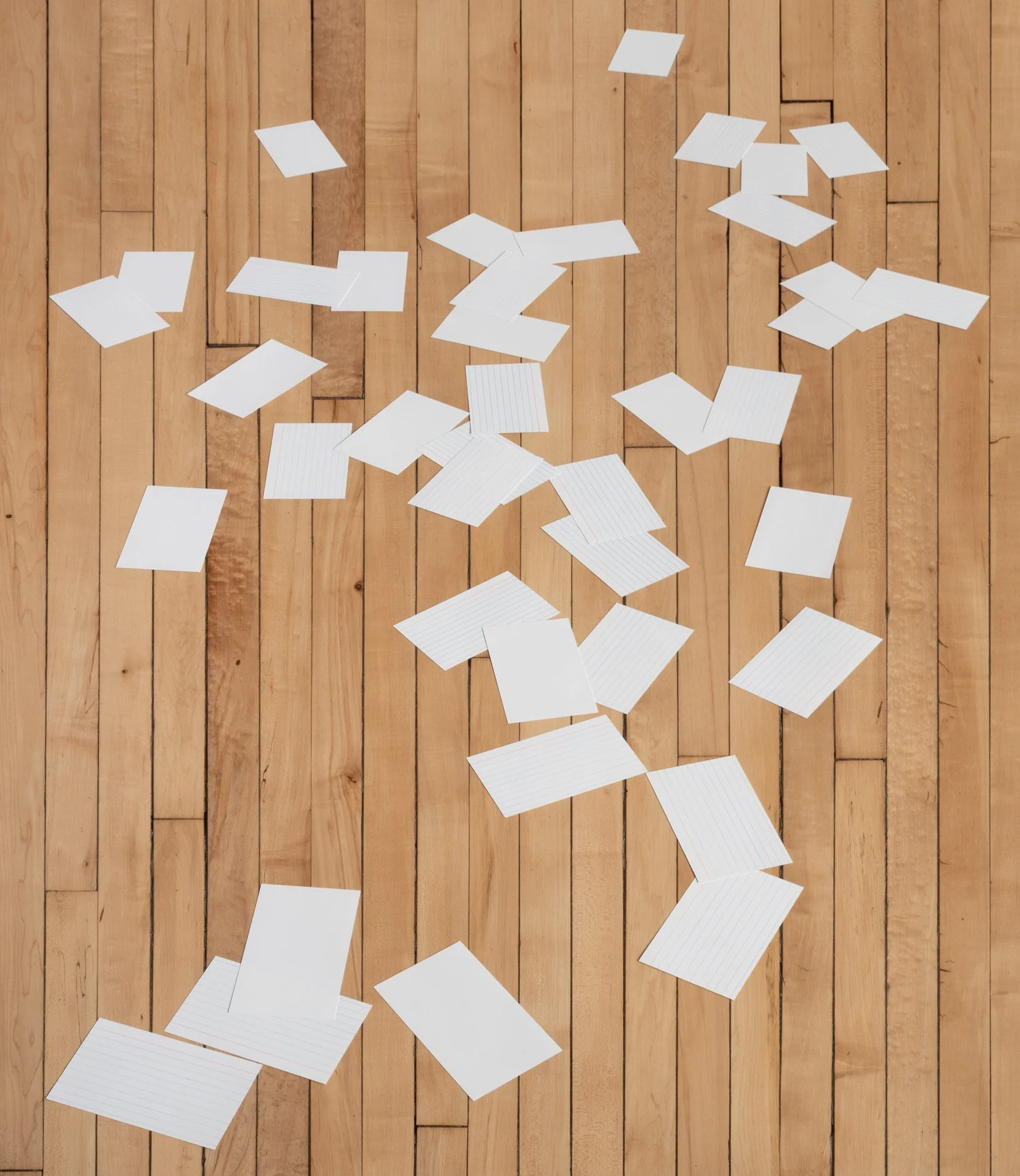
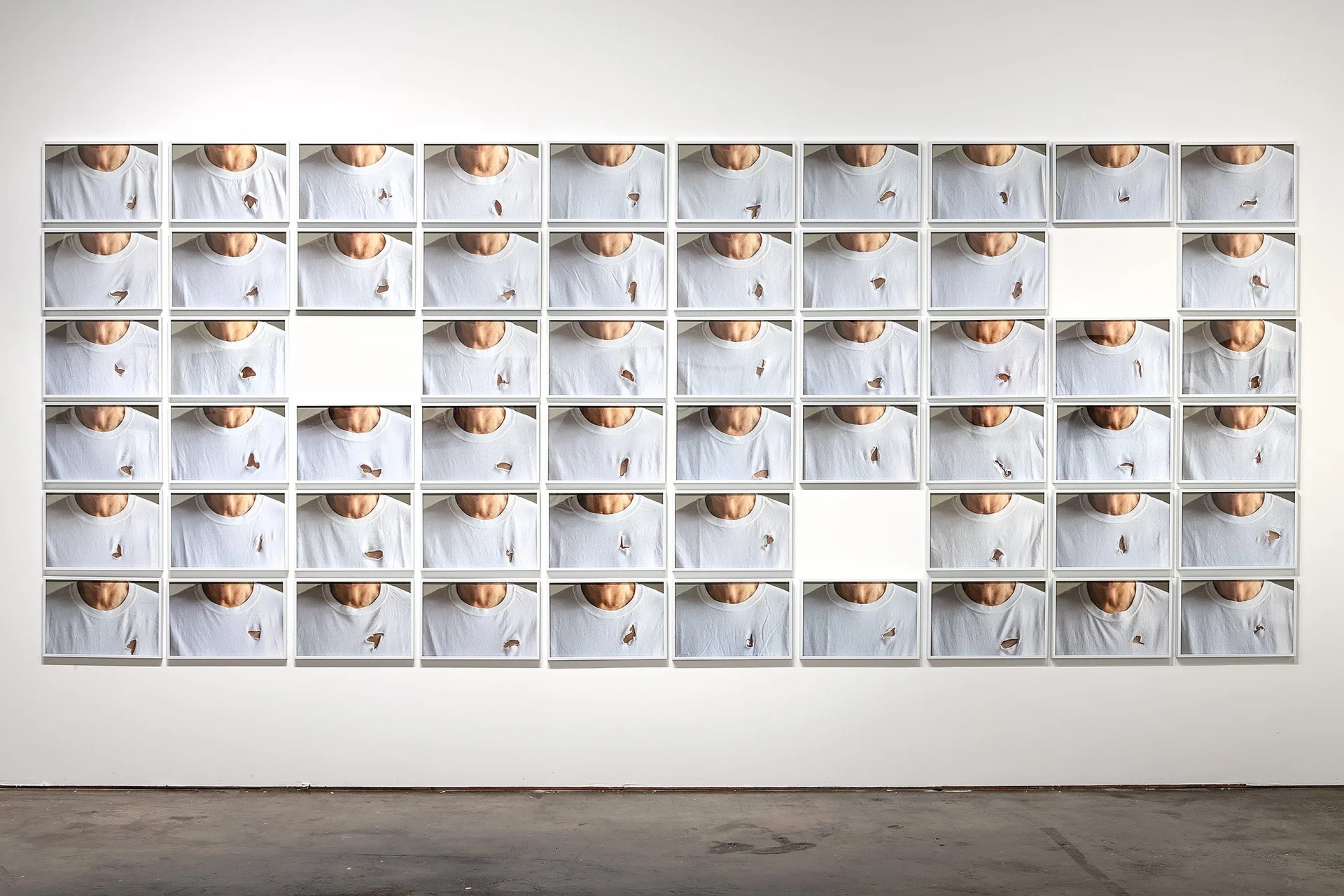
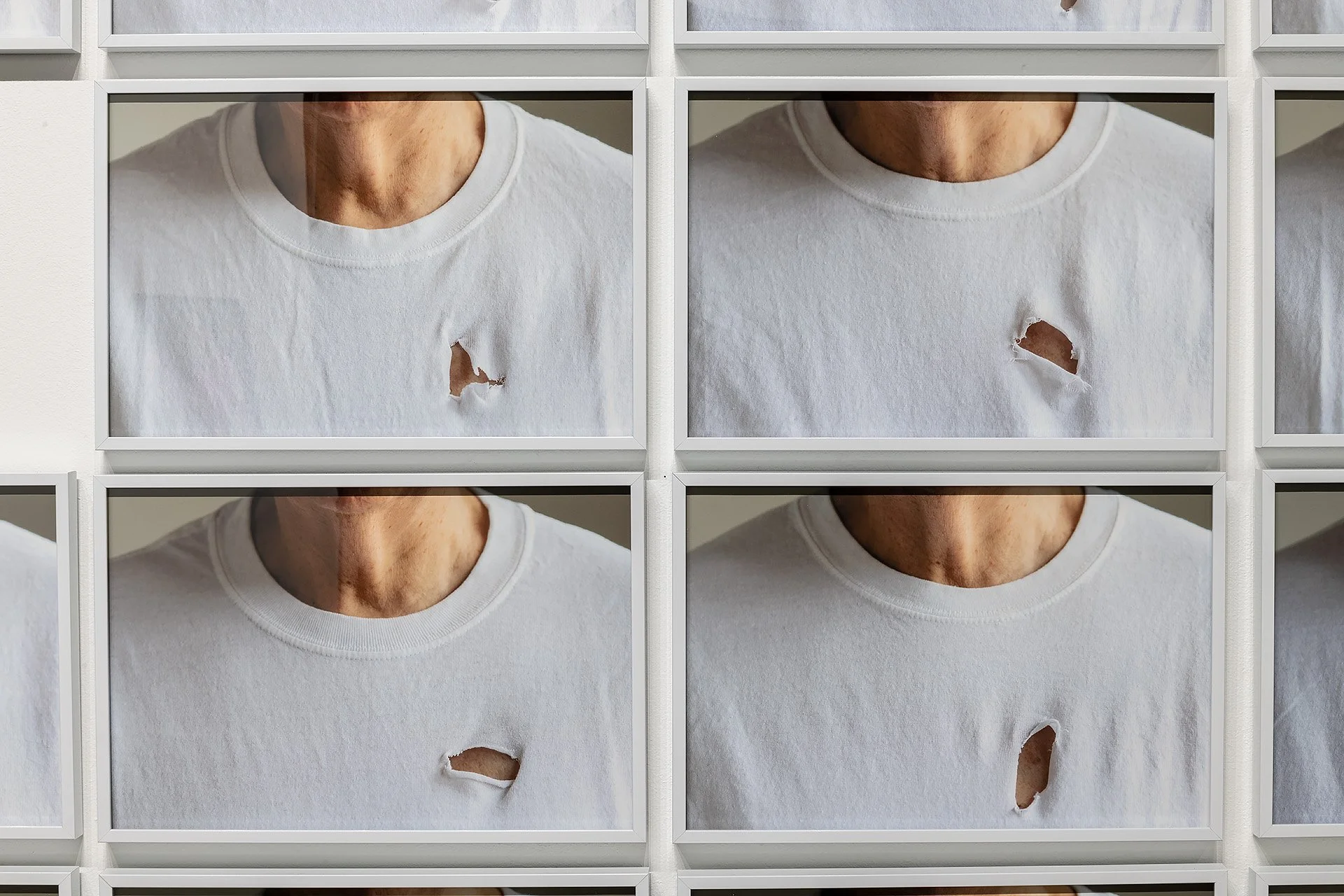
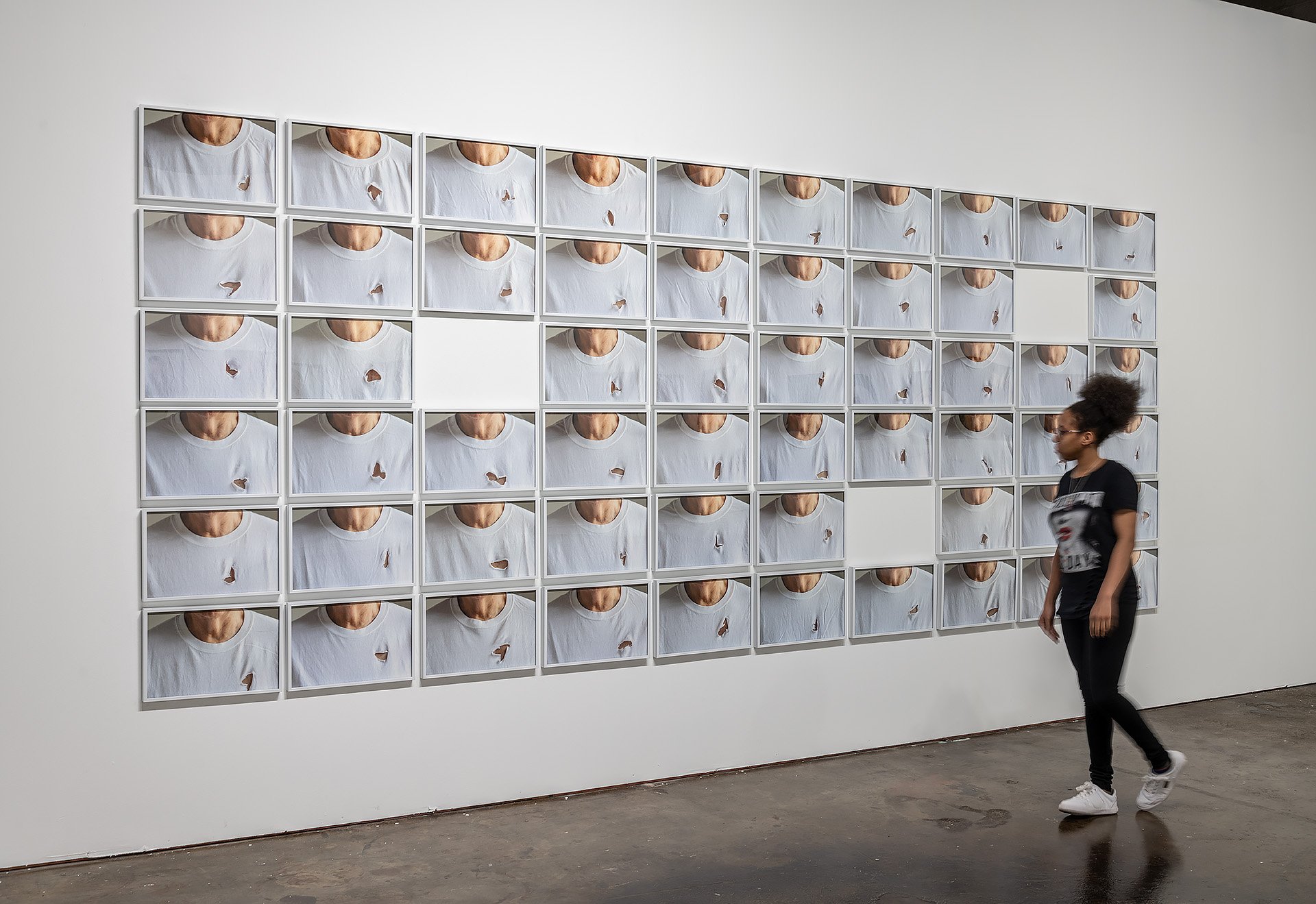
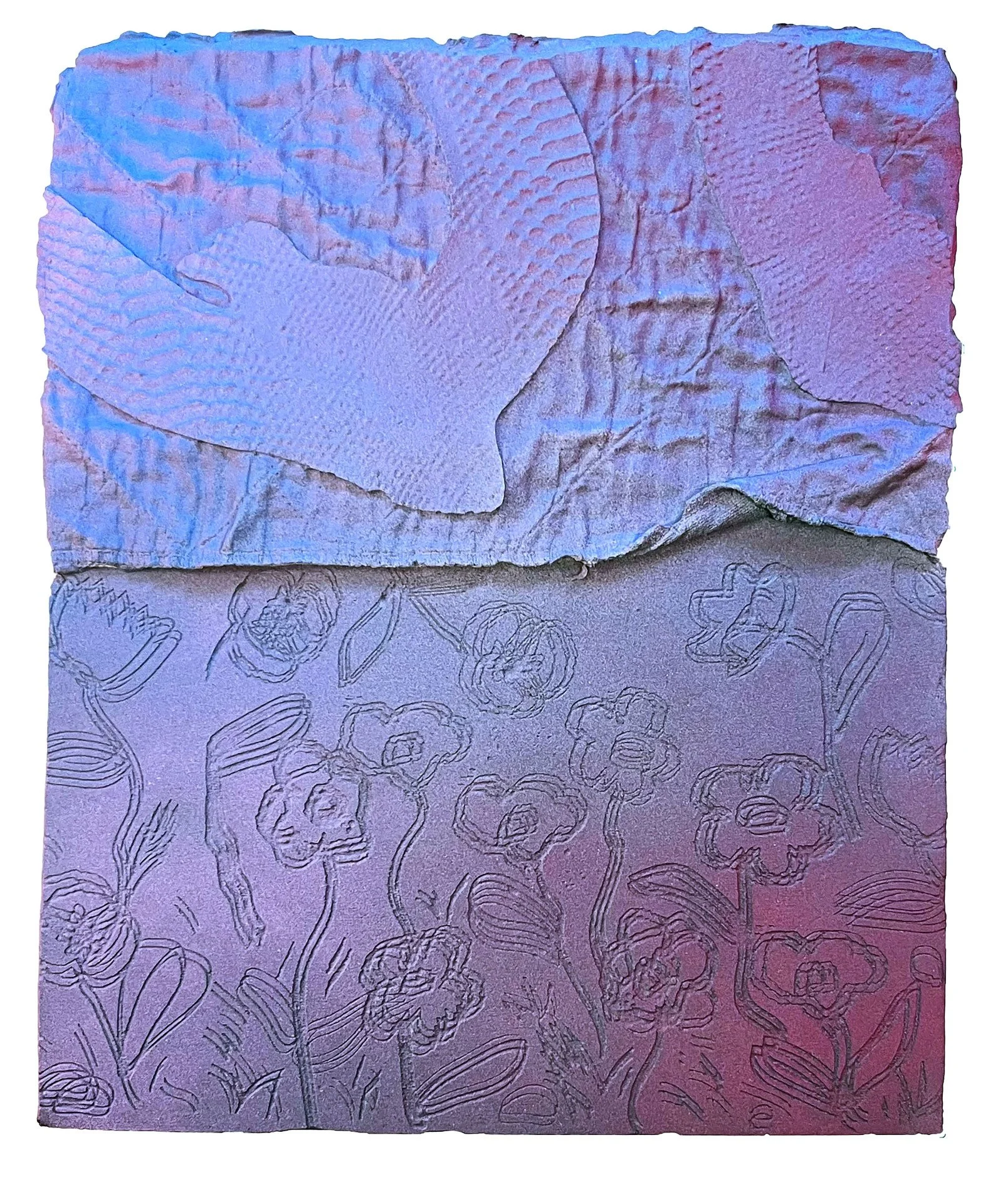
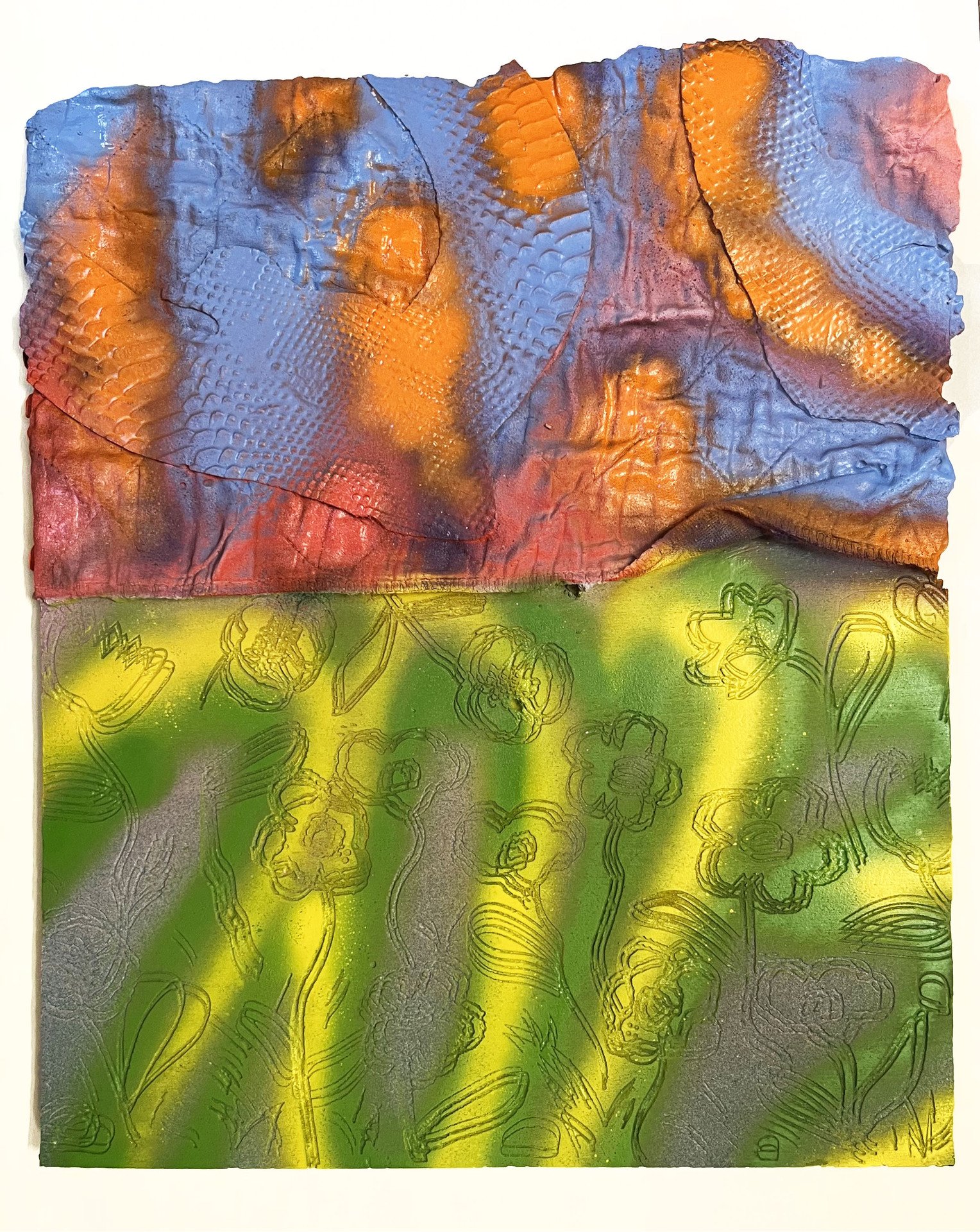
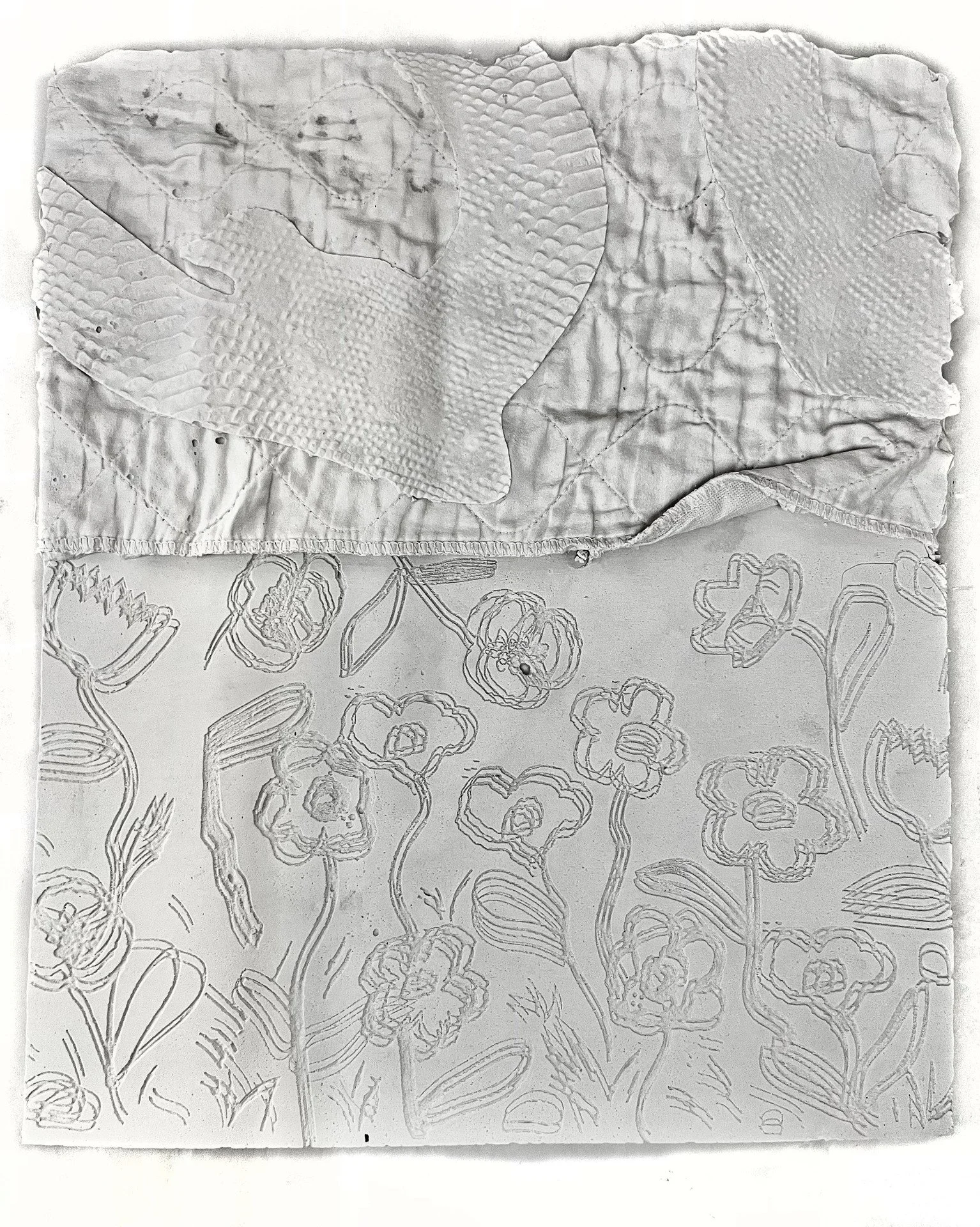
Series: One Thing After Another brings together 35 contemporary artists who explore seriality, repetition, and sequence in their work. Historically, artists have chosen to work in series for myriad purposes: using narrative panels, Renaissance artists depicted episodes in the lives of saints, whereas Impressionists captured changes in light and color by creating numerous studies of the same scene. In the 20th century, modern artists probed the boundless potential of abstraction through variations on a theme, while post-war minimalist and conceptual artists employed seriality as a way to remove subjectivity, relinquishing creative control to predetermined formal systems.
The works included in this show represent the bountiful heterogeneity of seriality, both in terms of WHY artists have chosen to work in sequence, as well as HOW they do so: the message and the medium. Despite this disparateness, I was struck by a unifying thread as I reviewed the submissions online, that has less to do with art’s creation than its reception. The process of looking at these series offered a remedy to the frenetic way we often engage with images though our screens. Rather than indifferently scrolling through an endless chain of single images, I was forced to slow down, to carefully evaluate several works in relation to each other, to tease out the formal, material, and thematic threads connecting them. Ironically, it is the serial nature of these artworks — which artists have used for a century to reflect contemporary alienation — that thwarts digital flattening and disconnection. The phrase “One Thing After Another”— which , on the surface, could suggest unceasing, banal succession—takes on a more expansive connotation here: perpetually unfolding discovery.
About the Juror
Matt Stromberg is a freelance arts writer and educator based in Los Angeles. He is a frequent contributor to Hyperallergic and has also written for the Los Angeles Times, the Guardian, and KCRW Art Insider, amongst other publications. He teaches Art Appreciation and Introduction to Modernism at Mt. San Jacinto College.
Wall 1: Narrative
Jessica Baker / Michael Ajerman / Julie Carcione Cavaz / Glen Holland / Nicholas Phitides
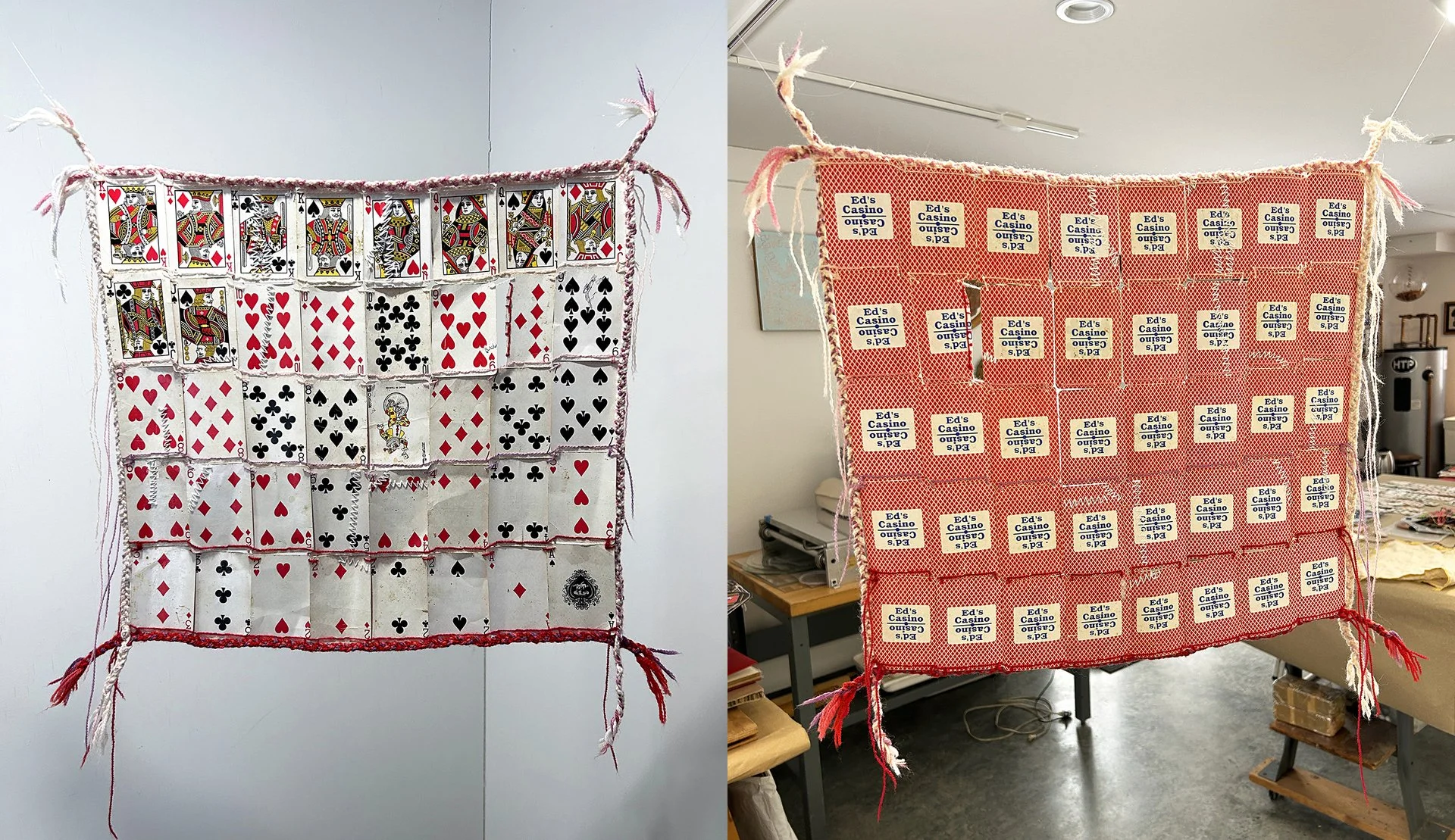
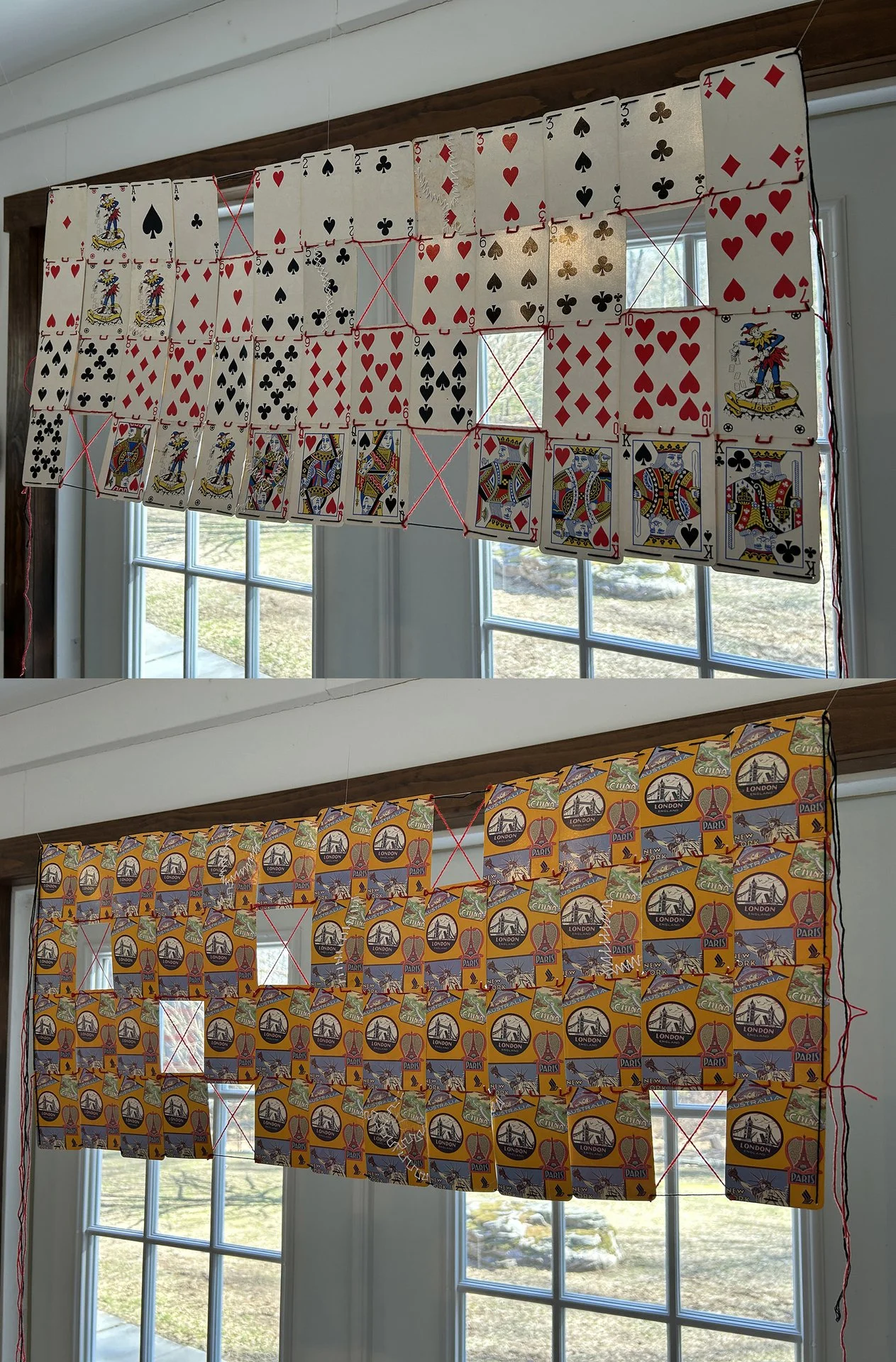
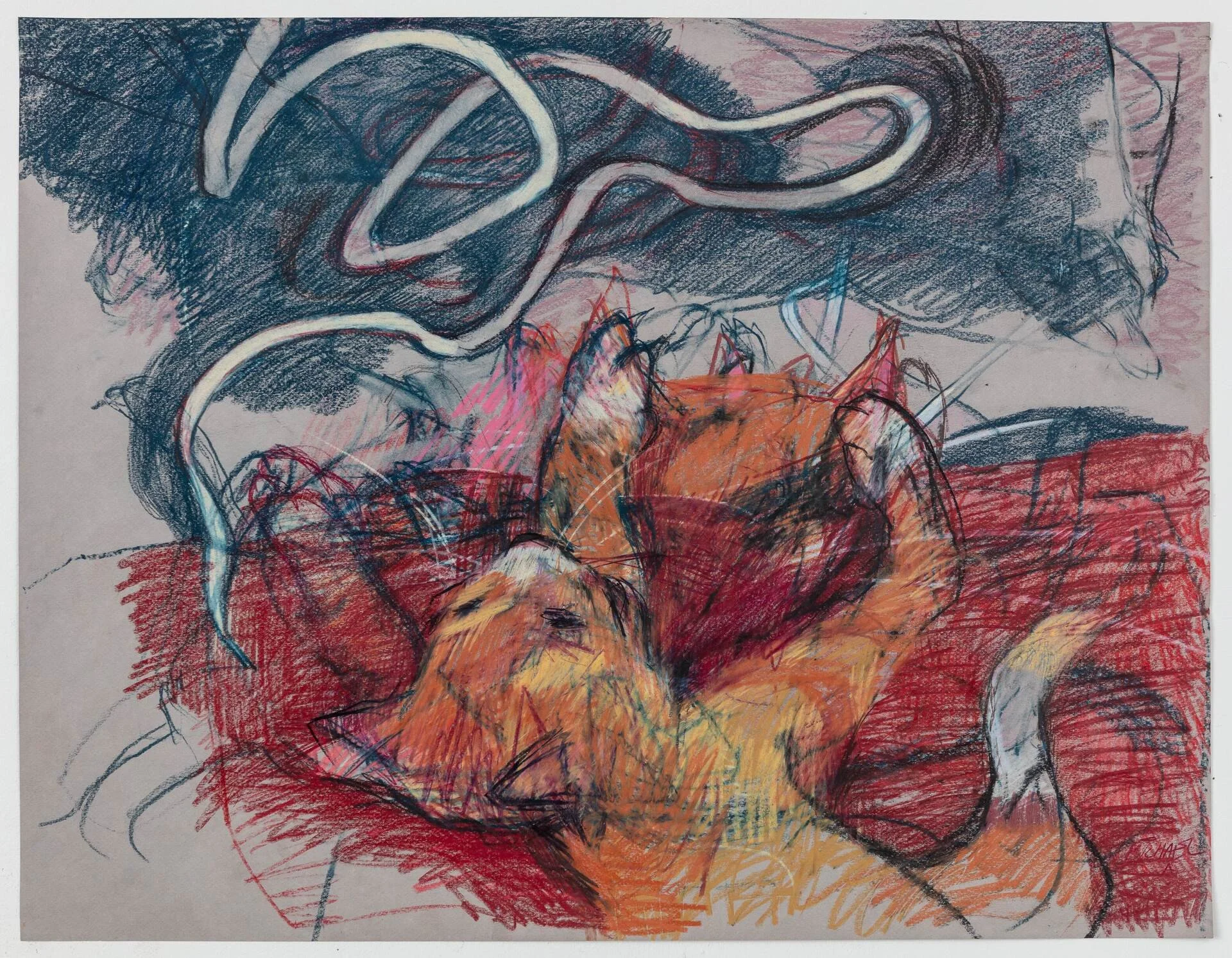
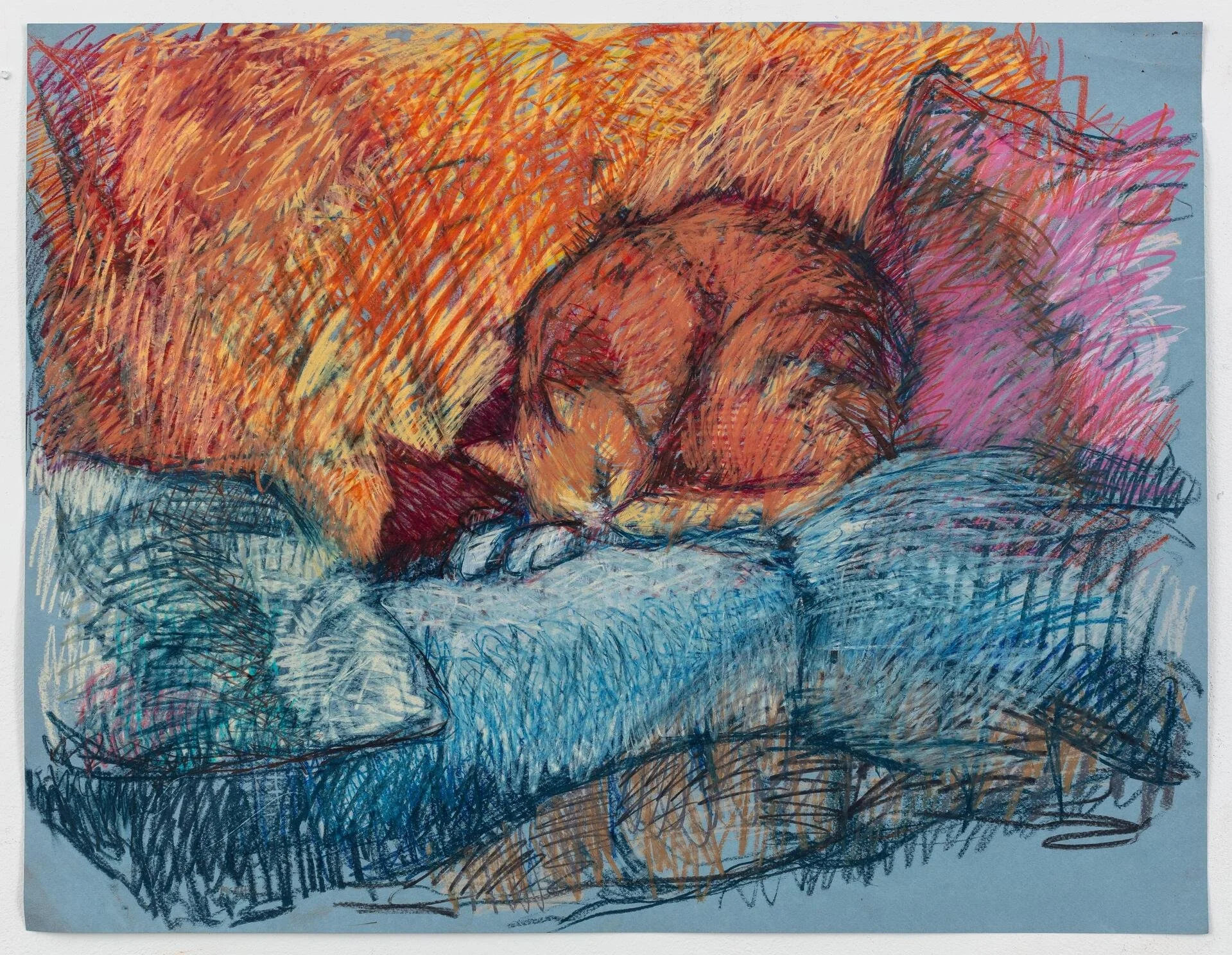
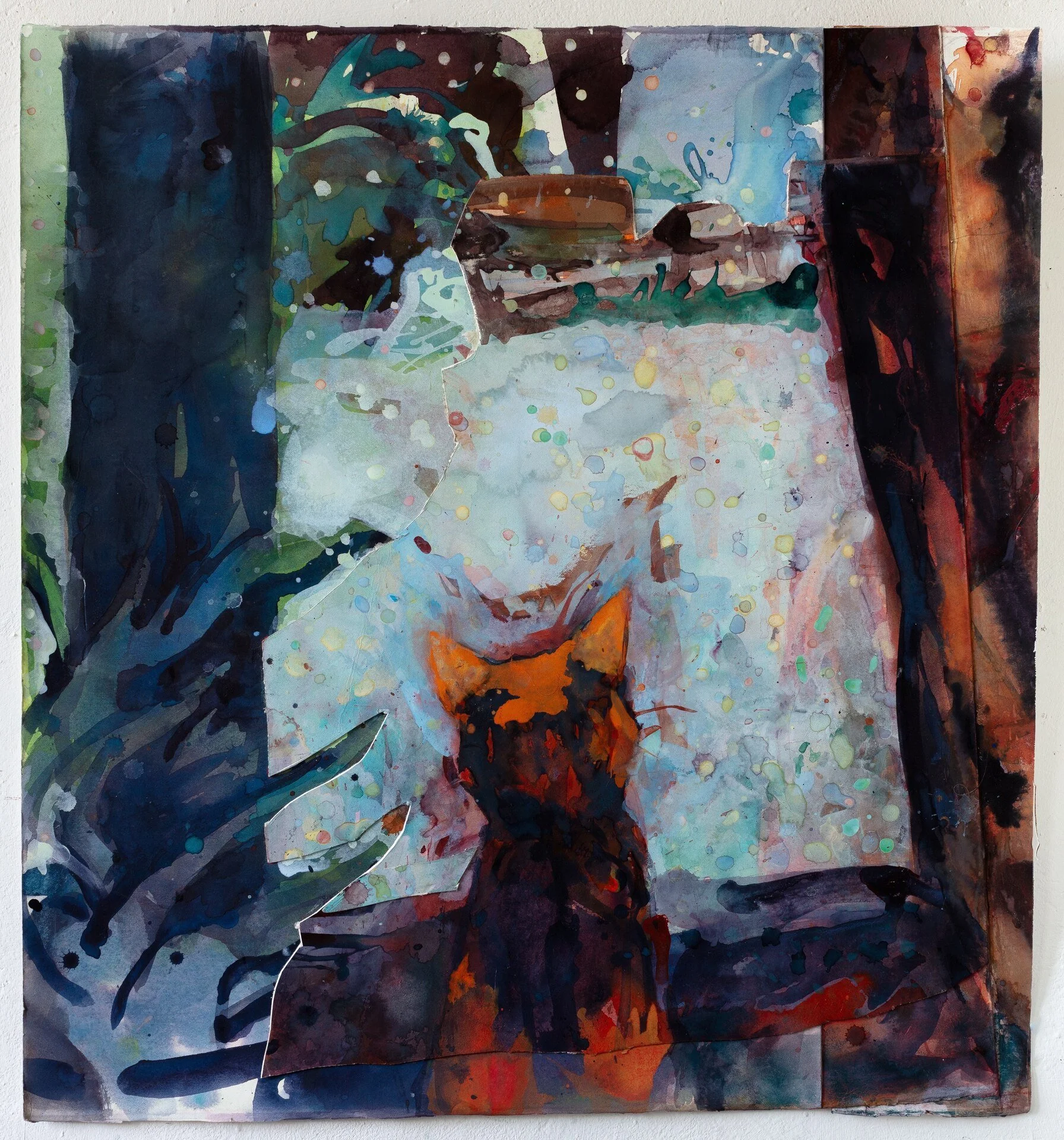
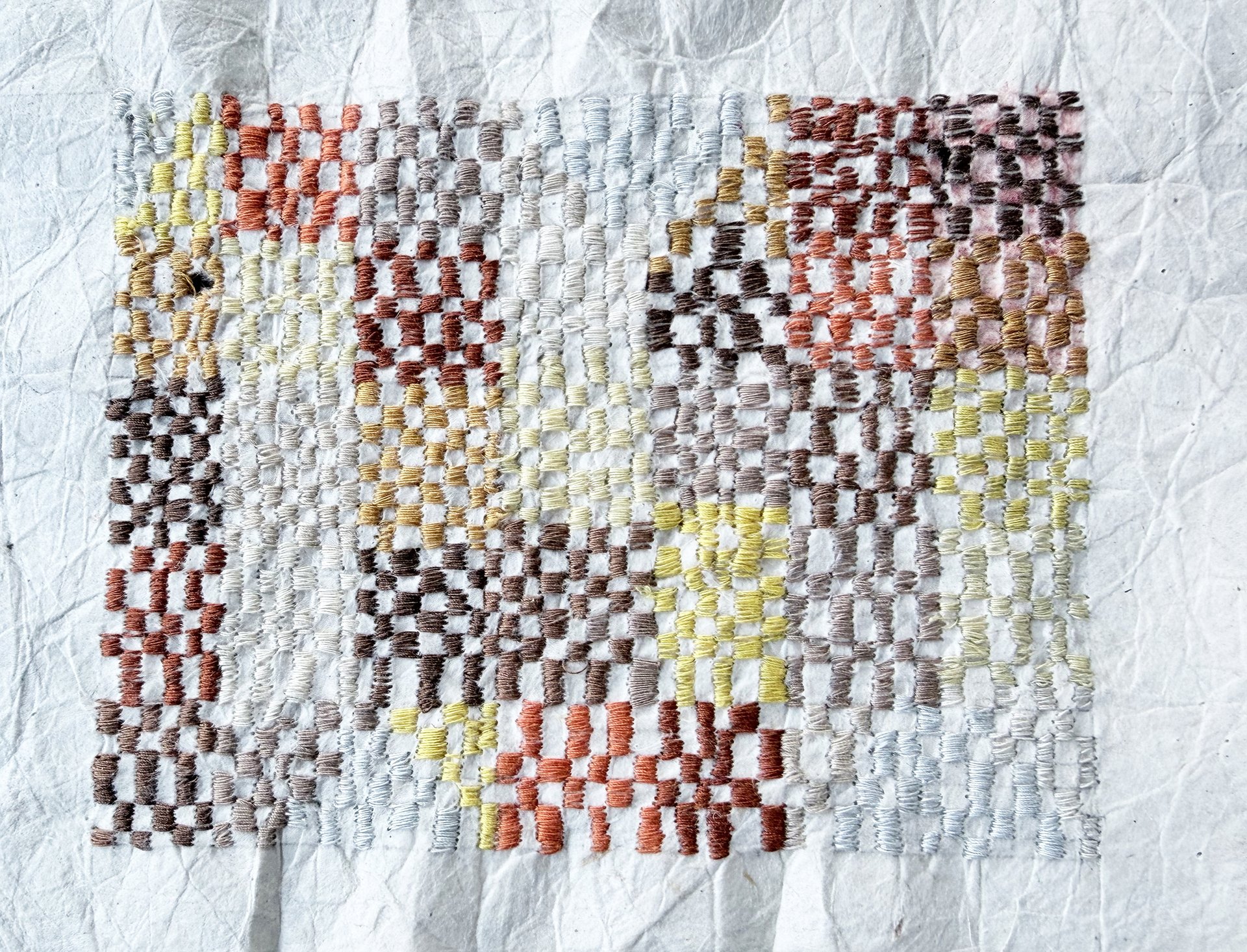
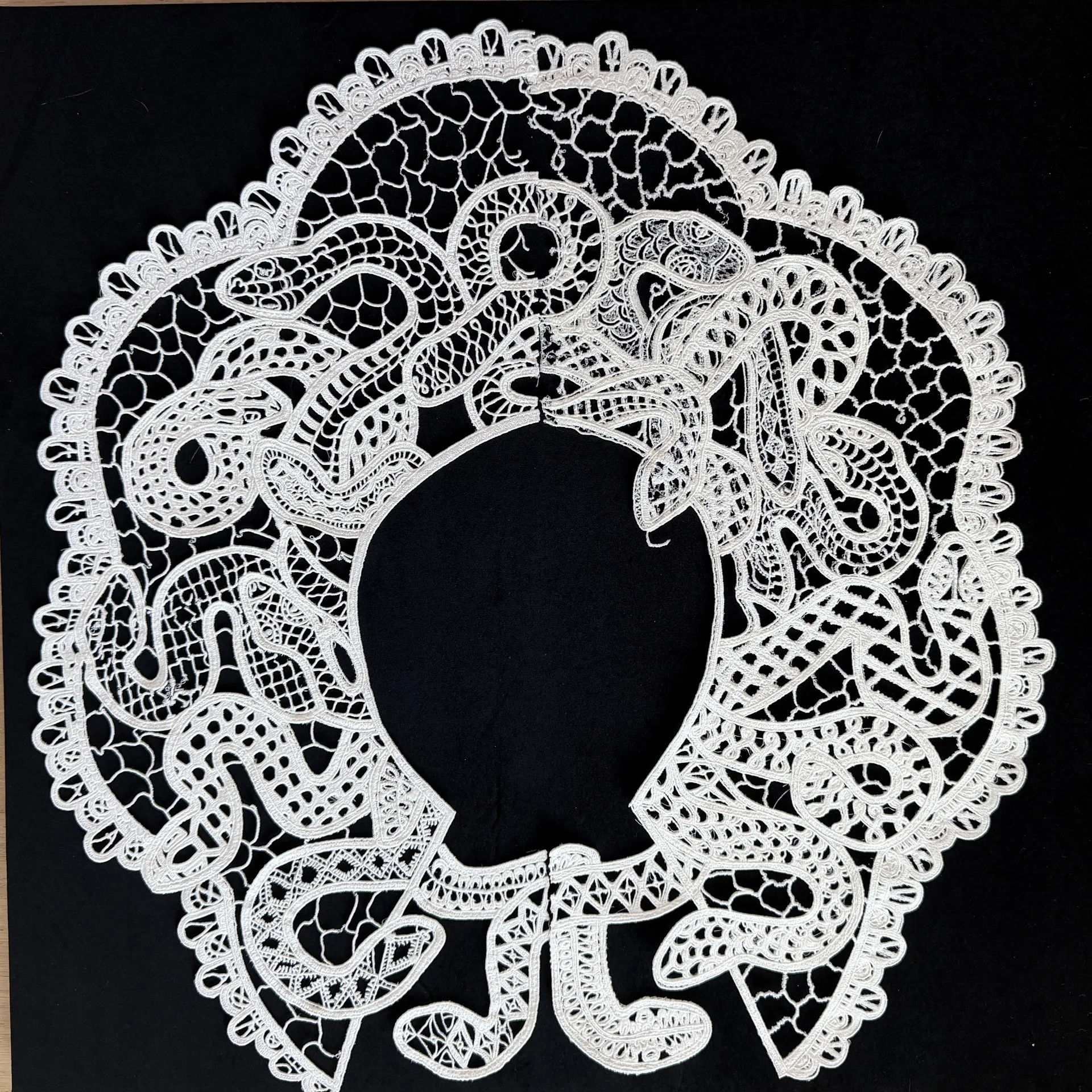
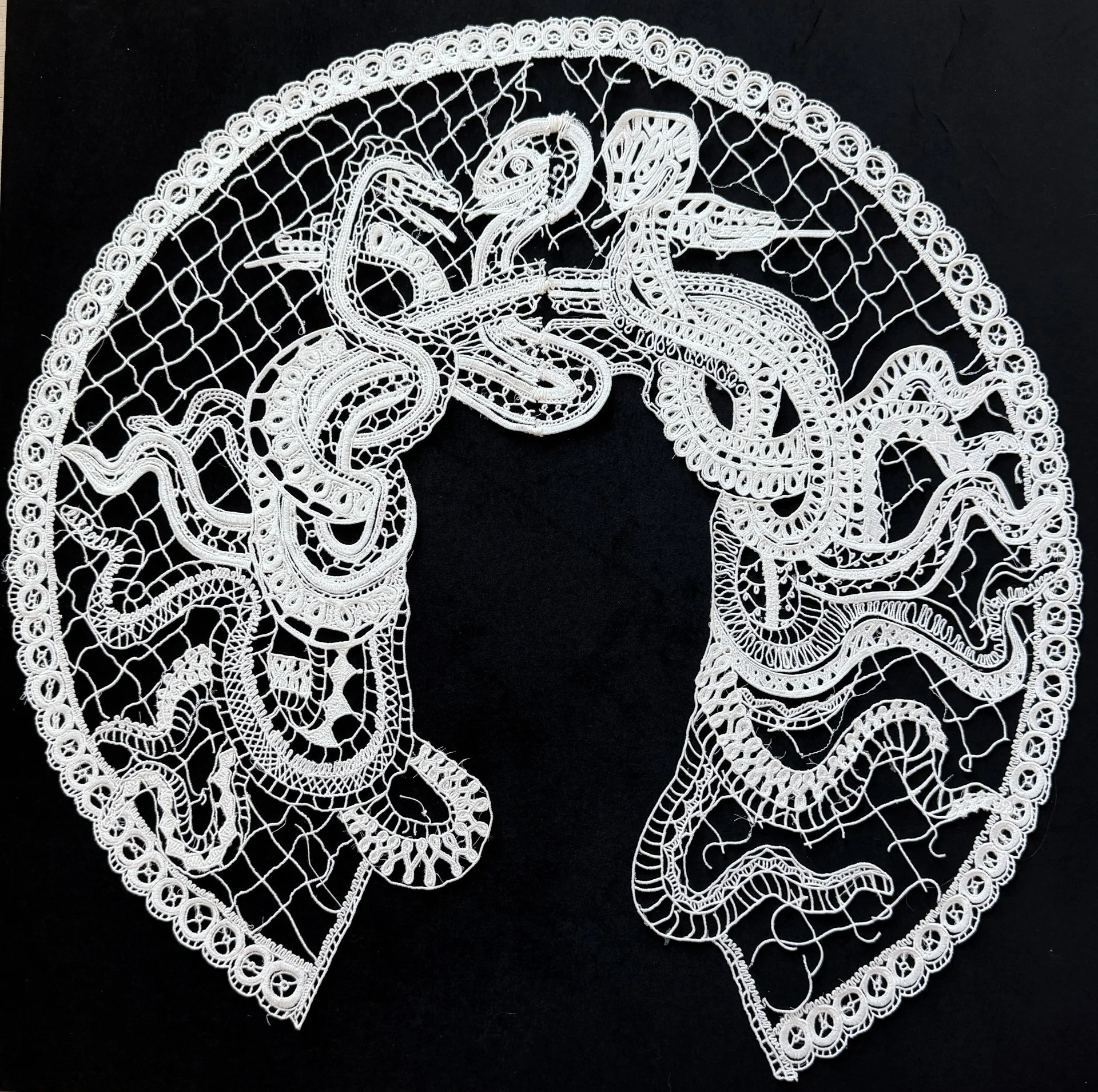
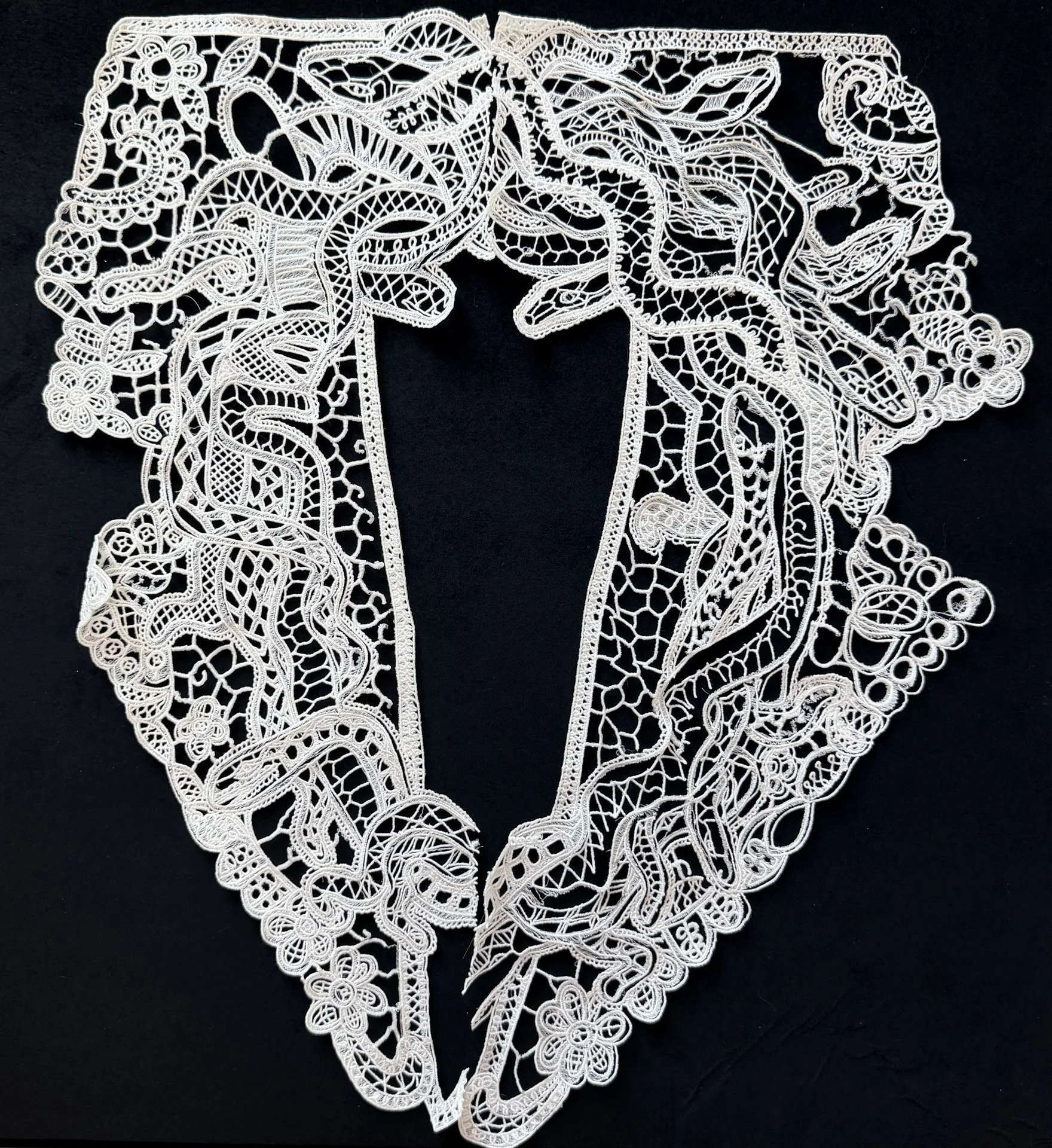
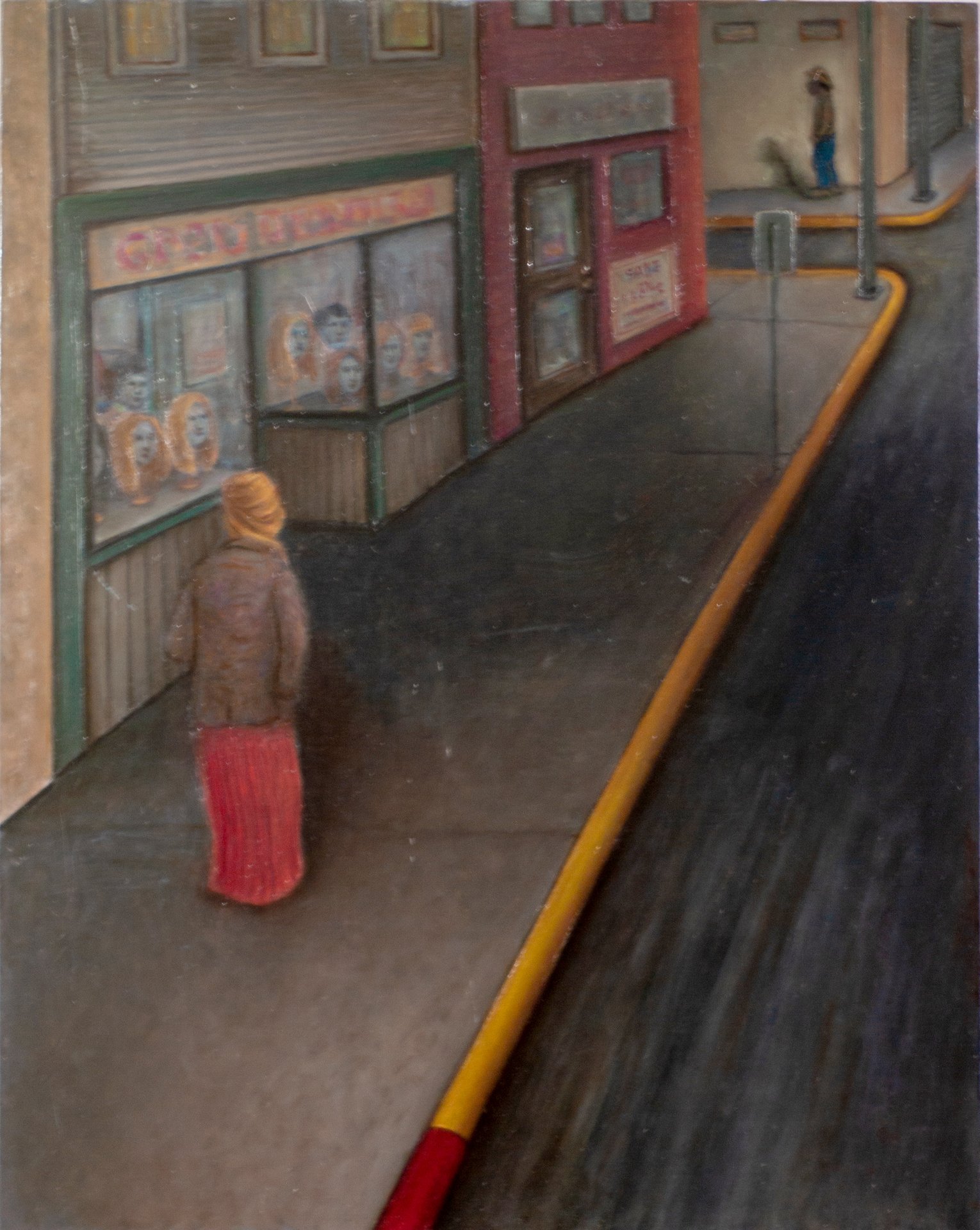
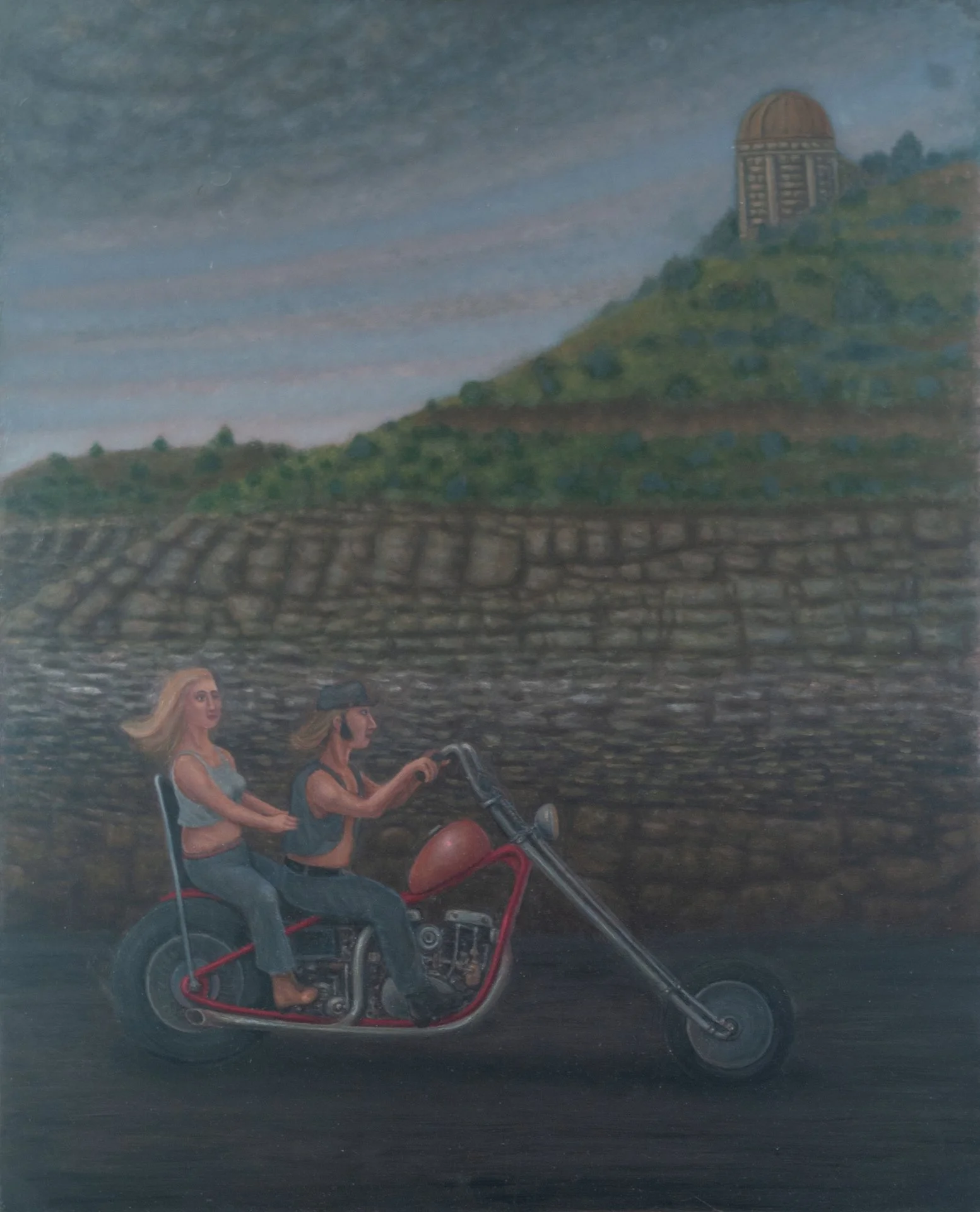
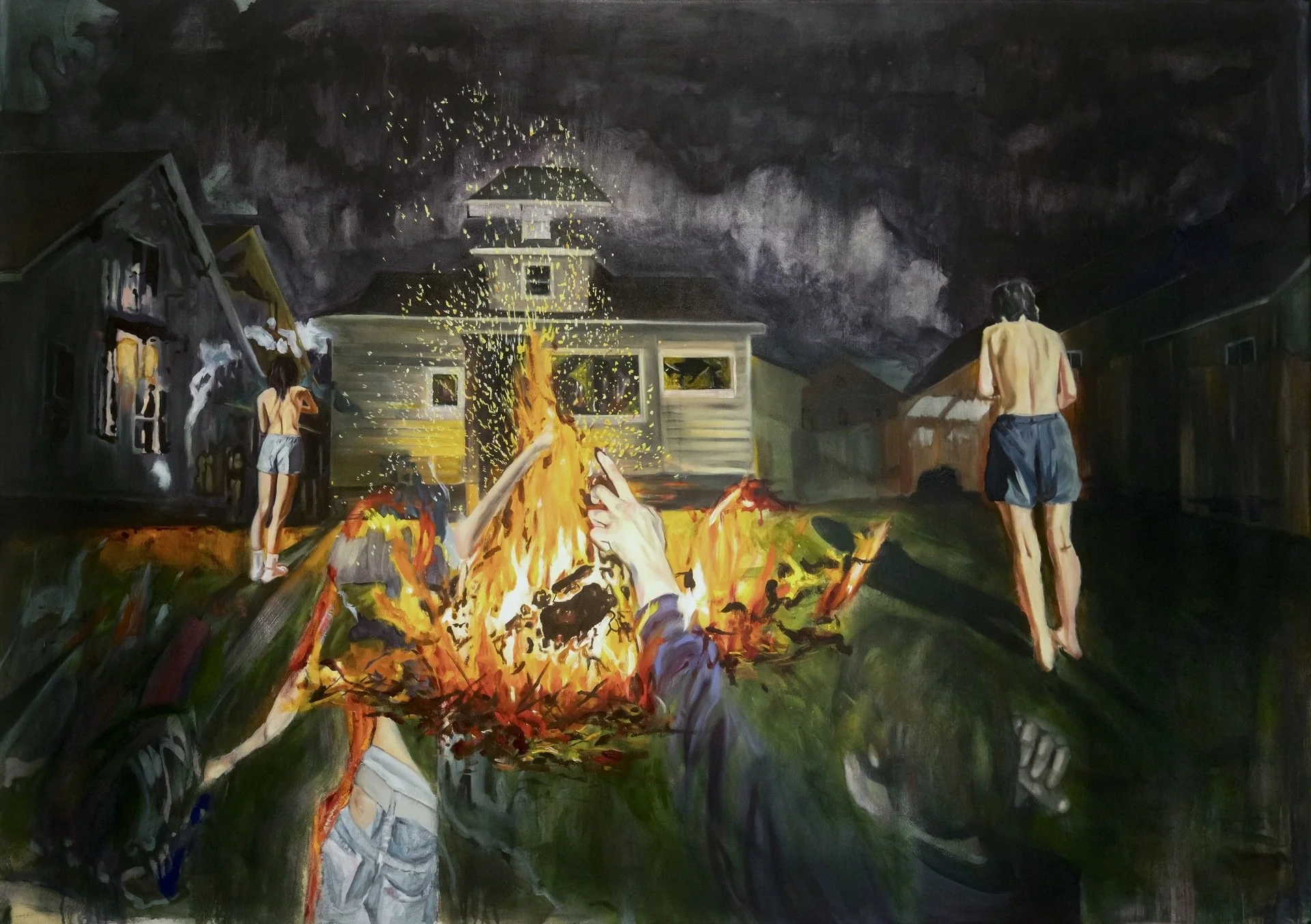
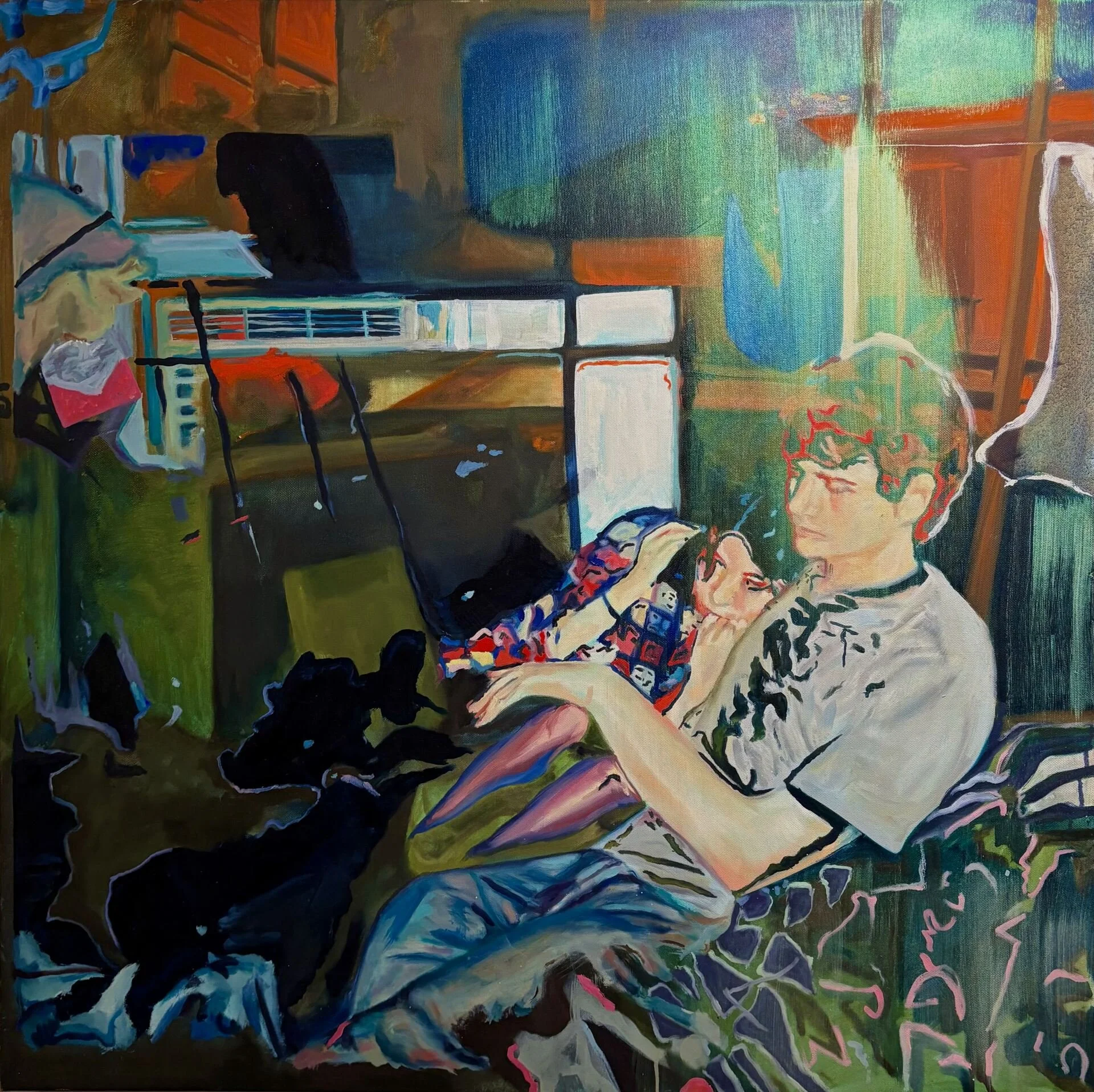
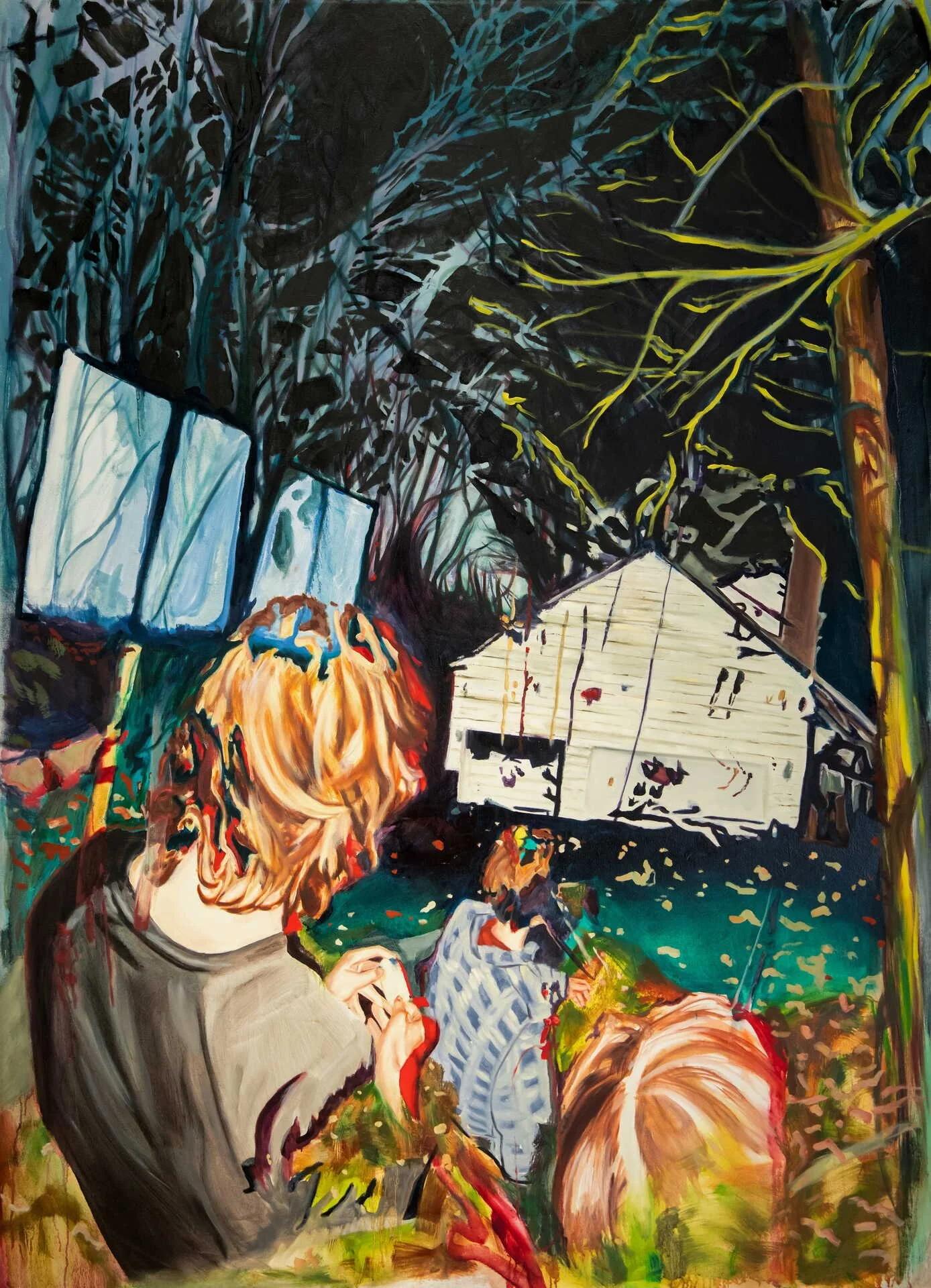
The artists in this section focus on the narrative potential of seriality, telling stories through multiple, related works. Jessica Baker stitches her late mother’s well-worn playing cards into loose grids, intimate assemblages that convey a sense of pathos and loss. Michael Ajerman has created dozens of drawings and paintings of the neighborhood cat who first snuck into his London apartment in 2020, documenting their relationship as well as his own artistic development. Julie Carcione Cavaz’s lace collars depict the mythological figure Medusa, their delicate rayon threads forming the sinuous deadly snakes that sprout from her head. In quite distinct ways, Glen Holland and Nicholas Phitides portray scenes of weird, anxious America. Holland imbues the everyday with dream-like disquiet, while Phitides’ stark, disjointed canvases convey a foreboding unease about the future.
Jessica Baker
Jessica A. Baker
Posthumous Collections III
Playing cards and embroidery thread
19" x 18" x 0"
$1,500.00
Jessica A. Baker
Posthumous Collections II
Playing cards and embroidery thread
13.5" x 31" x 0"
$1,500.00
Michael Ajerman
Michael Ajerman
Curled Up
Color pencils on paper
19.75" x 25.5" x 1"
$3,000.00
Michael Ajerman
Storm
Watercolor on joined watercolor paper
30" x 27" x 0"
$5,000.00
Michael Ajerman
Shoe Lace
Color pencils on pastel paper
25.5" x 19" x 1"
$3,000.00
Julie Carcione Cavaz
Julie Carcione Cavaz
Medusa Gorgon
Rayon thread
22" x 22" x 1"
$2,200.00
Julie Carcione Cavaz
Medusa Roman
Rayon thread
22" x 22" x 1"
$2,200.00
Julie Carcione Cavaz
Medusa Antiquity
Rayon thread
22" x 22" x 1"
$2,200.00
Glen Holland
Glen Holland
The Stores Are All Closed
Water miscible oil on wood panel
25" x 20" x 1"
$4,000.00
Glen Holland
Layers of Time and Space Chopper
Water miscible oil on wood panel
25" x 20" x 1"
$4,000.00
Glen Holland
Laid Out
Painting/comic in water miscible oil on gessoed panel
25" x 20" x 1"
$4,000.00
Nicholas Phitides
Nicholas Phitides
Faultlines
Oil on canvas
86" x 63" x 1"
$2,500.00
Nicholas Phitides
Hangar (it rains for hours)
Oil on canvas
36" x 36" x 2"
$1,000.00
Nicholas Phitides
Final Autumn
Oil on canvas
64" x 91" x 1"
$2,500.00
Wall 2: Nature and the Built Environment
Neil Griess / Kim Tanzer / Monique Fouquet / Lainey Peltier / Marc Phares / Maria Bjorkdahl / Hannah Duggan
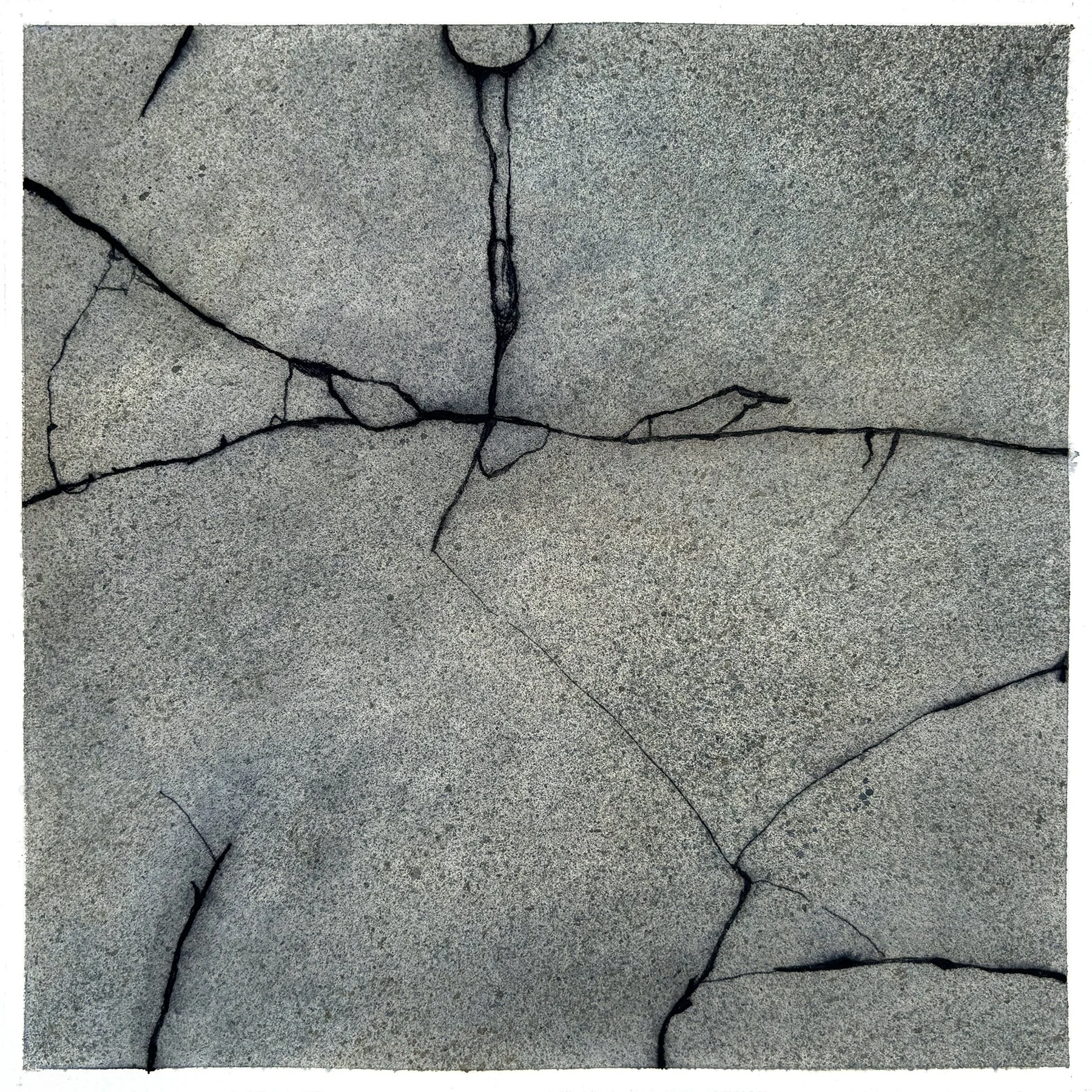
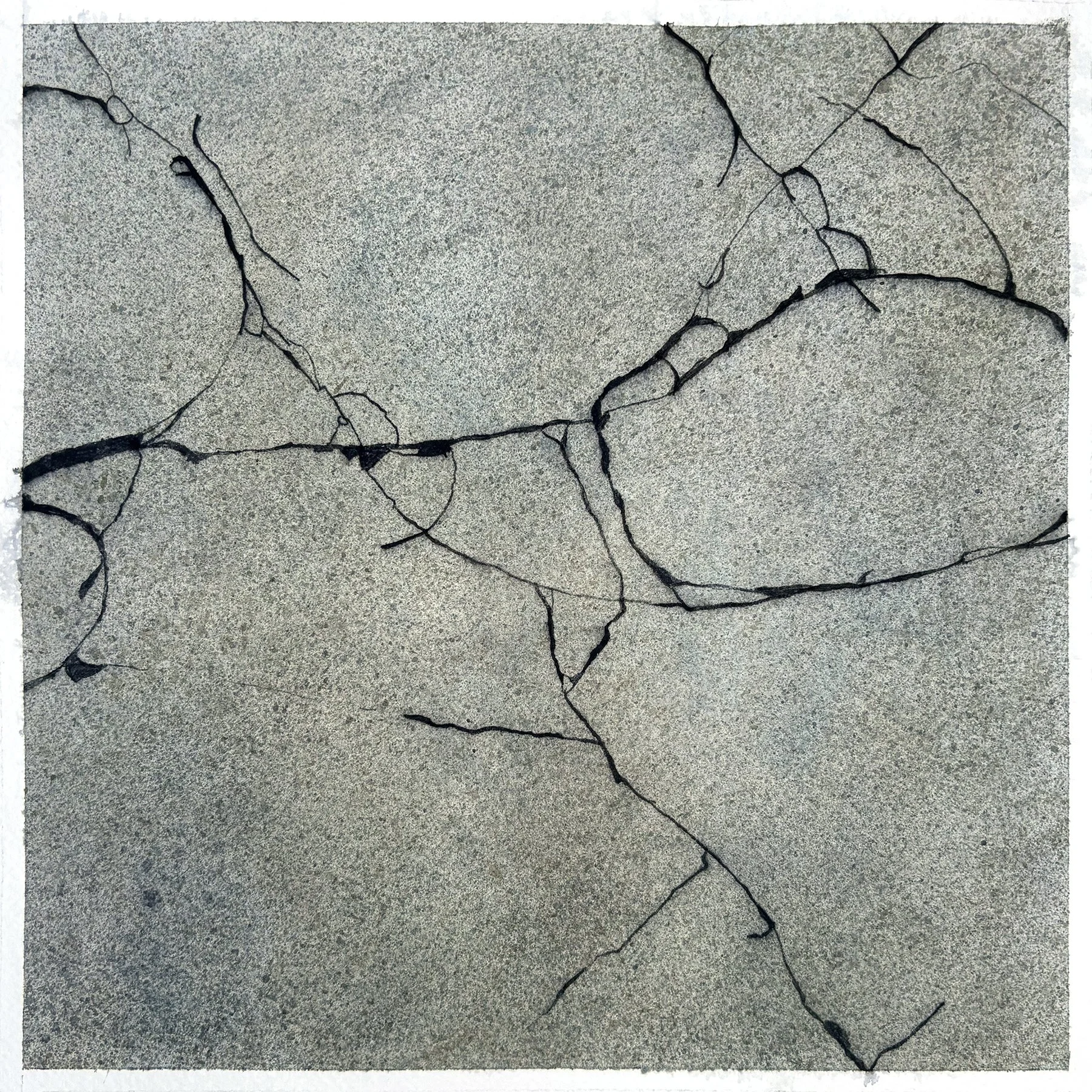
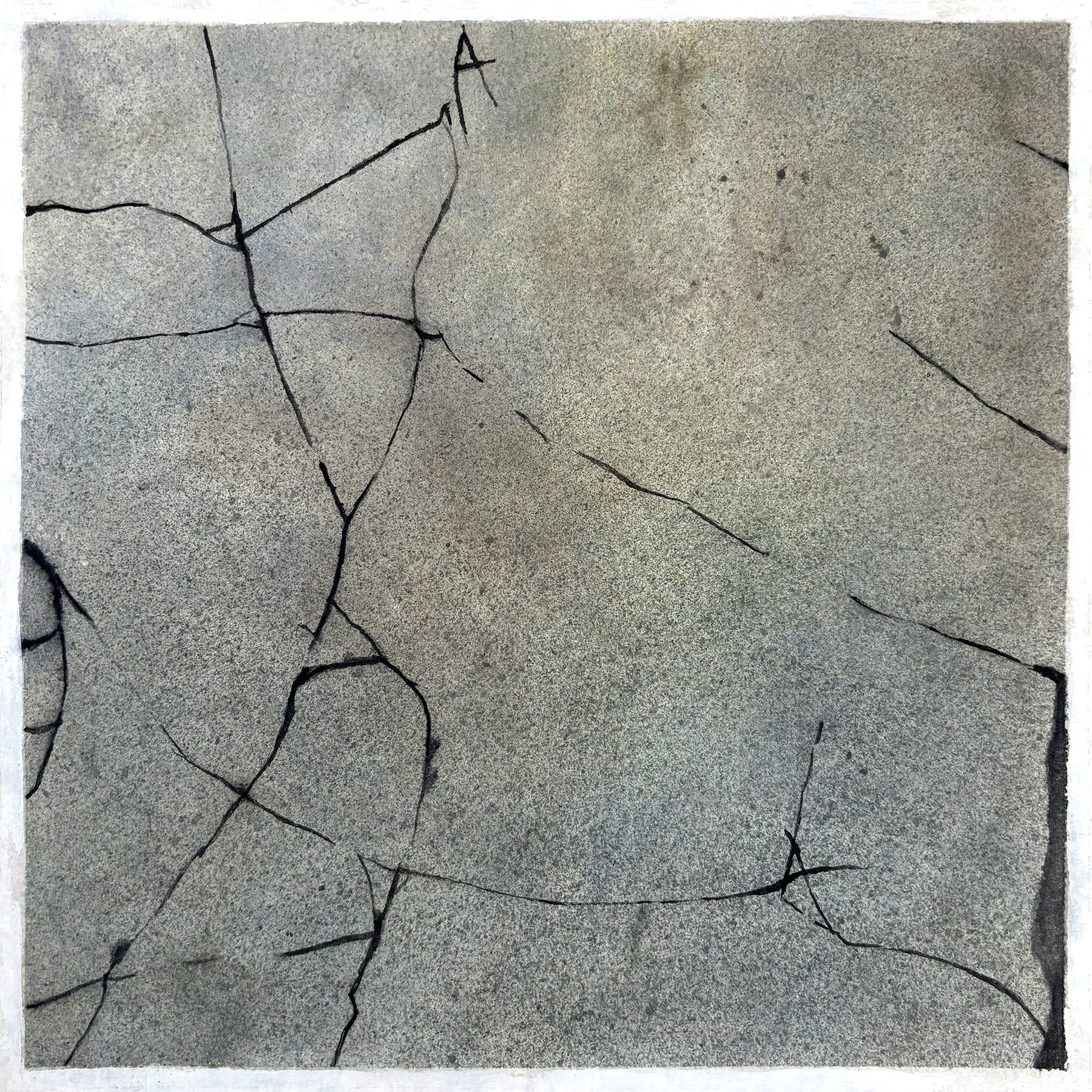
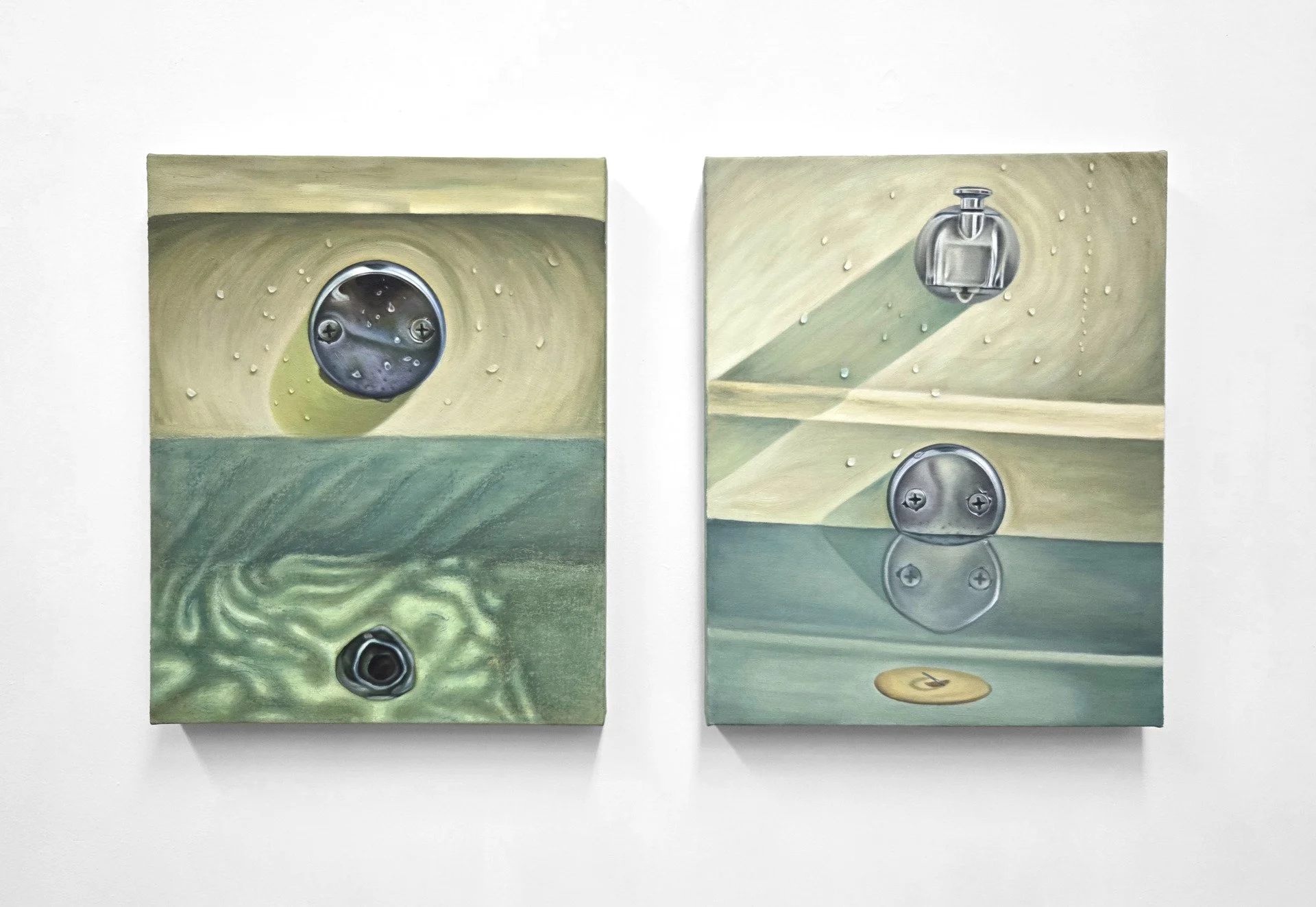
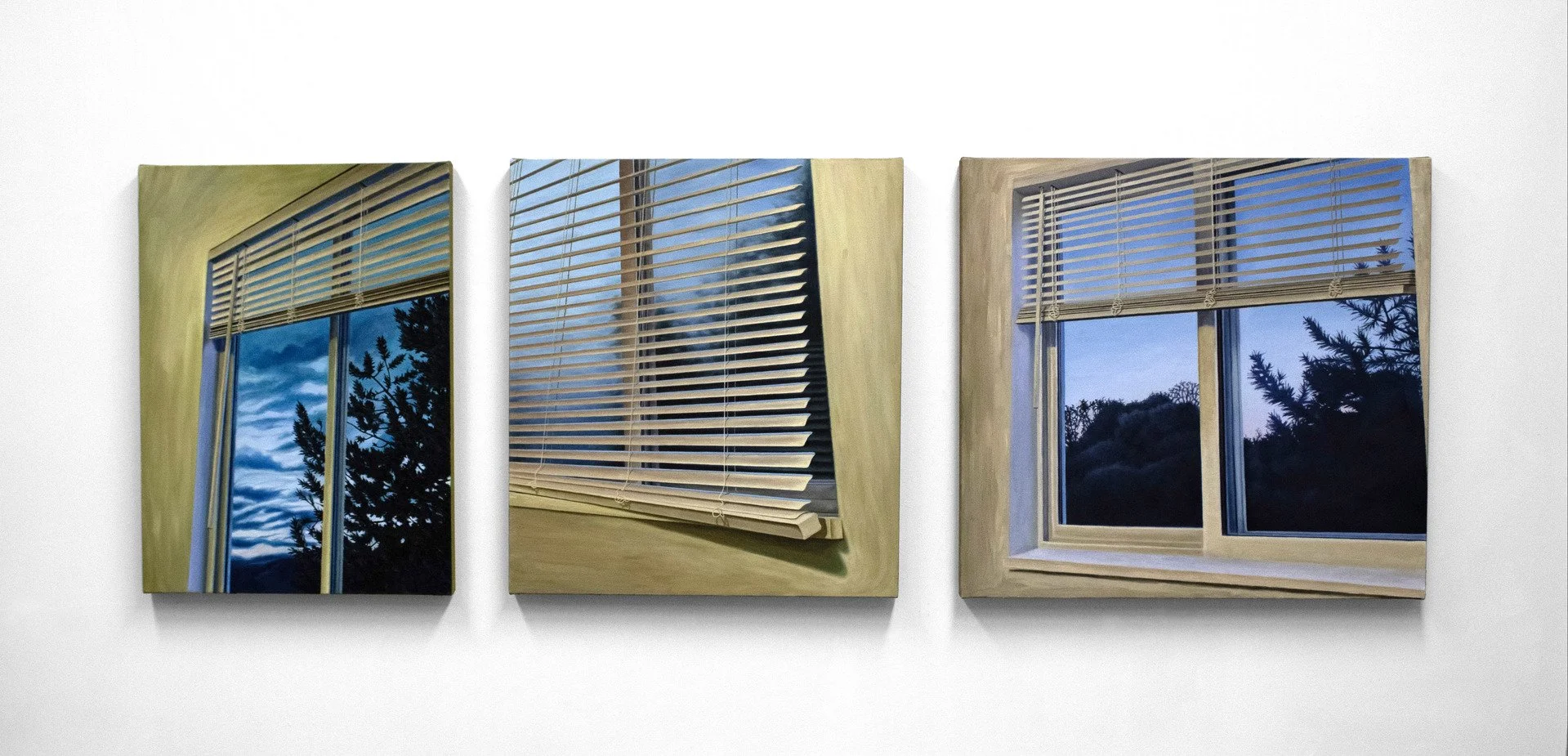
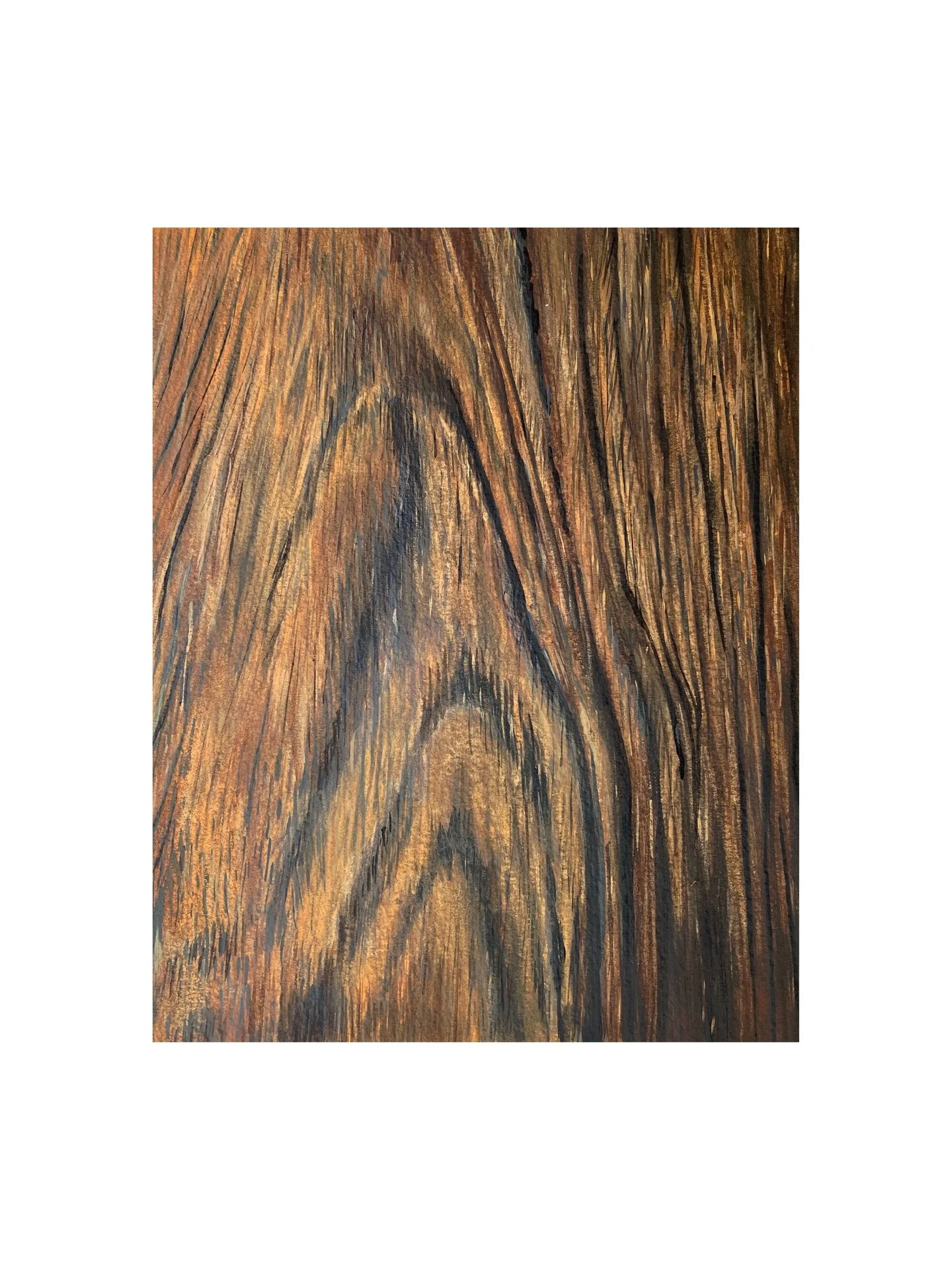
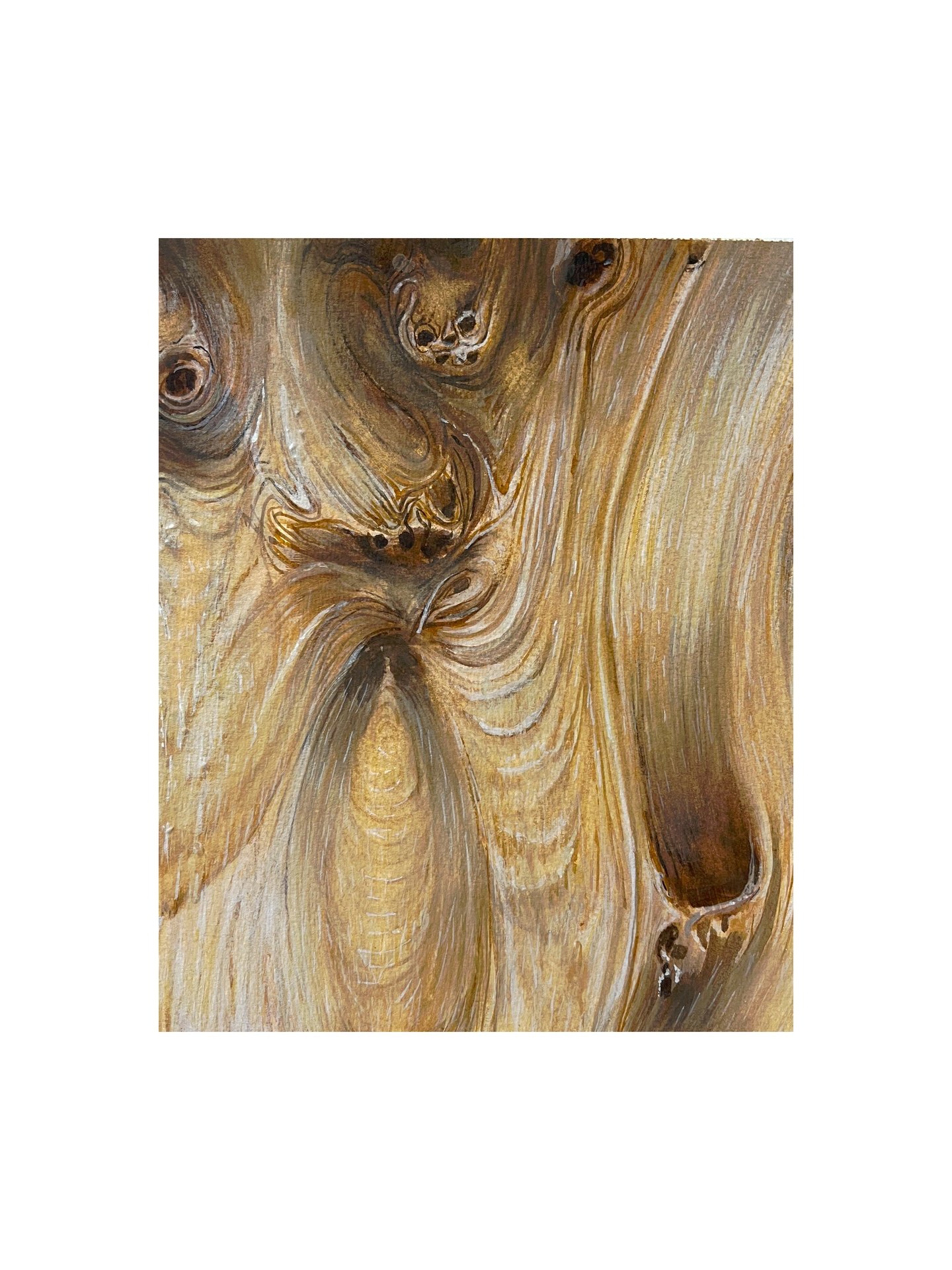
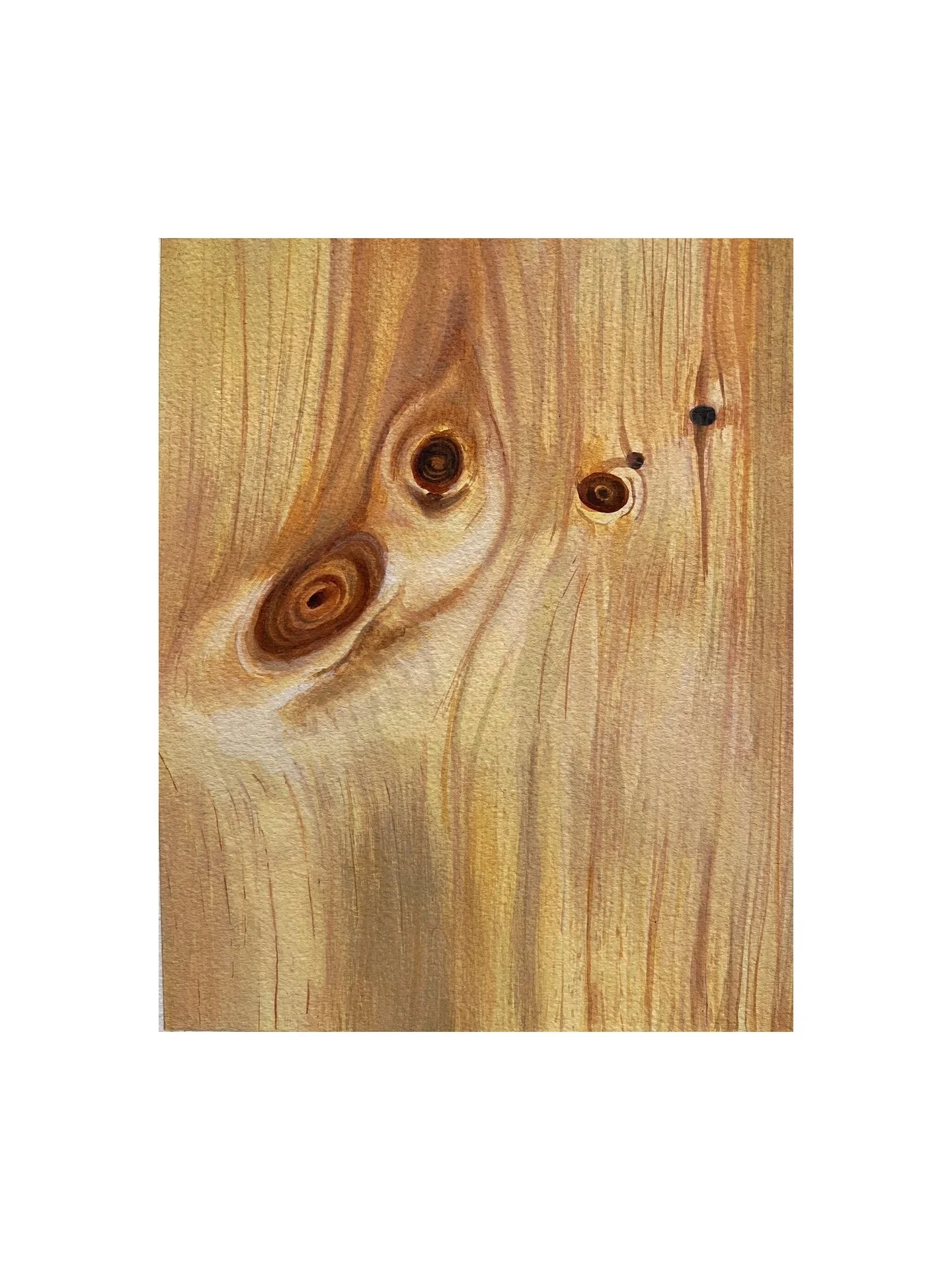
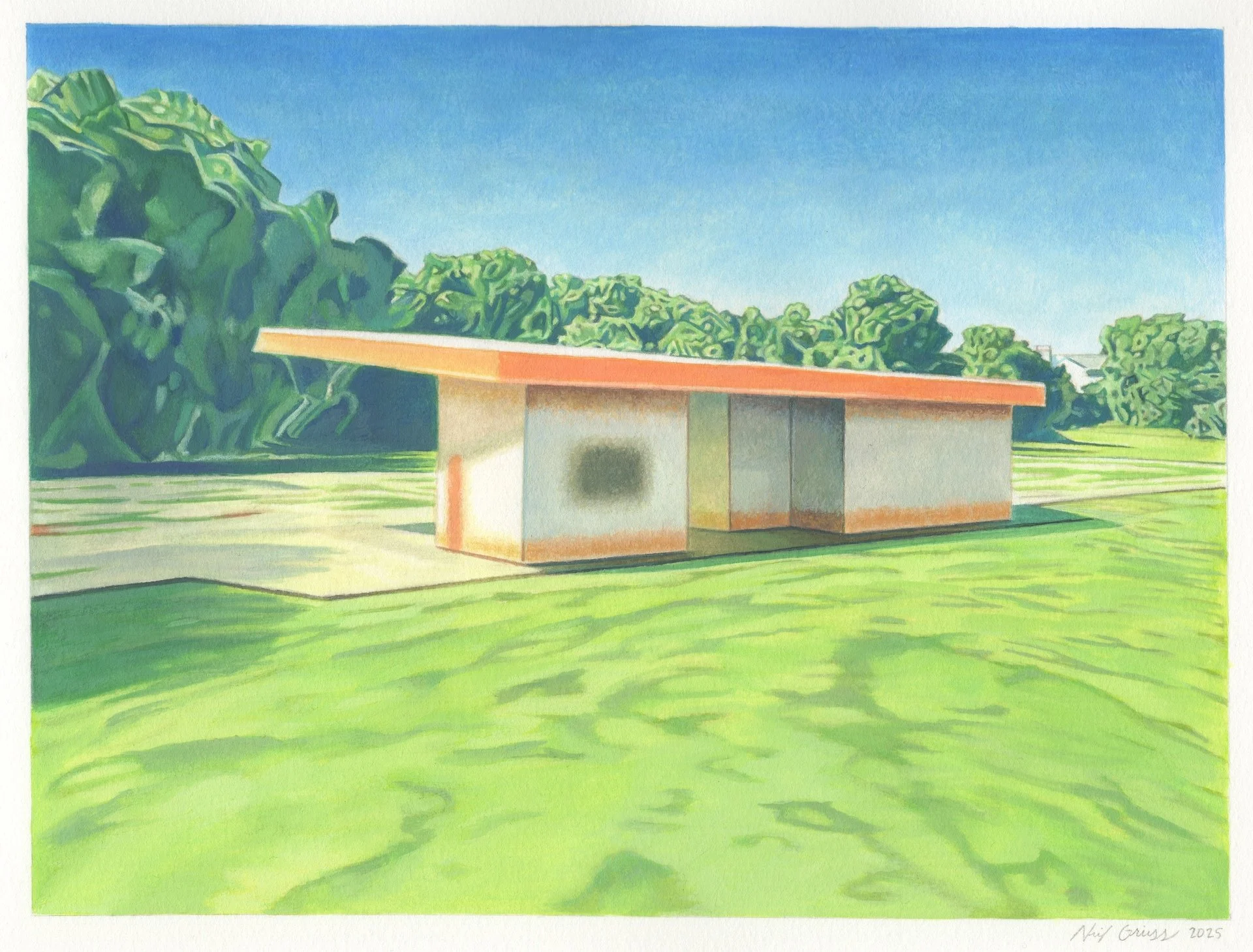
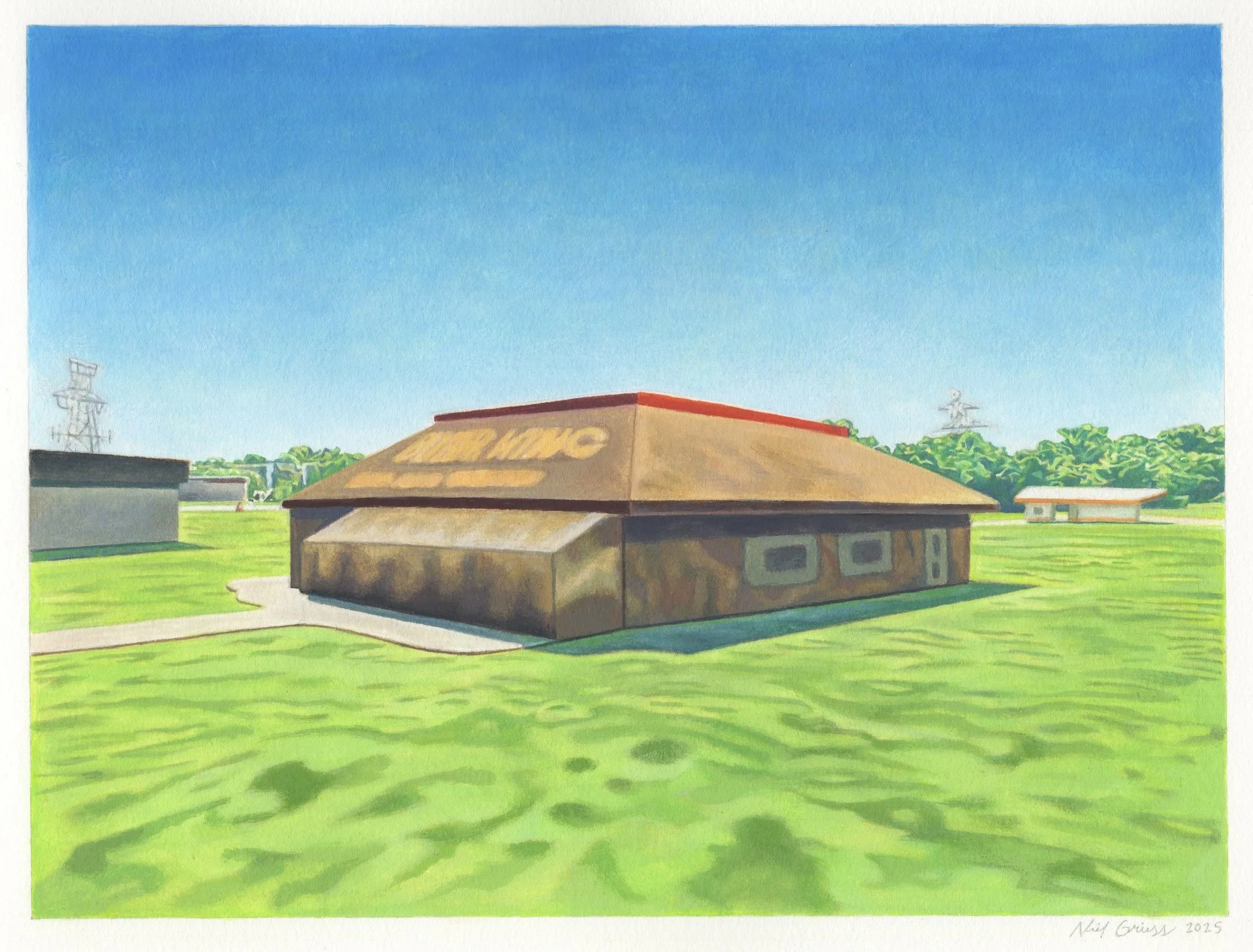
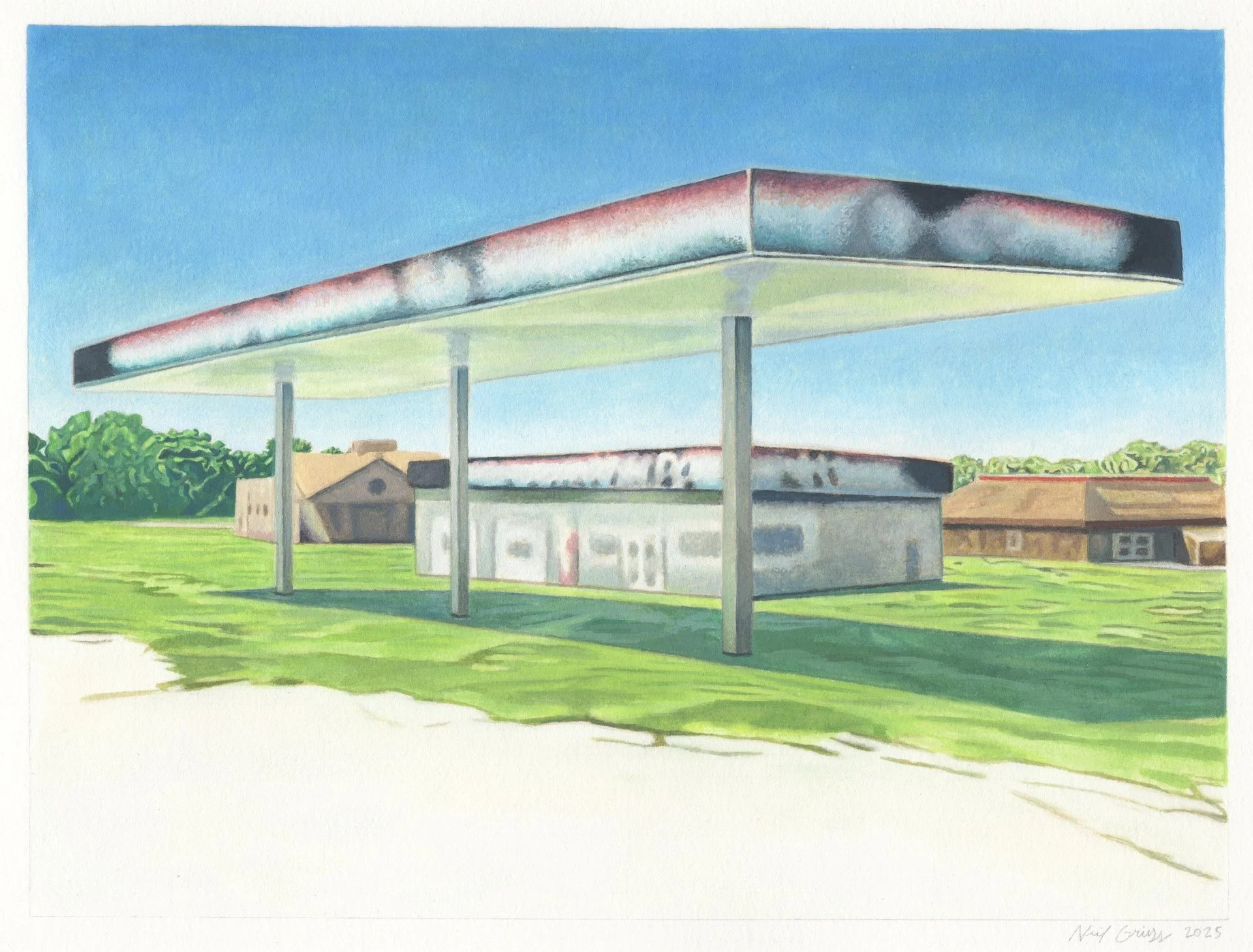
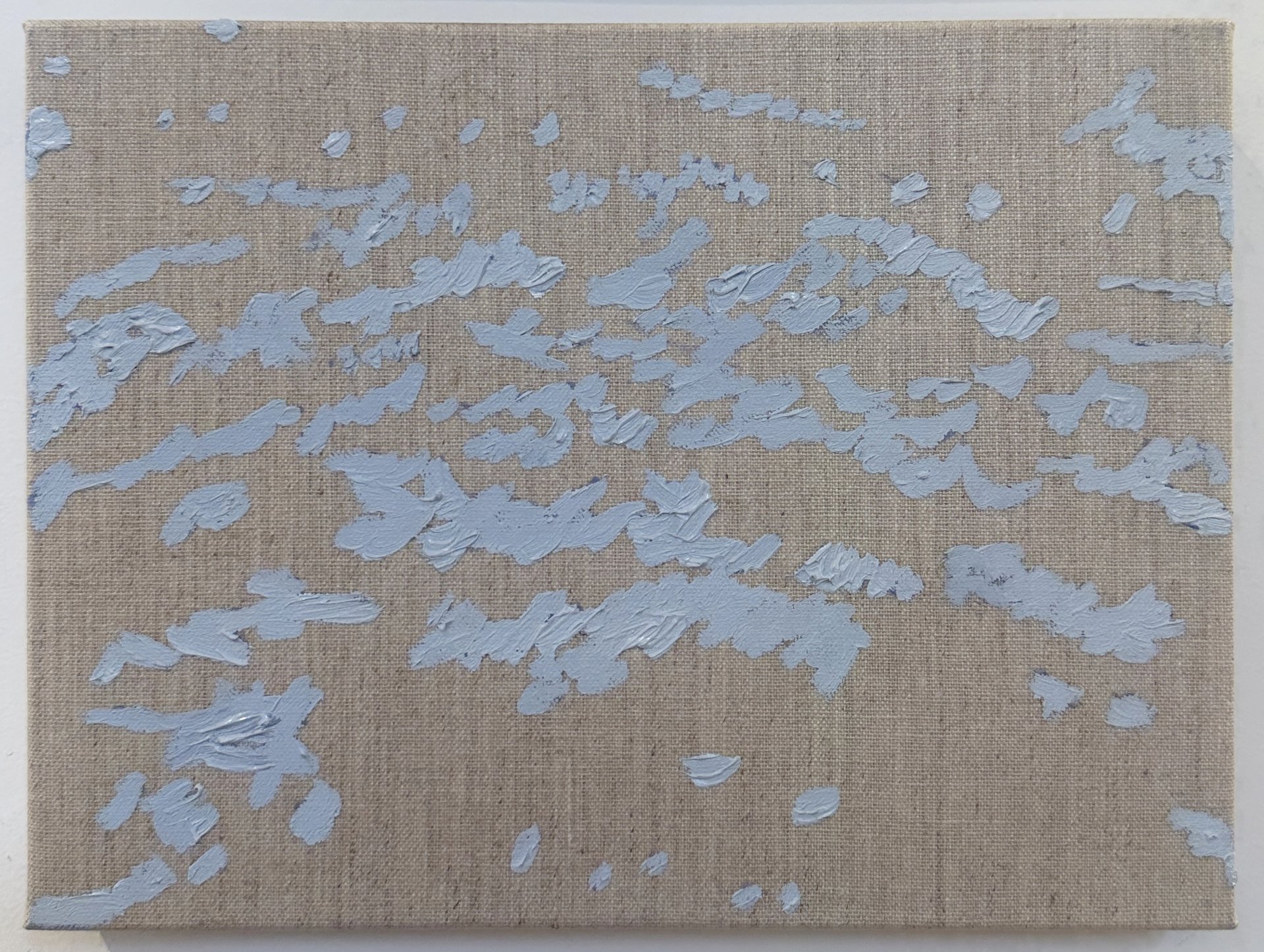
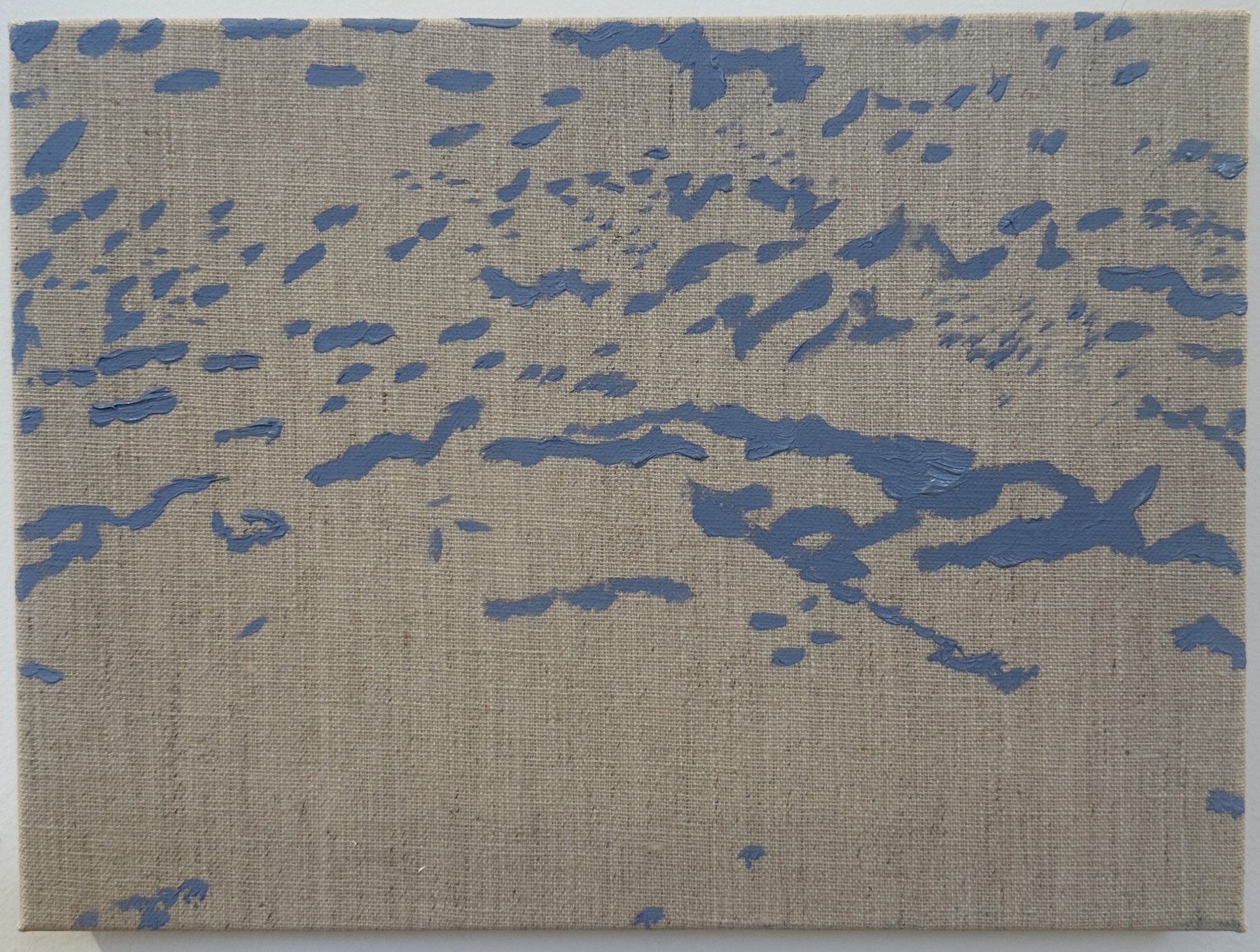
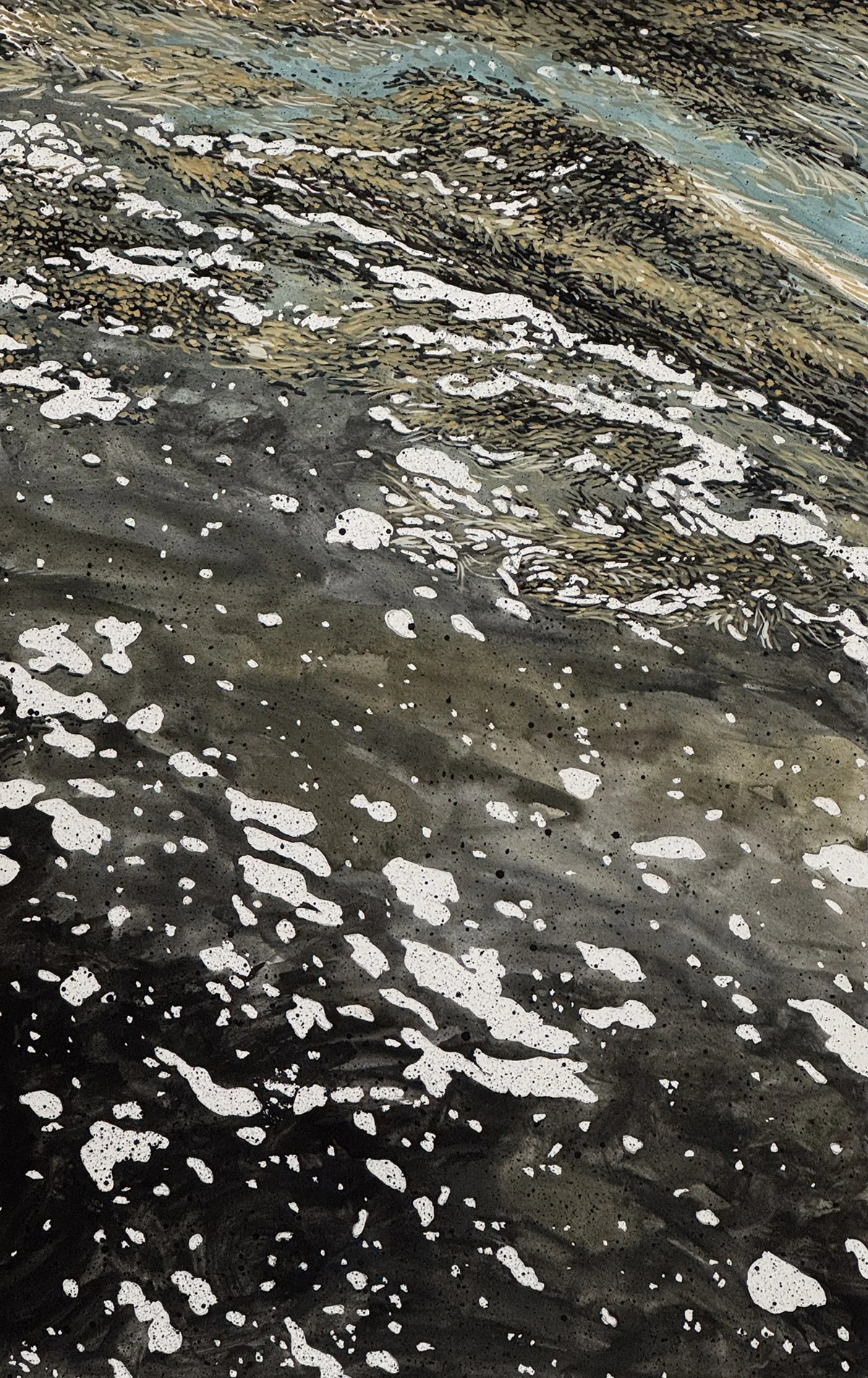
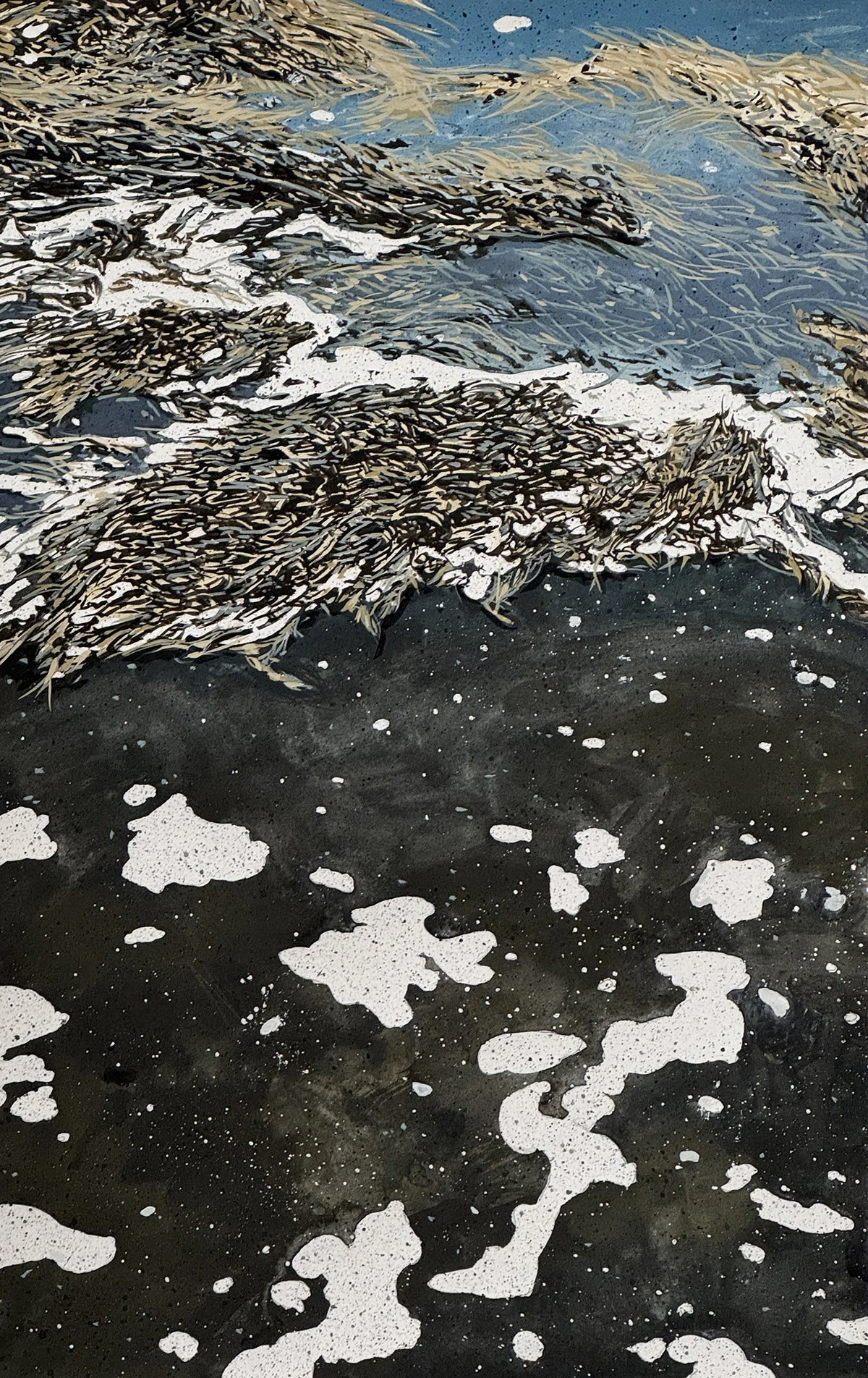
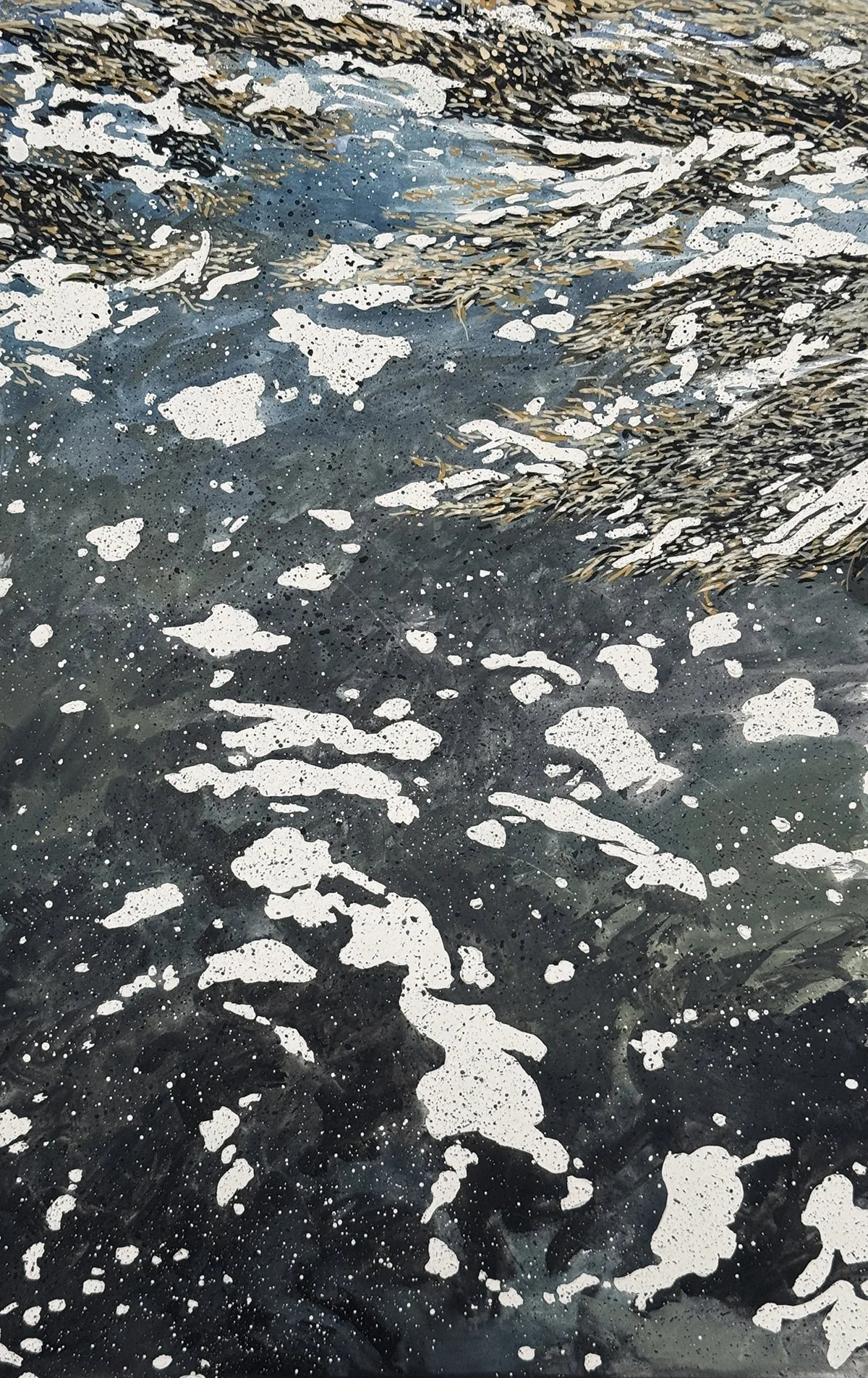
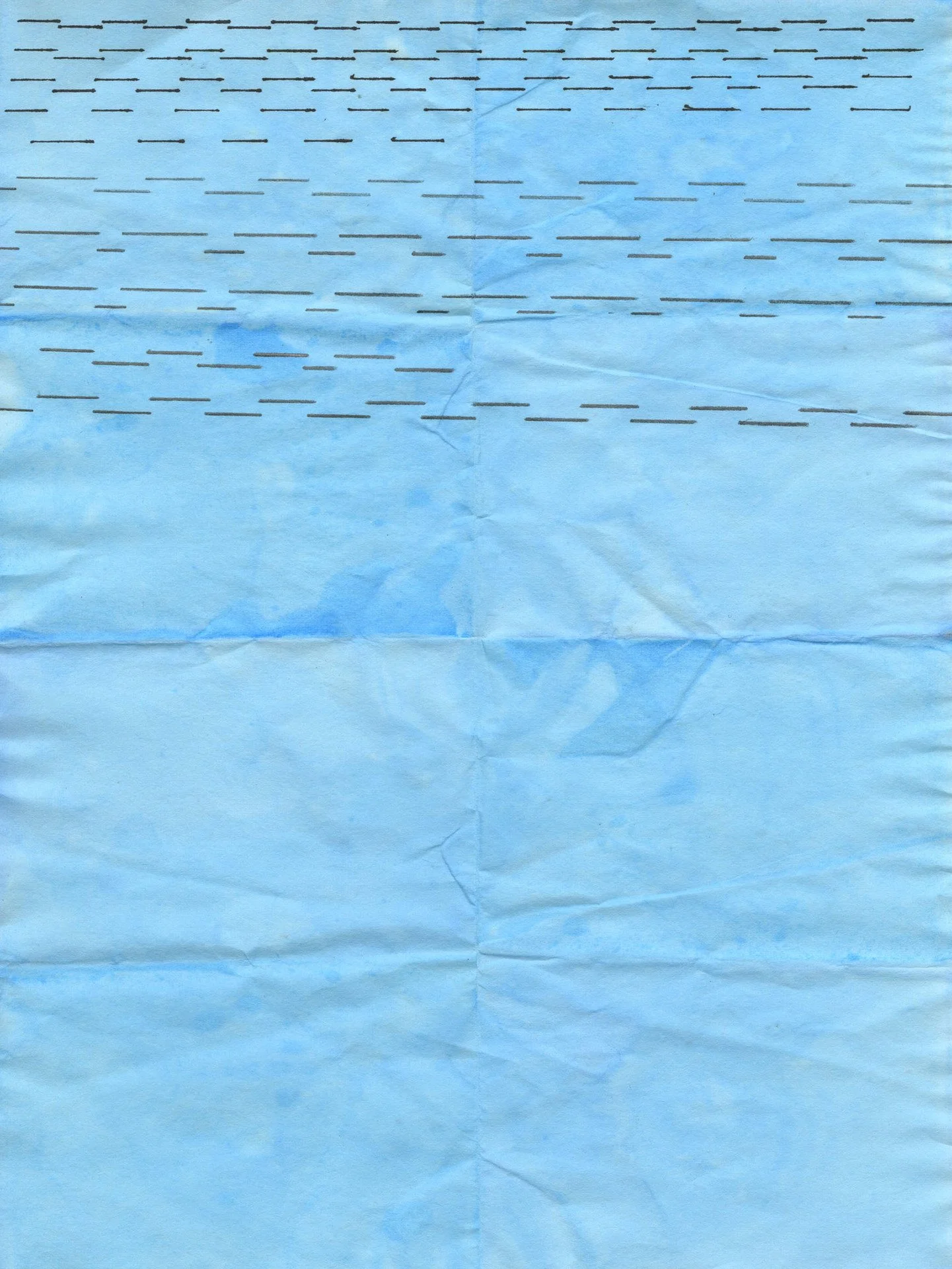
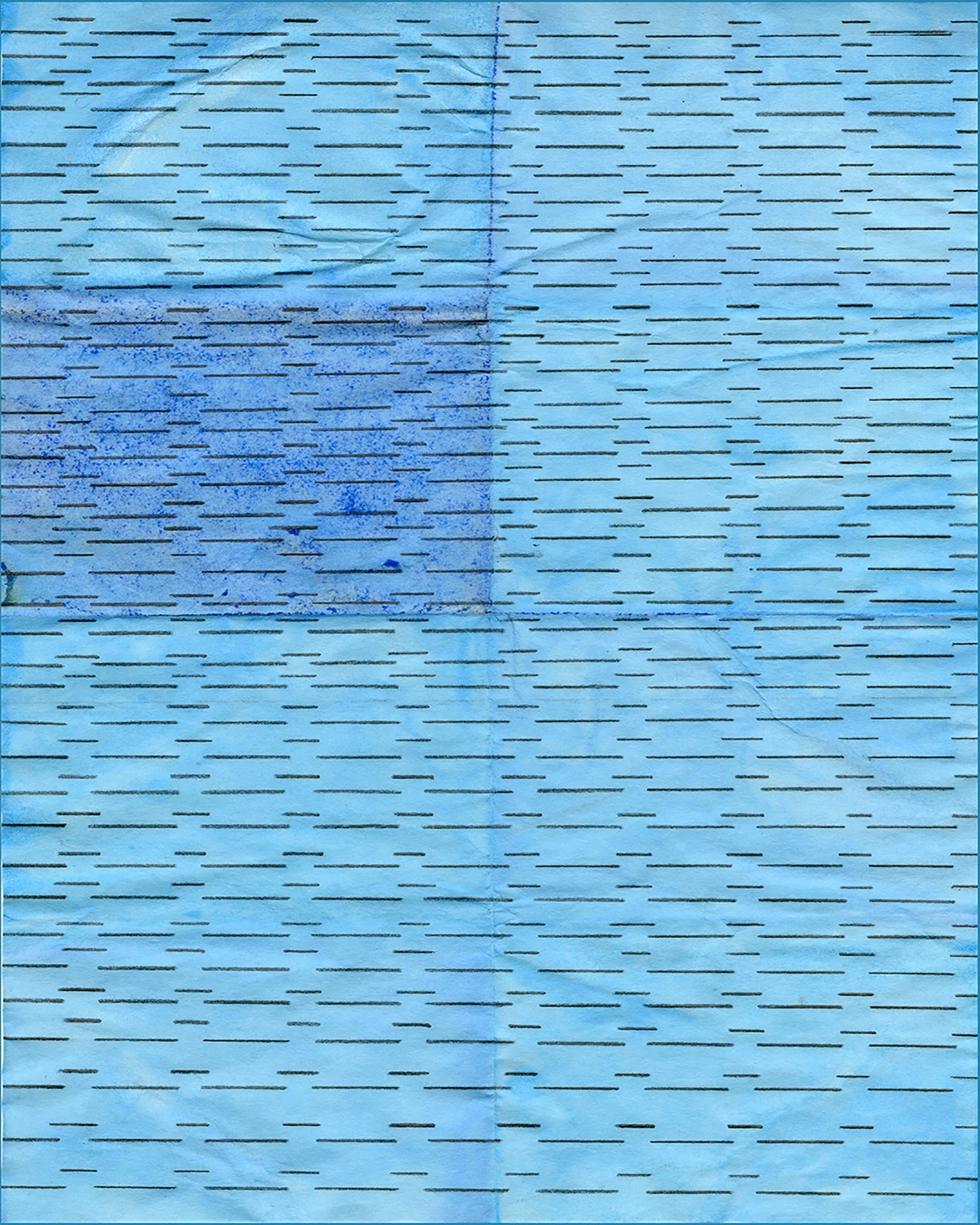
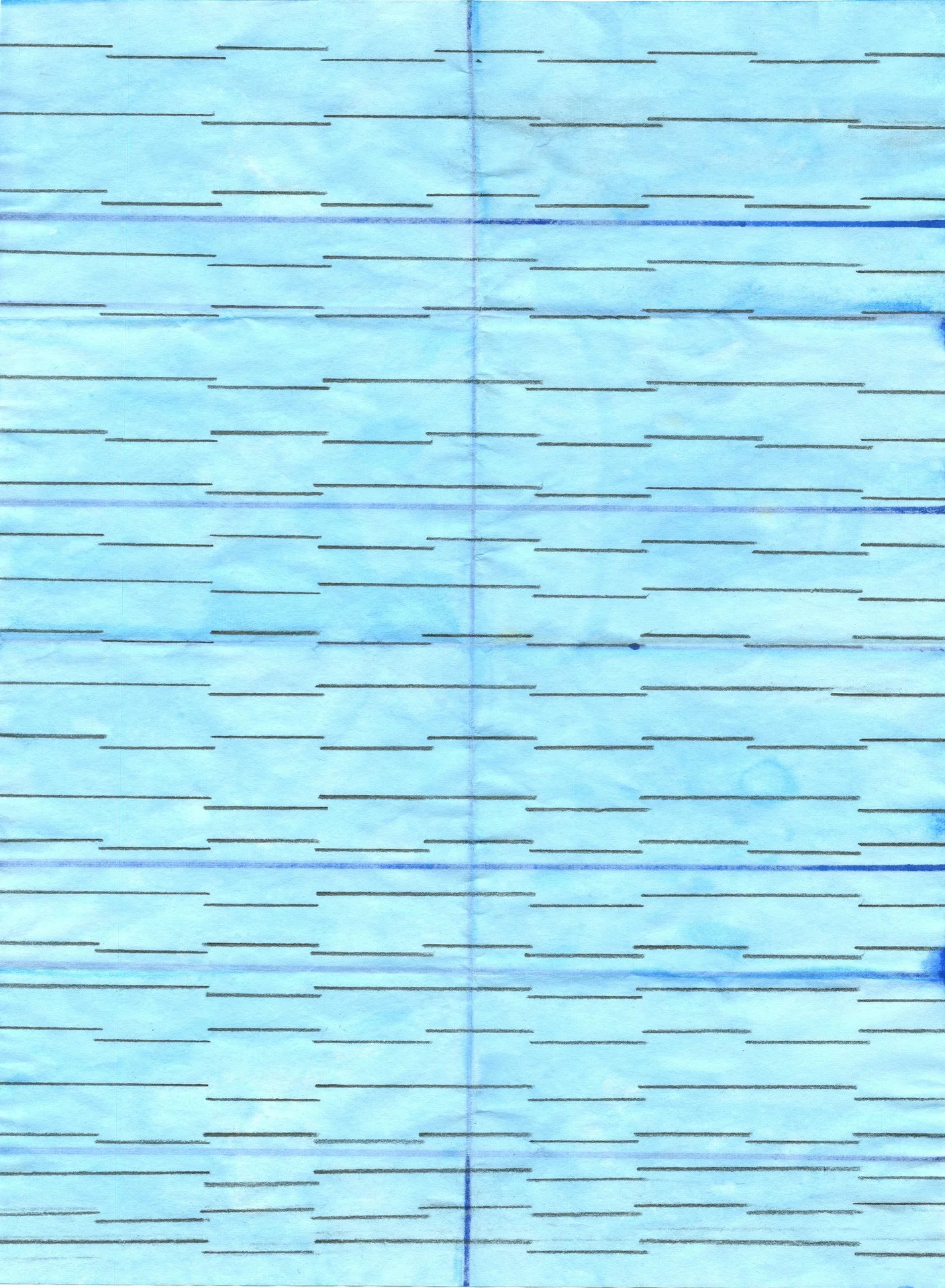
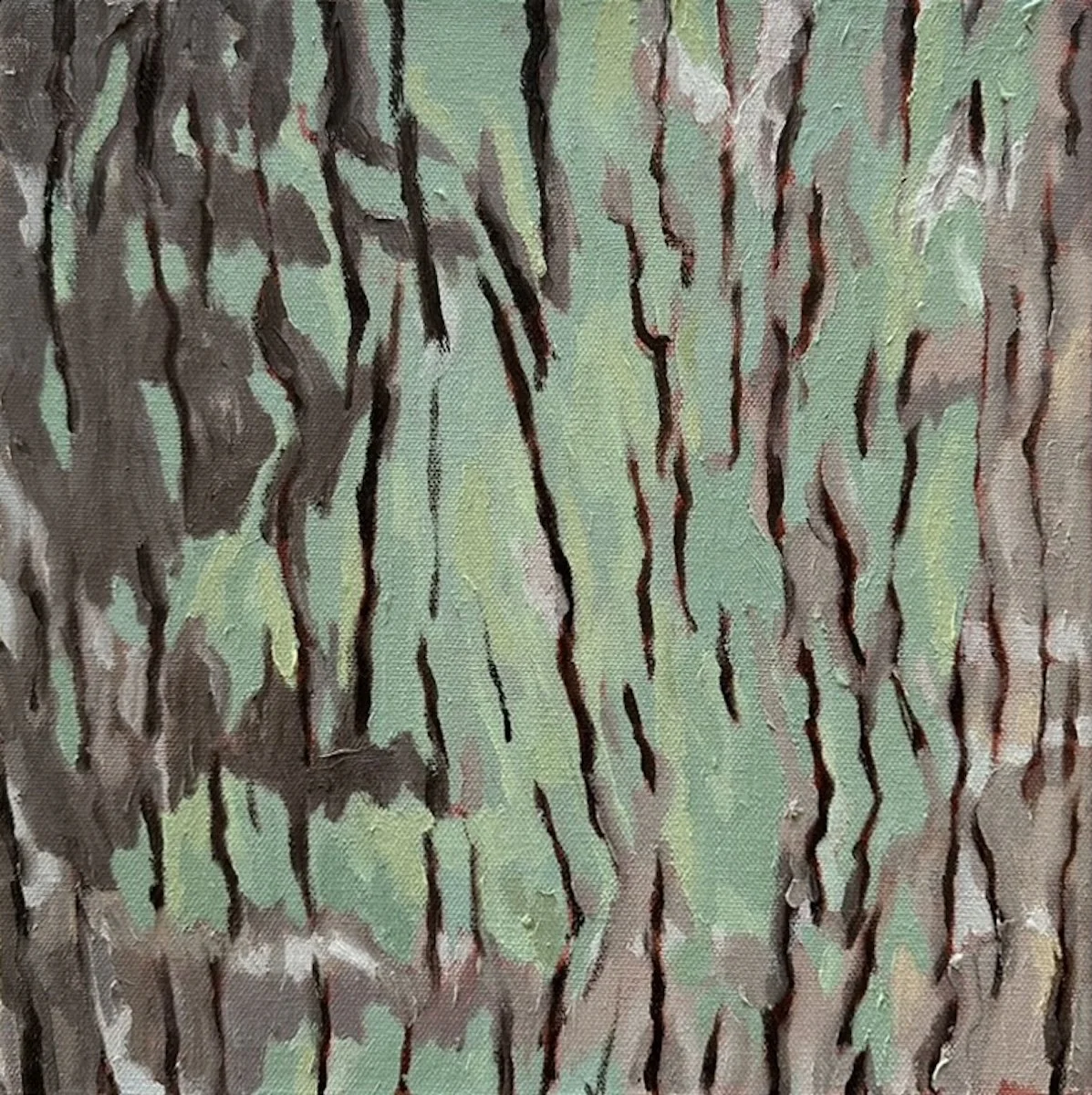
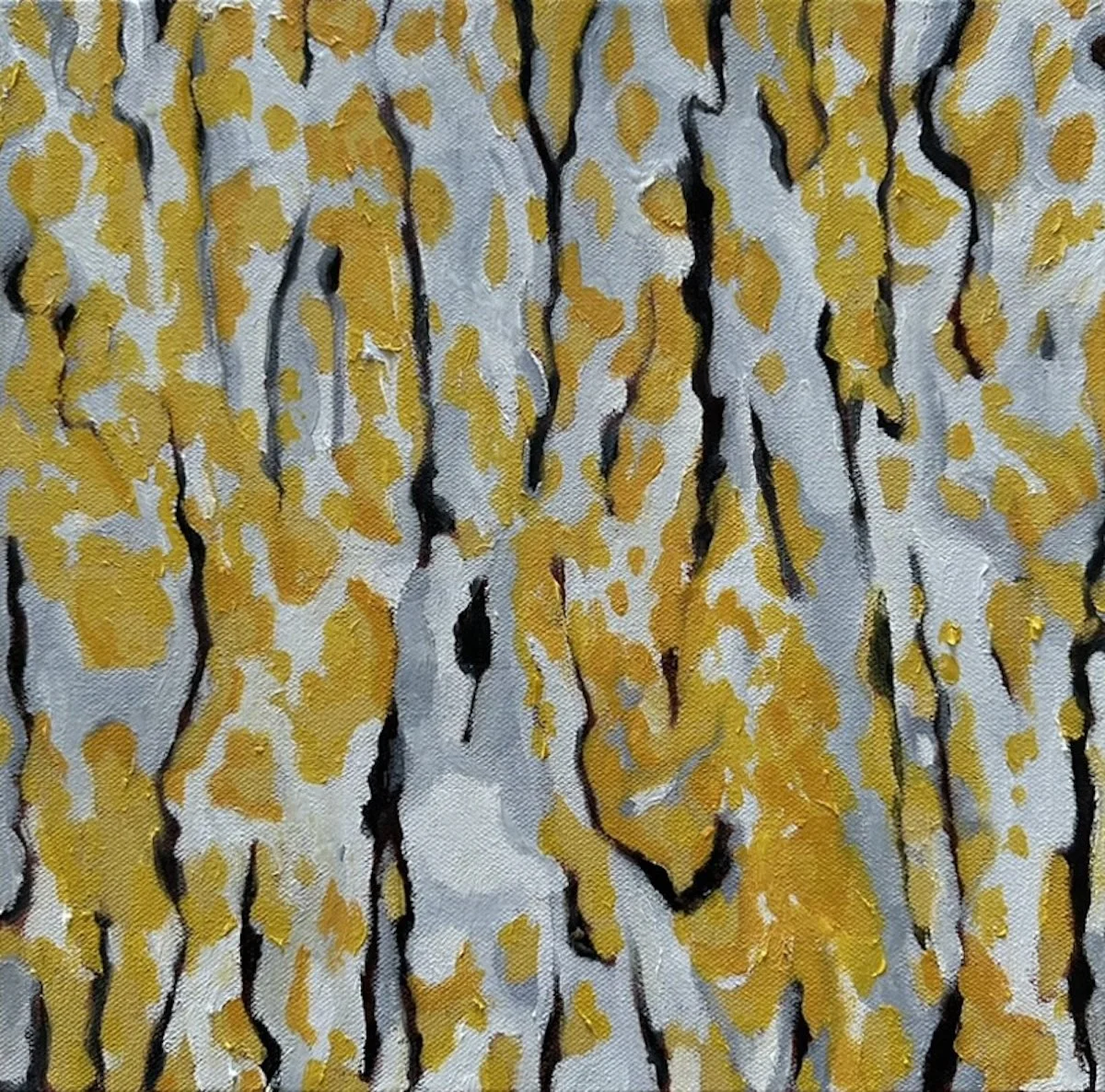
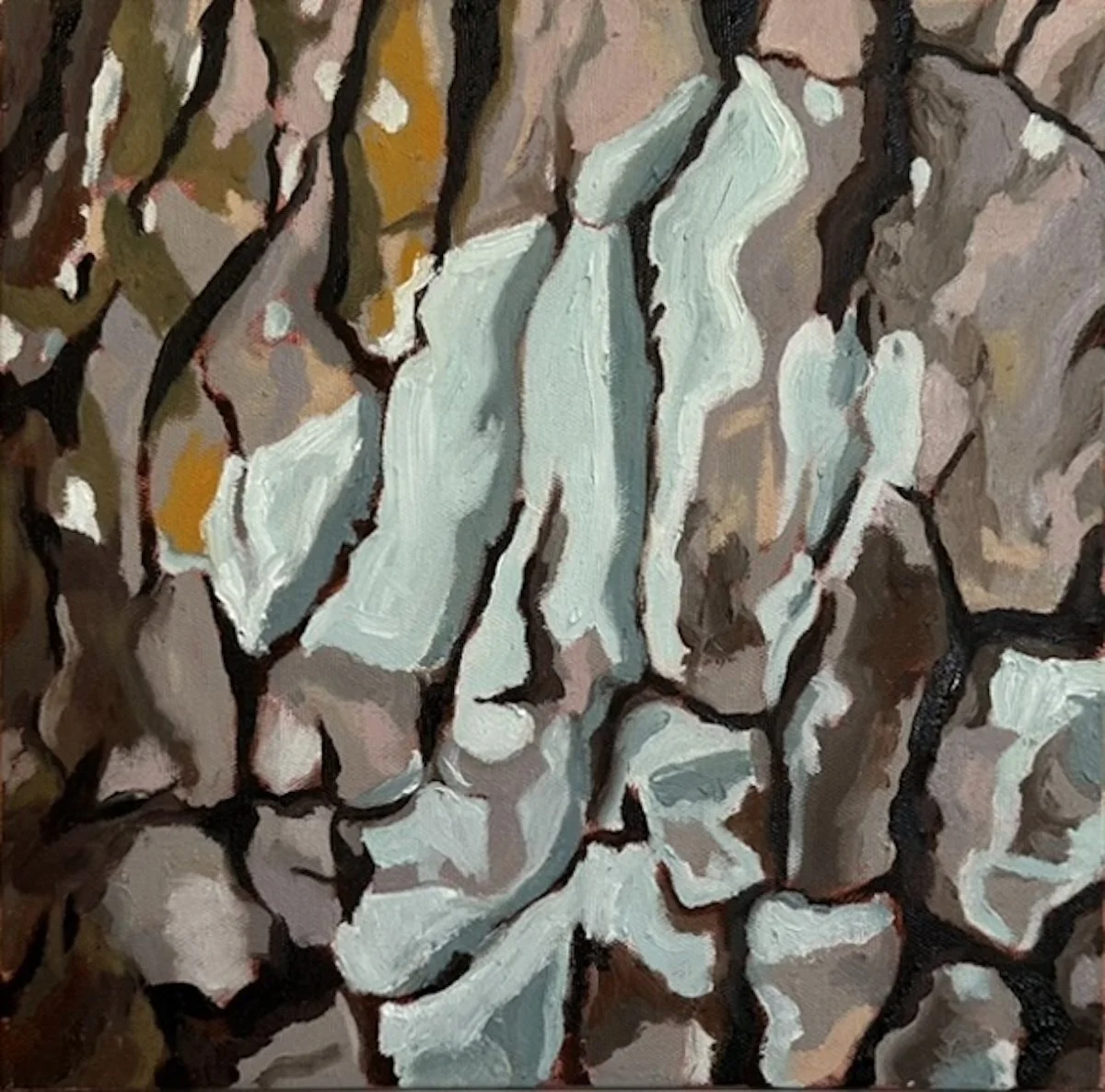
Nature and the built environment have long been fertile subjects for artists working in series, from 19th century naturalists documenting flora and fauna, to the Bechers’ architectural typologies. The artists on this wall continue to find inspiration in the world around them, be it natural or man-made. Neil Greiss draws on satellite images to create paintings of buildings that once stood in his childhood neighborhood in Omaha, Nebraska, fusing the haze of memory with the dispassionate clarity of technology. Kim Tanzer’s 1:1 depictions of tree bark hover between representation and abstraction, as meticulous renderings of surface texture dissolve into color and form. Monique Fouquet focuses on various types of woodgrain, though her watercolors are based on digital images from wood veneer suppliers, highlighting our mediated experience of nature. Marc Phares and Lainey Peltier both choose water as their subject, but the results could not be more divergent. Phares’ nearly photorealistic gouaches capture the rich visual and biological soup of coastal waters, whereas Peltier’s minimalist, monochromatic canvases give the faintest suggestion of waves with her restrained fields of lyrical blue brushstokes. Maria Bjorkdahl painstakingly renders the sidewalks of Los Angeles in ink and watercolor, each painting depicting the individual cracks and mottled greys of specific patches of street in the anonymous urban landscape. Hannah Duggan turns her eye to mundane domestic spaces, chronicling subtle variations in light and composition that reveal glimpses of her interior life.
Neil Griess
Neil Griess
The Field I (Gas Station)
Gouache on watercolor paper
5.875" x 7.875" x 0.00"
$1,250.00
Neil Griess
The Field V (Putt-Putt)
Gouache on watercolor paper
5.875" x 7.875" x 0.00"
$1,250.00
Kim Tanzer
Kim Tanzer
Camphor
Oil on canvas
12" x 12" x 1.5"
$400.00
Kim Tanzer
Lichen and Bark
Oil on canvas
12" x 12" x 1.5"
$400.00
Kim Tanzer
Azalea Lane Oak with Lichen
Oil on canvas
12" x 12" x 1.5"
$400.00
Monique Fouquet
Monique Fouquet
Knotty Pine
Watercolour on Arches cold press rag paper
16" x 12" x 0"
$800.00
Monique Fouquet
Brazilian Rosewood
Watercolour on Arches cold press rag paper
16" x 12" x 0"
$800.00
Monique Fouquet
Manio Burl
Watercolour on Arches cold press rag paper
16" x 12" x 0"
$800.00
Lainey Peltier

Lainey Peltier
July 6th (Caribbean Sea)
Oil on linen
9" x 12" x 1.5"
$1,500.00
Lainey Peltier
July 6th (Caribbean Sea) (detail)
Oil on linen
9" x 12" x 1.5"
$1,500.00
Lainey Peltier
July 6th (Caribbean Sea) (detail)
Oil on linen
9" x 12" x 1.5"
$1,500.00
Marc Phares
Marc Phares
Sea Floaters 02
Gouache on high quality watercolor paper
17" x 11" x .1"
$2,000.00
Marc Phares
Sea Floaters 03
Gouache on high quality watercolor paper
17" x 11" x .1"
$2,000.00
Marc Phares
Sea Floaters 04
Gouache on high quality watercolor paper
17" x 11" x .1"
$2,000.00
Maria Bjorkdahl
Maria Bjorkdahl
LA Sidewalk ID No. 694,252 - I
Watercolor, ink, and acrylic on paper mounted on canvas
12" x 12" x 1.5"
$650.00
Maria Bjorkdahl
LA Sidewalk ID No. 694,252 - IV
Watercolor and ink on paper mounted on canvas
12" x 12" x 1.5"
$650.00
Maria Bjorkdahl
LA Sidewalk ID No. 694,252 - II
Watercolor and ink on paper mounted on canvas
12" x 12" x 1.5"
$650.00
Hannah Duggan
Hannah Duggan
Windows
Oil on canvas
24" x 72" x 1.5"
$8,000.00
Hannah Duggan
Drains
Oil on canvas
24" x 35" x 1.5"
$4,000.00
Wall 3: Abstraction and Pattern
Belinda Yang / Fabiola Gironi / Justin Phillips / Ariana Padovano / Emre Meydan / Rajee Aryal / John Richardson / Will Suglia
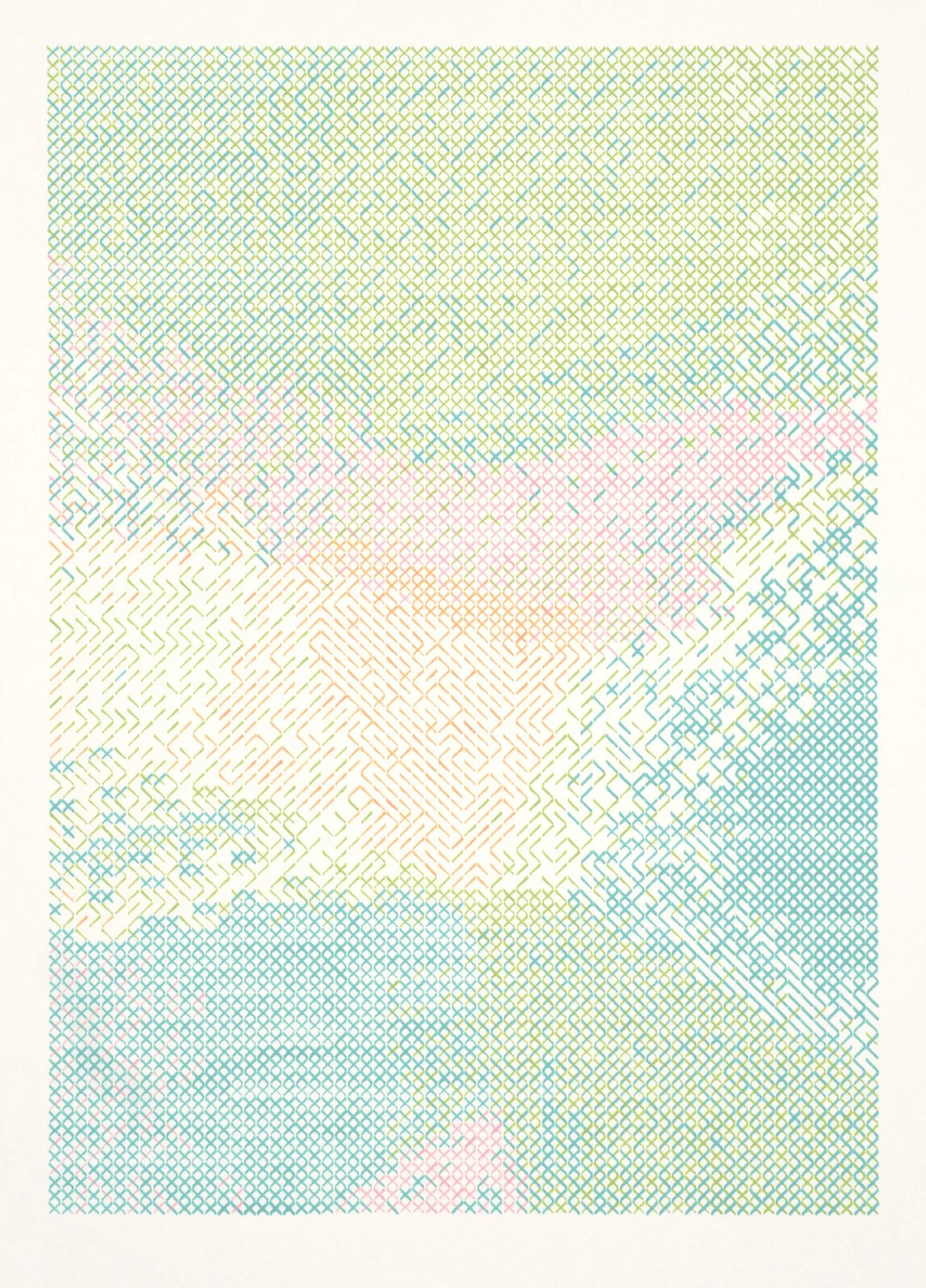
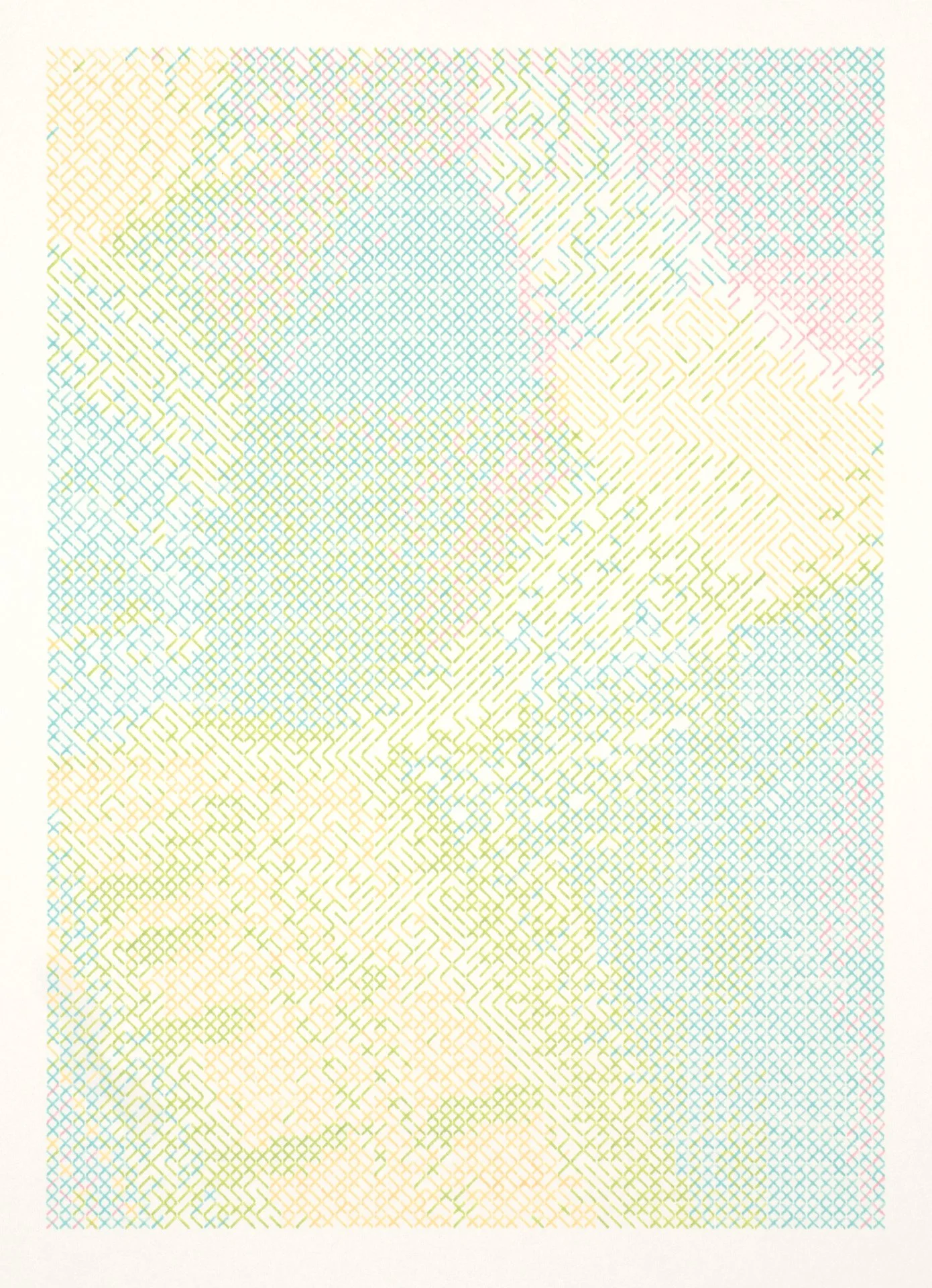
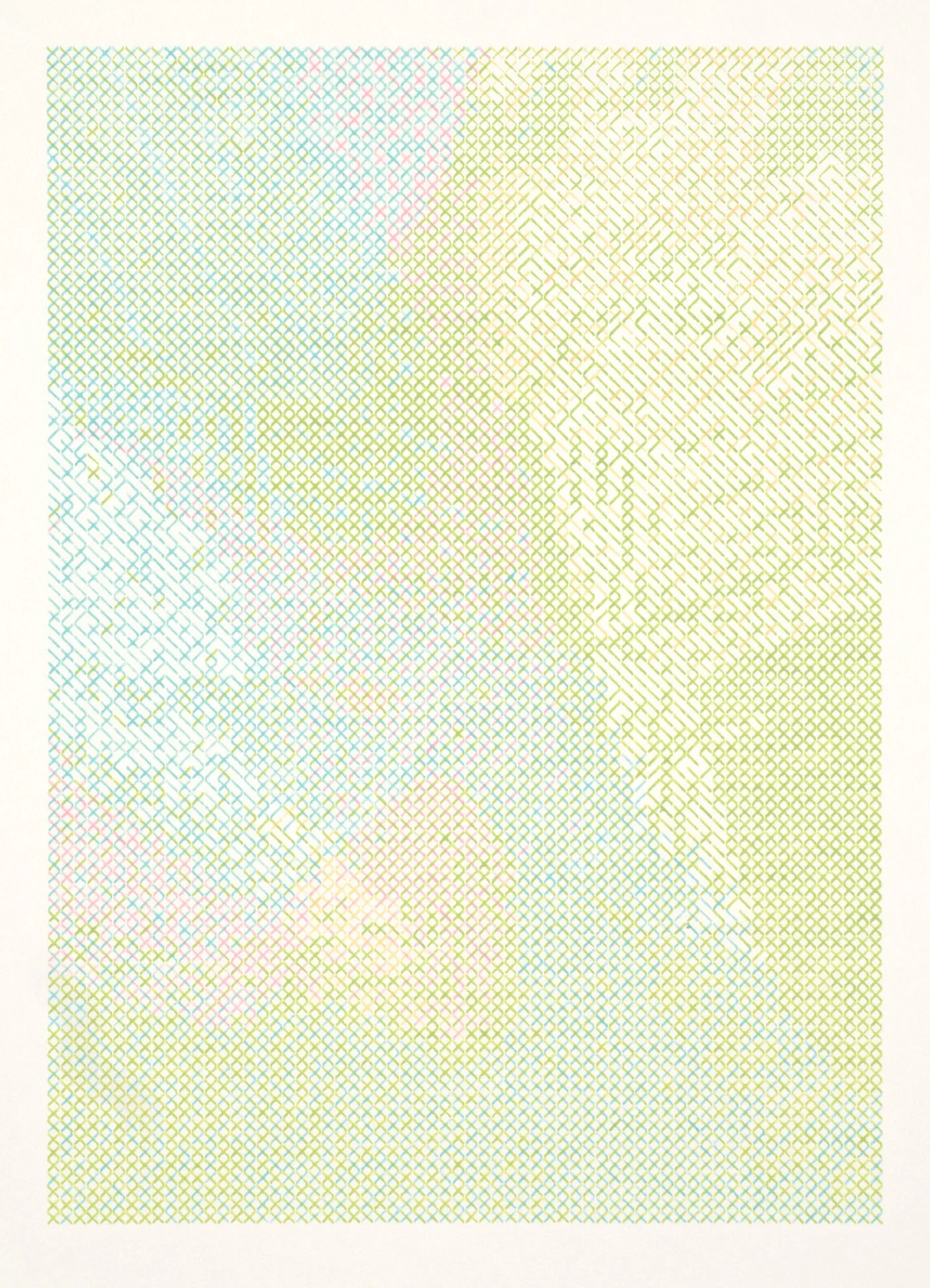
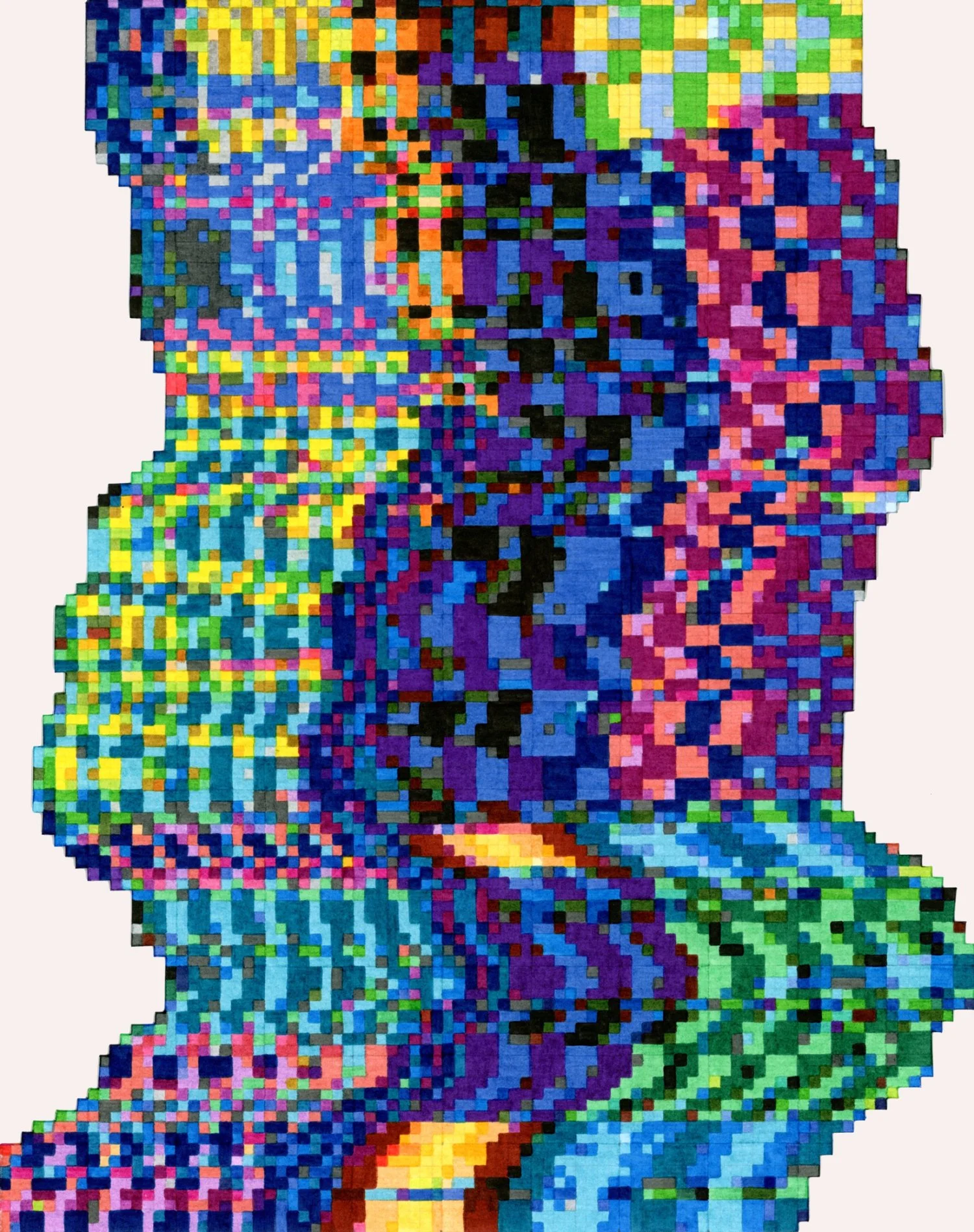
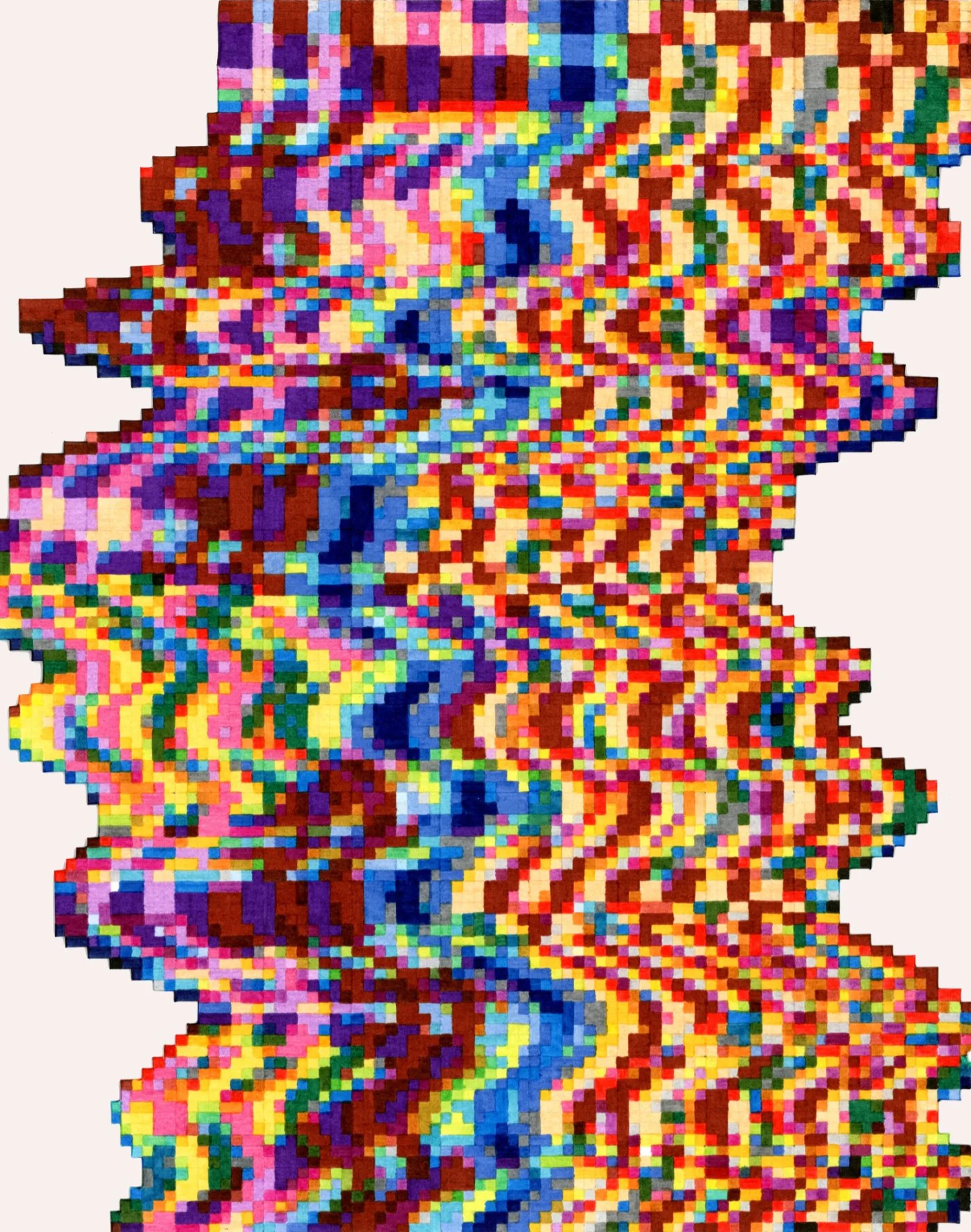
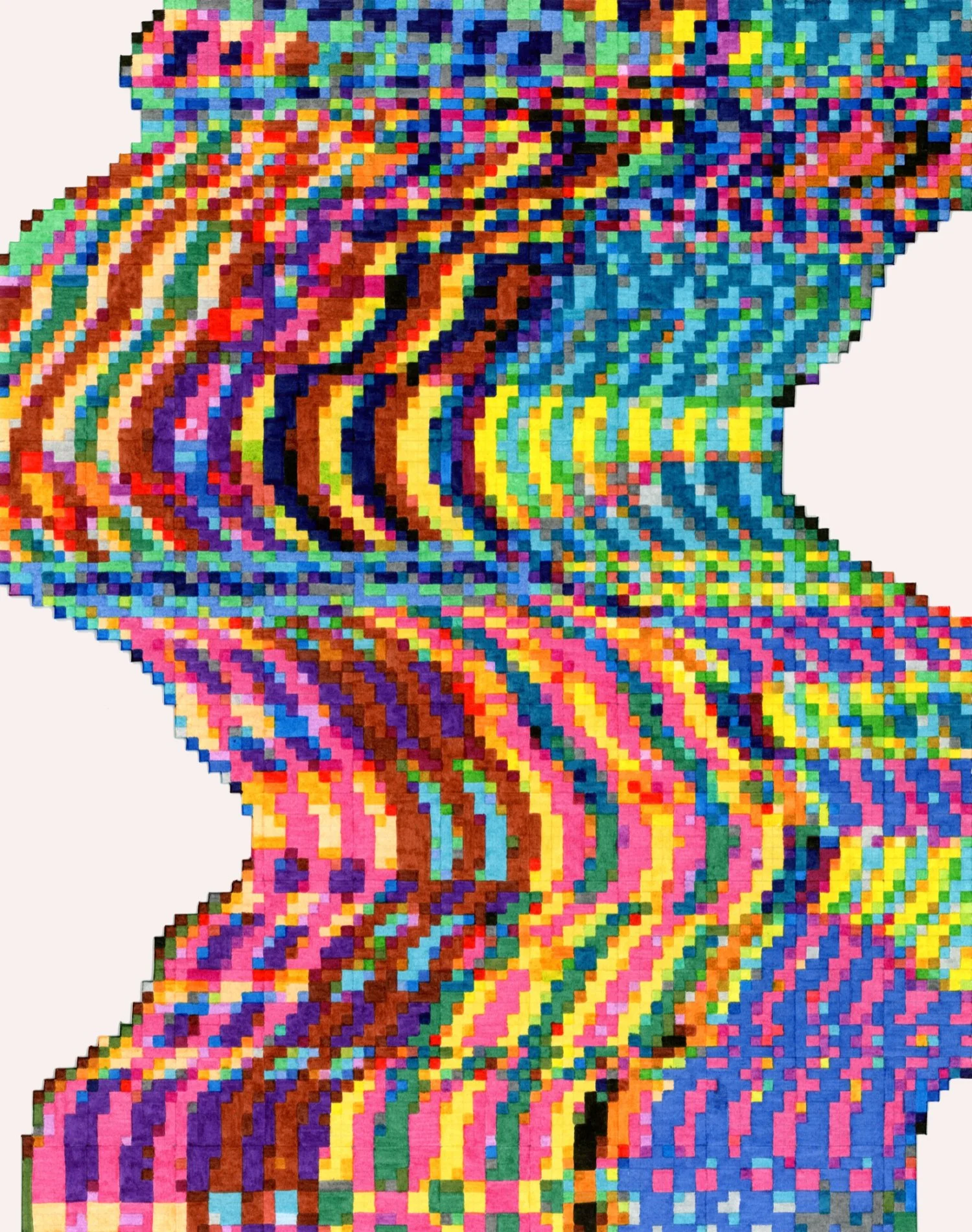
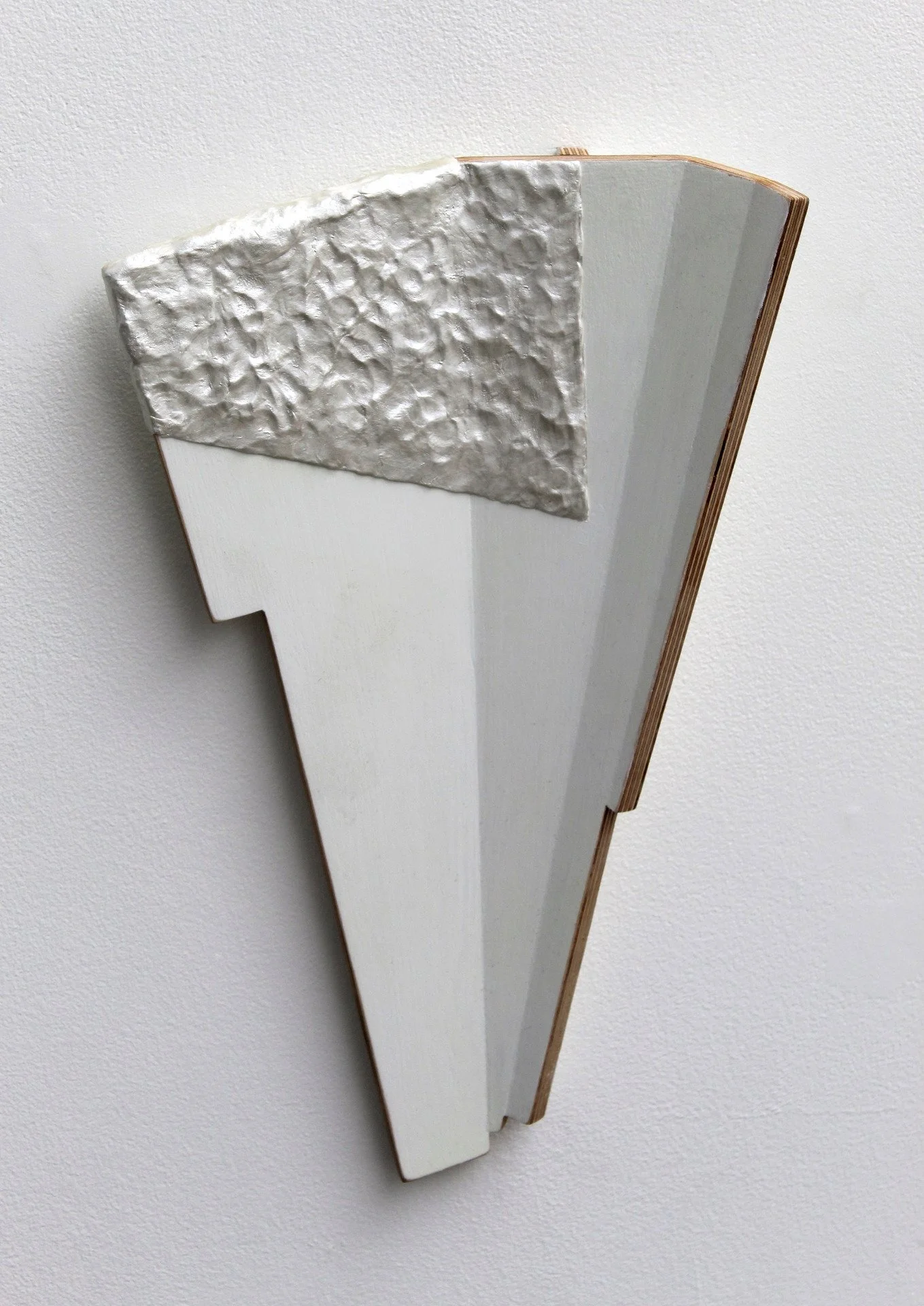
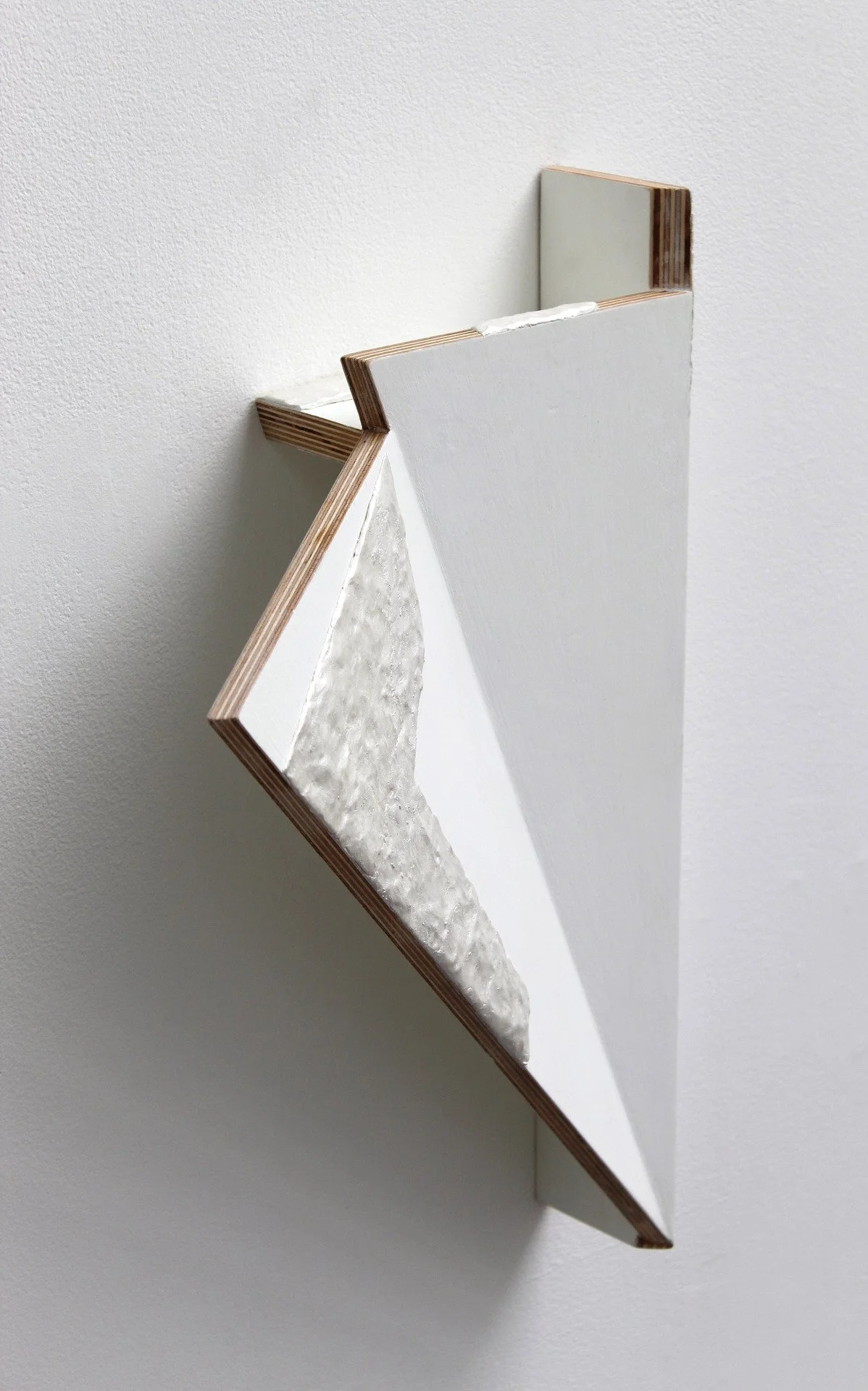
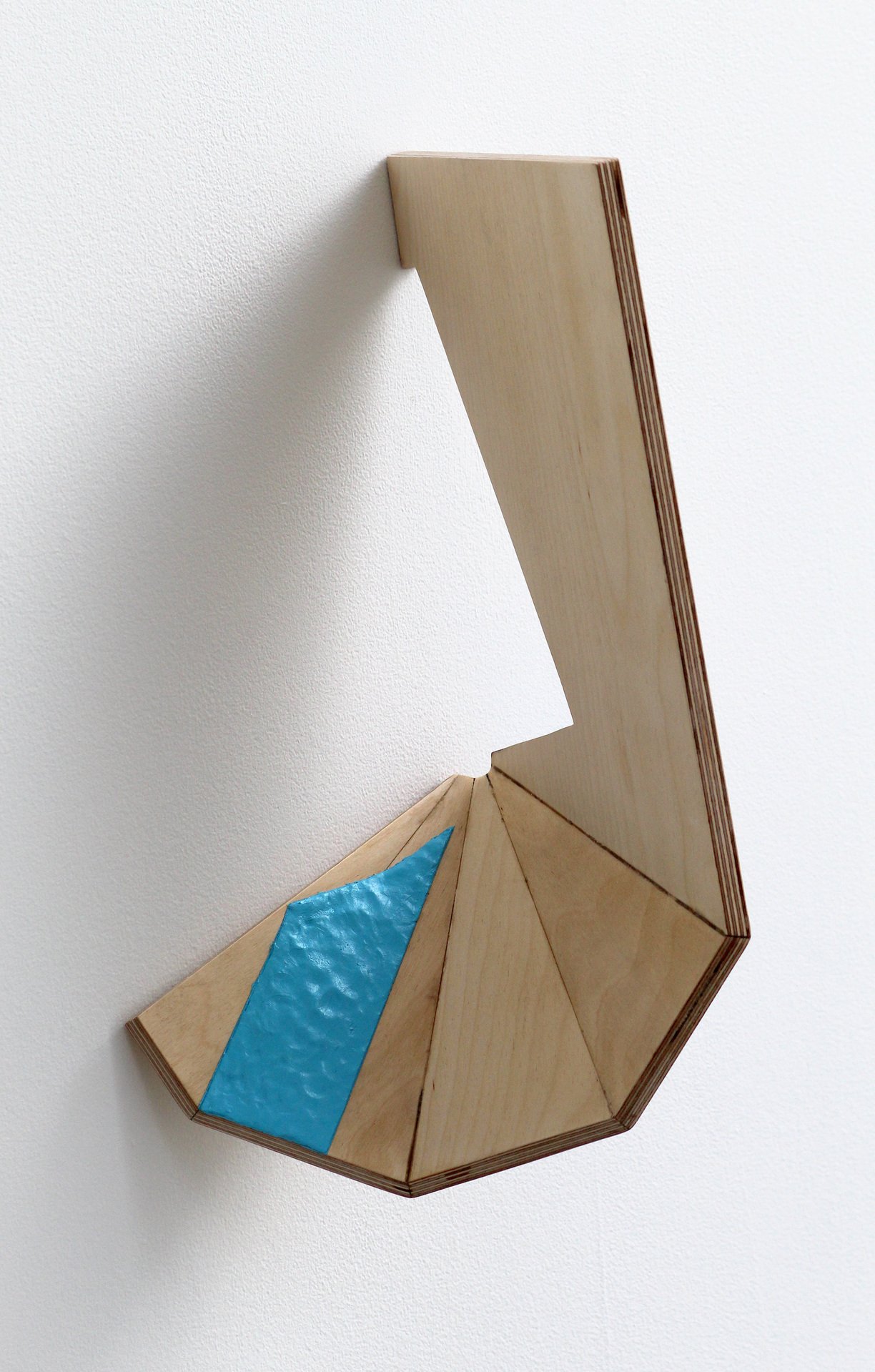
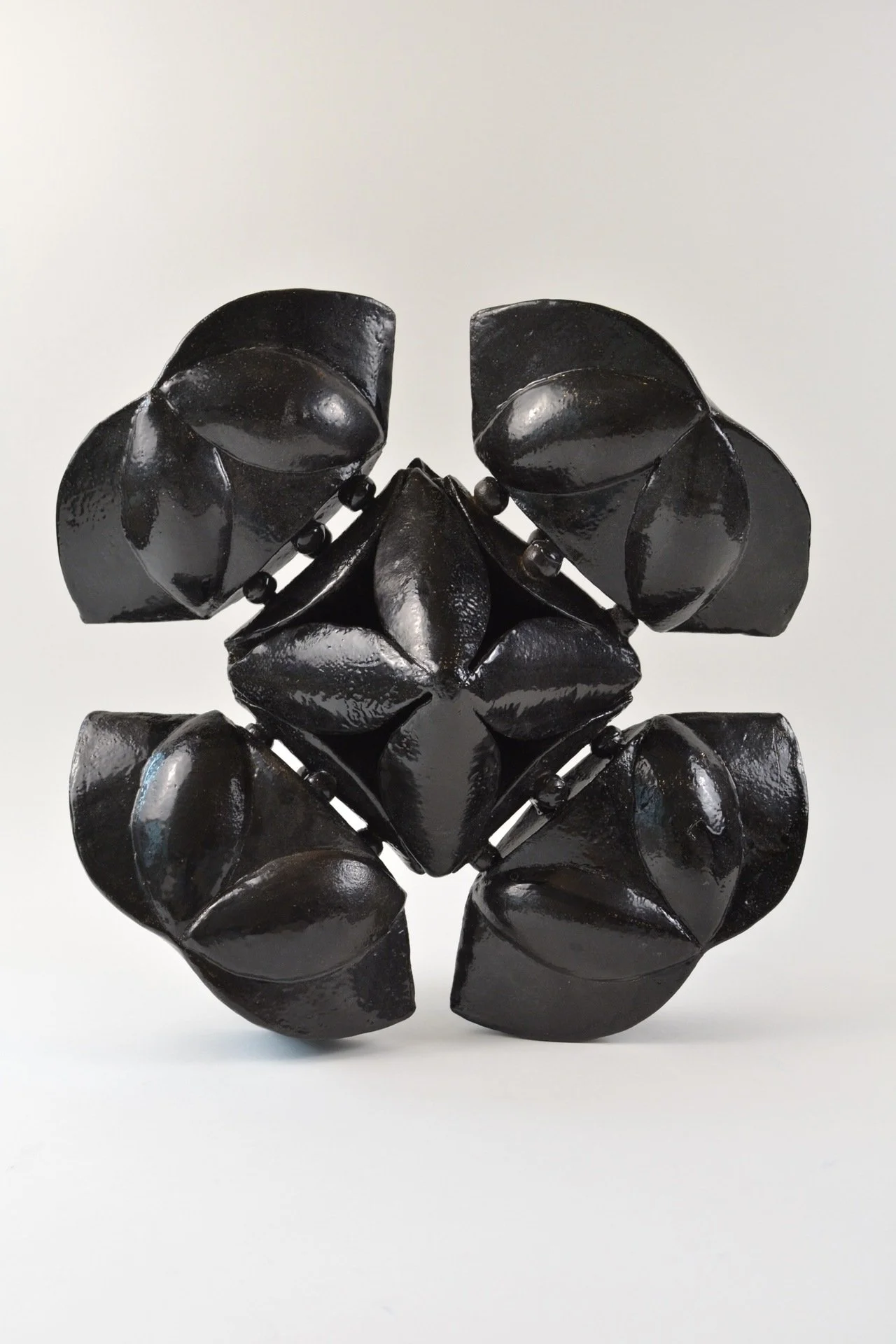
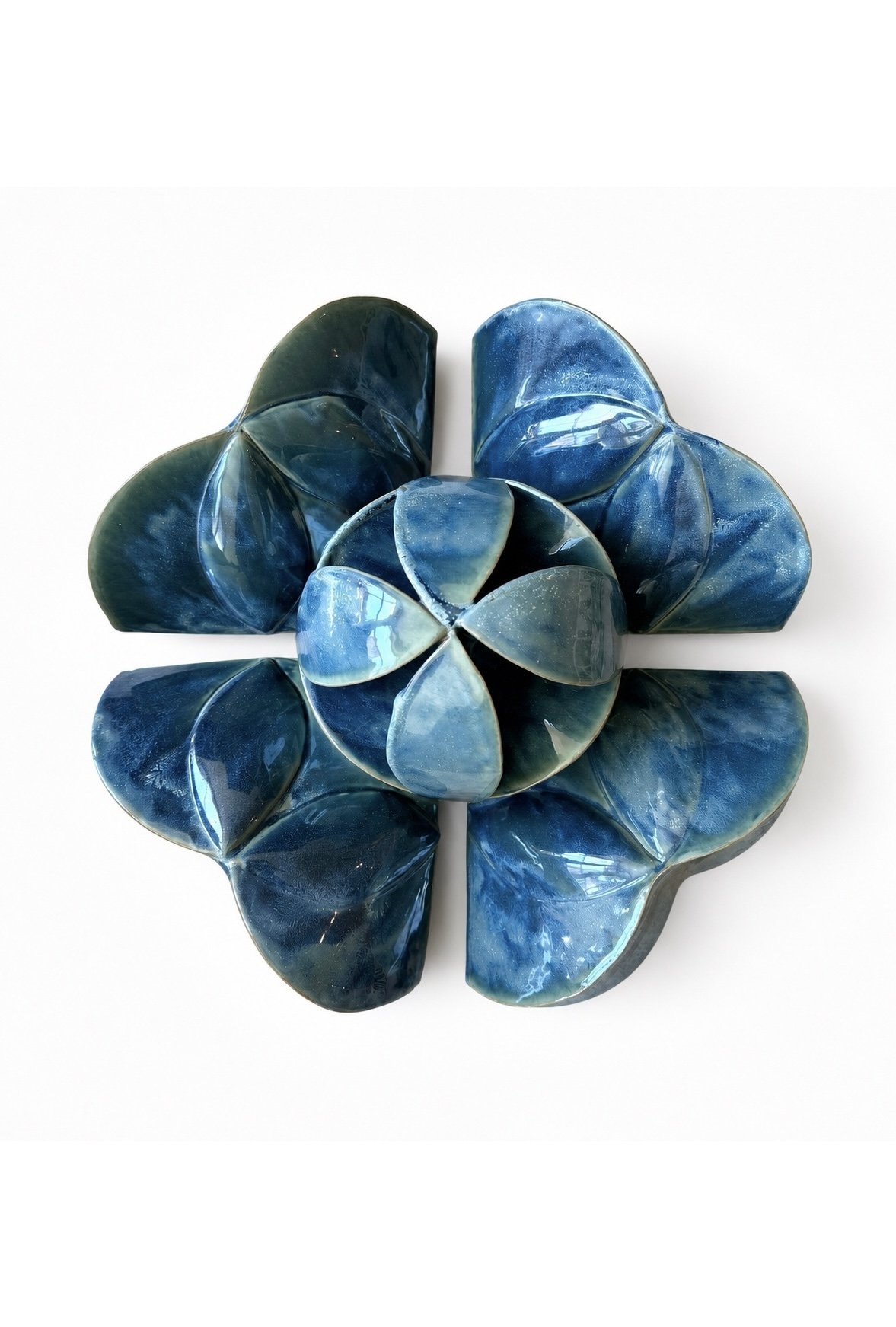
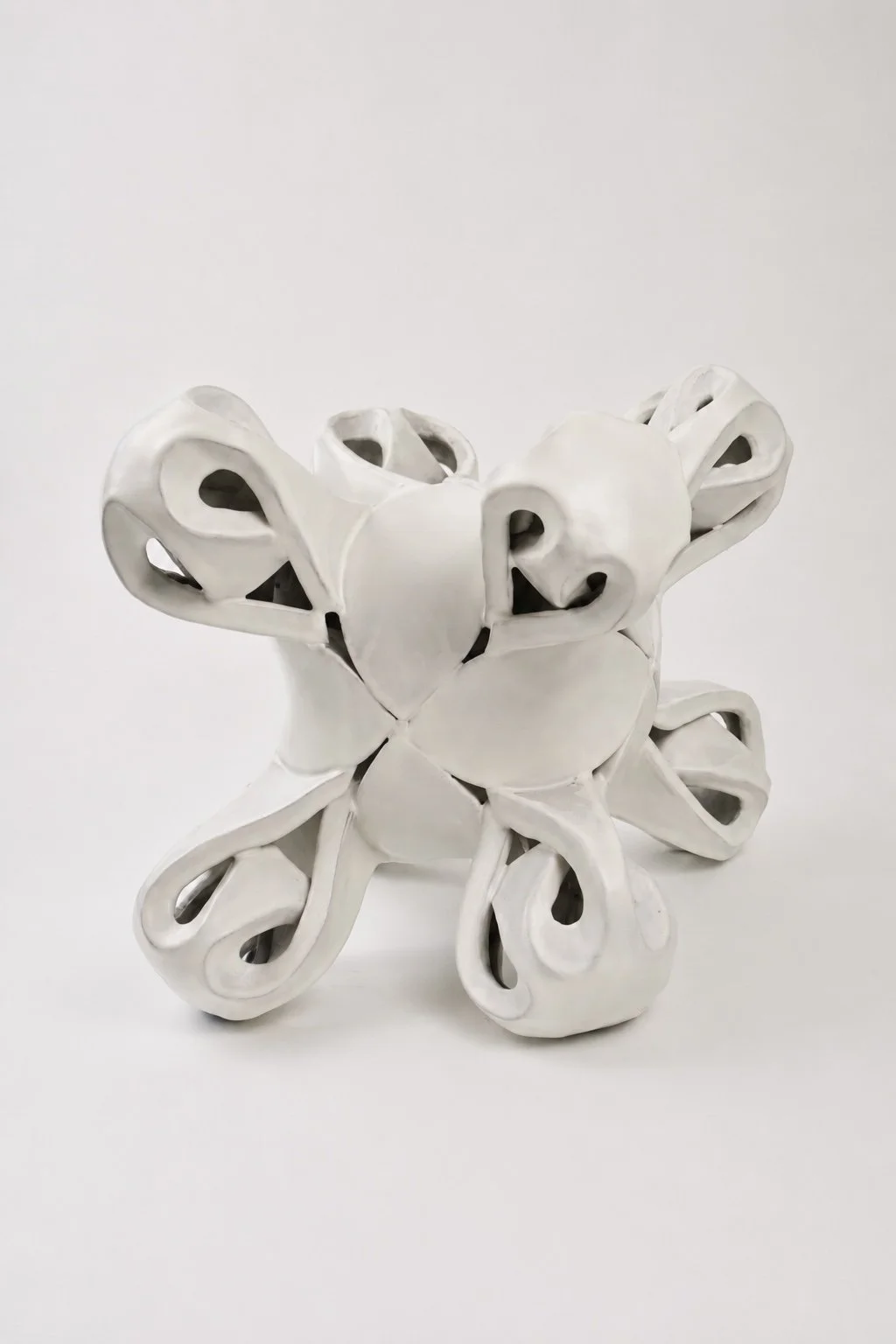
Modern and contemporary artists have explored abstract motifs and patterns by working in sequence, from Josef Albers’ iconic Homage to the Square series to countless artists working in minimalism, post-minimalism, the pattern and decoration movement, and beyond. The artists in this section continue to mine formal variations, each taking a different route through abstraction. Belinda Yang’s modular ceramic sculptures are based on natural forms, which she abstracts, duplicates, and reconfigures into unique tessellations. Fabiola Gironi’s daily routine consists of creating one painting over the course of one hour, and the resulting series reveals an almost real-time account of her wrestling with formal concerns of color, form, scale, and composition. Justin Phillips relies on chance, intuition, and pre-determined rules to create his minimal, mixed-media works that subtly subvert the rigidity of the grid. The grid provides a site of disruption as well for Ariana Padovano, who transforms digital pixels into vibrant, woozy ink drawings. Emre Meydan and Rajee Aryal similarly probe the space between technological order and the handmade. Meydan writes computer code to create images, which he then turns into physical artworks through painting or knitting; while Aryal uses software to create dense fields of layered text that are then fabricated as textiles or paintings. John Richardson’s sculptures resemble a kind of mutant architecture, folded planes of plywood that he partially layers with thick, epoxy putty, providing an organic foil to the forms’ rigid geometries. Will Suglia drastically alters the appearance of identical sculptural elements through different paint applications, making the familiar alien.
Belinda Yang
Fabiola Gironi
Susanna Eisenman
Remembering Vincent
Textile collage
28" x 22" x 1"
$2,000.00
Ariana Padovano
Danae Nunez
Desaparecidos
Beans, oil, spray paint
30" x 30" x 2"
$3,000.00
Rajee Aryal
Marcus DeSieno
Unknown Migrant, Male, Cause of Death Exposure - Probable Hyperthermia, Their Body Was Found Three Weeks After Death, Arizona
Archival pigment print
14" x 18" x 0"
$950.00
Marcus DeSieno
Unknown Migrant - Male, Cause of Death - Blunt Force Trauma/Struck by Automobile, Their Body Was Found on the Day of Death, California
Archival pigment print
14" x 18" x 0"
$950.00
John Richardson
Loreen Matsushima
Hiroshima Stepping Stone.1
Photograph - giclée on canvas
20" x 16" x 1"
$300.00
Reineke Hollander
In Limbo
Oil paint on repurposed canvas, sewing
47" x 43.5" x 1"
$2,500.00
Will Suglia
Wall 4: The Body
Nicole Belle / Roxanne Darling / Manas Ranjan / Emma Schwartz / Ceres Madoo / Mary Porterfield / Humna Raza / Kimberly Robertson
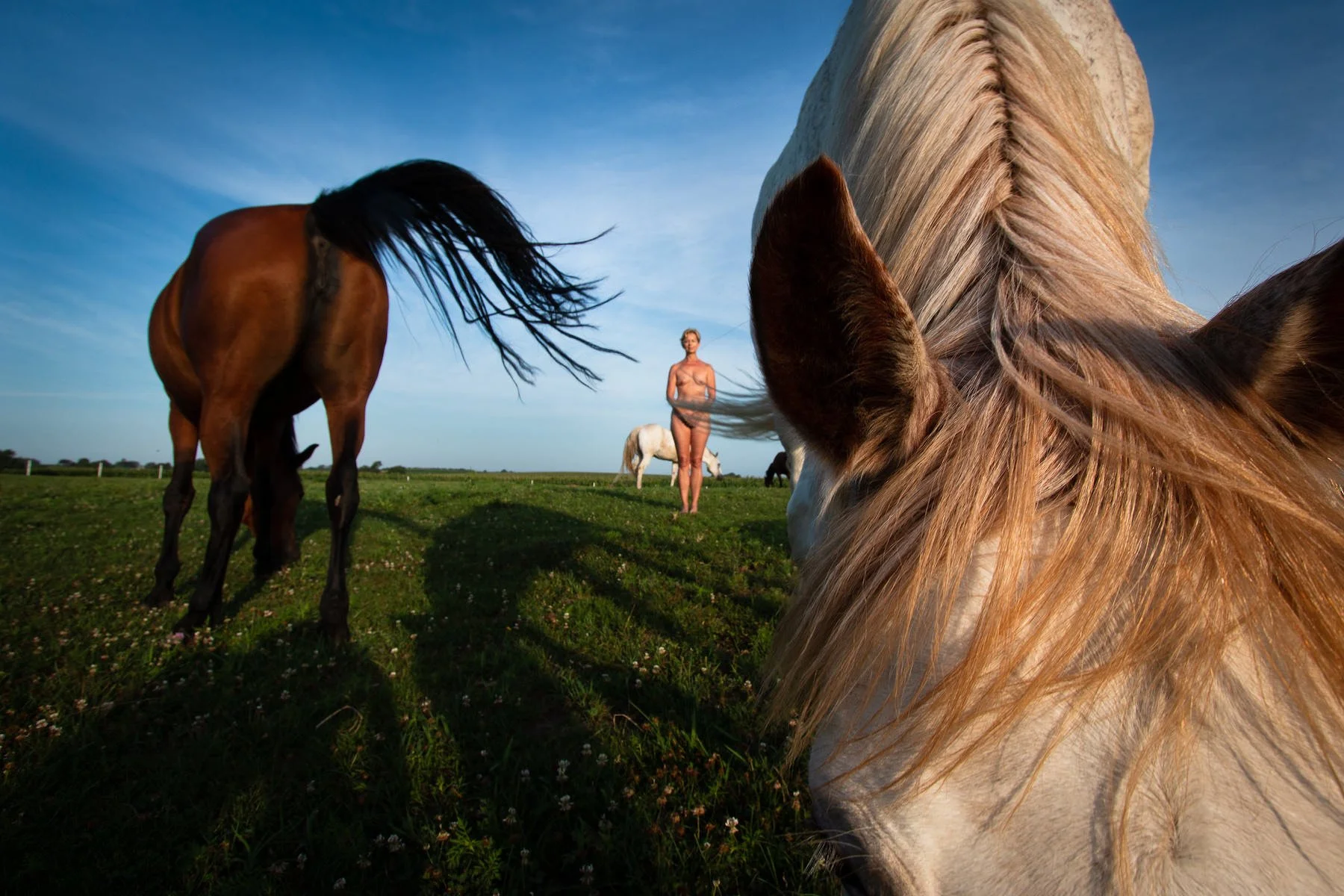
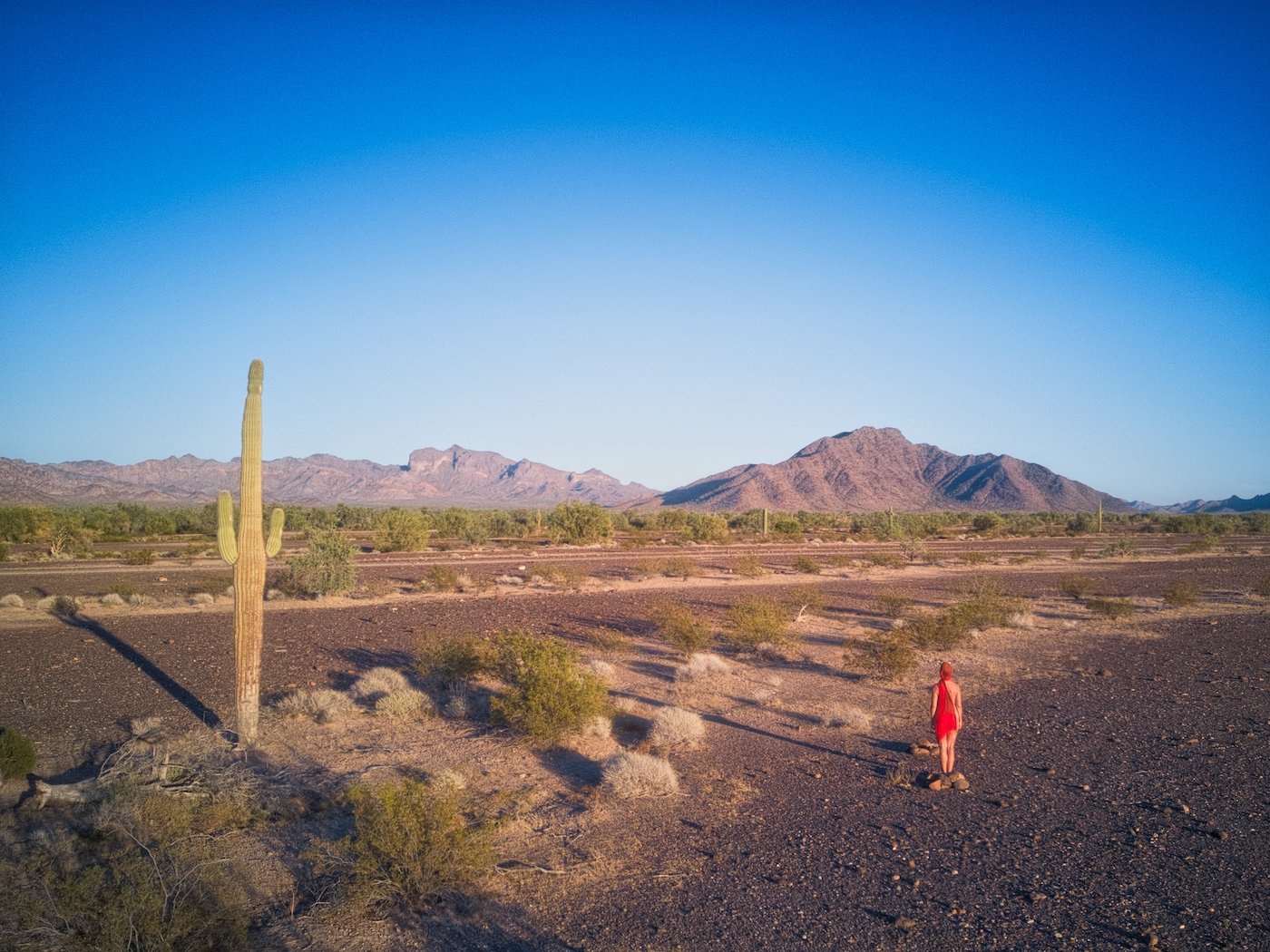
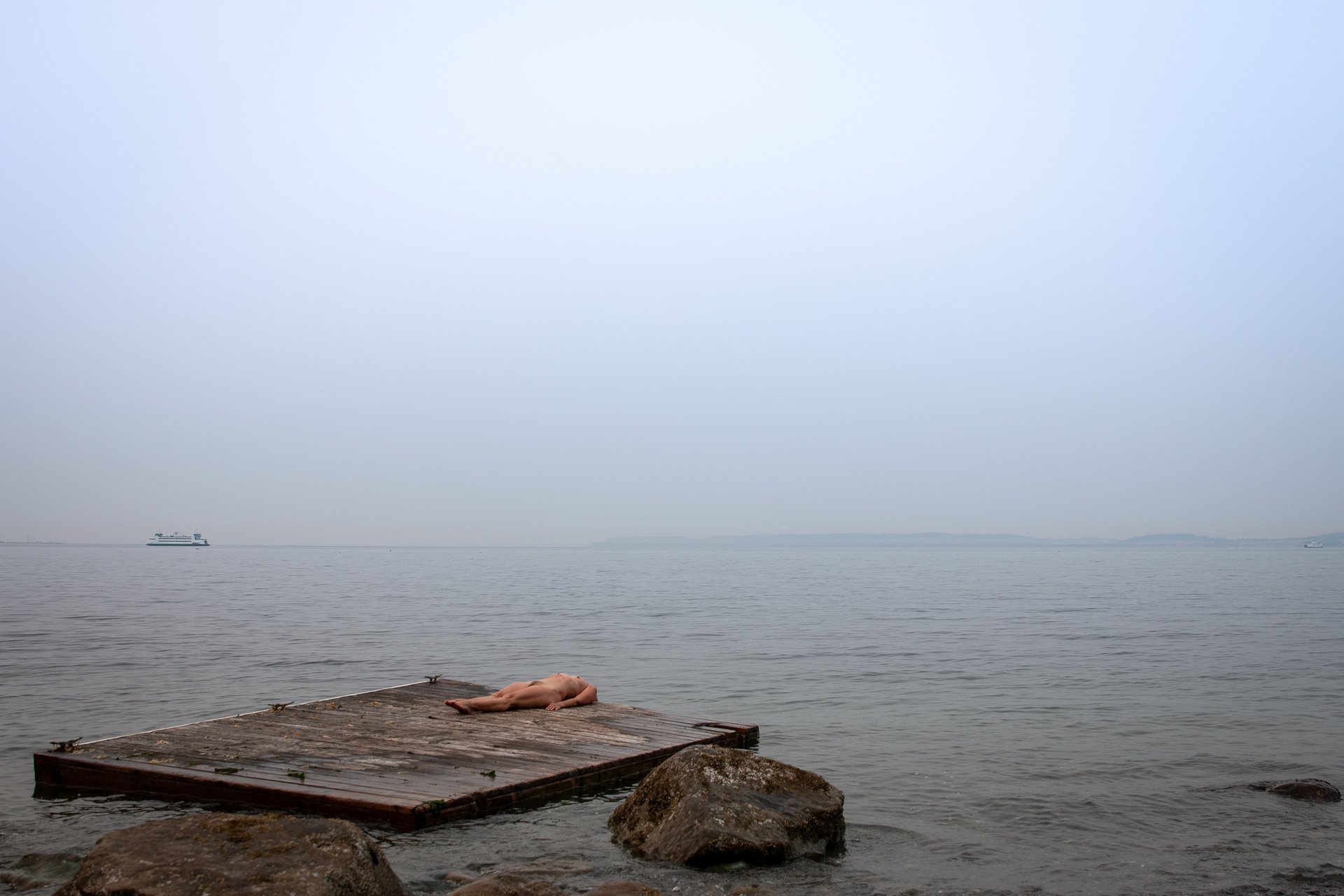
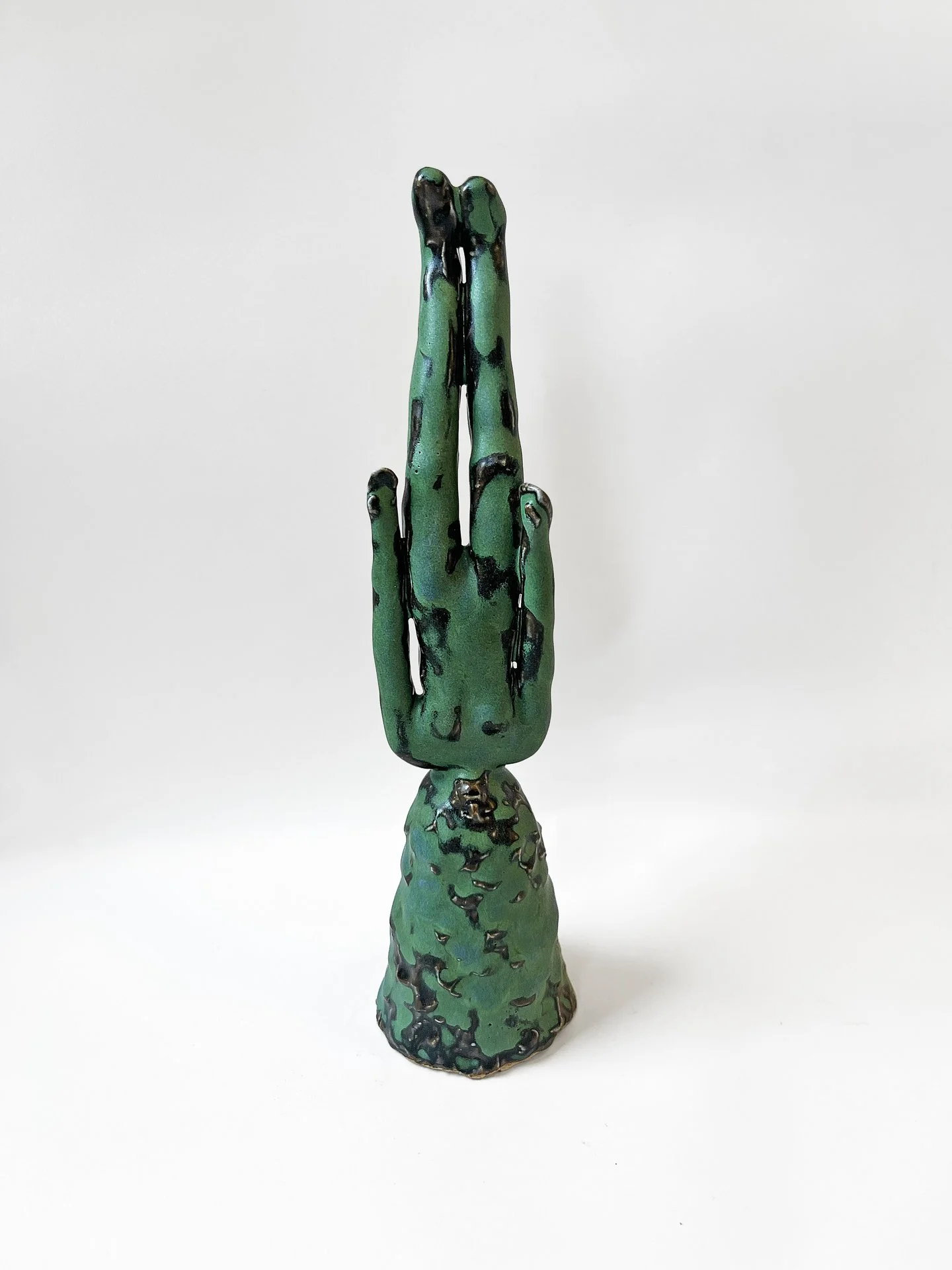
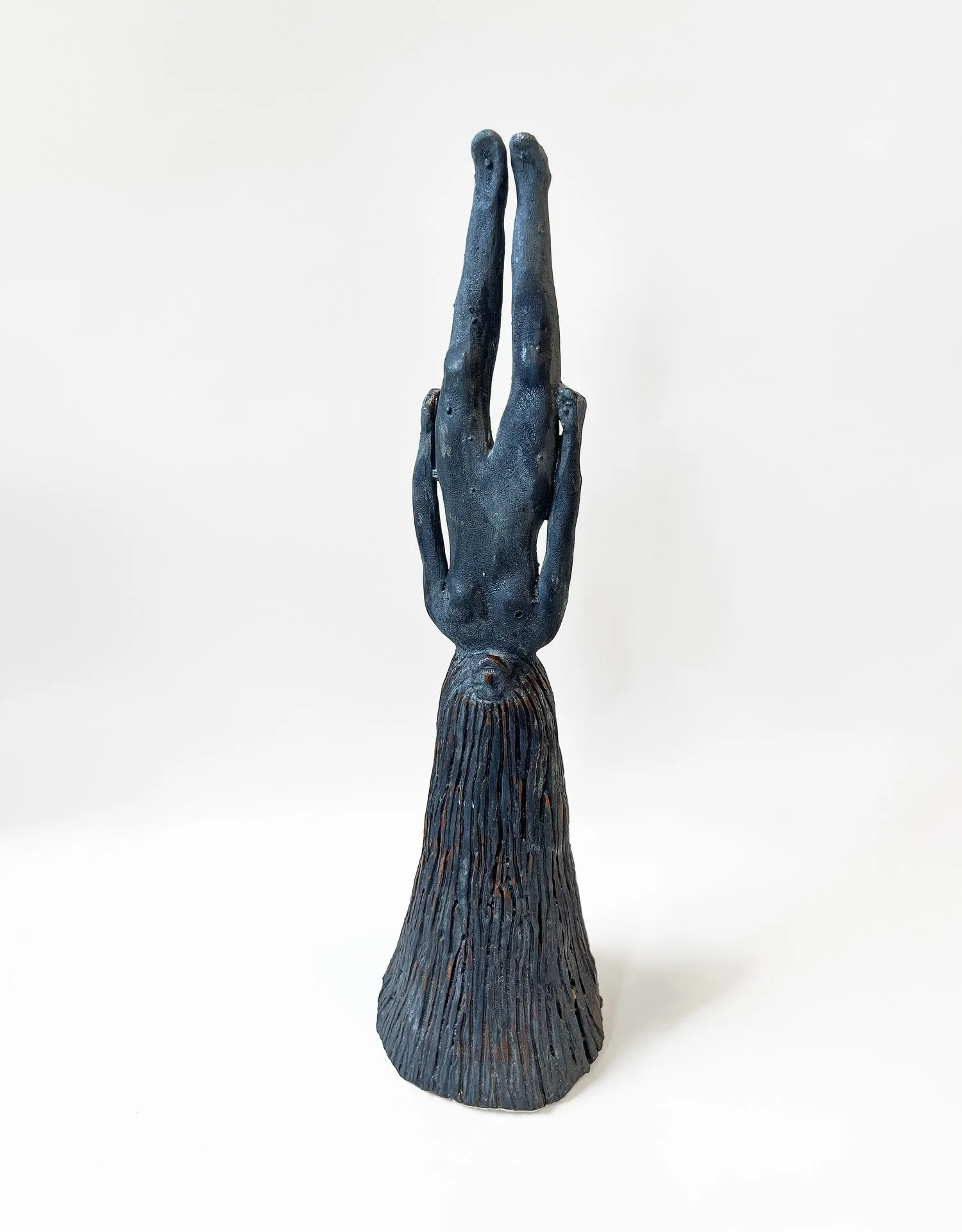
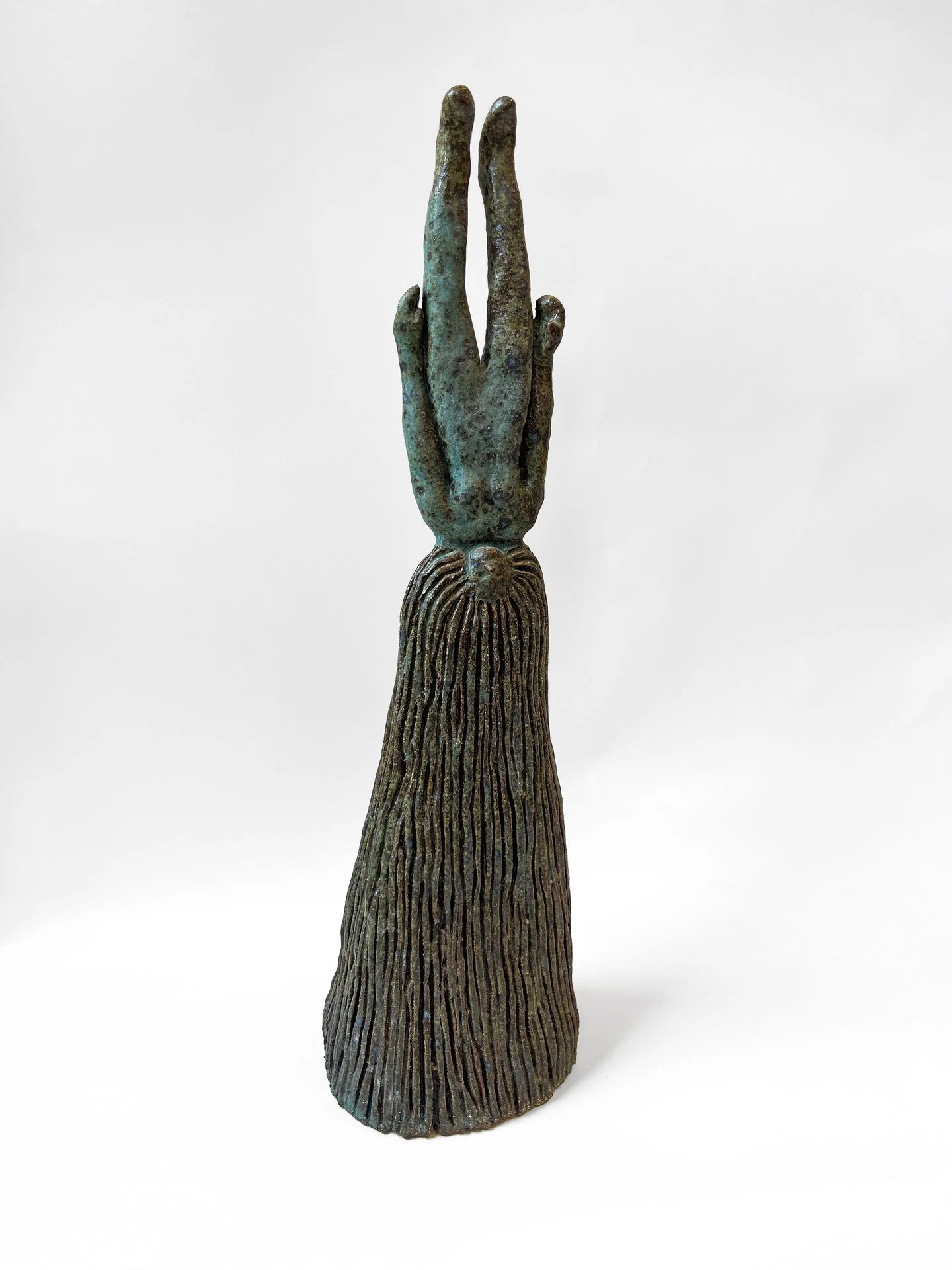
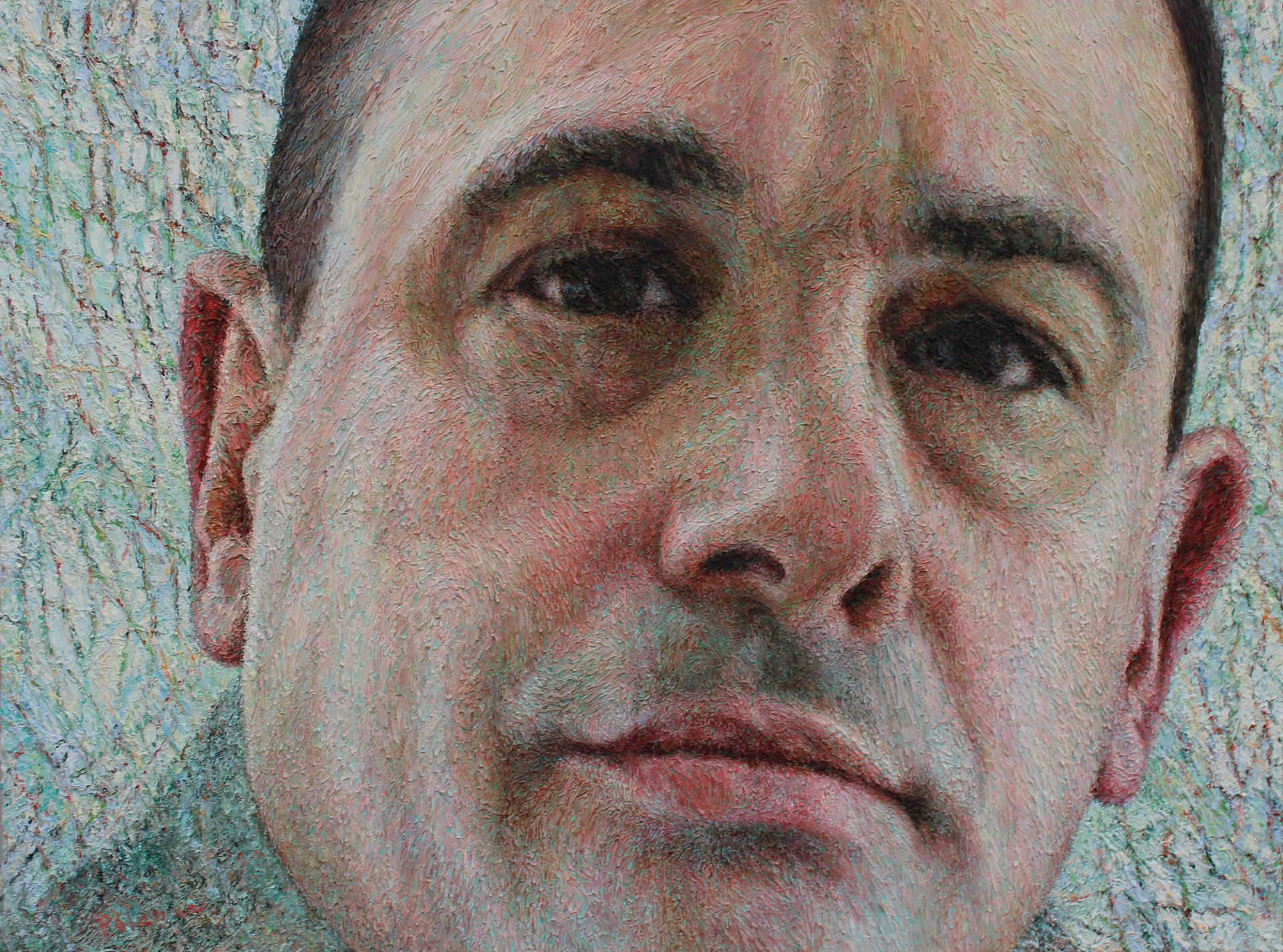
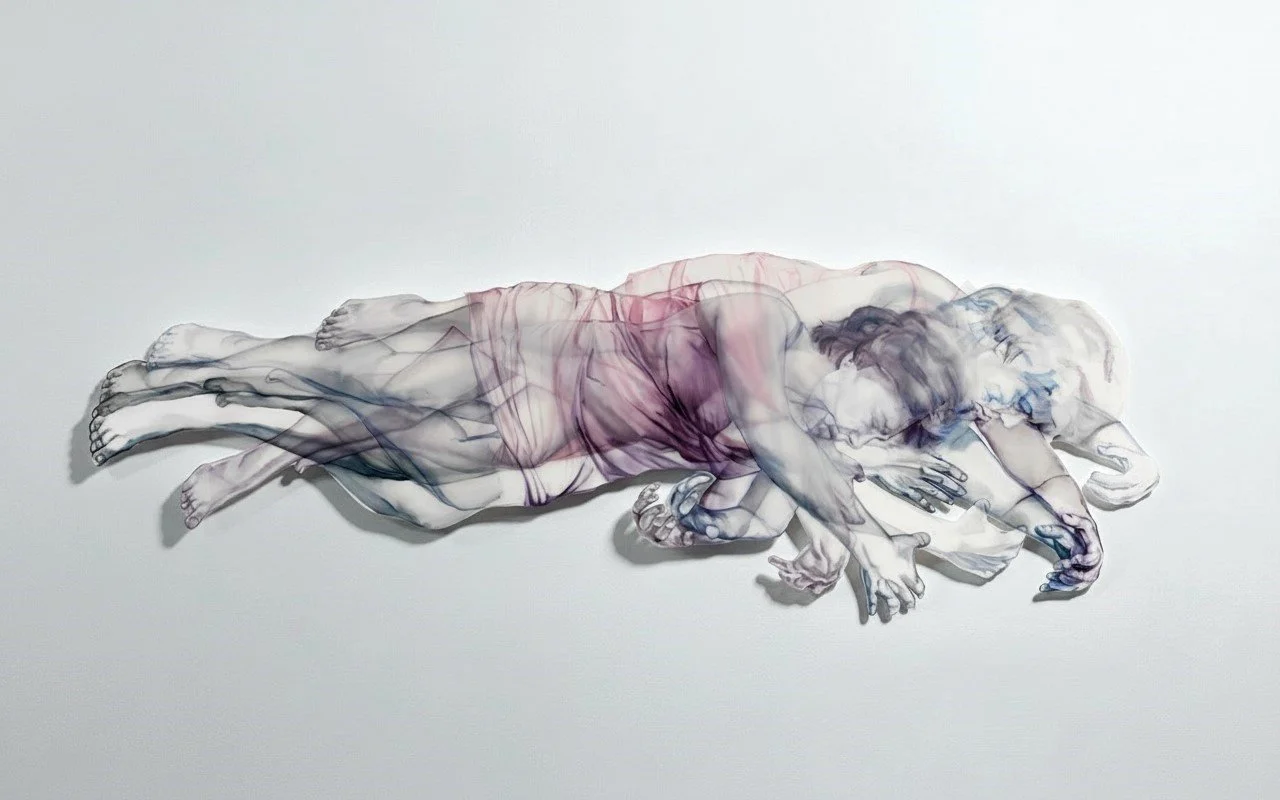
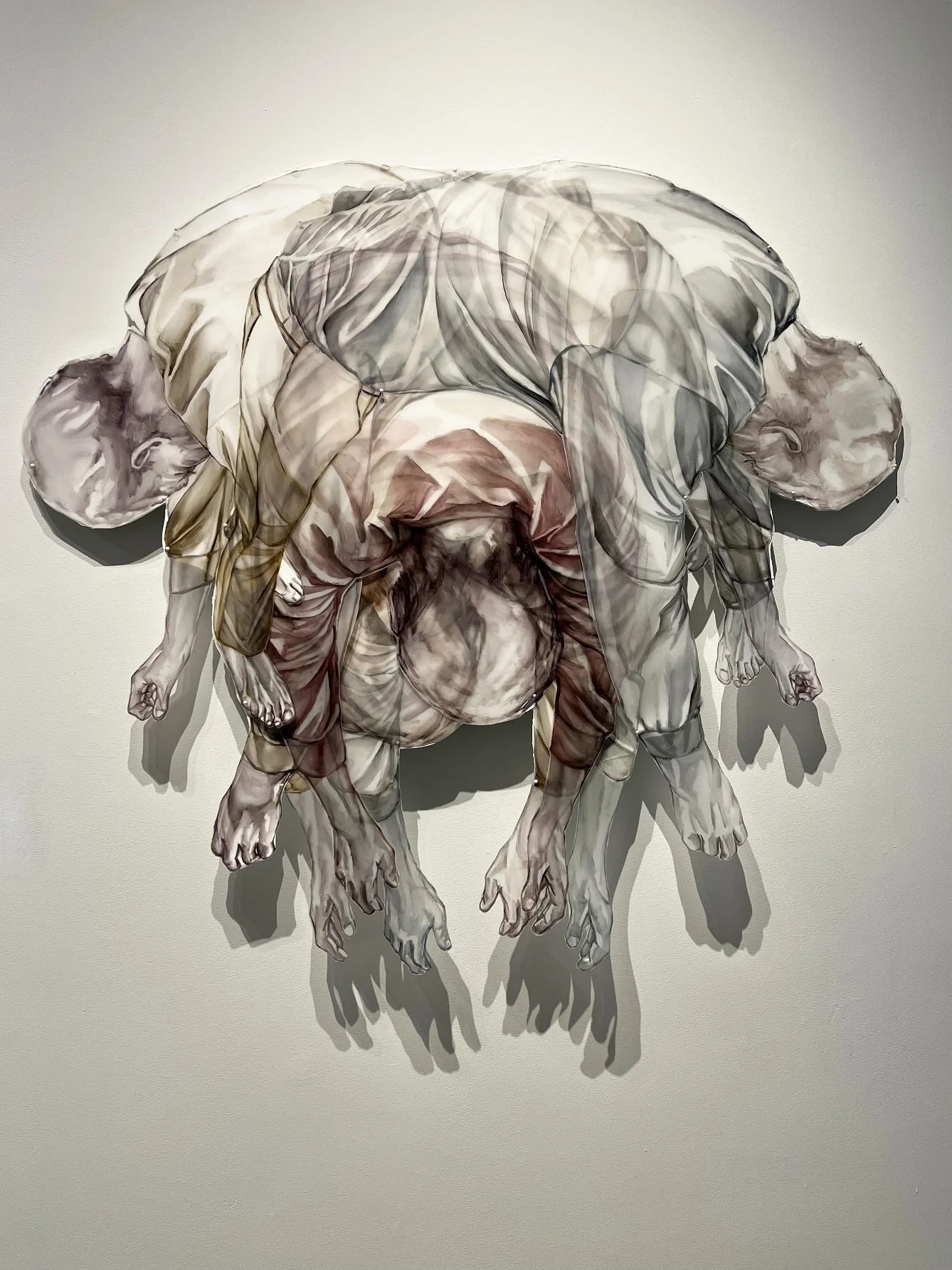
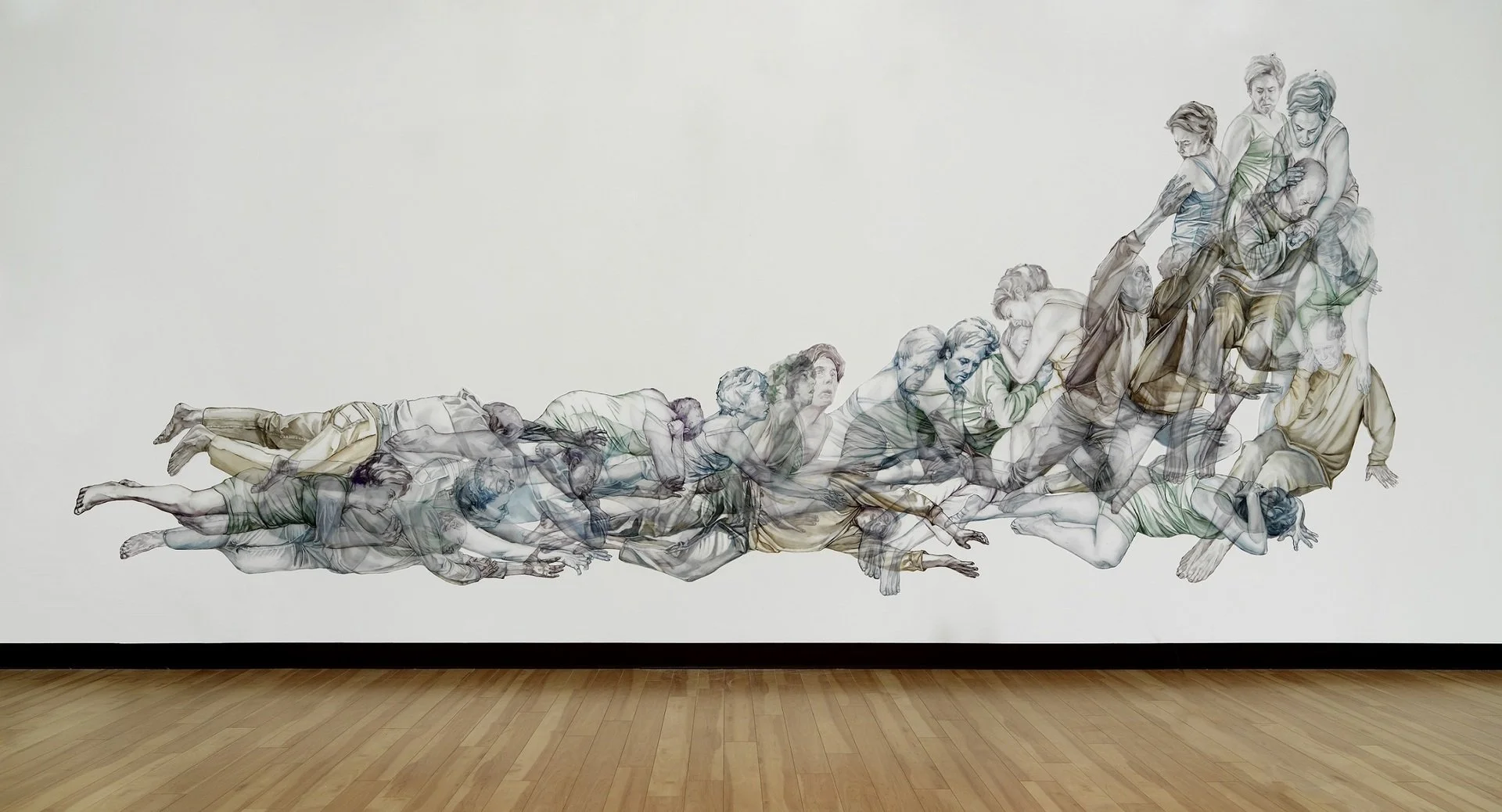
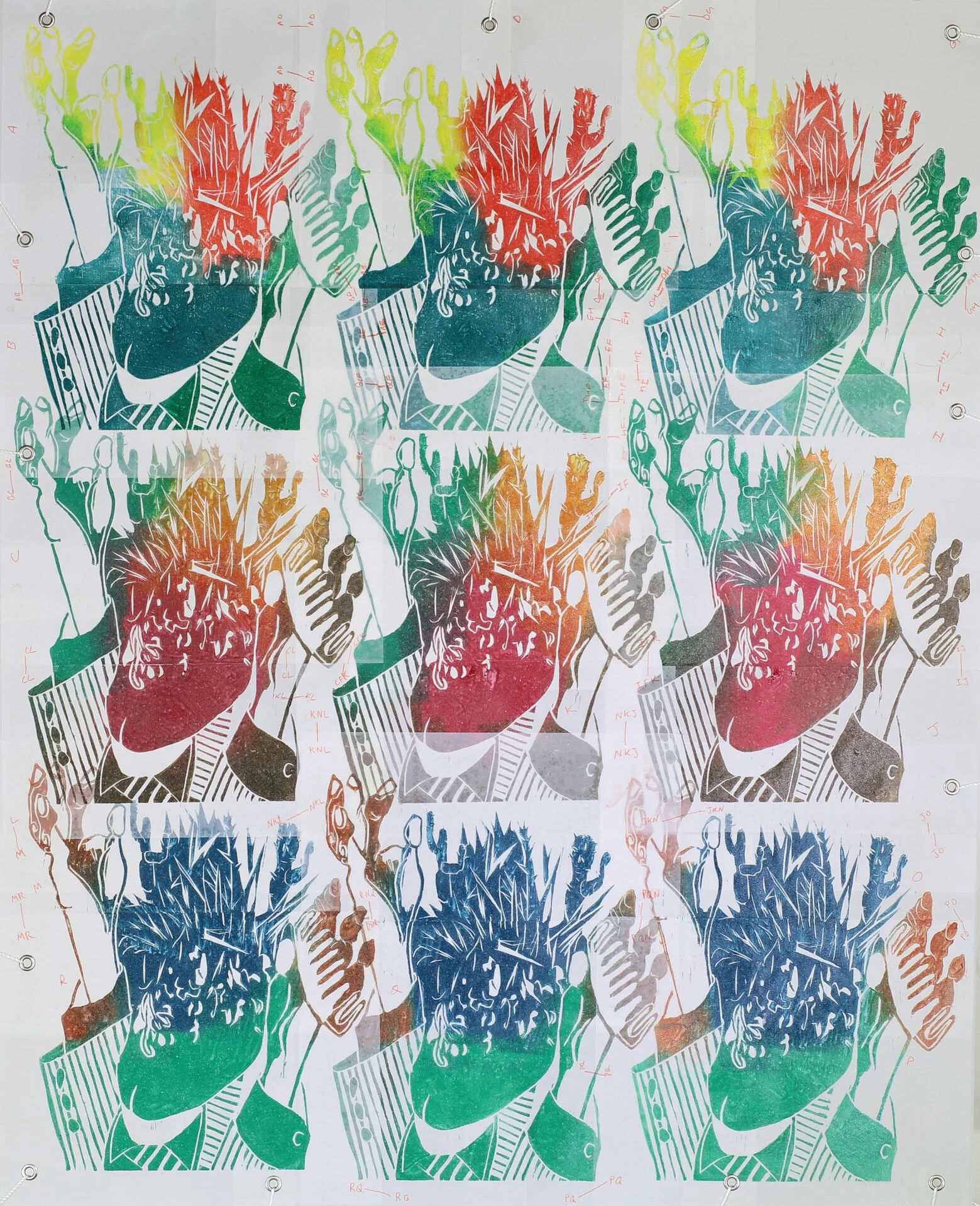
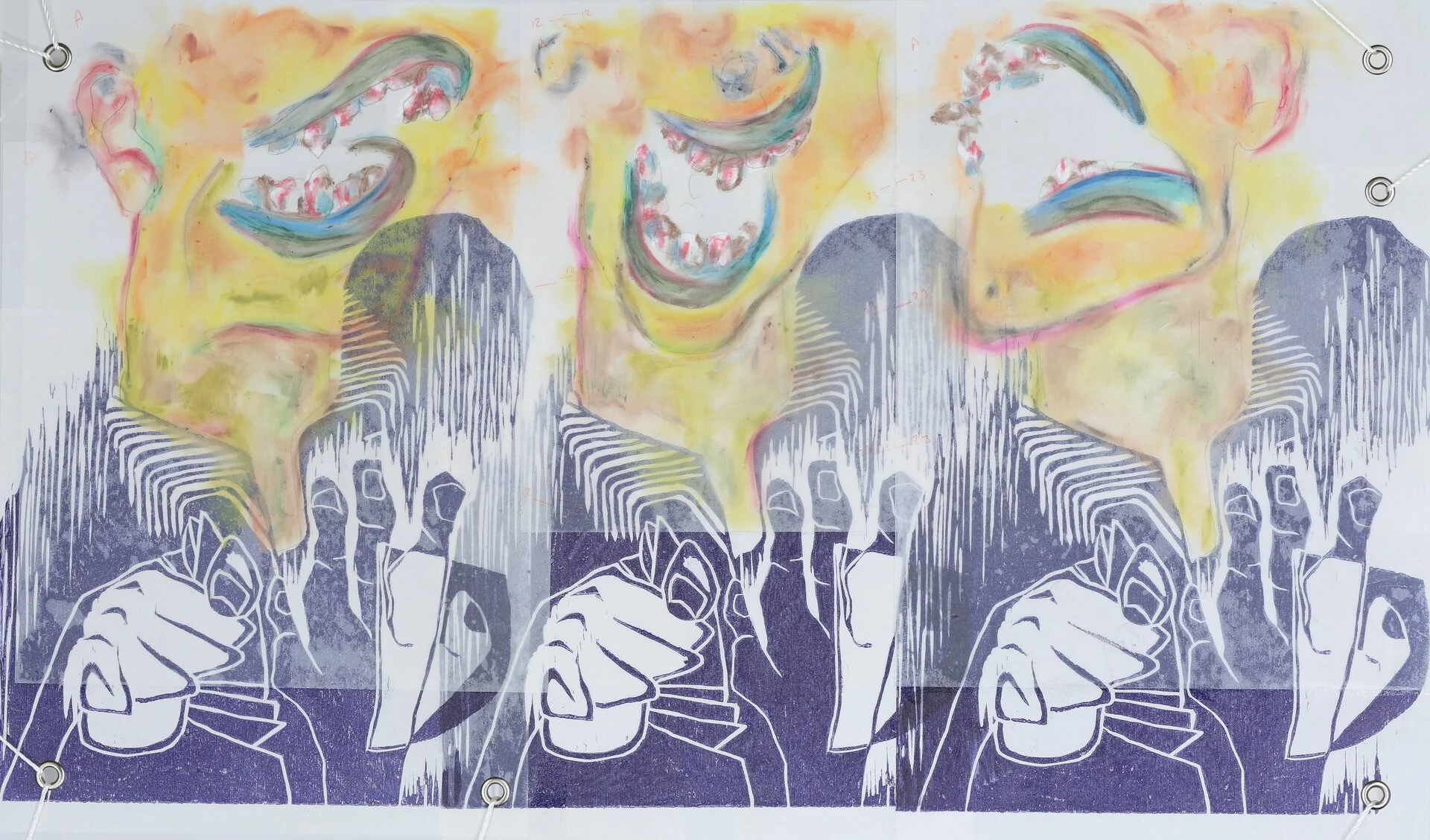
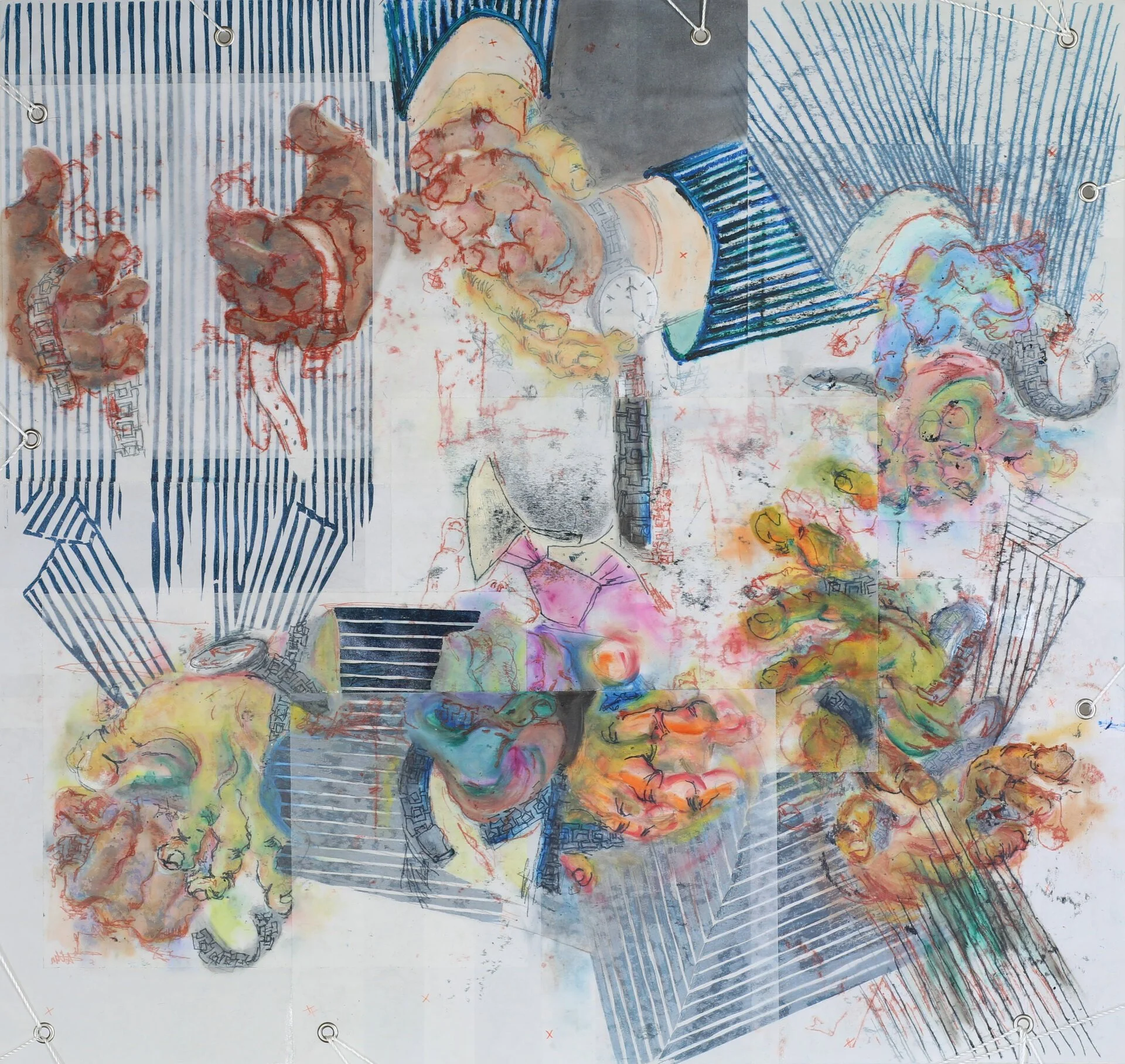
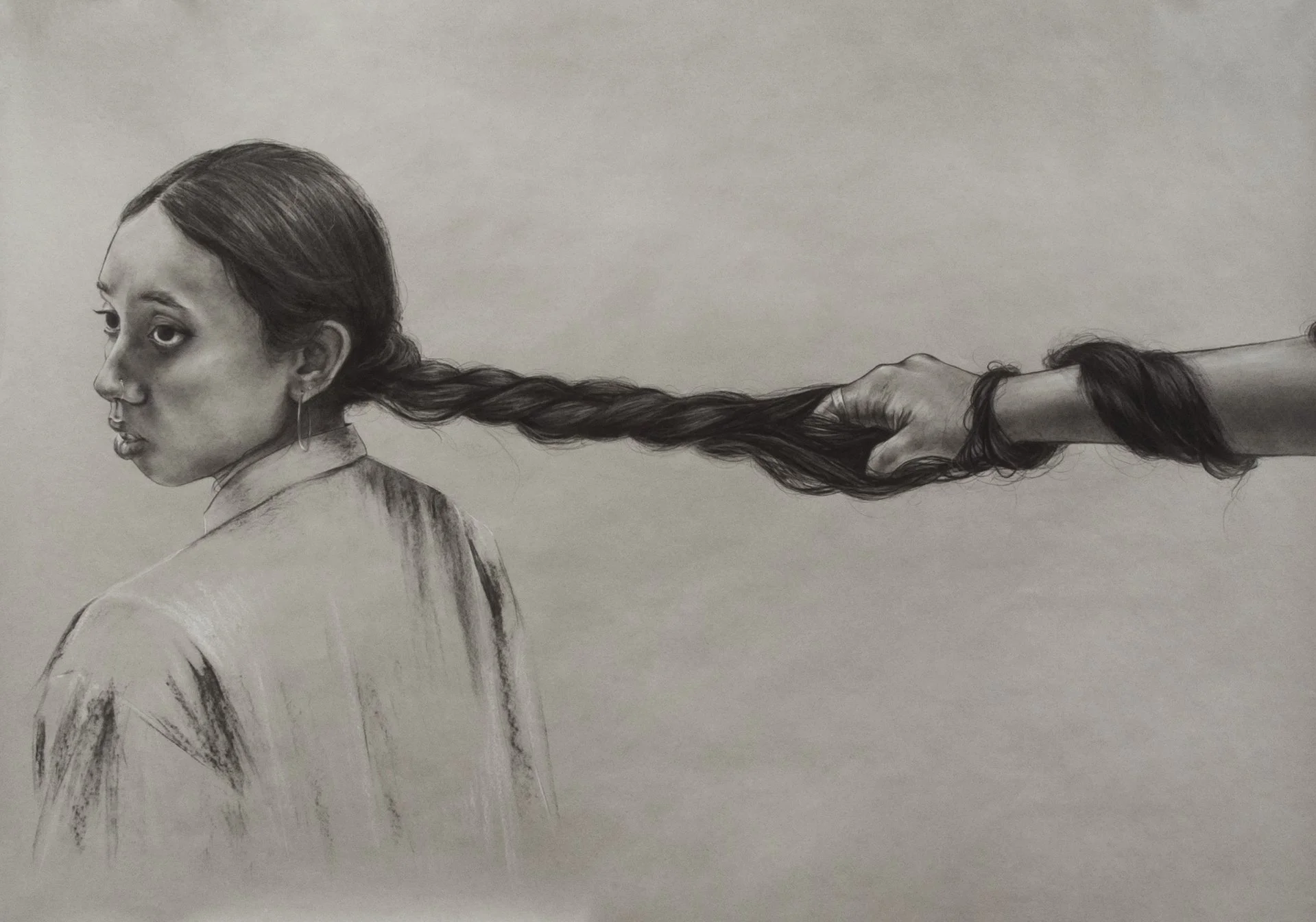
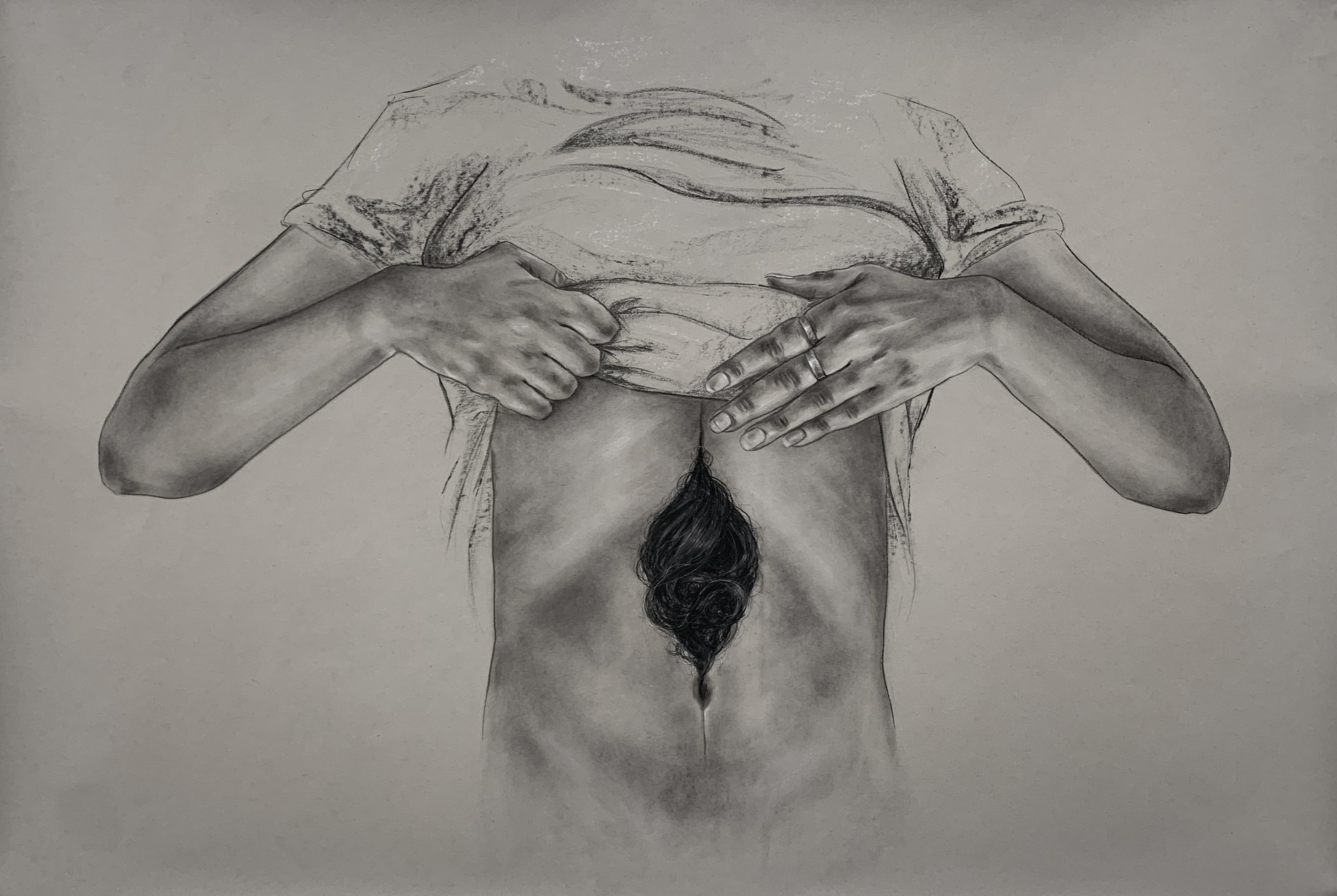
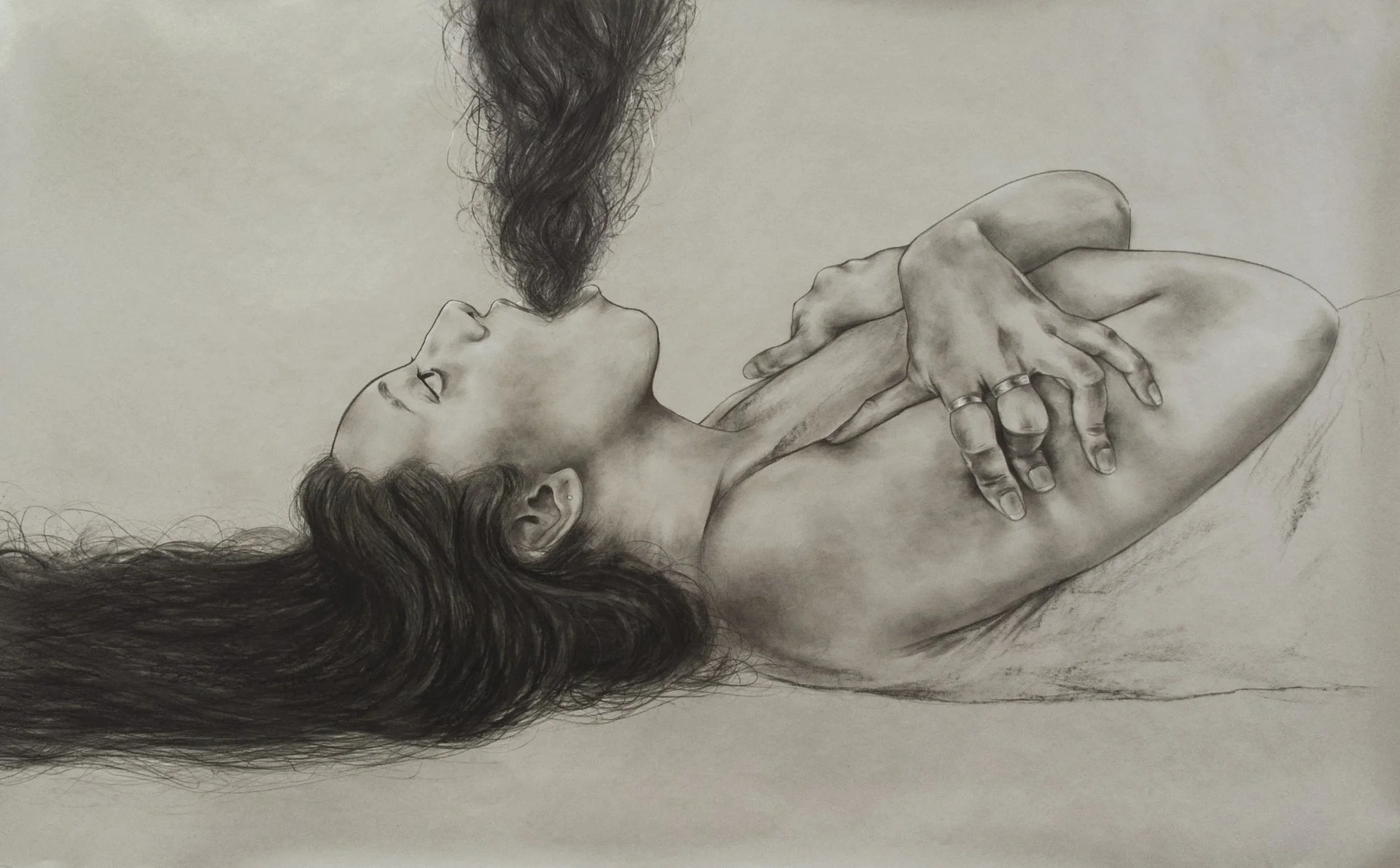
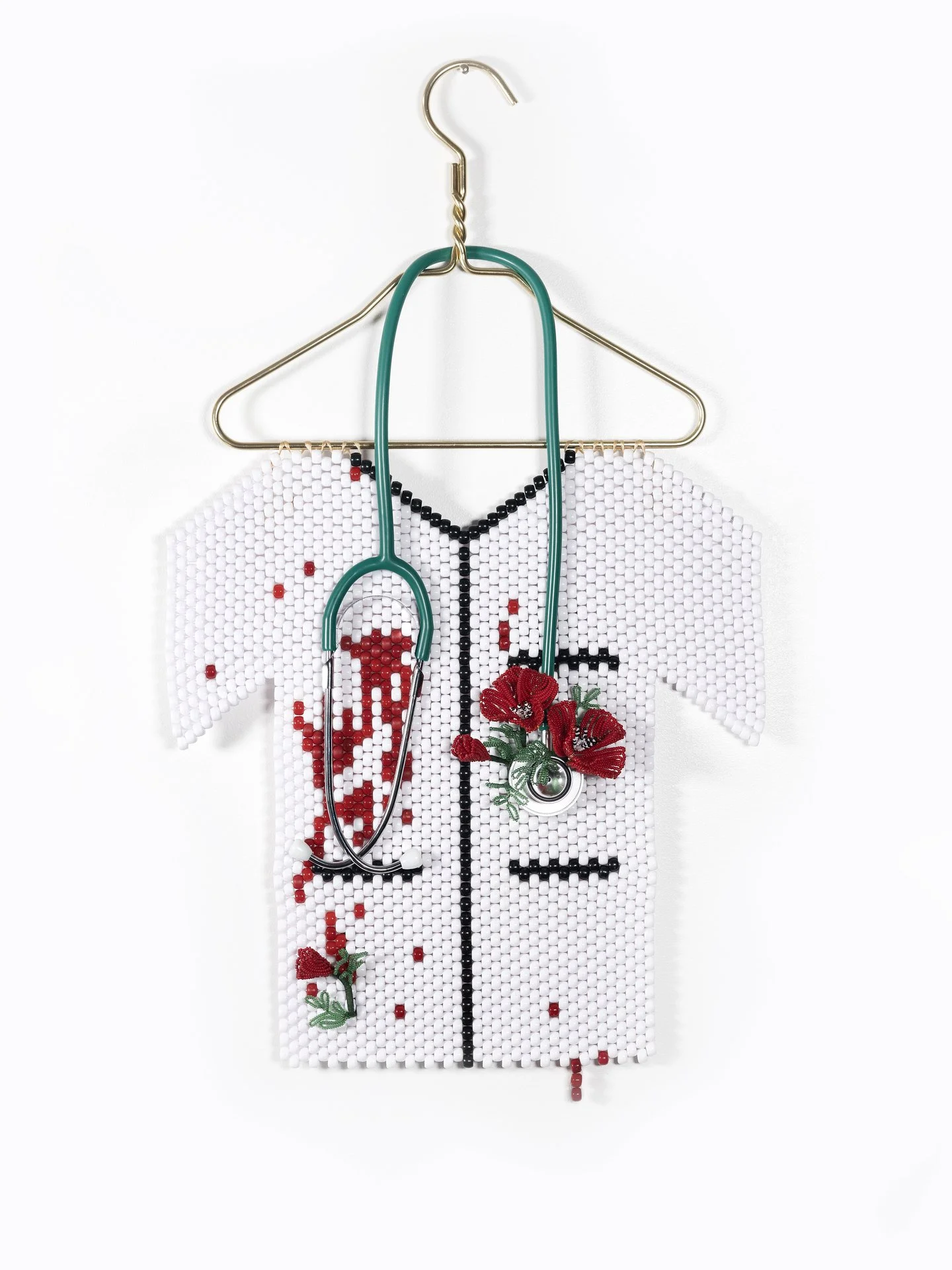
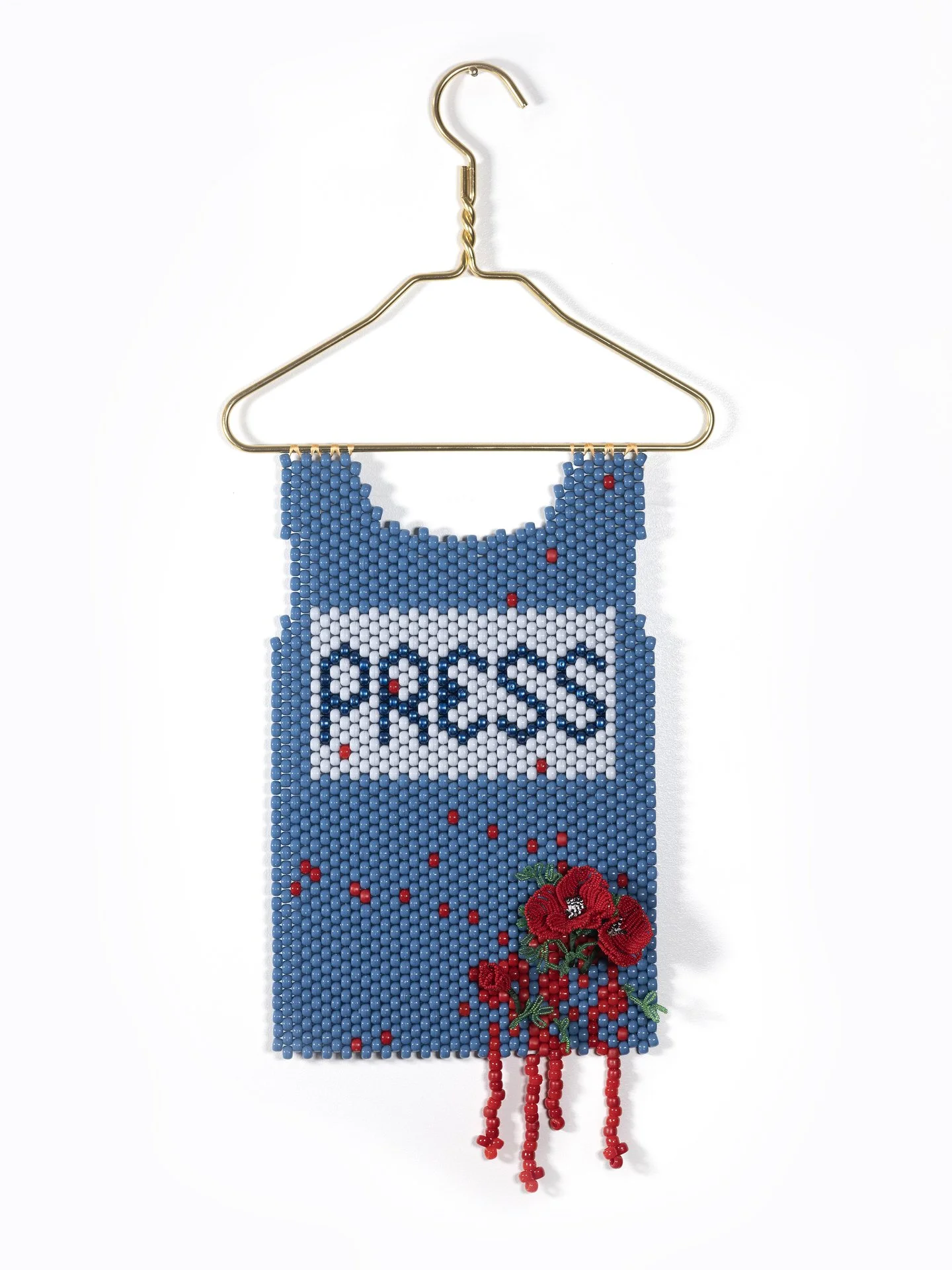
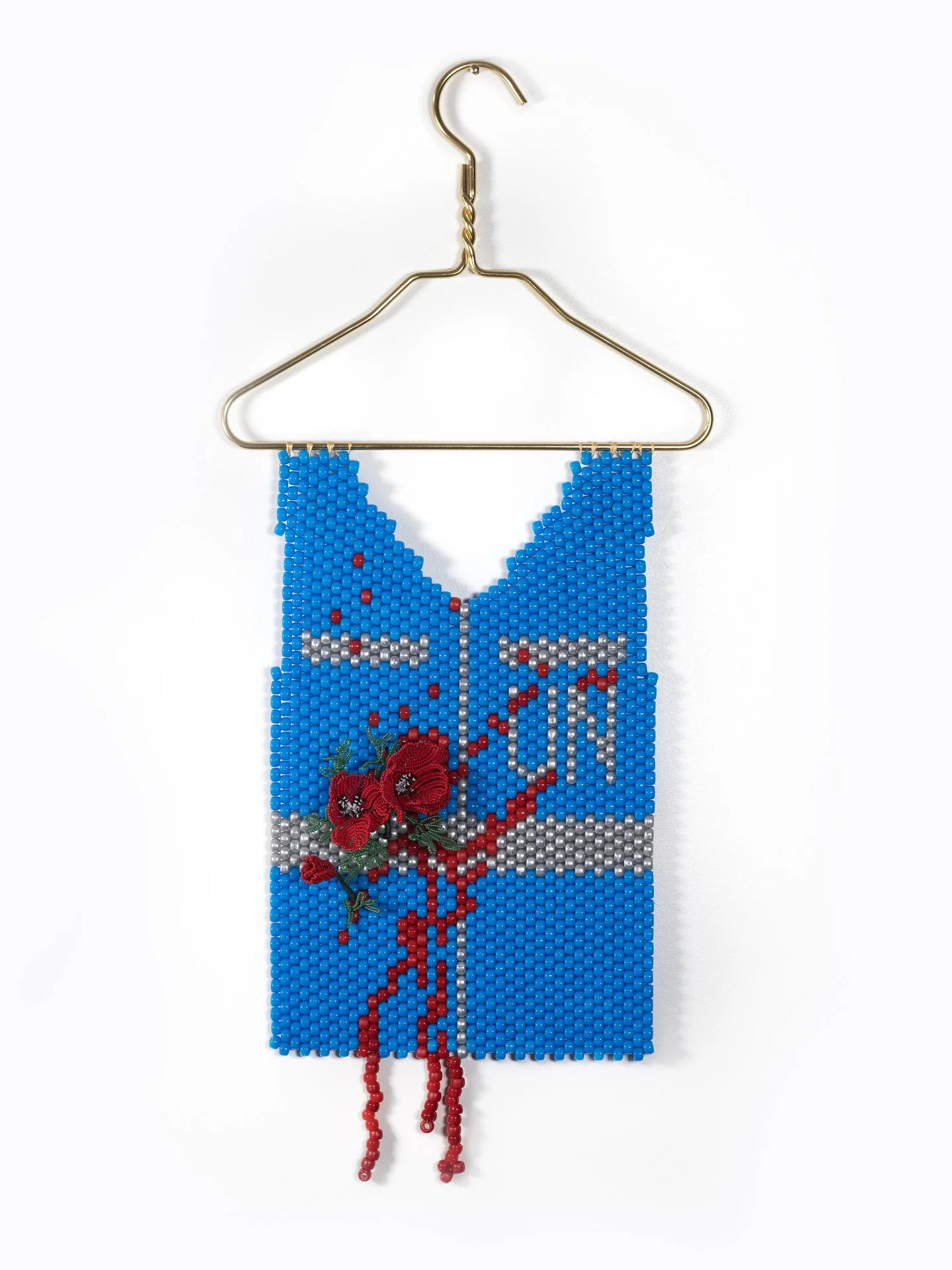
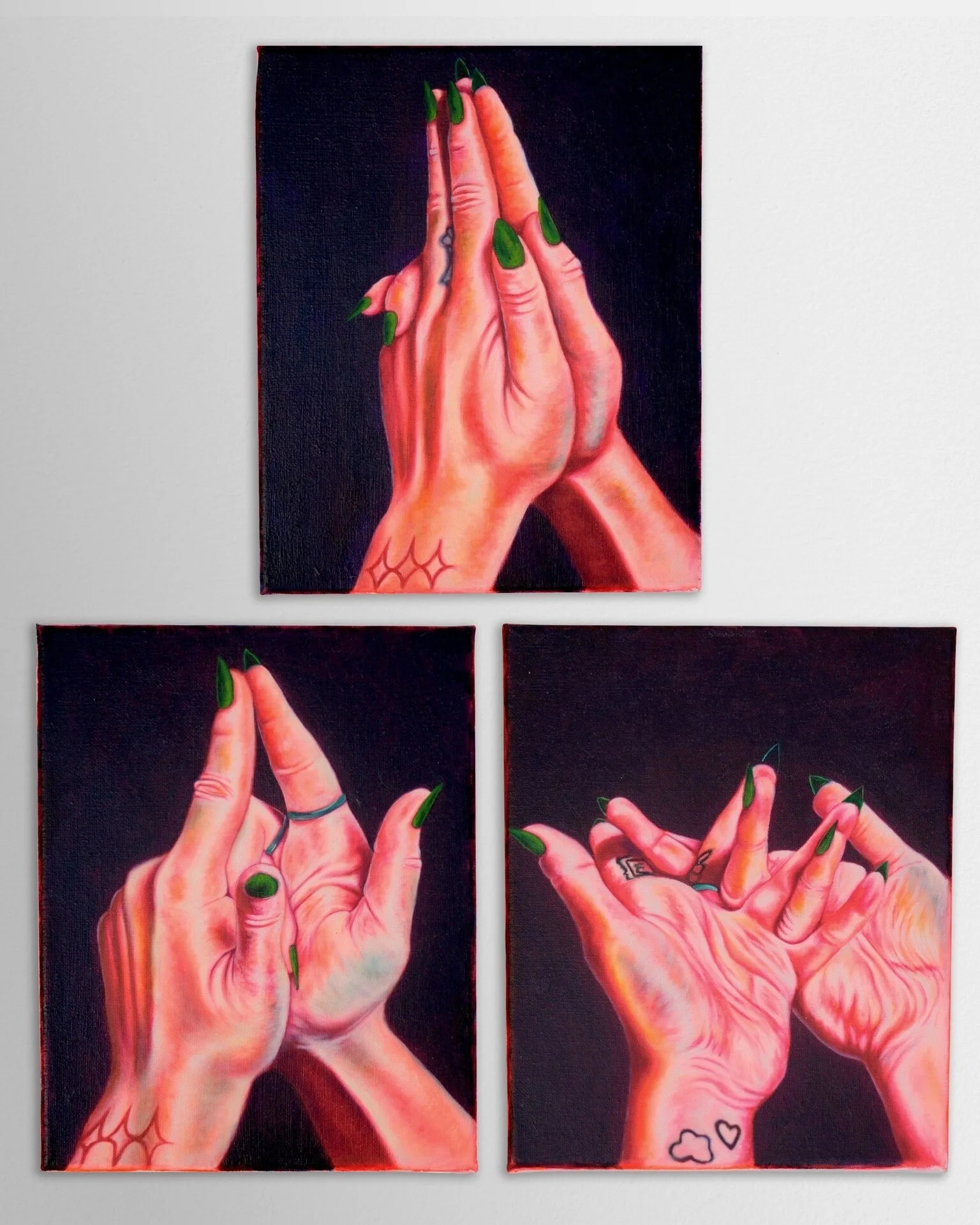
The artists in this section showcase the human body through variation and seriality, as a device for both formal and narrative investigations. Photographers Nicole Belle and Roxanne Darling both take vastly different approaches to self-portraiture. Belle’s self-portraits can be seen as vestiges of performances in which she playfully riffs on the staid traditions of studio photography. Darling’s photographs depict her nude body in various natural settings, presented almost as part of the landscape, with a mix of candor and humor. Manas Ranjan’s graphic woodcuts and monoprints convey a sense of bodily anxiety, through the repetition of a gaping, toothsome maw, or trembling hands. A trio of paintings by Emma Schwartz depict contorted hands as they pantomime a religious children’s rhyme, perhaps a portent of spiritual agony. Ceres Madoo’s ceramic female figures stand upside-down, supported by thick pillars of hair, bulwarks against the injustice of the status quo. Mary Porterfield and Humna Raza each employ the figure in their deeply personal work: Porterfield’s large-scale transparent cut-outs lay bare the grief of caring for aging and dying parents, while in Raza’s gripping charcoal, chalk, and ink drawings, hair plays a metaphorical role through which she explores her own identity. In Kimberly Robertson’s beaded Haunting series, the body is absent, replaced by bloodied vests representing journalists, doctors, and aid workers killed in Gaza.Sophie Spinelle
Nicole Belle
Sophie Spinelle
Michelle No. 3
Matte giclée print
16" x 24" x 1"
$1,800.00
Sophie Spinelle
Michelle No. 2
Matte giclée print
16" x 24" x 1"
$1,800.00
Roxanne Darling
Areeha Ahmad
٠٠ت (Mannat)
Life cast, plaster, clay, safety pins, tatreez thread, pearl
8" x 6" x 2"
$600.00
Areeha Ahmad
Imprisoned Bloom
Life cast, plaster, clay, aluminum wire, pins, jewelry
6" x 5" x 4"
$500.00
Manas Ranjan
Caroline Bell
Stripped Autonomous Rights
Soft sculpture
24" x 16" x 8"
$600.00
Emma Schwartz
Sawyer Rose
Rachel and Her Work: Sandwich Generation
Work data, burnt wood, cotton rope, gold and silver leaf
75" x 60" x 67"
$45,000.00
Ceres Madoo
Luyao Chang
The Passion
Pigment mixed with silicon, steel chain
25" x 25" x 5.5"
$1,500.00
Luyao Chang
Double Braids
Stoneware, glaze, crepe hair, thread
50" x 15" x 5.5"
$1,700.00
Mary Porterfield
Dominique Greene
Beijos For Us
Photo lithography
21" x 21" x 0"
$950.00
Dominique Greene
Beijos For Us
Photo lithography
7" x 21" x 0"
$350.00
Dominique Greene
Madonna and Child
Inkjet and silkscreen
96” x 72”
$1,750.00
Humna Raza
Kimberly Robertson
Wall 5: Conceptualism
Dylan DeWitt / Christine Gaffney / Judith G Levy / Mahdi Dolatyari / Yik Heng Lee / Joyce Polance / Kirsten Simonsen
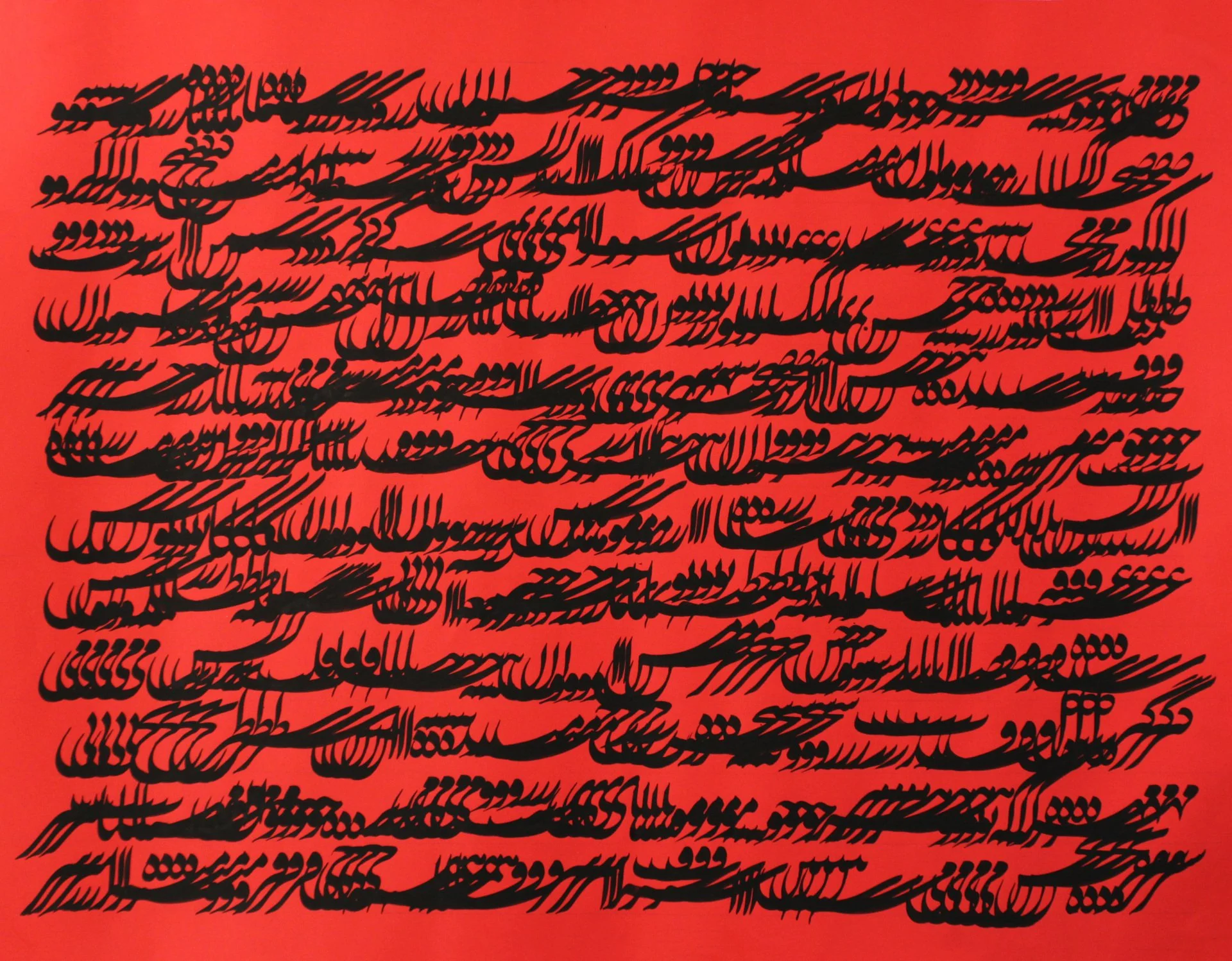
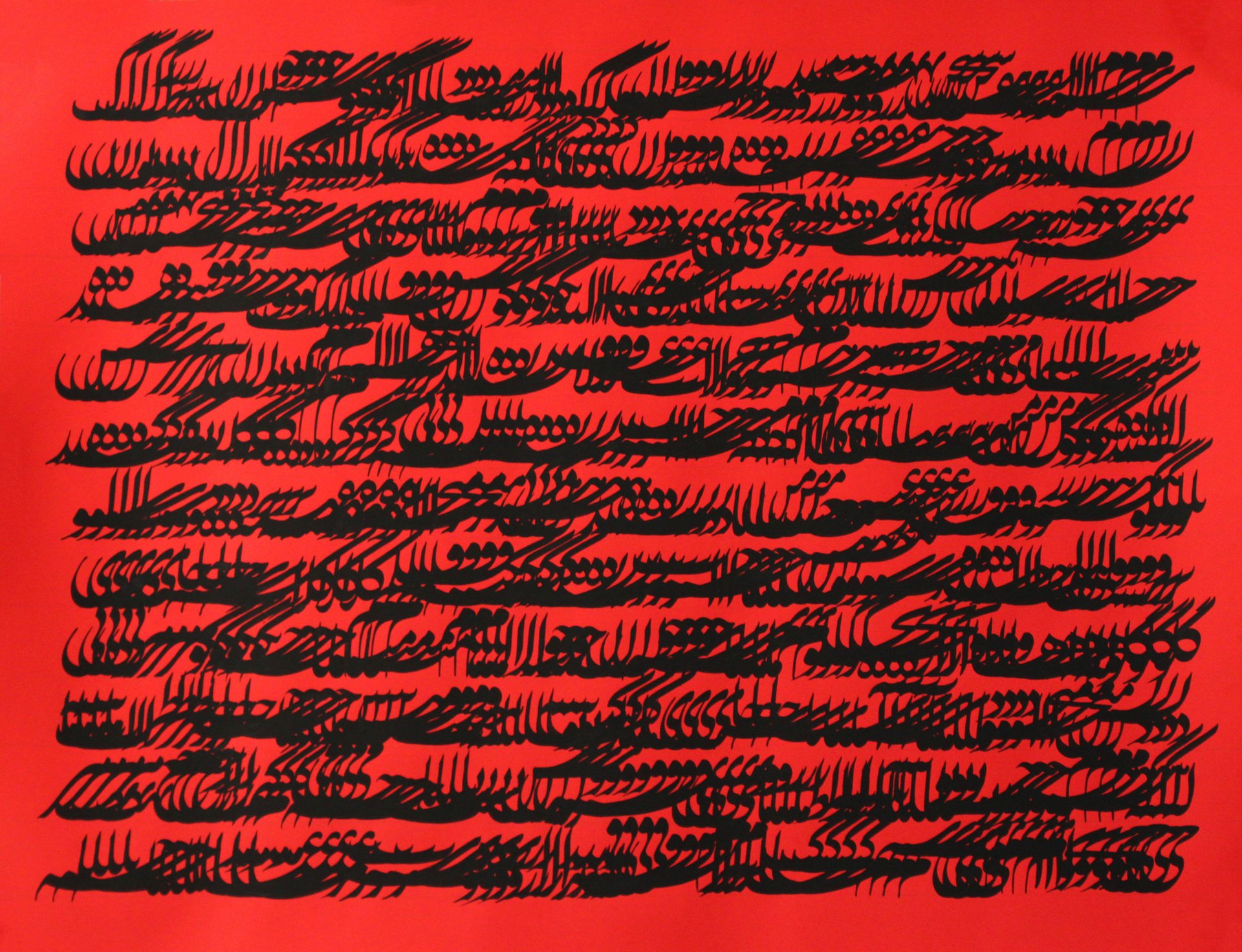
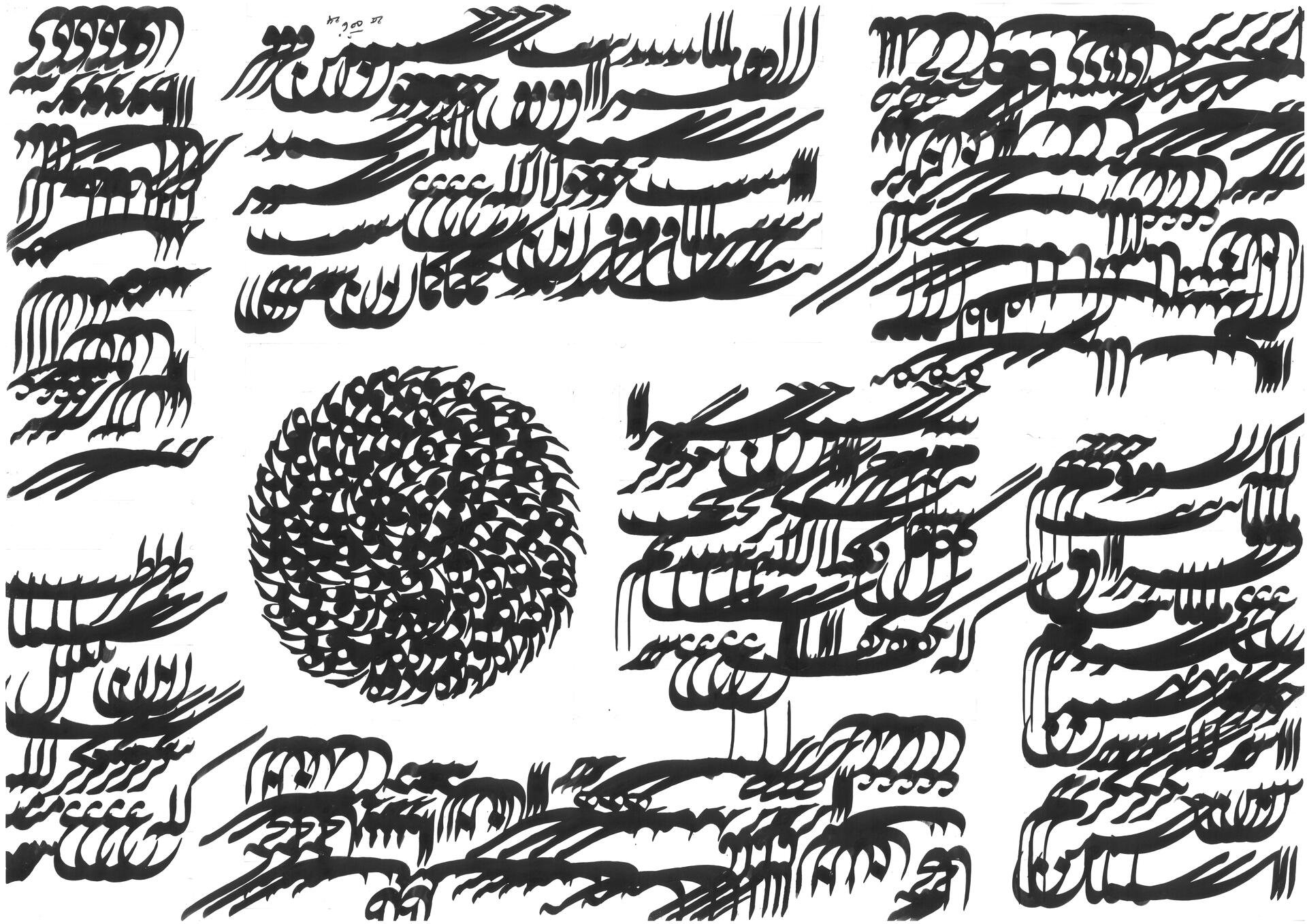
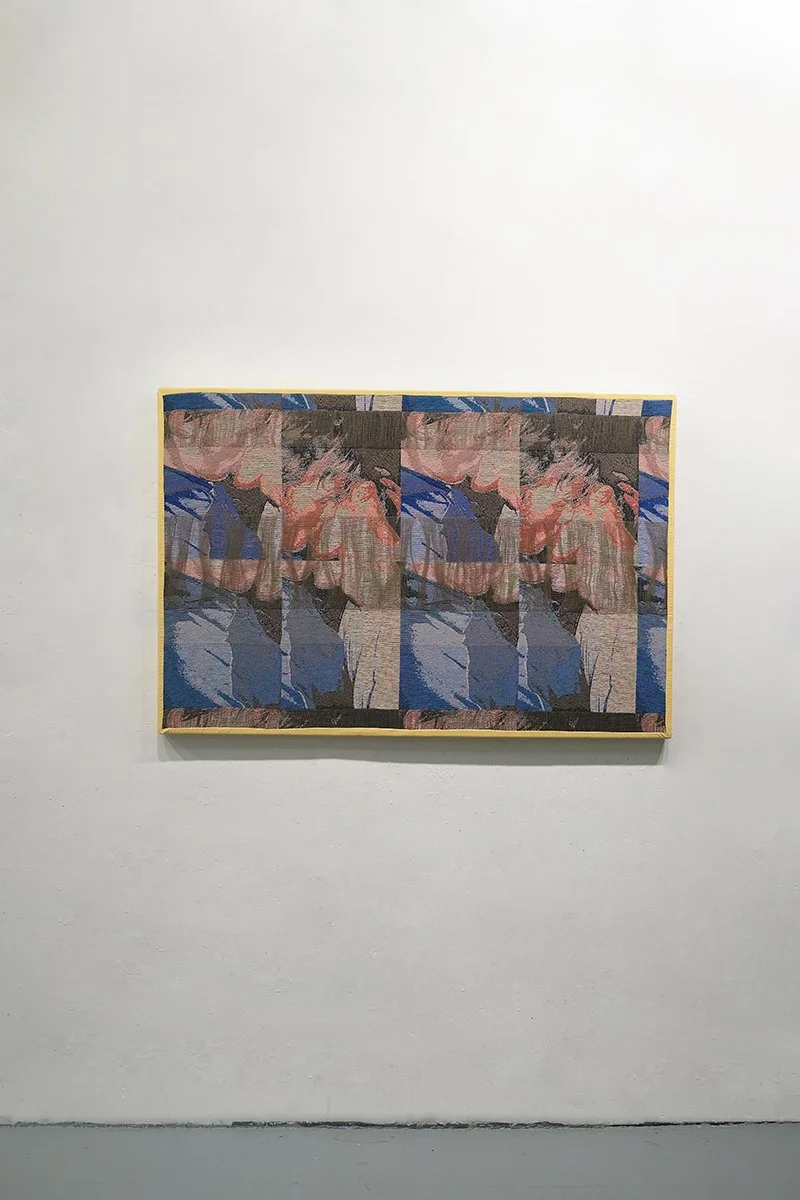
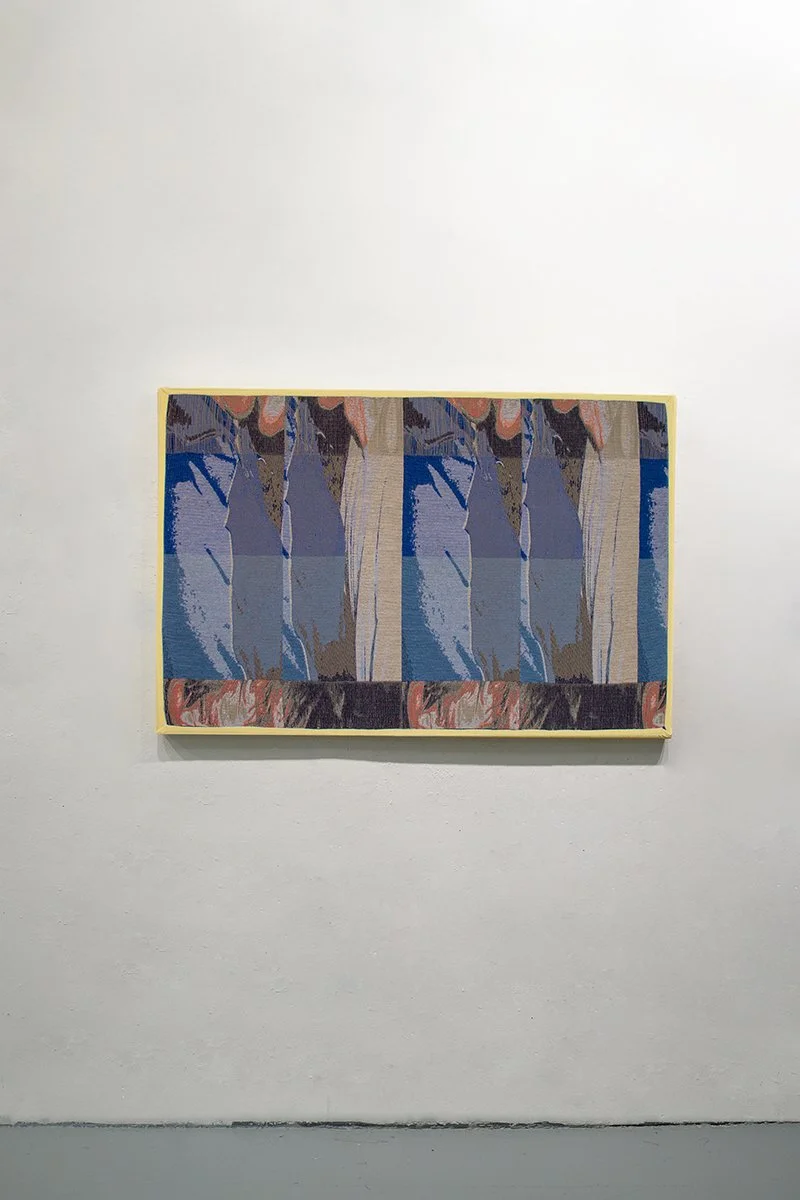
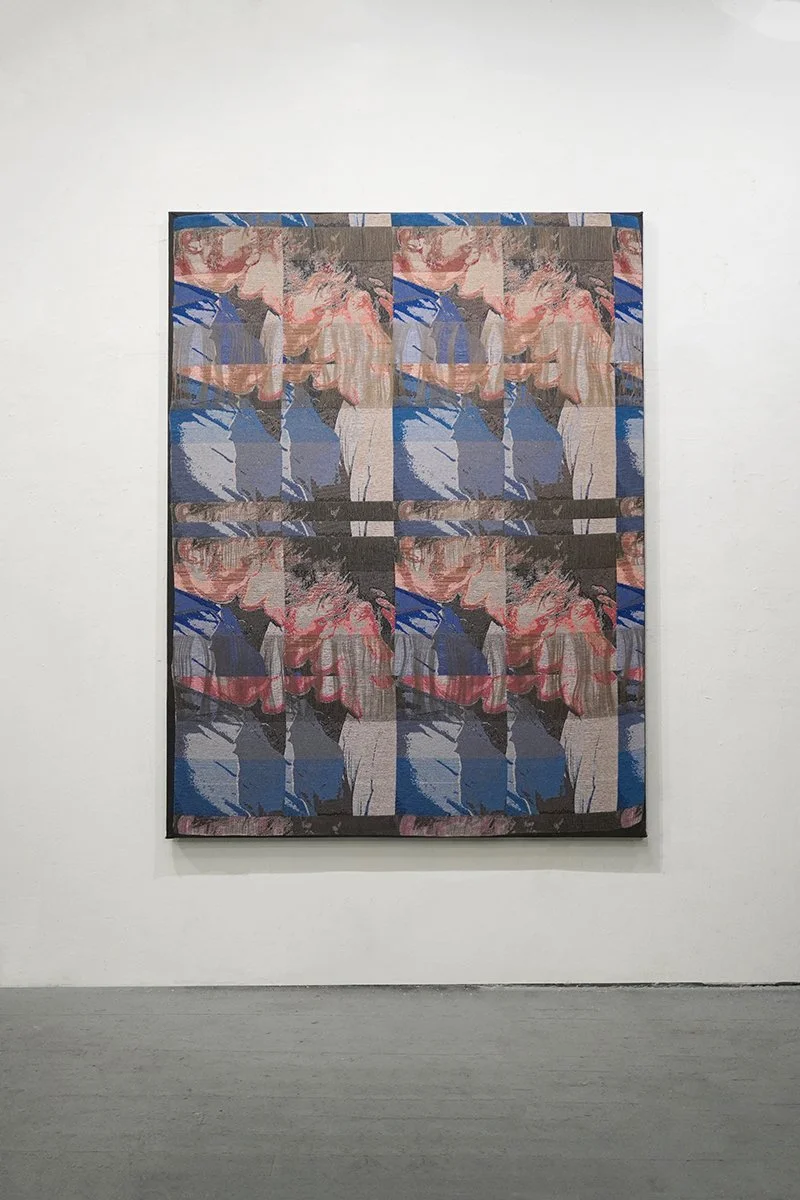
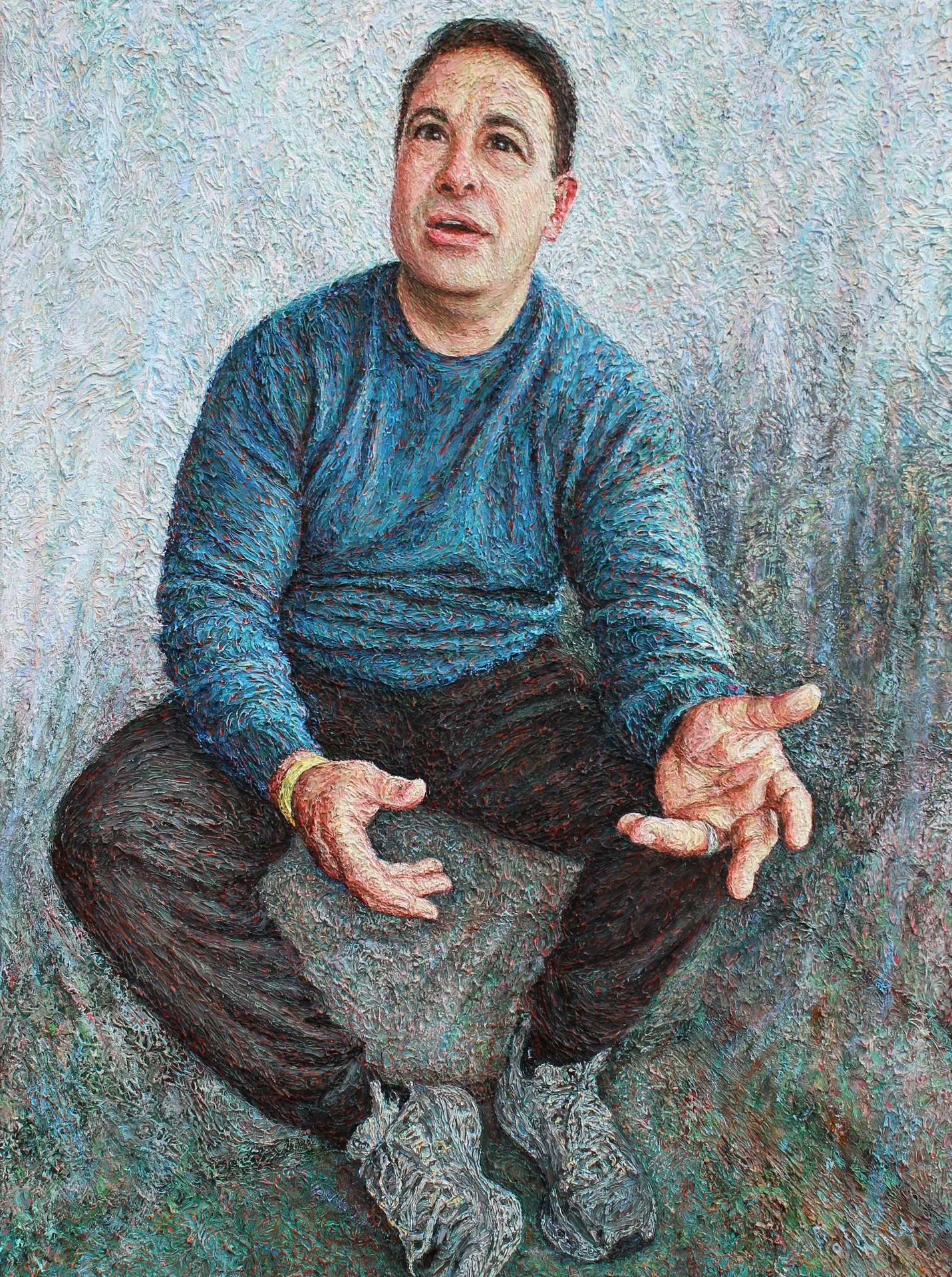
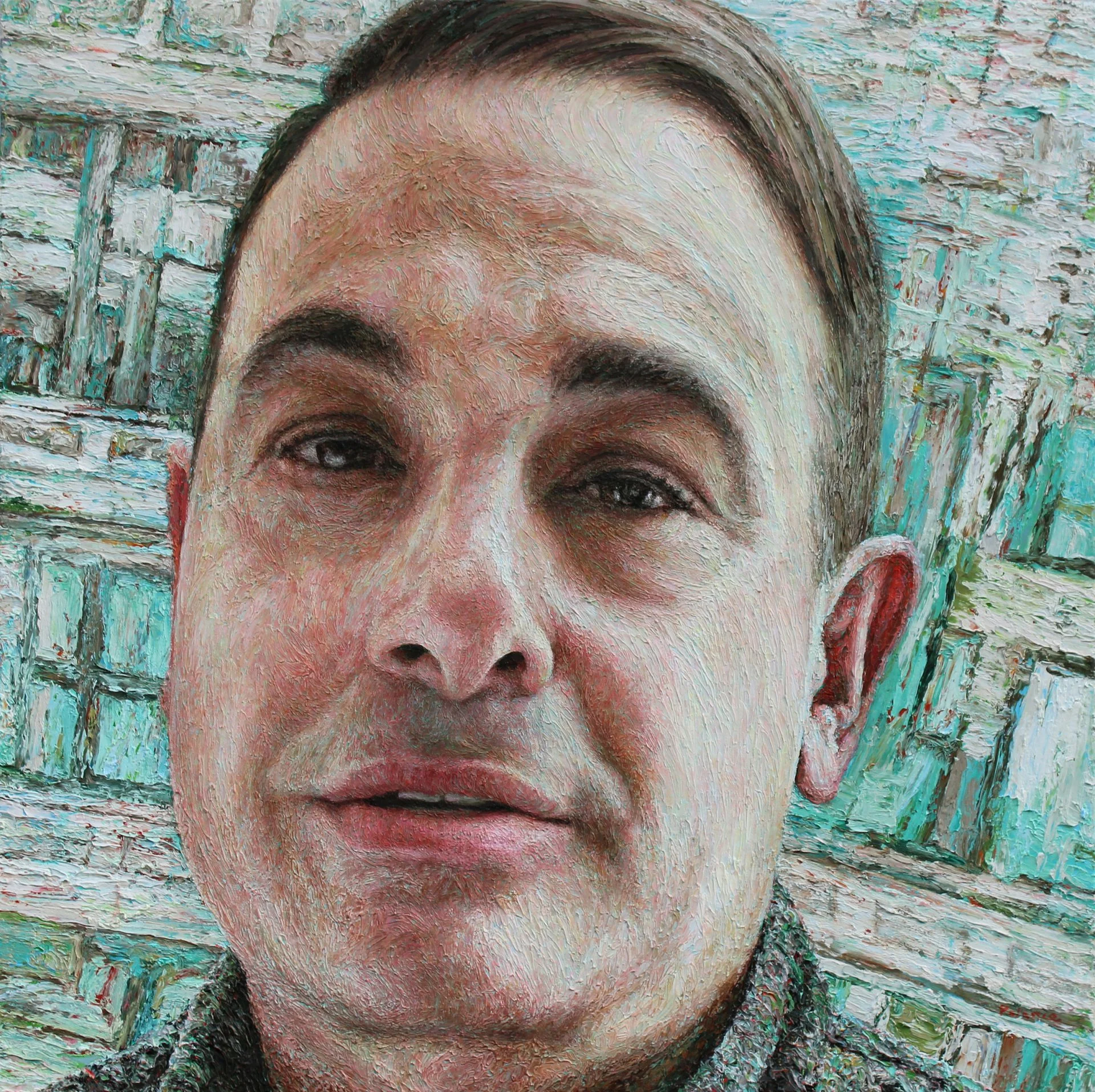
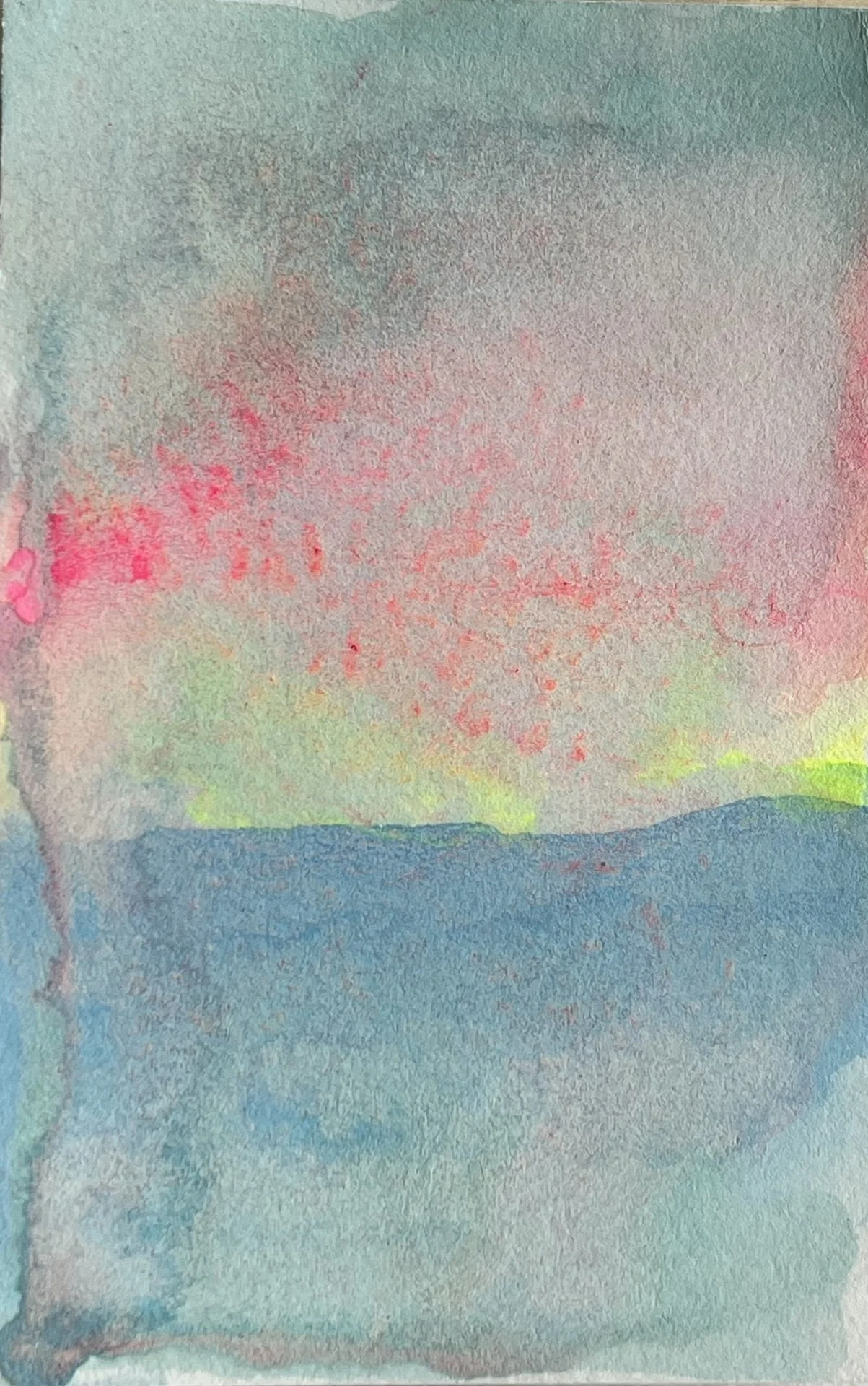
The final wall features artists whose use of seriality is rooted in a conceptual framework. Dylan DeWitt’s carefully-constructed works cheekily raise questions about artifice and authenticity. Through performance and sculpture, Christine Gaffney offers a feminist rejoinder to minimalism’s phallocentrism. Judith G. Levy uses repetition to harrowing effect in her memorial to murdered trans and non-binary individuals. Mahdi Dolatyari uses Persian calligraphy to investigate slippages in meaning and understanding, while Yik Heng Lee explores how the meaning of an appropriated image shifts, as it moves from photograph to woven pattern. Joyce Polance’s paintings of her therapist upend the established relationship between therapist and patient, while engaging issues around memory and recognition. Named after songs by the Eagles, Kirsten Simonsen’s tranquil color field postcards take on a darkly ironic tone, conjuring commodified paradise and despoiled nature.
Dylan DeWitt
Sophie Spinelle
Michelle No. 3
Matte giclée print
16" x 24" x 1"
$1,800.00
Sophie Spinelle
Michelle No. 2
Matte giclée print
16" x 24" x 1"
$1,800.00
Christine Gaffney
Judith G Levy
Caroline Bell
Stripped Autonomous Rights
Soft sculpture
24" x 16" x 8"
$600.00
Mahdi Dolatyari
Sawyer Rose
Rachel and Her Work: Sandwich Generation
Work data, burnt wood, cotton rope, gold and silver leaf
75" x 60" x 67"
$45,000.00
Yik Heng Lee
Luyao Chang
The Passion
Pigment mixed with silicon, steel chain
25" x 25" x 5.5"
$1,500.00
Luyao Chang
Double Braids
Stoneware, glaze, crepe hair, thread
50" x 15" x 5.5"
$1,700.00
Joyce Polance
Dominique Greene
Beijos For Us
Photo lithography
21" x 21" x 0"
$950.00
Dominique Greene
Beijos For Us
Photo lithography
7" x 21" x 0"
$350.00
Dominique Greene
Madonna and Child
Inkjet and silkscreen
96” x 72”
$1,750.00