In Black & White
Juried by Alina Cohen
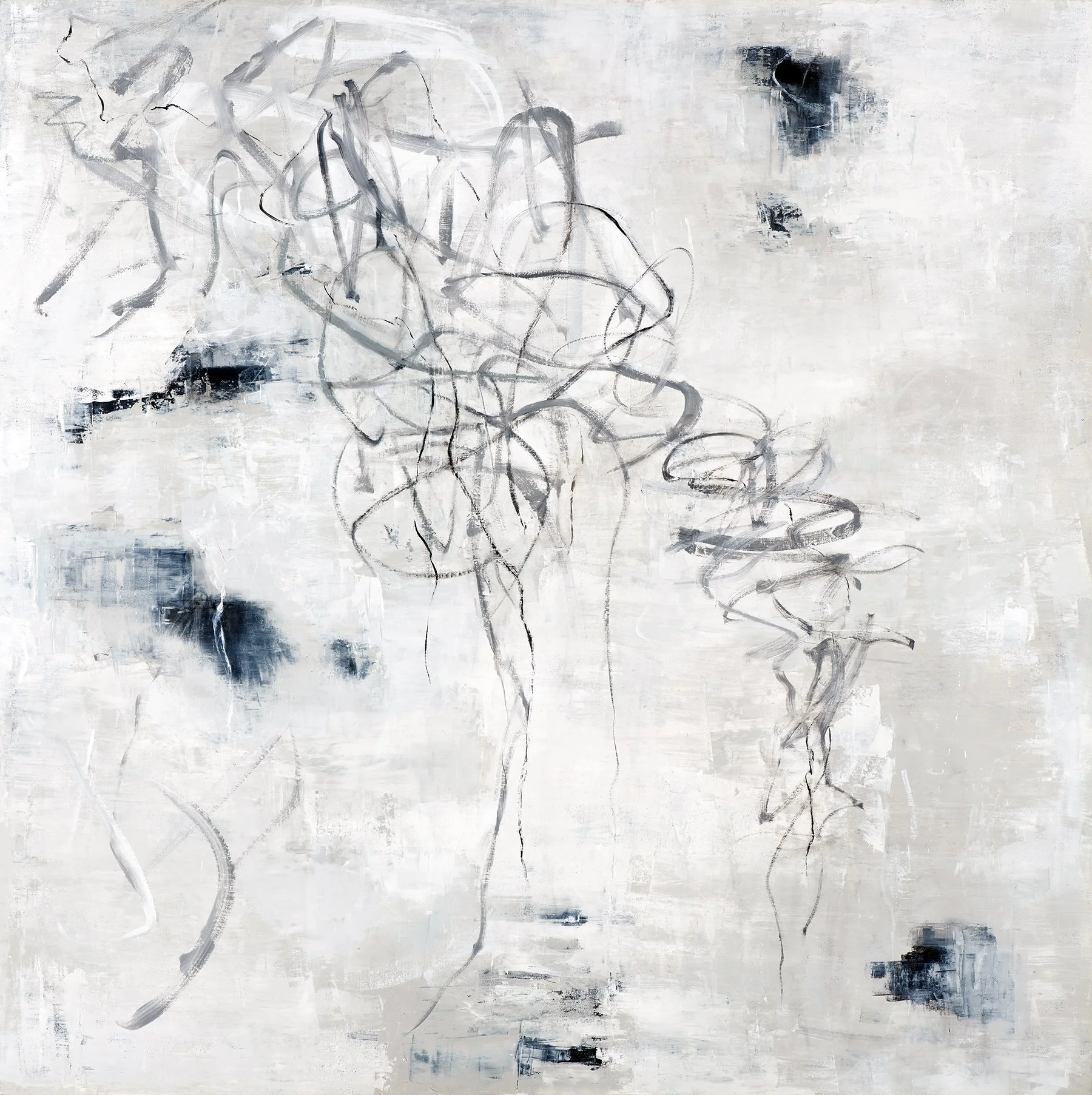

Curatorial Statement
The theme of this exhibition, In Black and White, immediately suggests a binary. It evokes two poles: light and its absence. Some of the included artworks play off this polarity, and their extreme contrast contributes to an appealing optical play (think: the geometries of Bridget Riley or Carmen Herrera). When artists eliminate a variable like color, the viewer’s eye more easily focuses on composition and line.
Yet most of the pieces in this show feature shades of gray. One extreme fades into another, while a majority of the artworks hover in the intermediate realm. All of this has social and political corollaries, of course. Such artworks ask us to reconsider what we really mean by “black” and “white,” and what we may accomplish by playing within or circumventing binary systems writ large. Male or female. Life or death. Figuration or abstraction. The considerable strictures of producing artworks In Black and White, it seems, leave plenty of room for expression, exploration, and the in-between.
In the realm of visual art, “black and white” took on new meaning with the advent of photography in the mid-19th-century. While visual artists had long been interested in light, it was now a more active material, responsible for fixing images. Humans could reproduce “reality,” but without color. In the mid-20th-century, that changed with the popularization of color photography. In the 1970s, color photography entered the gallery in a more serious way, and black and white pictures were no longer the norm. They were a specific creative choice.
Contemporary artists who work in monochrome, or grayscale, engage with other traditions, too. Vincent van Gogh created over 1,100 black and white drawings before he felt able to engage with color. Pablo Picasso’s 1937 masterpiece, Guernica, employs a monochromatic palette to accentuate the horrors of war (in 2013, the Guggenheim mounted an entire exhibition devoted to his black-and-white works). The history of sumi ink painting goes back thousands of years, with origins in China. Printmakers have long worked in monochrome, highlighting the precision of their drawings.
The exhibition explores how artists work within such histories, and within significant chromatic constraints, to develop visual languages that feel unbridled and new.
About the Juror
Alina Cohen is a writer based in Brooklyn. She holds an MFA from the University of Montana, and her fiction and criticism have appeared at The New York Times, Los Angeles Times, ArtReview, Artsy, and other publications.
Wall 1
Yezan Al Laham / George Krause / Robert Bibler / Myroslava Boikiv / Rosalyn Farney / Nomi Silverman / Luca Varano
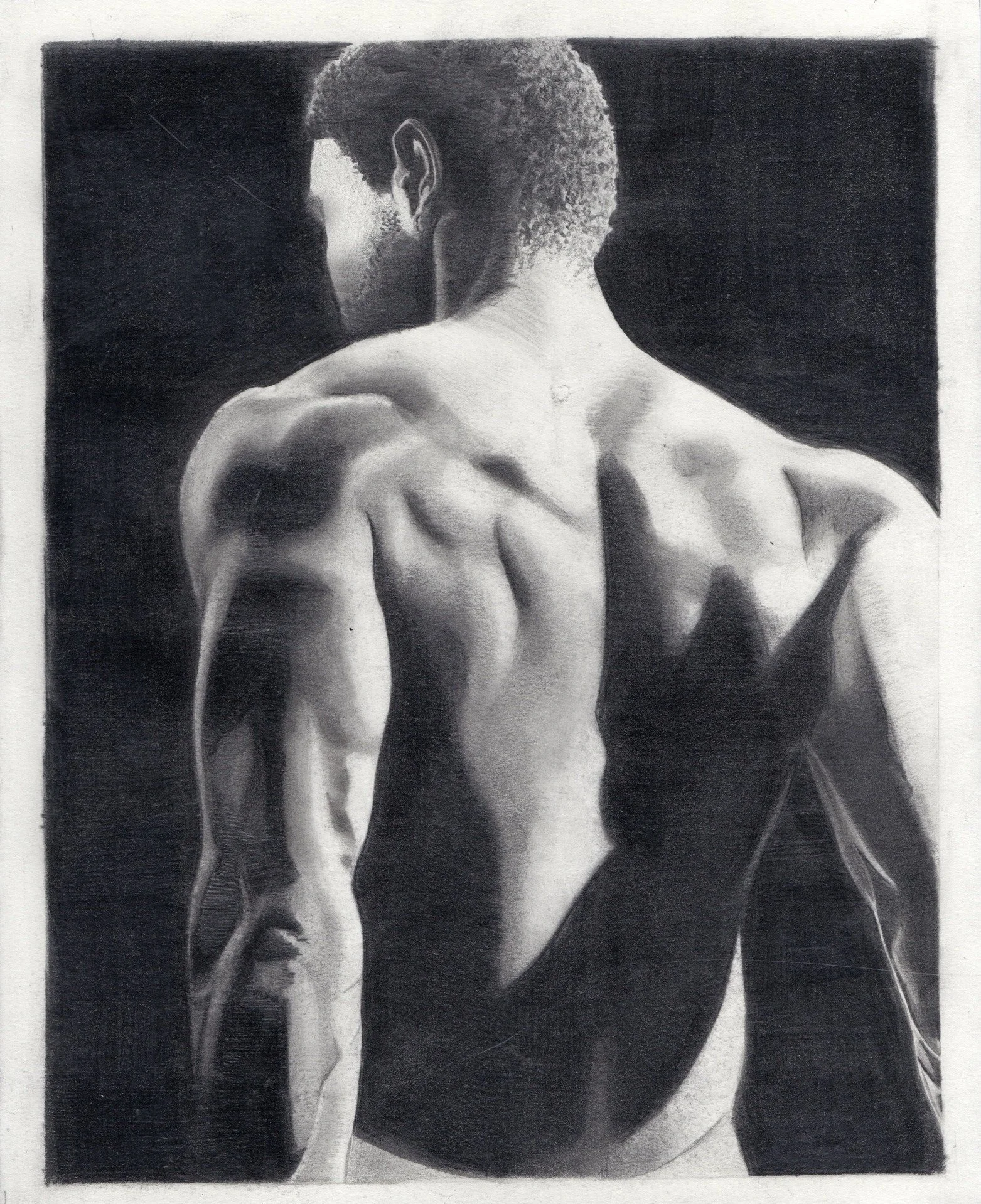
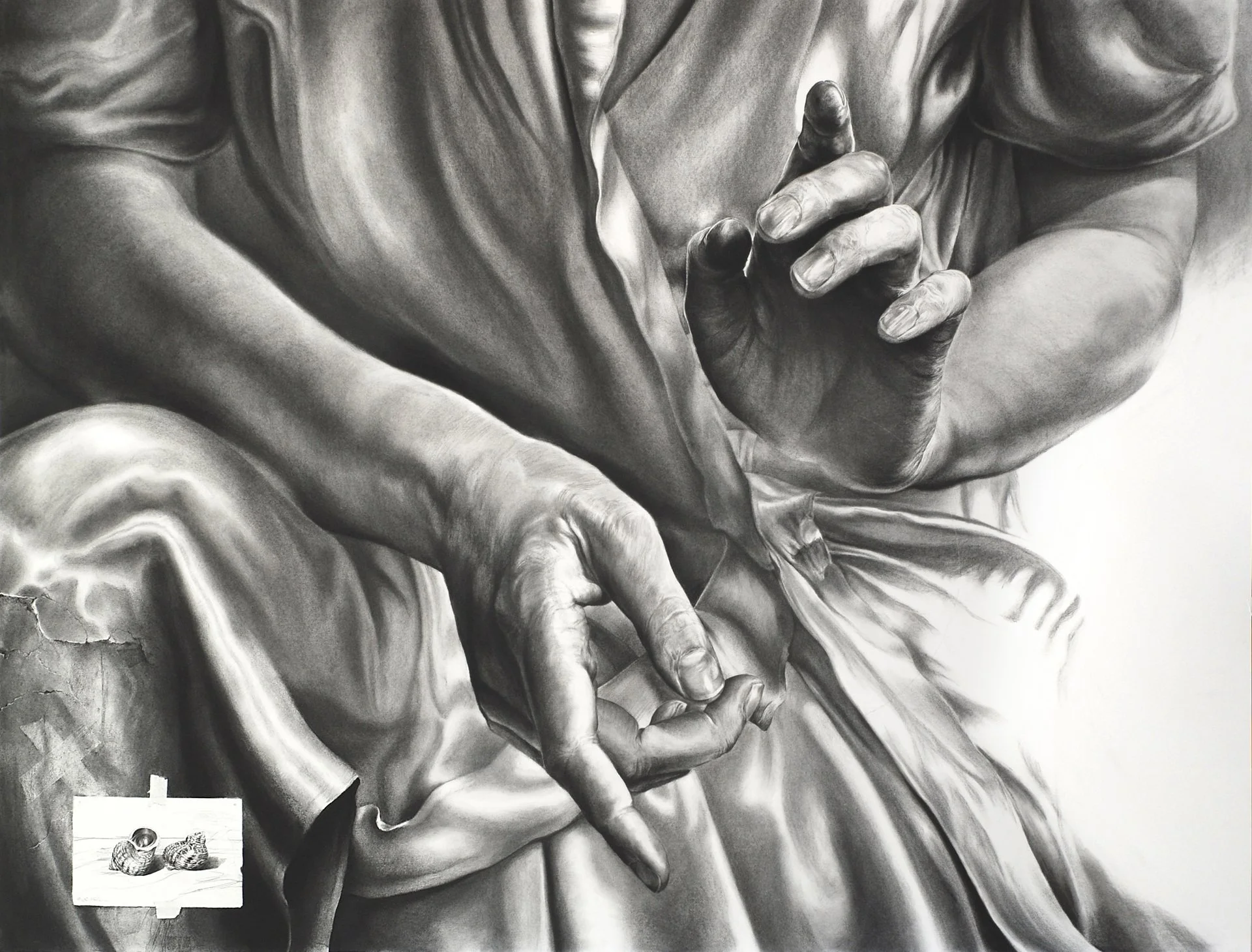
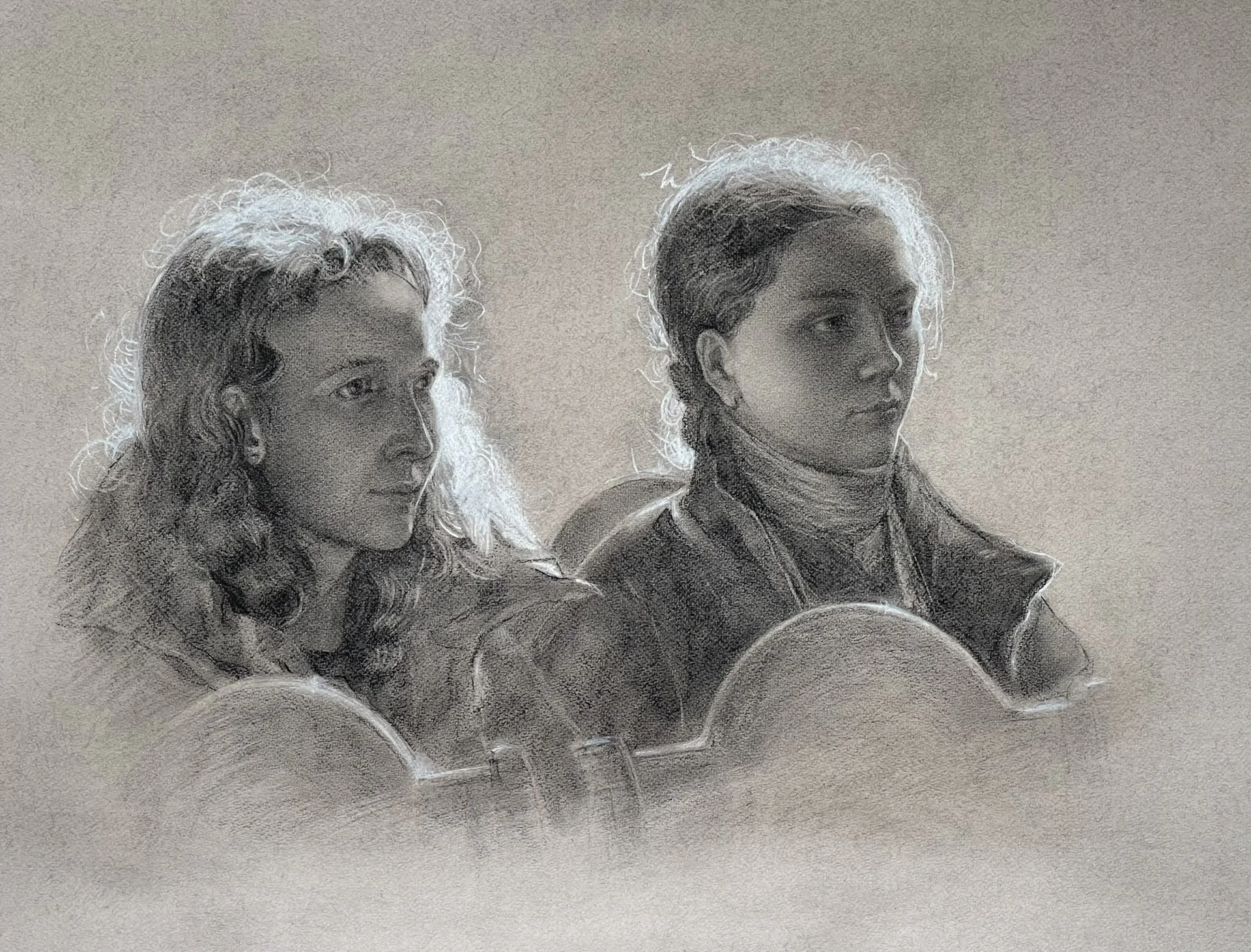
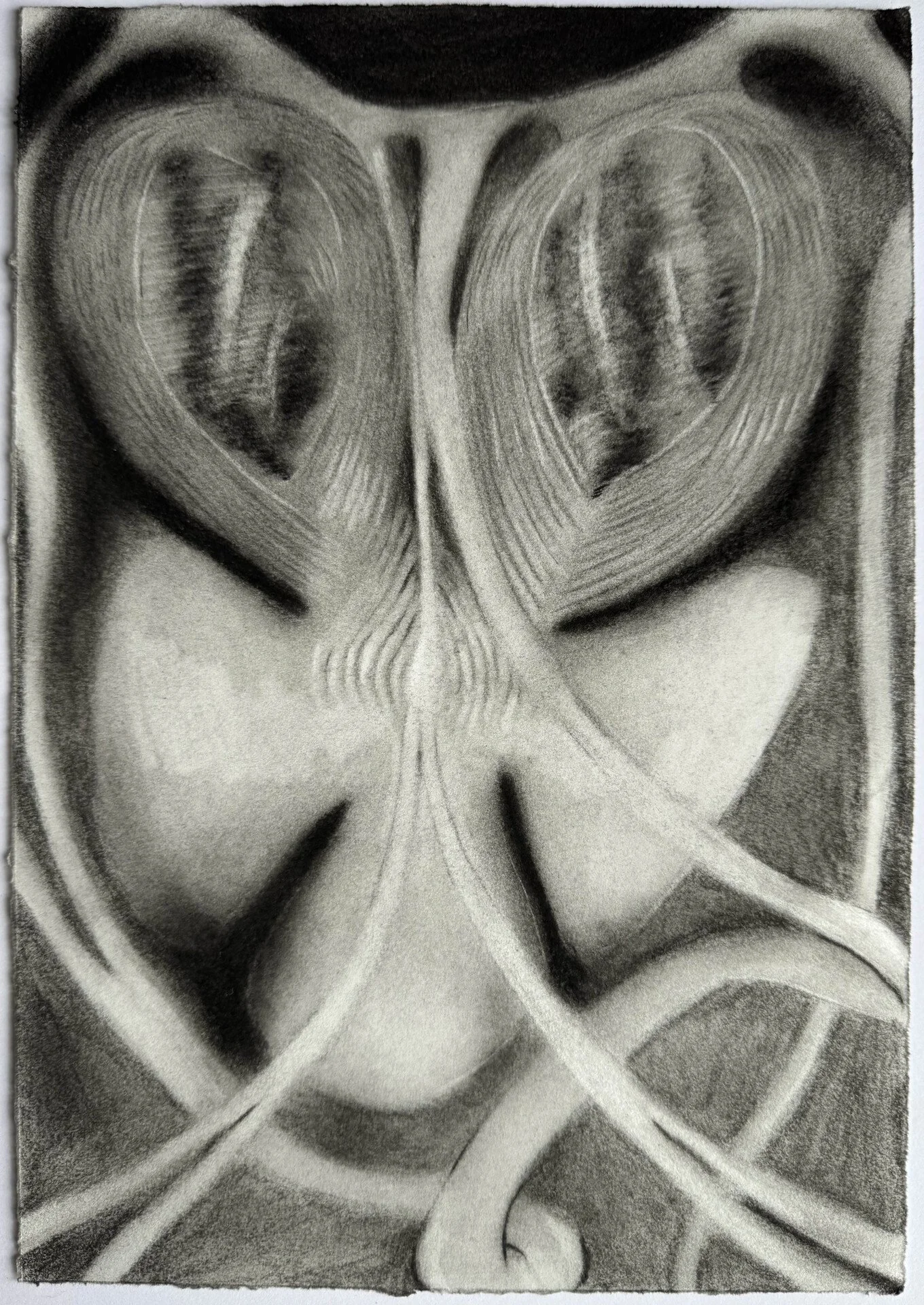
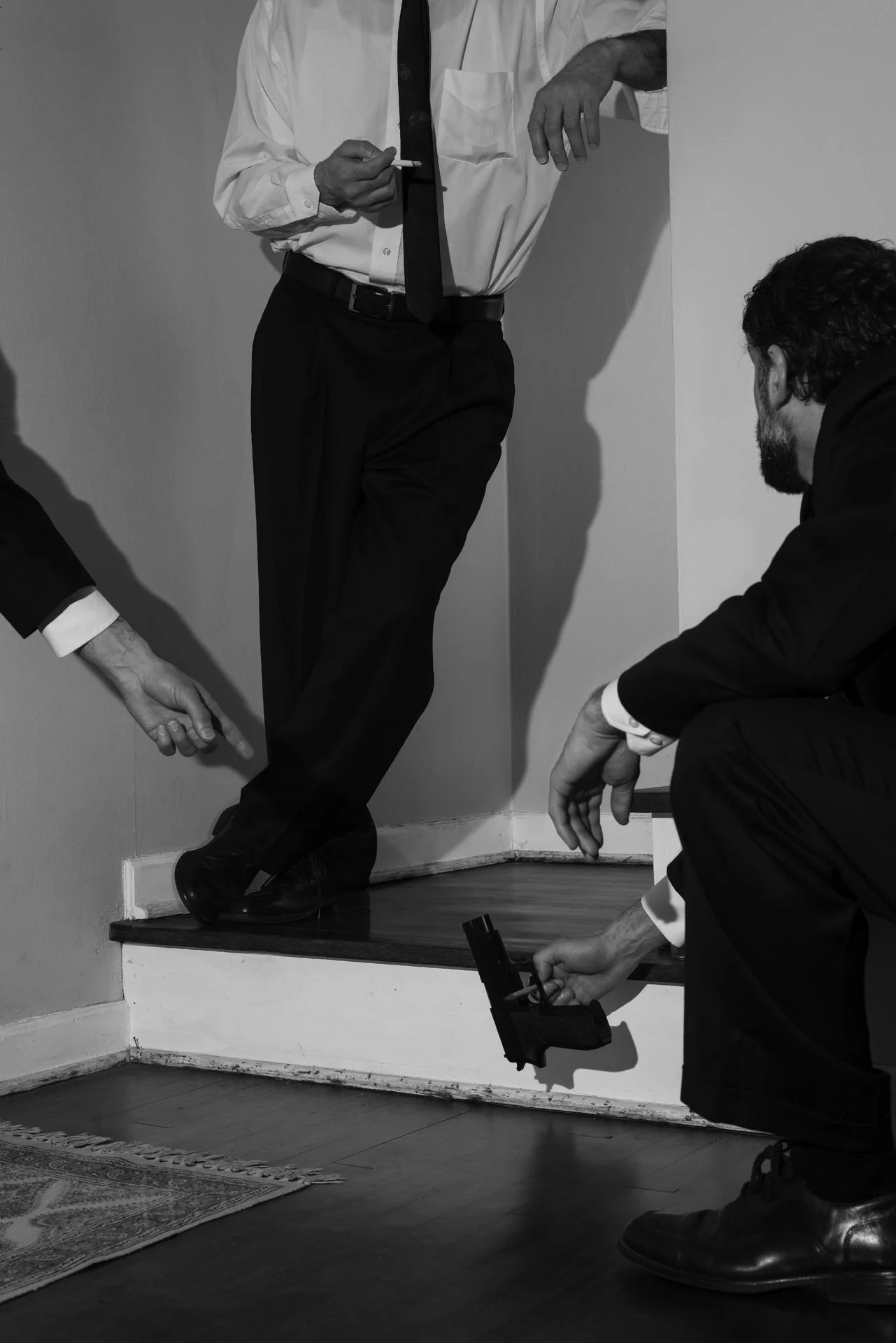
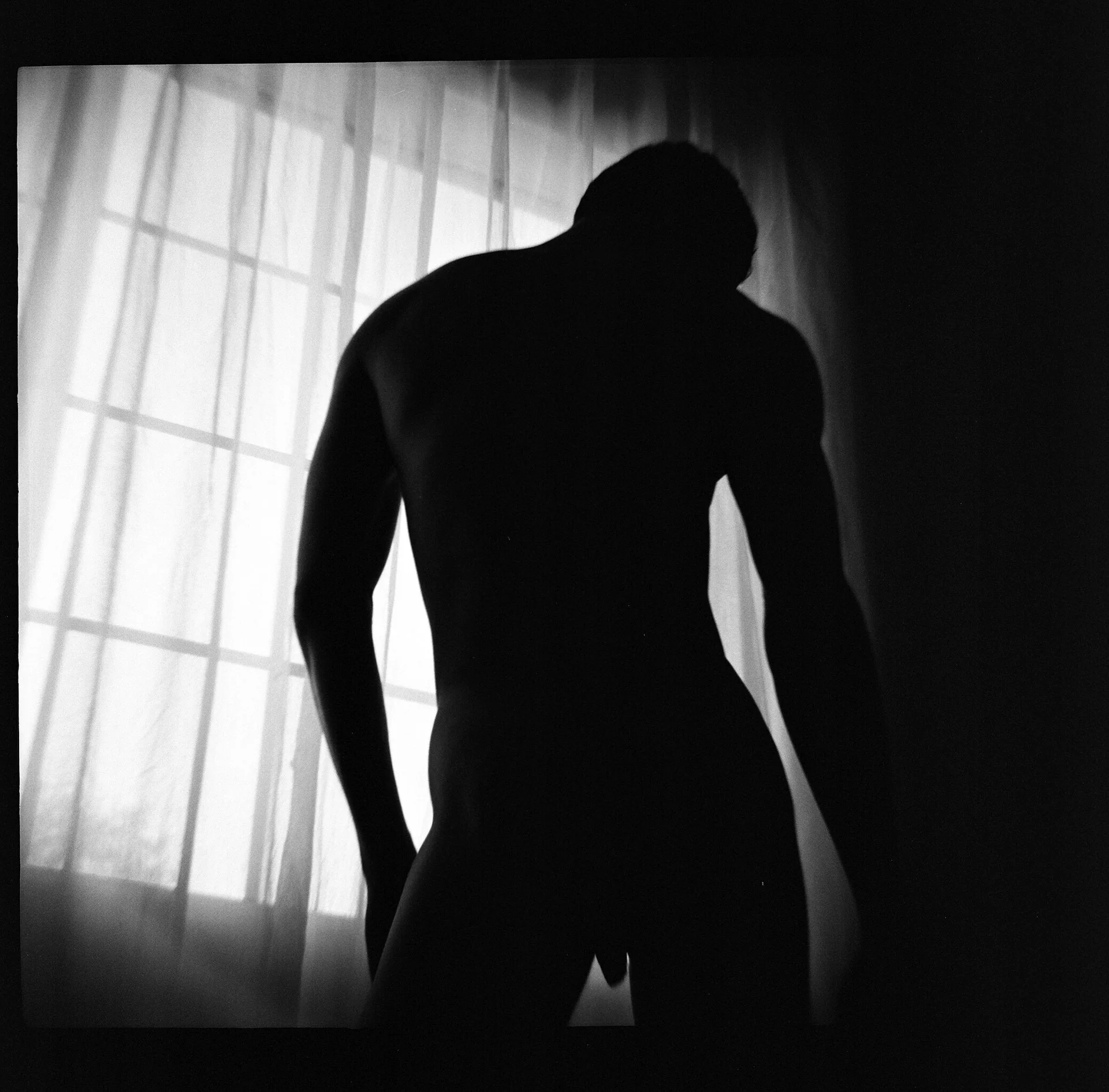
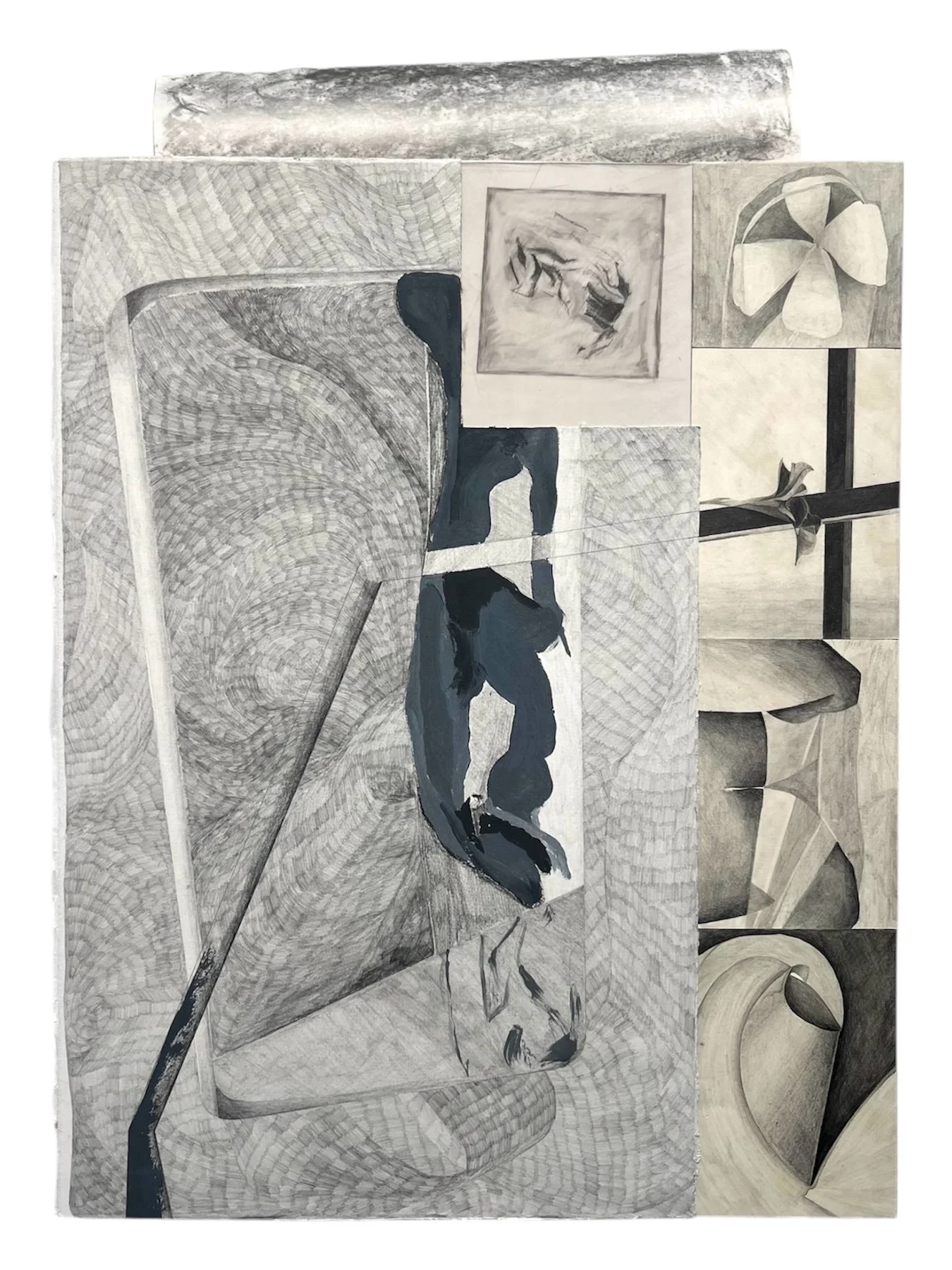
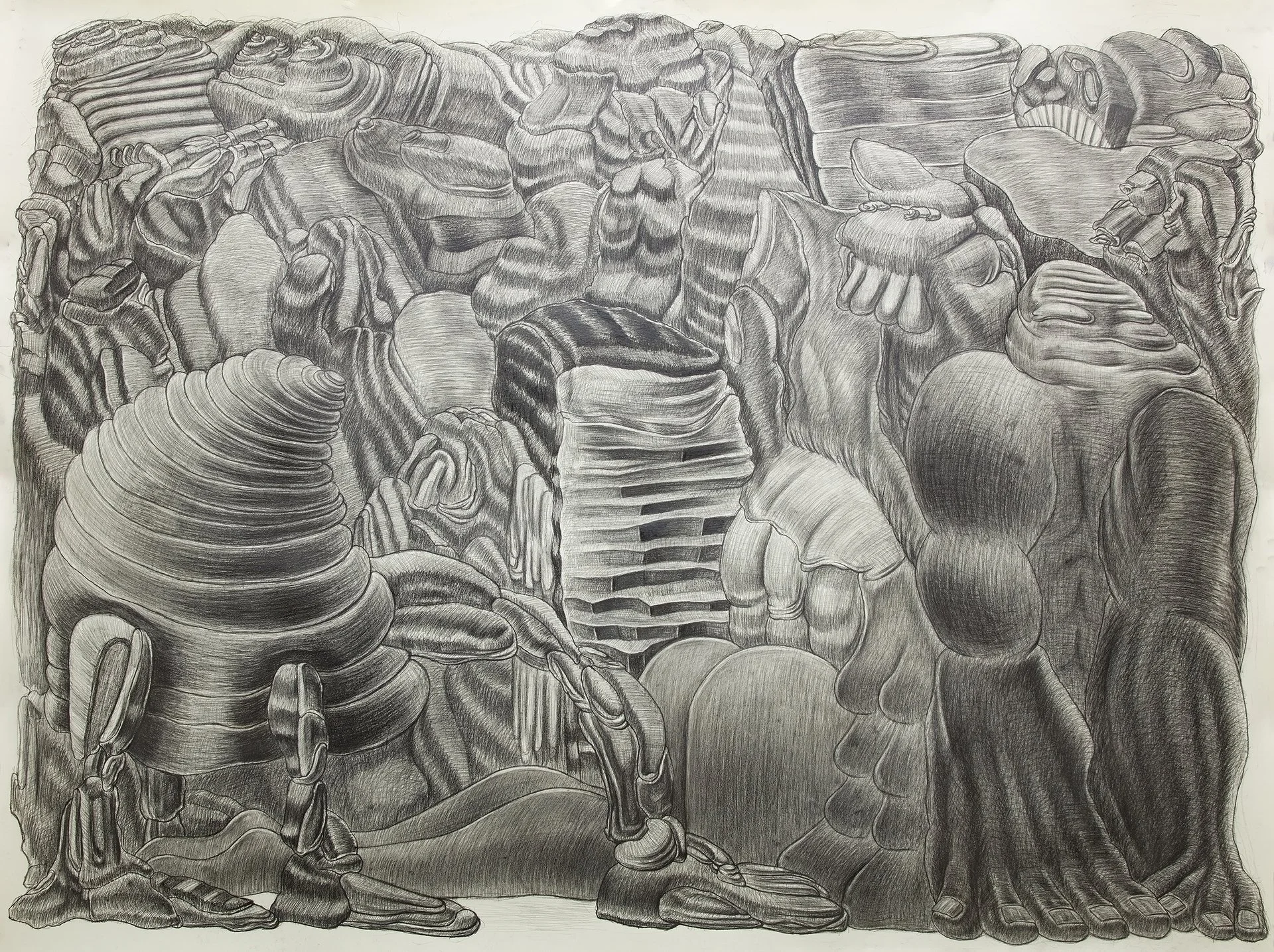
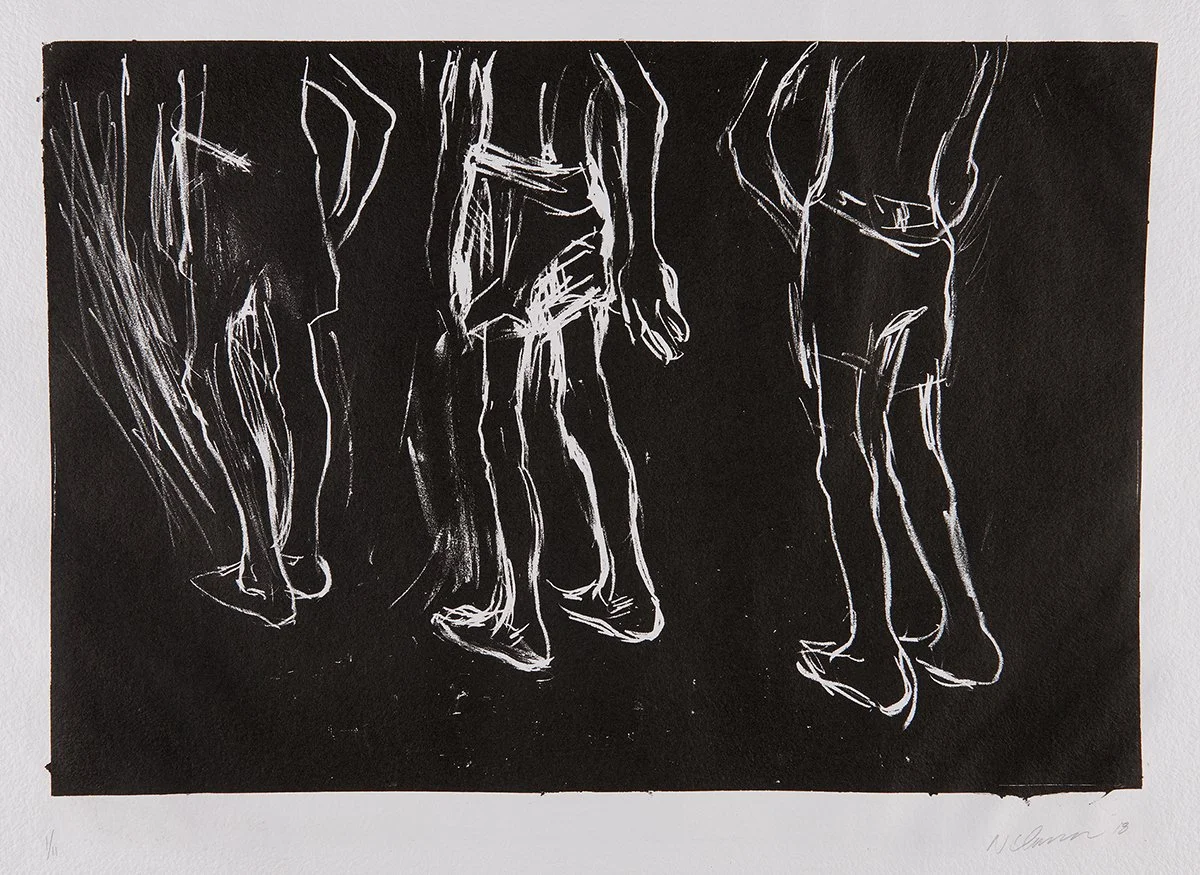
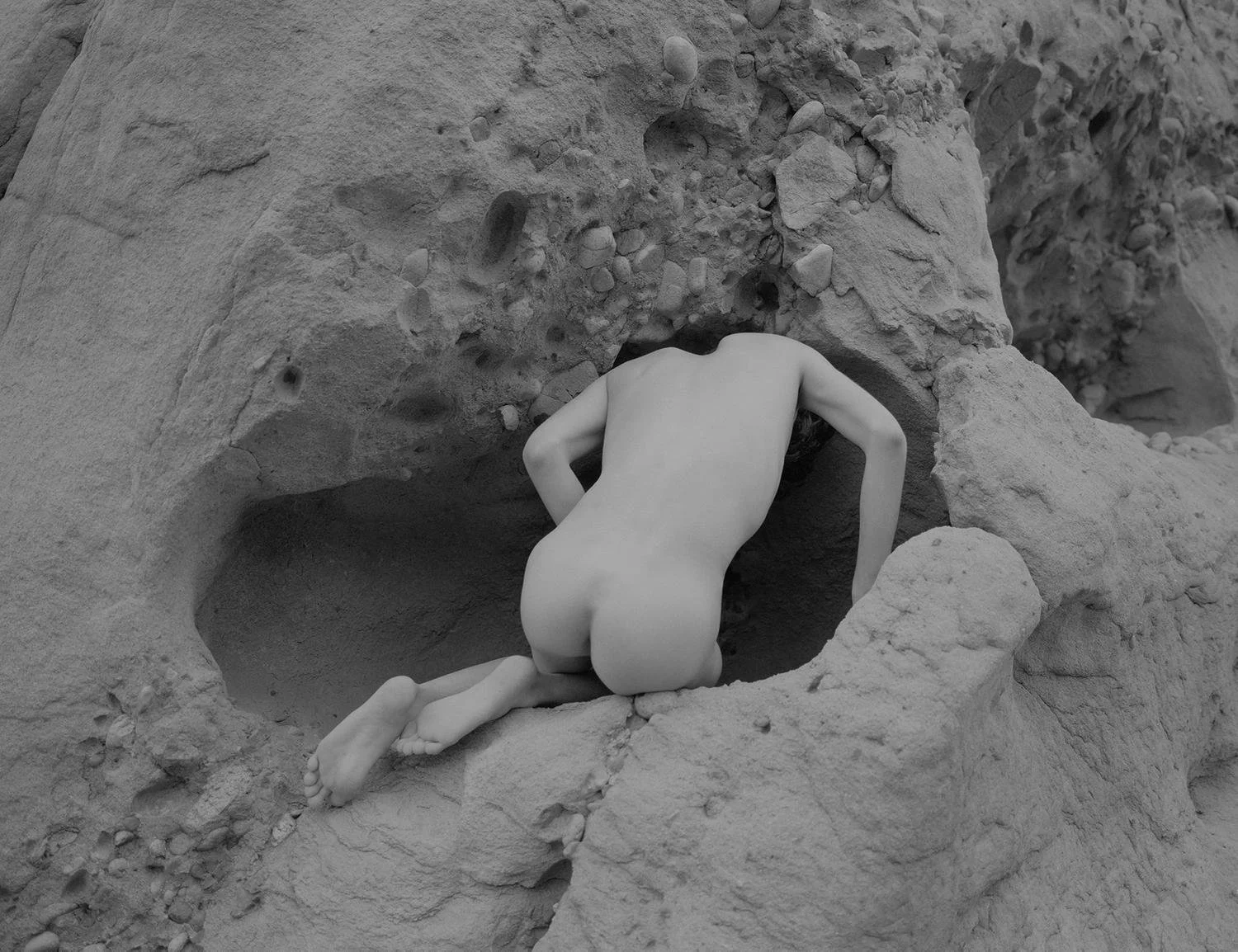
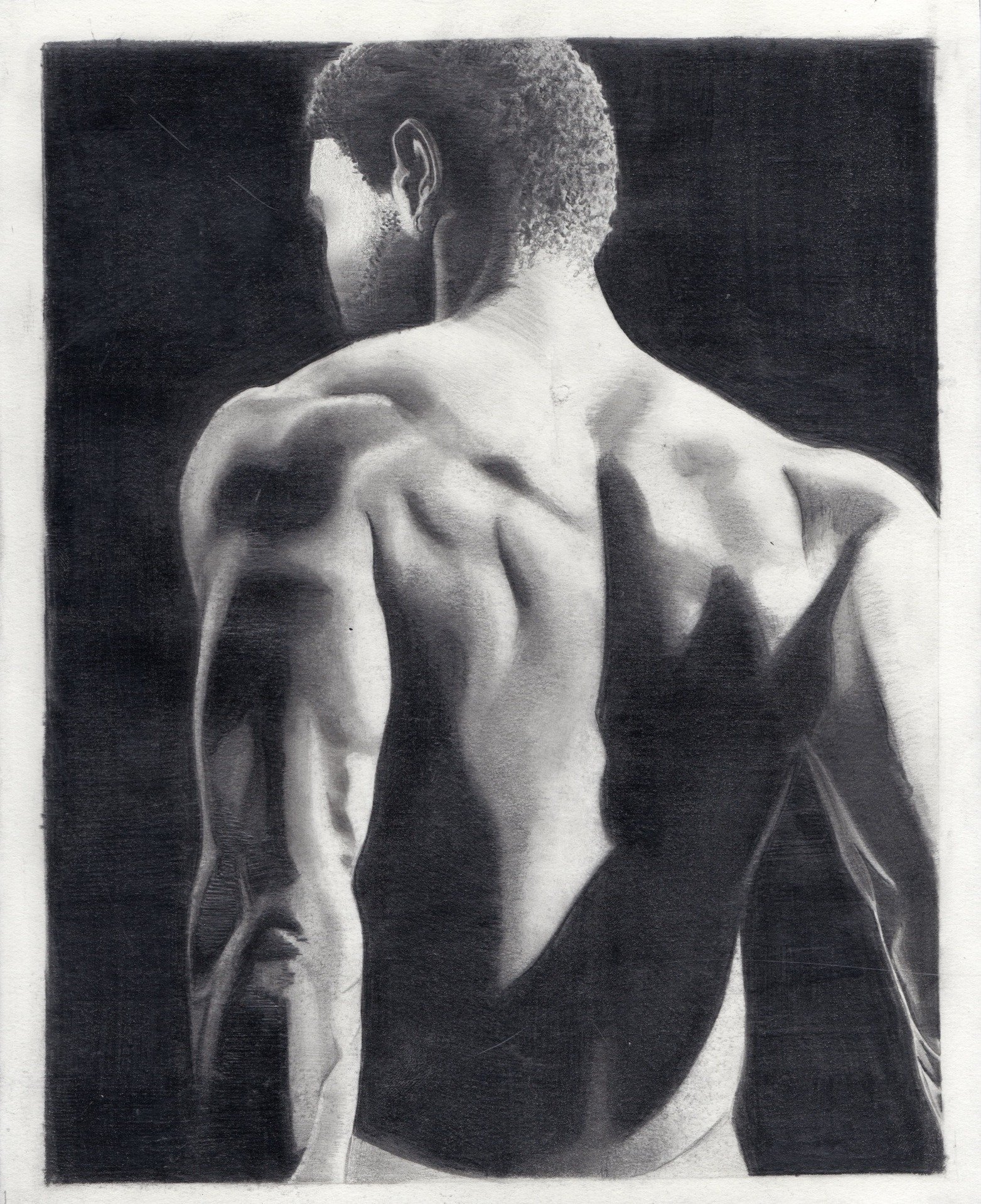
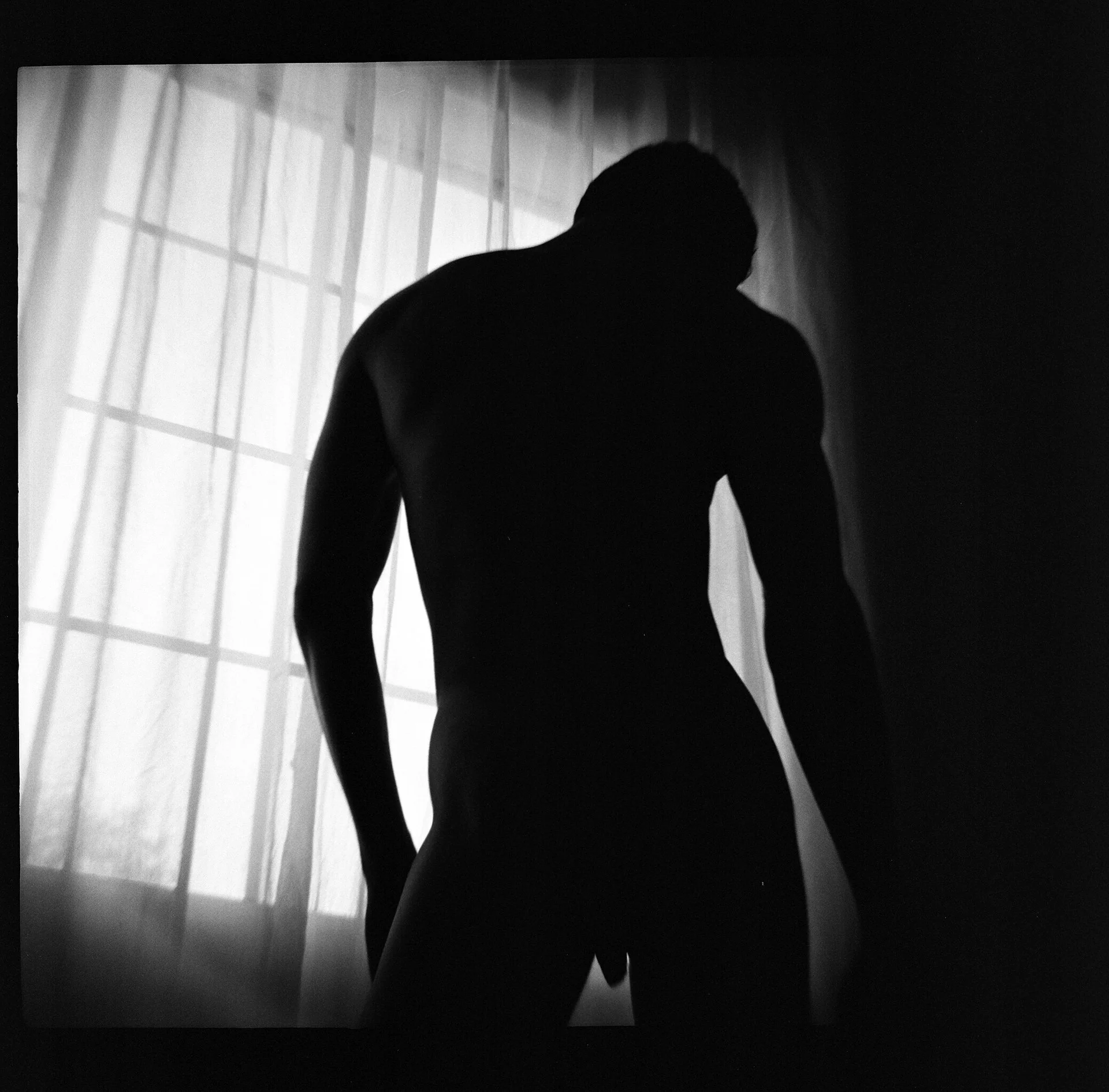
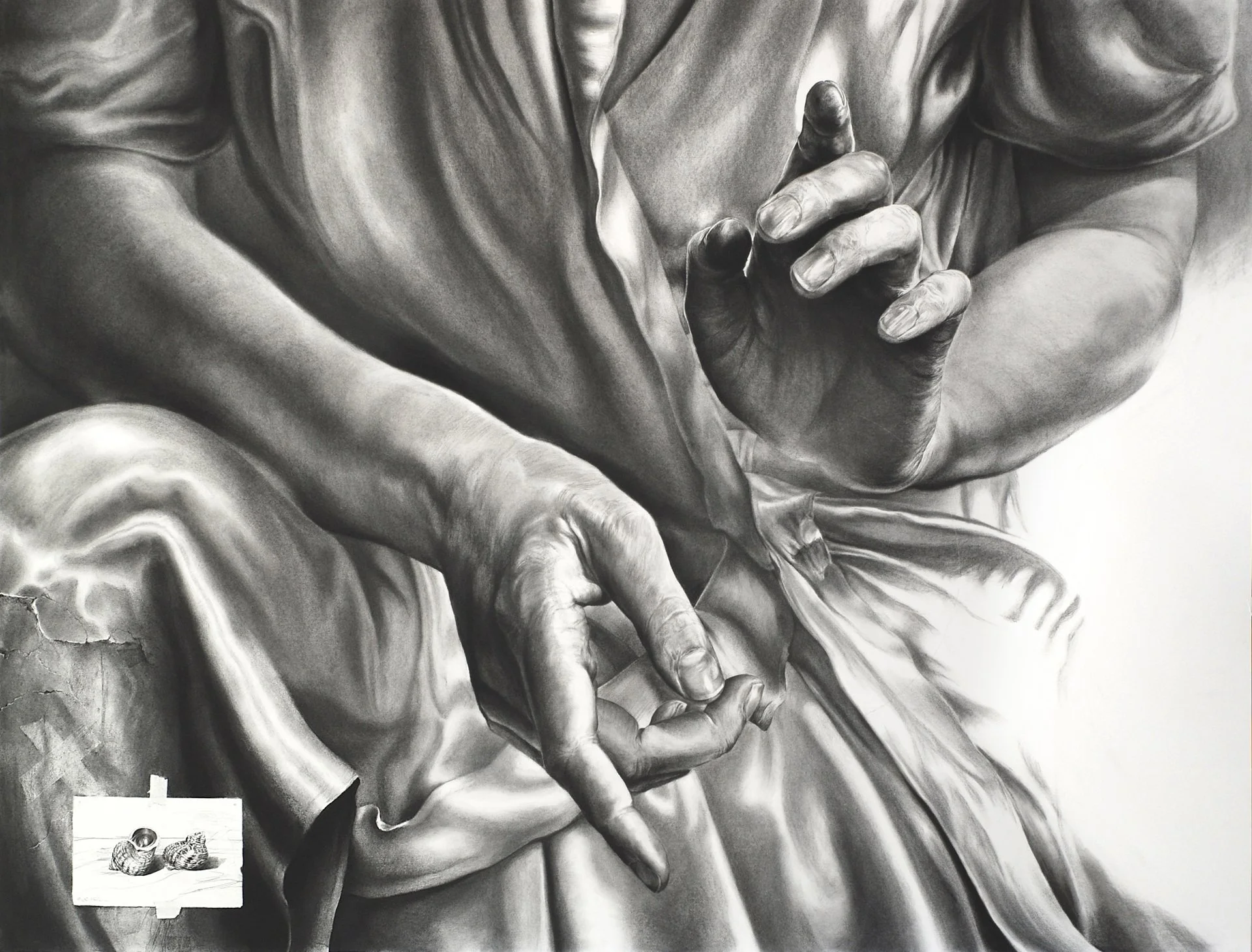
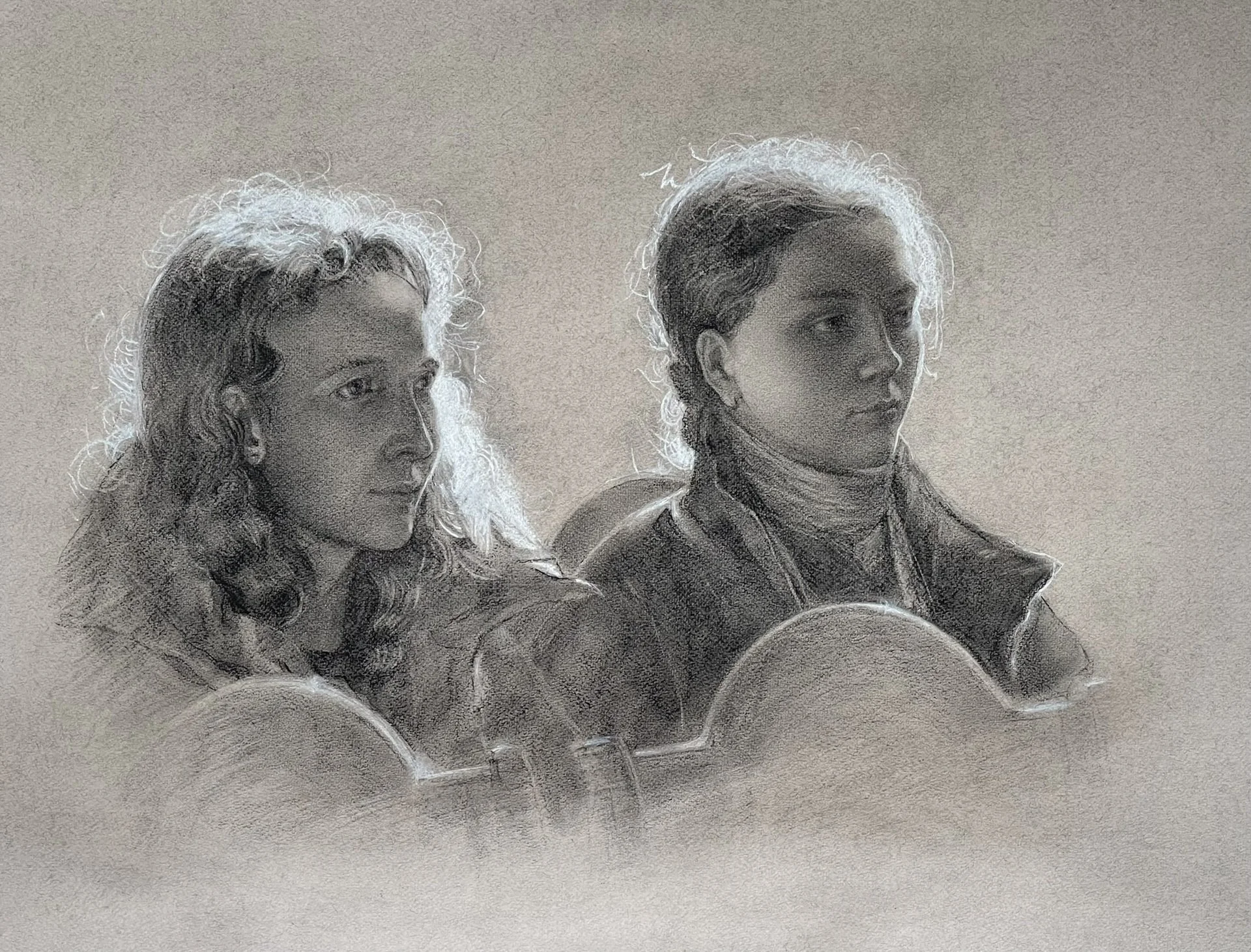
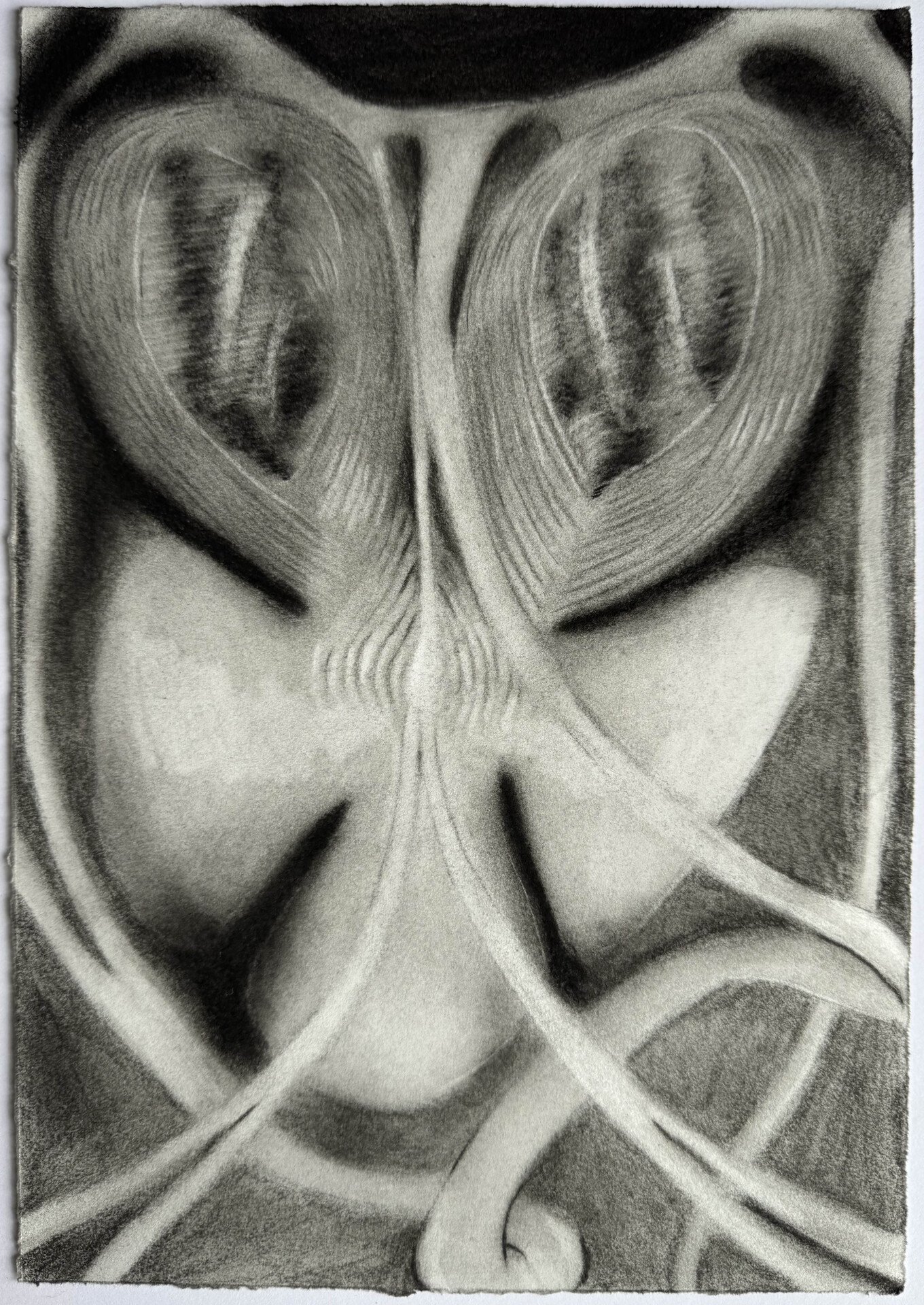
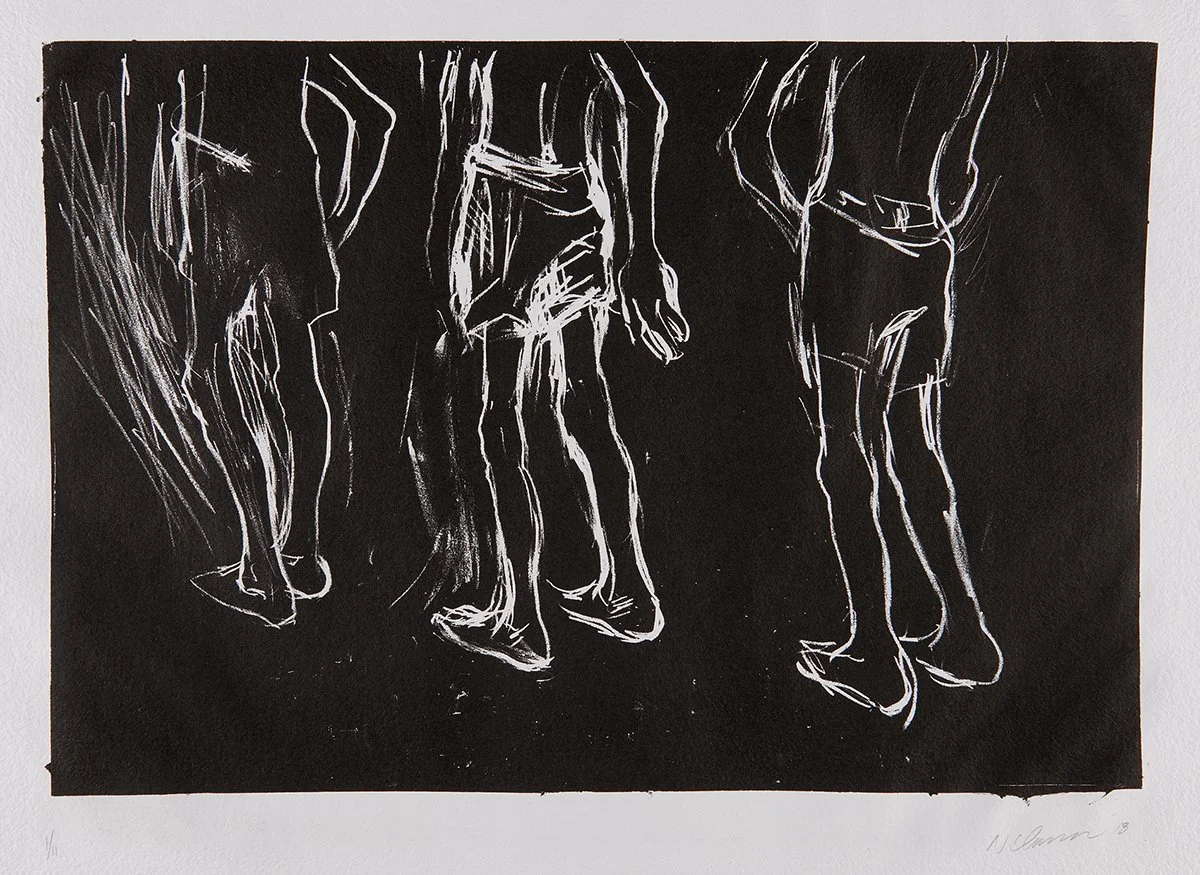
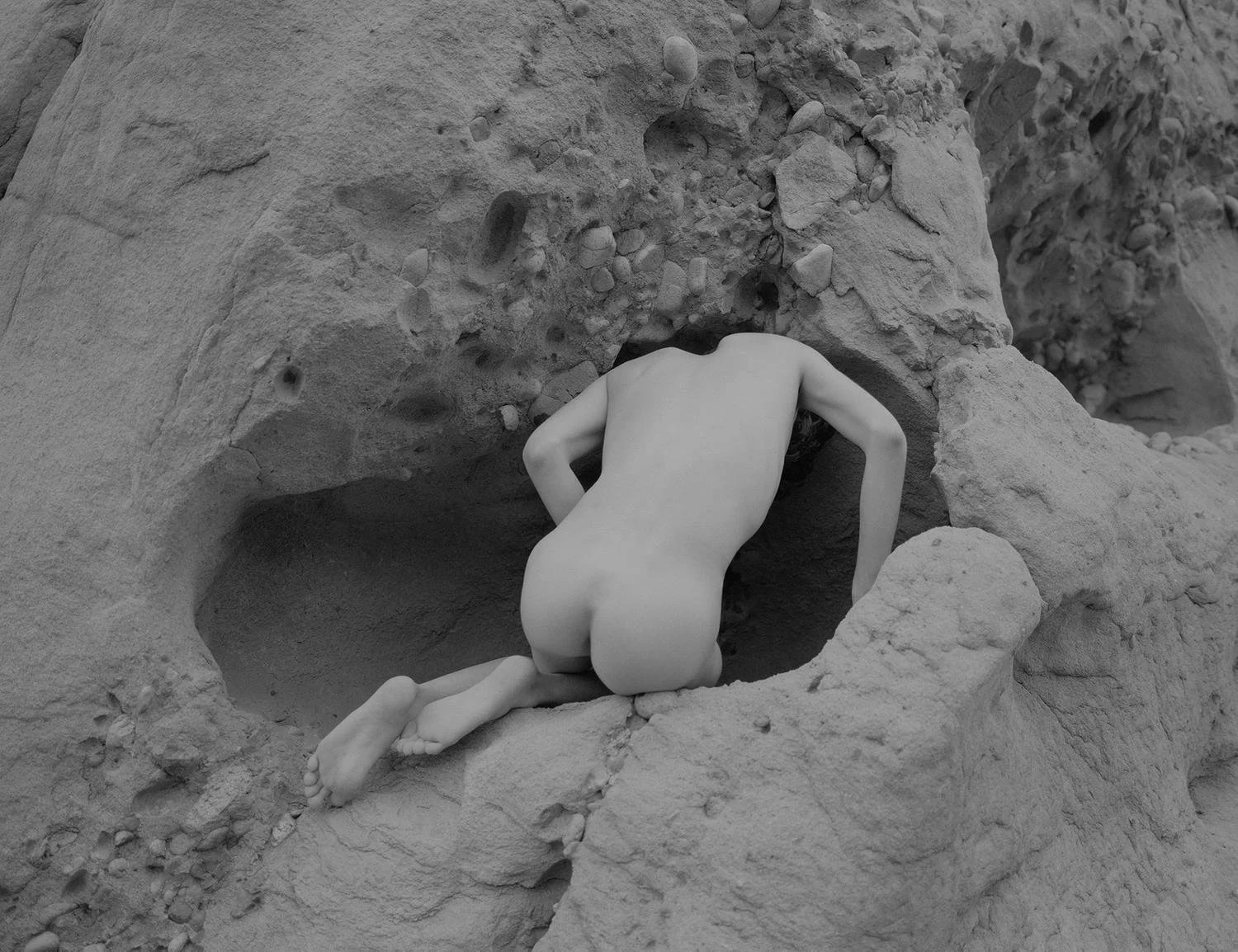
The artists in this group pare back their palettes to focus on the contours of the body. Yezan Al Laham and George Krause offer opposing views of masculinity. Laham’s drawing highlights the musculature of his subject’s back, white Krause’s photograph throws his into shadow. Both works play with the motif of the “rückenfigur,” or the figure seen from behind, and both subjects remain hidden to the viewer in their own way. Robert Bibler and Myroslava Boikiv work in a realist vein as they depict hands and faces, respectively, with exquisite detail. Bibler’s work evokes Renaissance motifs and styles, while the seriousness of Boikiv’s figures suggests a certain timelessness as well. Rosalyn Farney uses charcoal to render tubes that connect plant-like forms that nevertheless bring to mind the interior of the human body. Nomi Silverman’s lithograph reduces the body to a series of legs, a line of figures that appear primed for ambiguous action. Luca Varano’s photograph captures a nude body fitted into a rock formation. Queer intimacy, and the practice of cruising in particular, finds new language in the puzzle-like configuration of figure and environment.
Wall 2
Felipe Bermudez Durana / Rylie Paull / Rosemary A Luckett / Noosha Golab / Elliott Golden / Alice Gravely / Amy Keeler / Sean Livingstone / Michael McNeil / Marie Ringwald / Irena Skalik / Igal Stulbach / Paul Taylor / Tamar Zinn
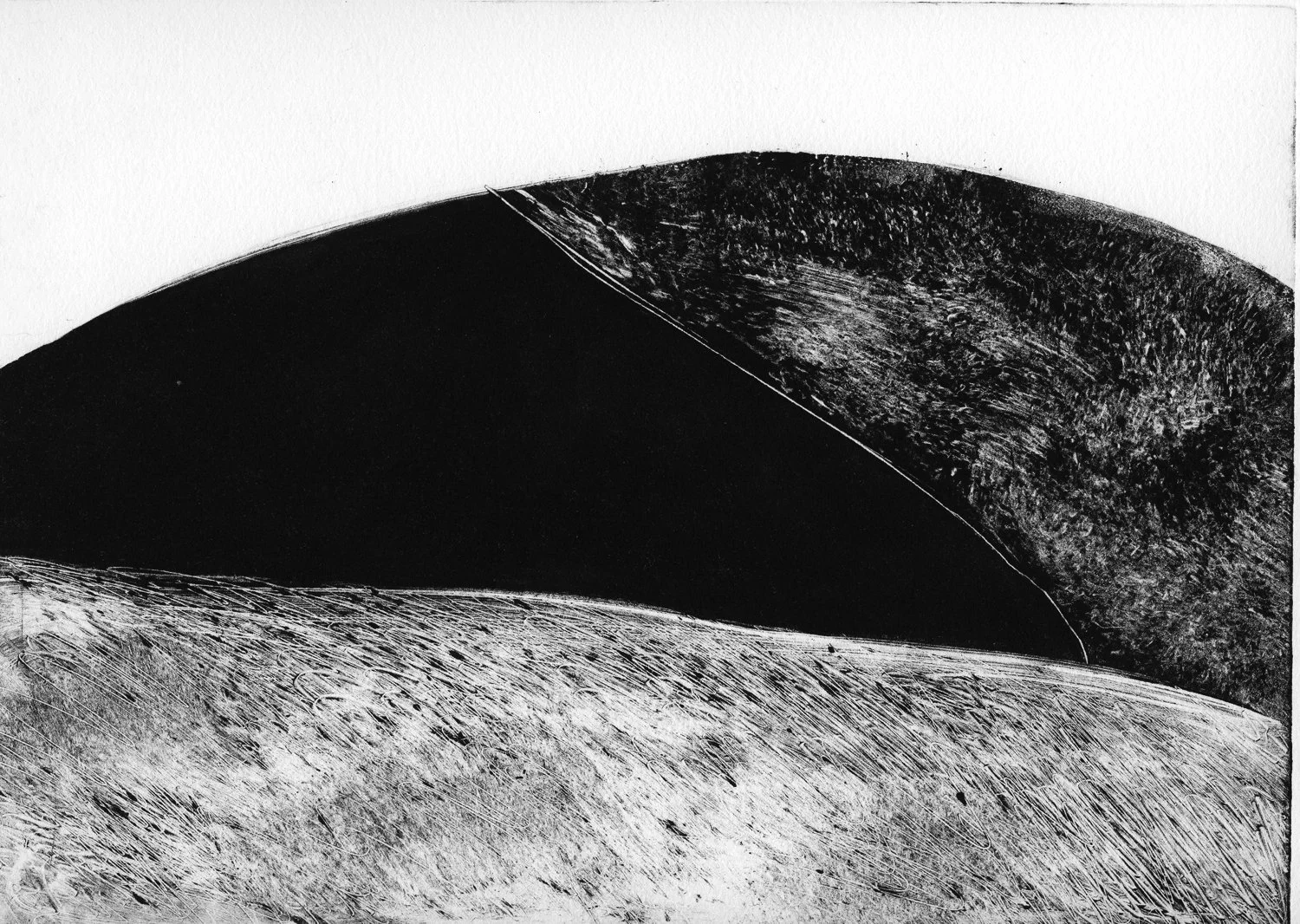
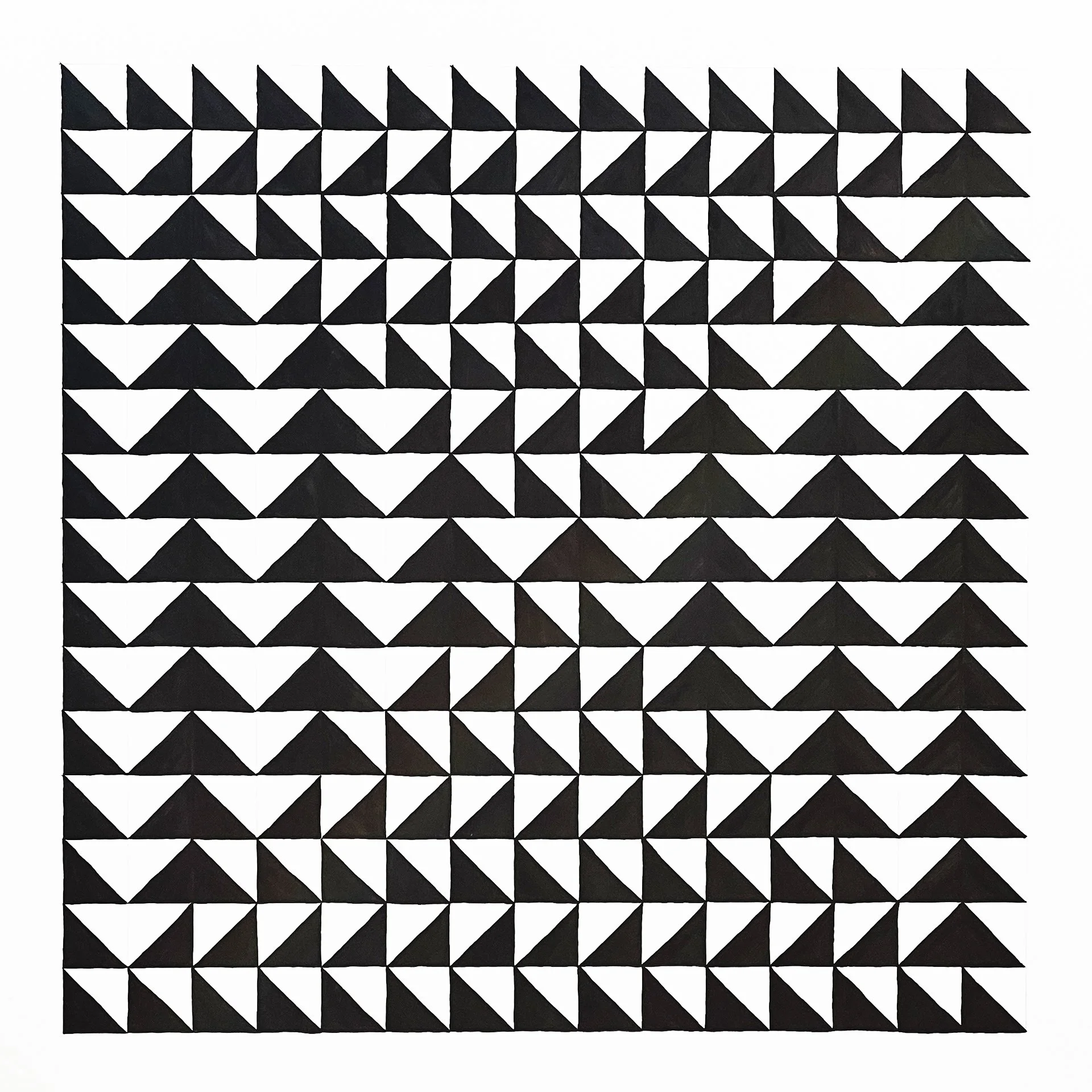
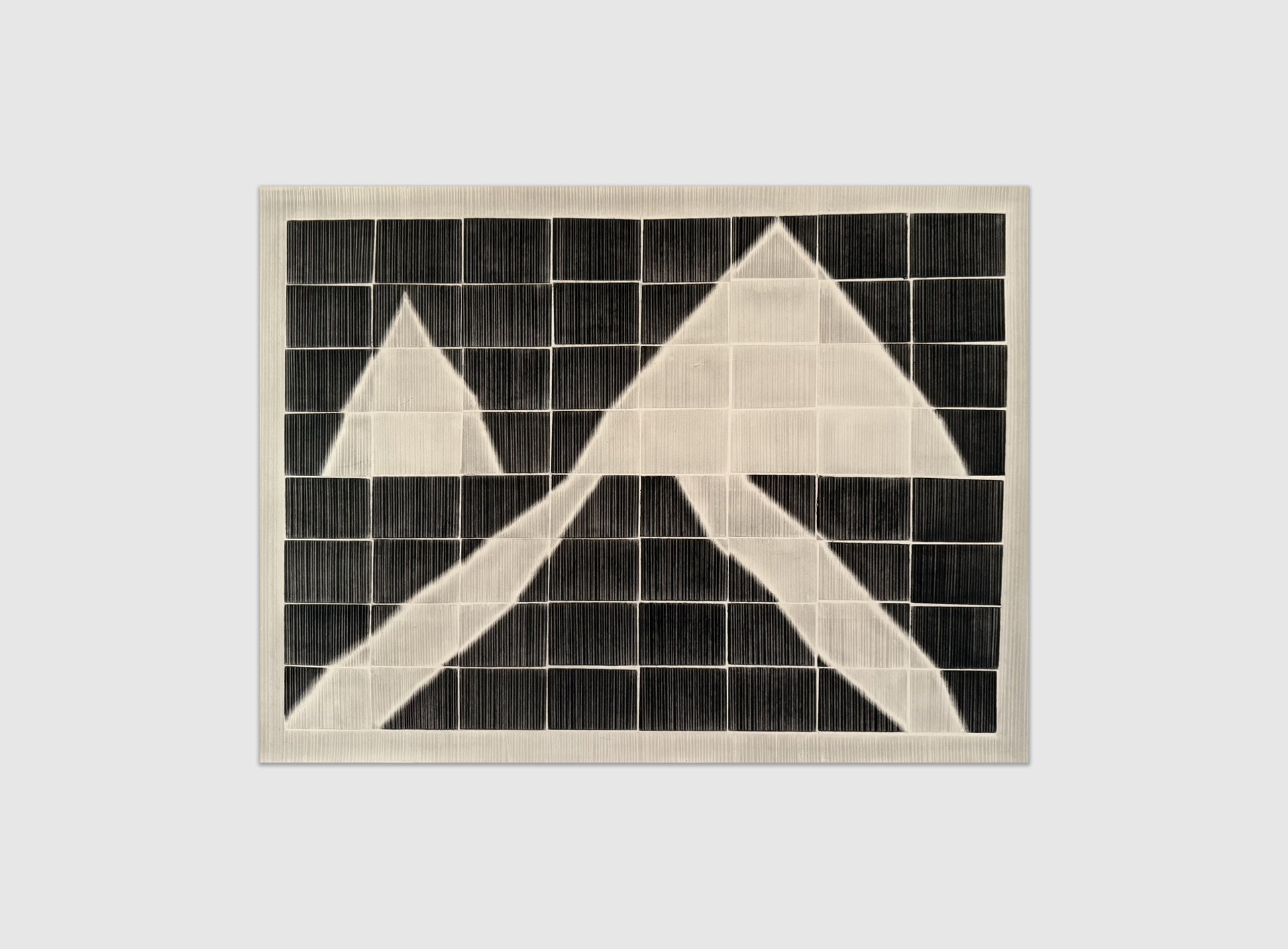
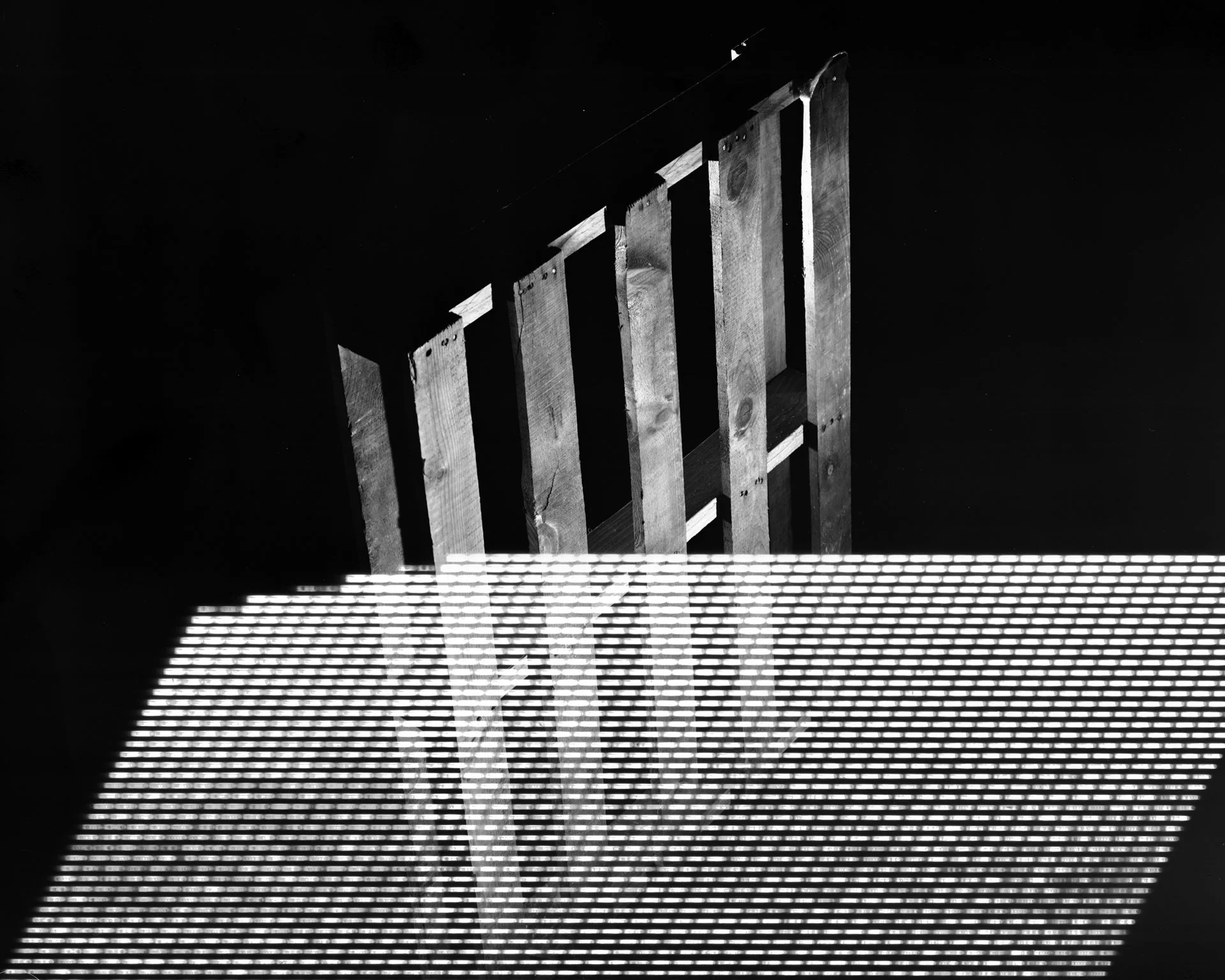
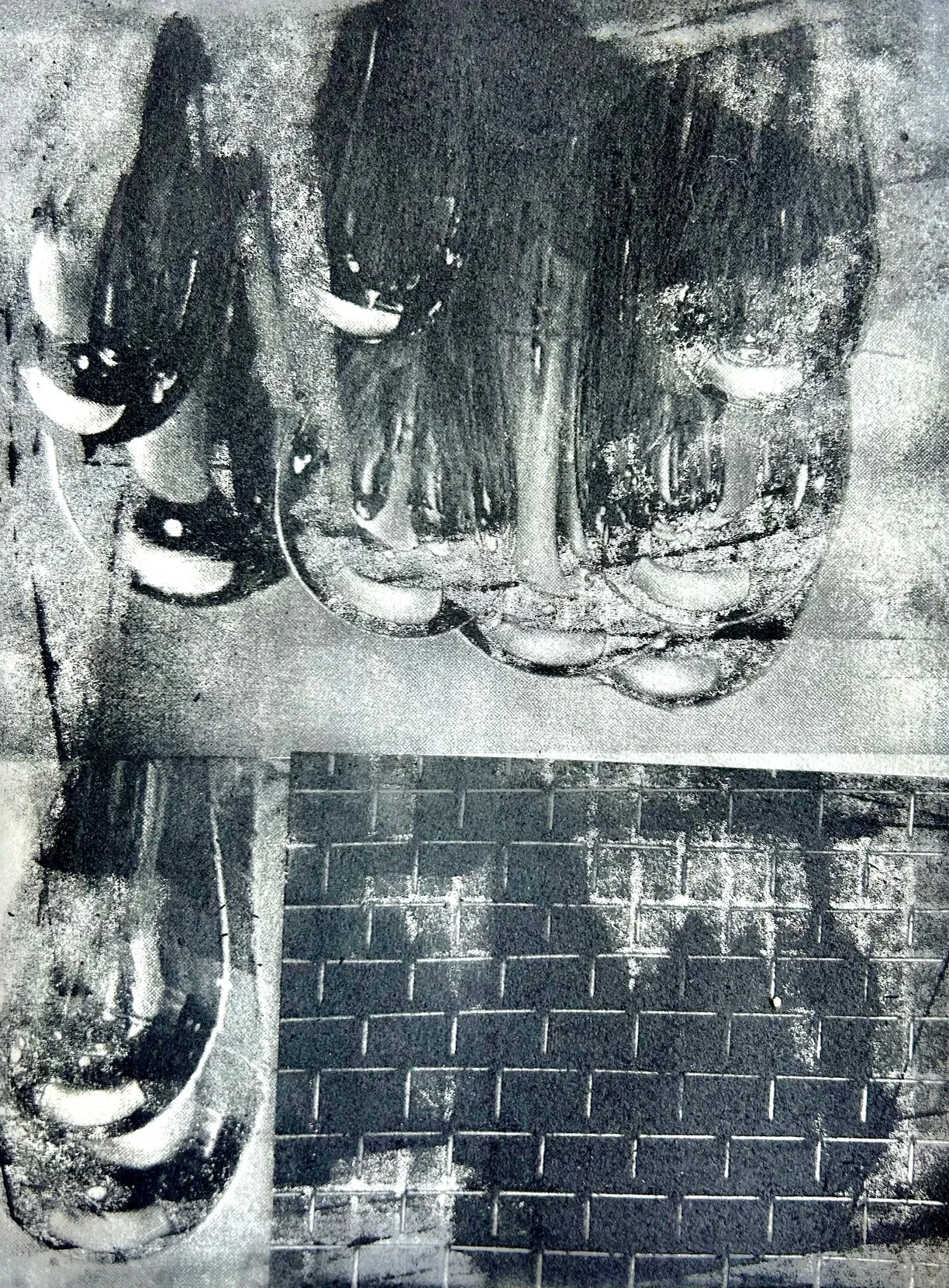
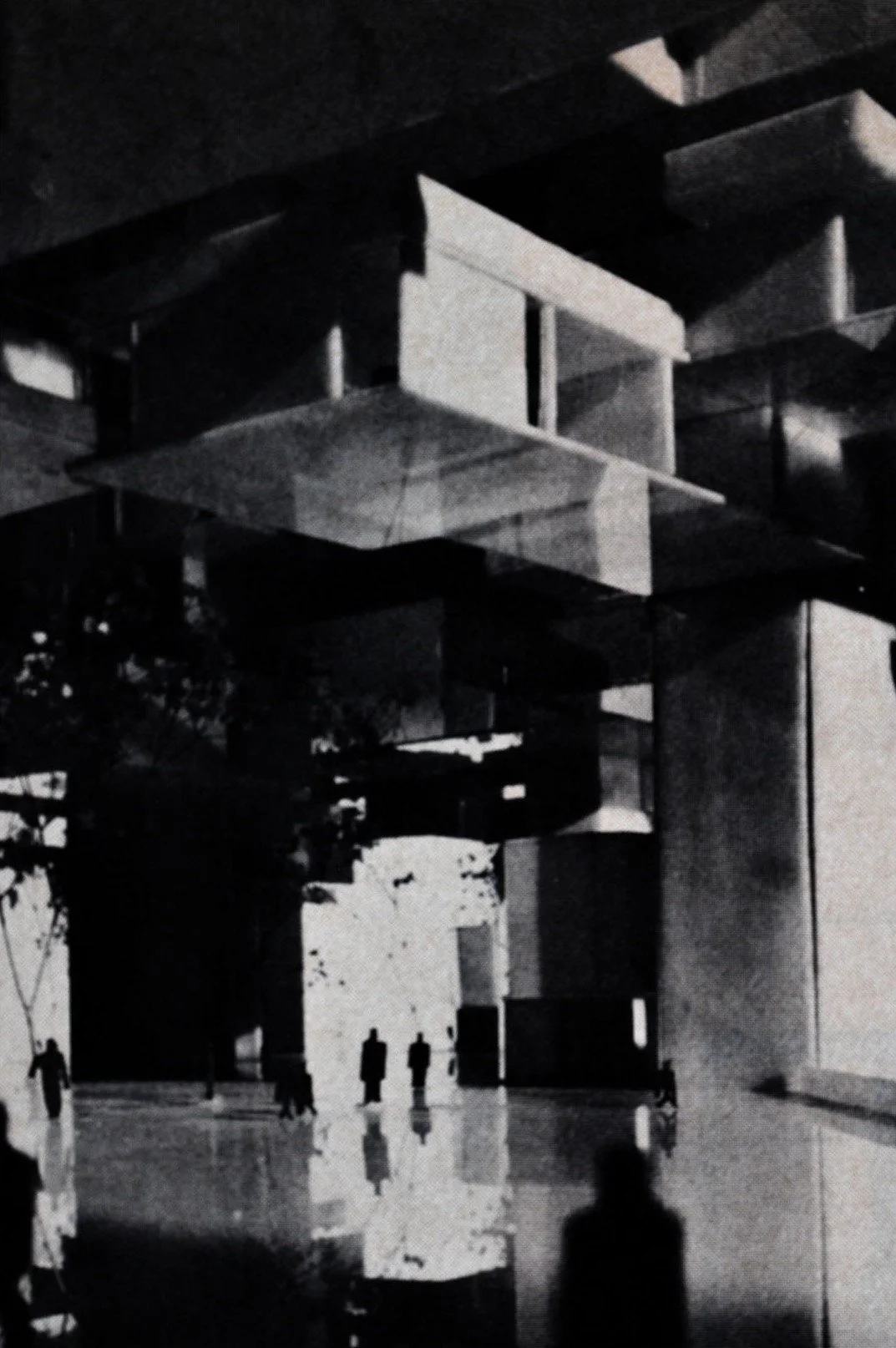
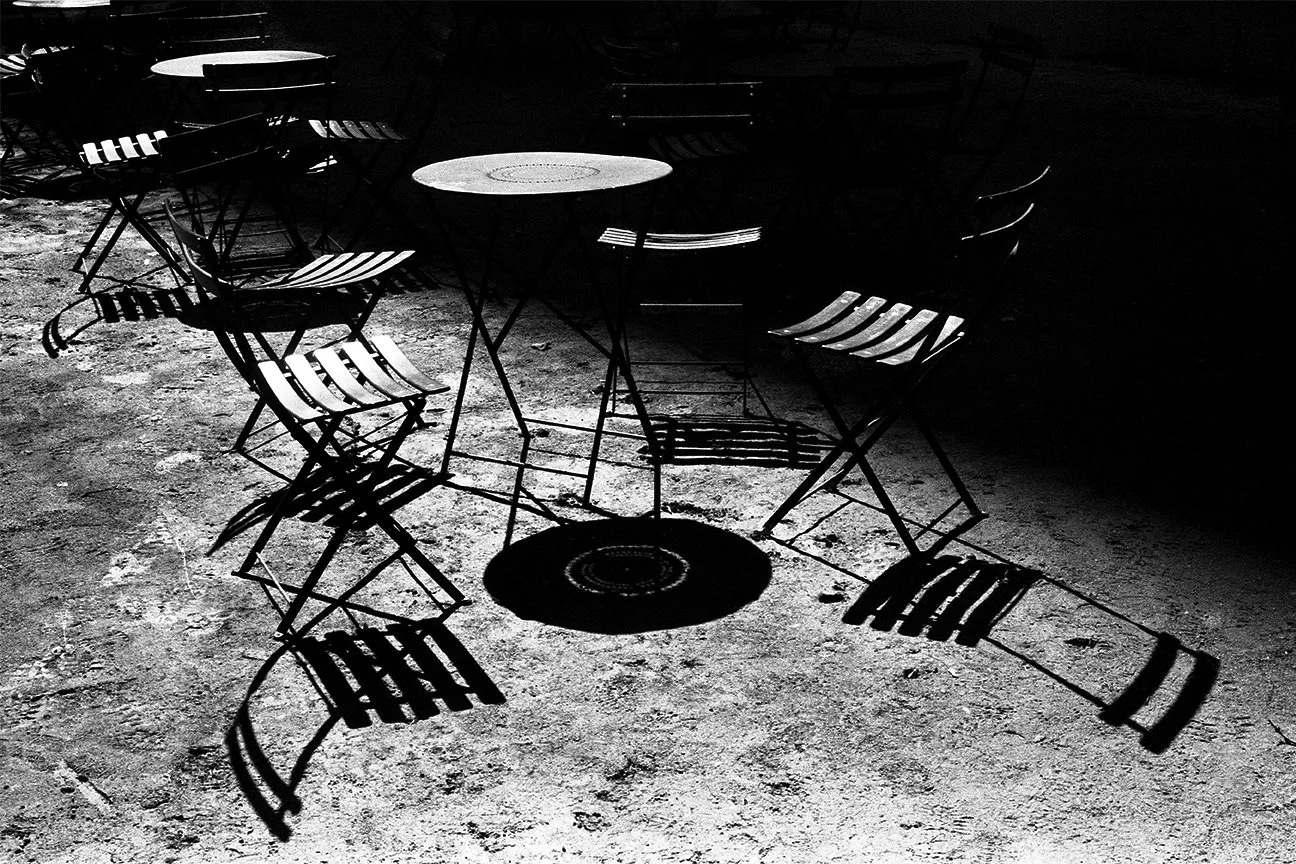
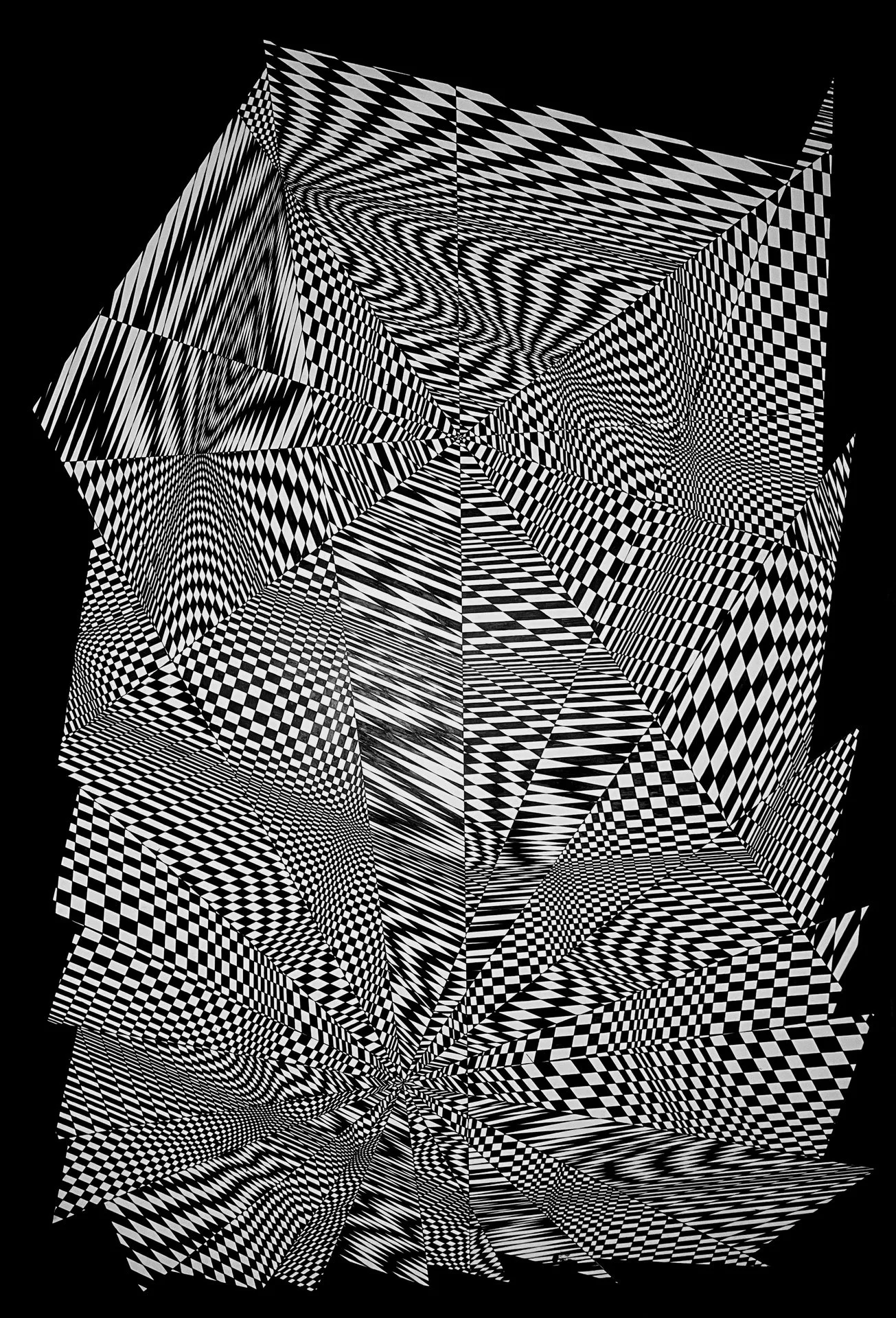
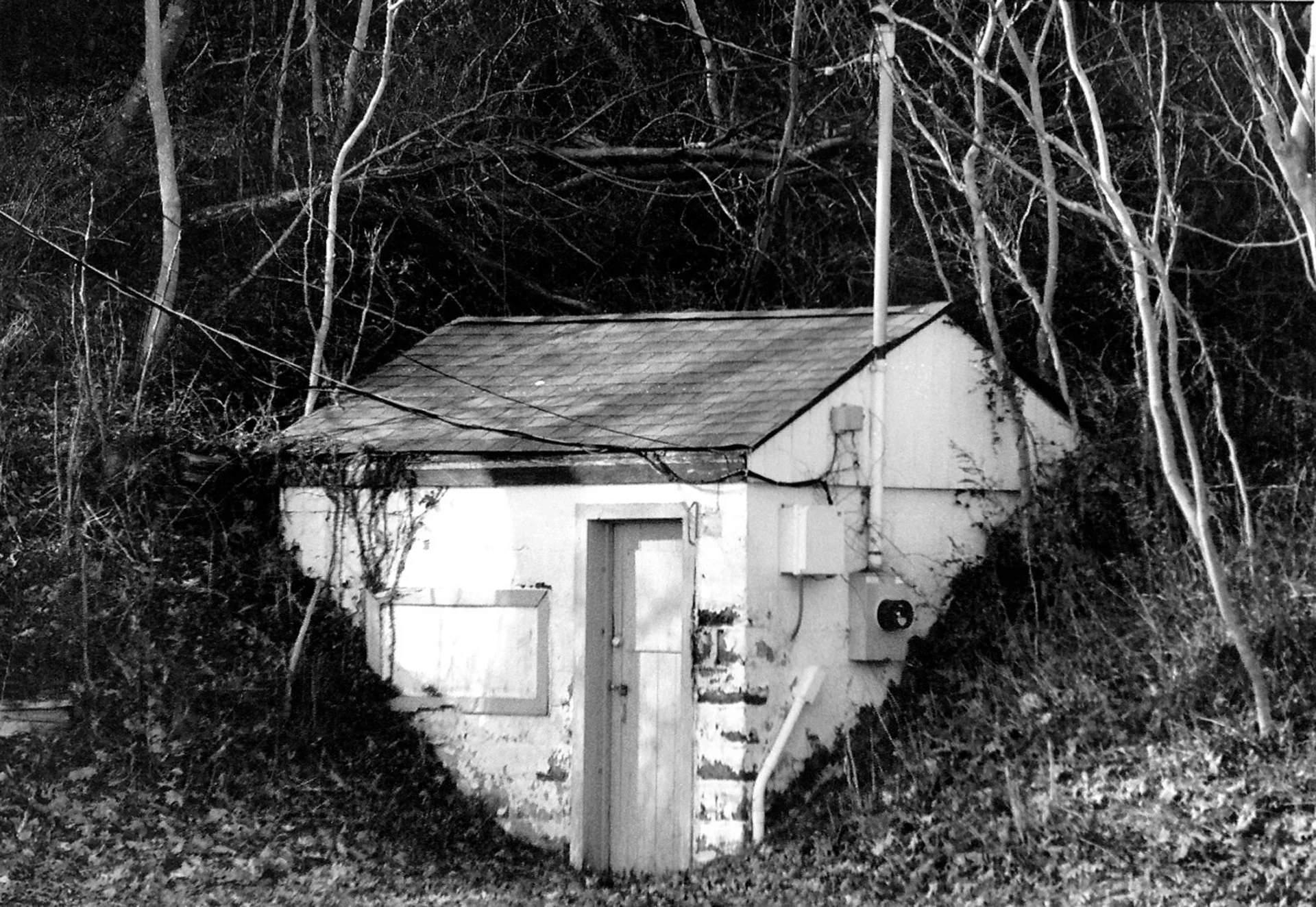
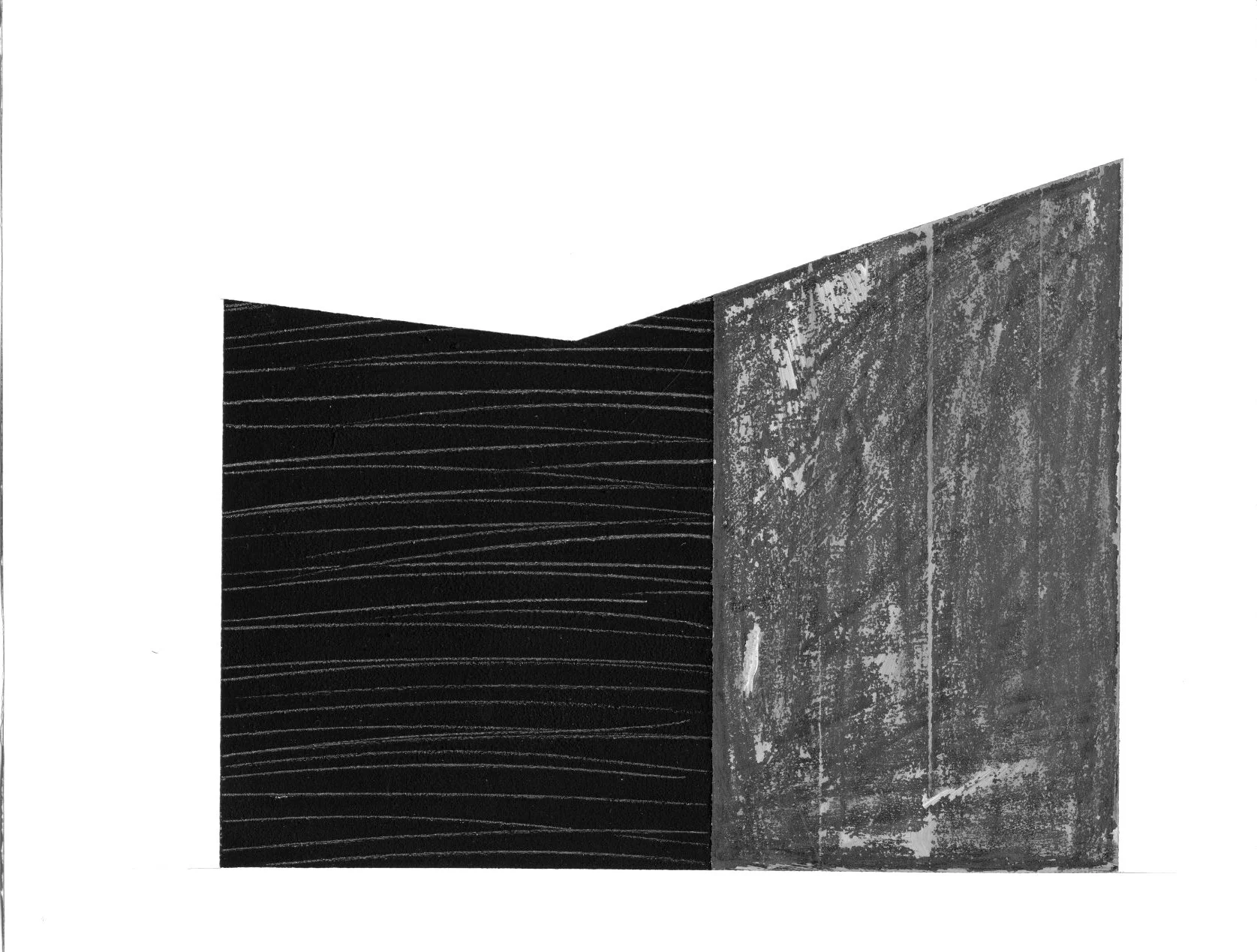
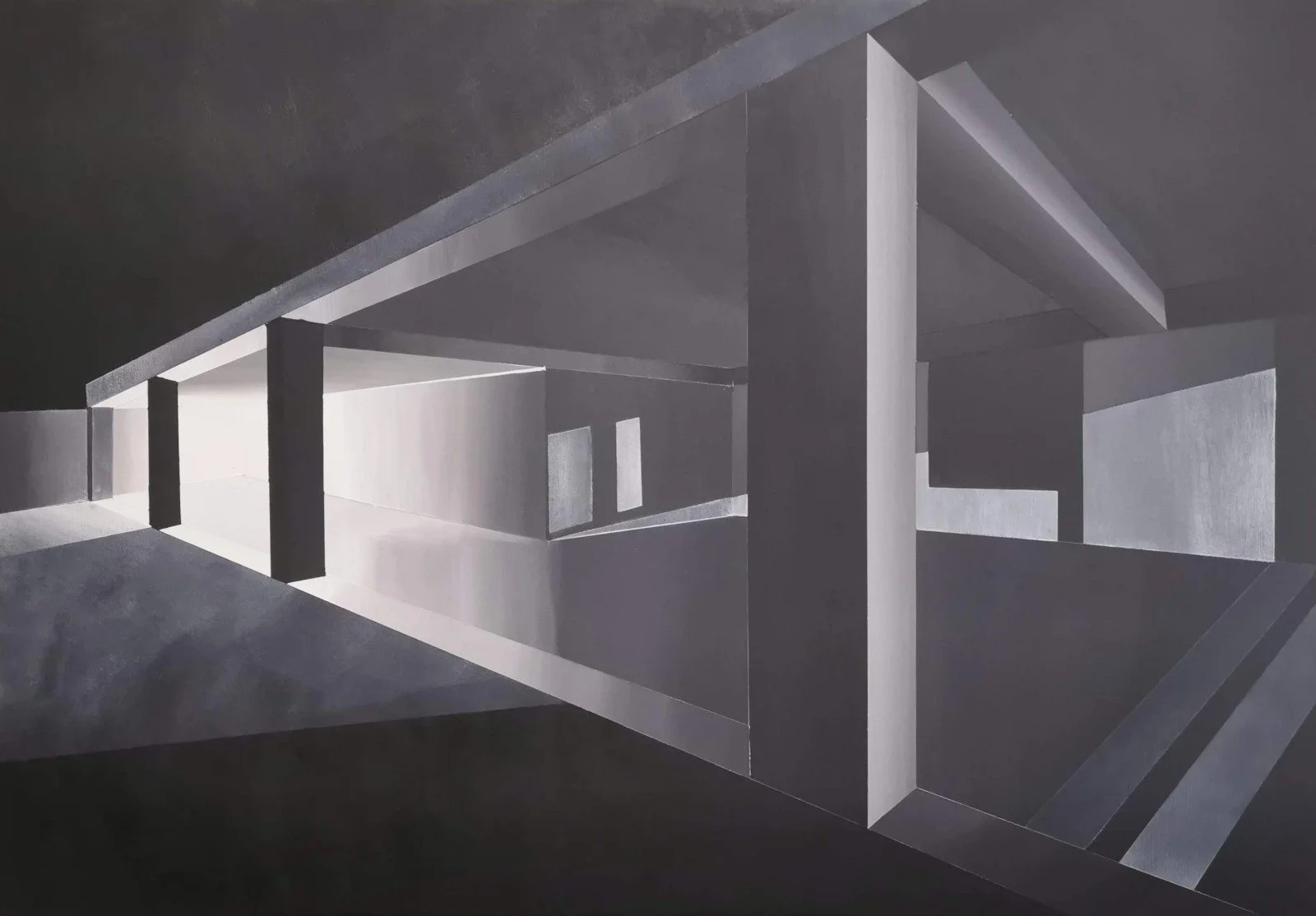
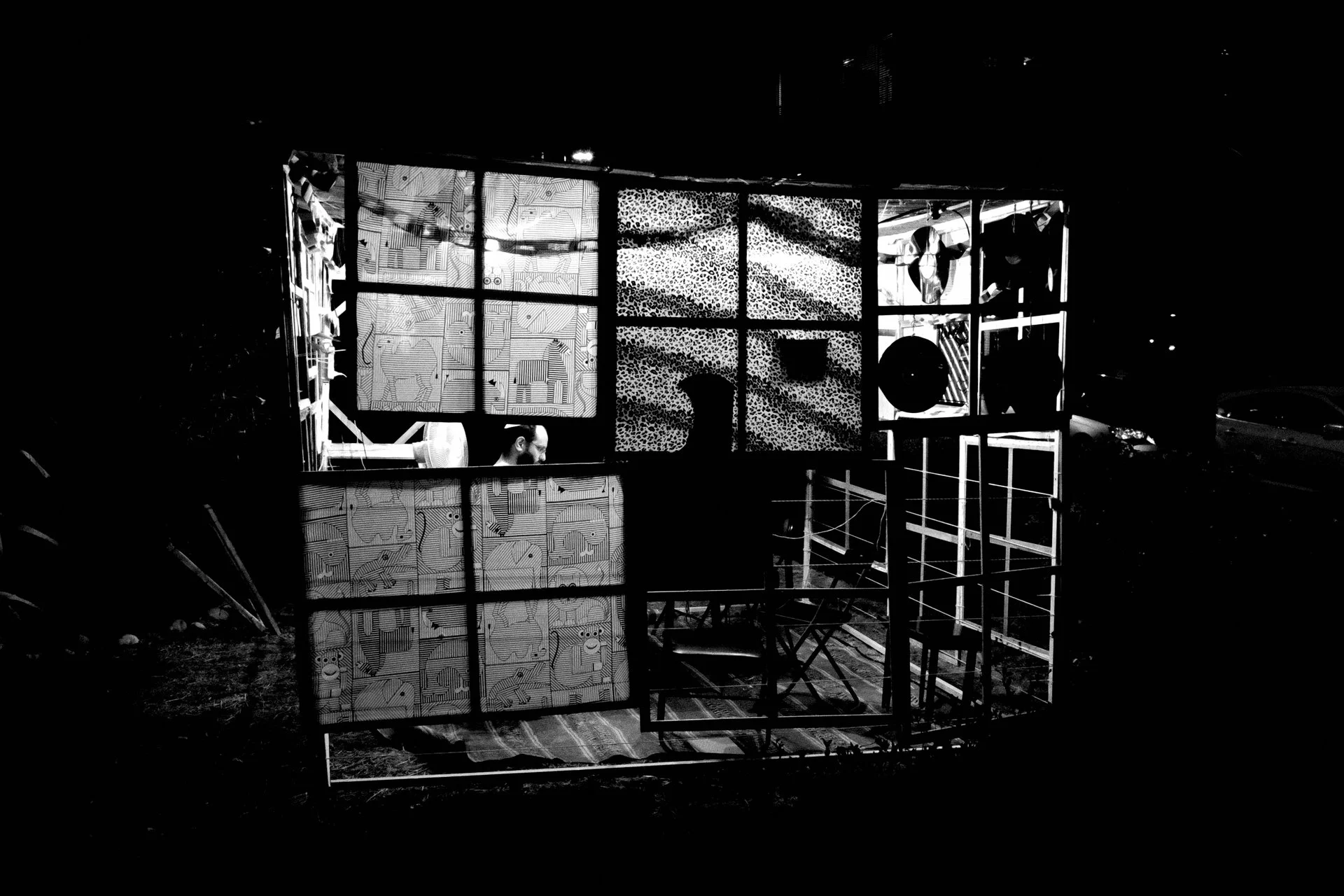
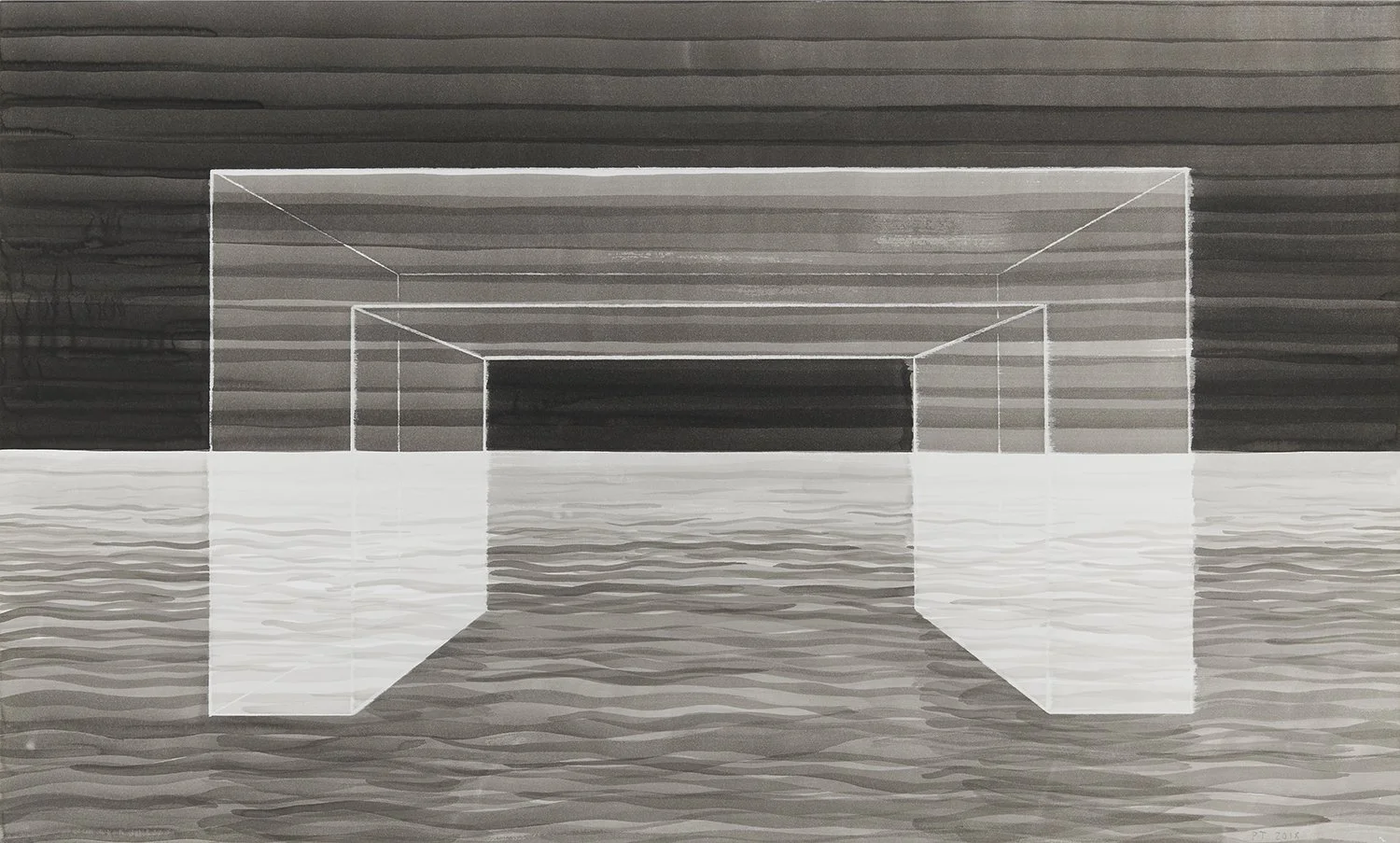
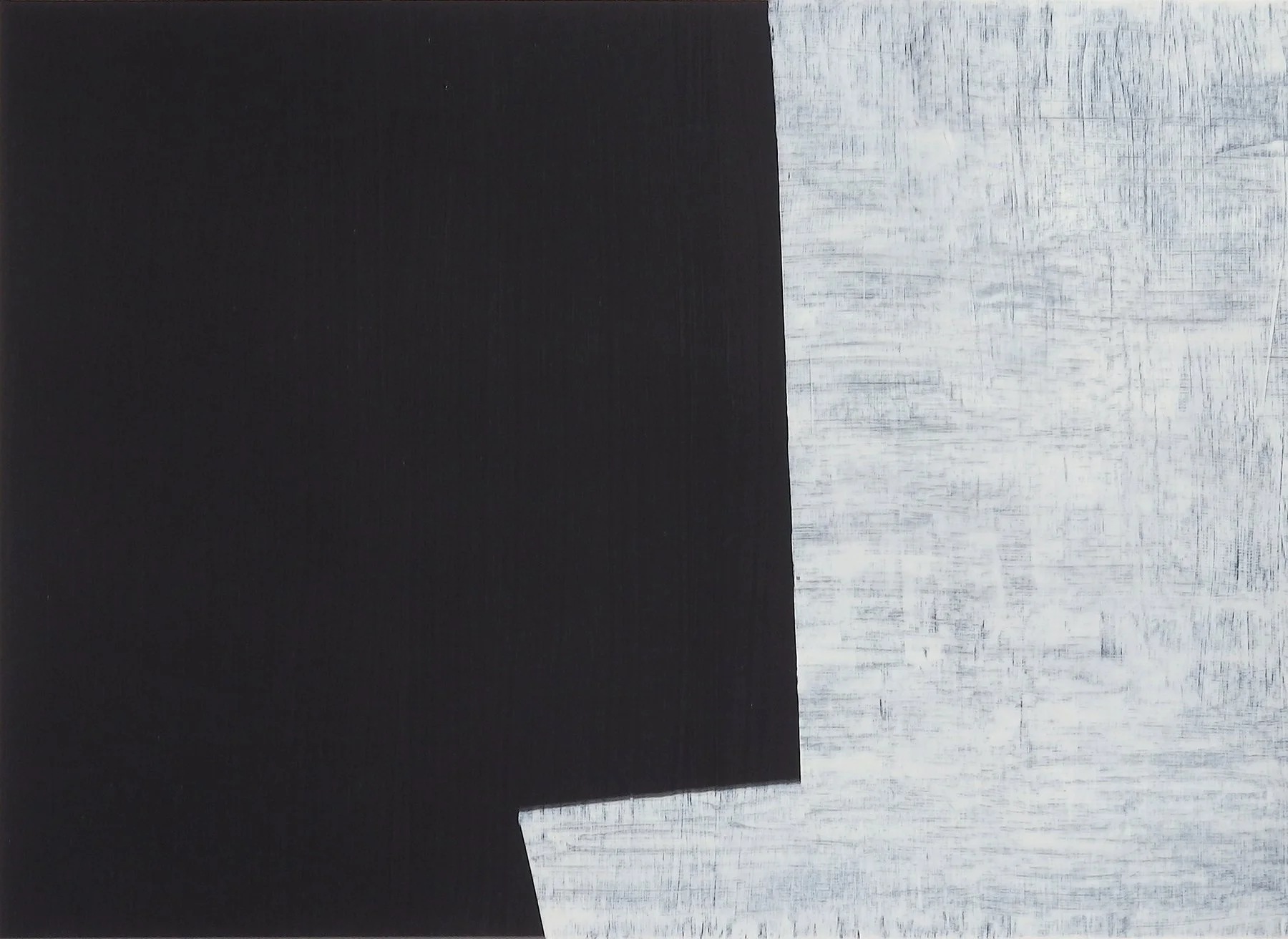
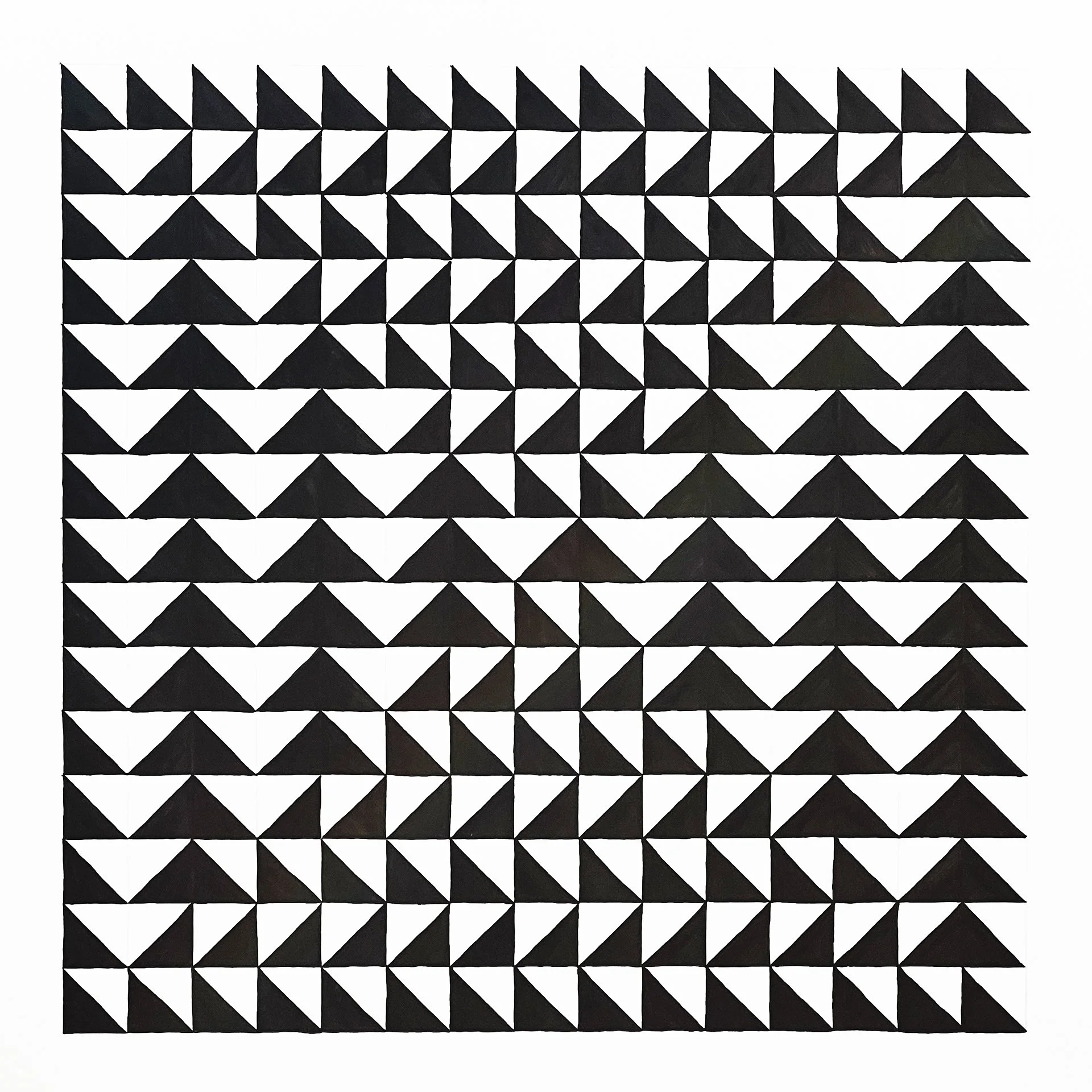
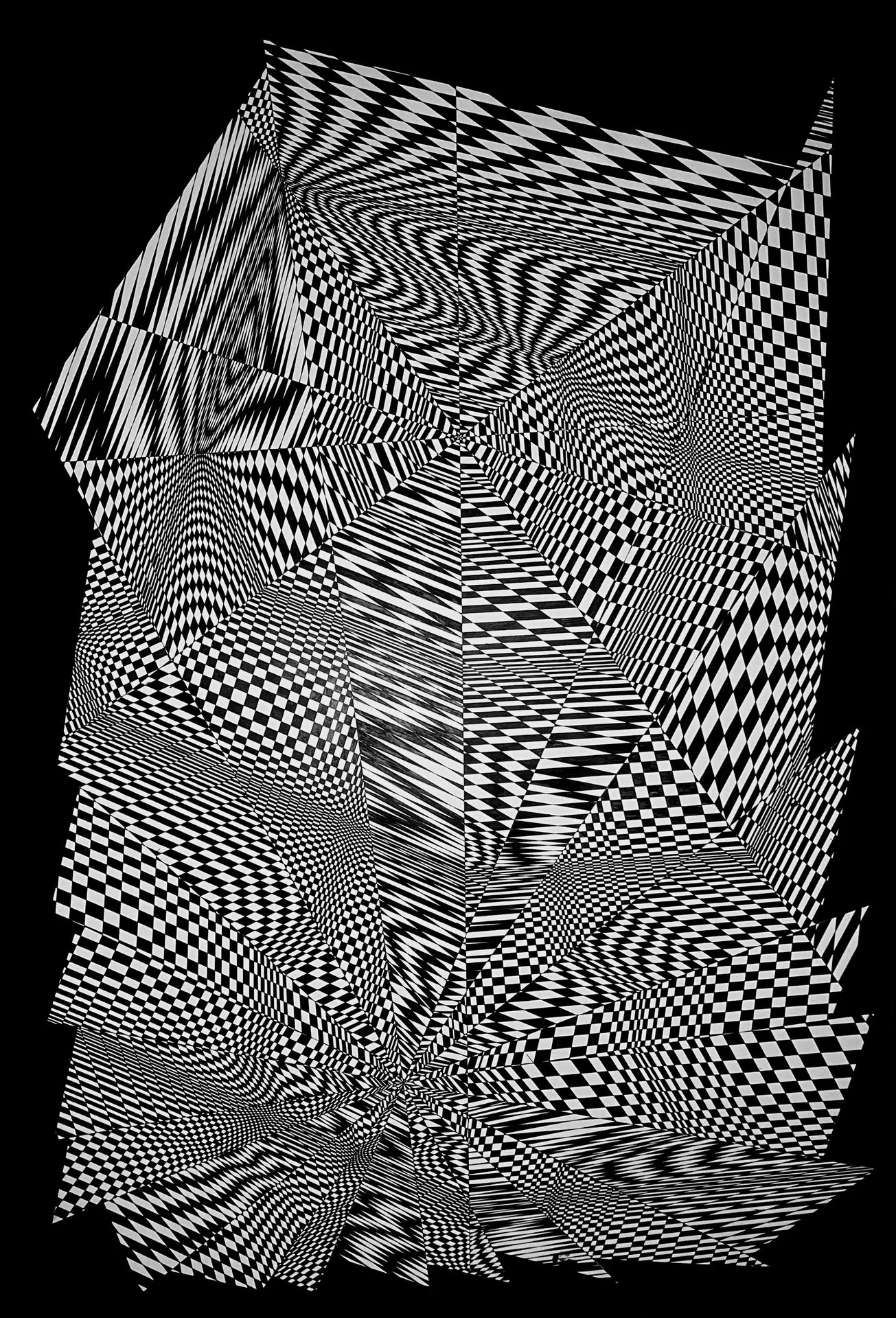
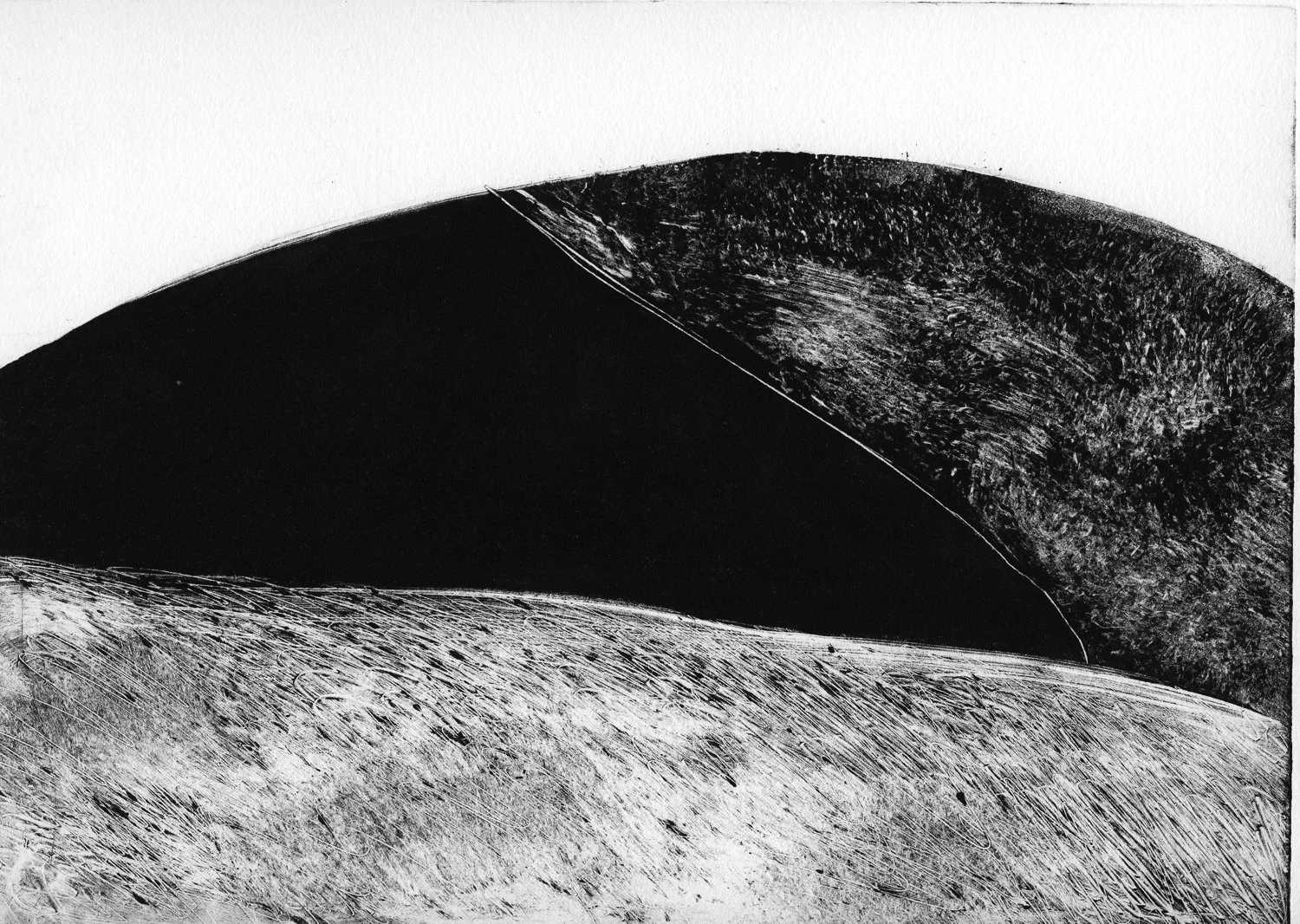
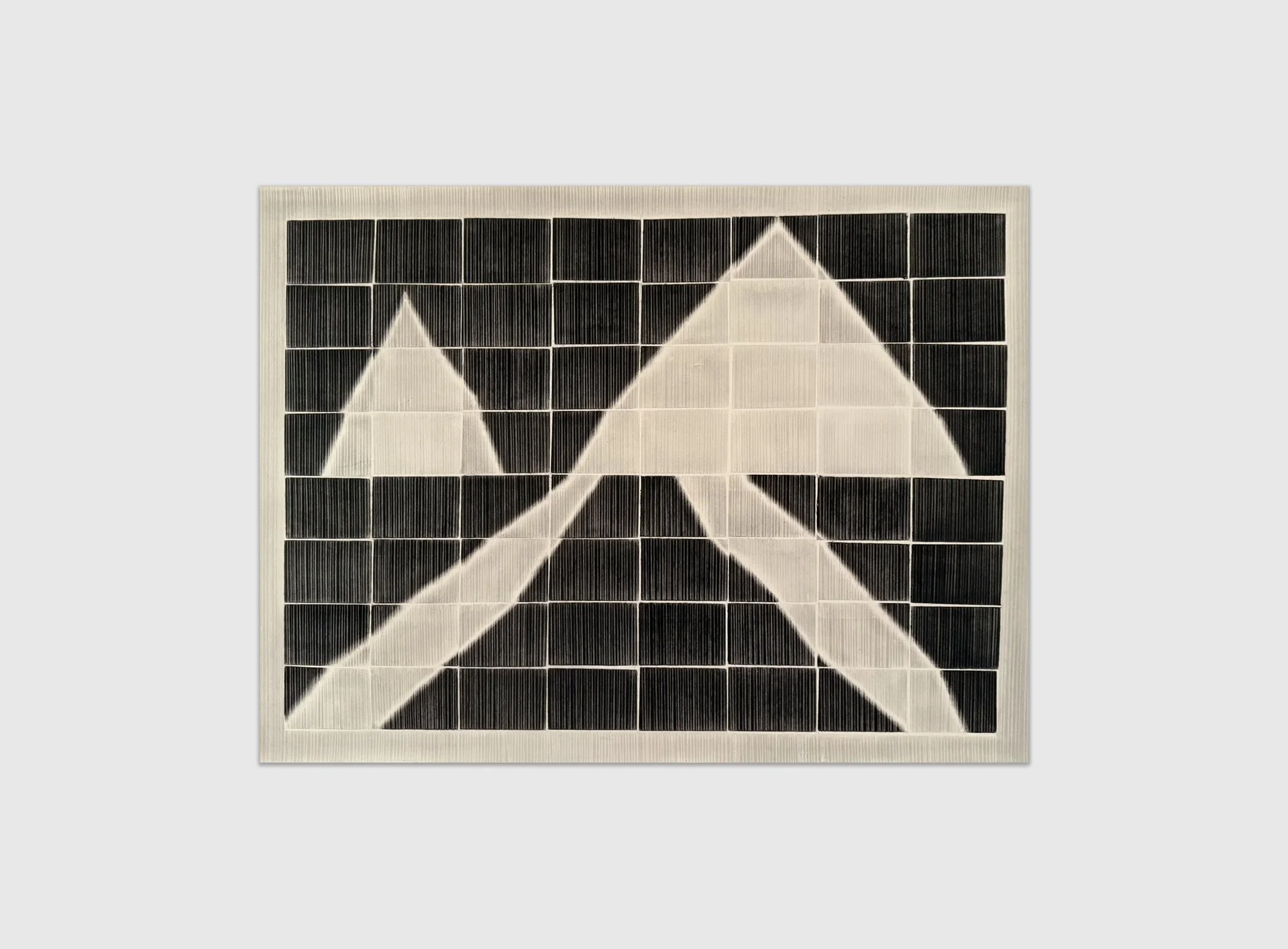
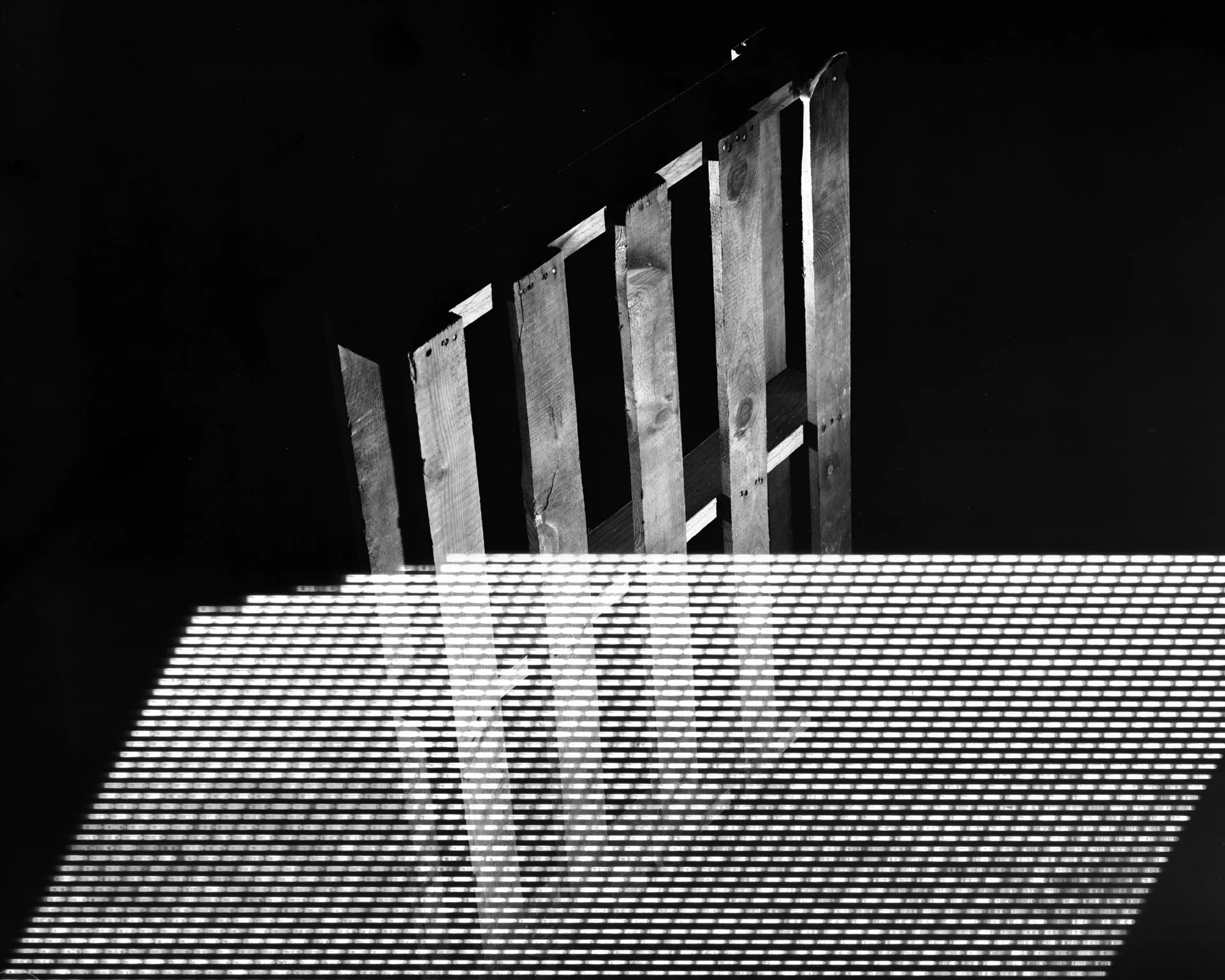
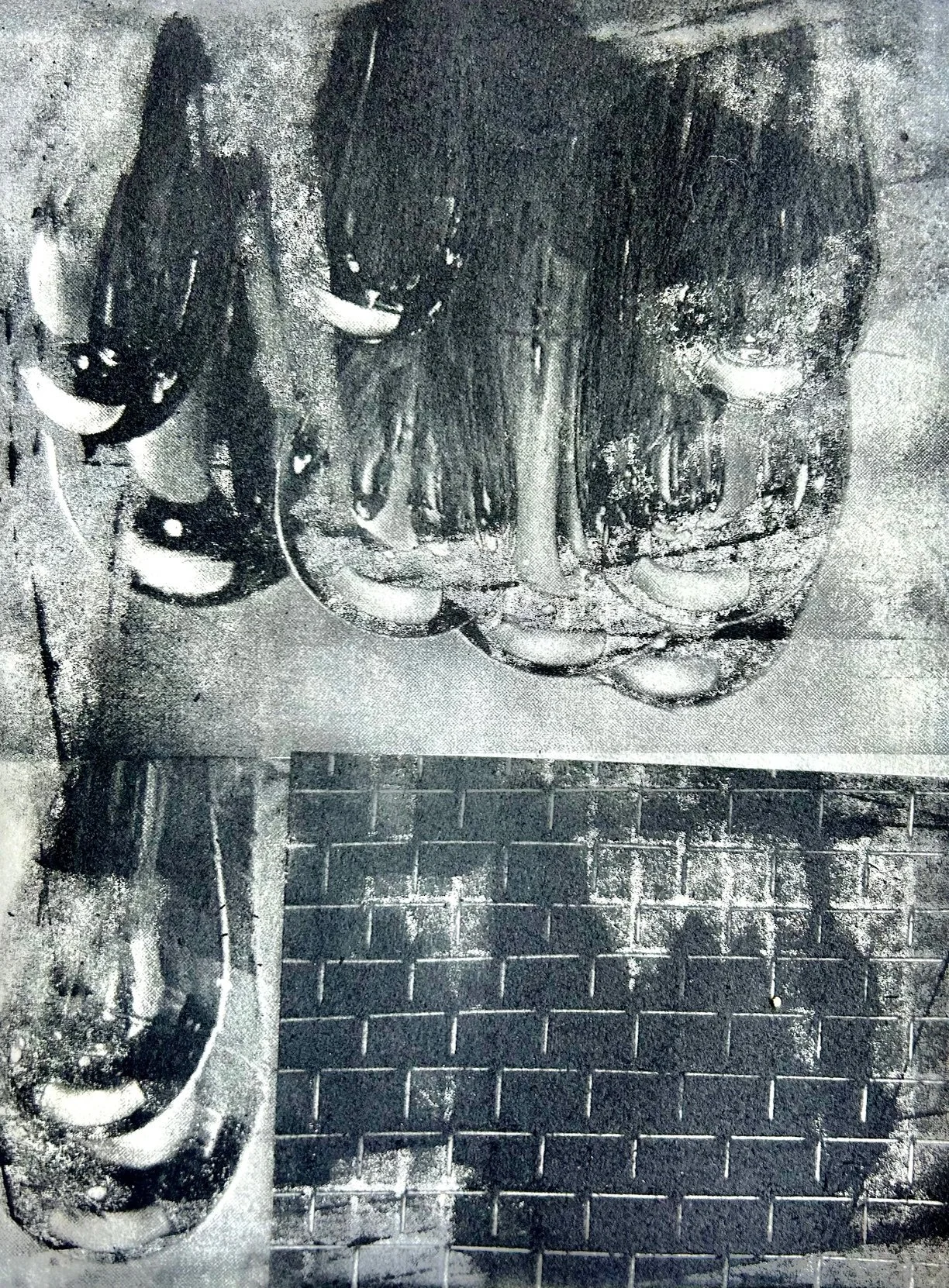
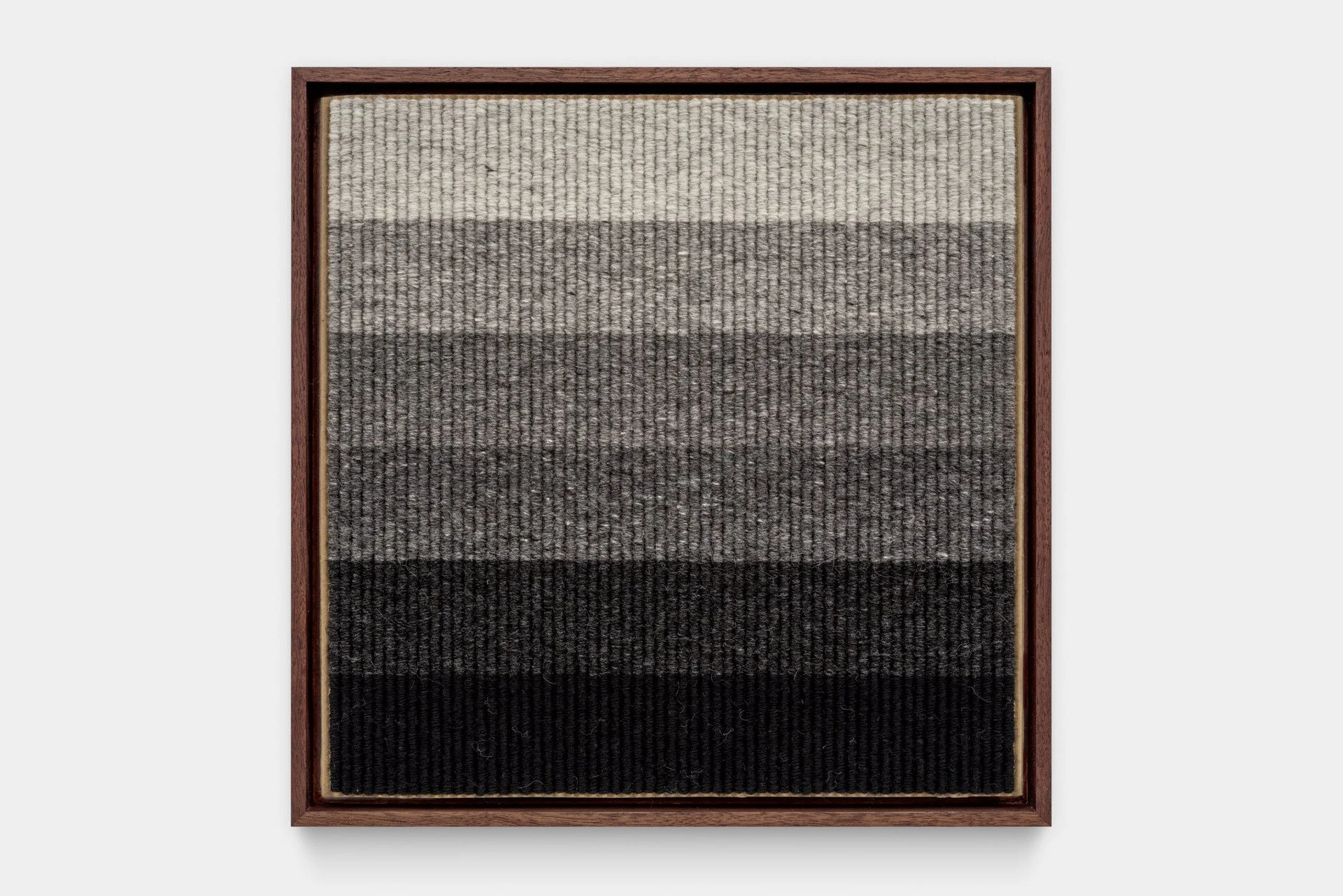
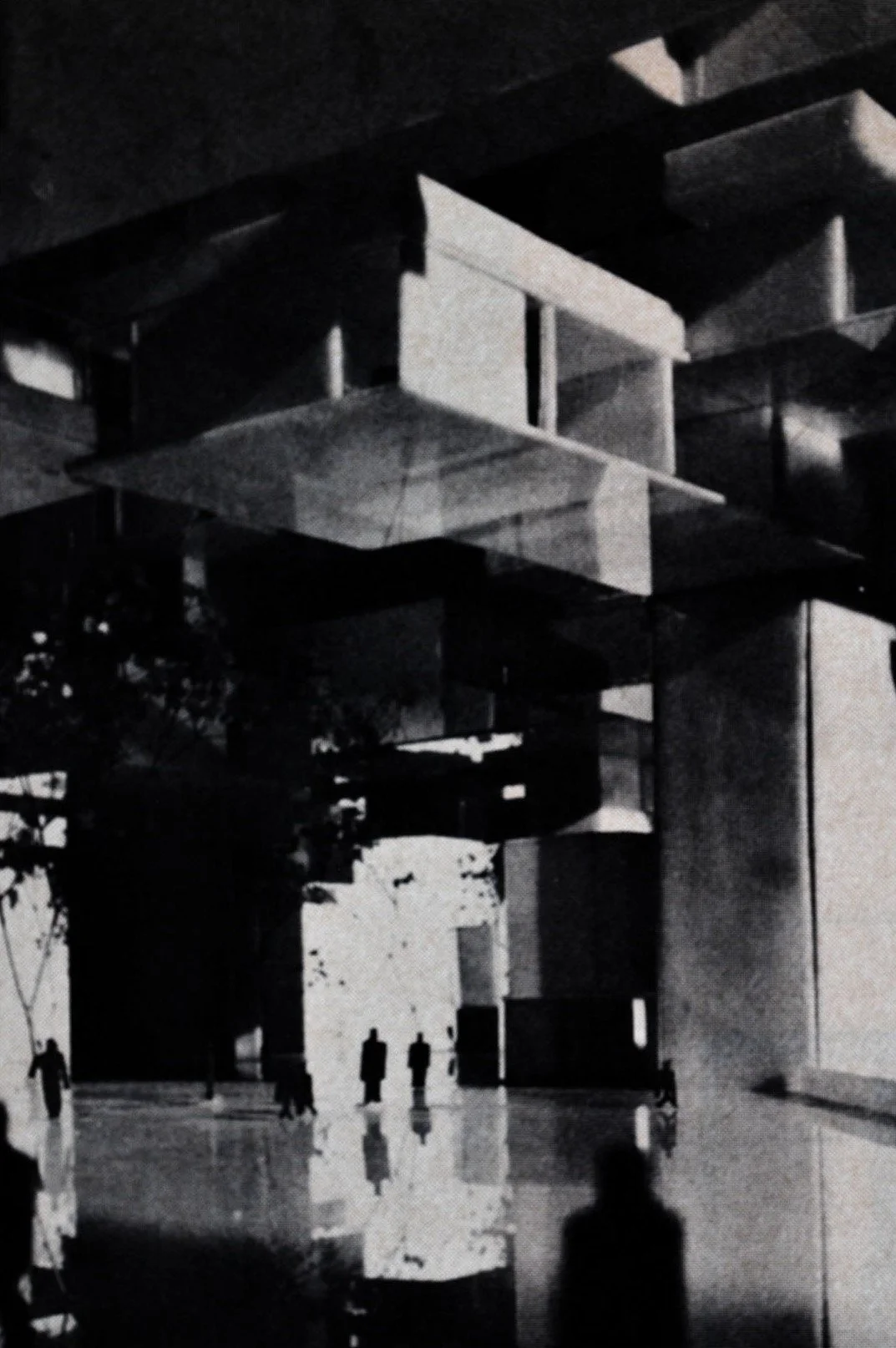
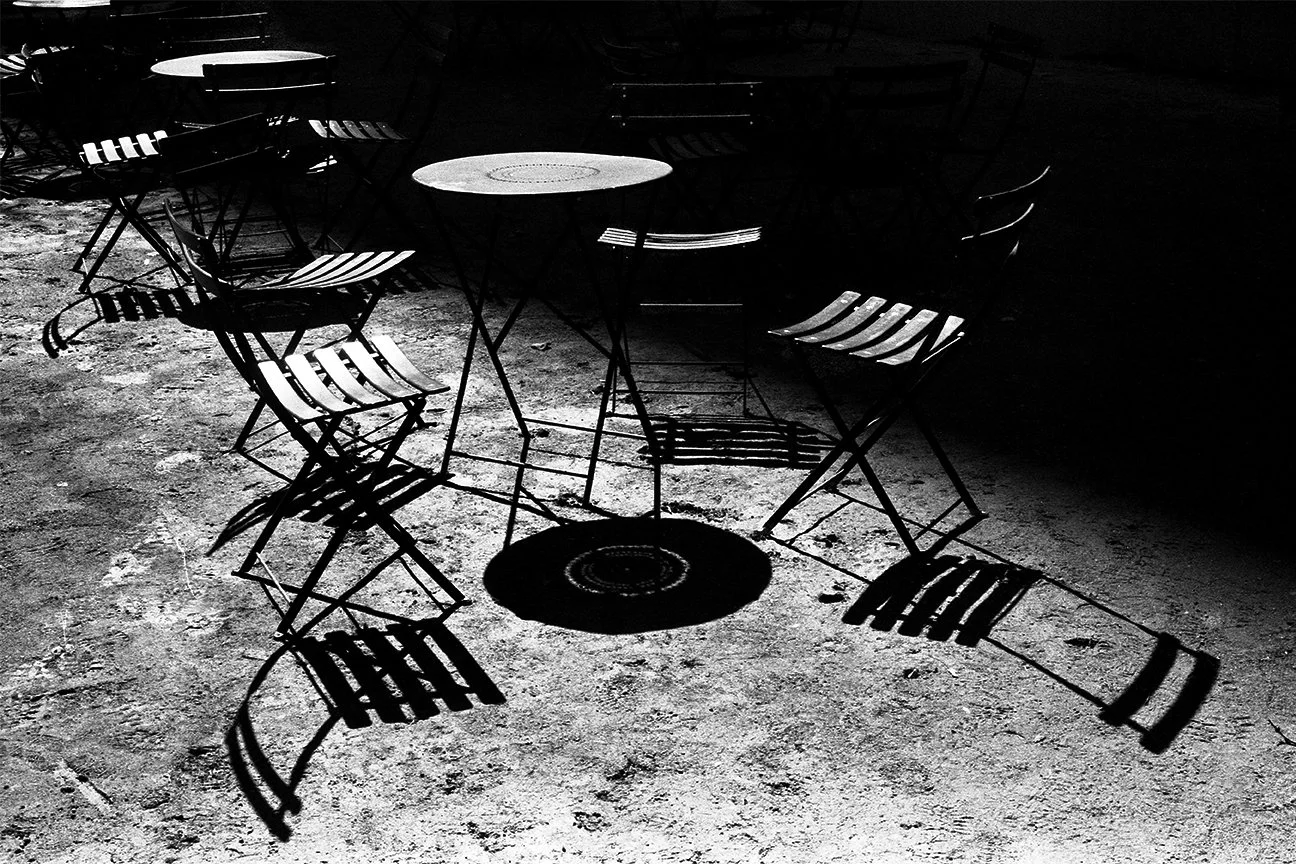
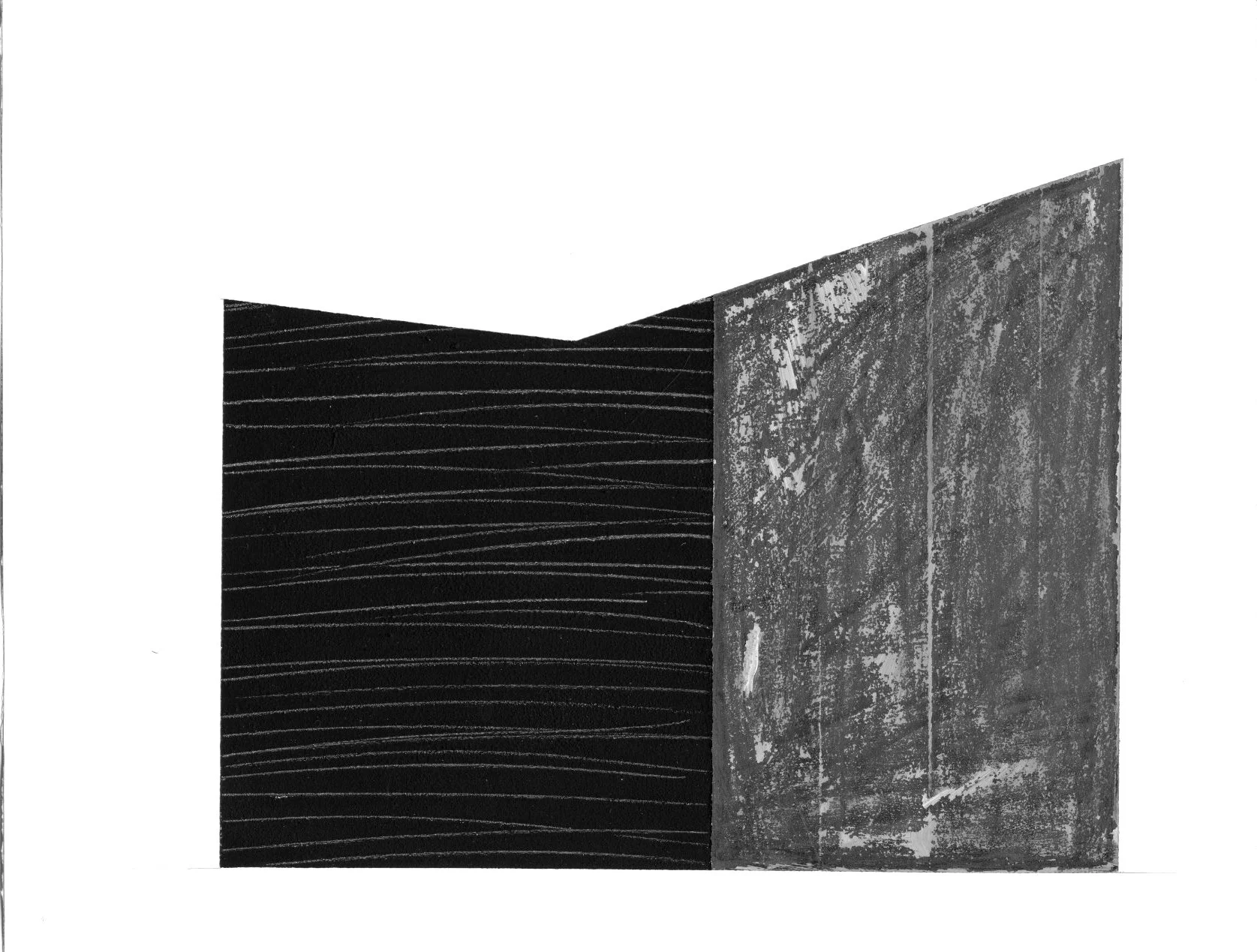
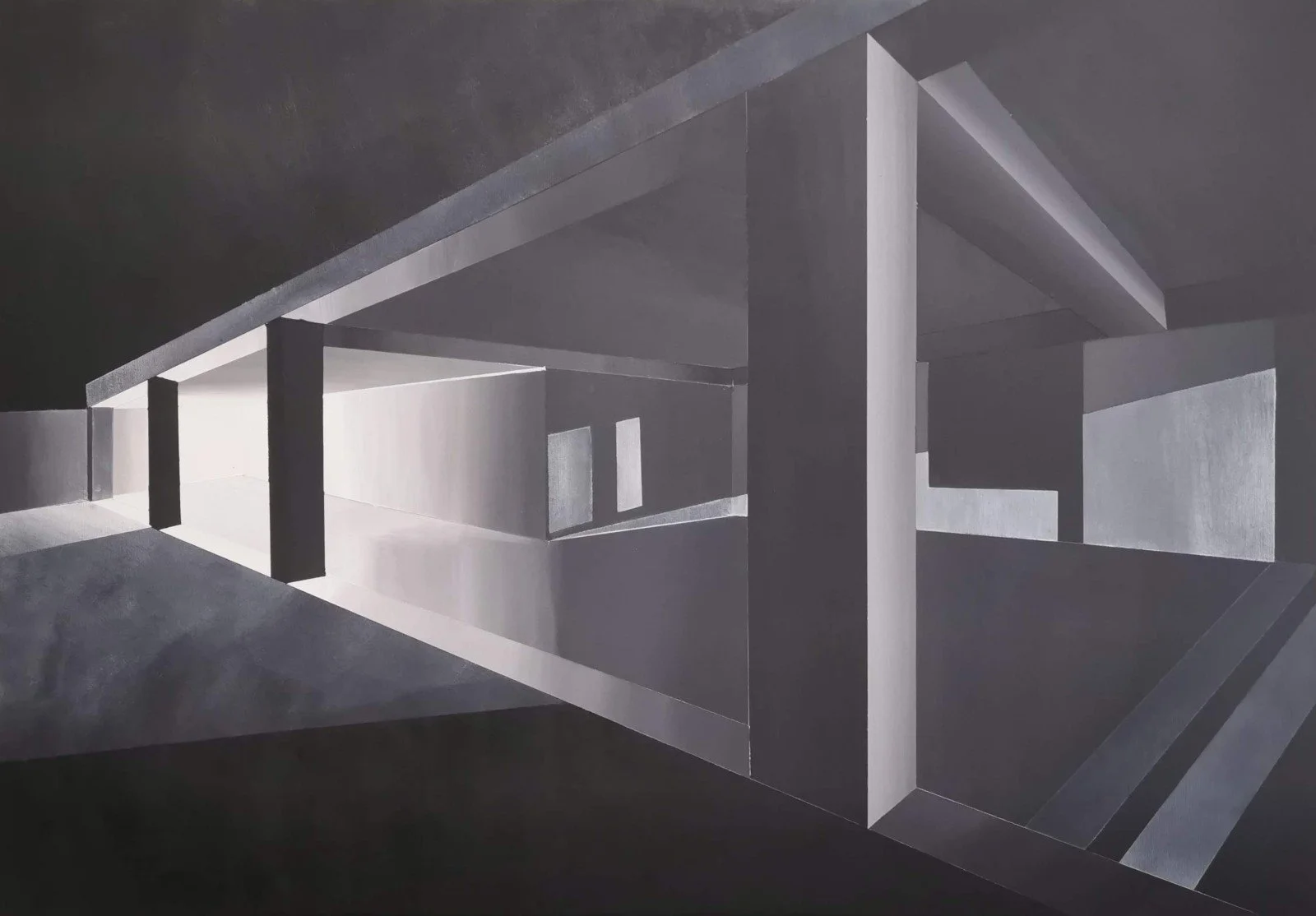
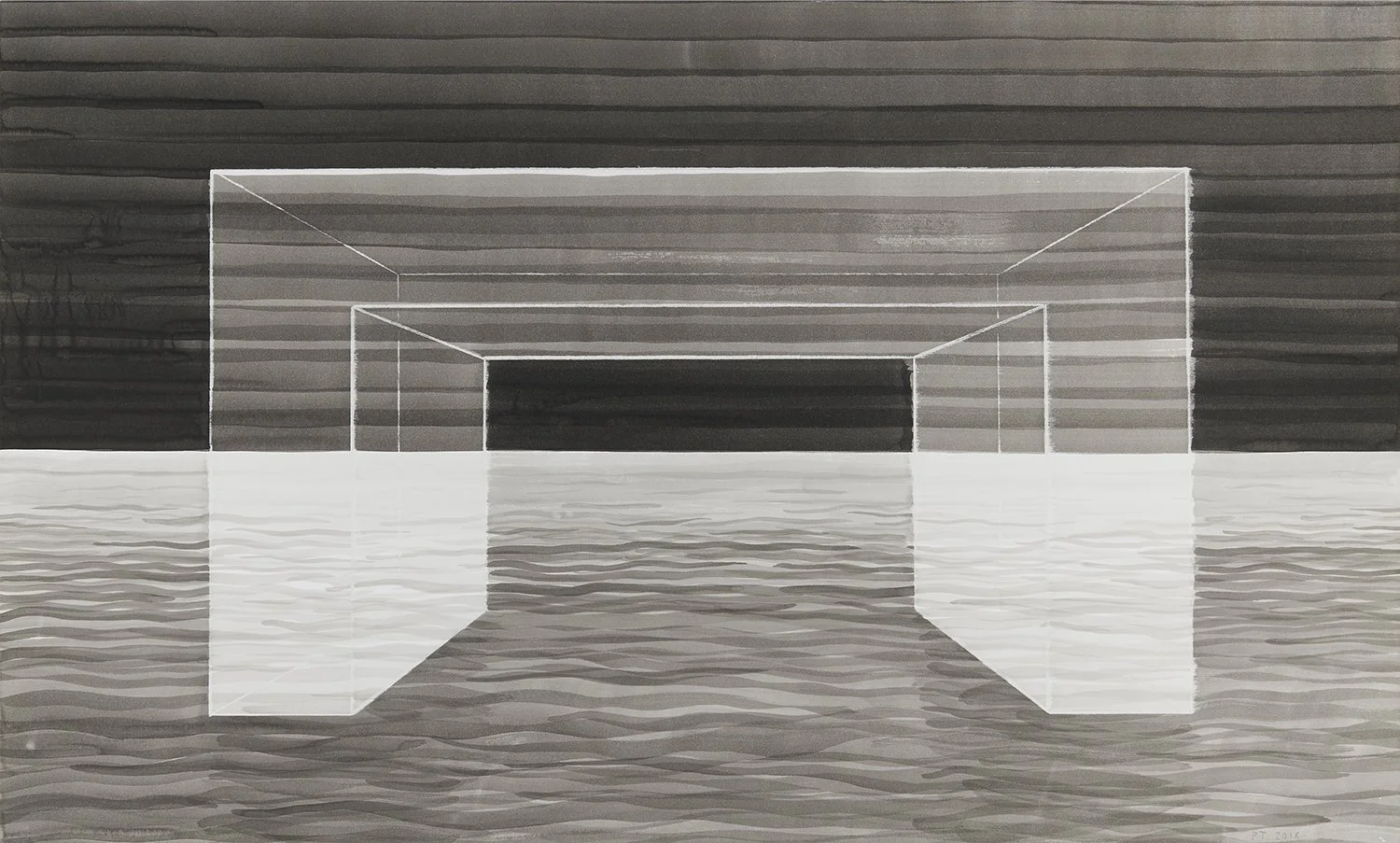
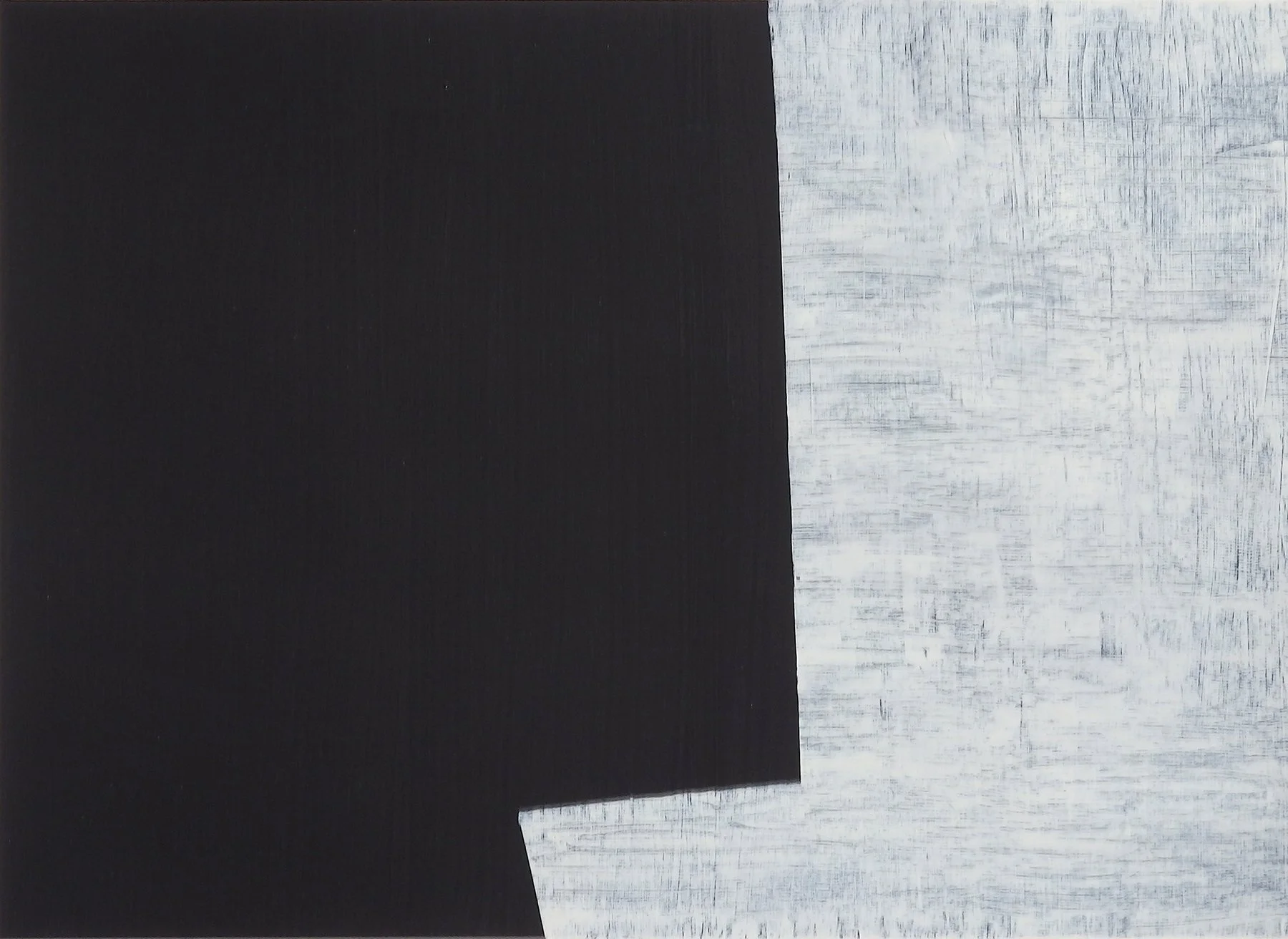
Geometry, architecture, and reconsiderations of the grid are critical to the work of artists in this group. The spirit of op-art lives on in the work of Felipe Bermudez Durana and Rylie Paull, whose precise ink drawings offer hypnotic patterns. Rosemary A Luckett’s hand-pulled monotype pares the landscape into spare, shaded blocks that appear in harmonious balance. Noosha Golab layers charcoal on paper in finely rendered marks. She creates an imperfect grid with two light, triangular shapes that alternately hover in the darkness and extend two paths towards the composition’s light edge. Elliott Golden’s photograph features a dramatically lit palette beneath dashes burnt into the photographic negative before development. The result evokes a riff on a Cartesian plane. Alice Gravely’s intaglio print unites drooping, pendulous forms with a brick wall. Straight line and curve, stasis and gravity exist in dynamic interplay. Amy Keeler’s Full Moon features wool on corrugated cardboard. Simultaneously soft and geometric, the work evokes celestial shifts. Sean Livingstone’s haunting interior photograph unites imposing architectural forms with diminutive figures. Michael McNeil removes the figure from his photograph entirely, and chairs and their shadows take on their own personality. In Marie Ringwald’s elegant translation of a shed, a black block with delicate, horizontal white lines meets a painterly gray block with more vertical stripes and strokes. Irena Skalik captures an empty interior space with acrylic on canvas. The viewer is situated behind a pillar, and the composition demonstrates a keen interest in perspective. Igal Stulbach photographs a sukkah, a Jewish ceremonial shelter. It looks like a grid, filled with pattern and light, though the viewer remains on the outside. Paul Taylor uses sumi ink and conte crayon on paper to depict a spare arch that hovers across two different planes. The artist takes inspiration from the vestigial military structures in the Marin Headlands, reducing them into ghostly forms that fade into the backdrop. Working in black and white allows Tamar Zinn to concentrate on shape, mark-making, gesture, and the interplay of figure and ground. She creates two interlocking forms in black and white. She lays down the black first, and it emerges in textured grids from beneath the overlaid white paint.

Wall 3
Tatiana Johnson / Lily Massee / Tina Salvesen / Zara Shahi / Alex Z. Wang / Christiane Fichtner
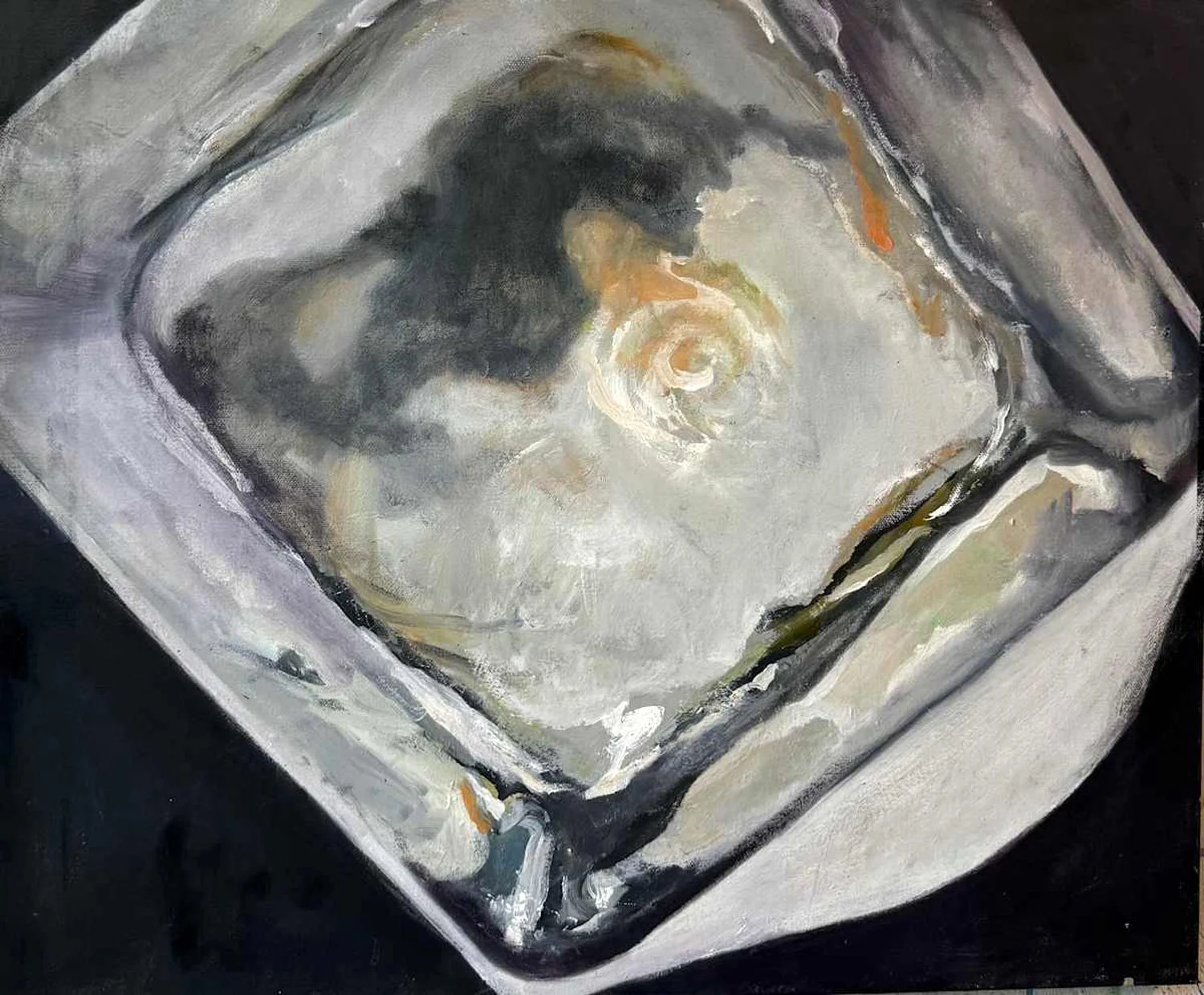
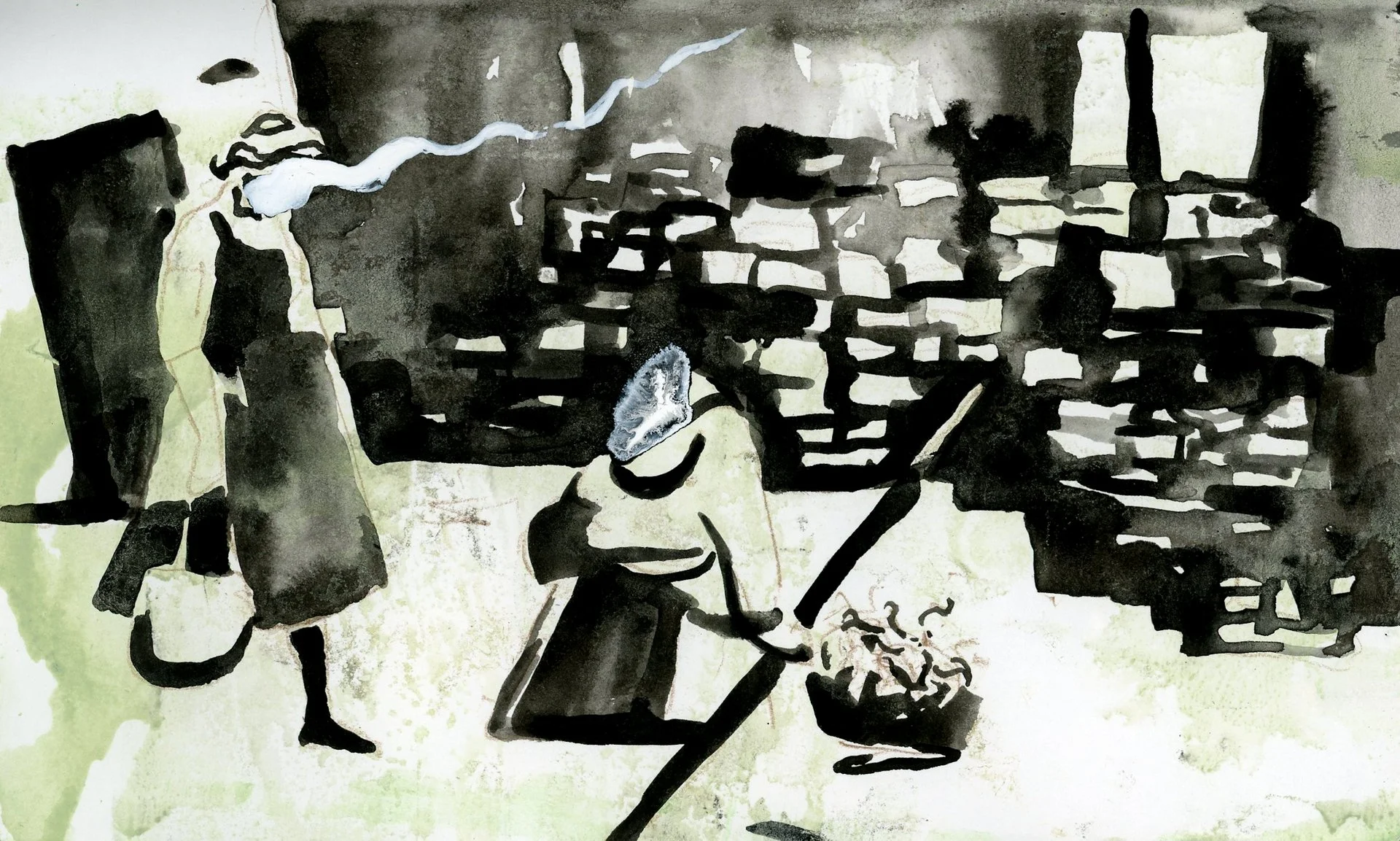
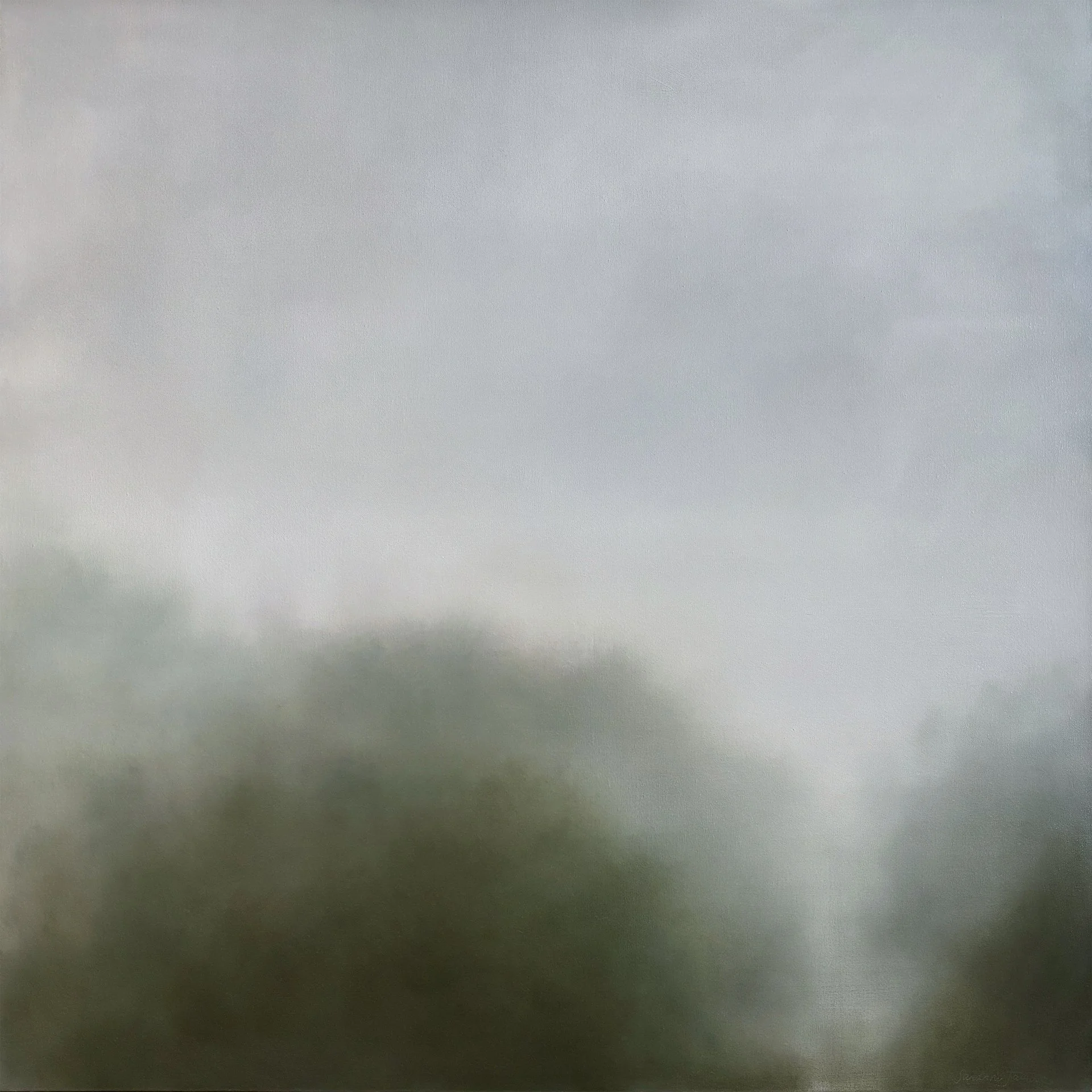
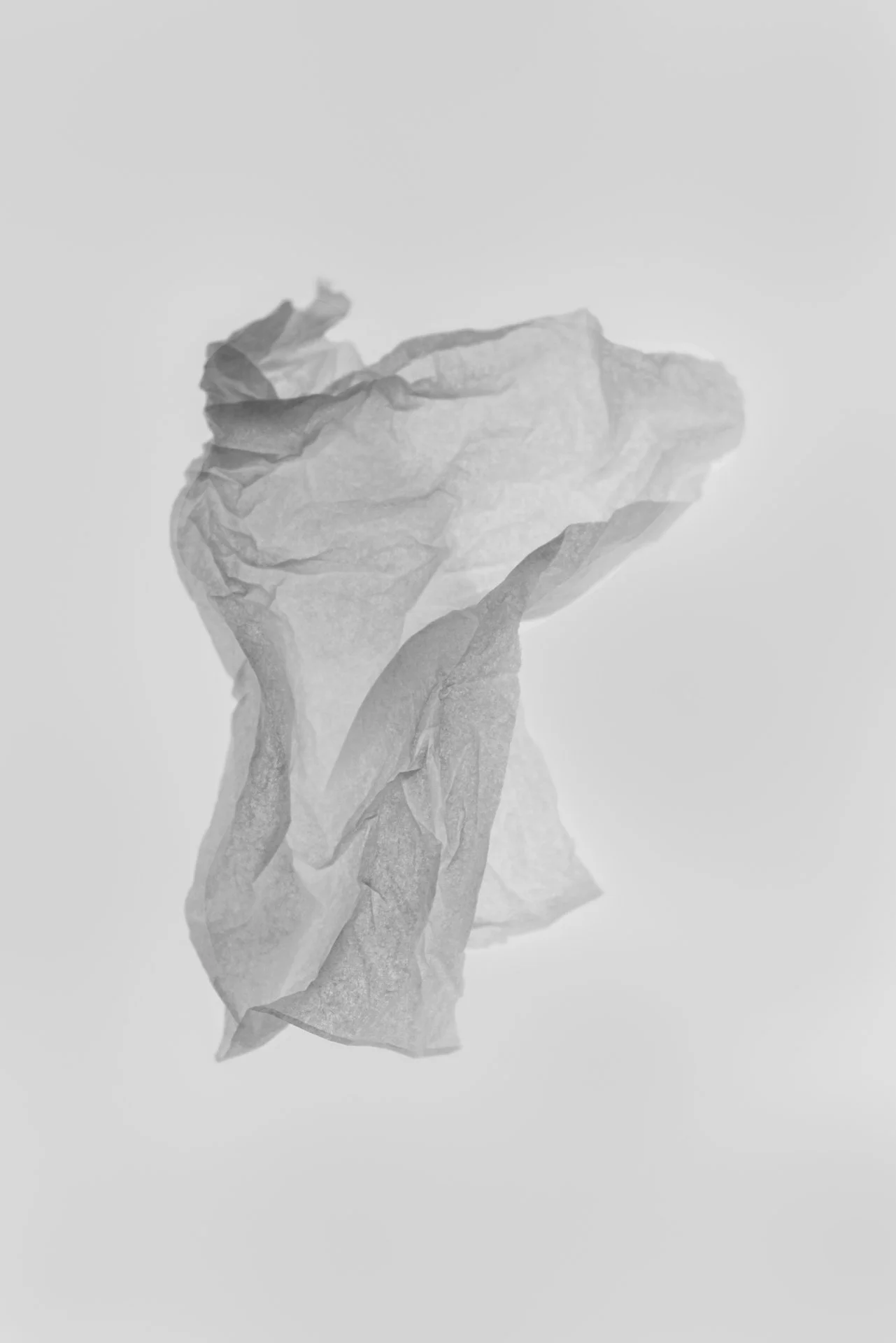
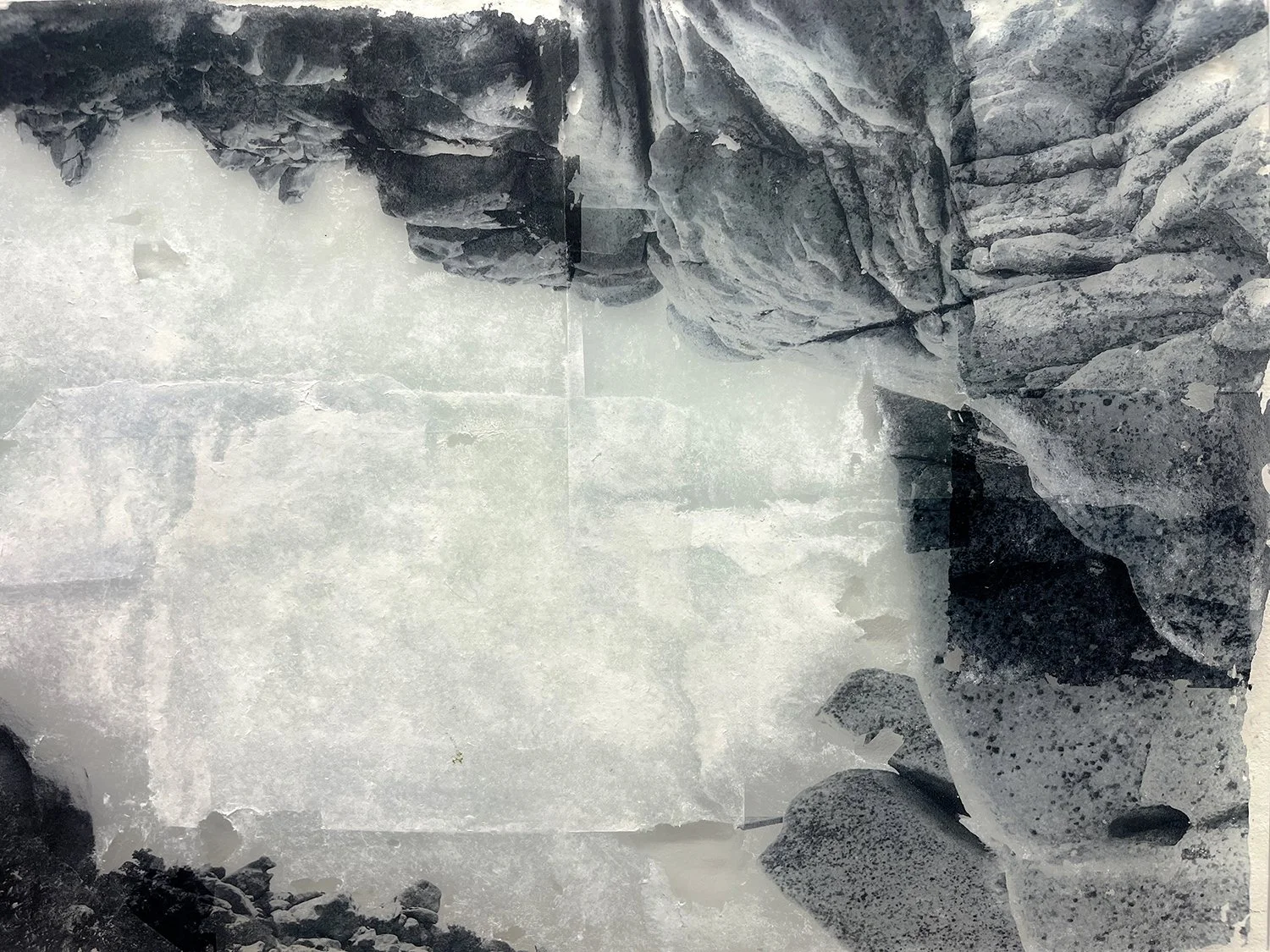
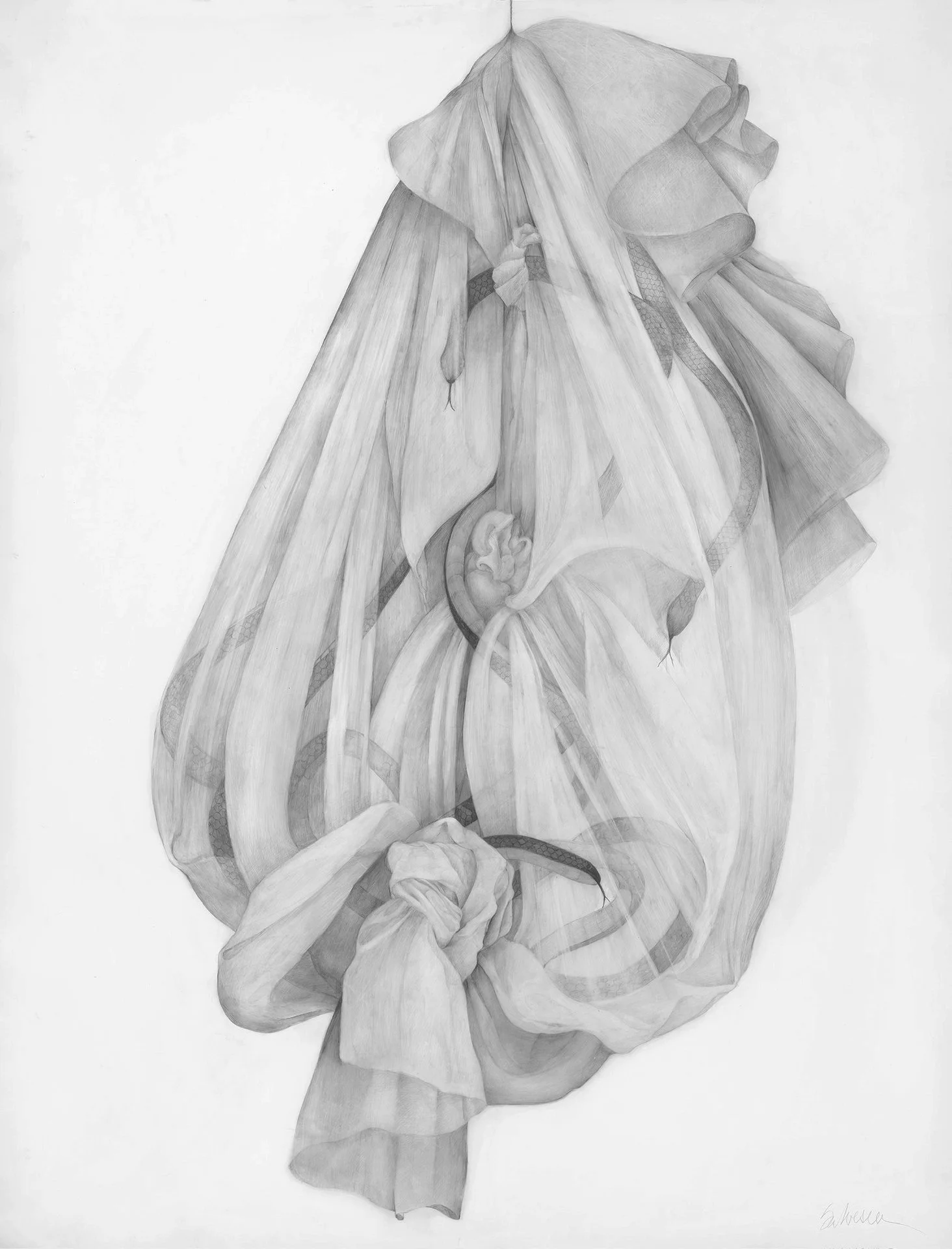
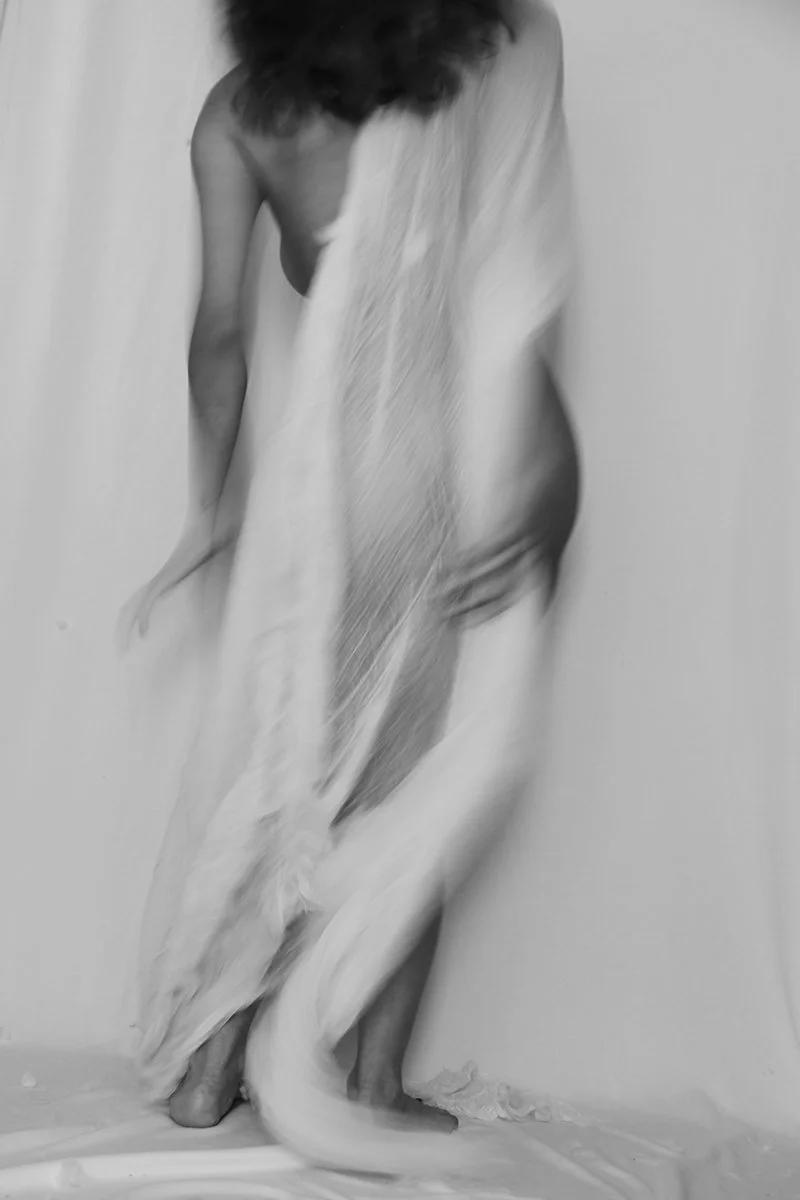
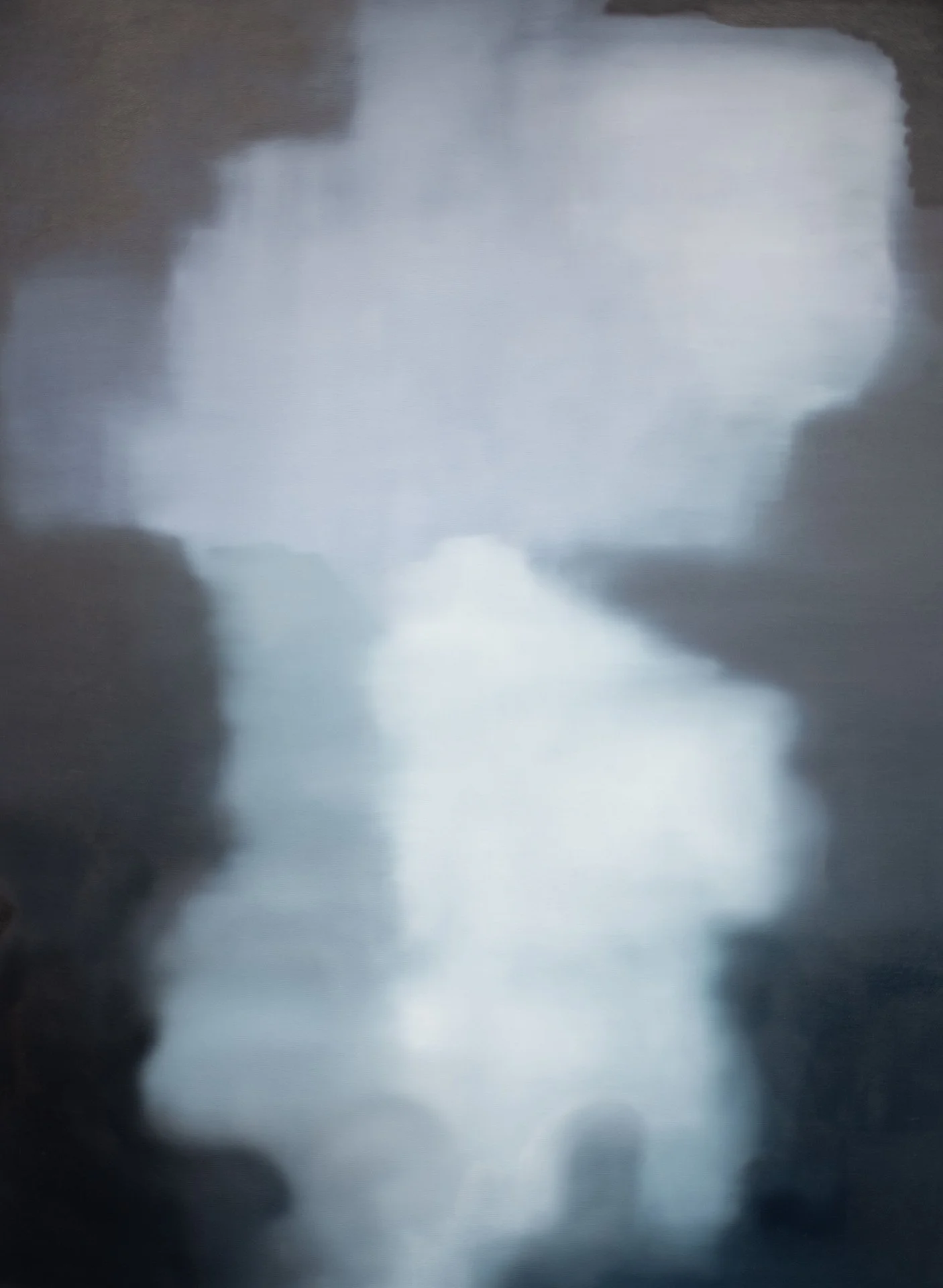
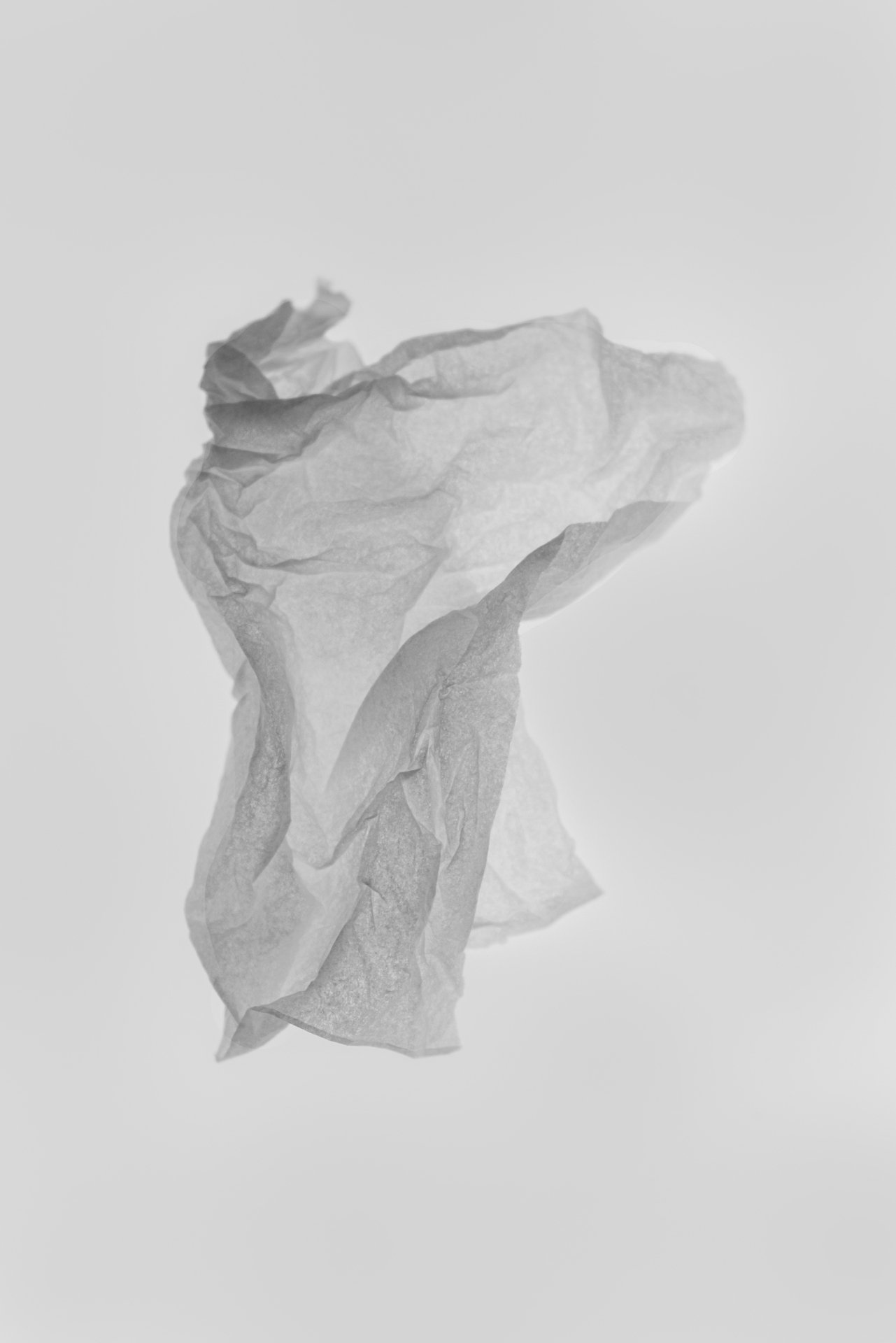
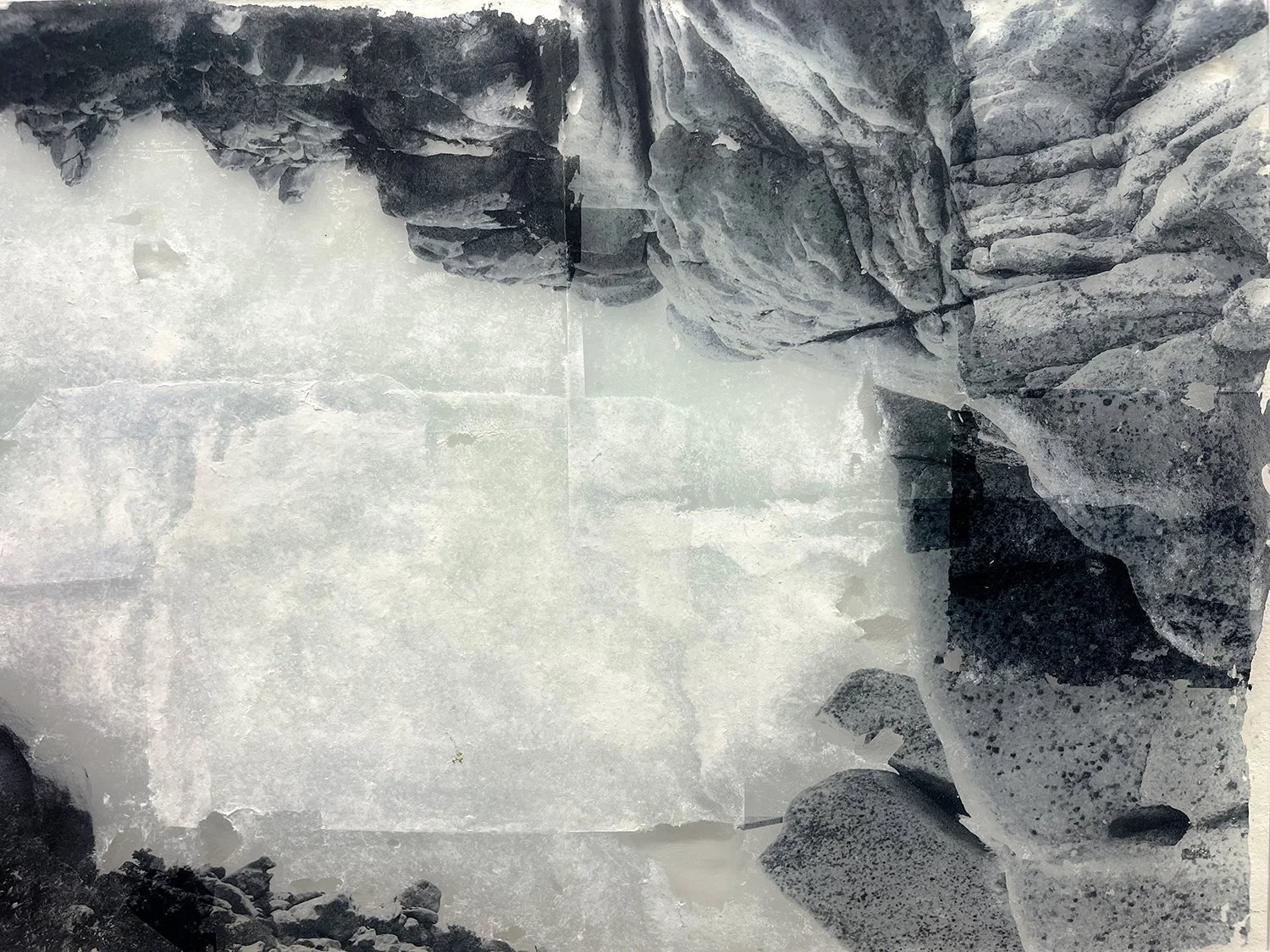
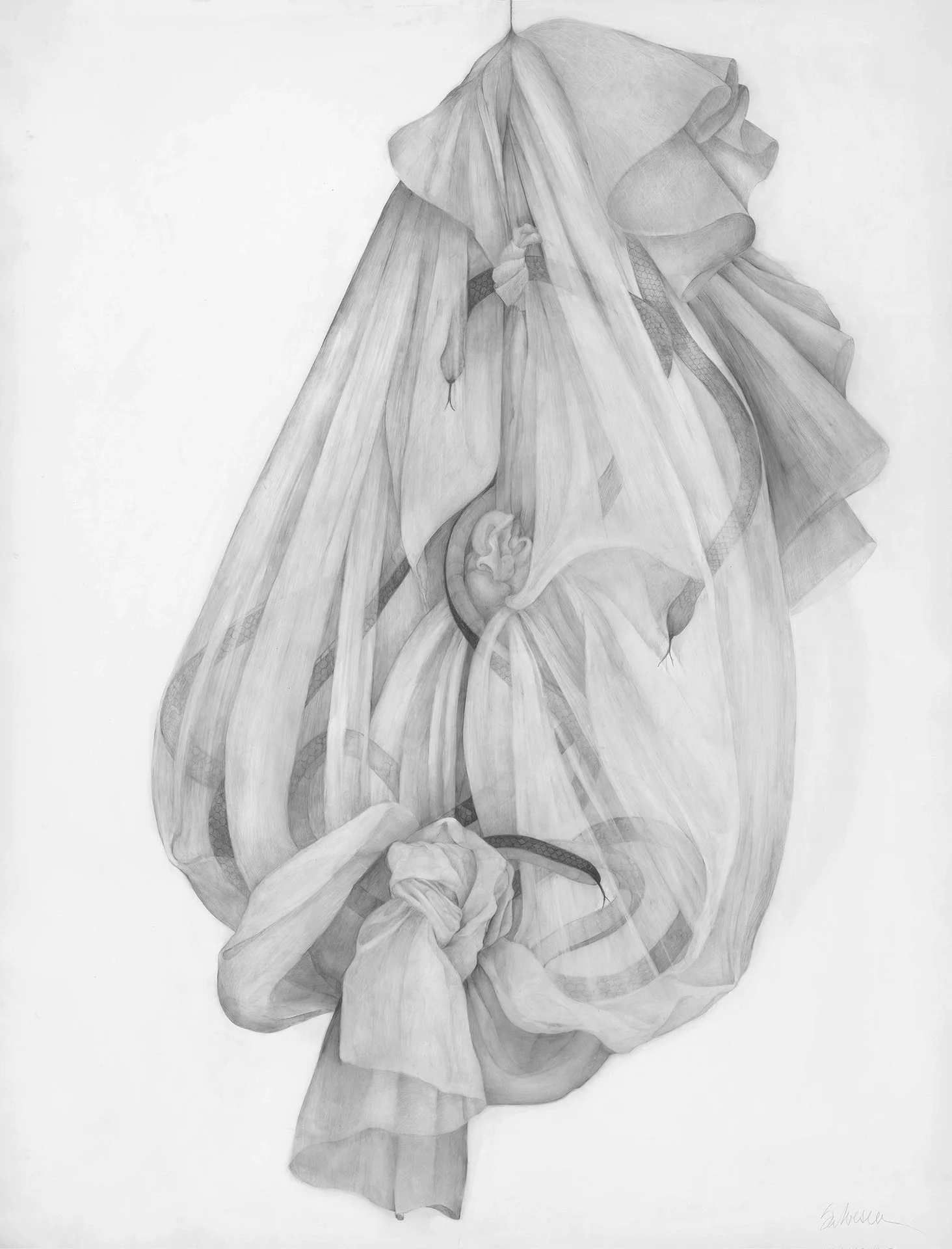
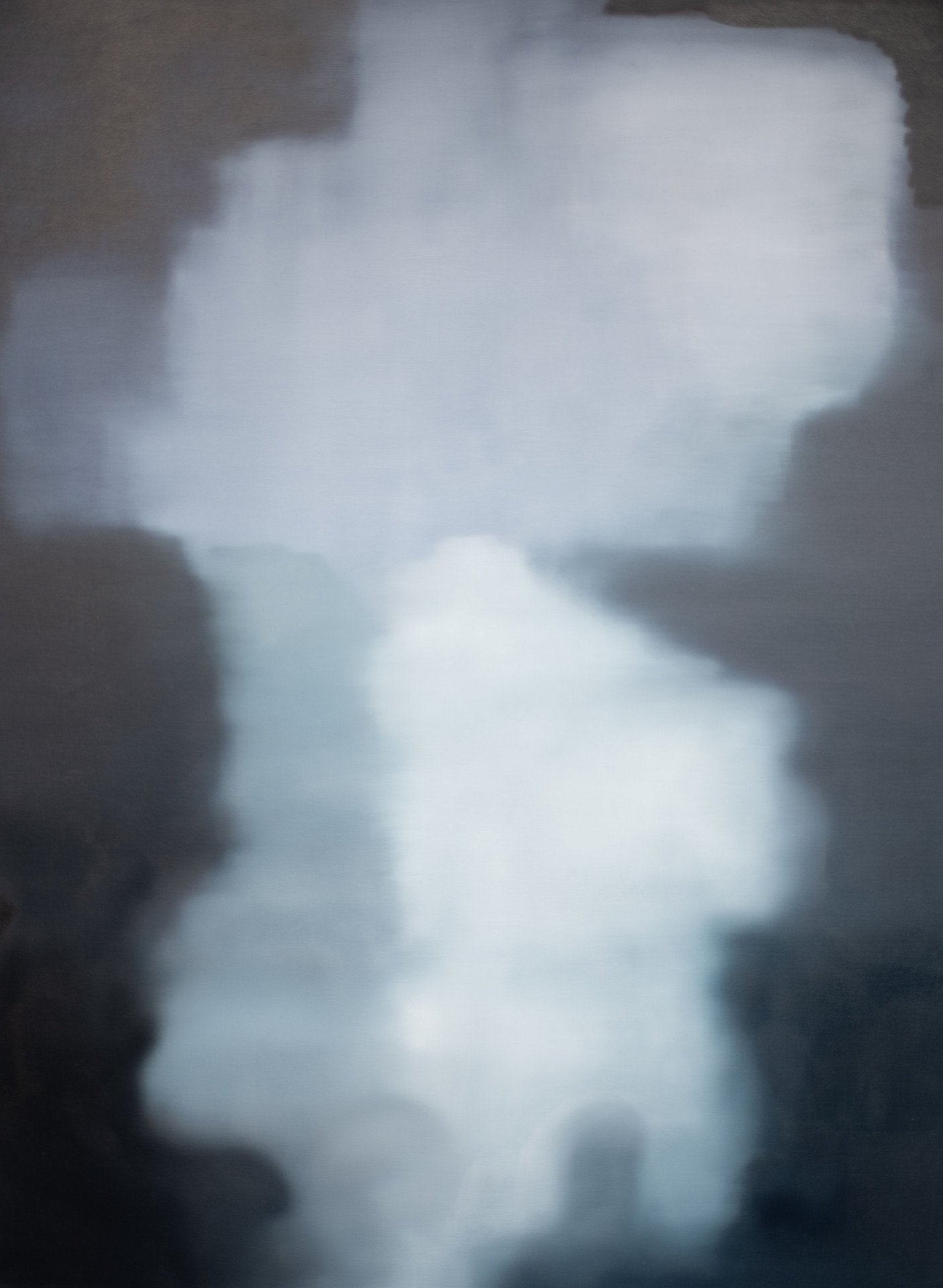
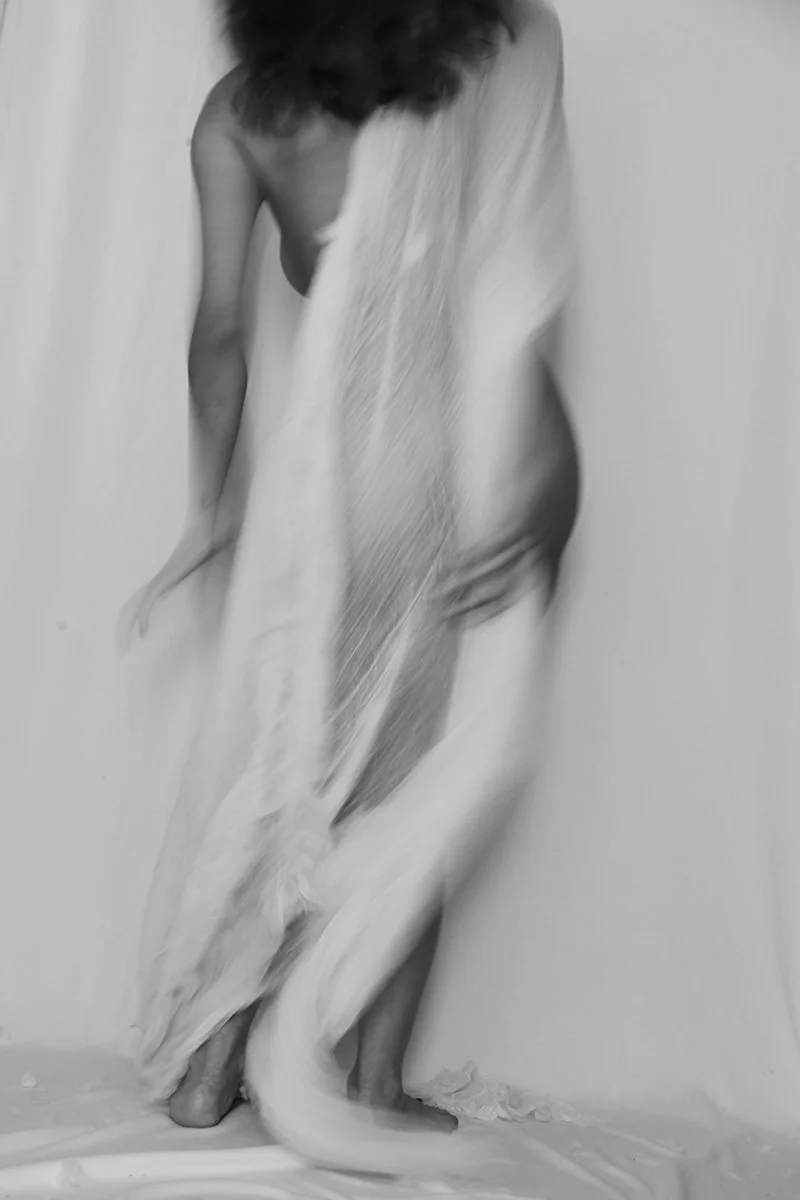
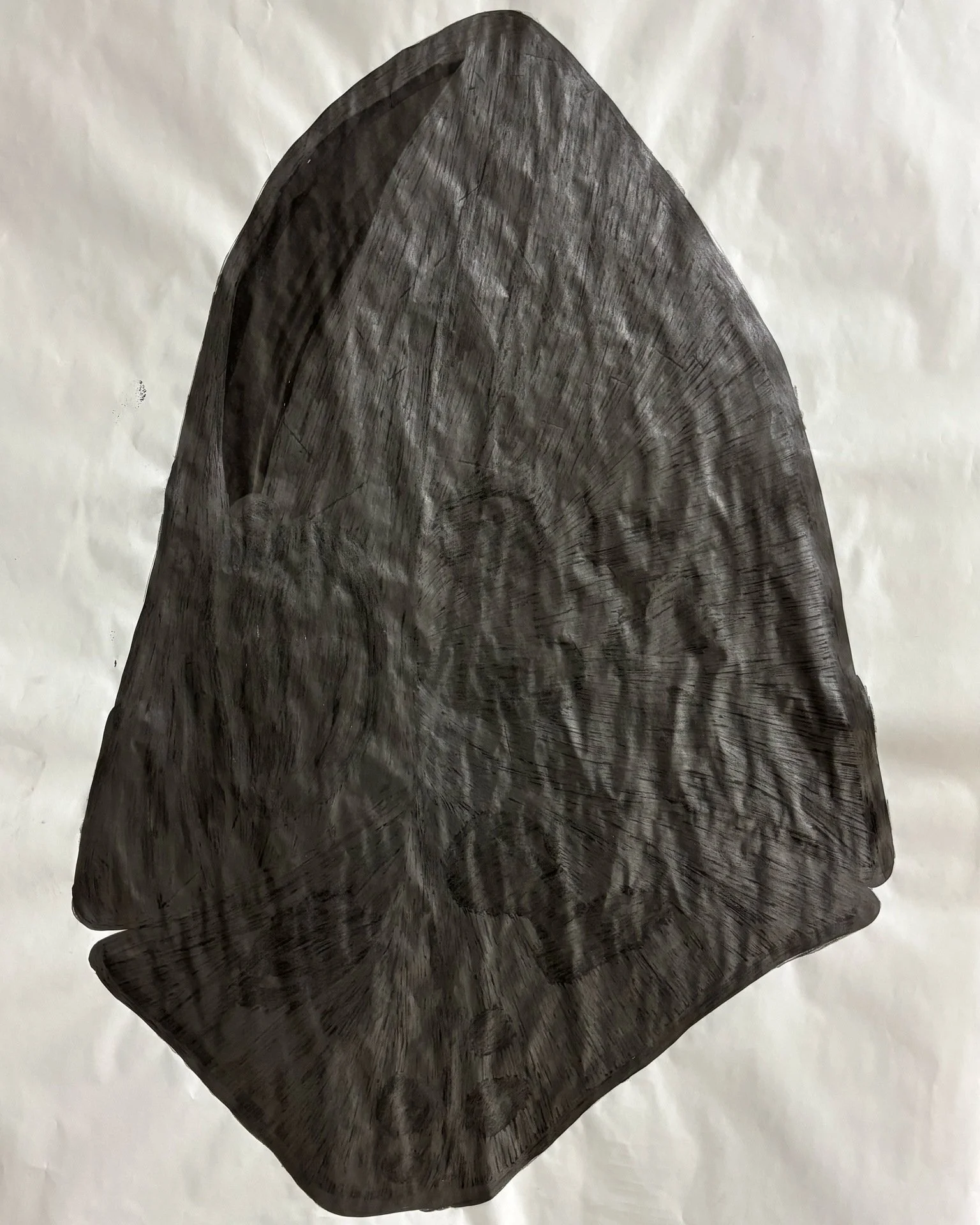
The artists in this group are interested in veils, sheaths, and scrims, the materials we use to reveal and conceal. Tatiana Johnson photographs translucent forms on a light table. Folds and gradients appear in sharp, precise detail, adding lyricism to simple materials. Lily Massee’s image transfers on glass capture the site where ashes of the artist’s father and grandparents were scattered. Light and process aim at the suggestion of an afterlife. Tina Salvesen draws a diaphanous sack filled with snakes, uniting delicacy and danger, a sense of wildness and constraint. Zara Shahi photographs a veiled body. The movement of figure and fabric contribute to a sense of concealment that may or may not be a means of protection. Light, cloudy forms also appear to obscure darker fields in Alex Z. Wang’s oil painting. The artist views his paintings as quiet thresholds where stillness, reflection, and escape can unfold. Christiane Fichtner’s ink and graffiti on paper work layers darkness atop darkness. The darkest swath evokes a slit, darkness itself becoming an entry point into some deeper mystery.
Wall 4
Sandrine Jacobson / Wai Hing Lau / Patsy Lindamood / Shanna-Ann Lindinger / Kristina Martino / Ken Mazzu / Rosella Mosteller / Harry Newman / Dan Roach / Harriet Silverstein / Xinshuo Zhuo / Maggie Nowinski
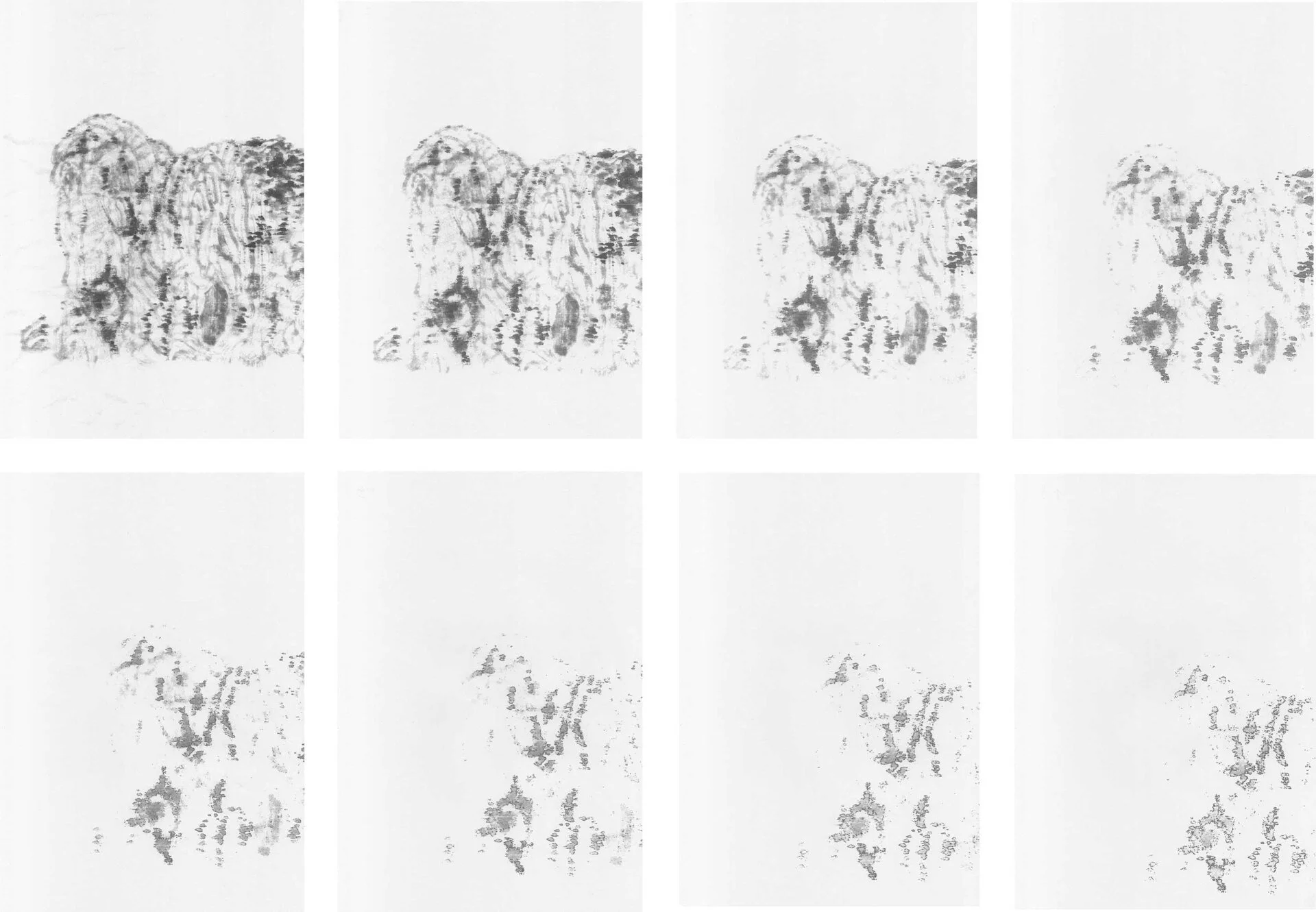
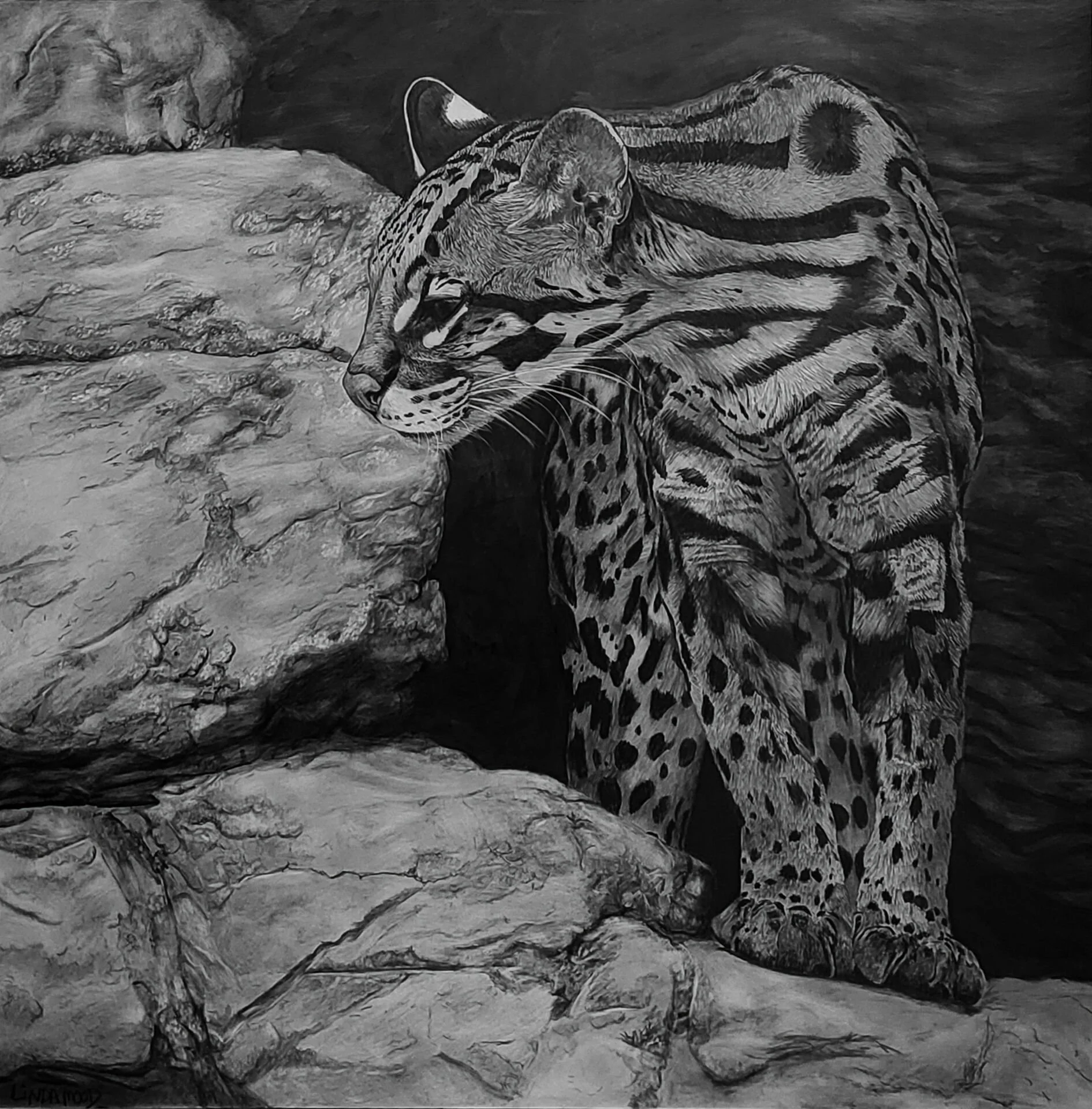
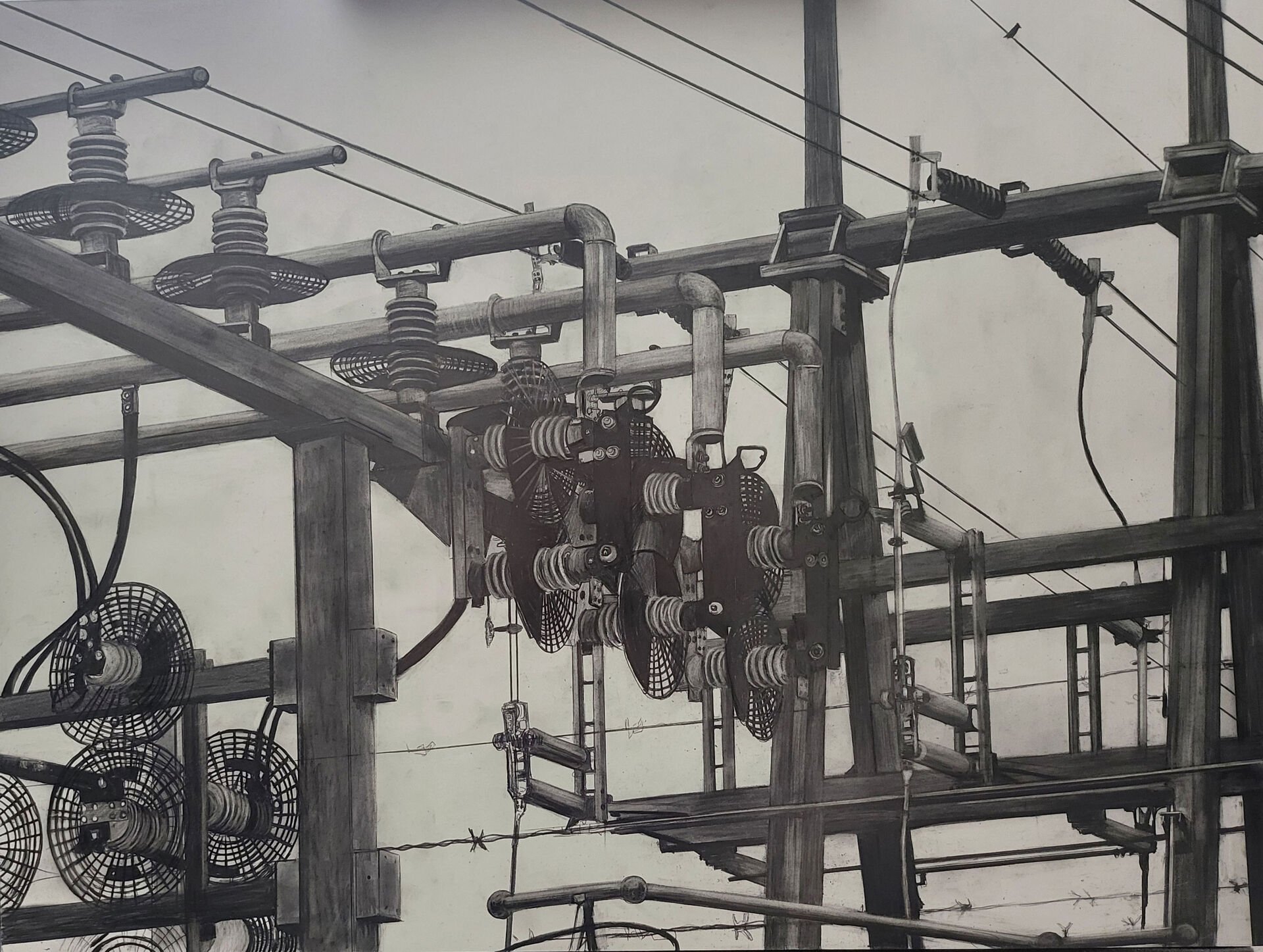
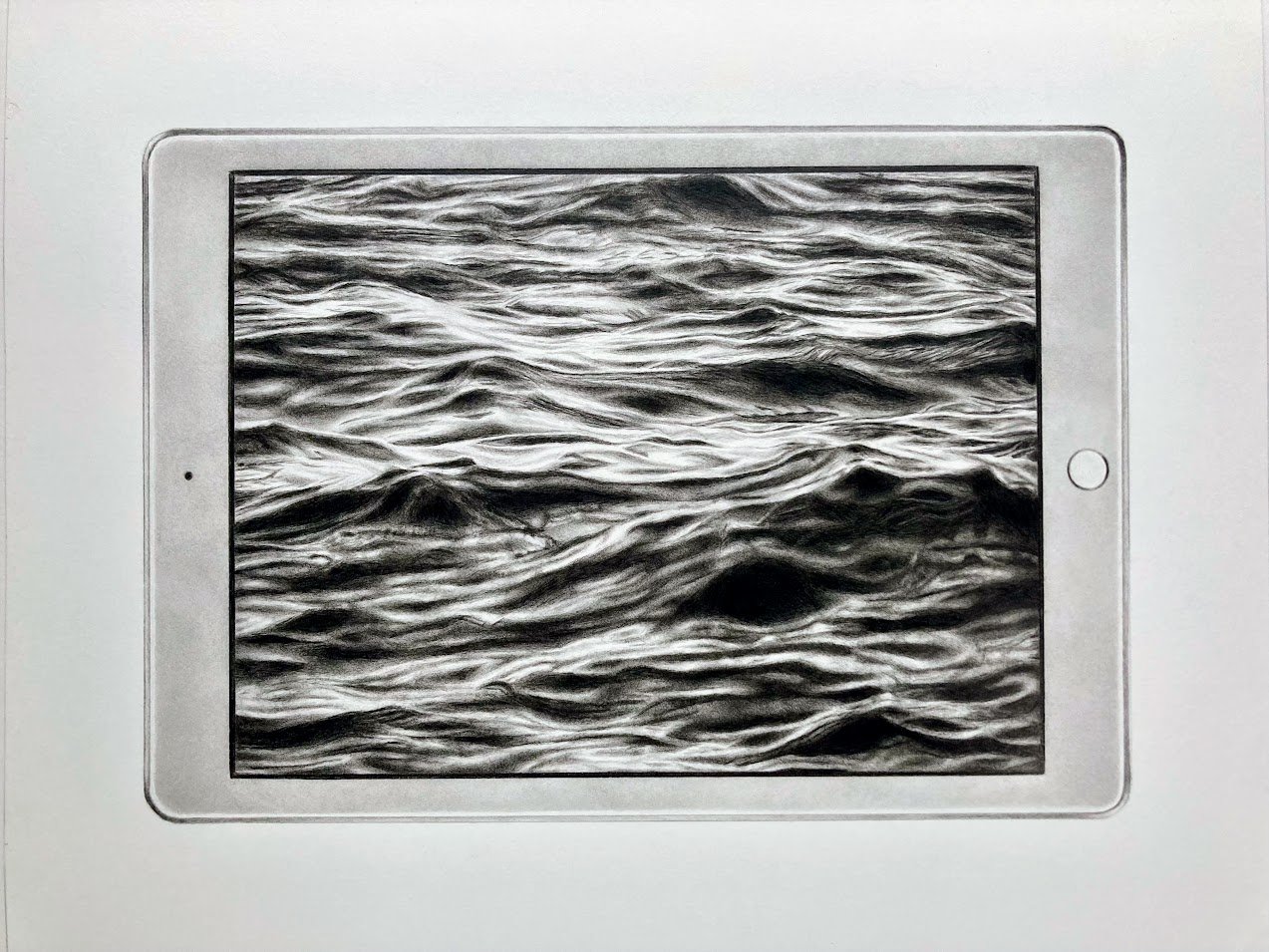
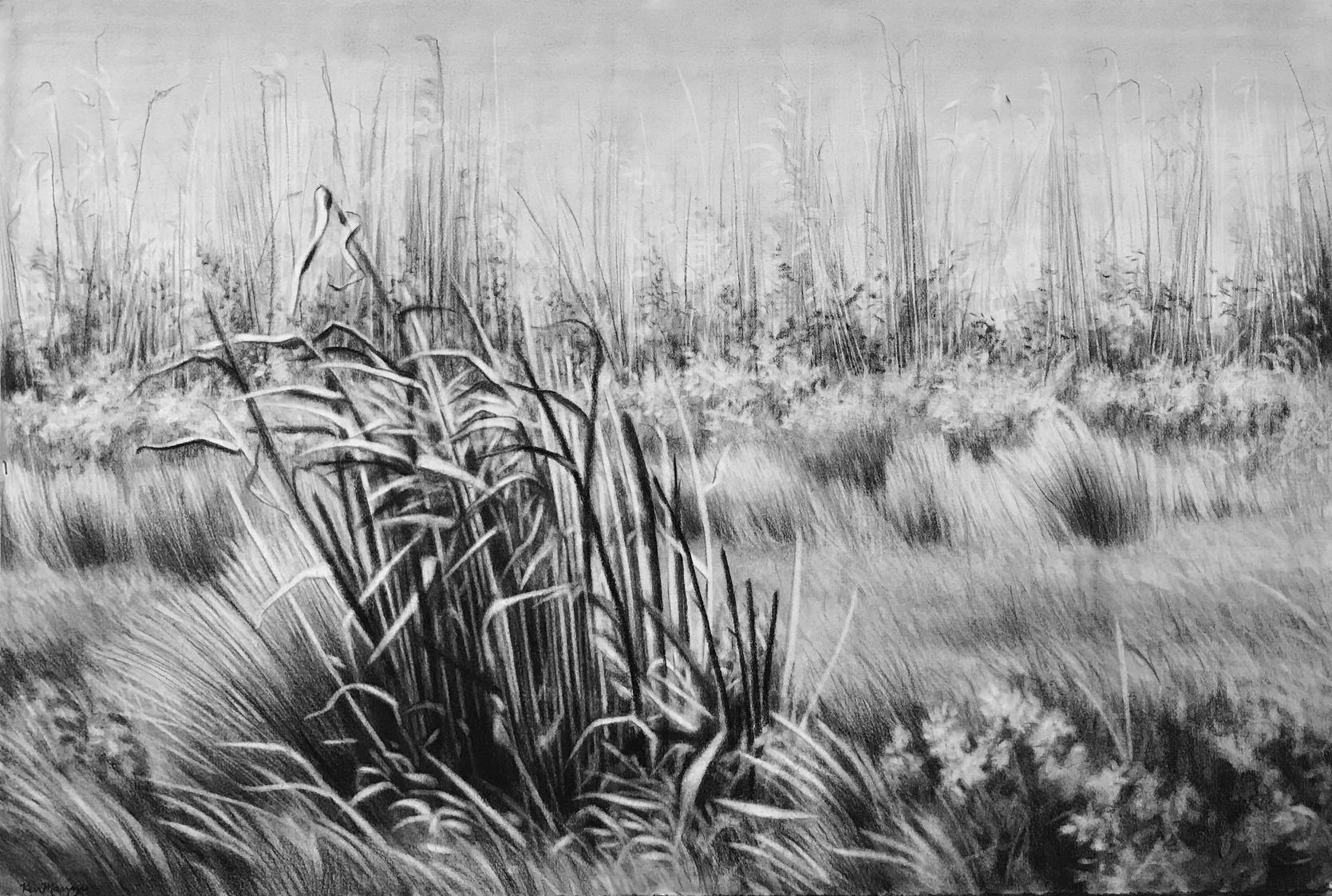
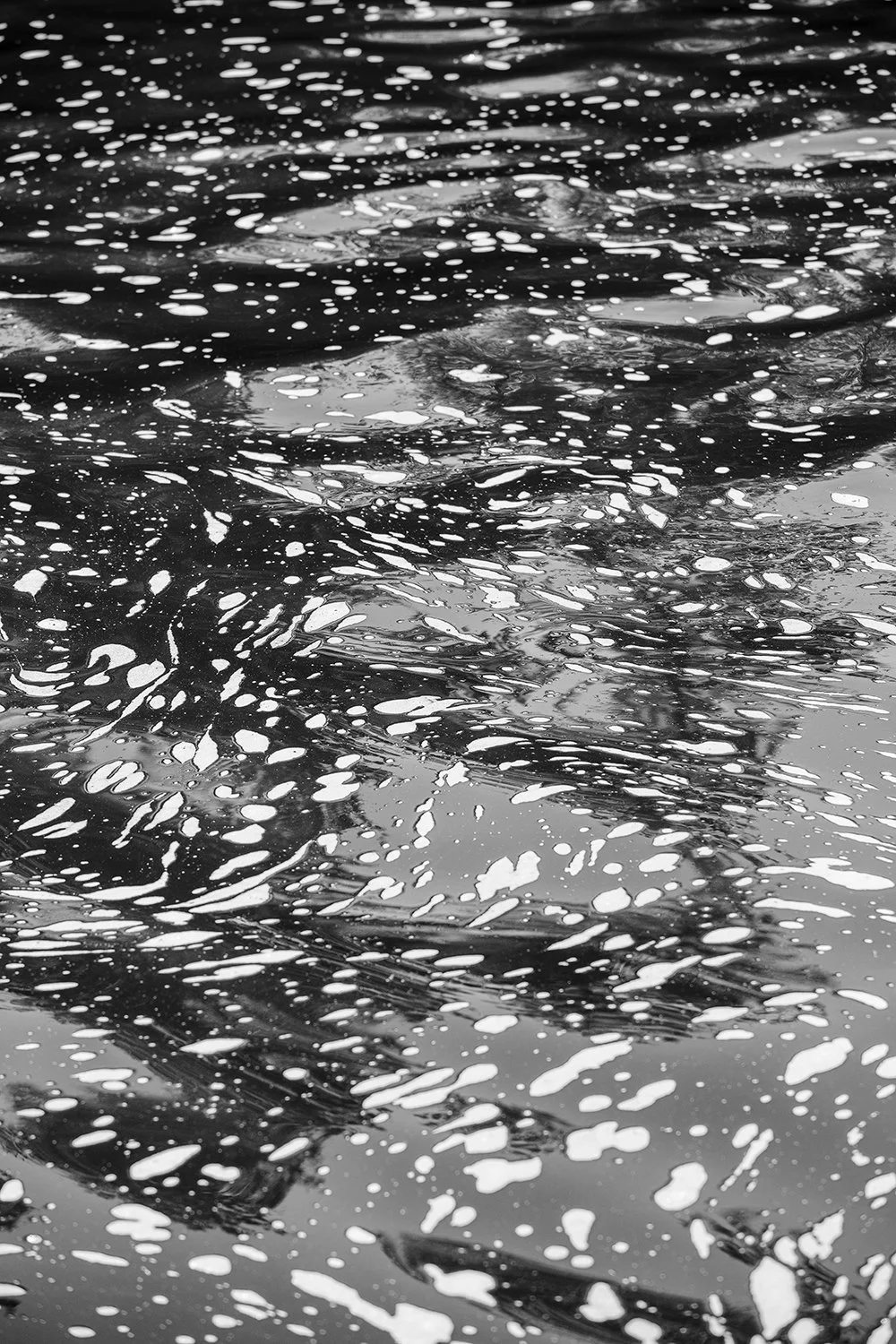
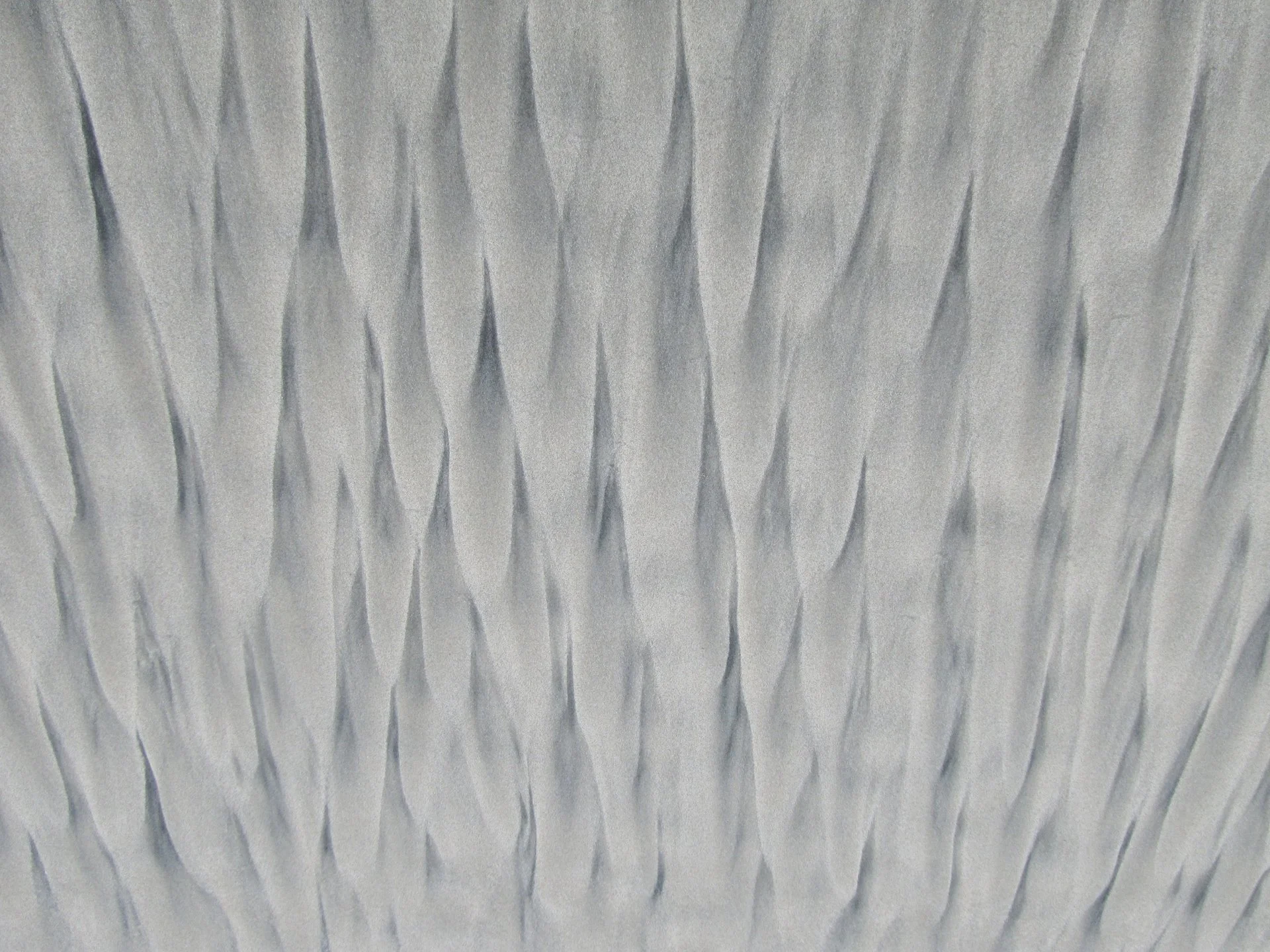
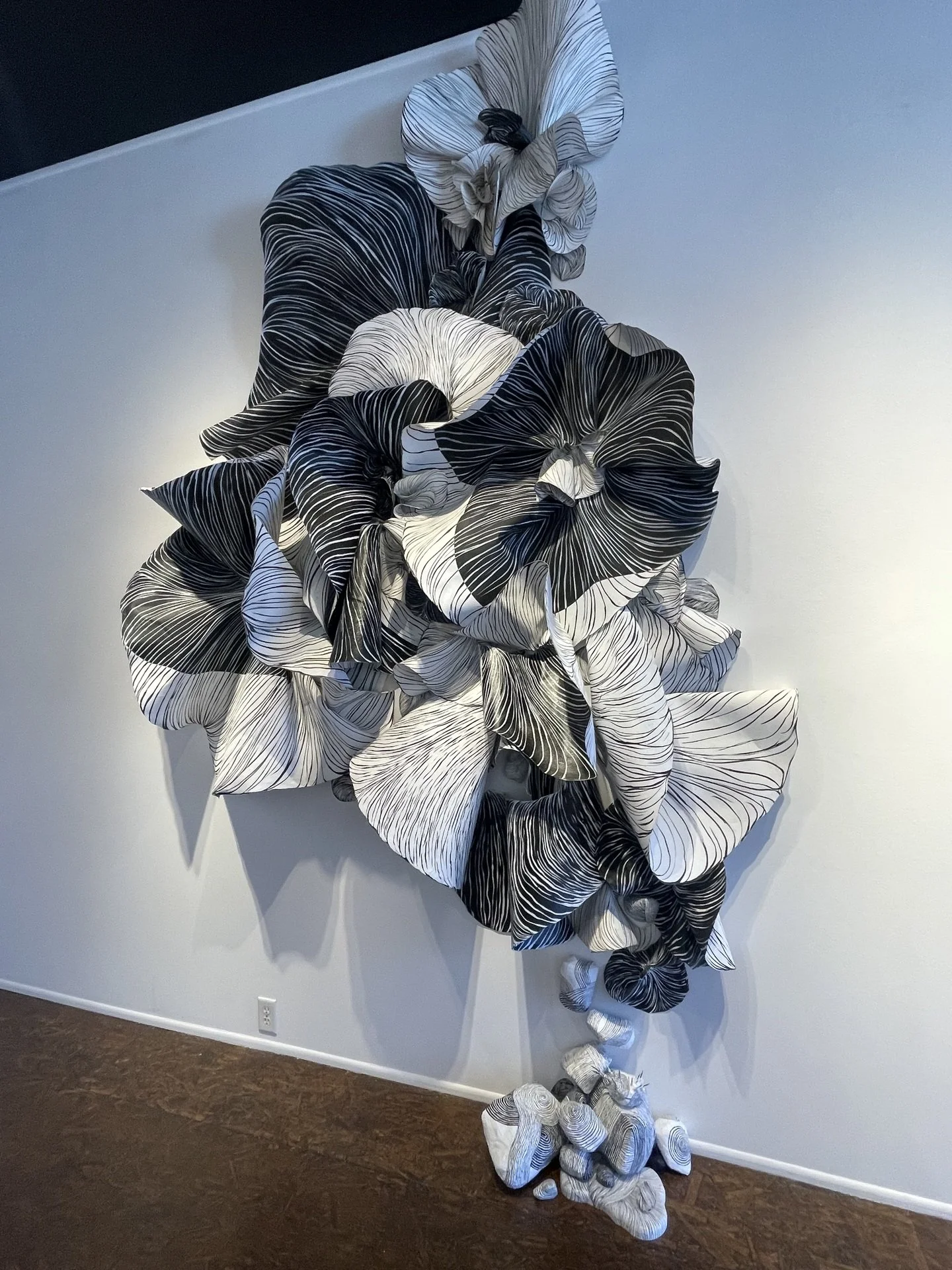
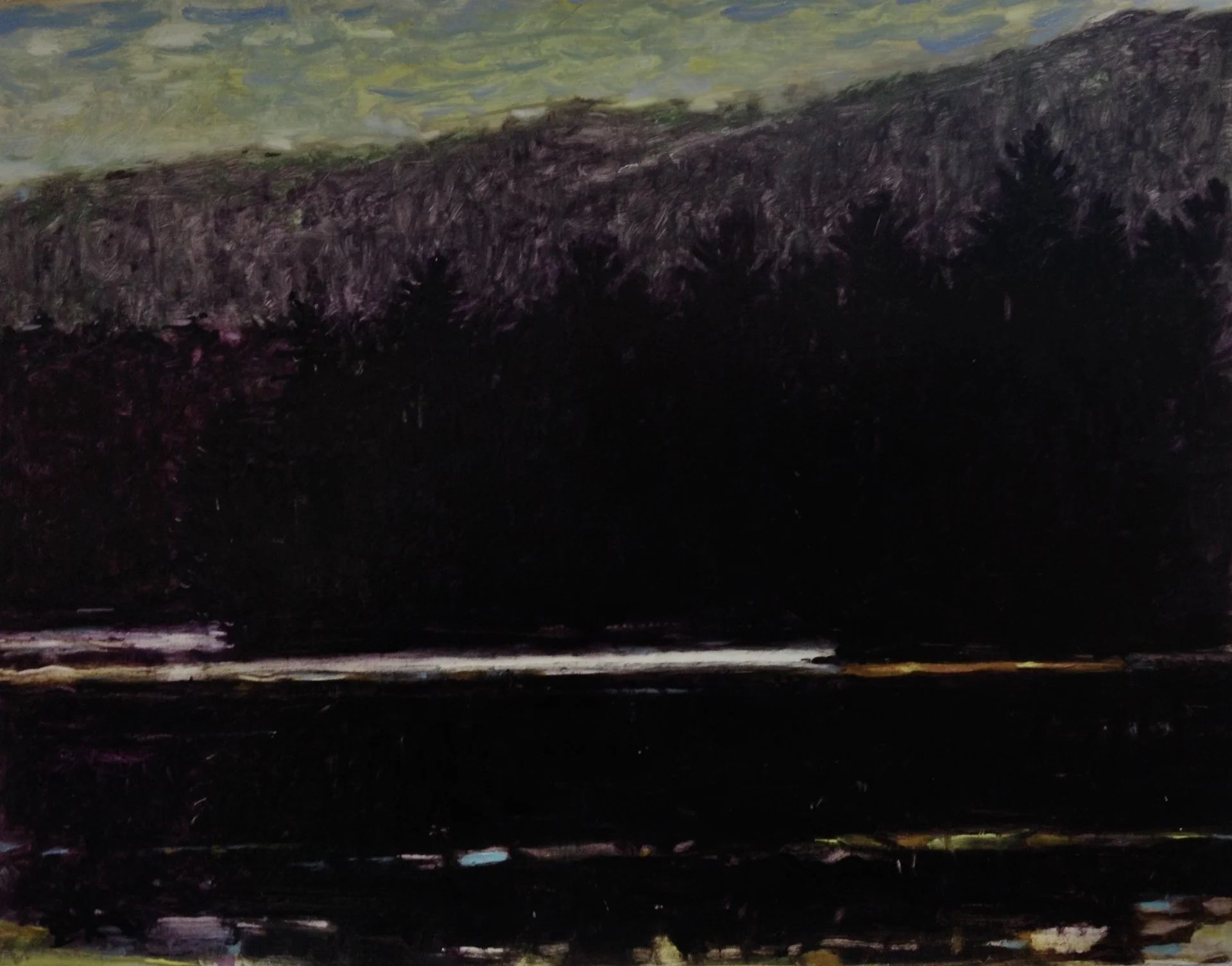
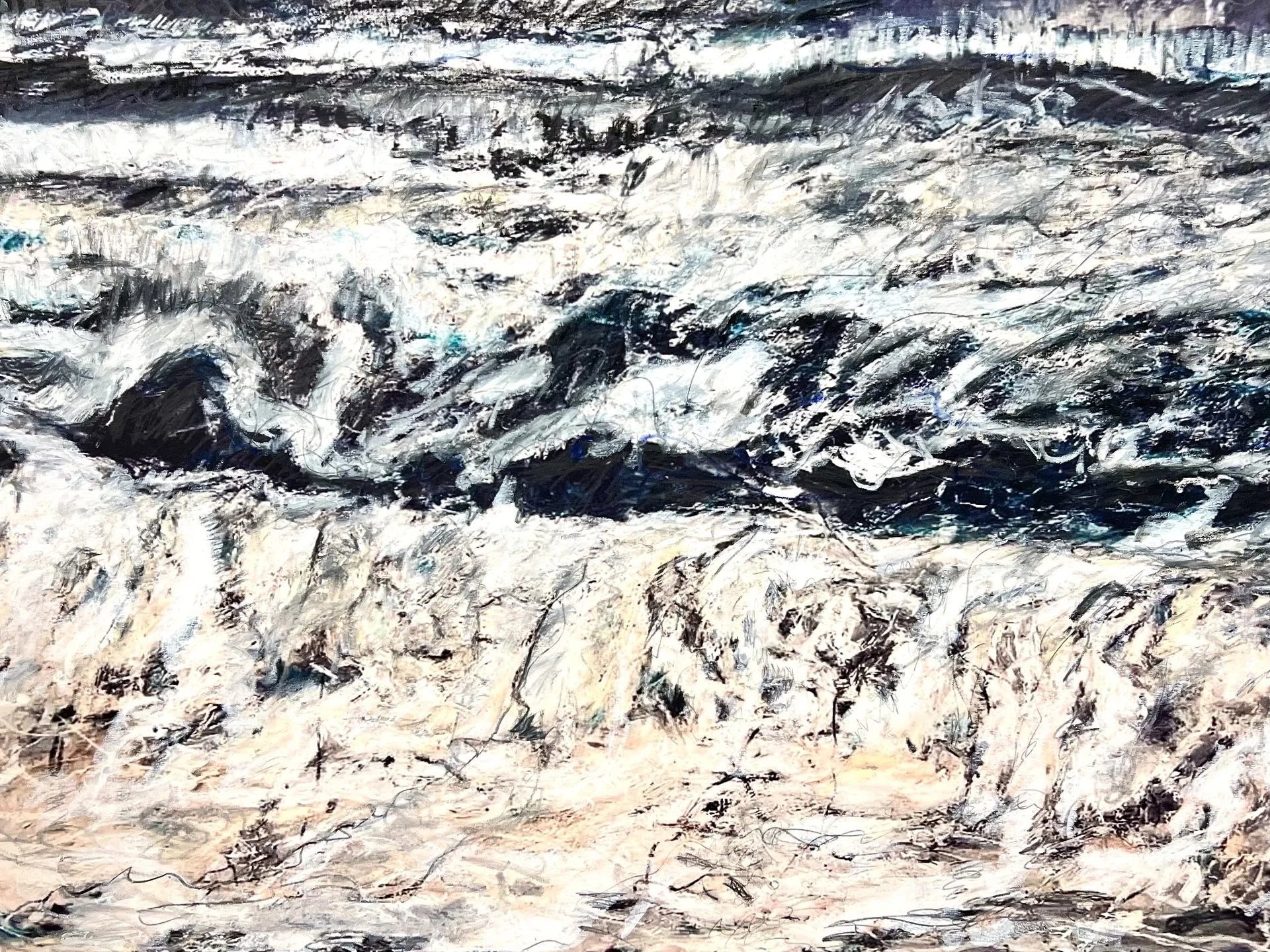
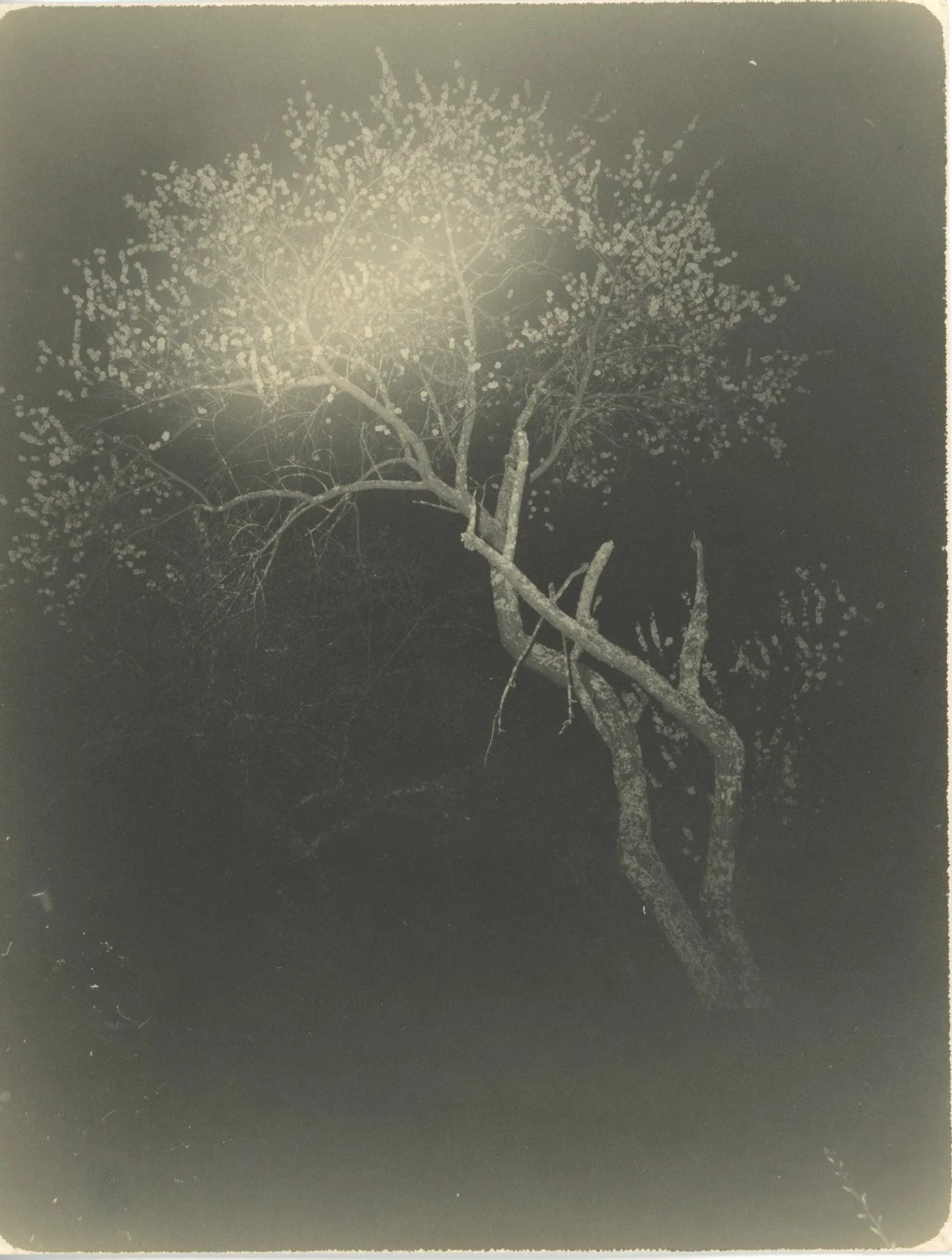
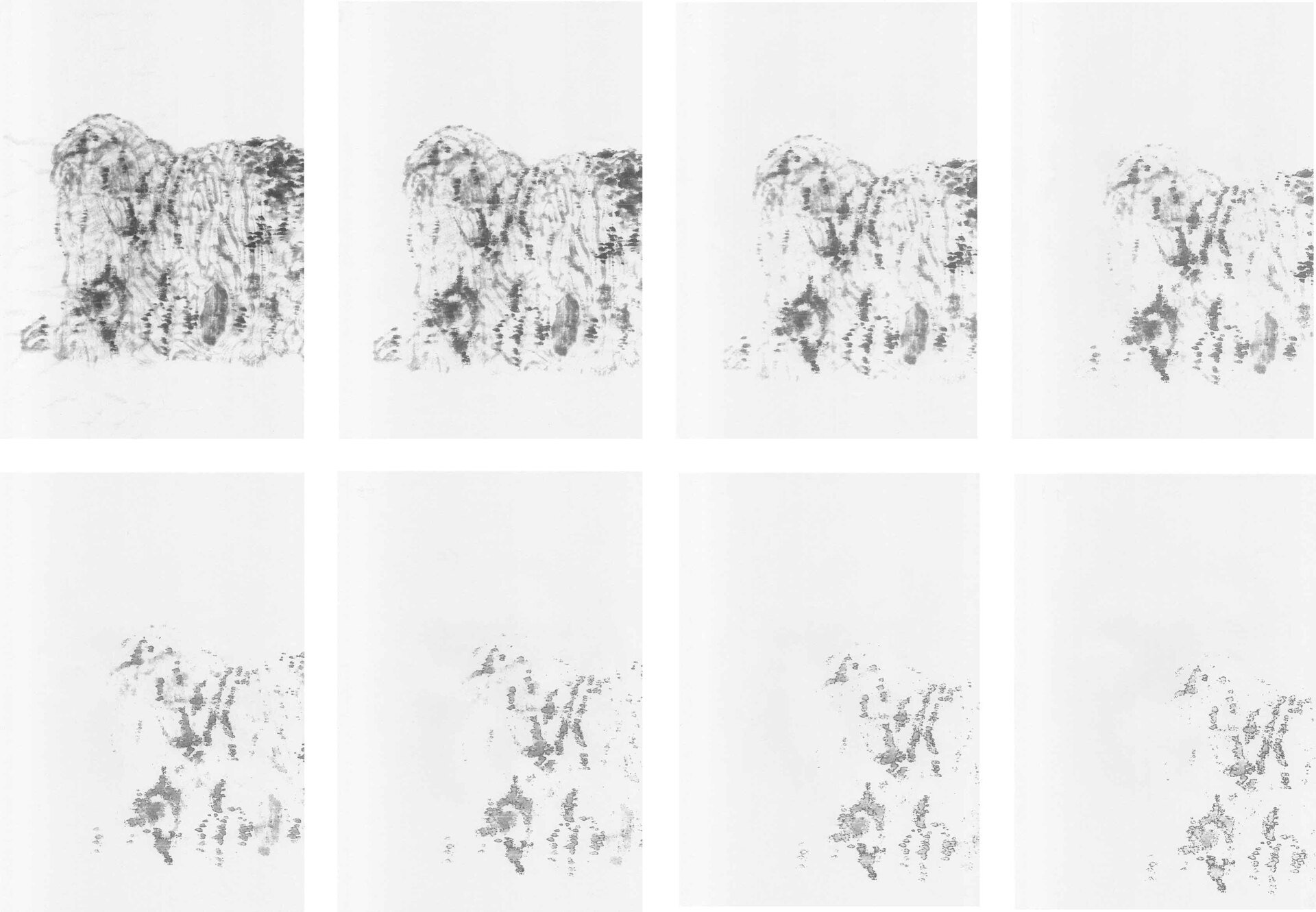
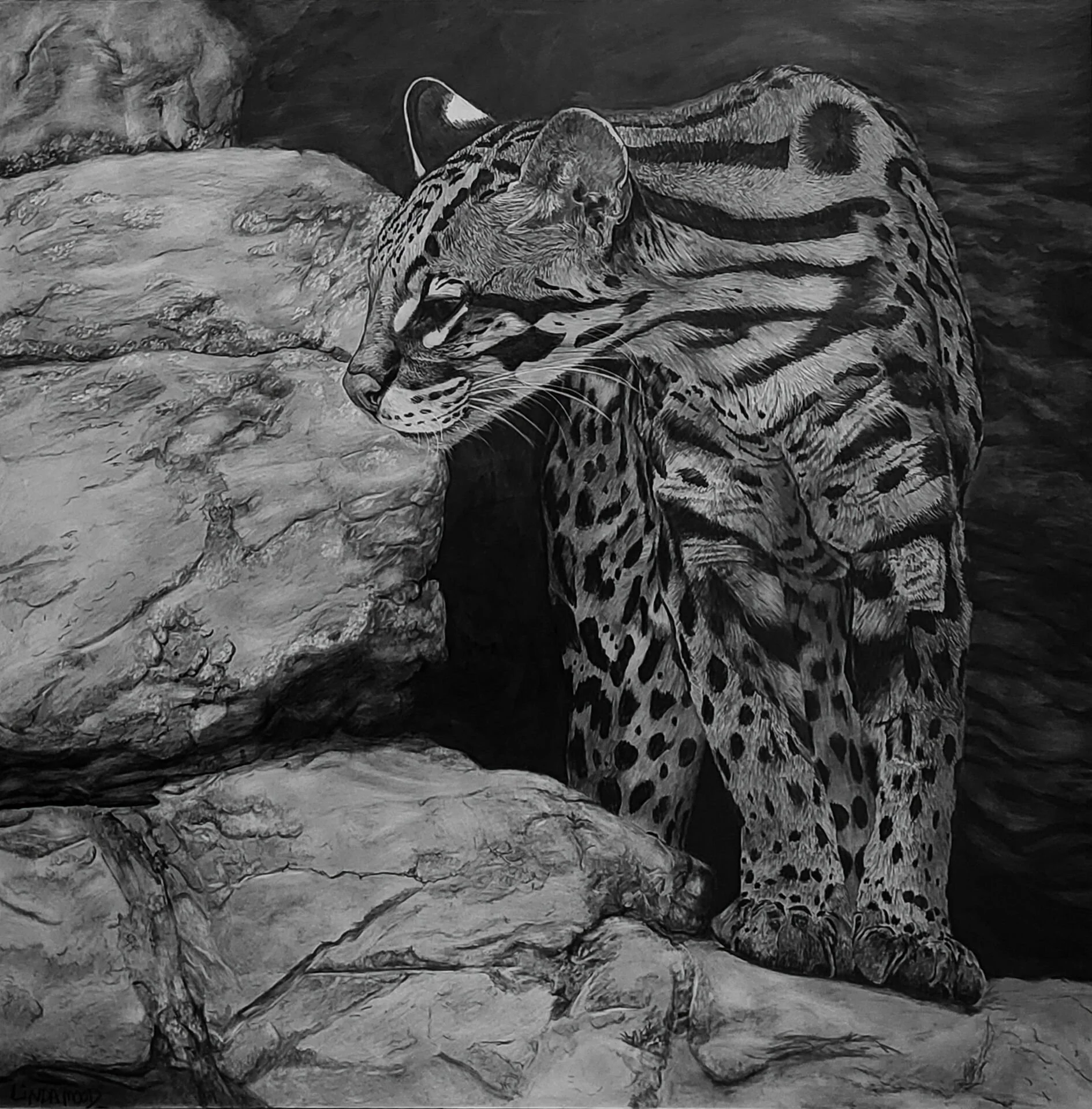
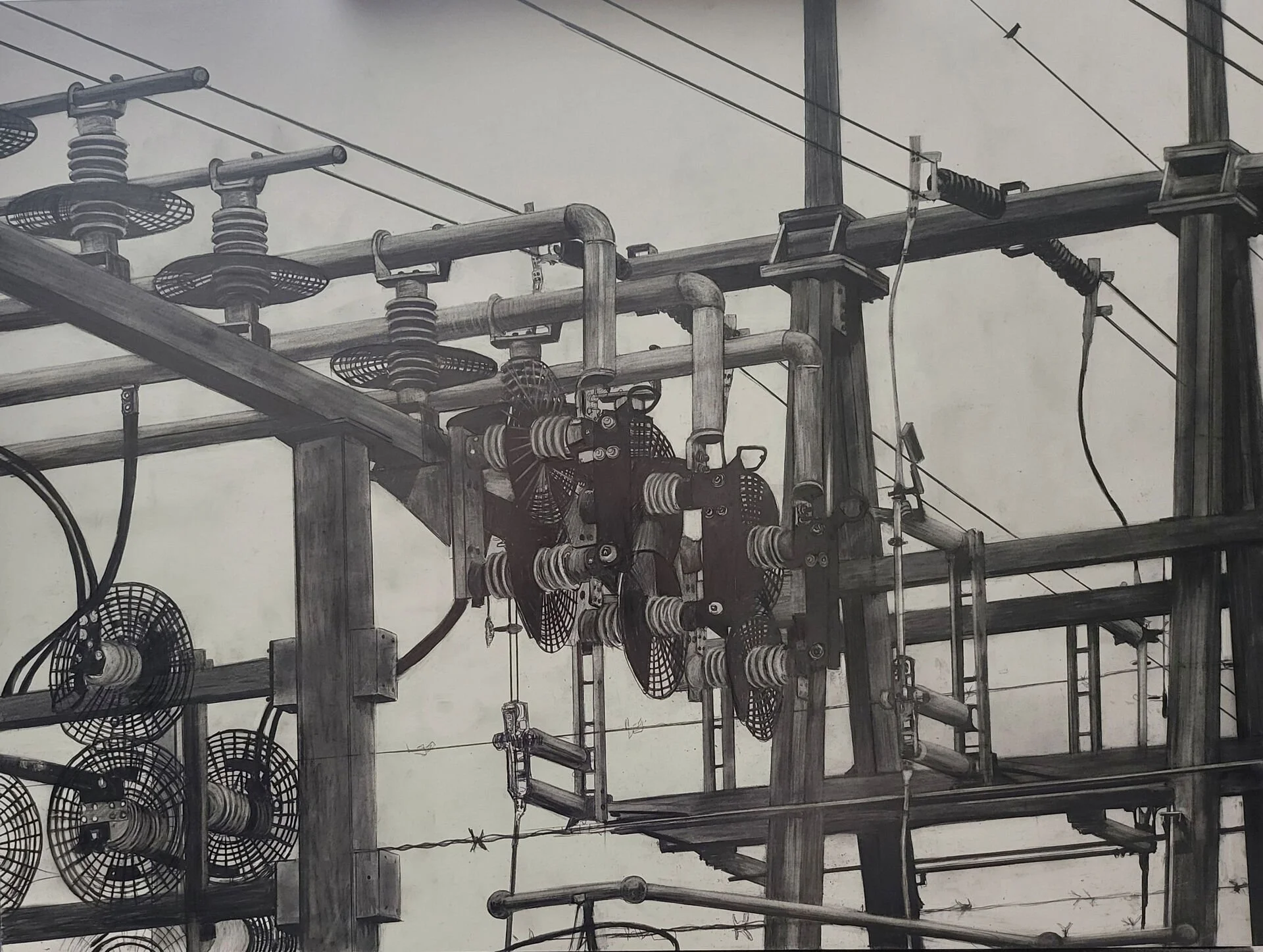
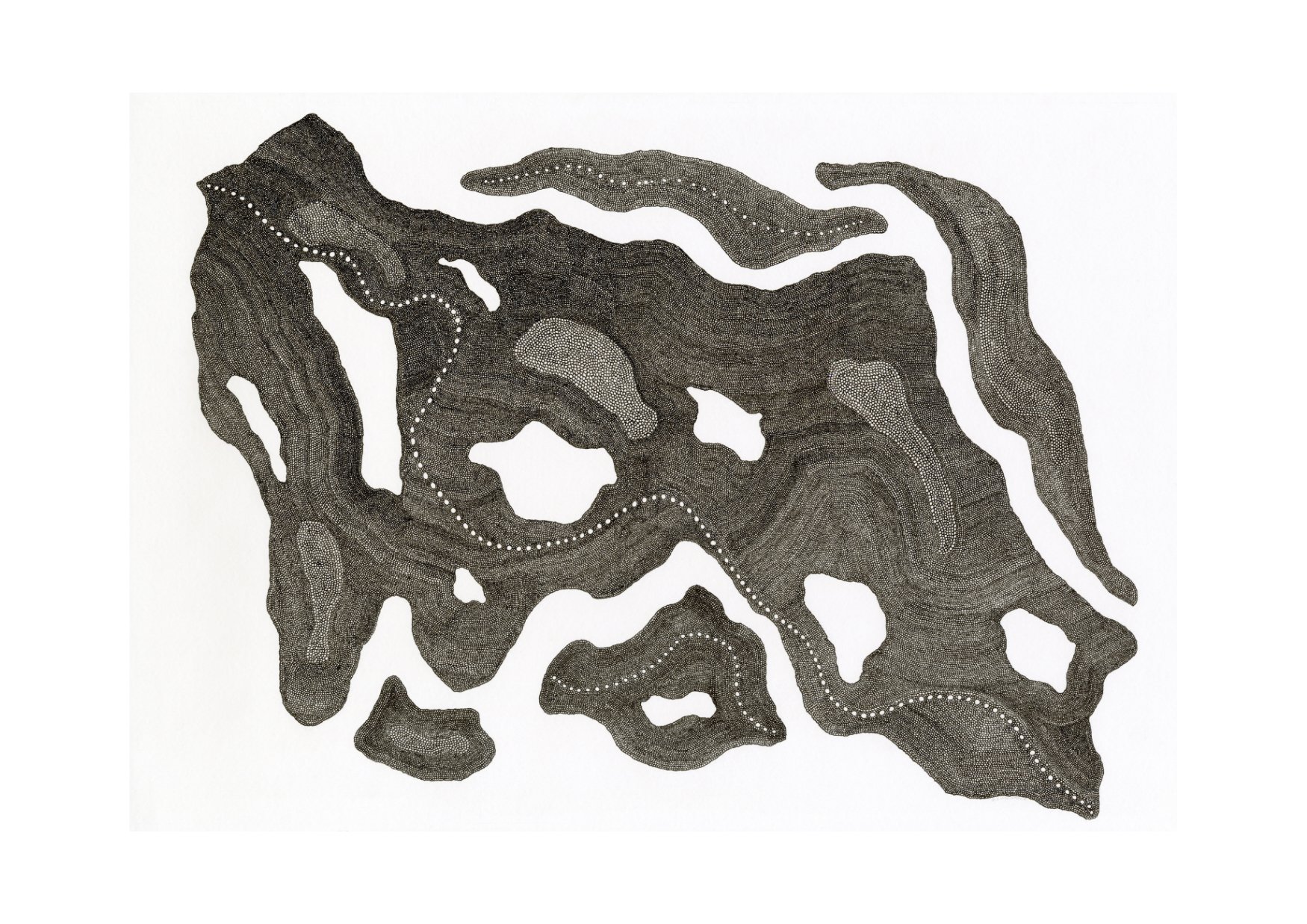
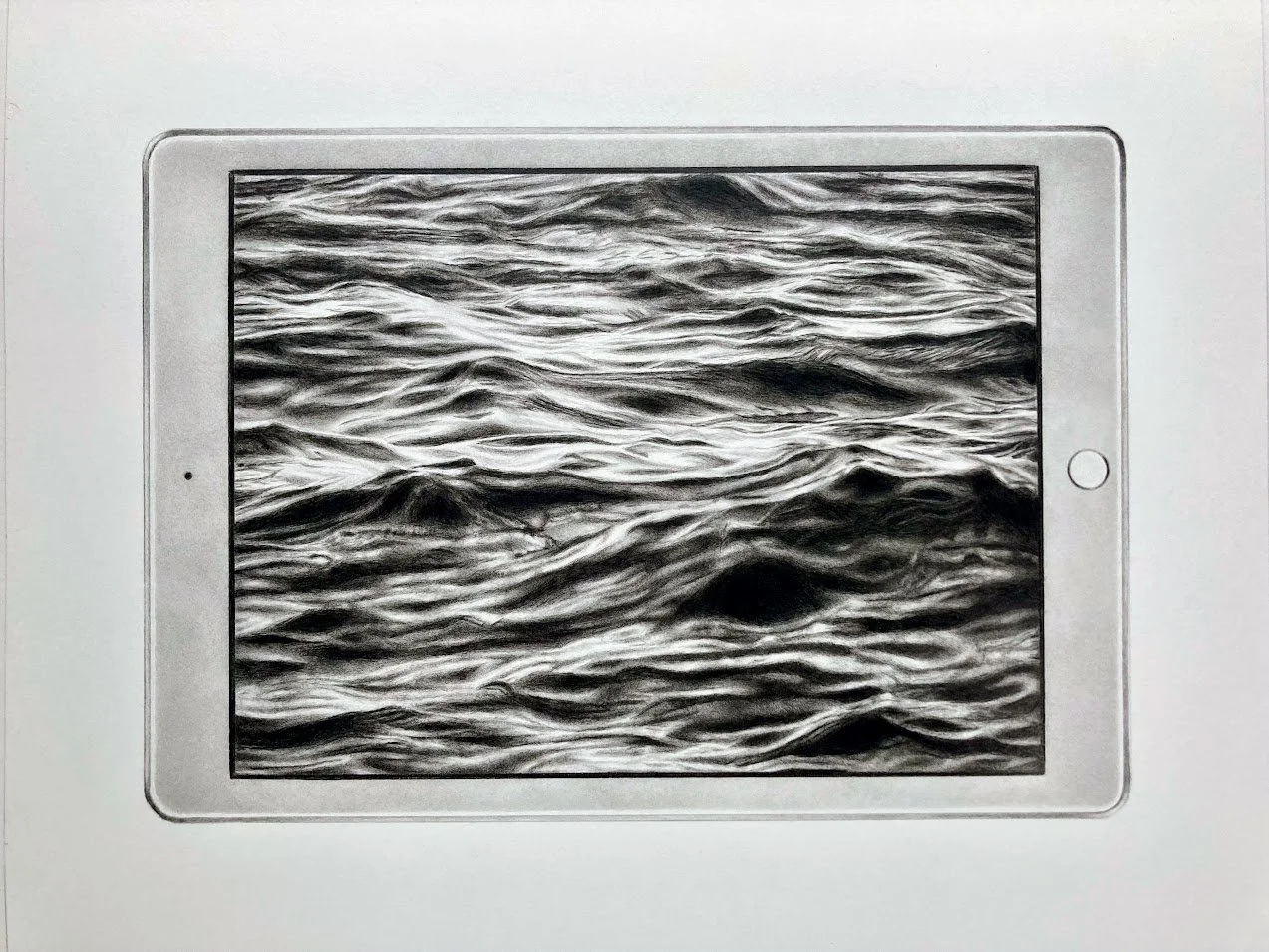
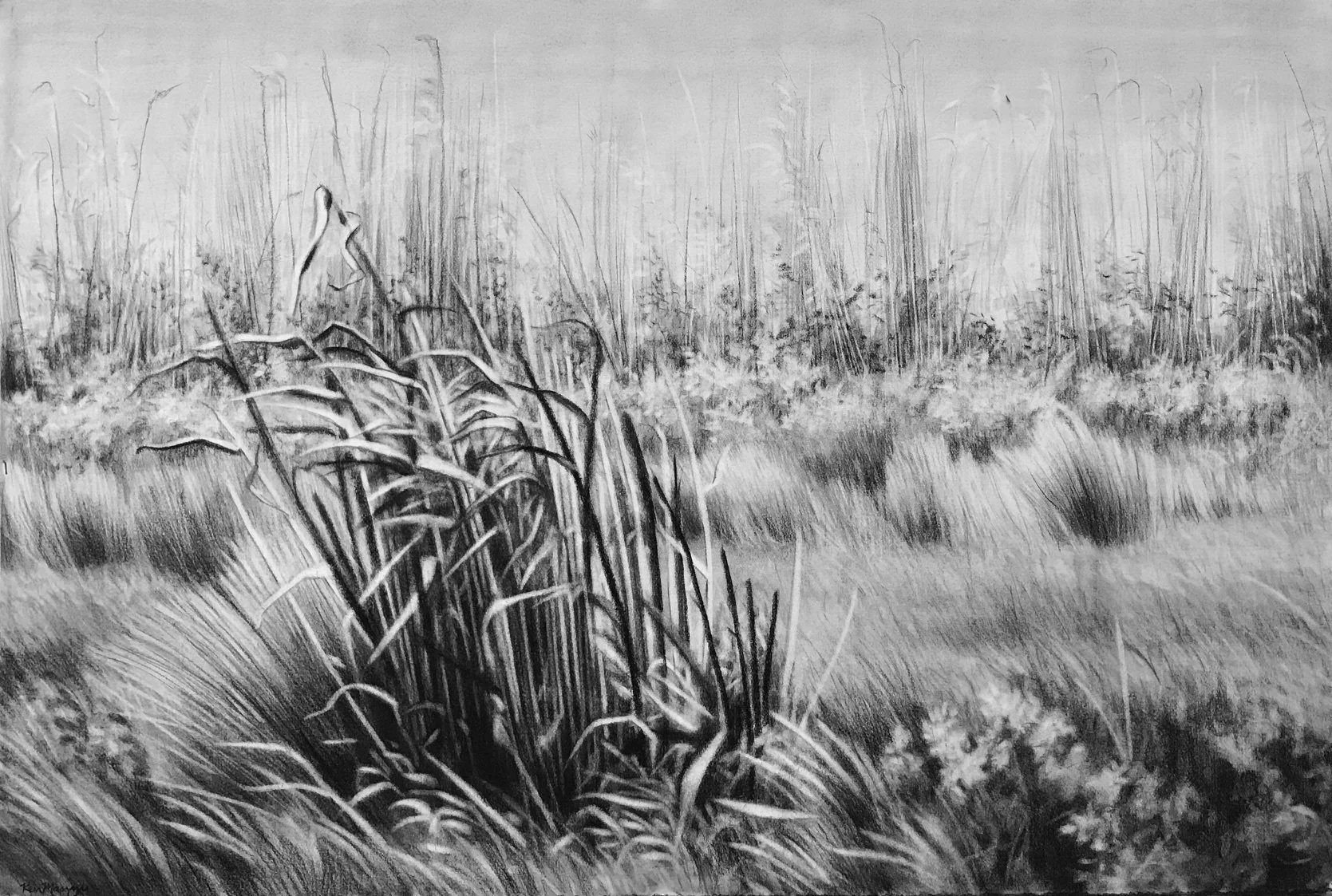
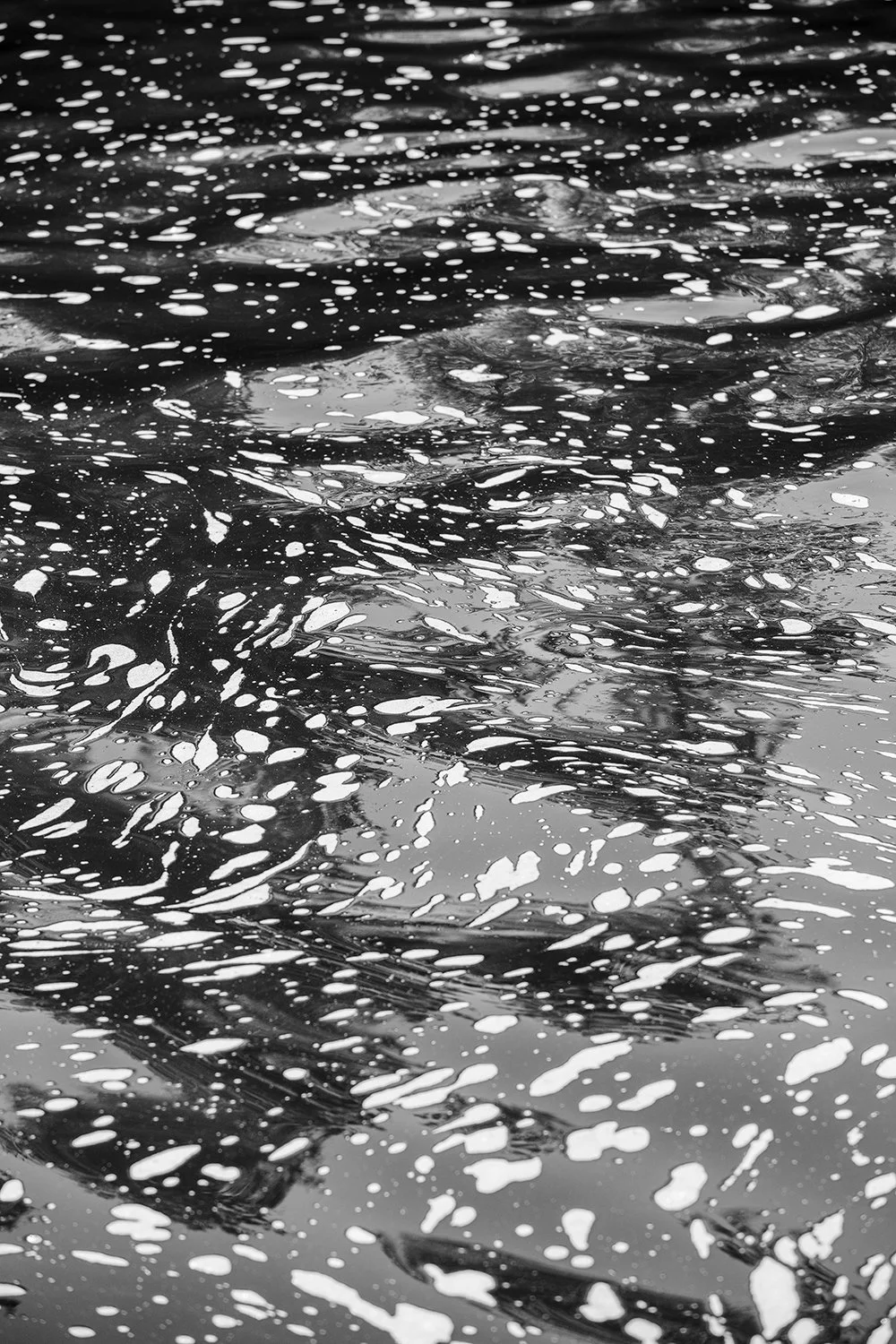
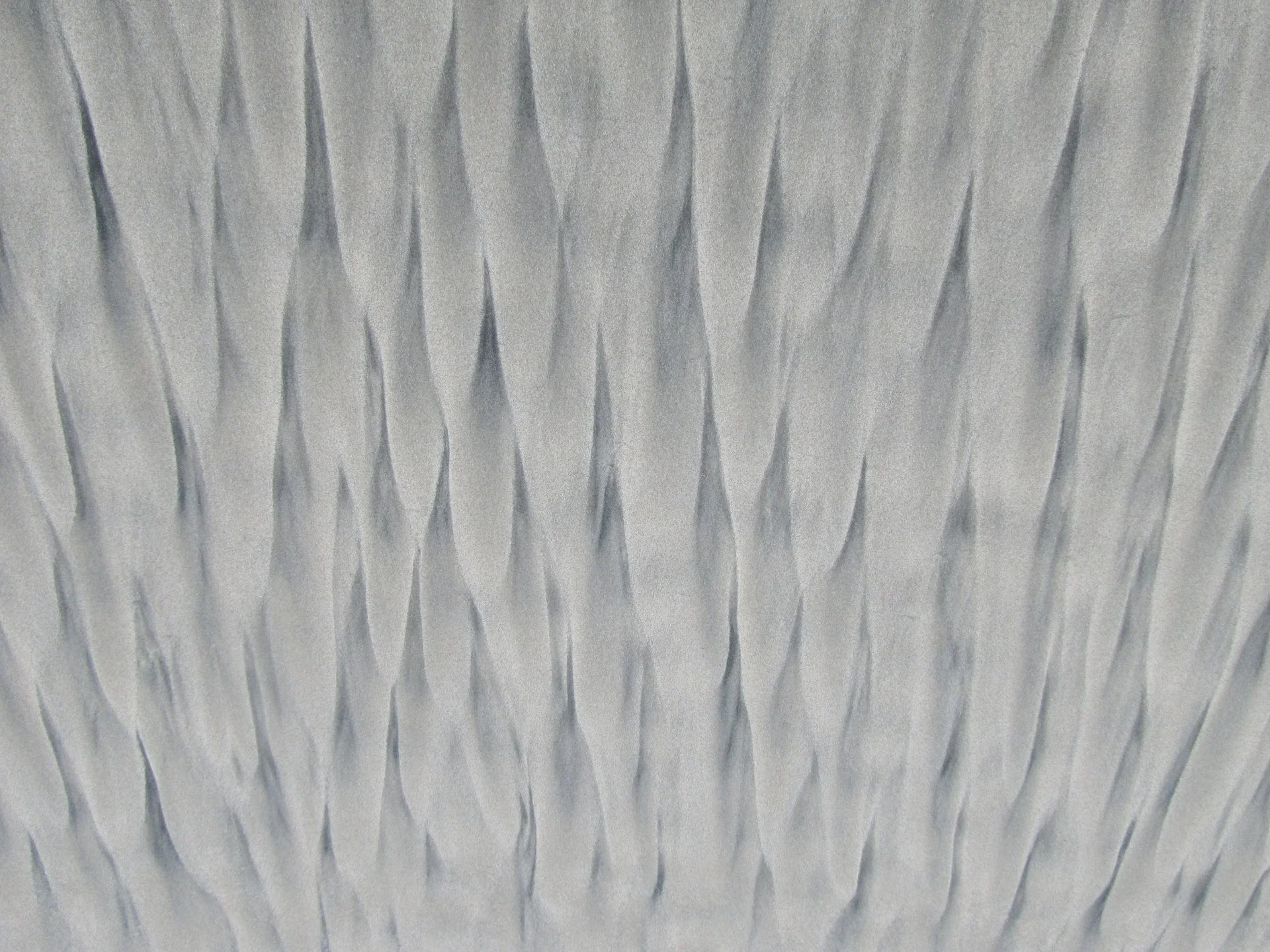
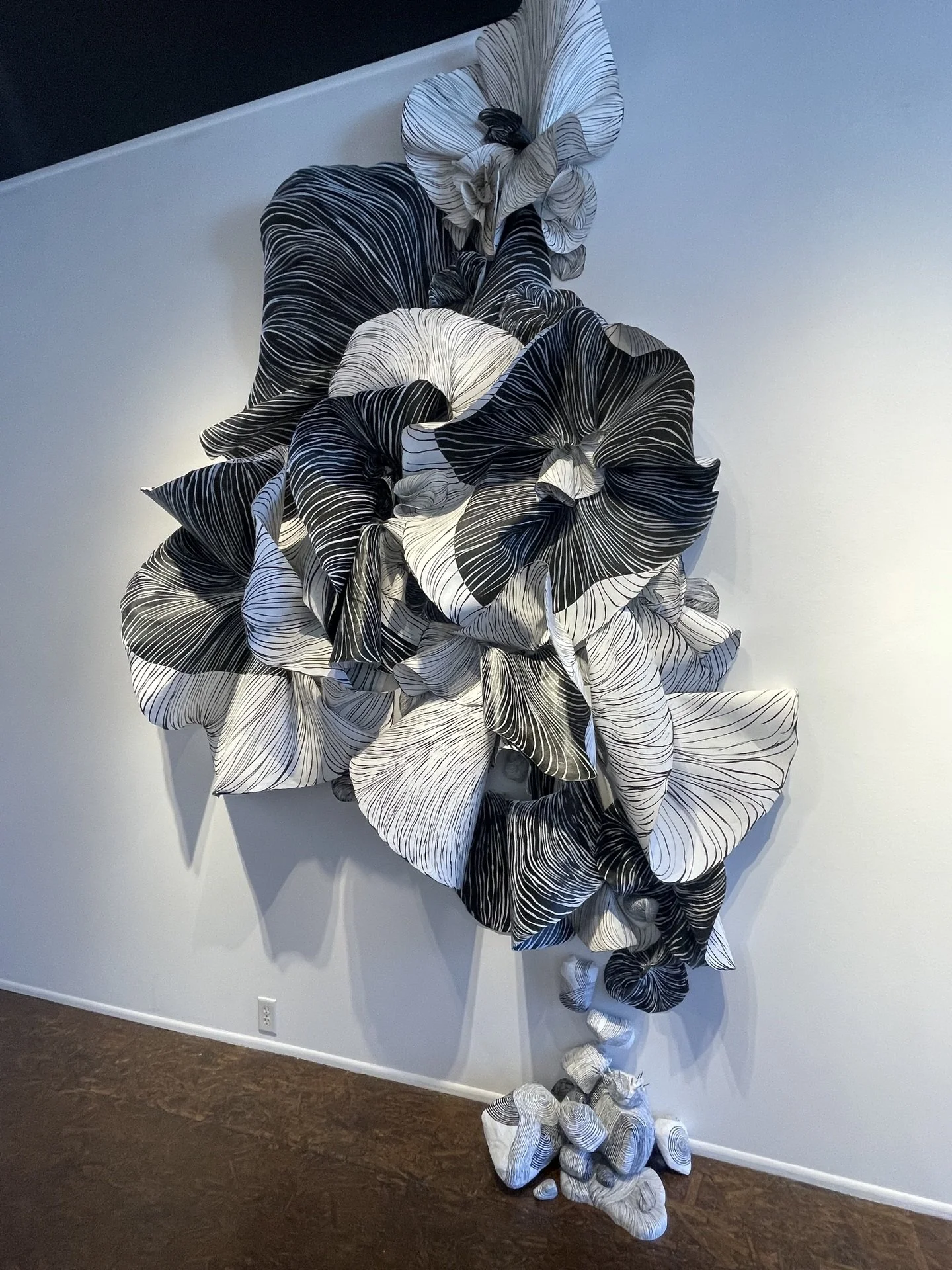
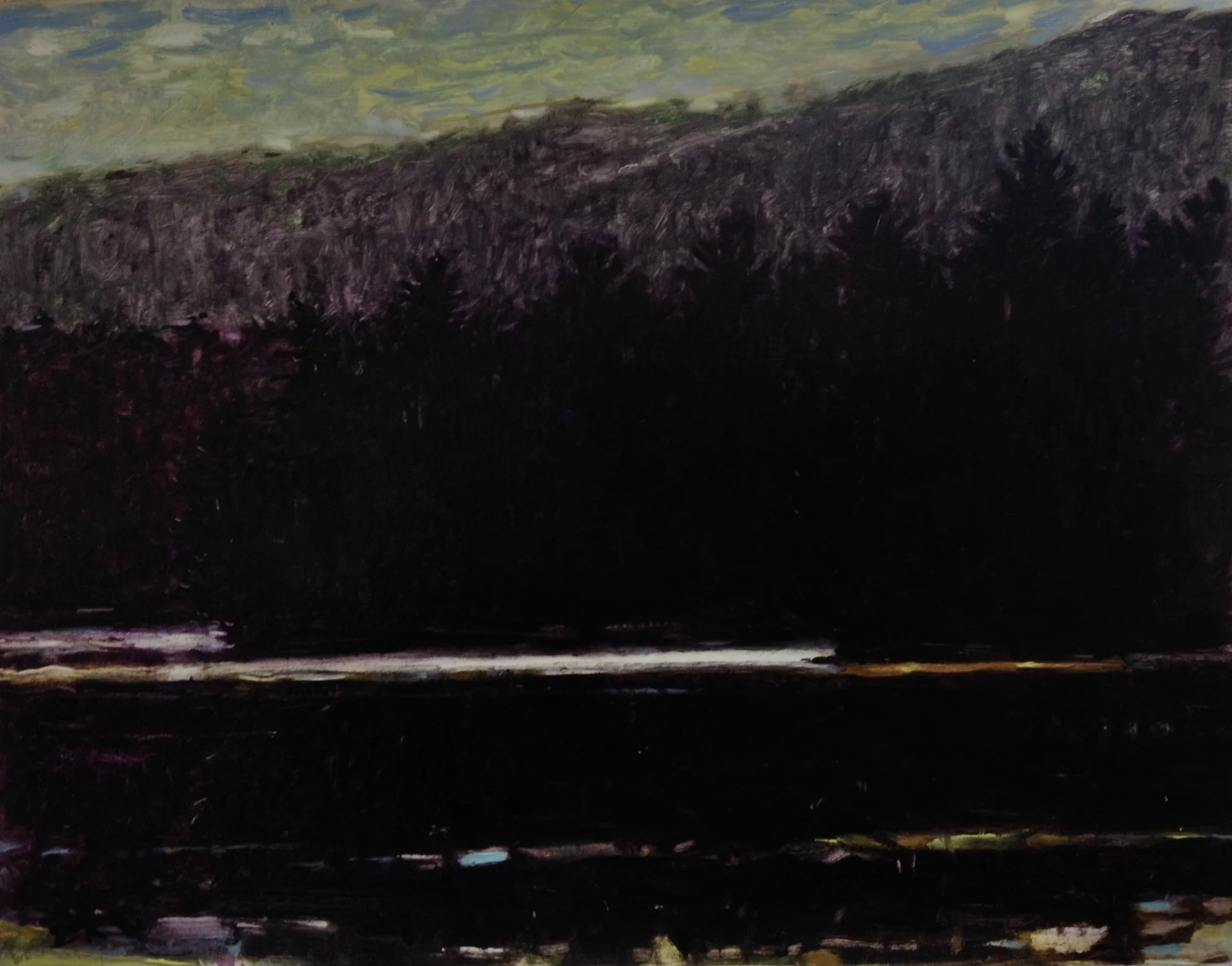
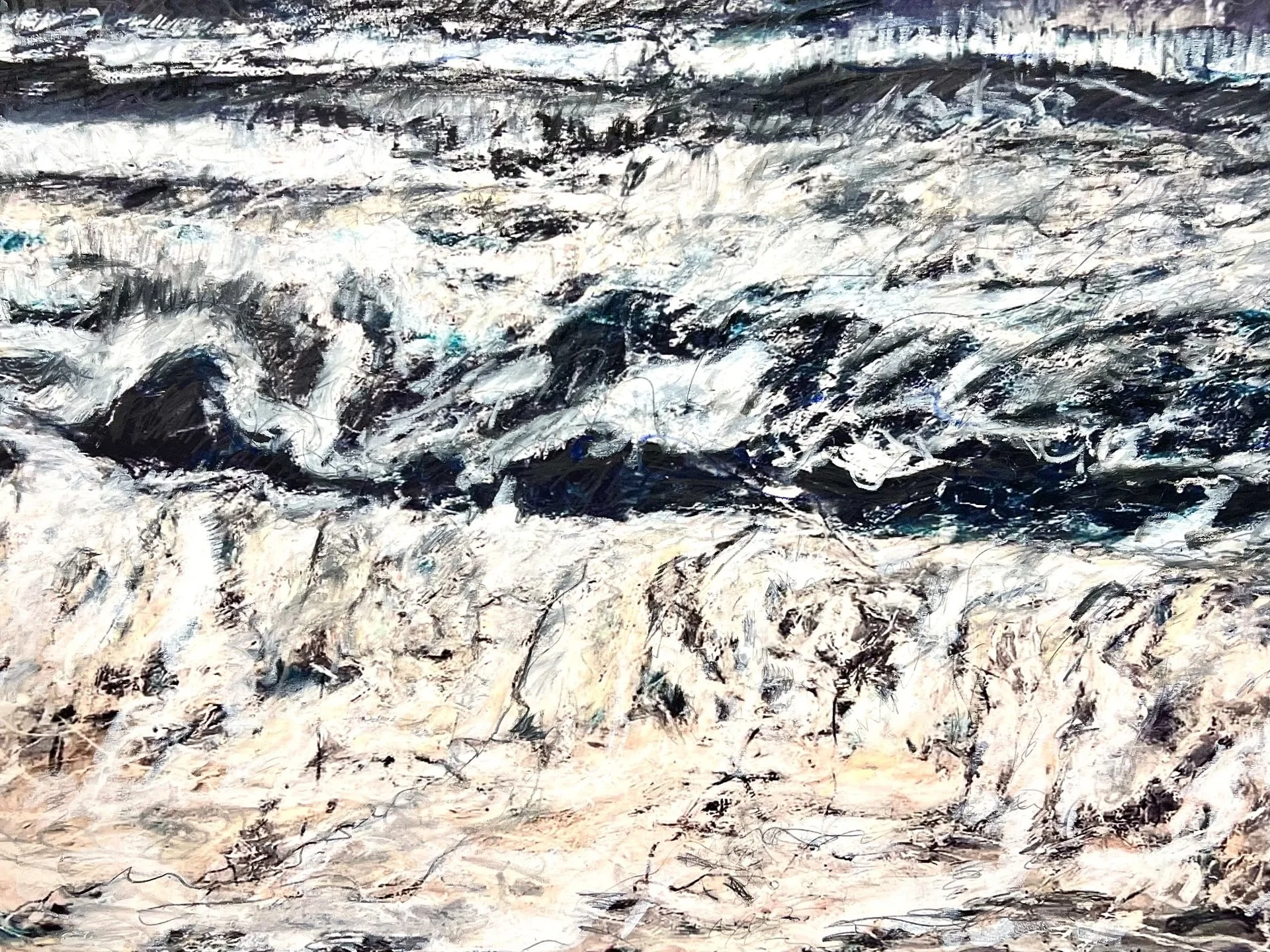
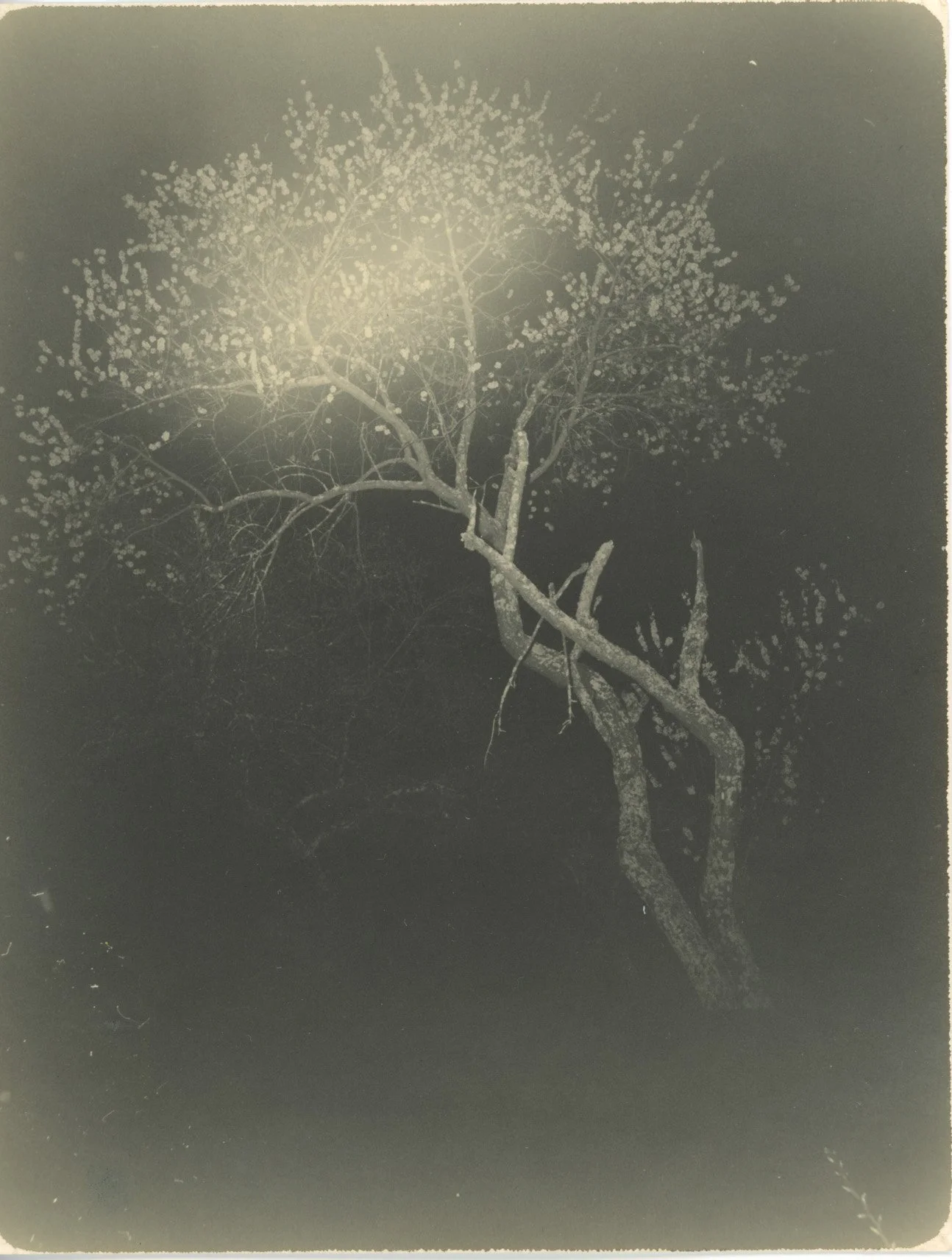
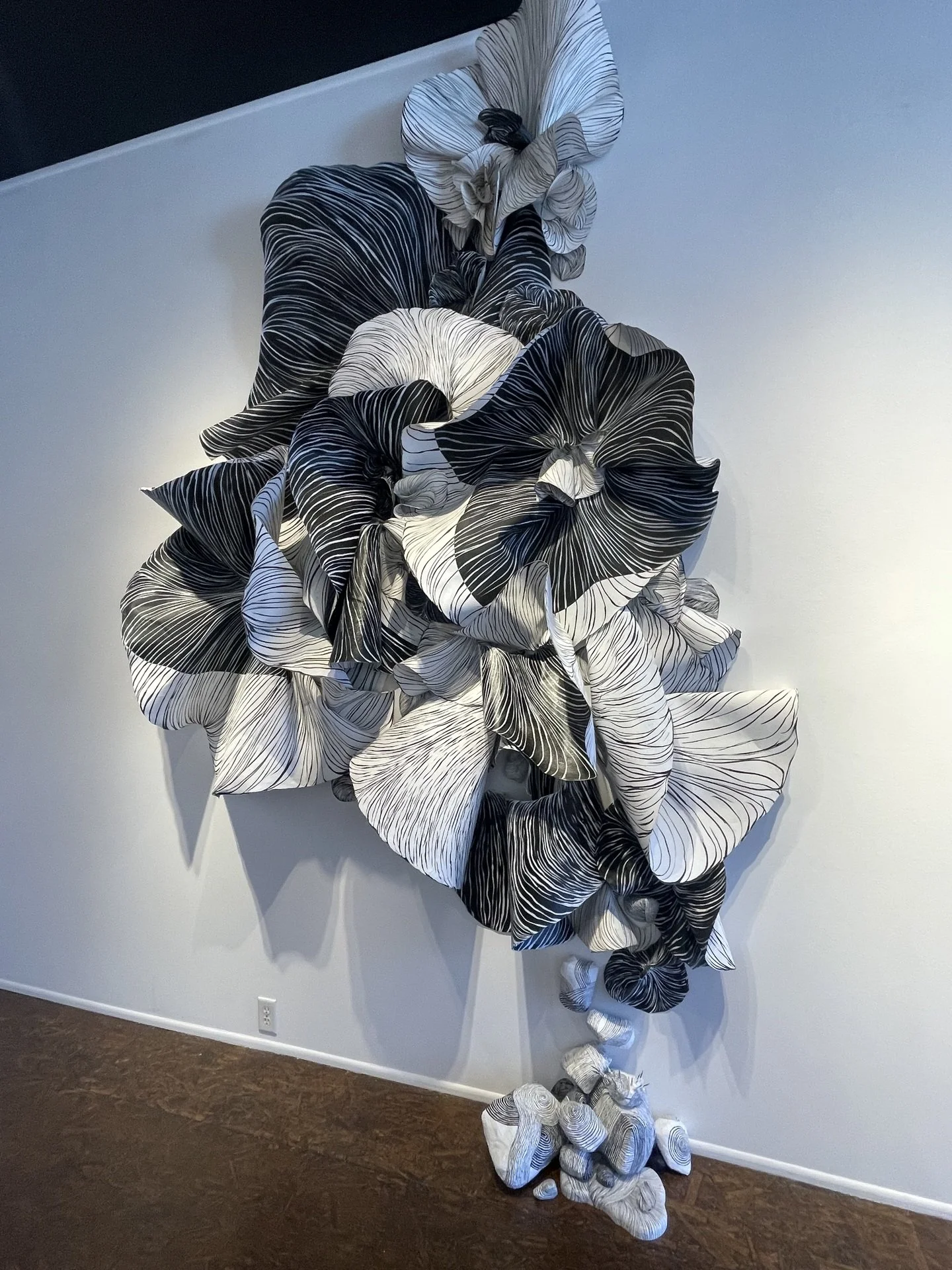
The name Ansel Adams has become synonymous with the monochromatic landscape. The photographer famously captured the grandeur of the American West in black and white. This artist grouping turns that documentary impulse on its head. Instead, these artists reveal an interest in cartography as well as abstracted and technologically mediated landscapes. Sandrine Jacobson’s shadowy oil painting suggests a blending of interior states and the exterior world. Wai Hing Lau repeatedly photocopies one of his paintings, making the craggy image fade and distort. The dual erosion of nature and memory coalesce. Patsy Lindamood applies the same level of detail to her wildlife portraits as to her drawings of man-made infrastructure. Her eye catches the intricacies of both nature and human invention. Shanna-Ann Lindinger uses archival ink on paper to transform memories of Cederberg cloud formations into abstracted landscapes. The result feels like a mapping of psychological terrain. Kristina Martino’s hyperrealist drawing depicts waves atop a screen. Our devices offer a frame--as does art--which mediates our experience of the environment. Ken Mazzu’s Mystical Marshland finds a spiritual element in the act of close looking and translating into art one’s close environs: here, the Upper Texas Coast where the artist has made his home for over 30 years. Rosella Mosteller trains her lens on the dynamic, spotted surface of a Montana river. Nature’s patterns and flow offer information both aesthetic and scientific. Harry Newman’s photograph likewise captures natural patterns in the sand. The artist zooms in on a landscape that has offered him refuge. An aura of both solace and loss emerges from his composition. Dan Roach’s oil painting envisions a mass of black forest and the body of water that seems one with the dark trees. Notions of reflection and absorption, in nature and life, result. Harriet Silverstein takes inspiration from the light and shadows of South Florida. Her layered painting captures the power and expressiveness of the waves themselves. Xinshuo Zhuo’s toned gelatin silver print finds light and magic in the image of a tree. The artist uses alternative photographic processes to unearth metaphors and memories related to East Asian diaspora. Maggie Nowinski’s mixed media floral forms both crawl up the wall and are weighted down by stones. The work likens the gallery space to a garden, both carefully manicured and full of possibility.

Wall 5
Kevin Bartlett / Marna Bell / Justin Fondrie / Camilo González / Lori Murphy / Merritt Spangler / Mike Quon / Nell Breyer / Dan Moras
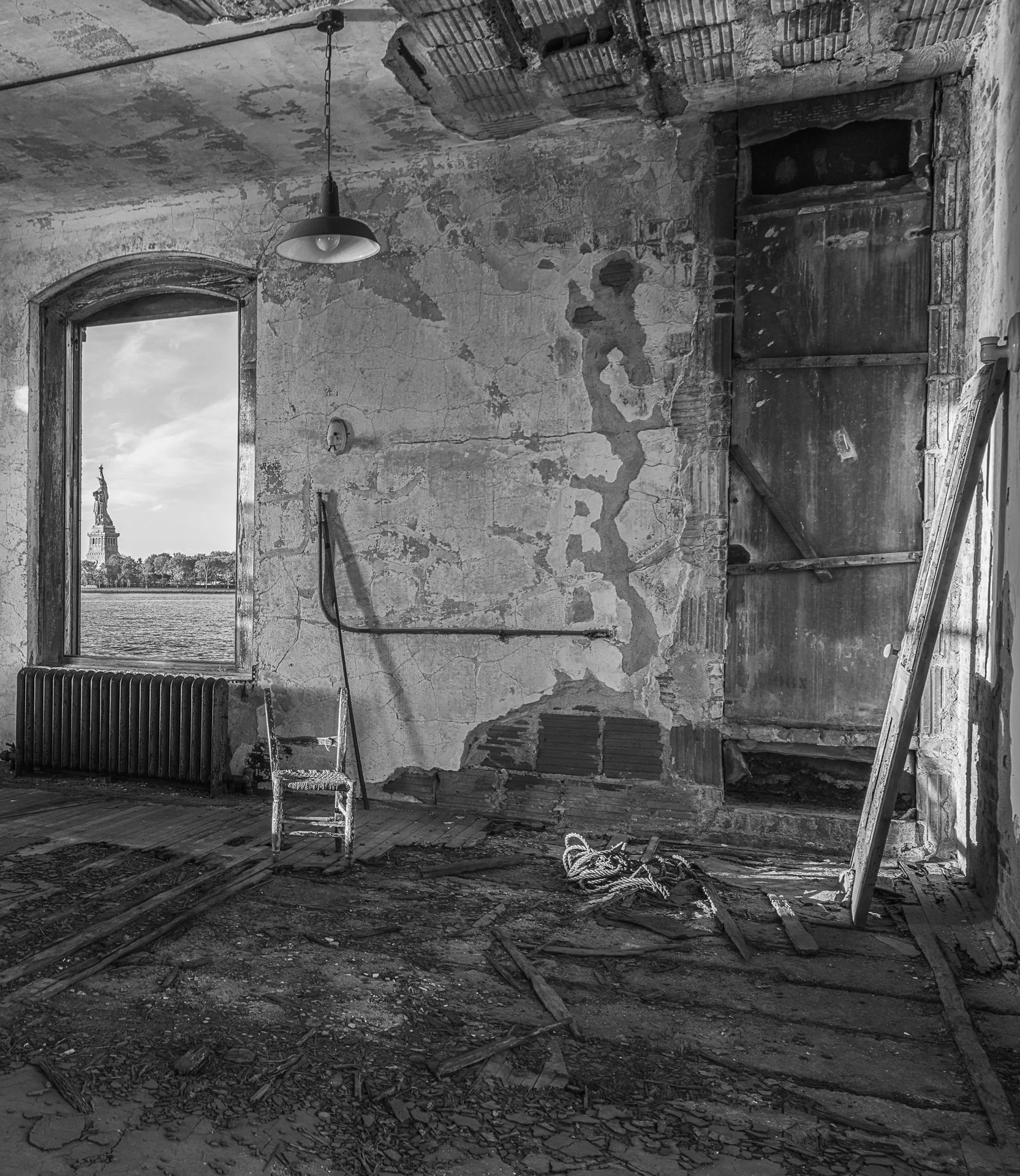
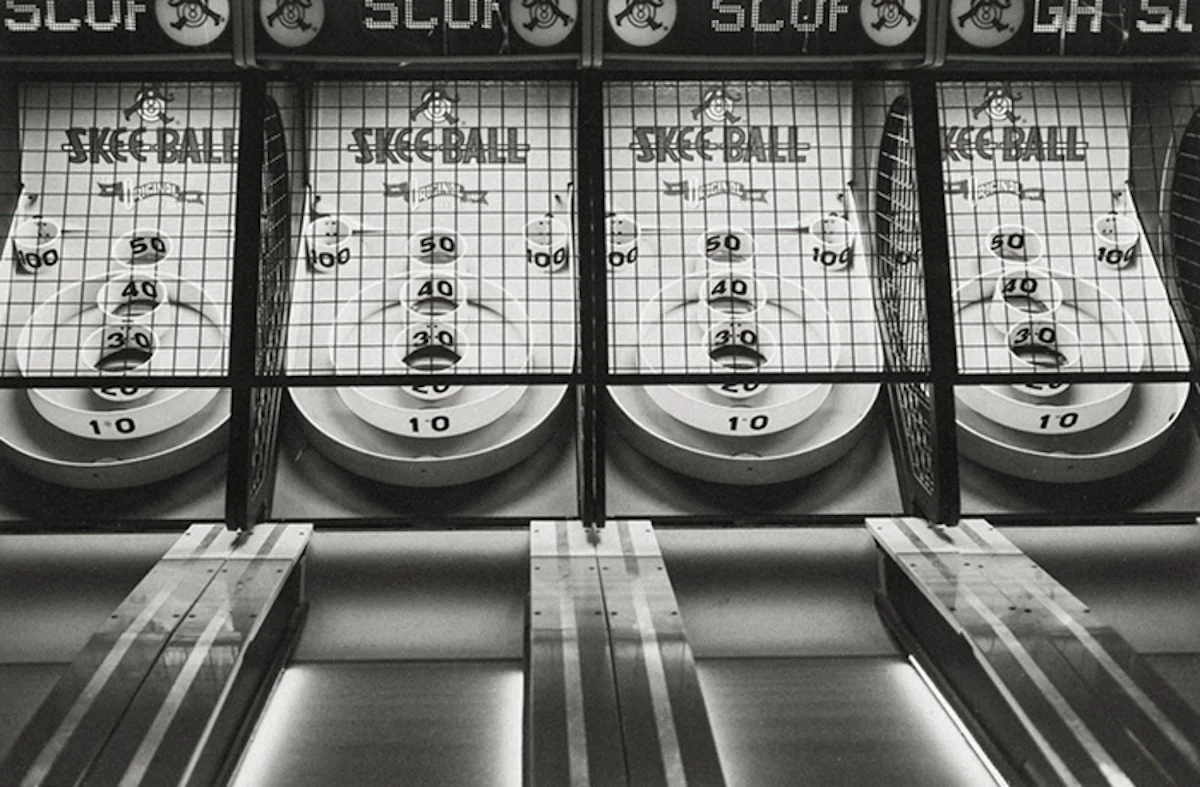
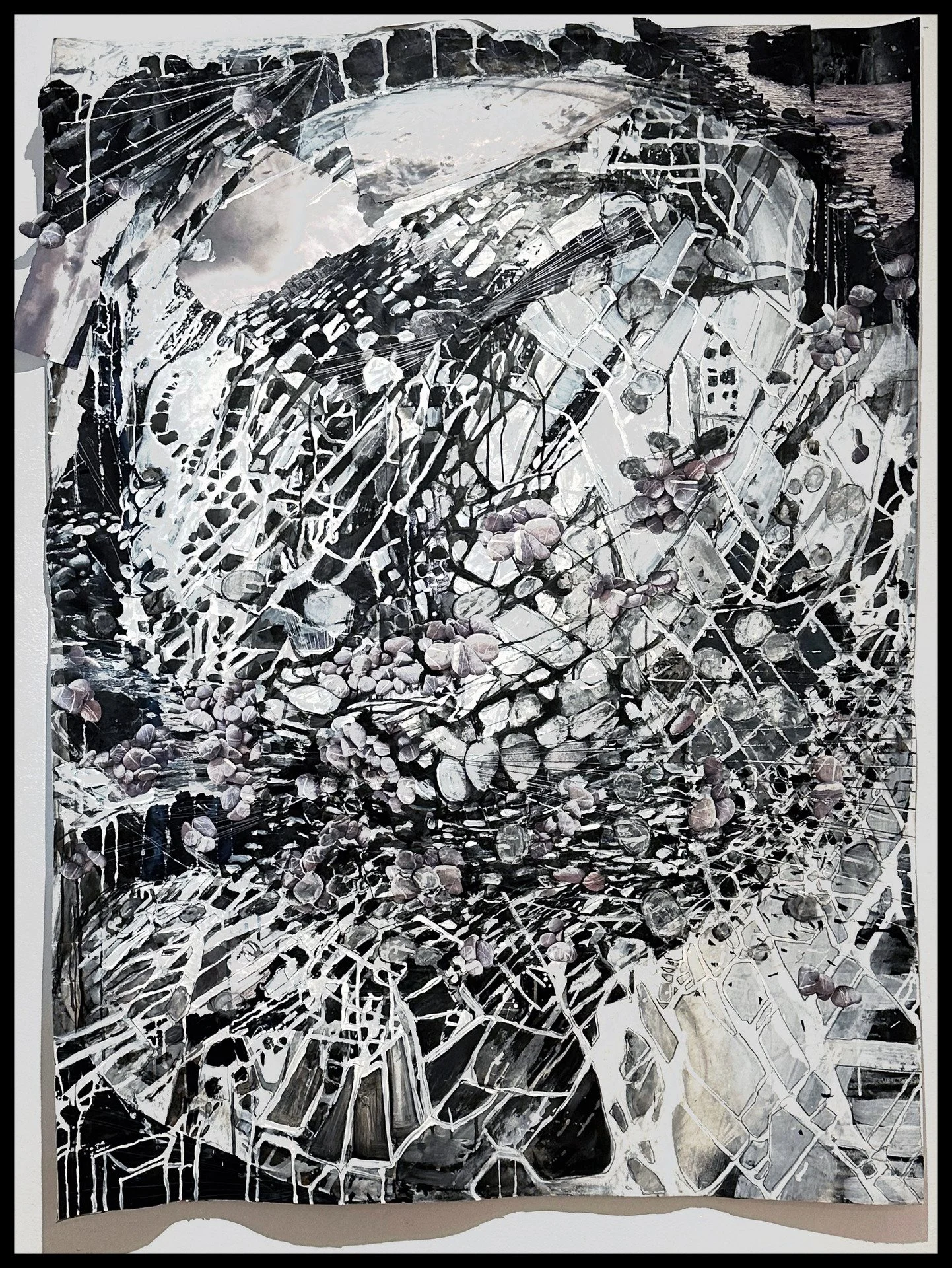
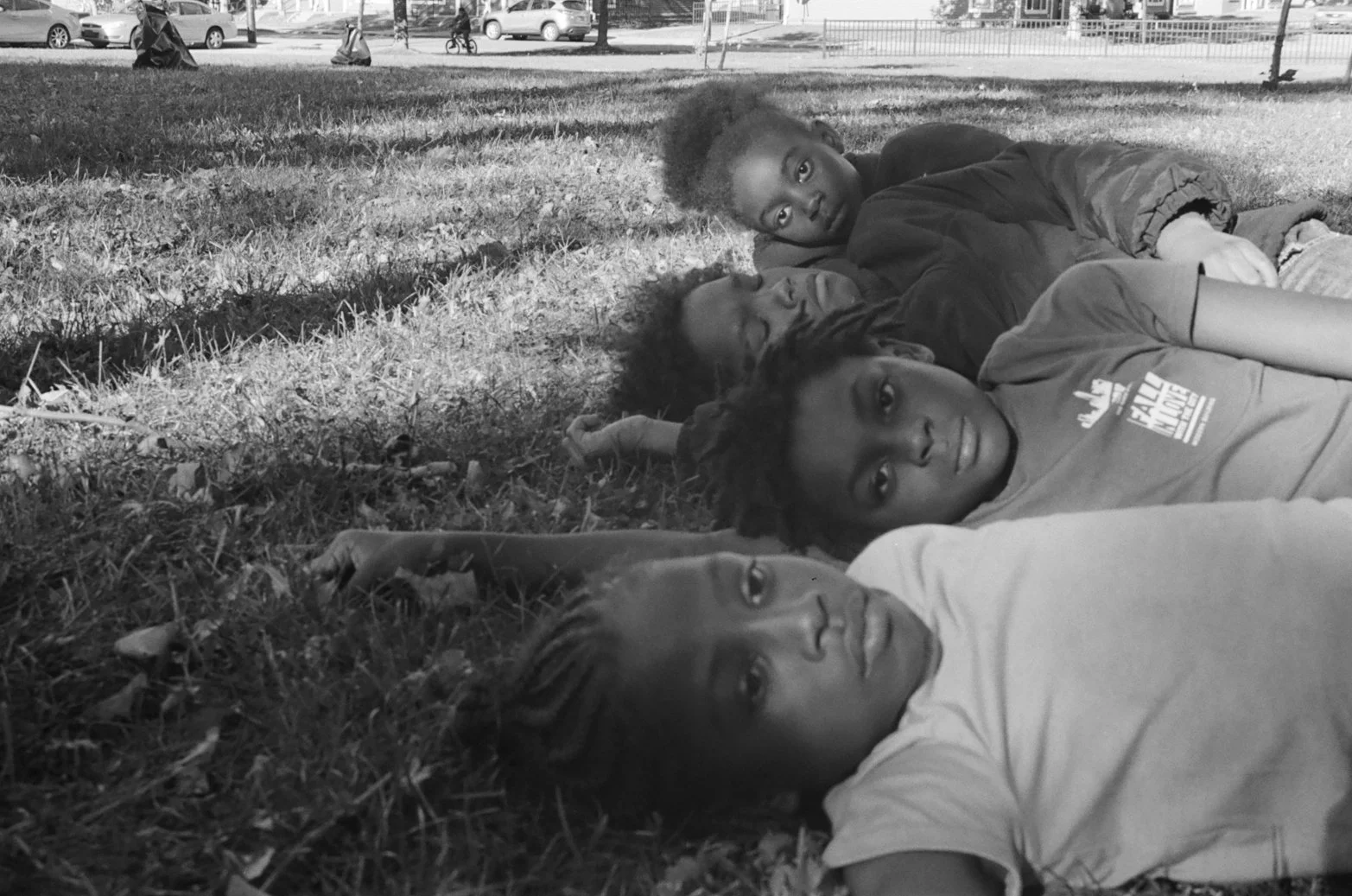
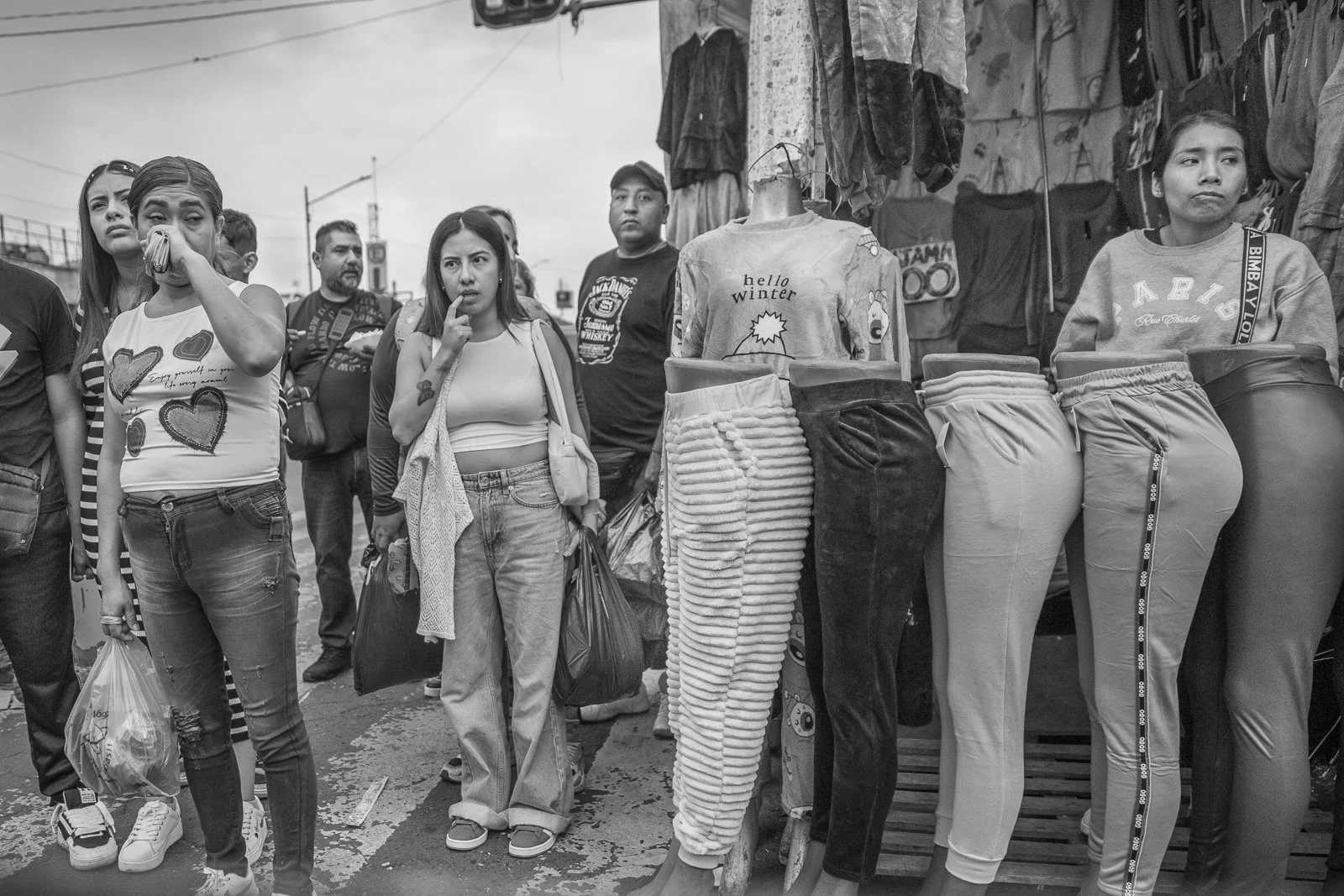
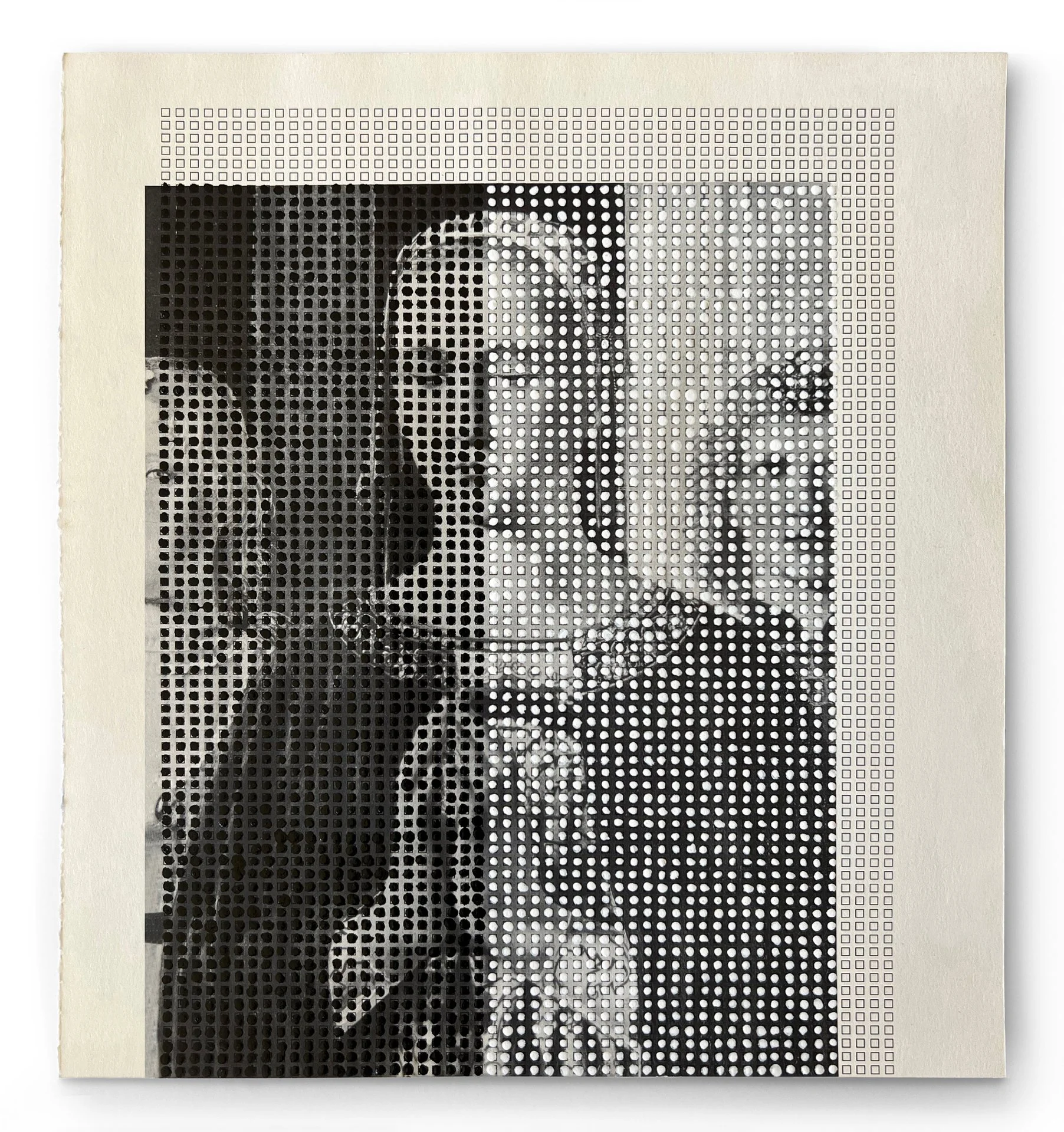
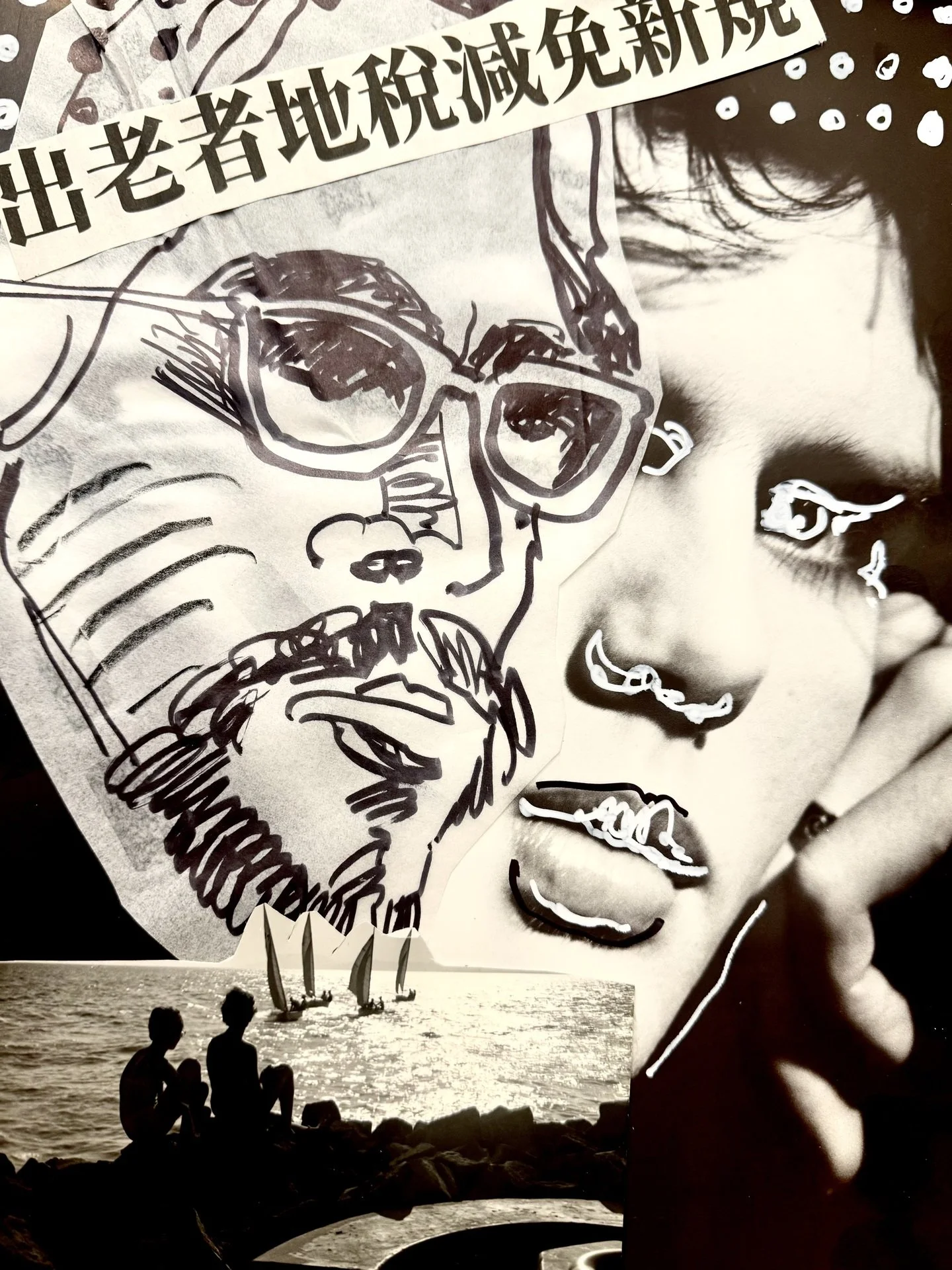
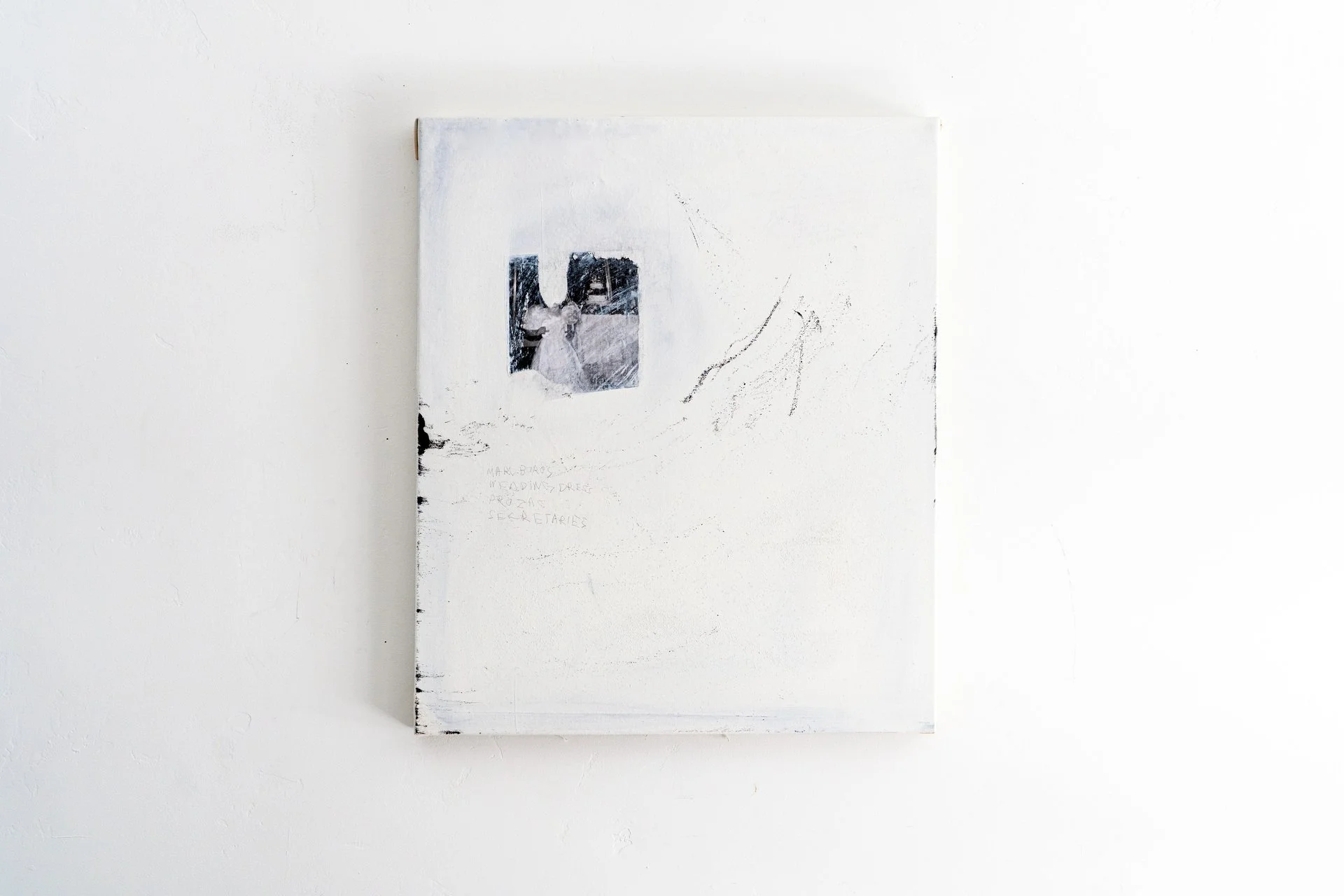
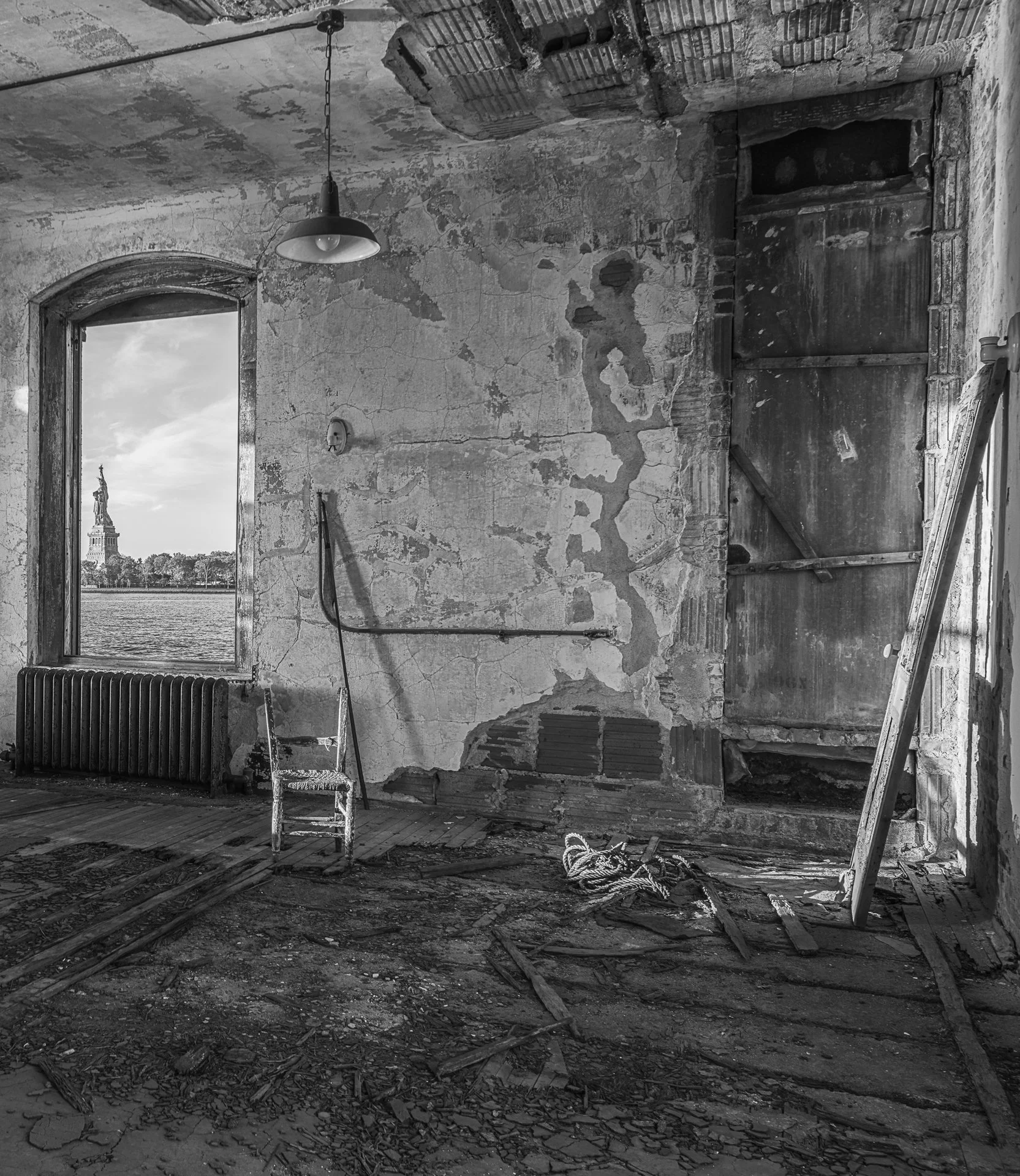
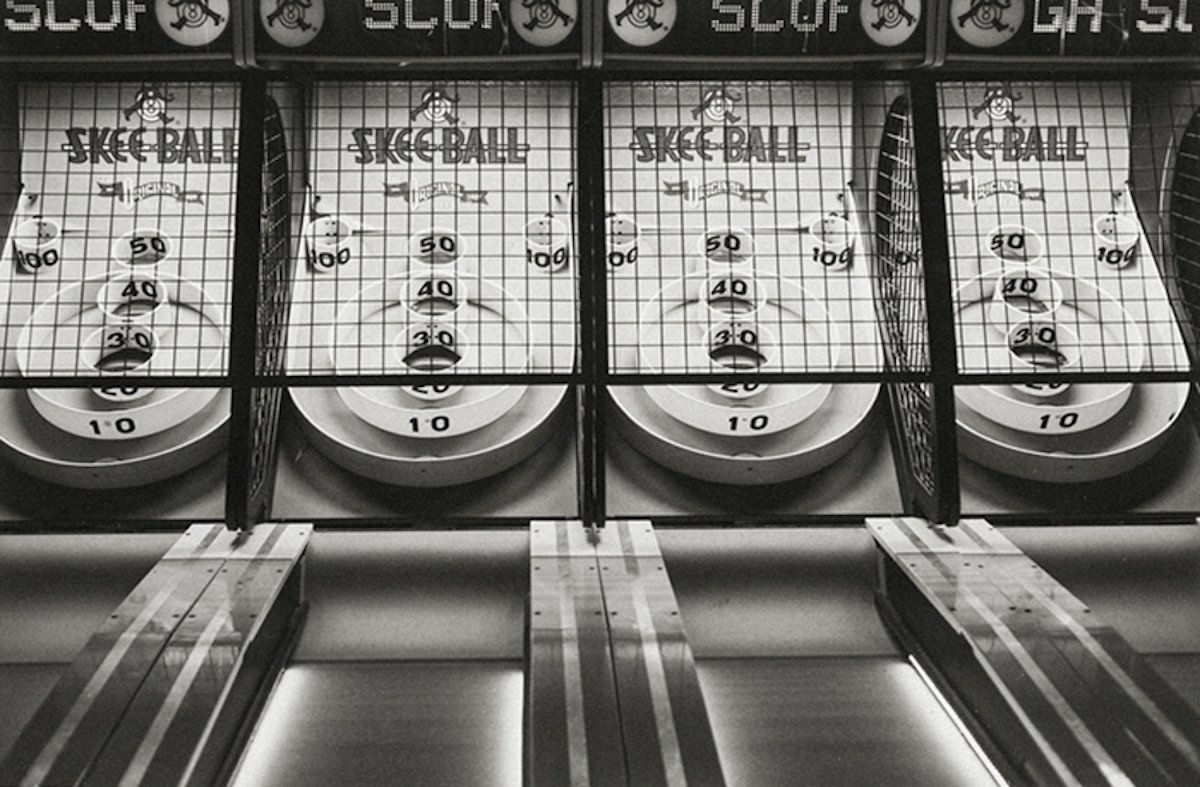
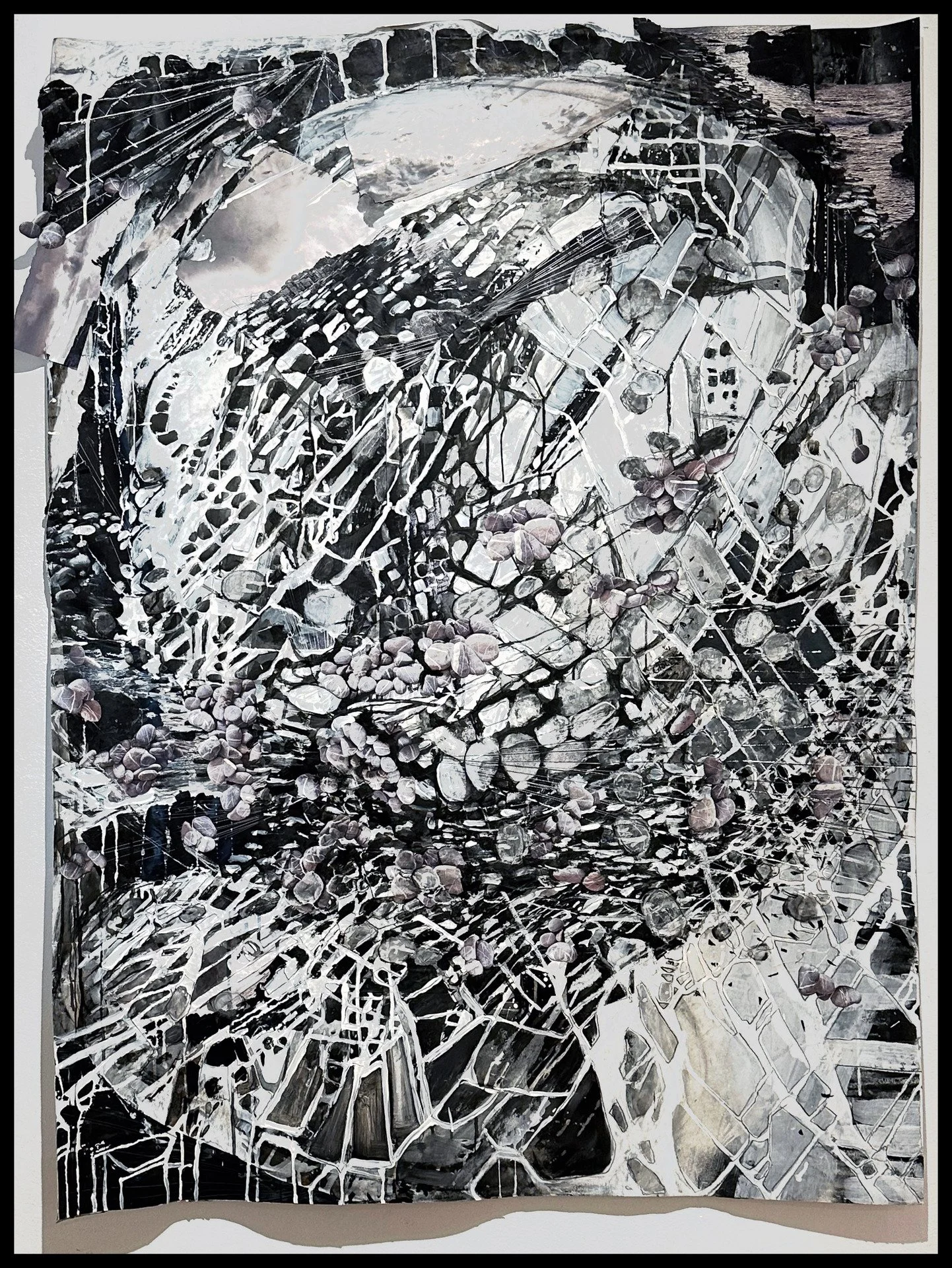
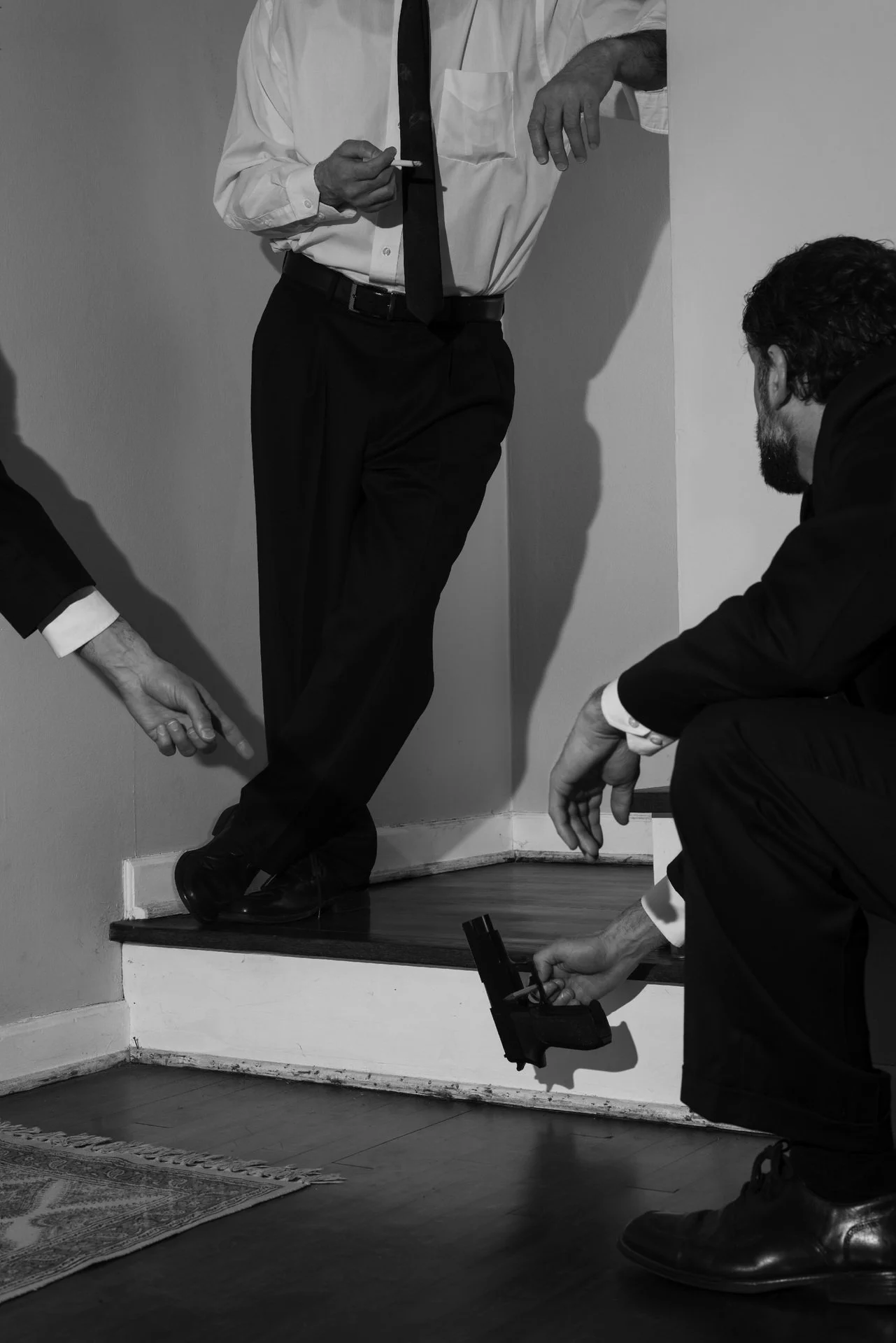
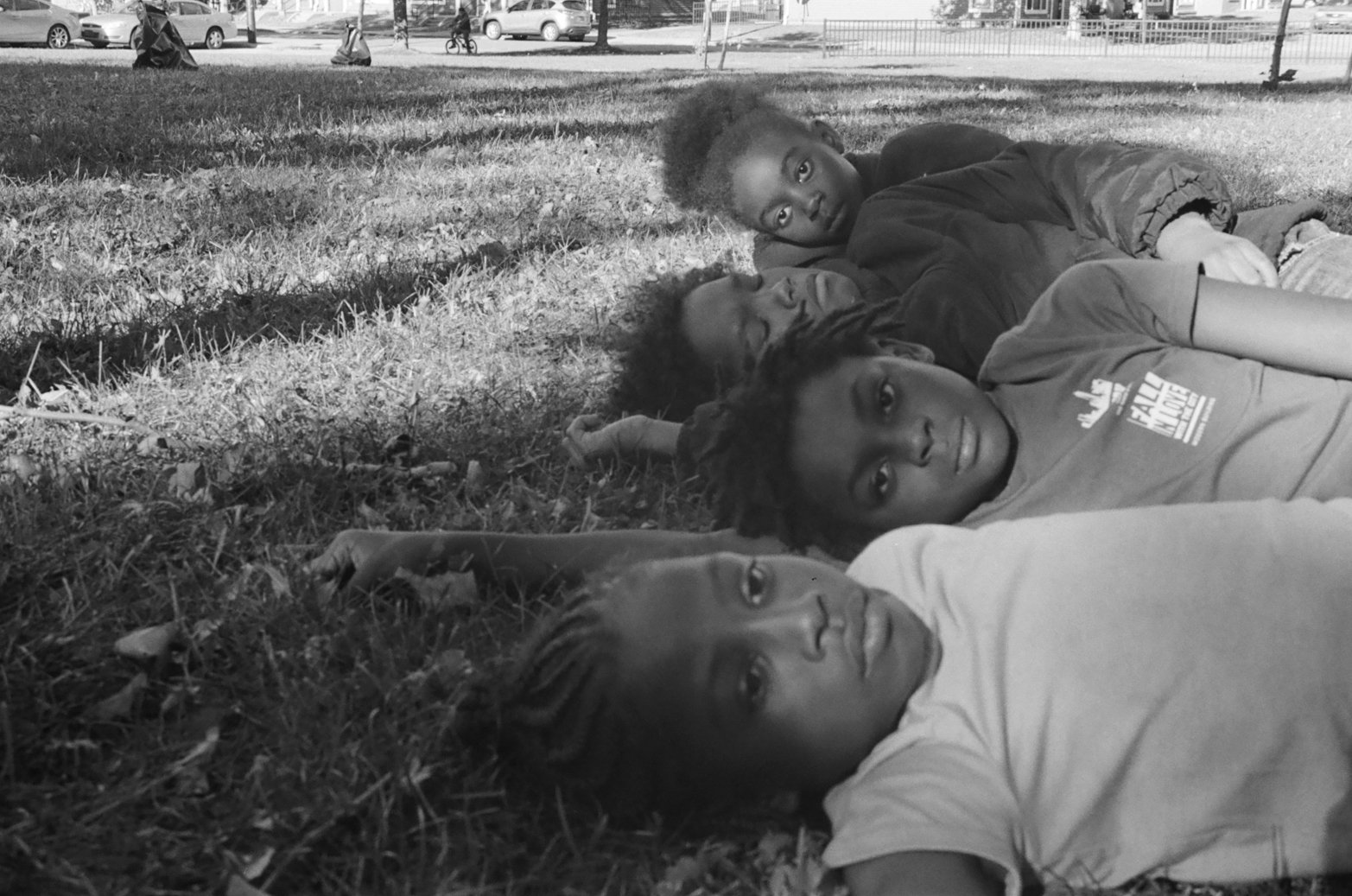
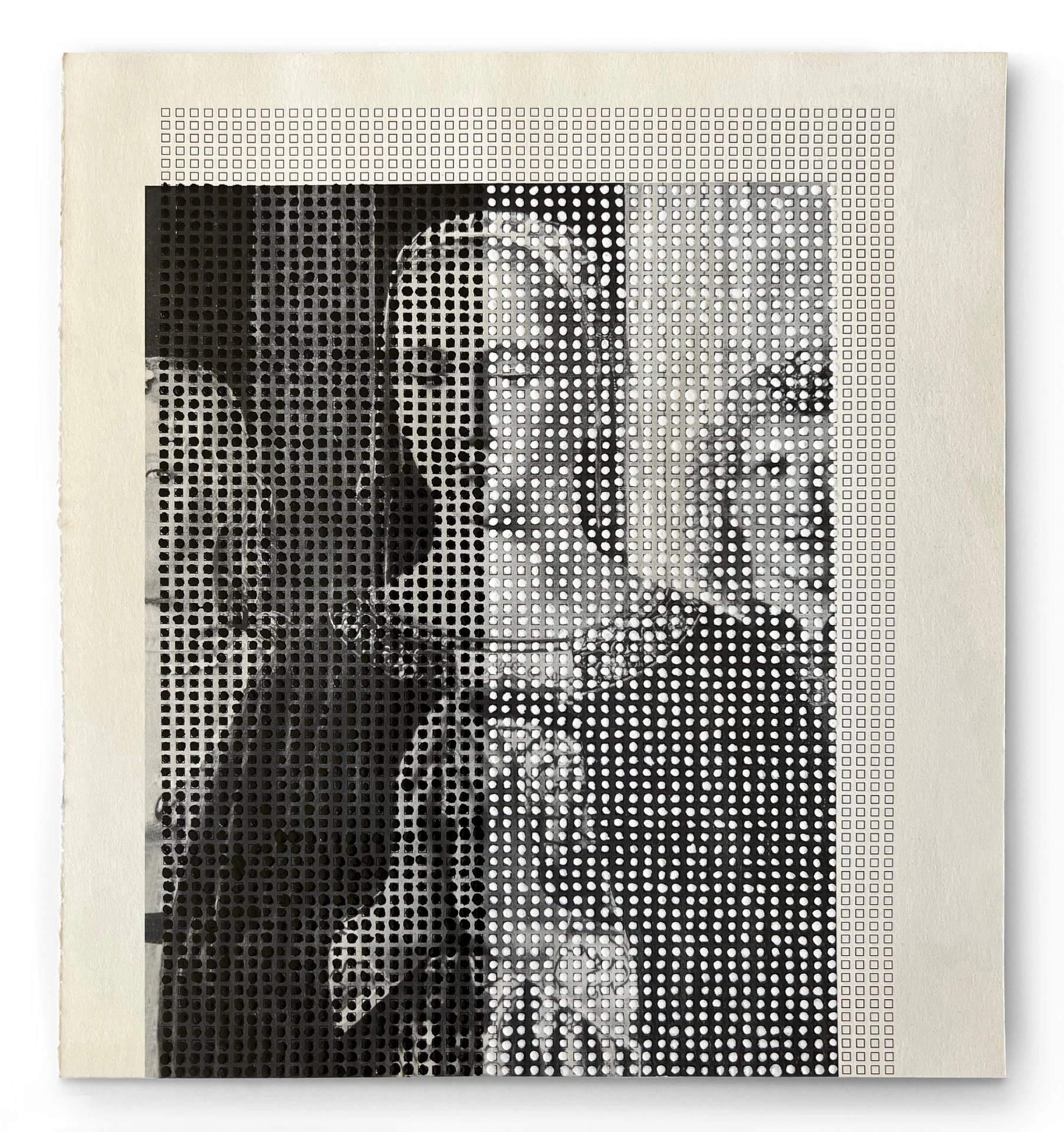
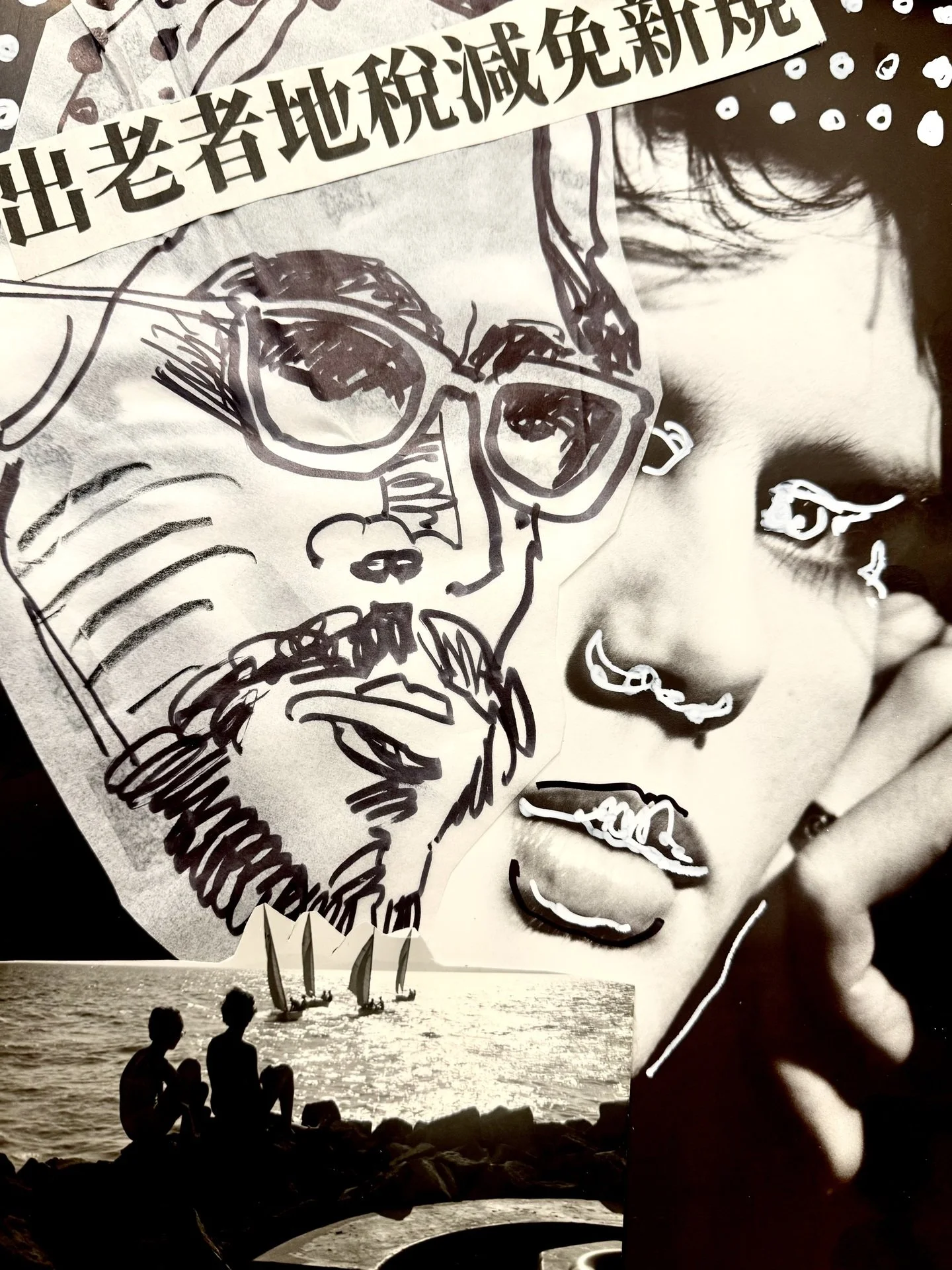
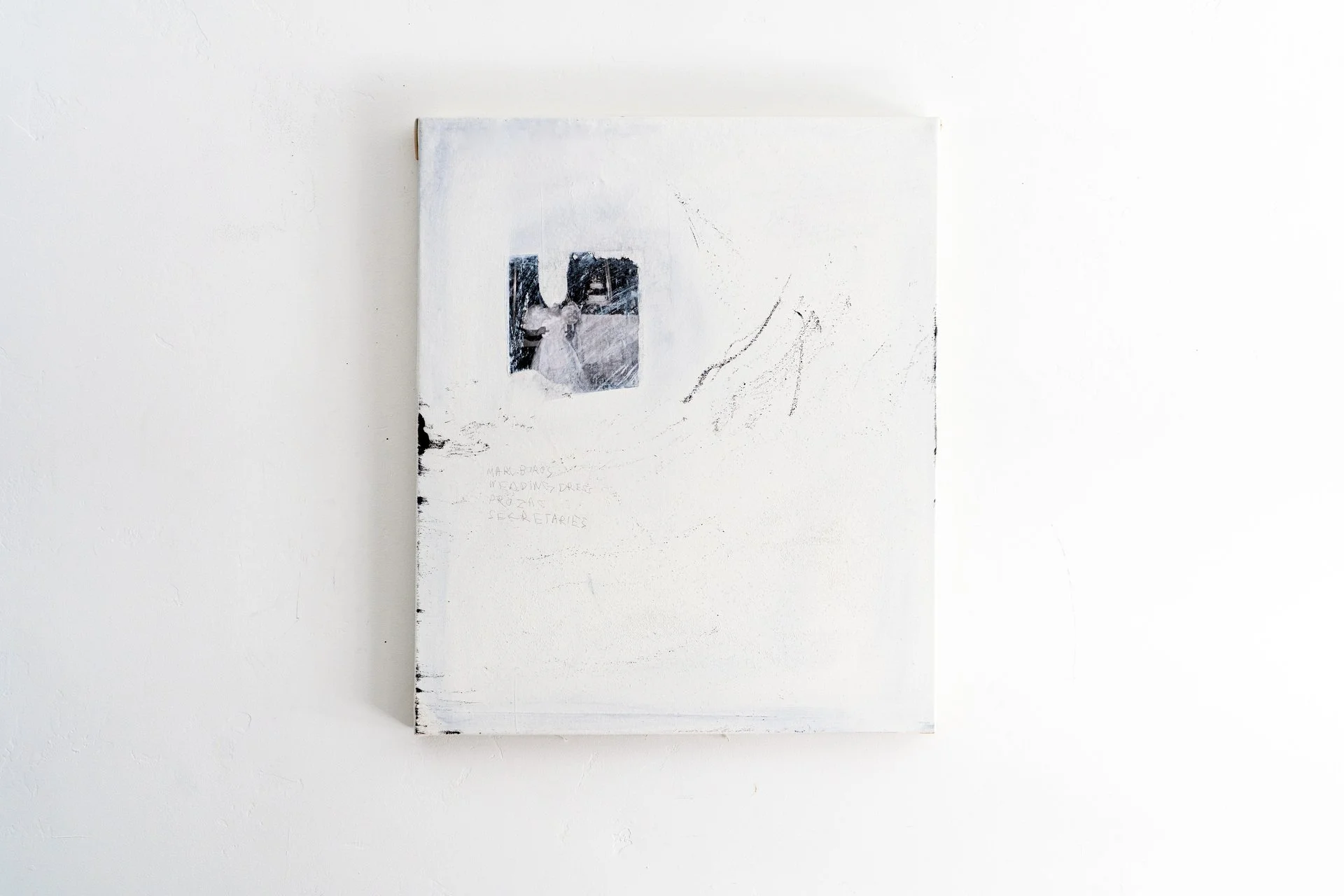
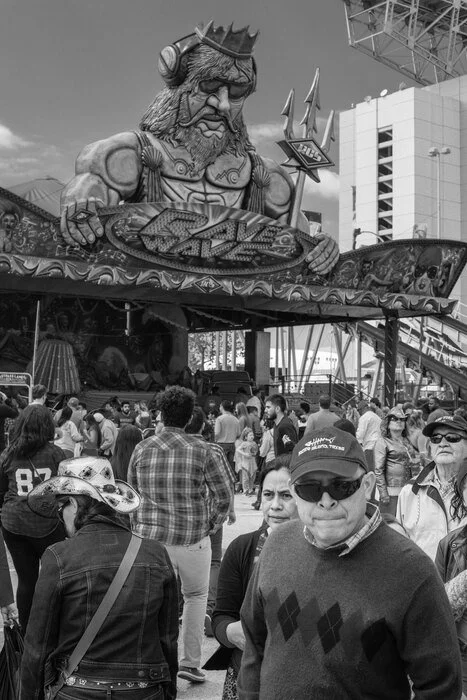
The monochrome offers a helpful structure for thinking about society, paring back the complexity of contemporary life into more manageable grayscale. The Statue of Liberty appears outside the window of the room that Kevin Bartlett photographs. The room’s peeling walls and state of disrepair become as suggestive as the faraway appearance of this iconic American symbol. Marna Bell captures Skee-Ball machines at an amusement park, defamiliarizing images of entertainment and leisure by removing color and the carnival atmosphere in which they usually appear. Justin Fondrie creates photographic re-enactments based on research into CIA case files. Truth and fiction, art and surveillance collide. Camilo González photographs four children from central Ohio lying on a lawn. Two look at the camera, while two seem consumed in their own reverie. Light and shadow add drama to the everyday scene. Lori Murphy runs an art history book page through a copy machine to print the grid, then paints black and white dots in the squares that overlap the figure. Murphy evokes the binaries that have plagued depictions of women throughout art history. Namely, Madonna or whore. Merritt Spangler scrawls “MARLBOROS, WEDDING DRESS, PROZAC, SECRETARIES” beneath an image of a girl with her face blotted out. Expectations of contemporary womanhood and its attendant pains find succinct expression. Mike Quon’s mixed media piece creates a double-exposure portrait that merges two figures into a single image. The piece suggests a sense of a fractured or doubled identity, of masks and what an art practice can reveal or conceal about the true self. Nell Breyer uses charcoal, chalk, ink, paper graphite, string, and stone to create a network of black and white motion that seems to be creating and destroying itself all at once--a metaphor for human movement atop the fragile planet.
Wall 6
Carla Aspenberg / Ben Bohnsack / Susan Brinkhurst / Suzie Buchholz / Arlene Farenci / Viktoria Ford / Monique Fouquet / Ann Marie Schneider
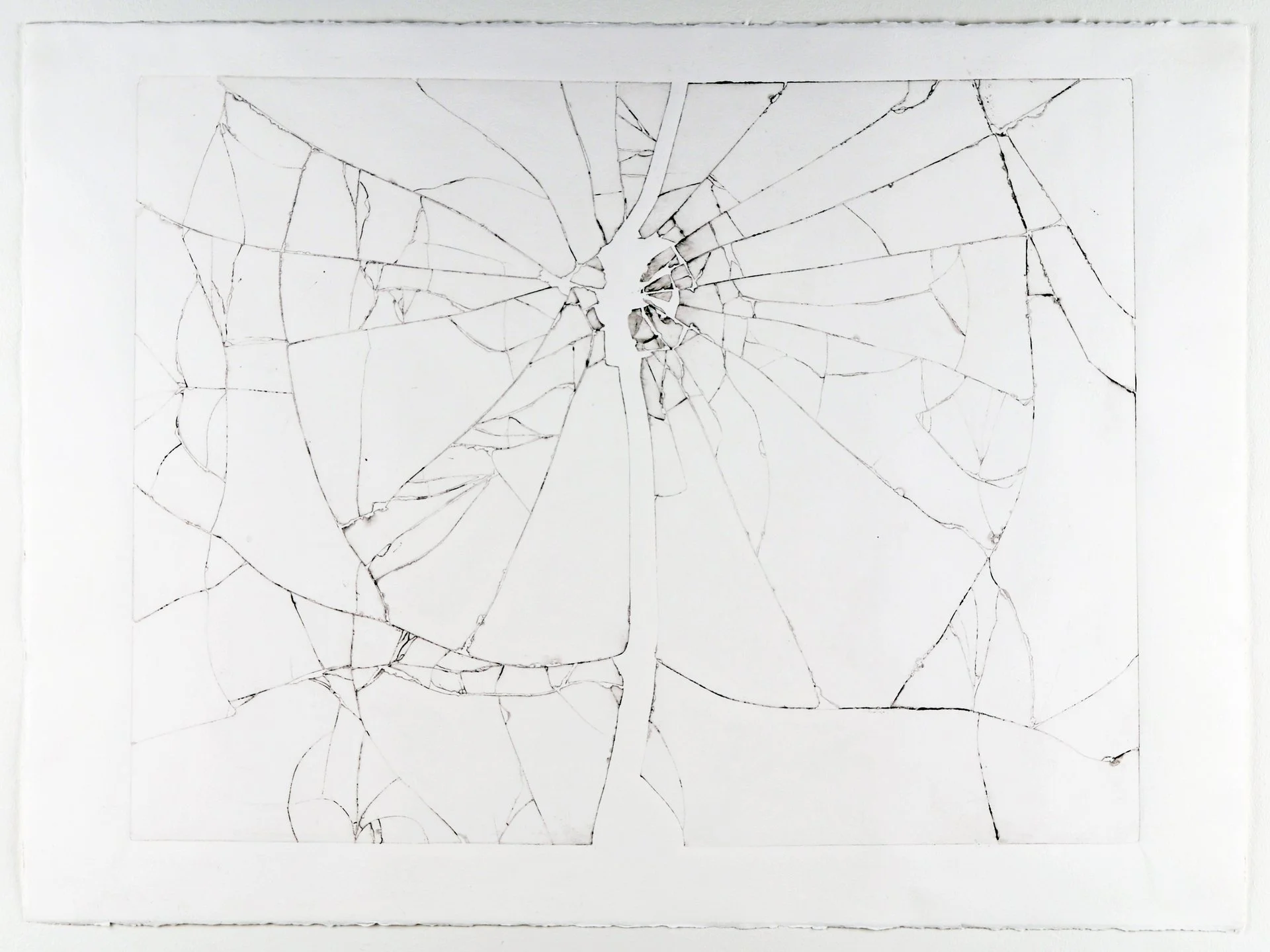
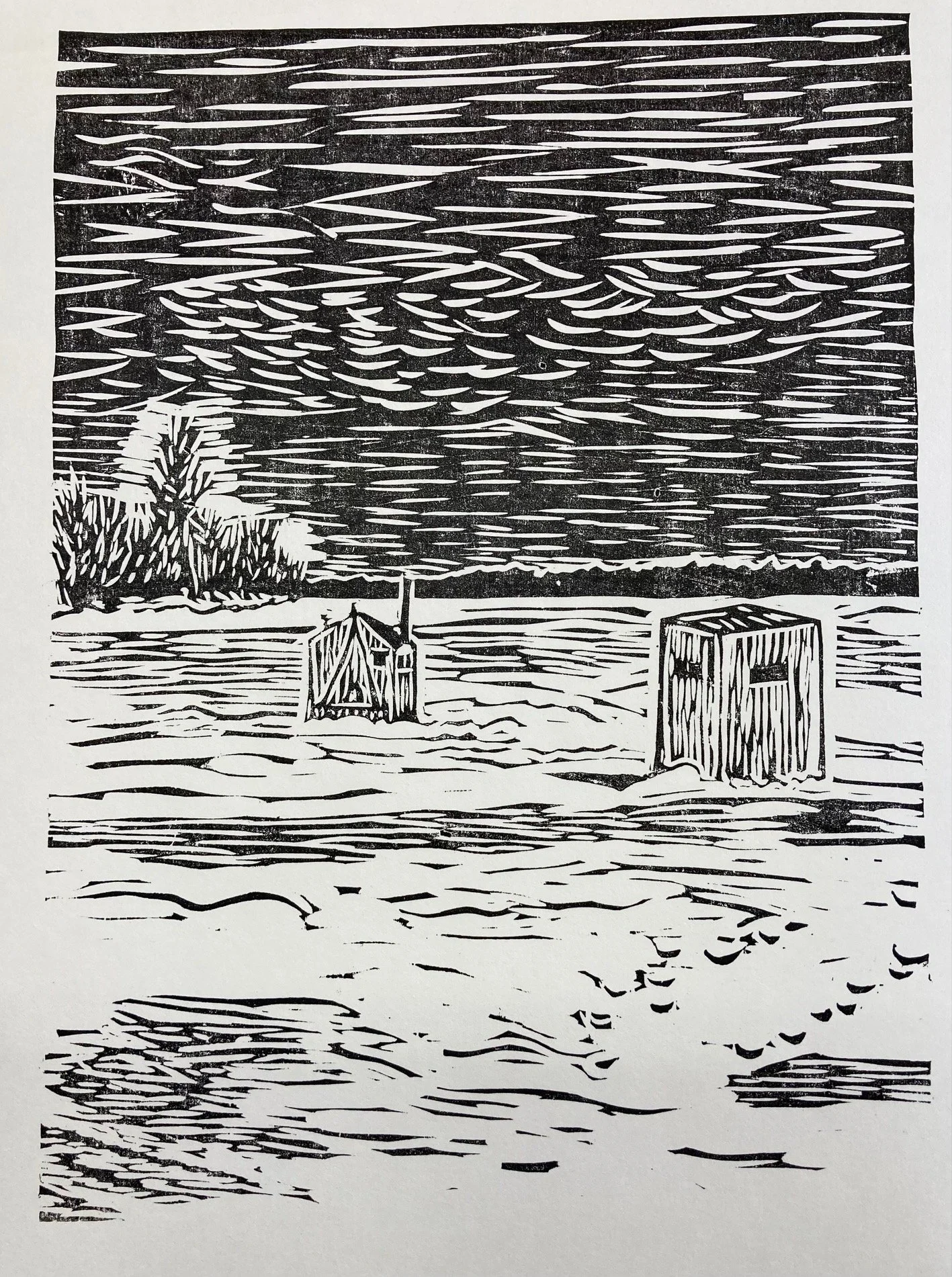
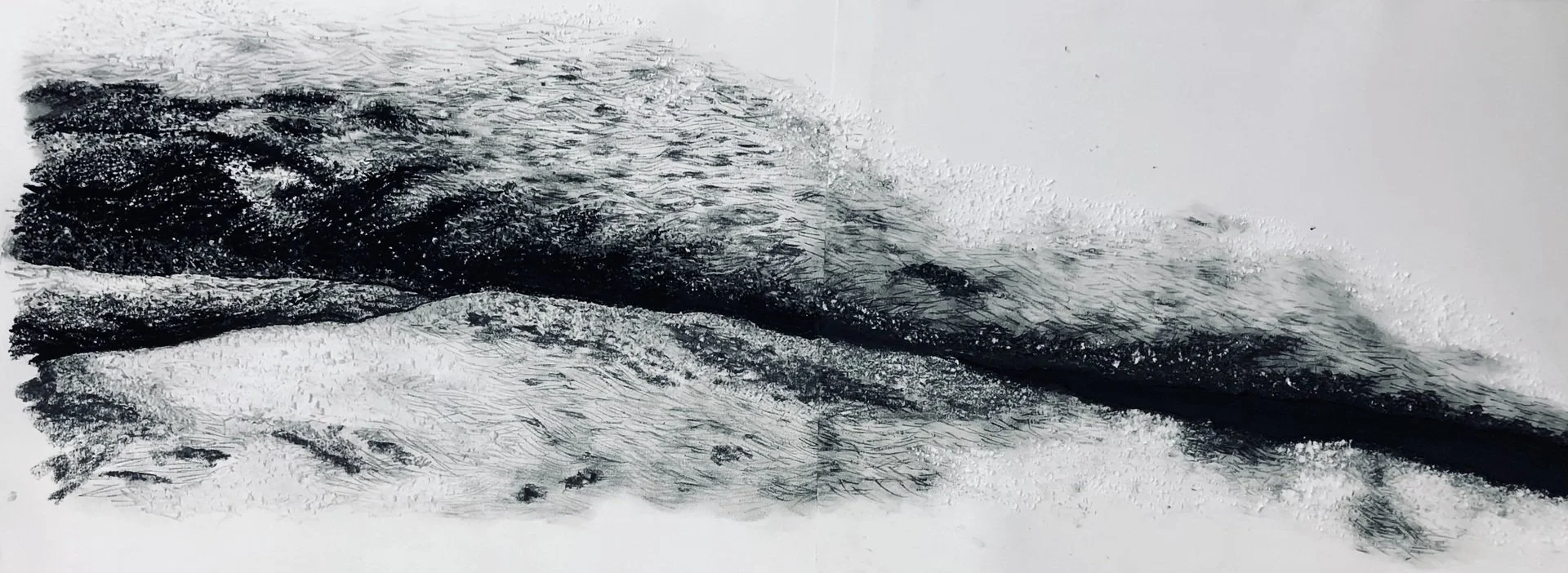
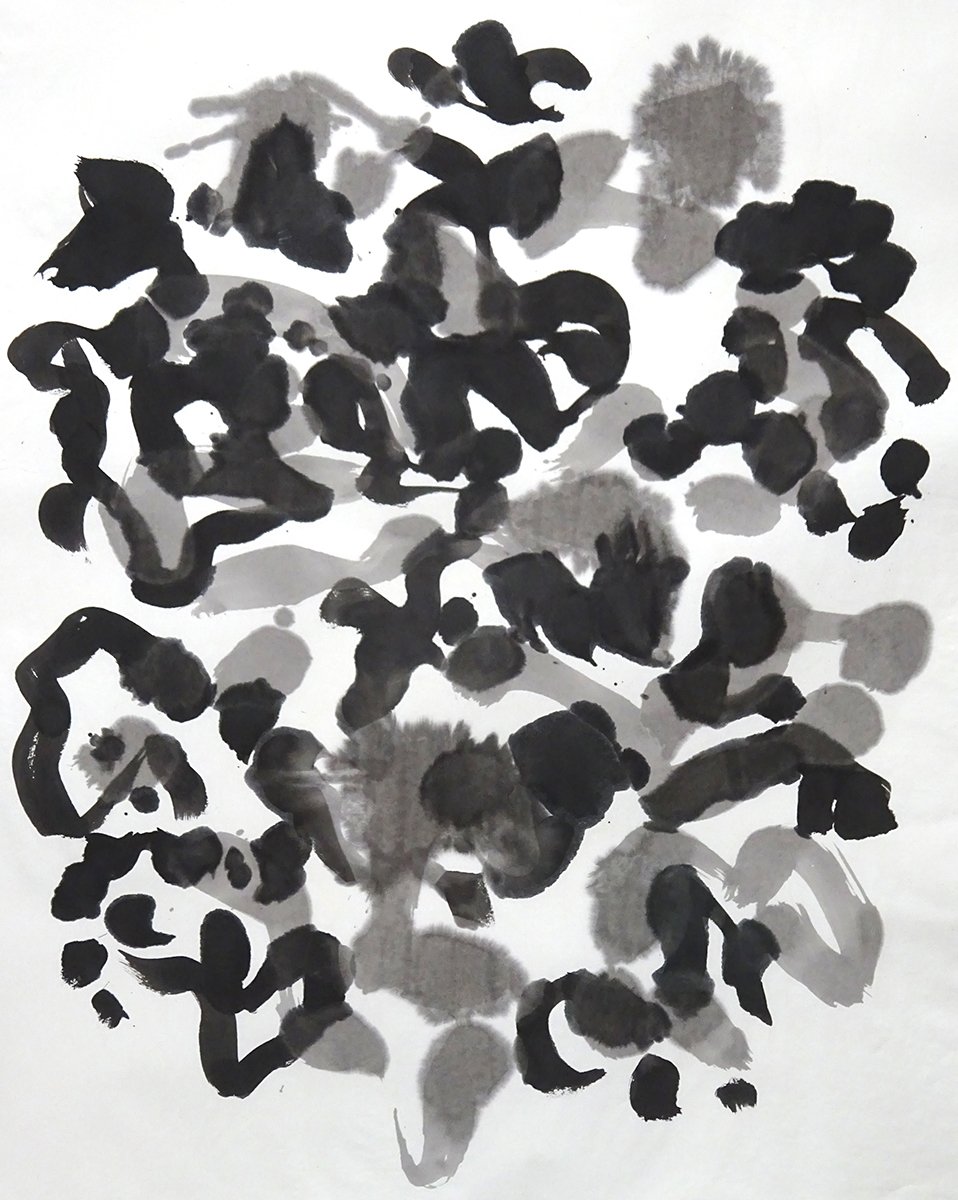
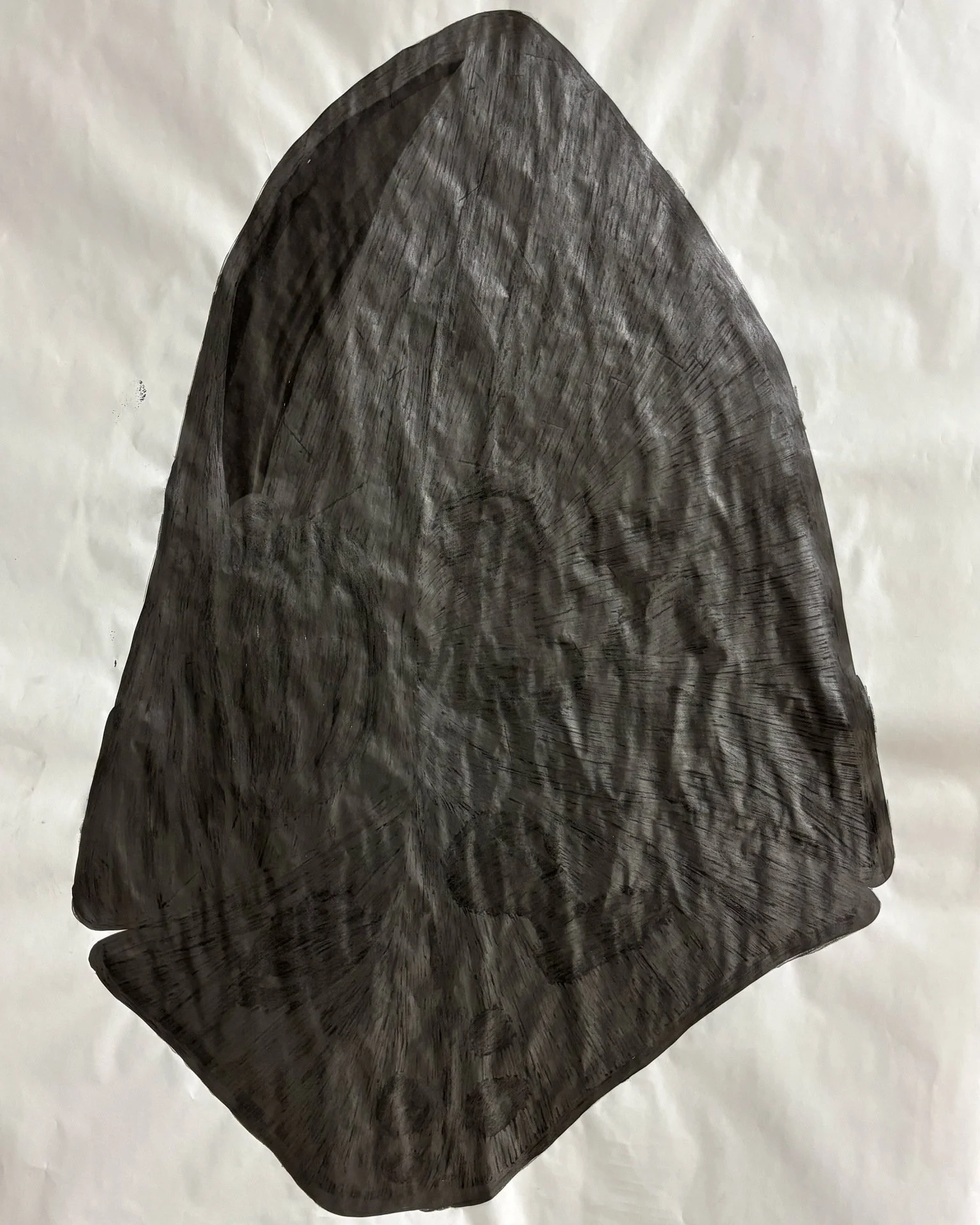
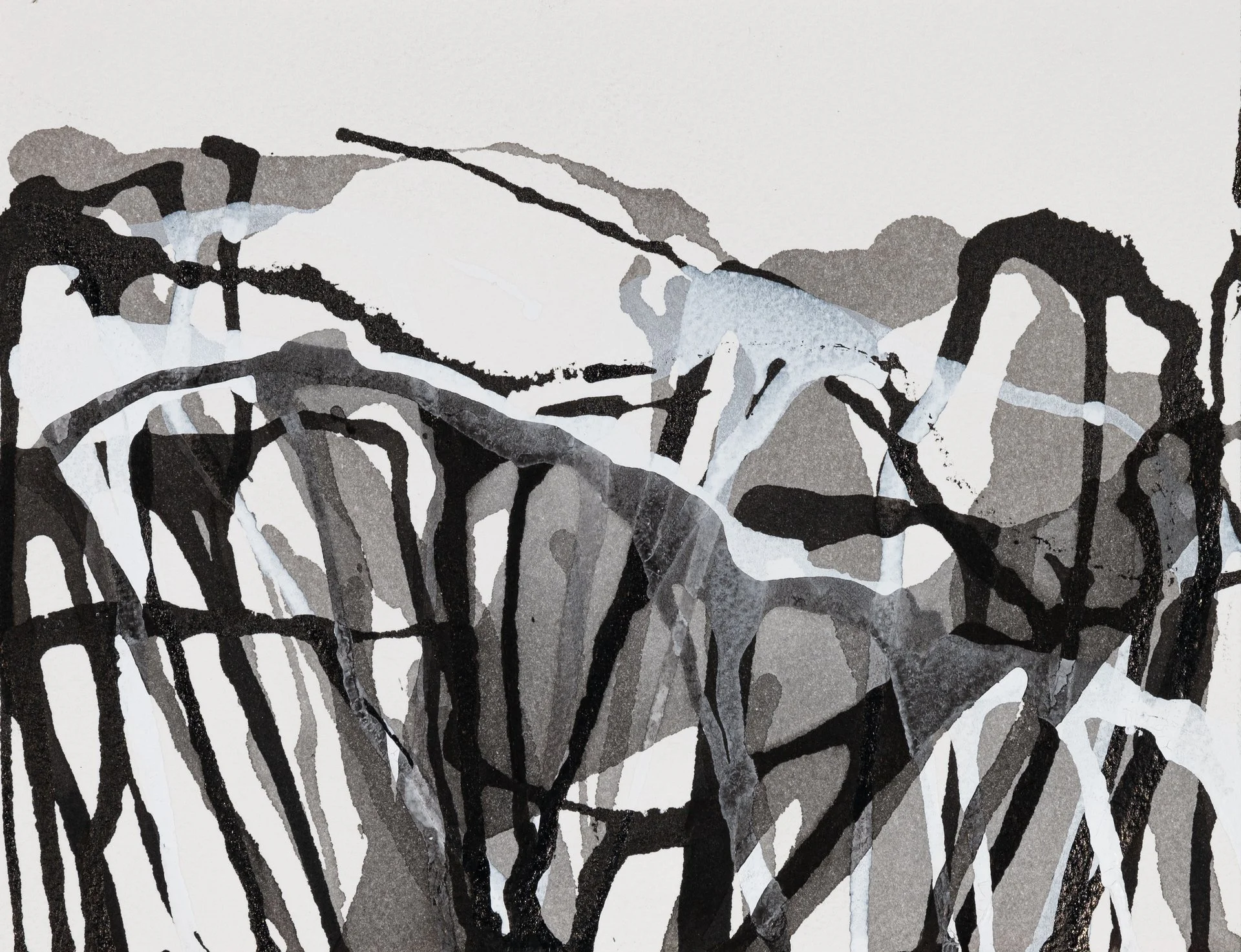
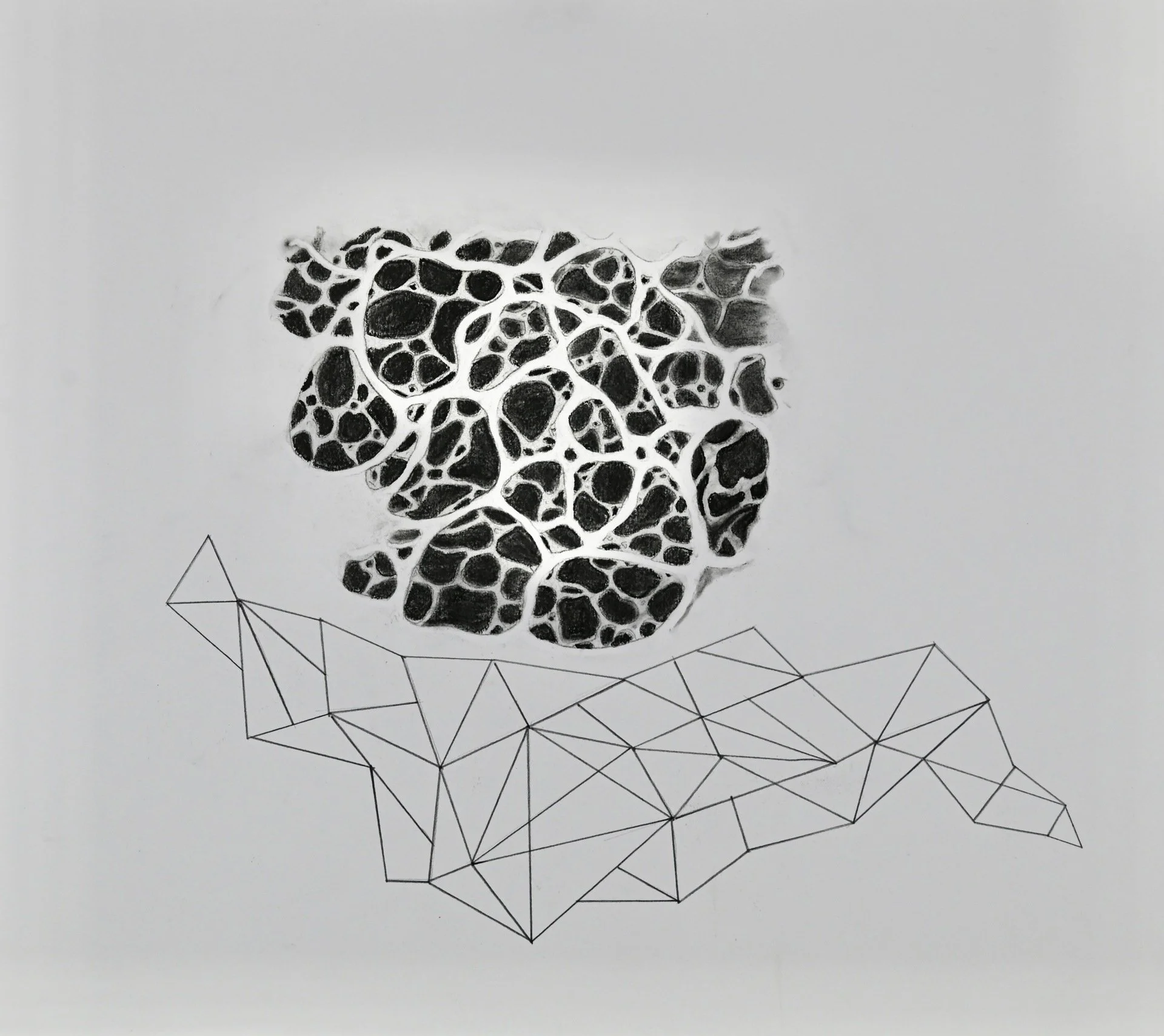
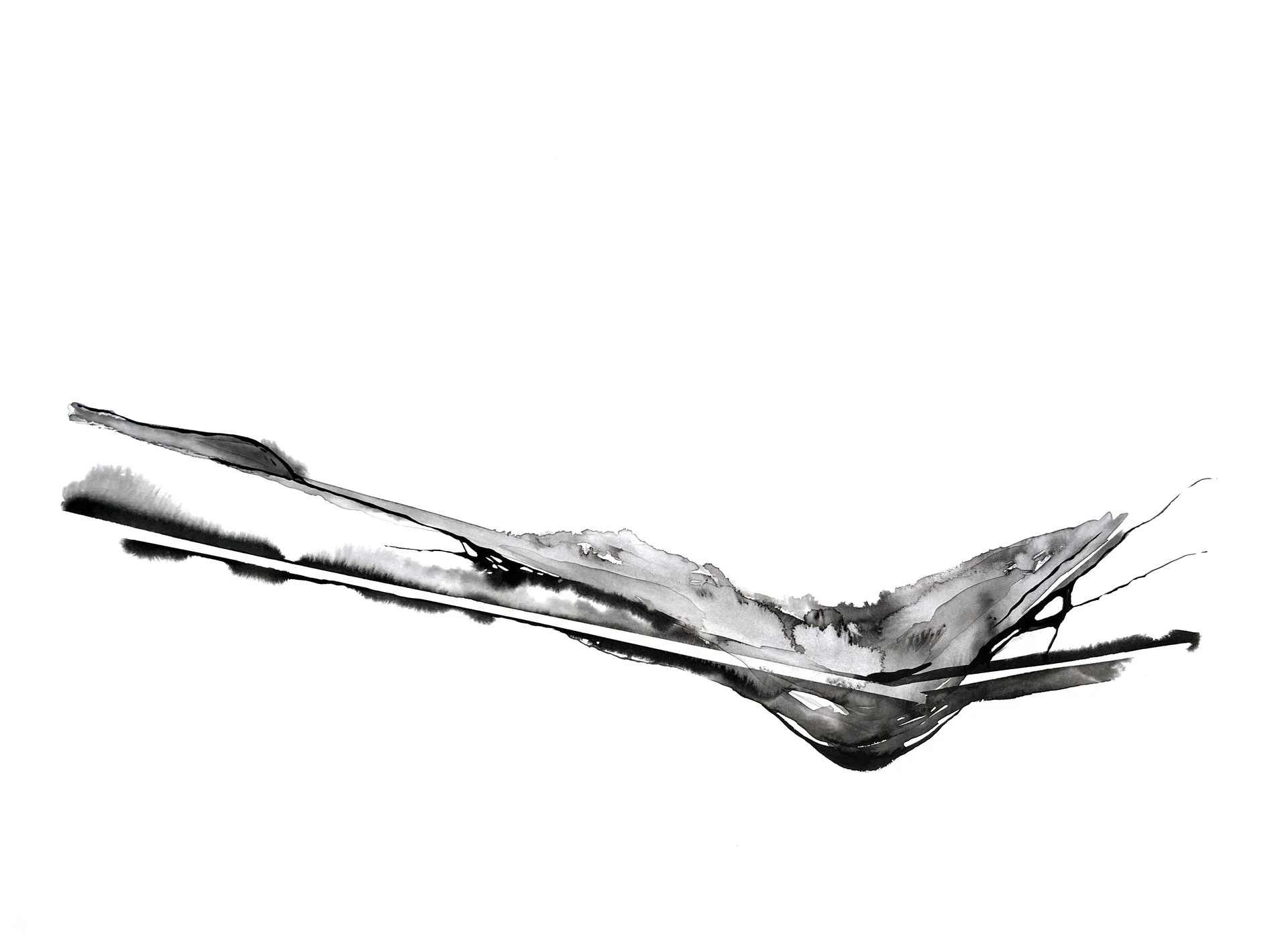
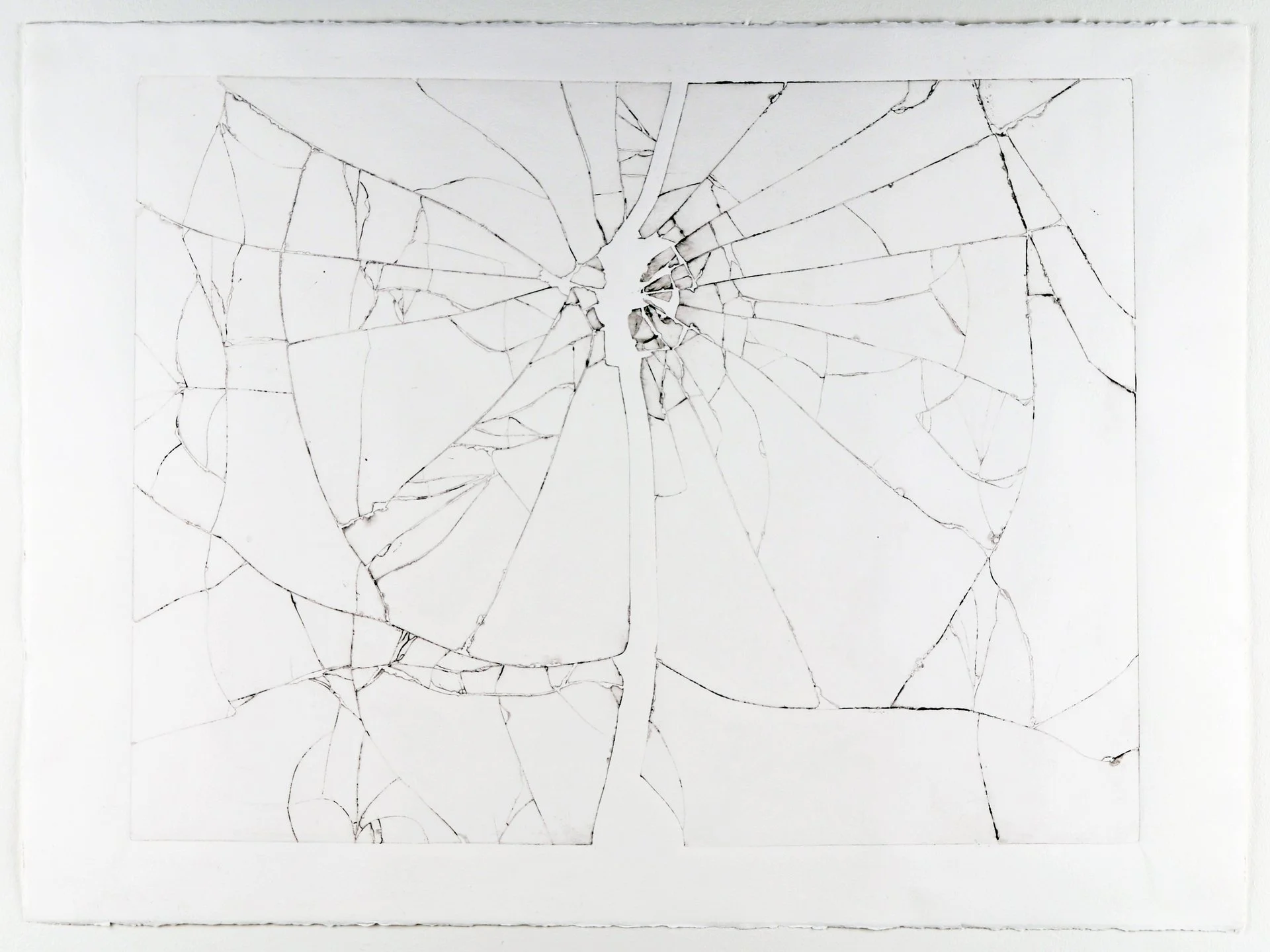
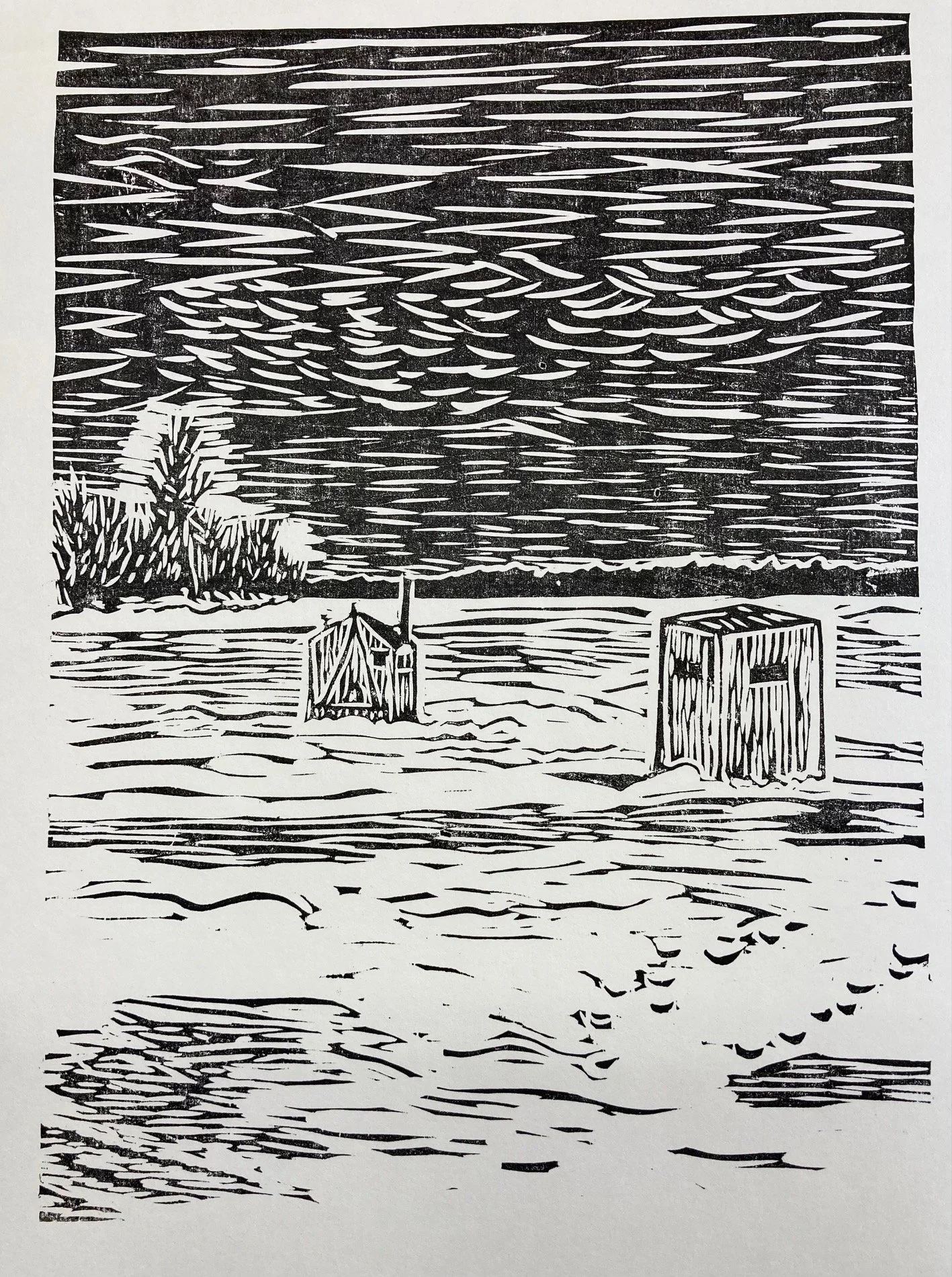
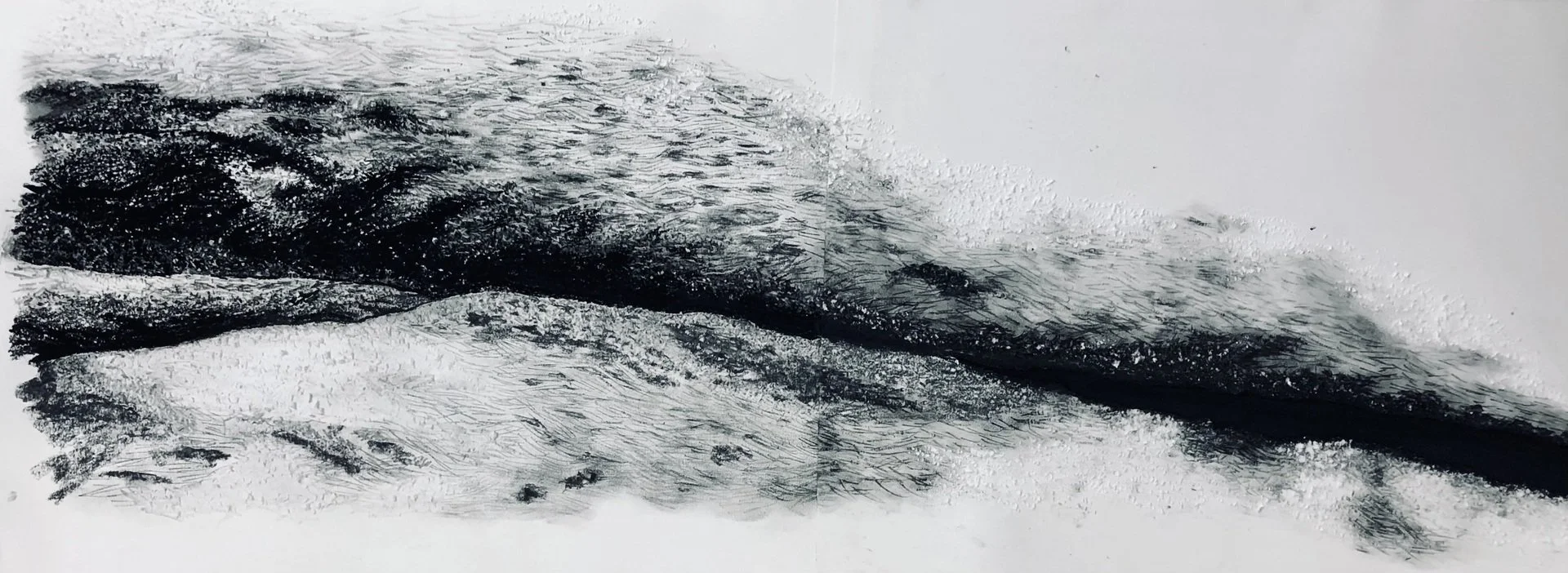
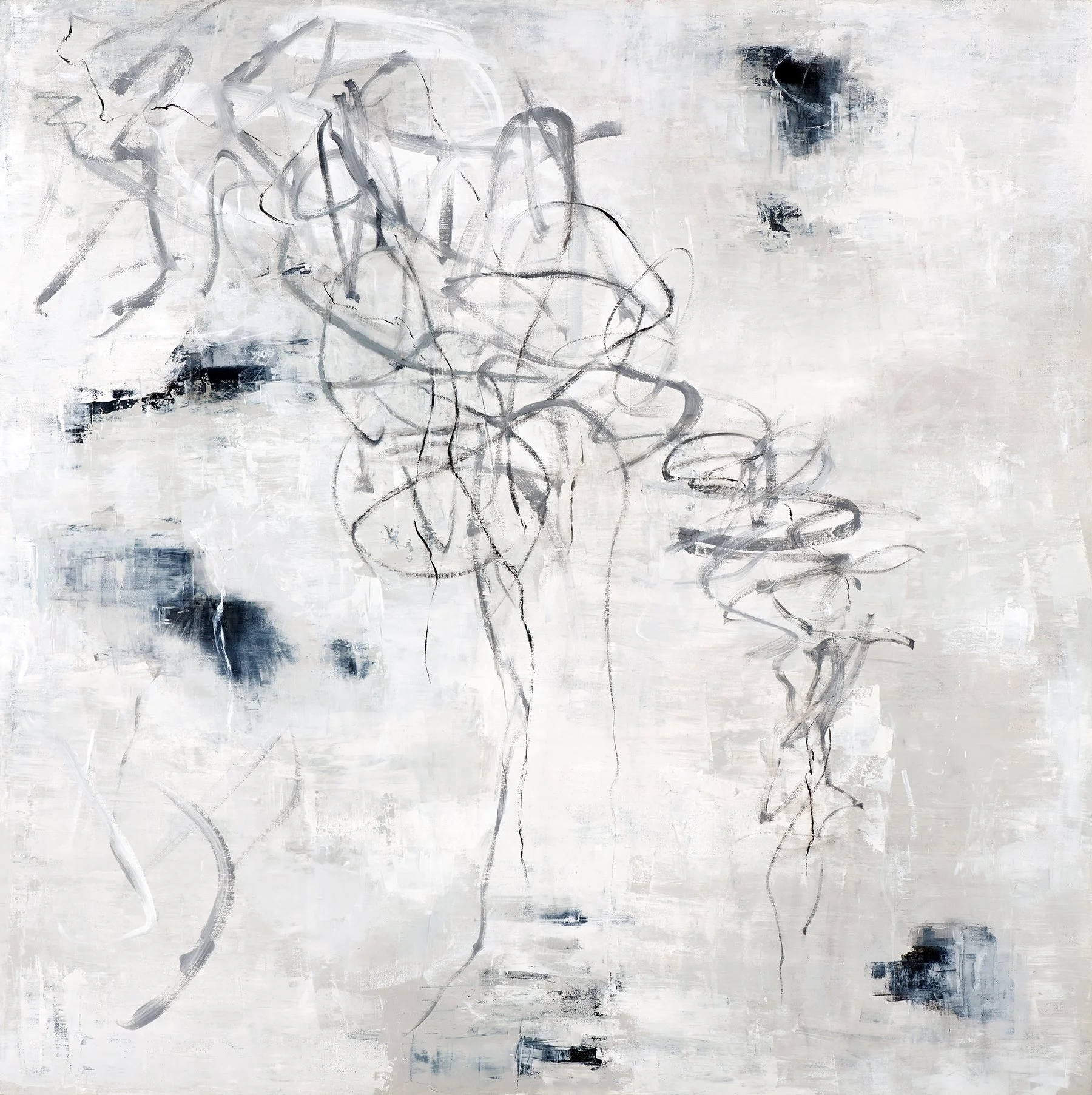
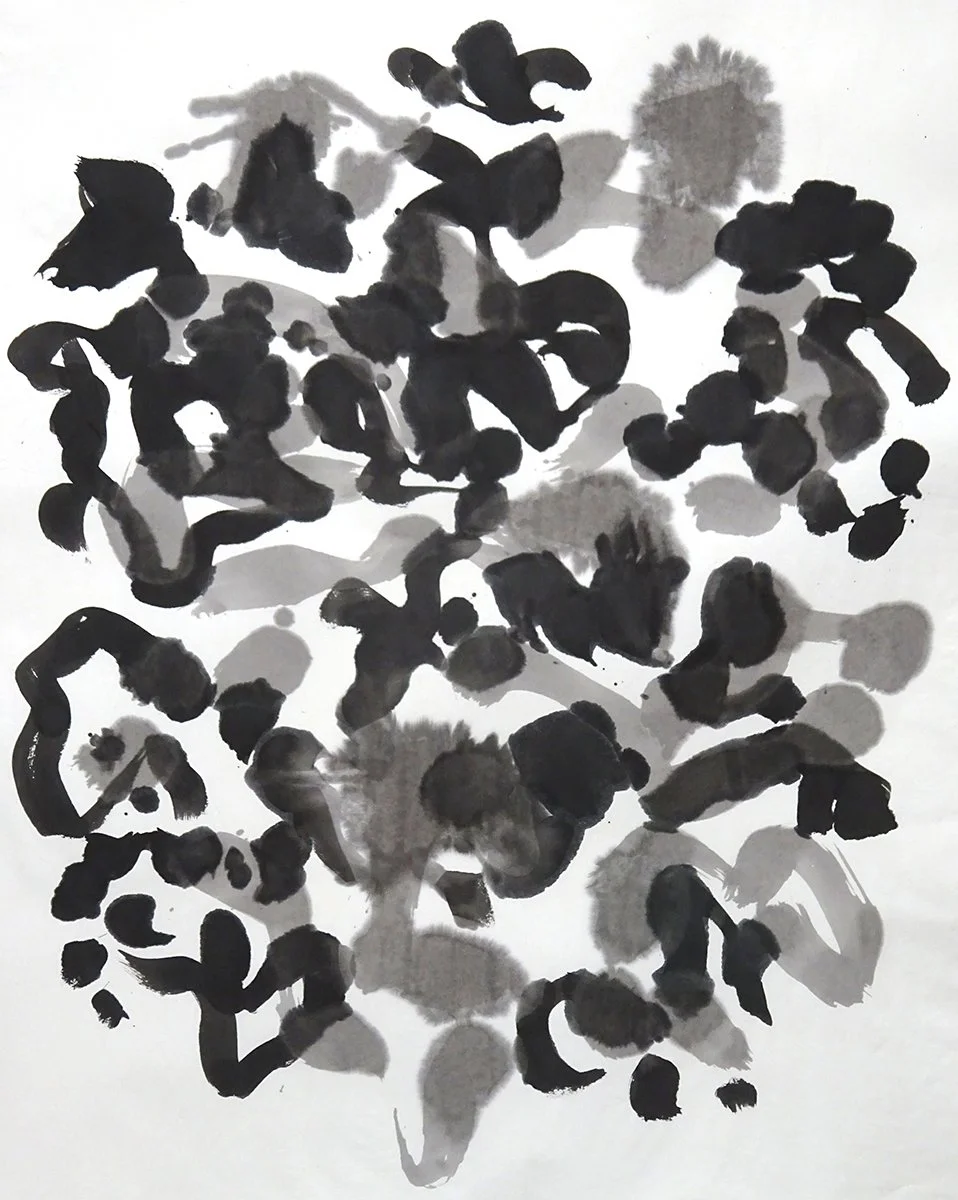
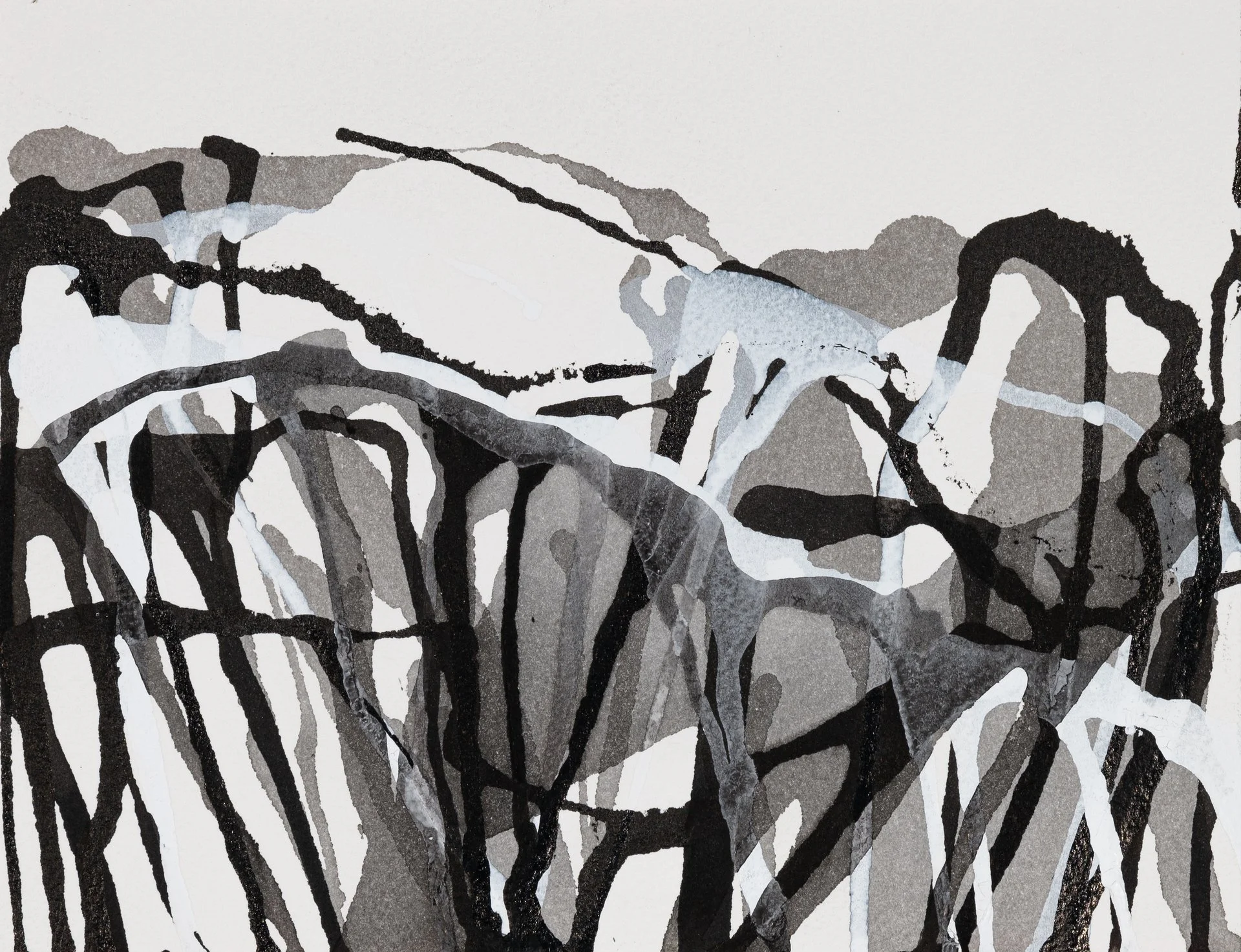
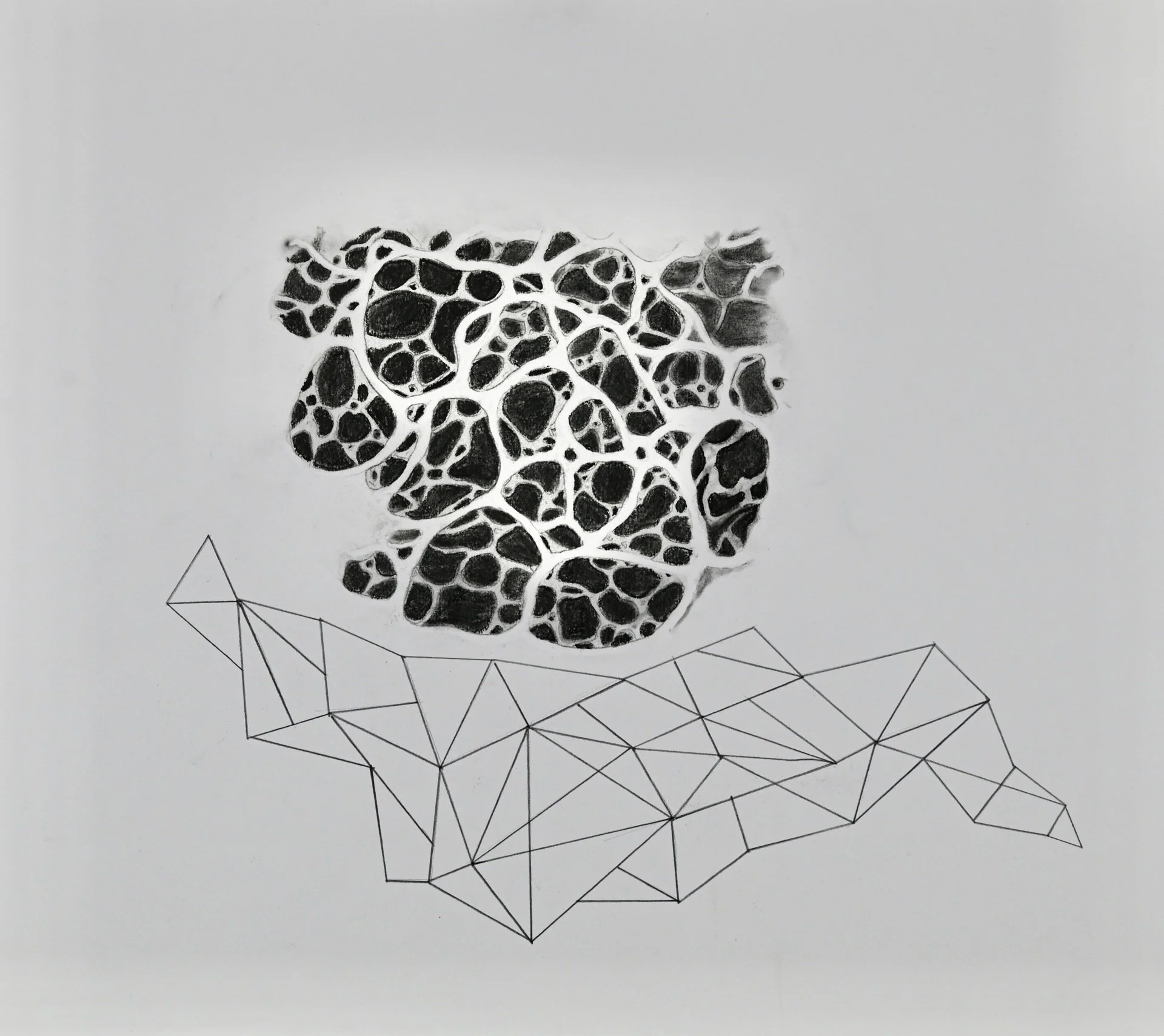
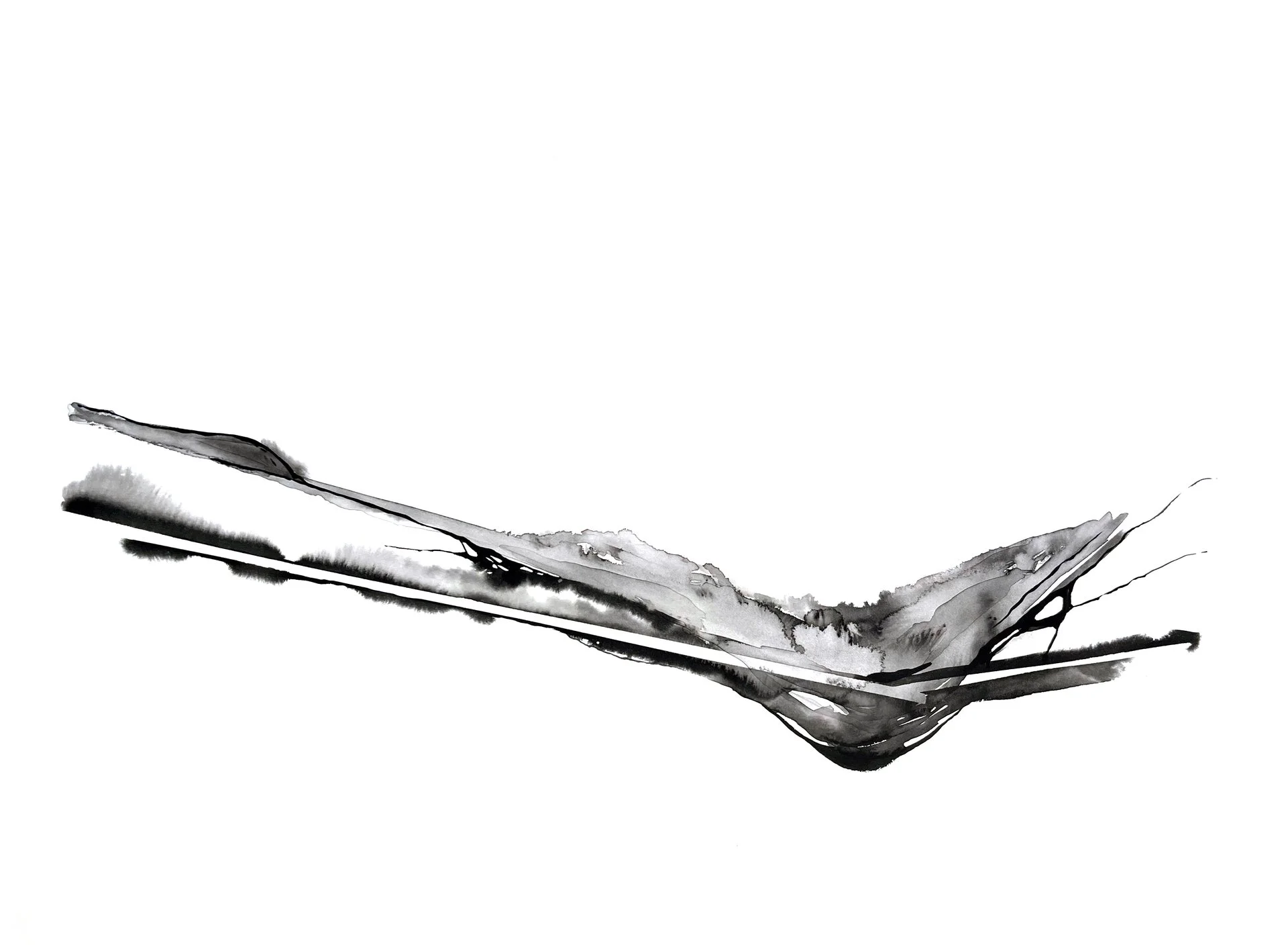
This group of artists demonstrates a keen interest in line and gesture. They find inventive ways to make new marks and reduce their palettes in order to highlight their discoveries. Carla Aspenberg makes a print of shattered glass, transforming breakage into creative generation. Ben Bohnsack’s monochromatic woodblock print of fishing shanties captures the setting’s iciness and desolation and the structures’ comforts amid the cold. Susan Brinkhurst creates a charcoal pastel with layered texture from incised stone. The artist gathers materials from the landscape, which in turn become tools for representing their origin sites. Cycles of art making and environmental shifts are at issue. Suzie Buchholz’s improvisational approach to mark making results in fluid, ribbon-like traces and built up oil surfaces. Arlene Farenci uses black ink on soft xuan paper to make marks that ripple and smudge in a suggestive, dynamic dance. After undergoing hand surgery, Viktoria Ford created a series of poured pieces with sumi ink and white ink on paper. Here, bodily and chromatic constraints lead to experimental new forms. Monique Fouquet uses charcoal and pencil on rag paper to create bulbous, cellular forms that hover over linked geometries that evoke origami. The two fields are in dialogue, not competition, the dialectic itself compelling the viewer’s eye. Ann Marie Schneider uses sumi ink on paper to suggest the potency of water, as a medium and as a life-giving element.
Wall 7
Deidre Corcoran / Miriam Fabijan / Zoe Gleitsman / Norma Greenwood / Kenichi Nakajima / Howard Pohl / Lael Salaets
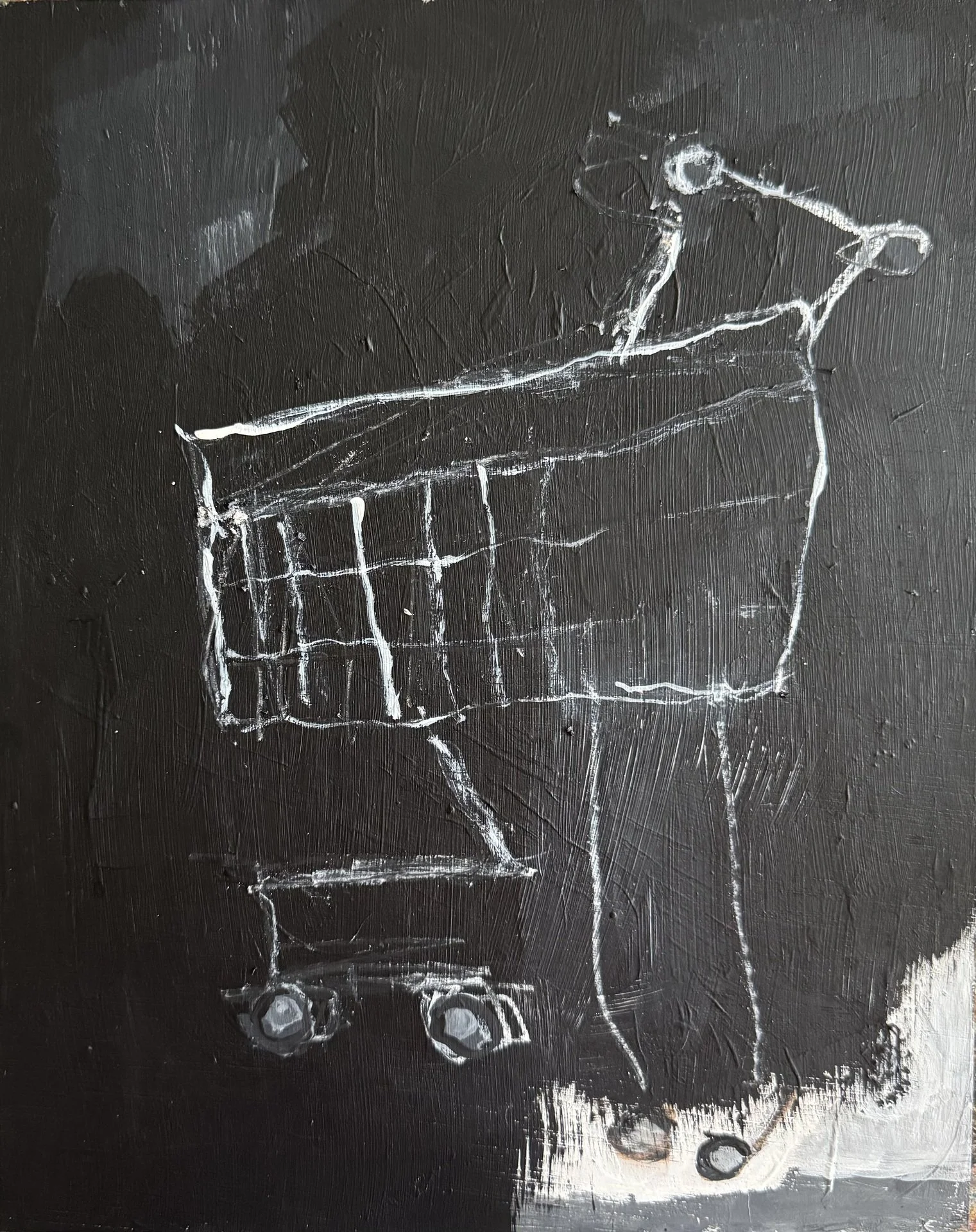
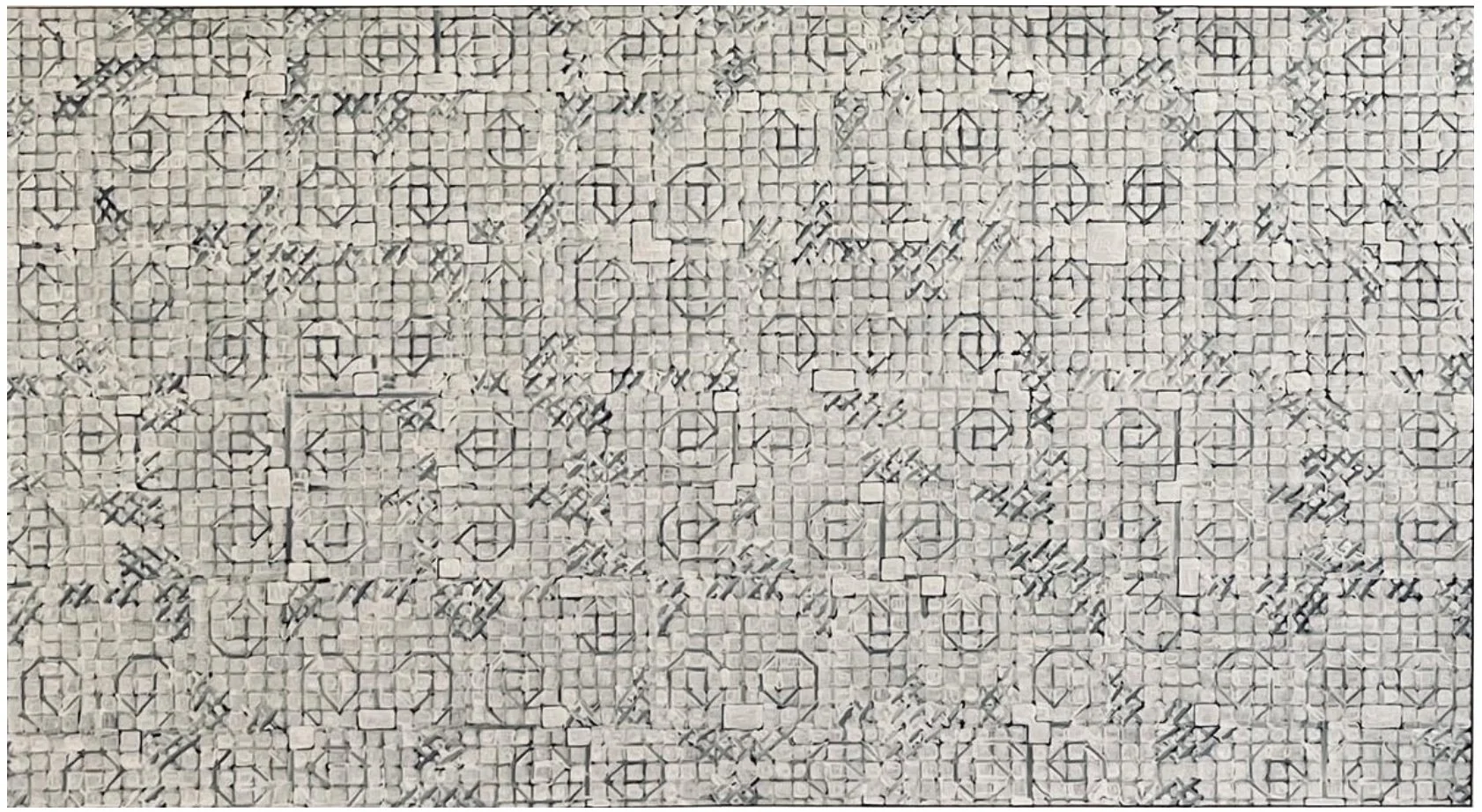
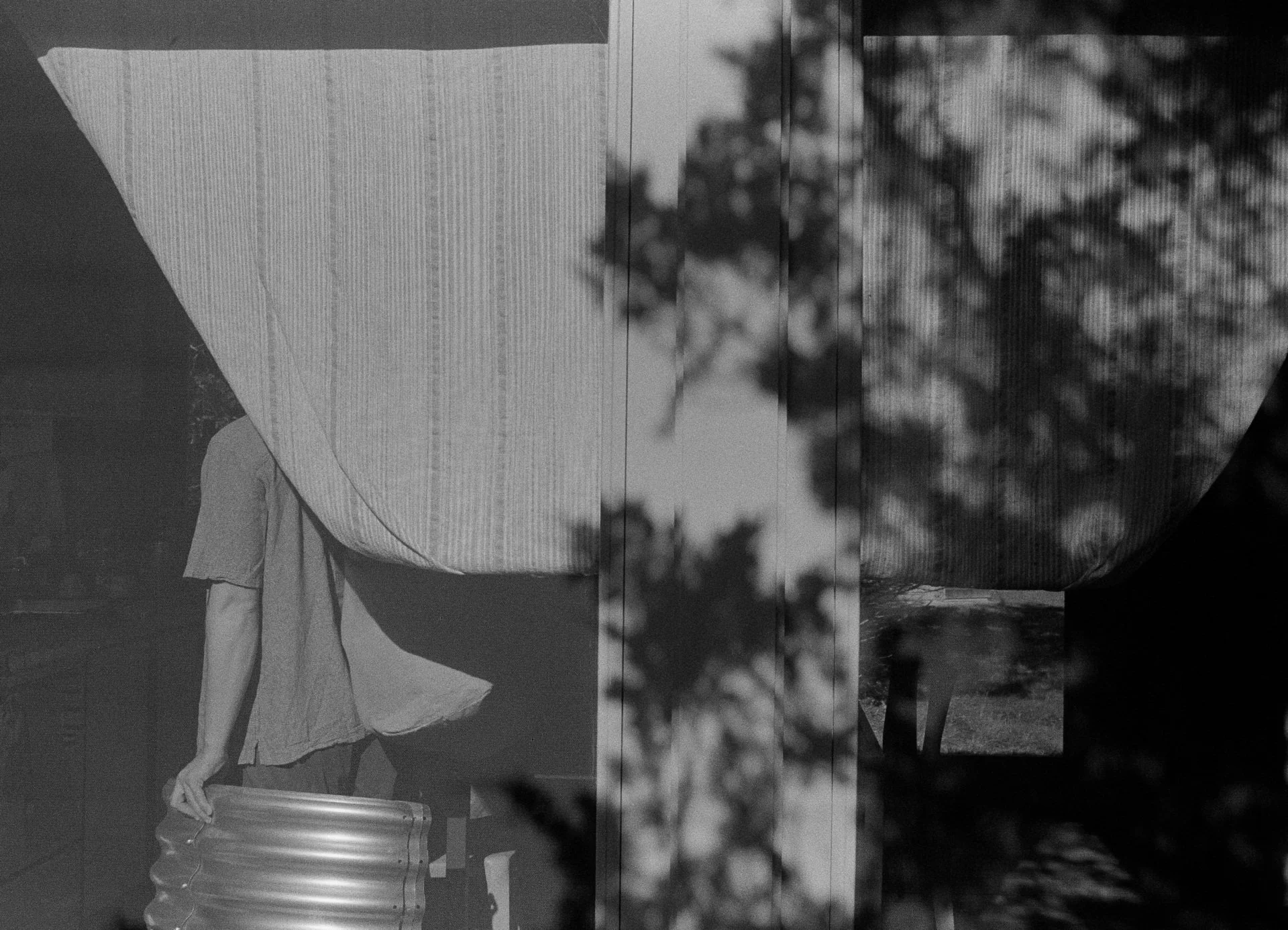
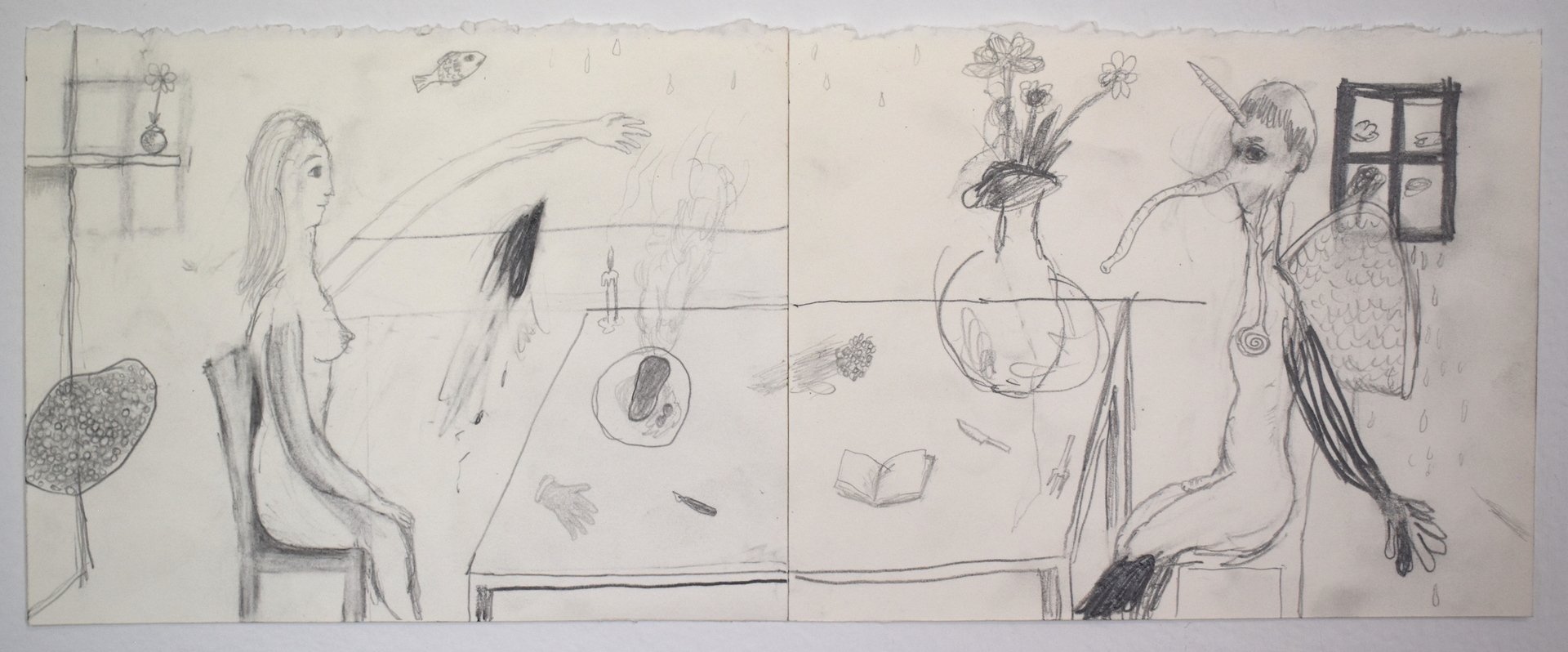
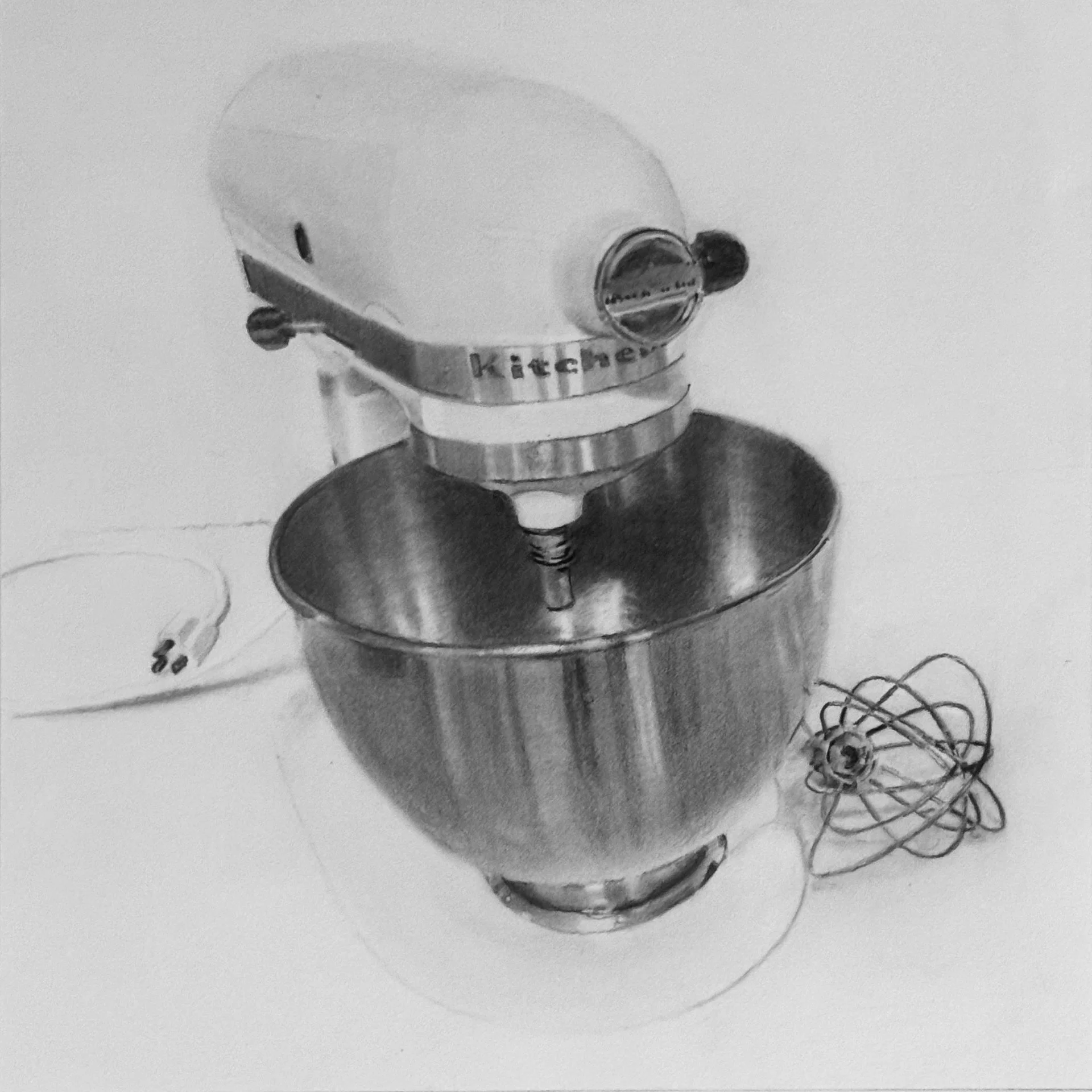
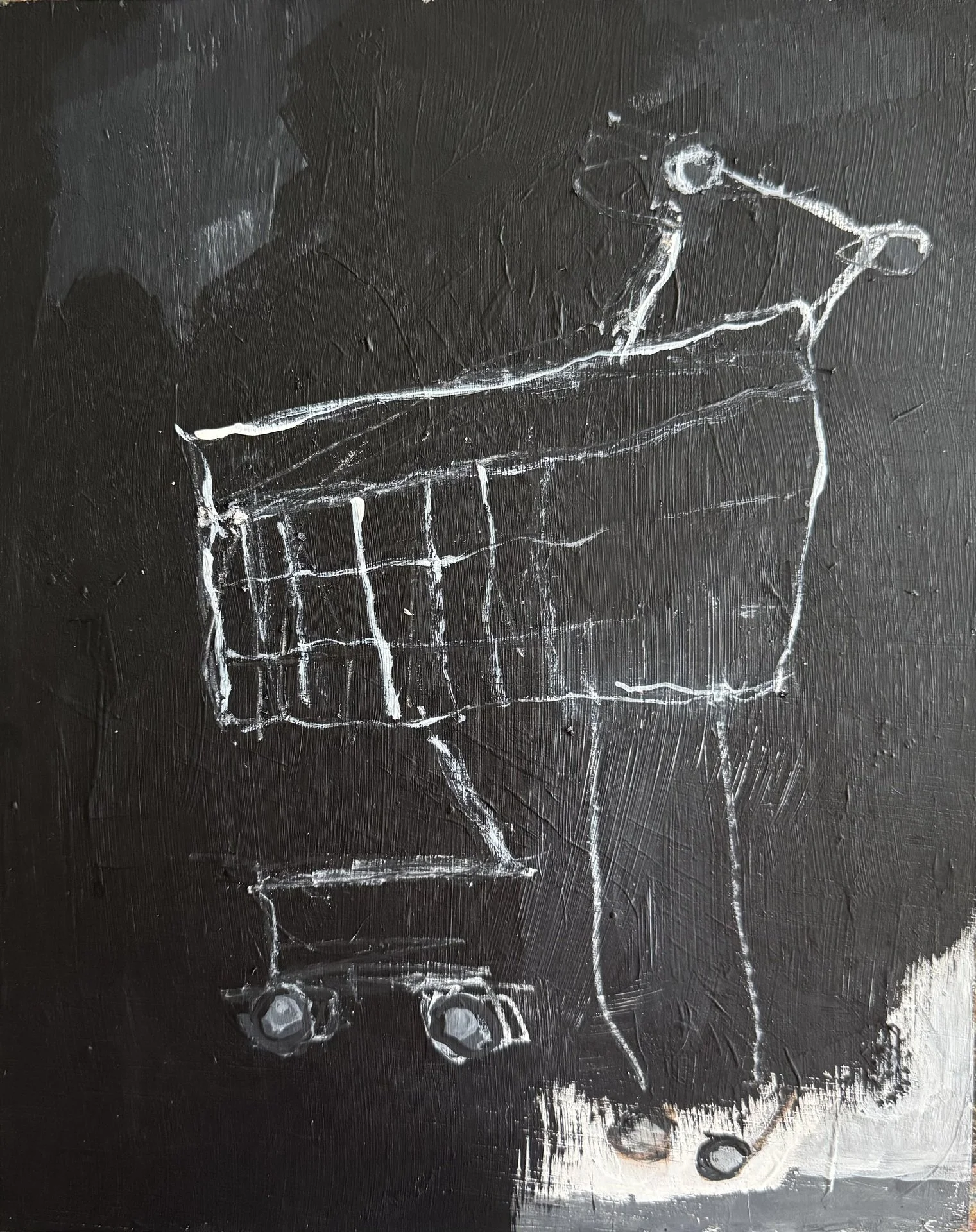
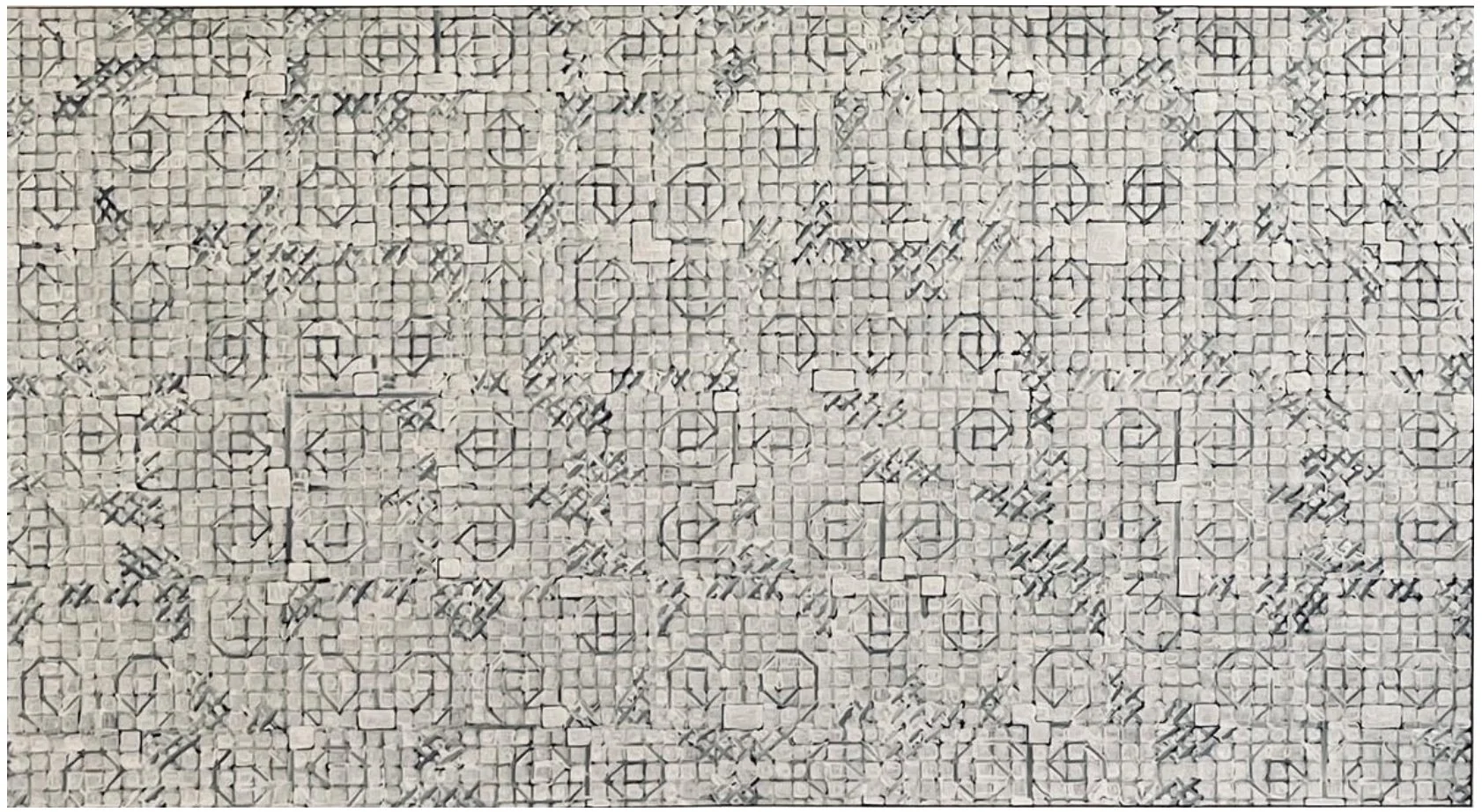
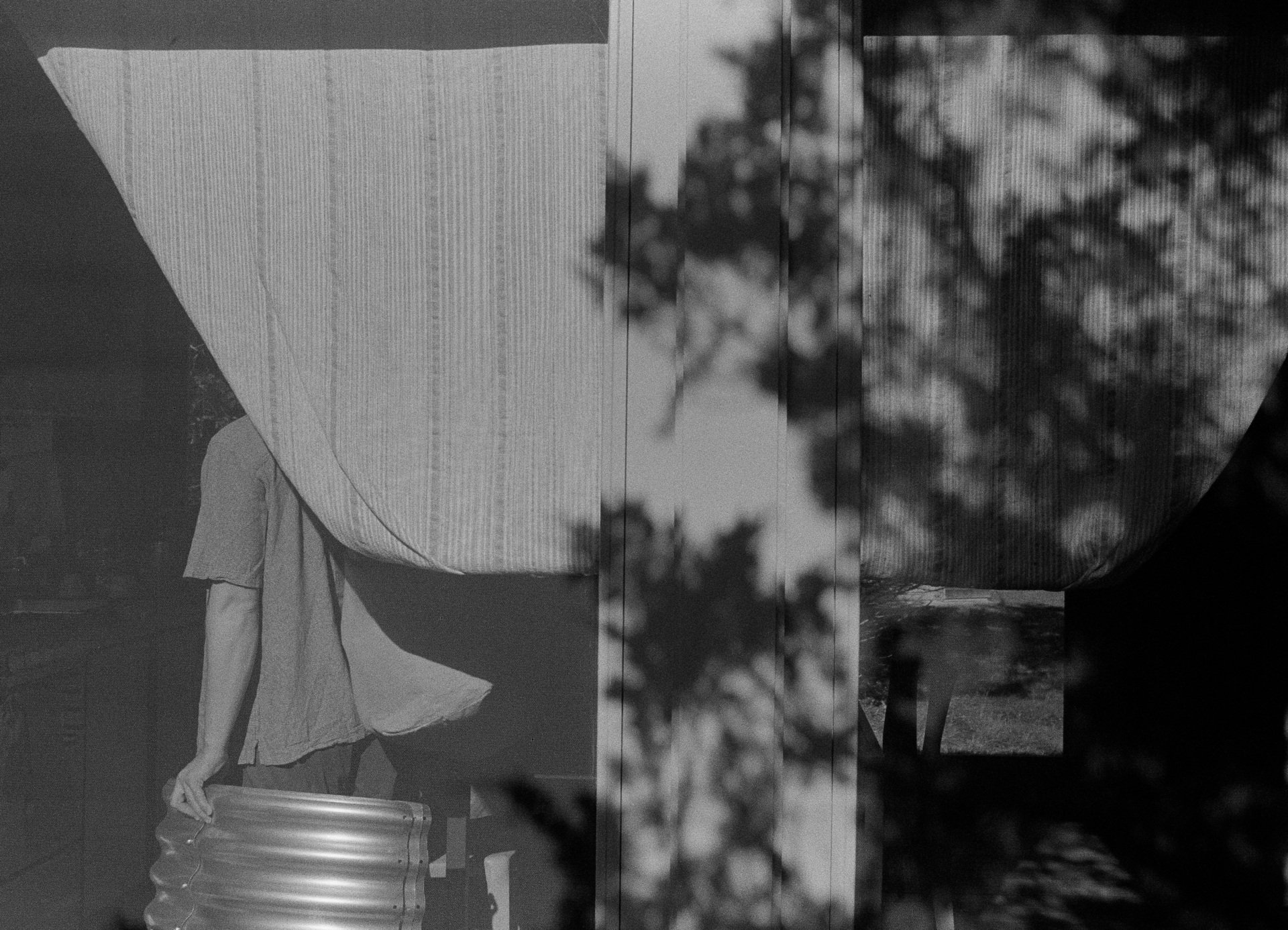
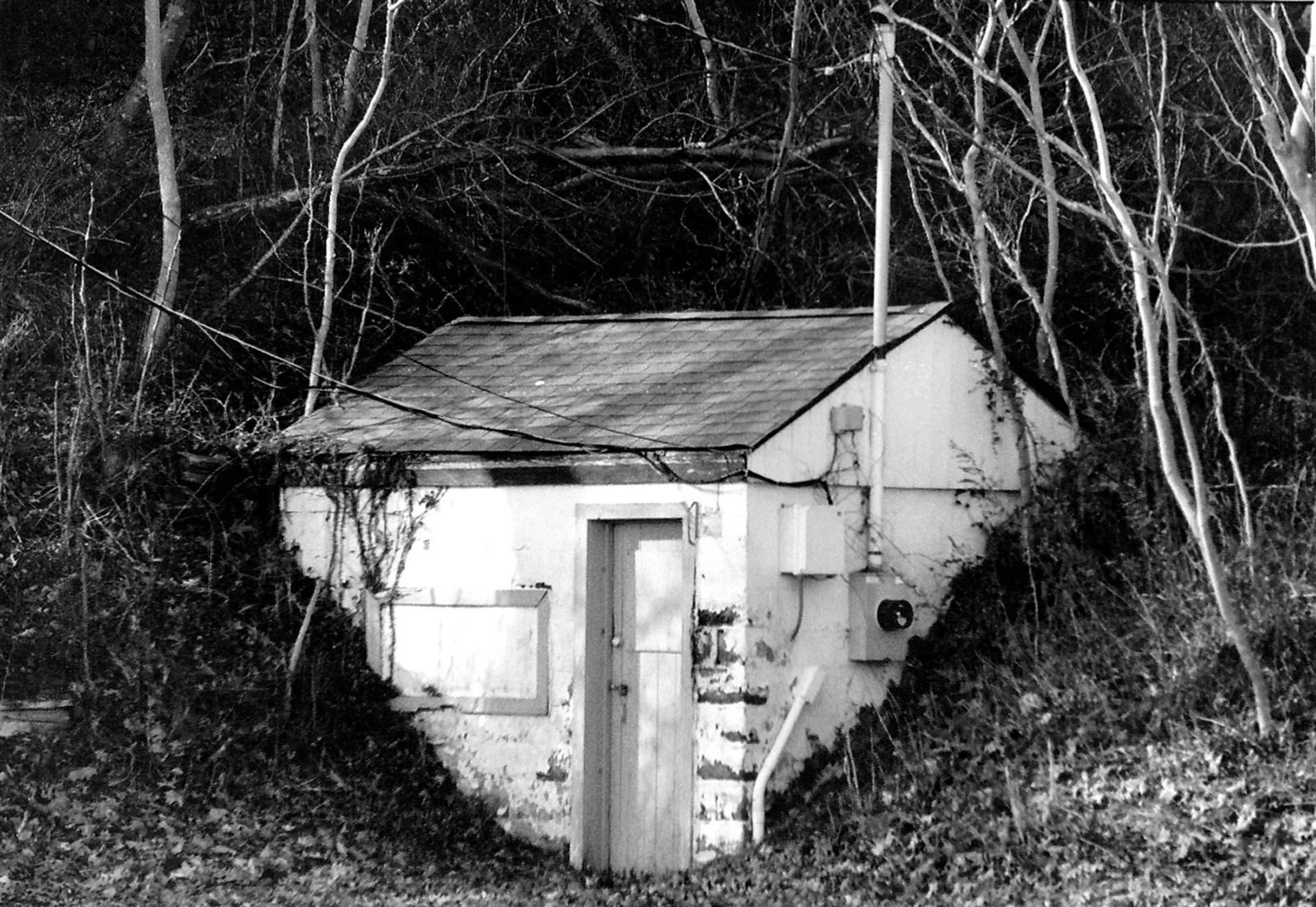
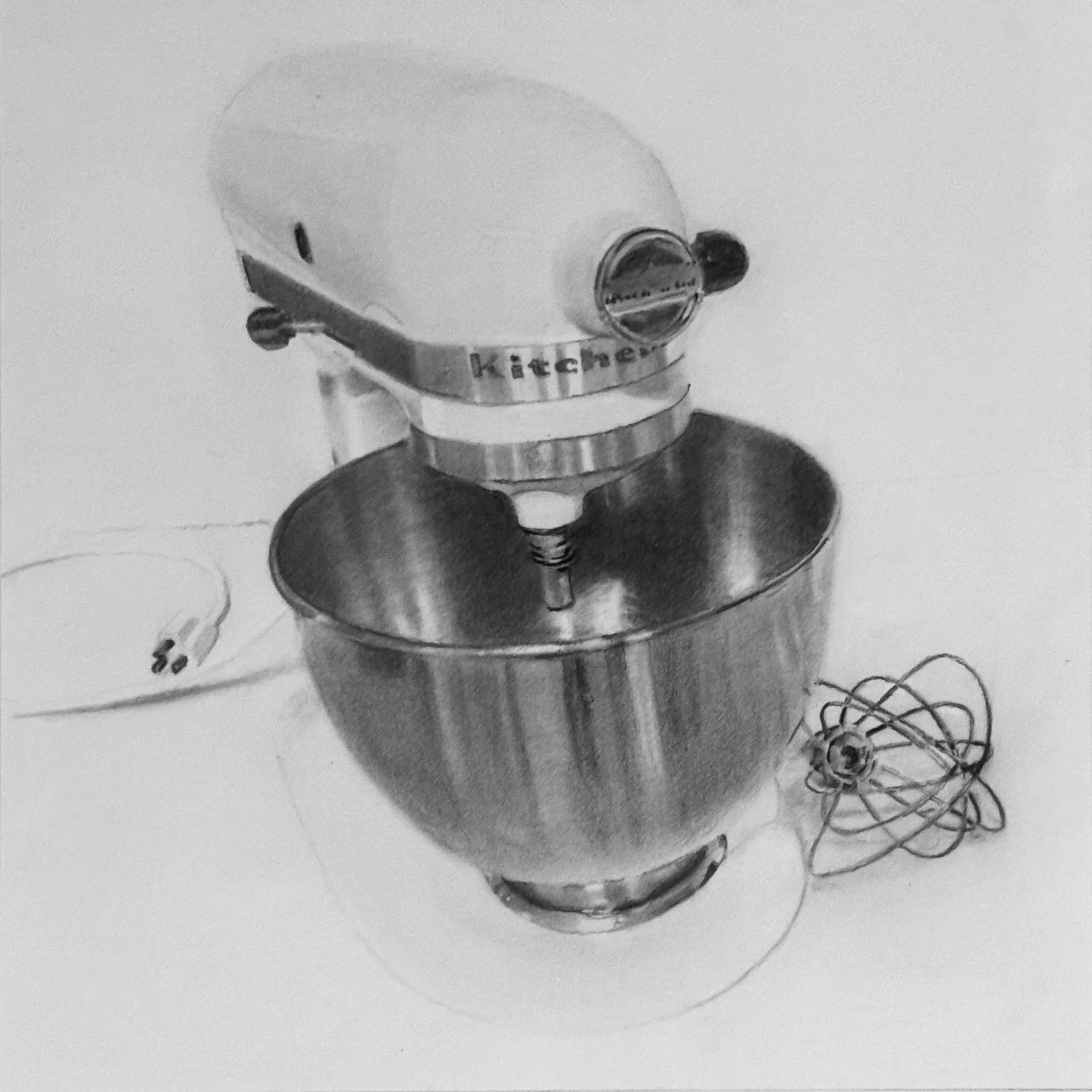
This group of artists defamiliarizes elements of the home and daily life. Deidre Corcoran began painting at 57 years old. Her imagery emerges from memory. The artist’s acrylic and graphite Grocery Cart appears to dance, a jazzy and anthropomorphized symbol of the prosaic market run. Miriam Fabijan preserves her mother’s memories as she uses her lace-making patterns to structure her elegiac painting. Zoe Gleitsman’s photograph, Preparing for a Fire on the Beach, suggests dramatic staging with its interplay of domestic fabric and shadows from the natural world. Norma Greenwood’s mysterious painting resembles a baking tin or a sink, some kind of repository for domestic memory and emotion. Kenichi Nakajima creates a fantastical dining table scene in diptych form. A female figure sits across from a mythical being, while a severed hand and flying fish contribute to the well-imagined meal. Howard Pohl photographs a home being overtaken by its environs. Nature appears primed to swallow the domestic whole. Lael Salaets draws a Kitchenaid mixer with graphite on cardstock. The precision of light and shadow on the metal bowl becomes meditative, transforming a mass-produced baking tool into an object worthy of reverence. As anyone who’s ever used one knows: It’s true.

Wall 8
Jamie Greenfield / Milena Guberinic / Hai-Hsin Huang / Emma Loy / Zhexing Shang
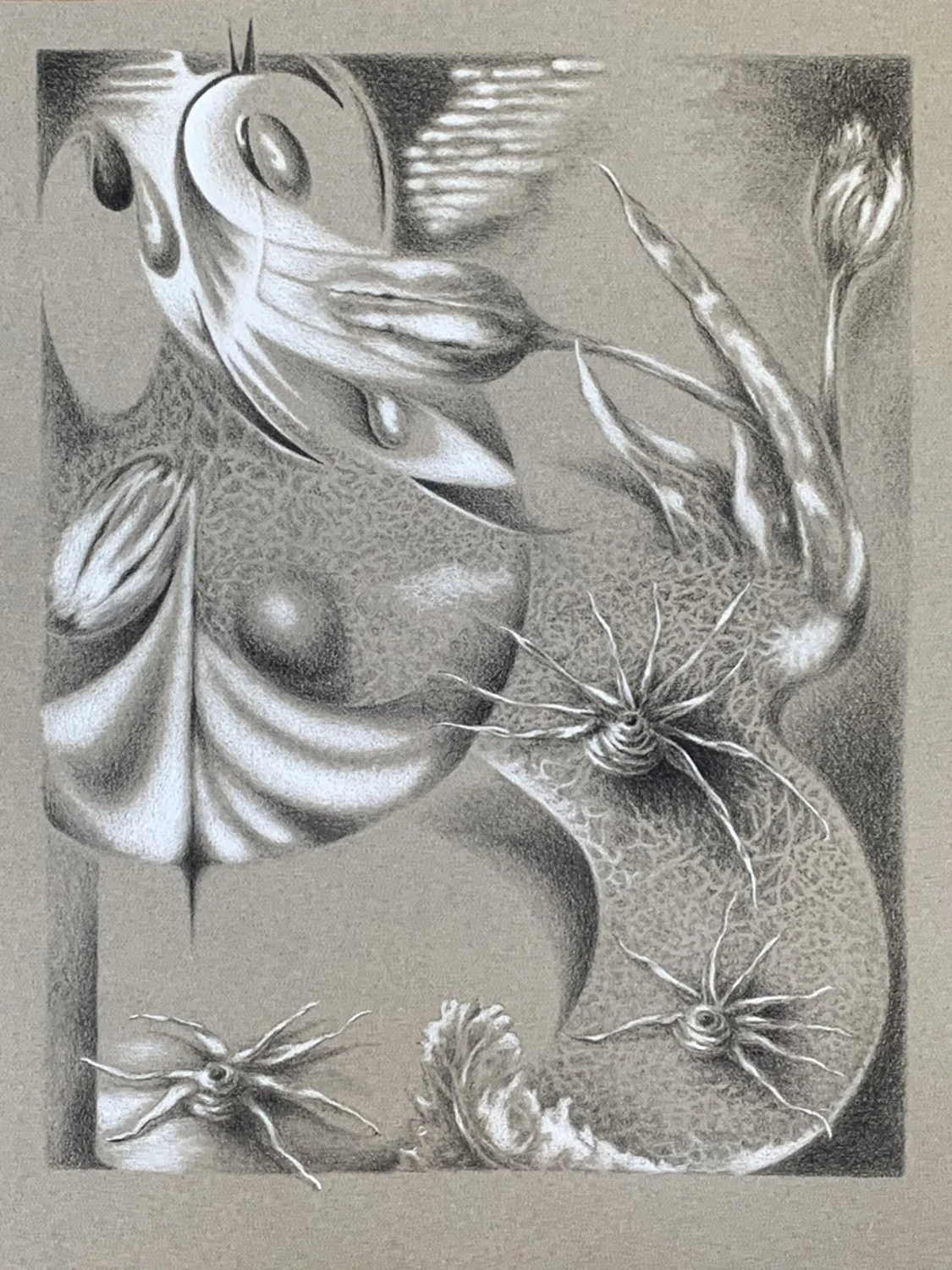
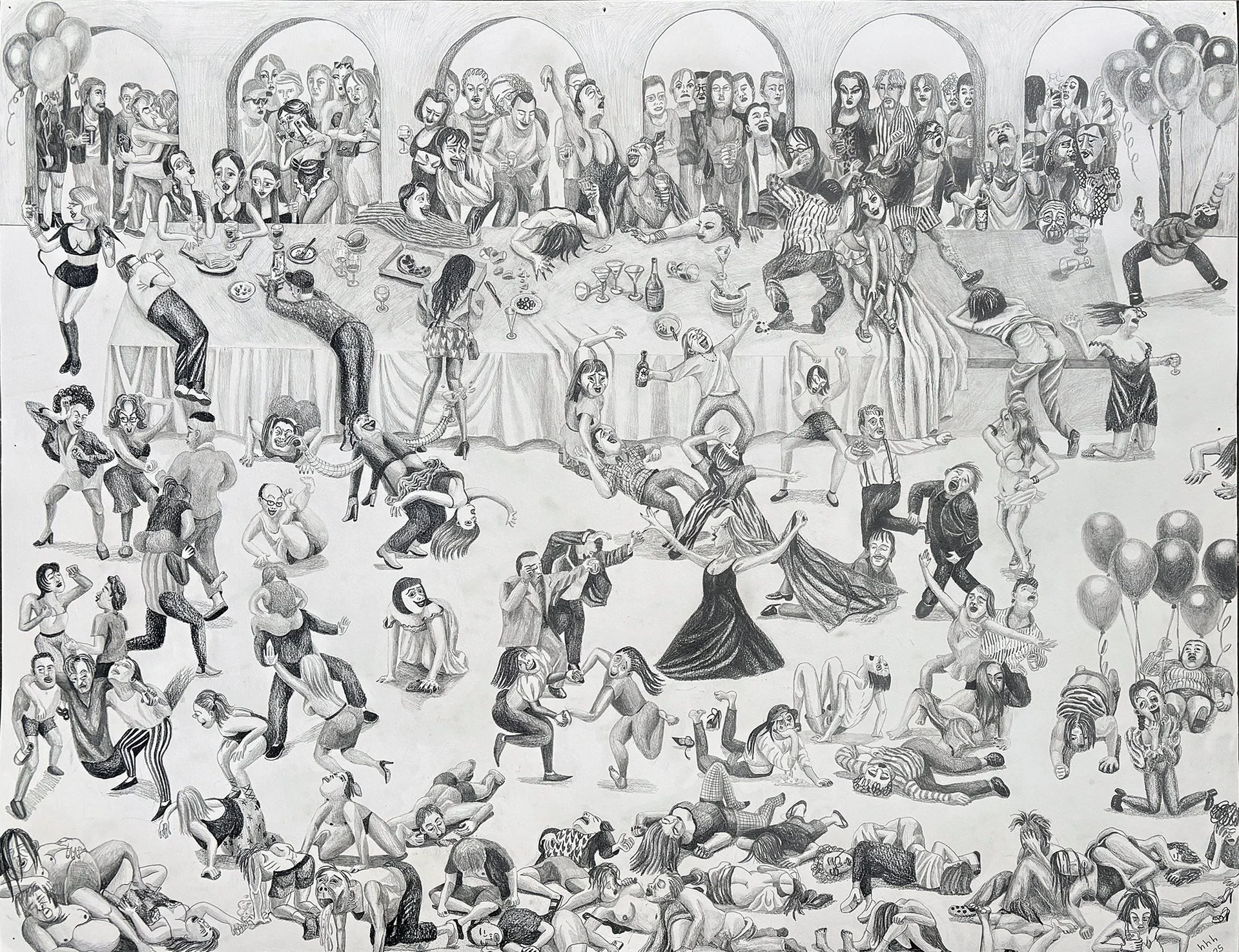
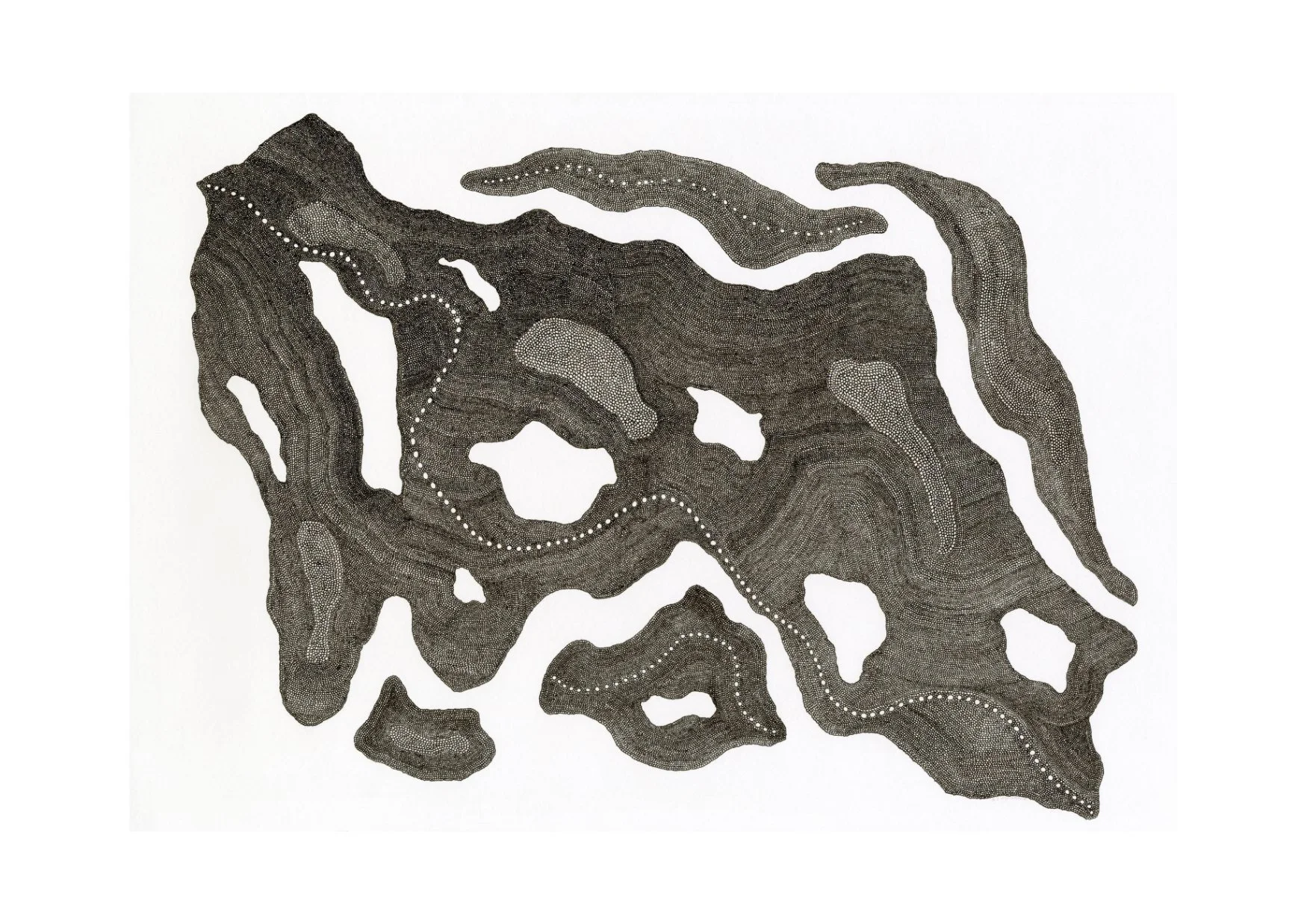
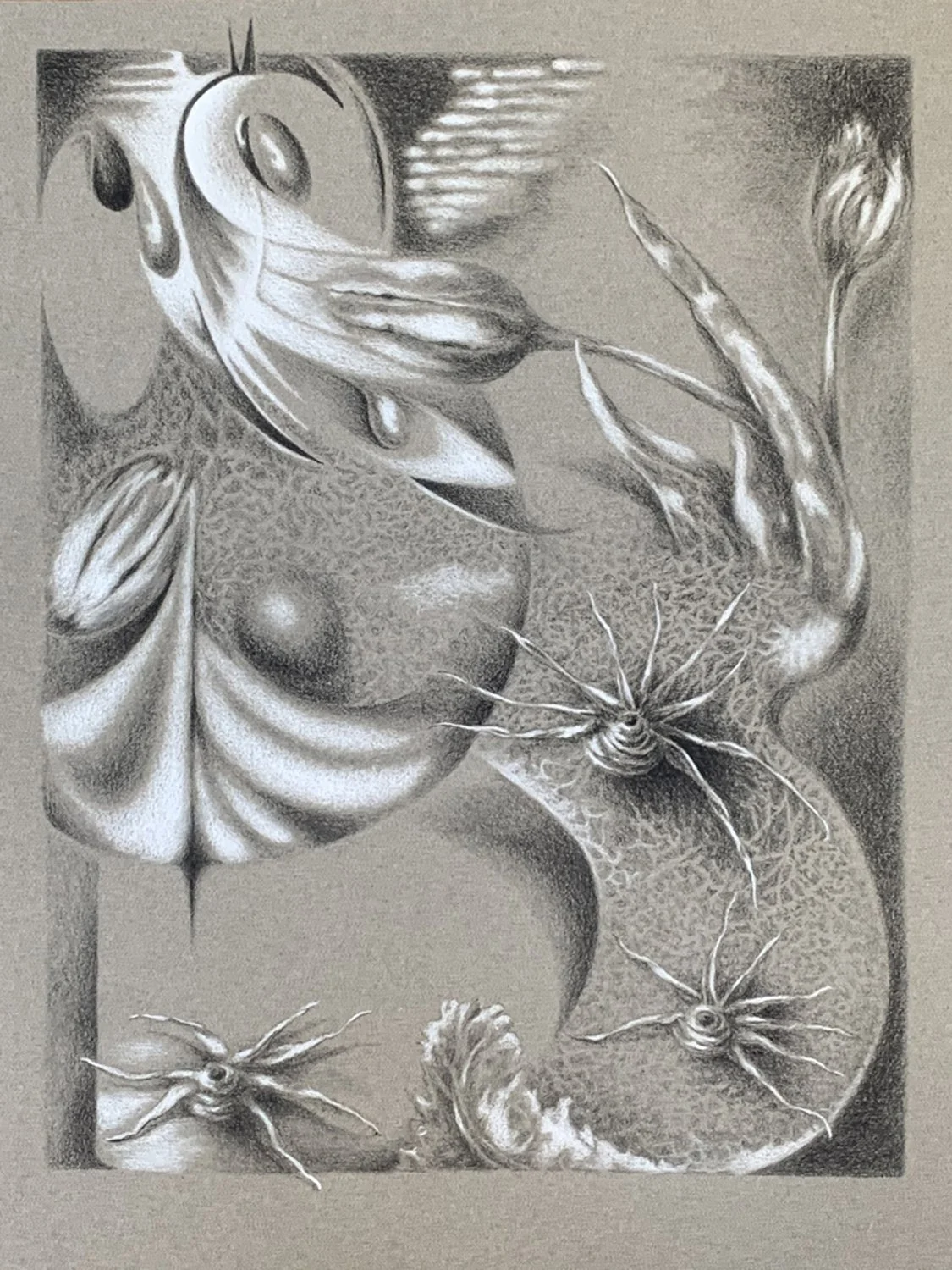
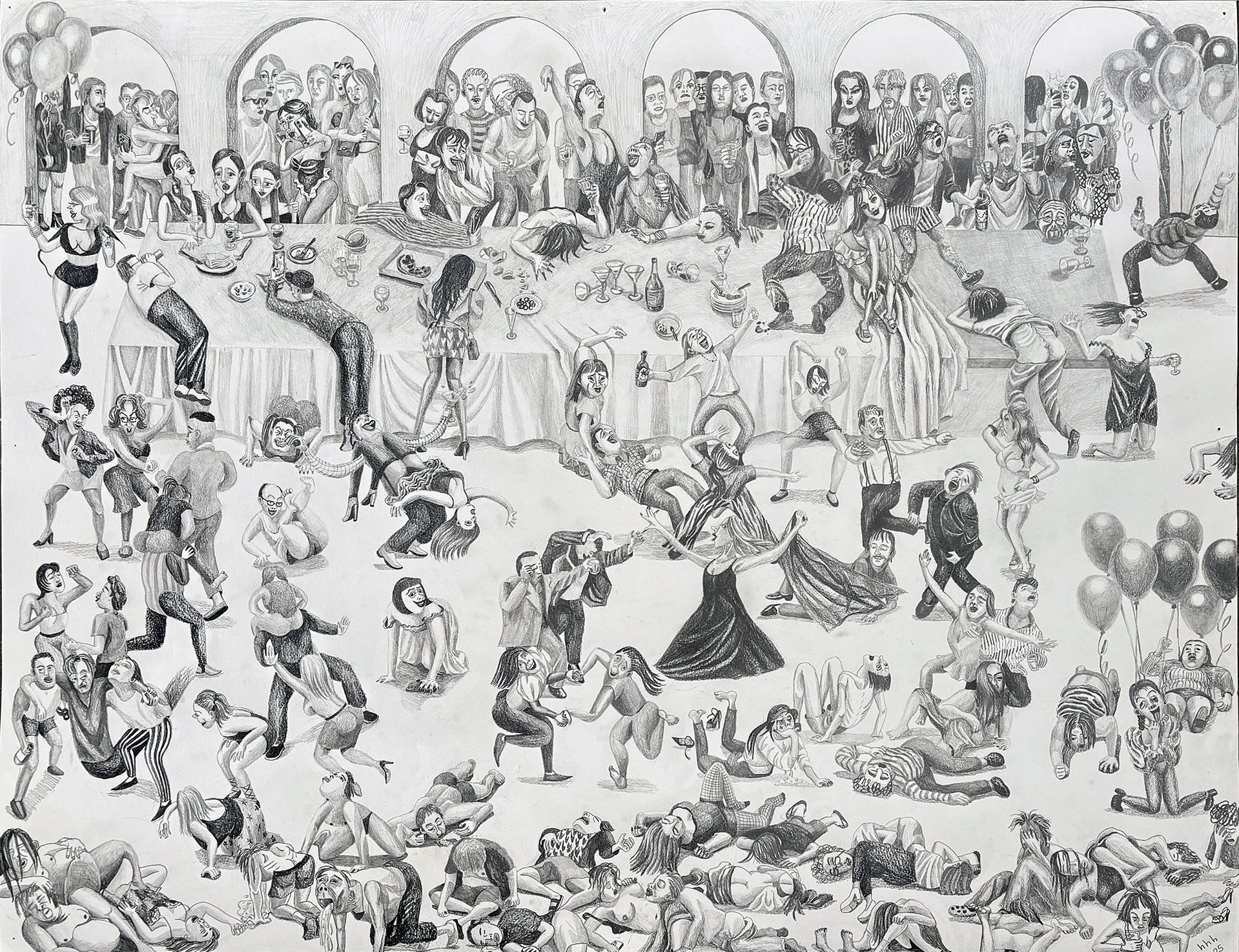
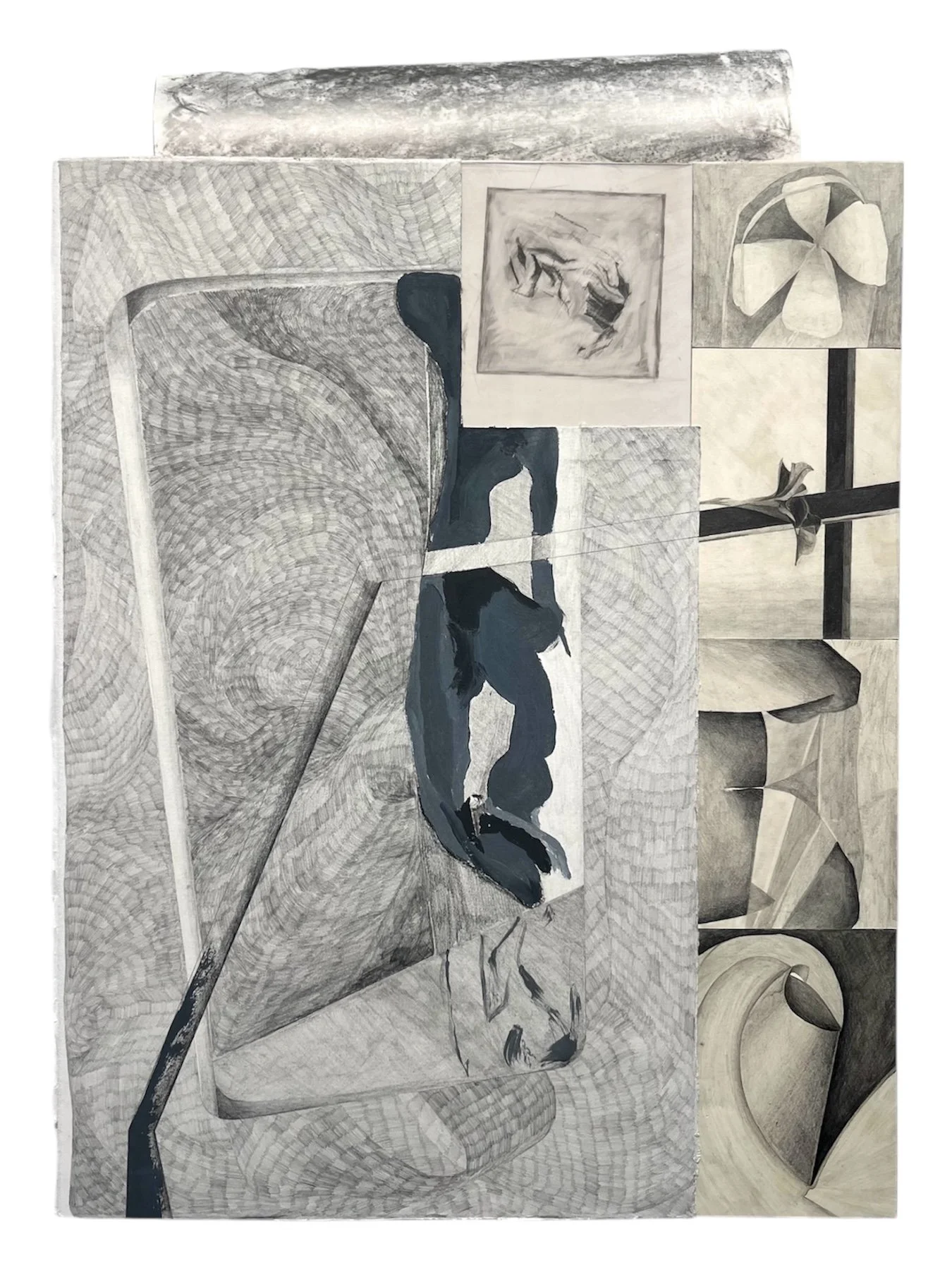
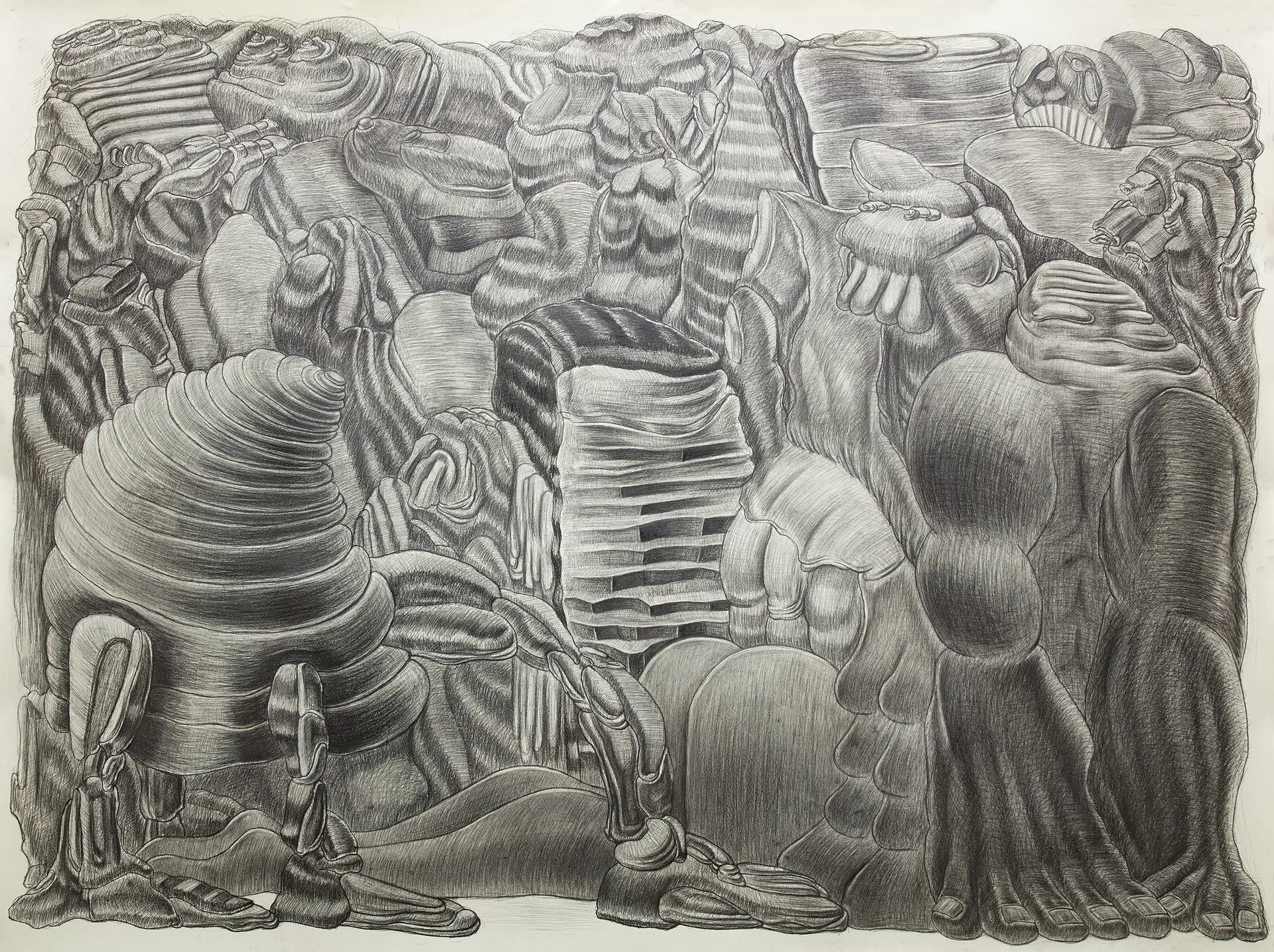
The artists in this grouping build uncanny worlds in monochrome. Jamie Greenfield’s A Strange Universe suggests flora that’s undergone some kind of extraterrestrial warp. Milena Guberinic uses watercolor to render two faceless women in conflict, across an abstract expanse. The result feels simultaneously timeless and of another world. Hai-Hsin Huang depicts a fever dream of a celebration, equal parts Bosch and The Last Supper. Emma Loy’s multimedia drawings transform the diaristic into the dreamlike. Shapes and patterns cut across planes, suggesting layers of memory and experience. Zhexing Shang’s drawing suggests a vividly imagined landscape of rocks and creatures with geological strata and folds.

Wall 9
Tali Grinshpan / Phaedra Mastrocola / Emilia Milcheva / Robert Zumwalt
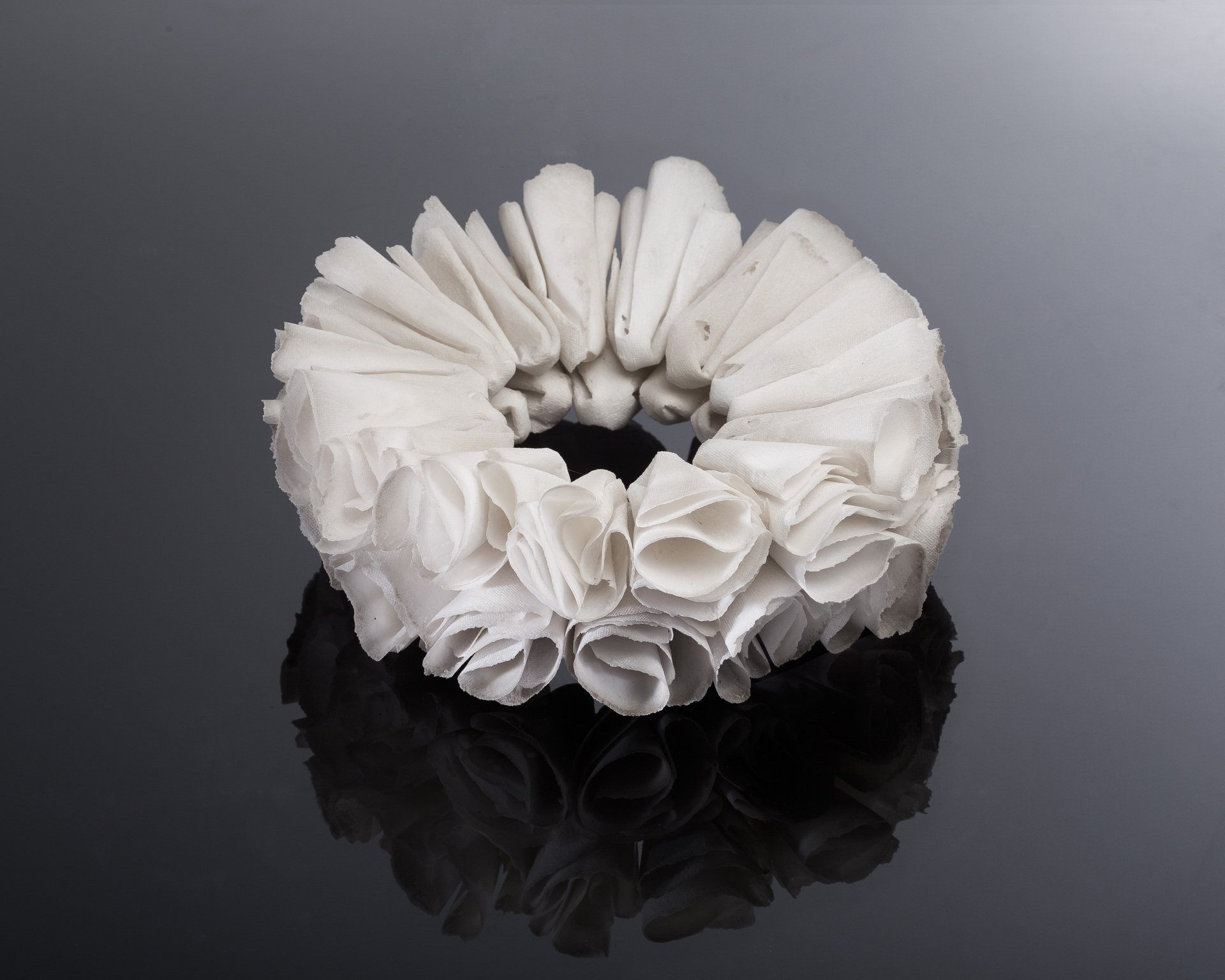
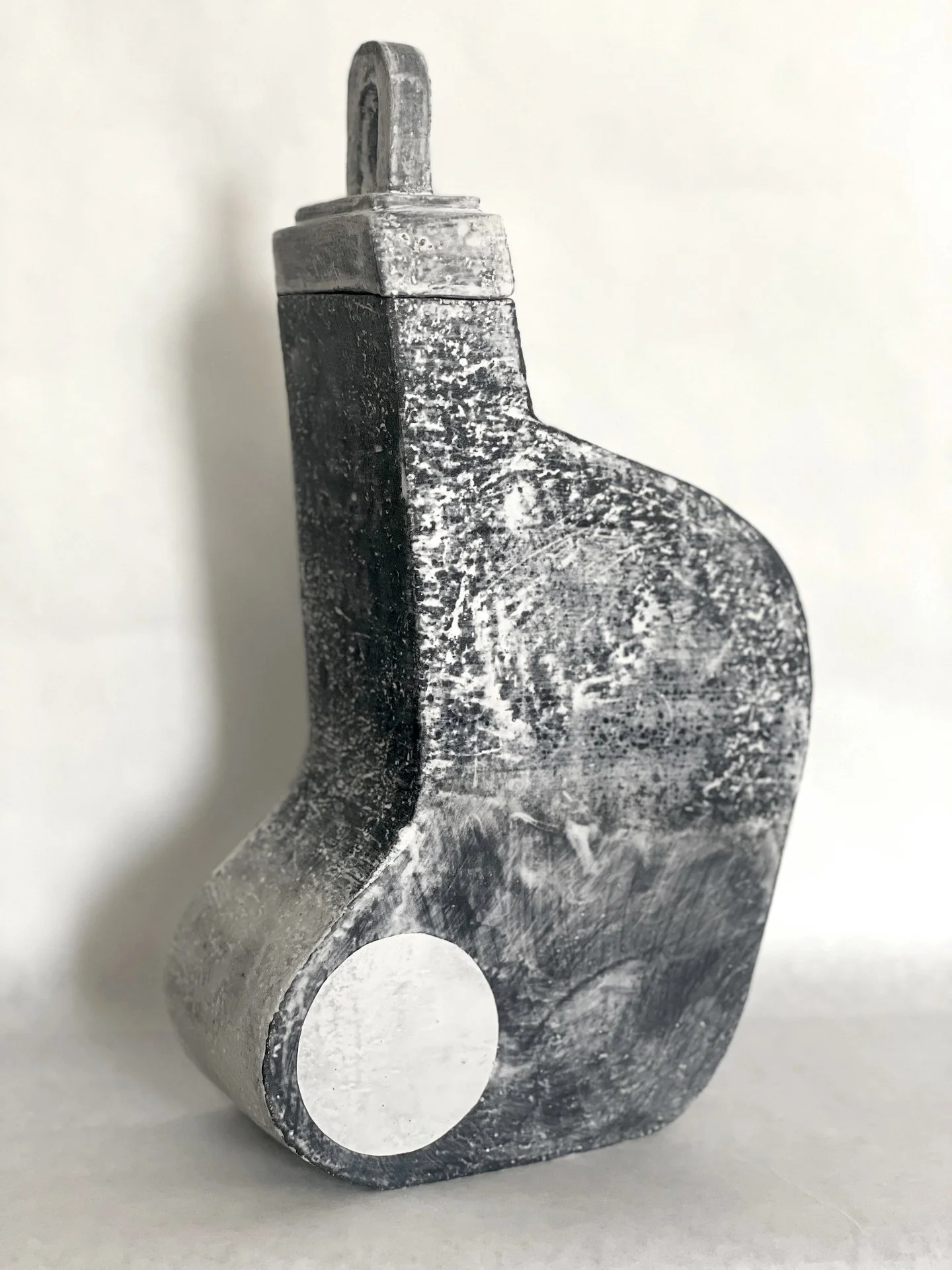
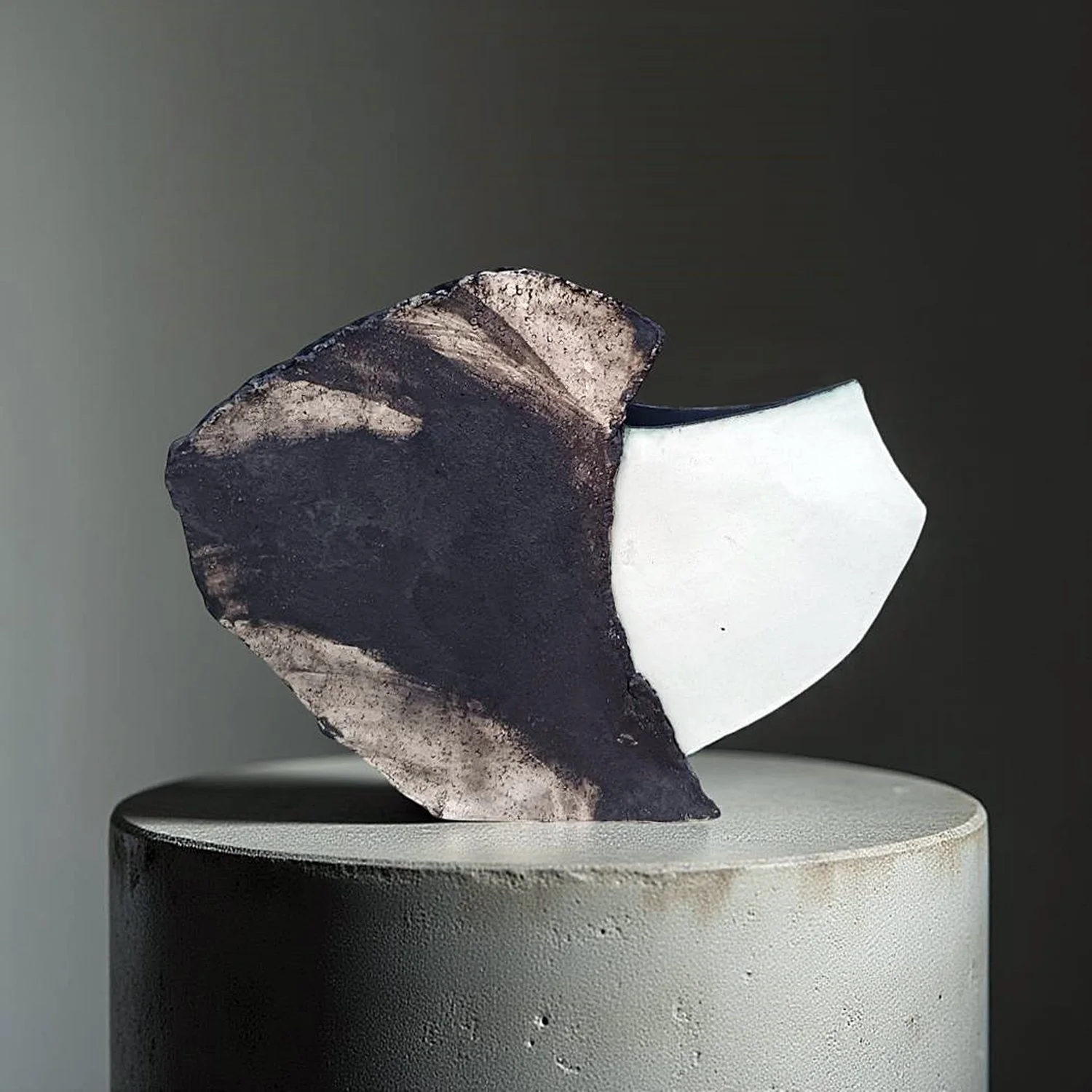
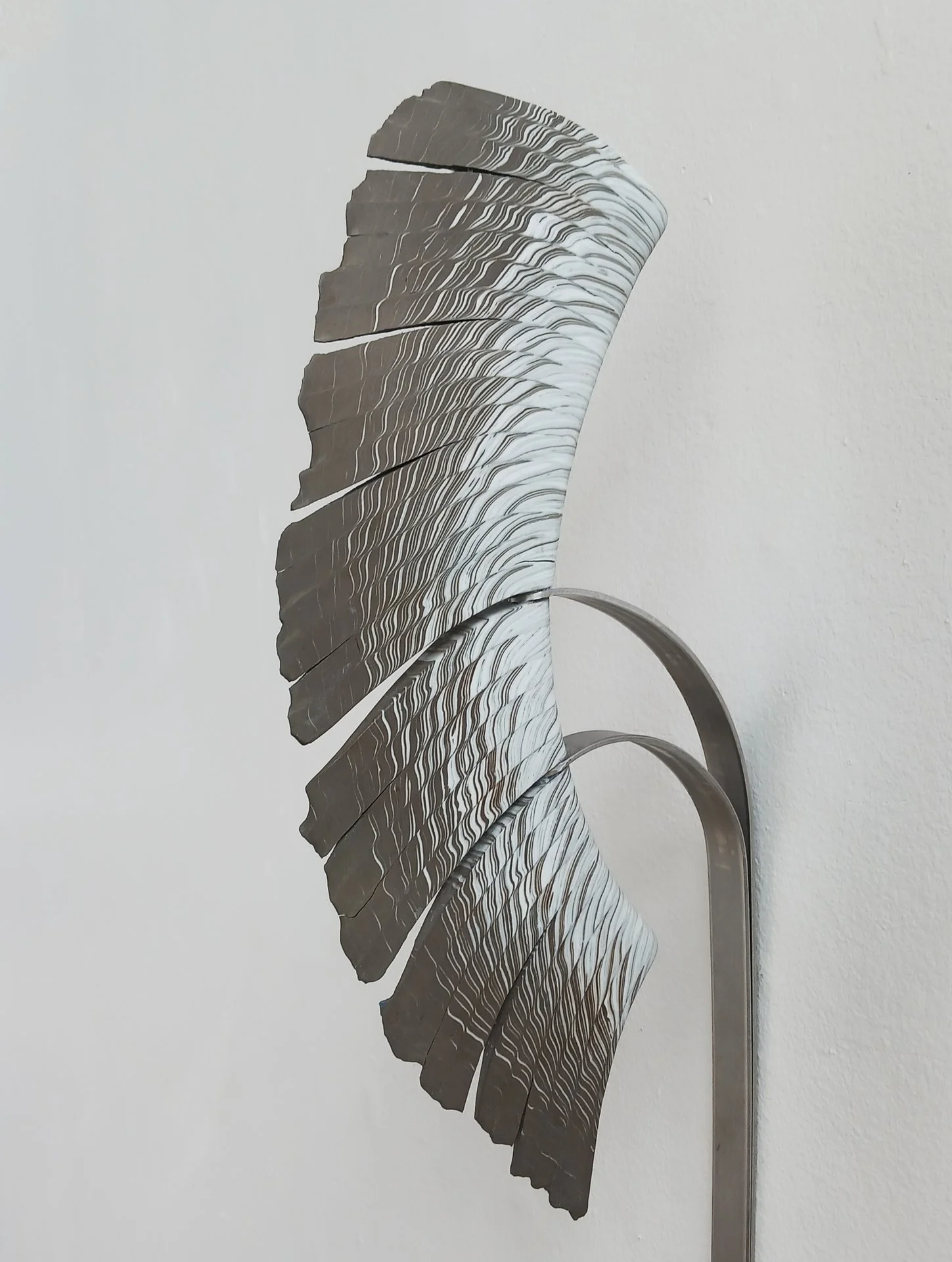
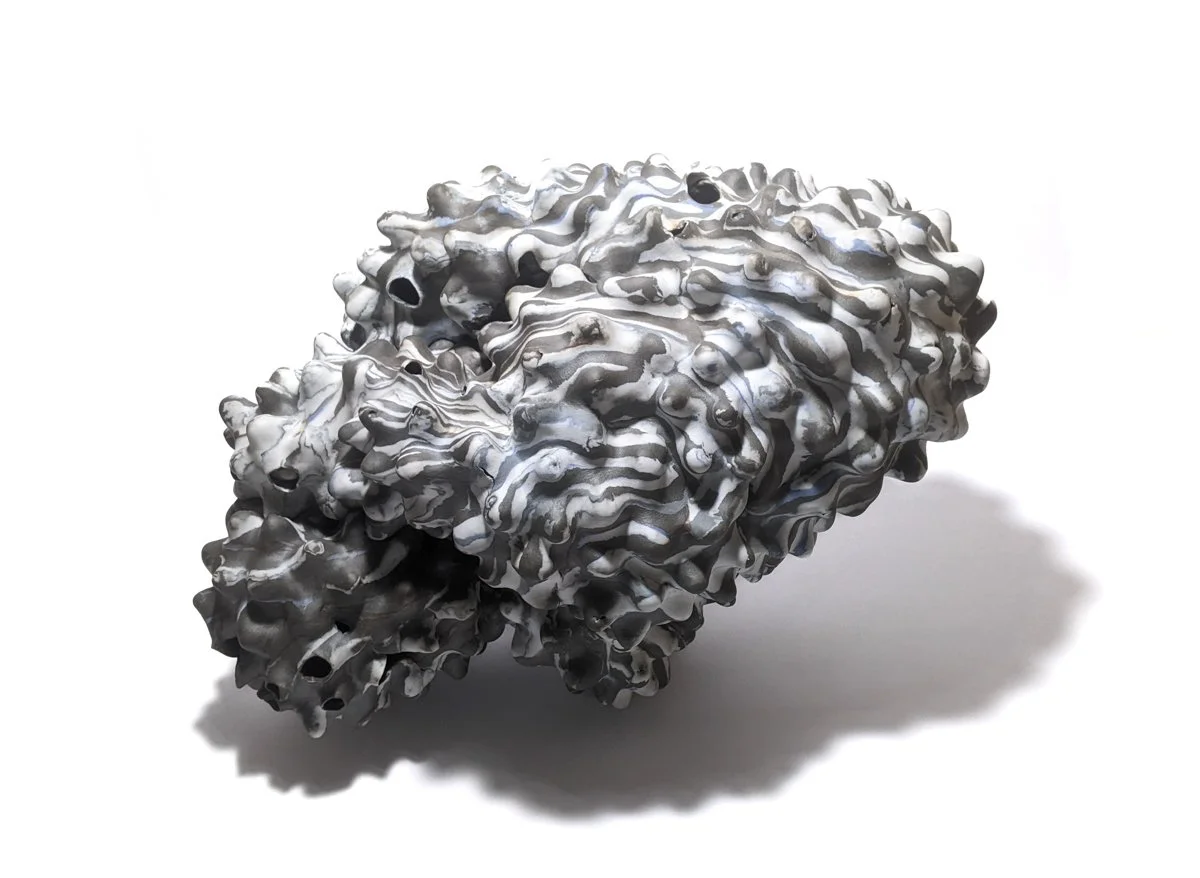
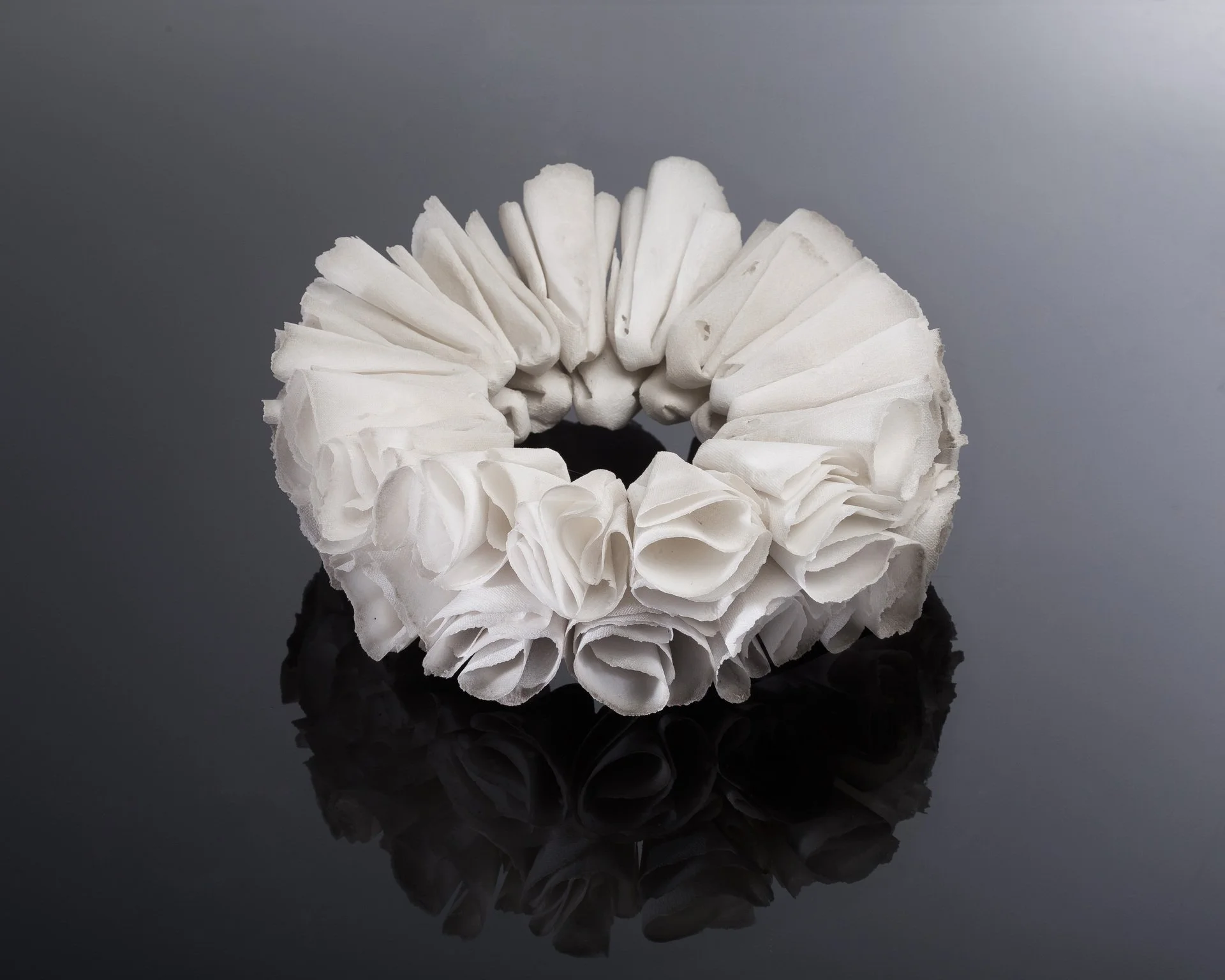
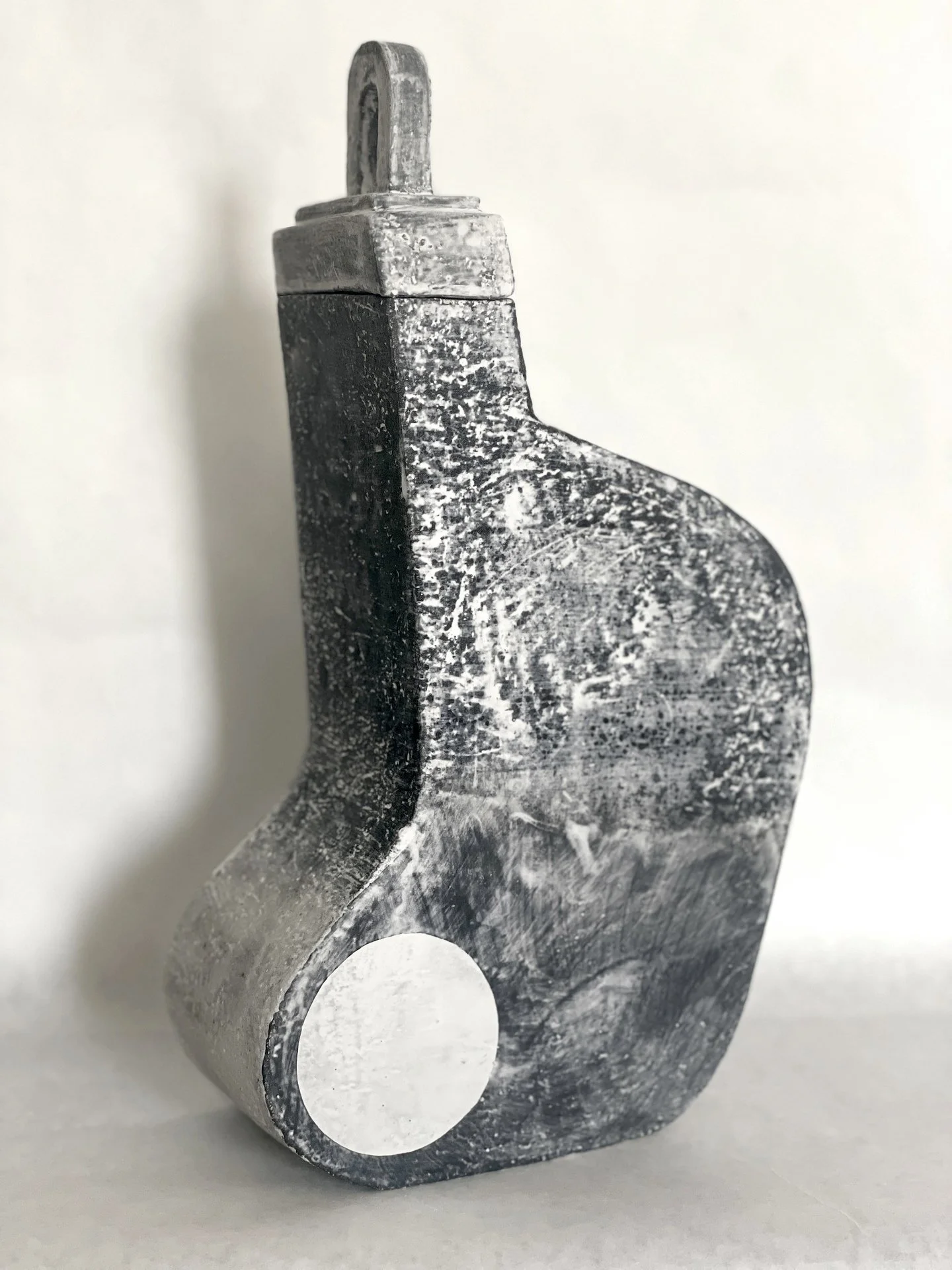
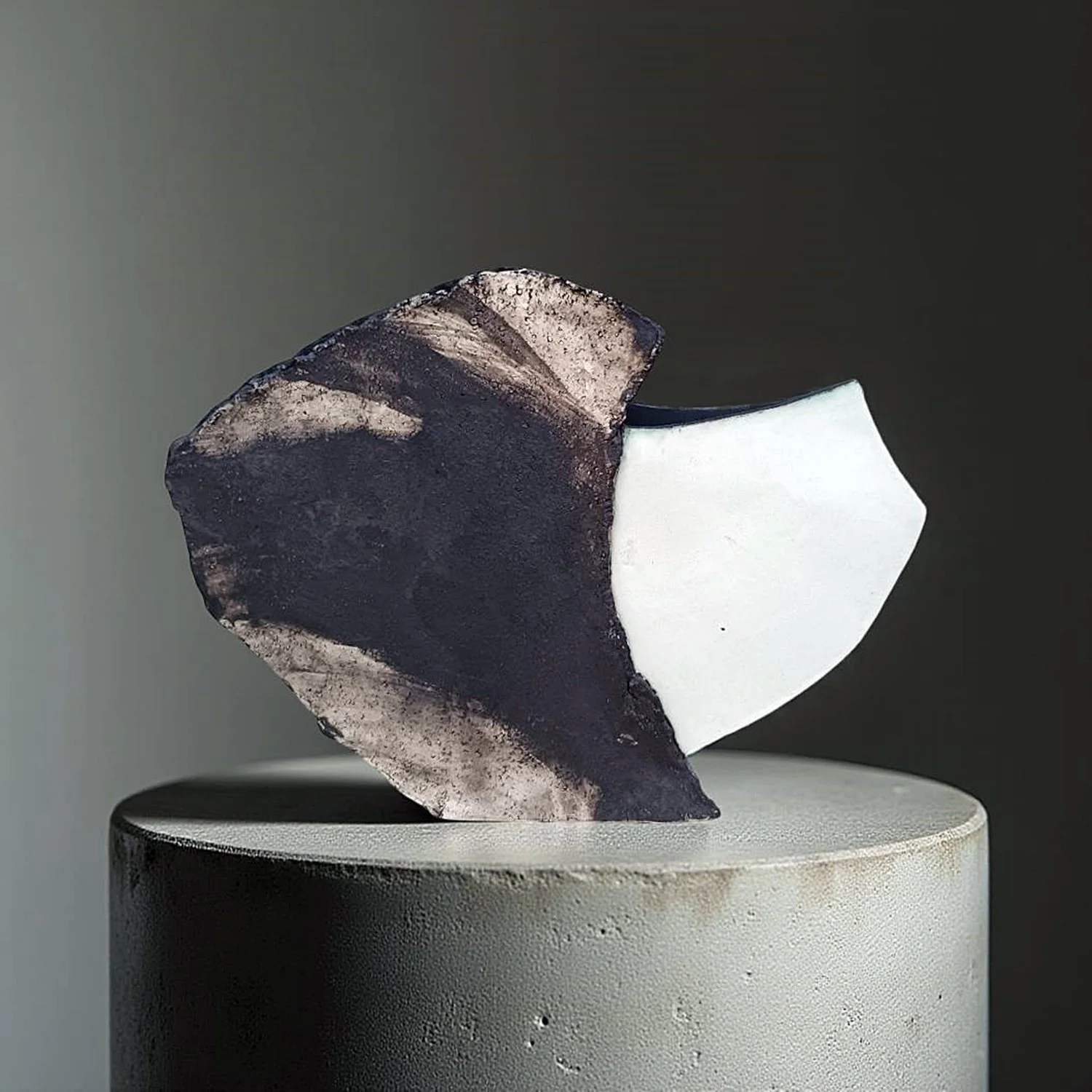
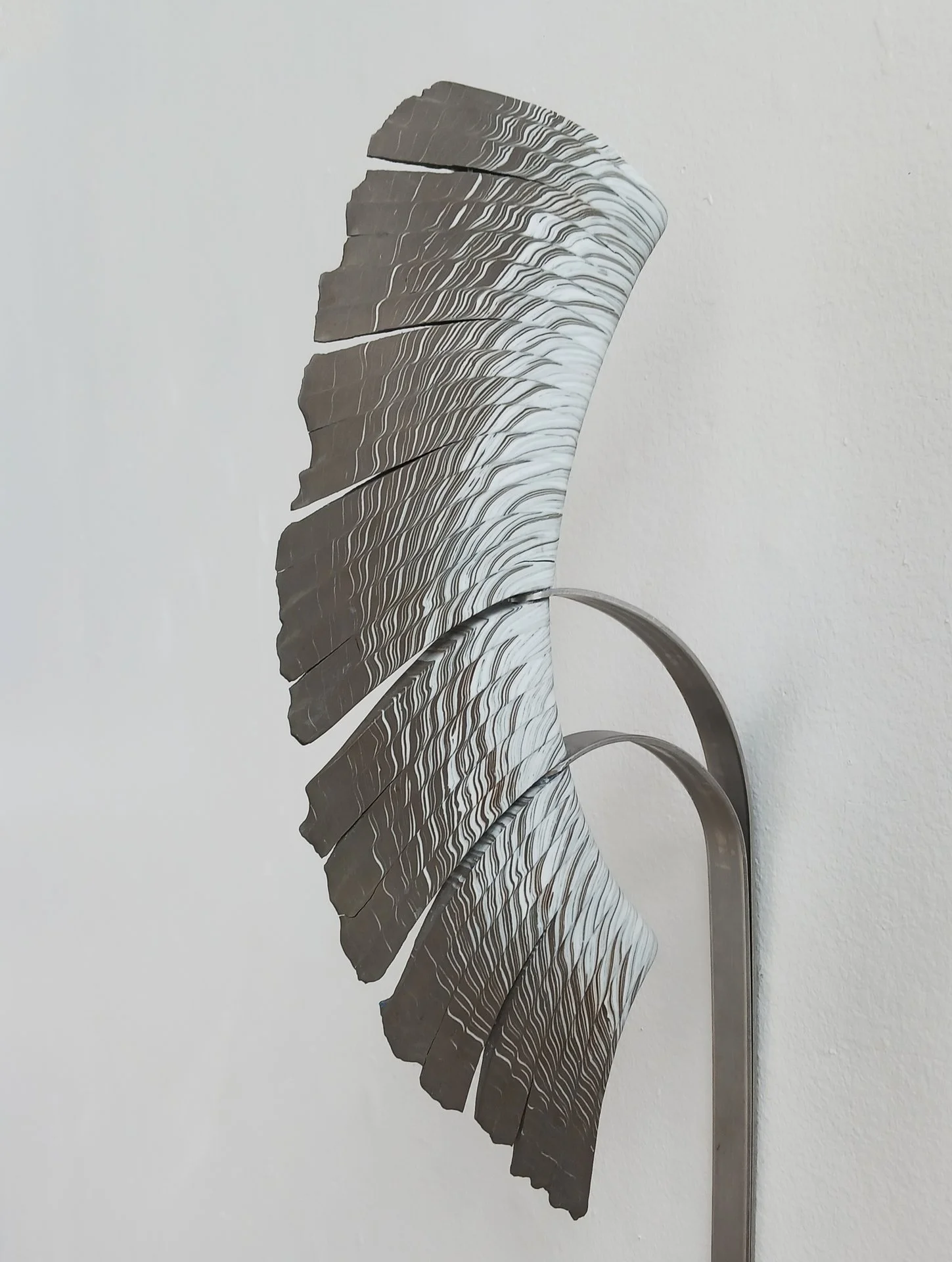
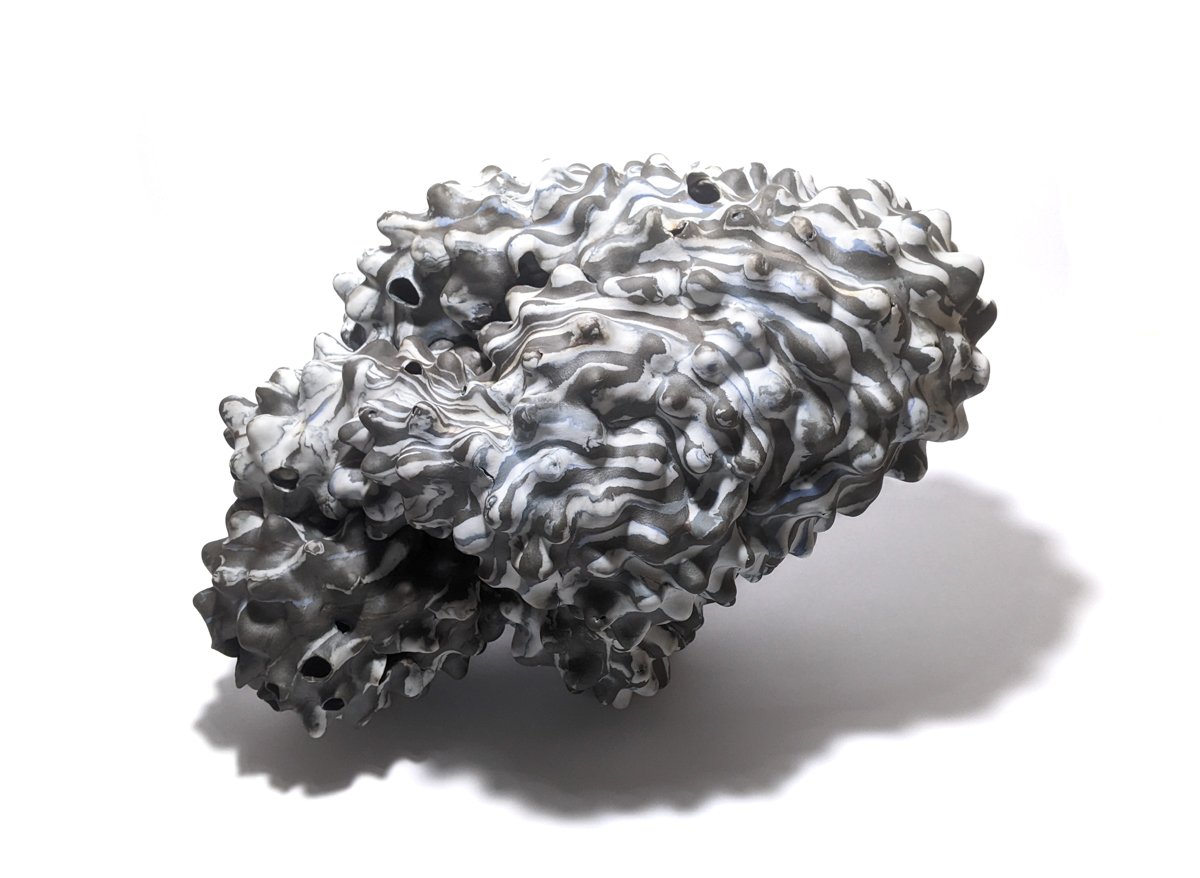
The artists in this group use glass, porcelain, and ceramic to bring the monochrome into three dimensions. Tali Grinshpan uses pate de verre to cast glass folds so delicate they evoke floral and paper forms. Phaedra Mastrocola’s stoneware vessel plays with balance and proportion and features a textured, alluring surface. Emilia Milcheva presents a ceramic in two dialectical parts. The Zen philosophy of wabi-sabi, and its emphasis on impermanence and imperfection, inform her practice. Robert Zumwalt works in porcelain. In Spore Series No. 6 and Folding Space, he references nerikomi, a Japanese pottery marbling technique. Forms evoke the natural world, while the palette and marbling confirm human intervention.